The Fisk University Rosenwald School Digital Collection is Now Public!

Fisk University has released its Rosenwald School Digital Collection, preserving and sharing the history of these vital institutions. In Montgomery County, the collection highlights schools built through the determination of African American communities in Elliston, Pine Woods, Shawsville, and Wake Forest.

Fisk University has made its Rosenwald School Digital Collection publicly accessible, a significant step in preserving and sharing the history of these important institutions. For Montgomery County, the collection documents the Rosenwald Schools established through the determination and vision of African American communities in Elliston, Pine (Piney) Woods near Riner, Shawsville, and Wake Forest.

Although only the Wake Forest school remains today—adapted for use as a private residence—the collection ensures that the legacy of all three schools endures. These schools stand as a testament to community leadership, resilience, and the transformative power of education during the early twentieth century.

The Story of Rosenwald Schools

The website (scroll down) offers a wealth of information: the story of Julius Rosenwald and his vision, the purpose of the school fund, the significance of the school designs, and the requirement that African American communities contribute a share of the cost. Visitors will also find maps, photographs, and documentation of schools across the region and beyond.

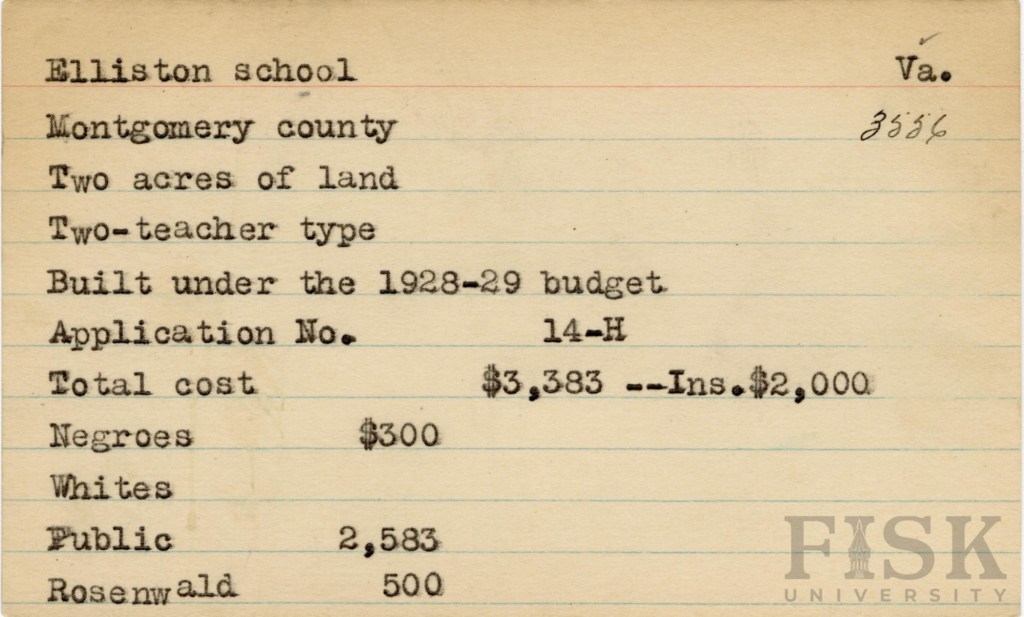
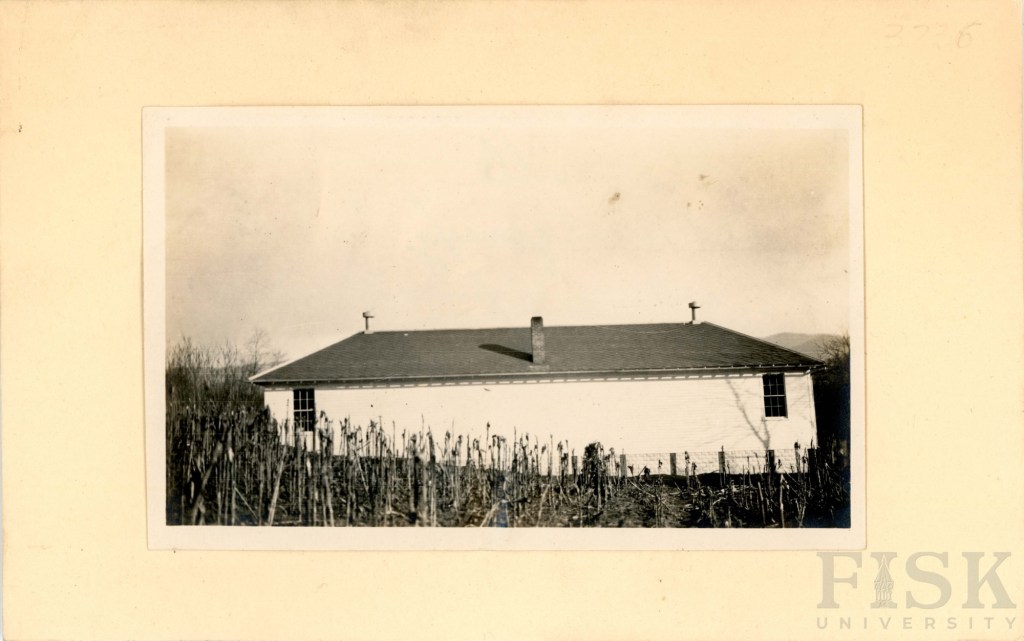
Elliston School

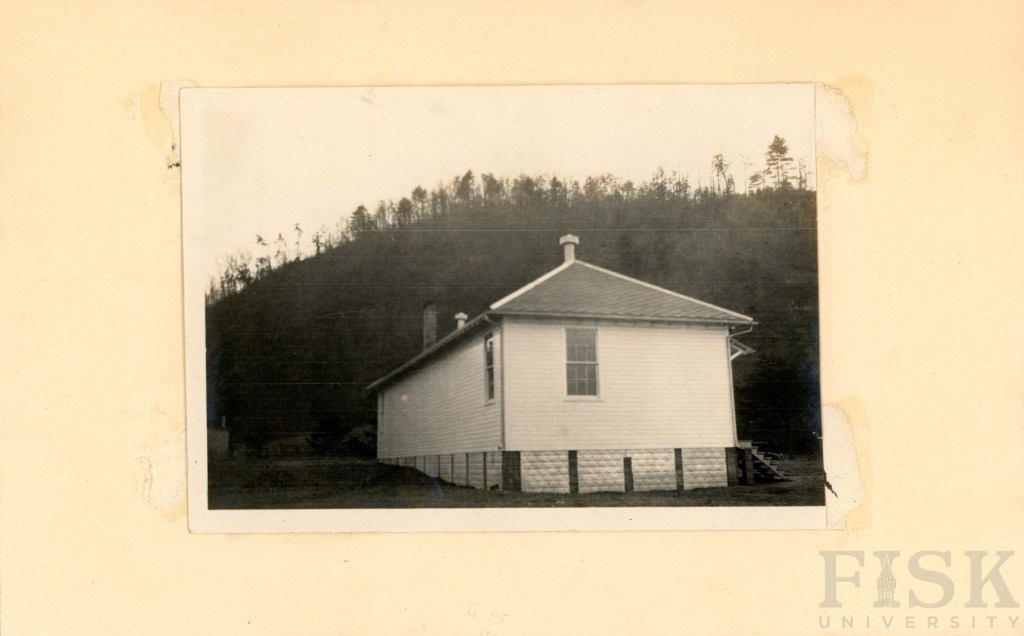
Built in 1928–1929, the Elliston Rosenwald School reflects the determination of the local African American community to provide better educational opportunities for their children. Families in Elliston raised $300 toward the project, which was matched by $500 from the Rosenwald Fund and $2,583 from the Montgomery County School Board.

The school stood on two acres of land and housed two classrooms, each with its own teacher. The school was located on Brake Road, in the Allegheny School District. The legacy: the Elliston Rosenwald School was a center of learning, community, and pride during an era when access to education was hard-won.

Pine Woods School

The Pine Woods Rosenwald School (Piney Woods) was built in a two-teacher design under the supervision of Tuskegee University. The school was sited on Piney Woods Road, in the Auburn School District. While the exact construction date is unknown, records indicate the total cost was $1,075. Of that amount, the Rosenwald Fund contributed $300, the African American community raised $275, and the Montgomery County School Board provided $500.

Unlike white schools of the period, which were fully funded by the School Board, African American families were required to make direct financial contributions toward the construction of their schools. This inequity underscores both the systemic barriers they faced and the extraordinary commitment of the Pine Woods community to ensuring education for their children.

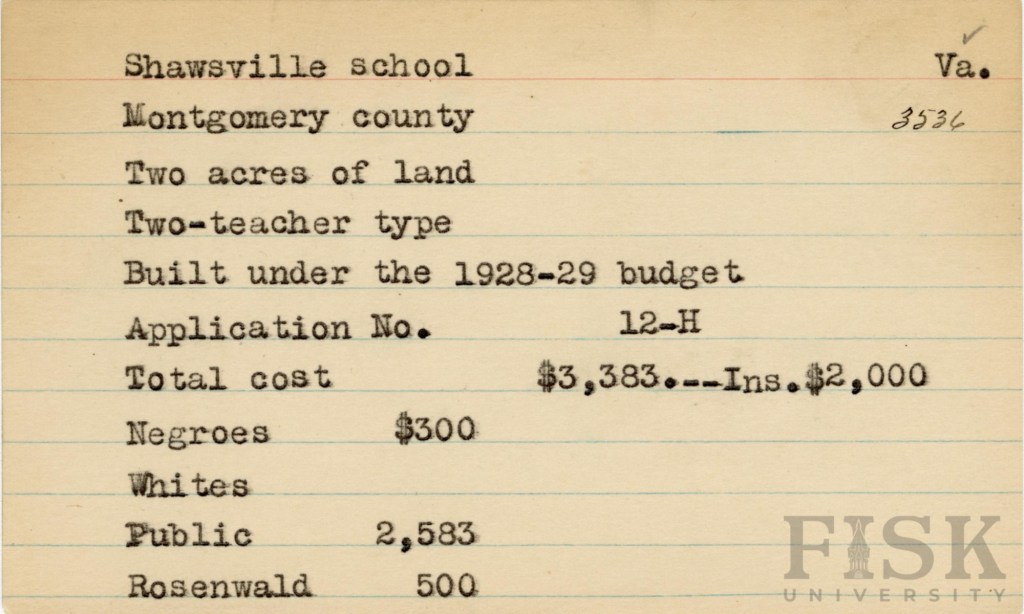
Shawsville School

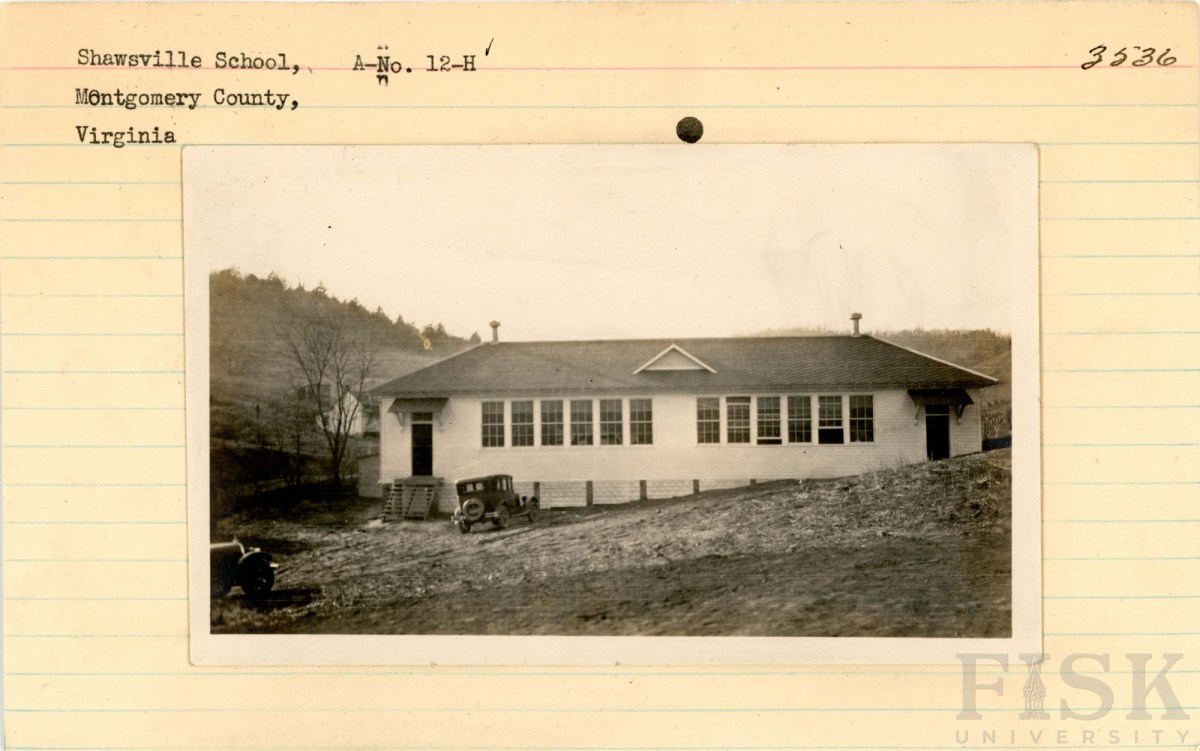
Constructed between 1928 and 1929, the Shawsville Rosenwald School followed a two-teacher design overseen by the Montgomery County School Board. The total cost of $3,383 was shared among the Rosenwald Fund ($500), the African American community ($300), and the Montgomery County School Board ($2,583).

At the time, Shawsville, of the Allegheny School District, was a thriving hub, energized by railroad service and new road (US Route 11) construction projects. These opportunities drew African American laborers and rail workers to the area, many of whom invested their limited resources into building a school for their children. Their contributions—financial and communal—stand as a testament to the determination of Shawsville’s African American families to secure education despite inequities in public funding.
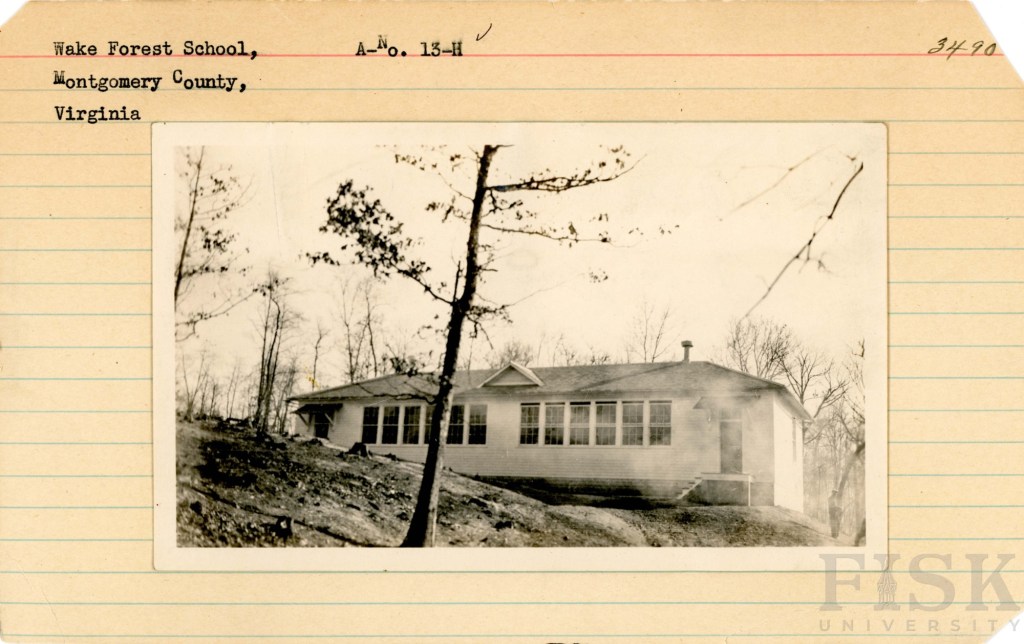
Wake Forest School

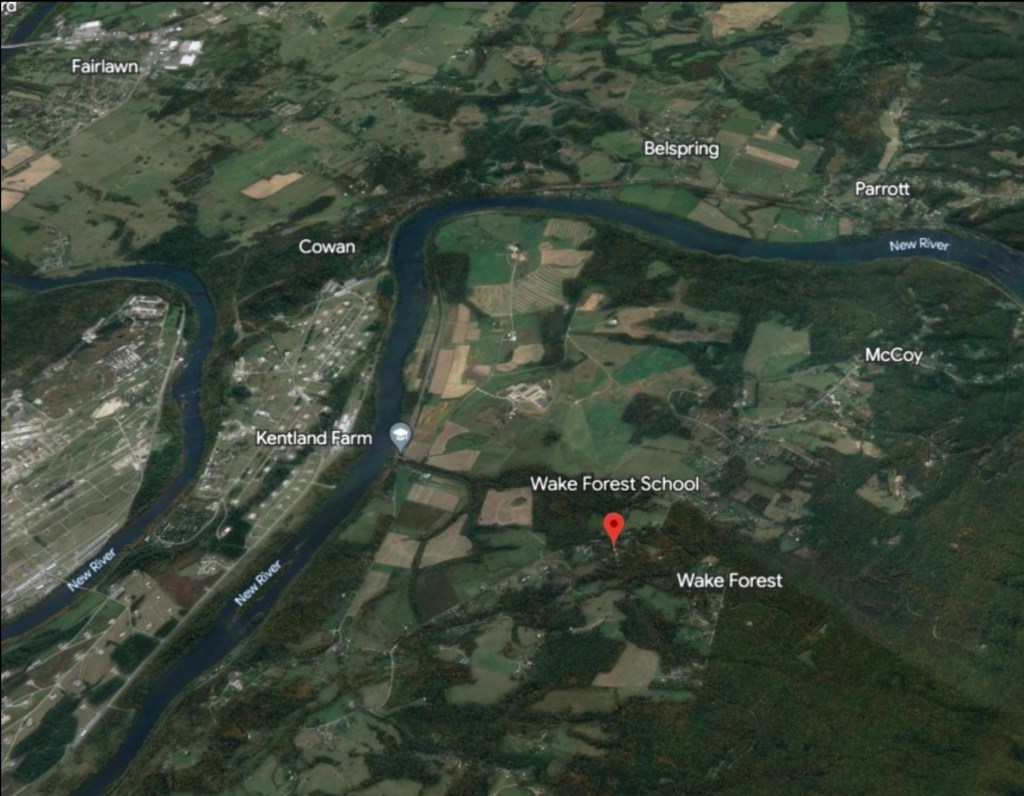
Constructed between 1928 and 1929, the Wake Forest Rosenwald School followed a two-teacher design on a two-acre site, in the Blacksburg School District, overseen by the Montgomery County School Board. The project cost $3,383, with funding shared by the Rosenwald Fund ($500), the African American community ($426 in 1928, about $7,500 in today’s value), and the Montgomery County School Board ($2,457). This school is now a private residence.

The Wake Forest community at this time was made up of independent farmers, farm laborers, boatmen, railroad workers, teamsters, and domestic workers. As coal extraction began to rise and reshape the region’s economy, African American families recognized that education would be essential for their children’s future. By pooling their resources—despite economic hardship—they ensured access to schooling that could open paths beyond the limits of labor and provide new opportunities for the next generation.

The Year 1961—Blacksburg High School Leads County in Desegregation

In 1961, Blacksburg High School became the first in Montgomery County to admit African American students, paving the way for full integration of all county high schools by 1966.

Montgomery County, Virginia, was slow to dismantle enforced racial separation in its schools, not doing so until September 1961. Neighboring counties followed a similar pace—Floyd in January 1961 and Pulaski in September 1961. (Martin, Black Education in Montgomery County 1939–1966, Virginia Tech master’s thesis, 1996).

After the U.S. Supreme Court’s 1954 Brown v. Board of Education ruling outlawed segregation, Montgomery County resisted. The school board leaned on “states’ rights” arguments and used tactics from Virginia’s Gray Commission—such as controlling student assignments and offering tuition grants to white families—to delay integration for years.

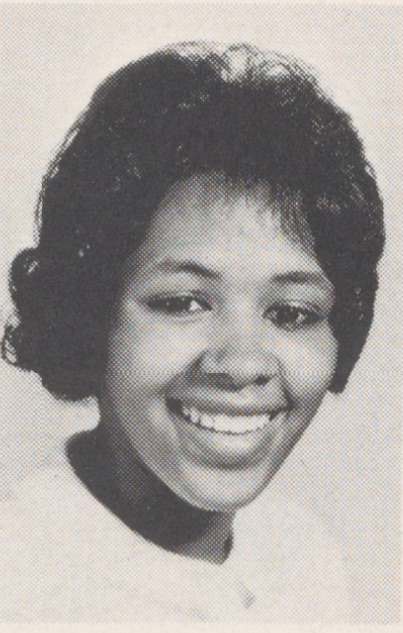
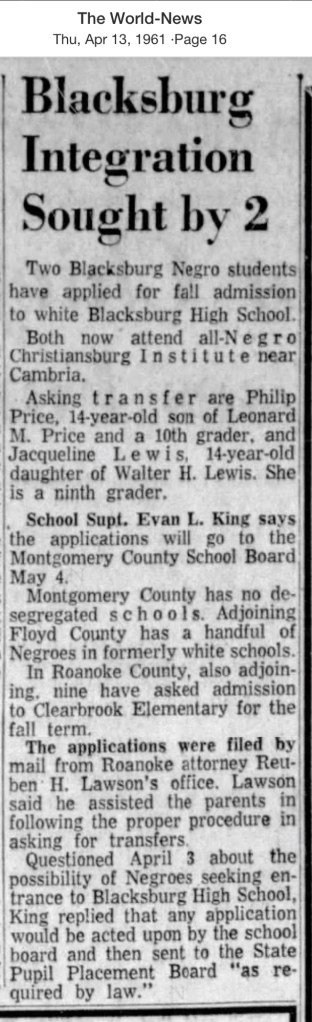
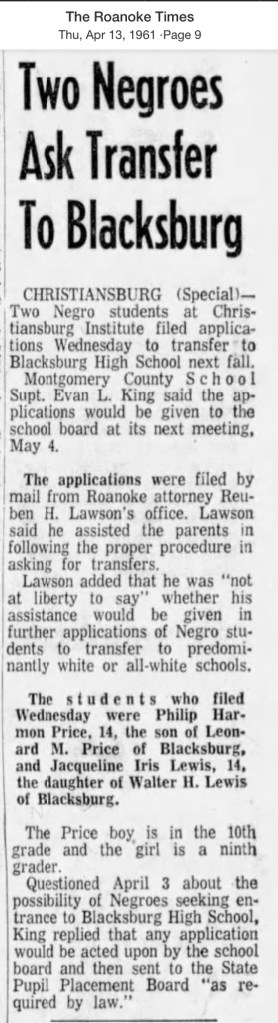
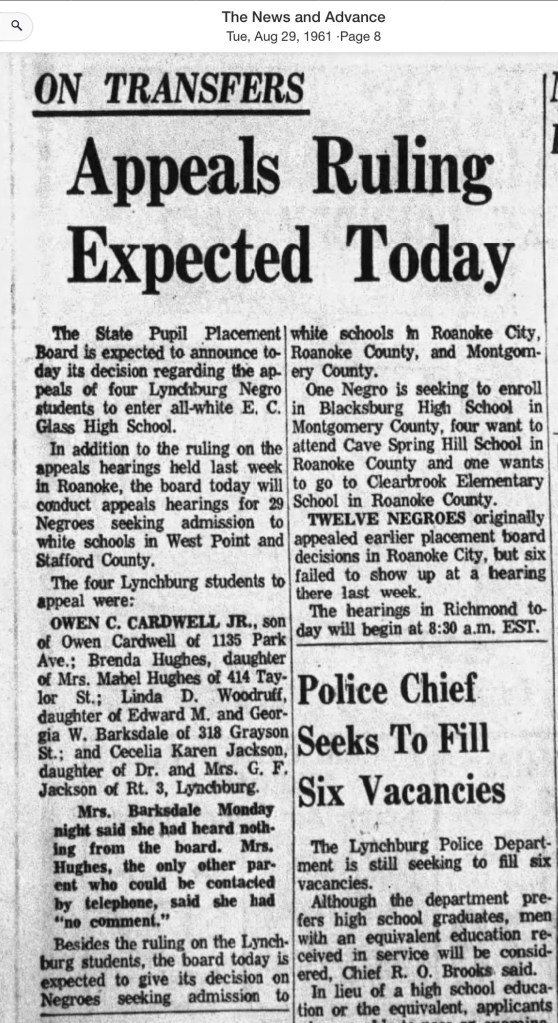
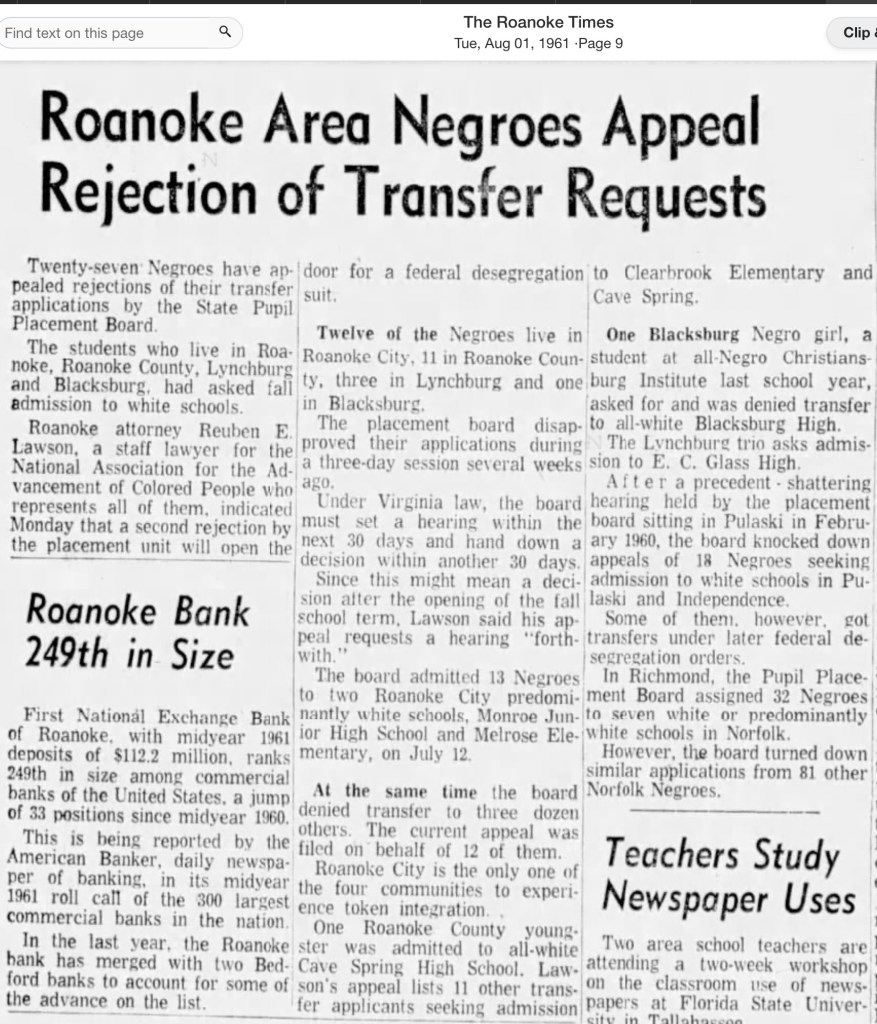
Amidst this resistance, three students from Christiansburg Institute applied to transfer to the all-white Blacksburg High School, which then enrolled about 900 students. They were siblings Phillip H. Price (15) and Ann Christine Price (13), along with Jacqueline Iris Lewis (14). With support from NAACP attorney Reuben E. Lawson of Roanoke, their applications went before the State Pupil Placement Board. Phillip and Ann Christine were admitted for the 1961 school year, but Jacqueline’s request was denied on the grounds of “academic standards”—a requirement never applied to white students.

On August 23, 1961, Jacqueline and her father, Walter H. Lewis, traveled to Roanoke for the hearing, an intimidating experience for a 14-year-old. The Board delayed its ruling for a week before denying her appeal. That fall, Jacqueline remained at Christiansburg Institute.

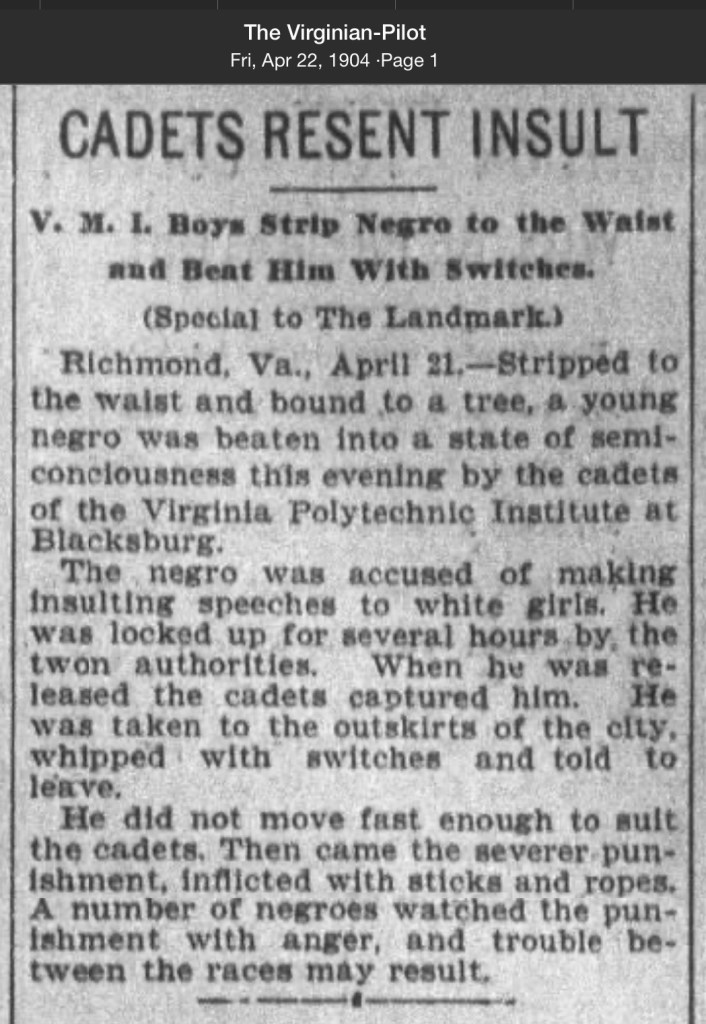
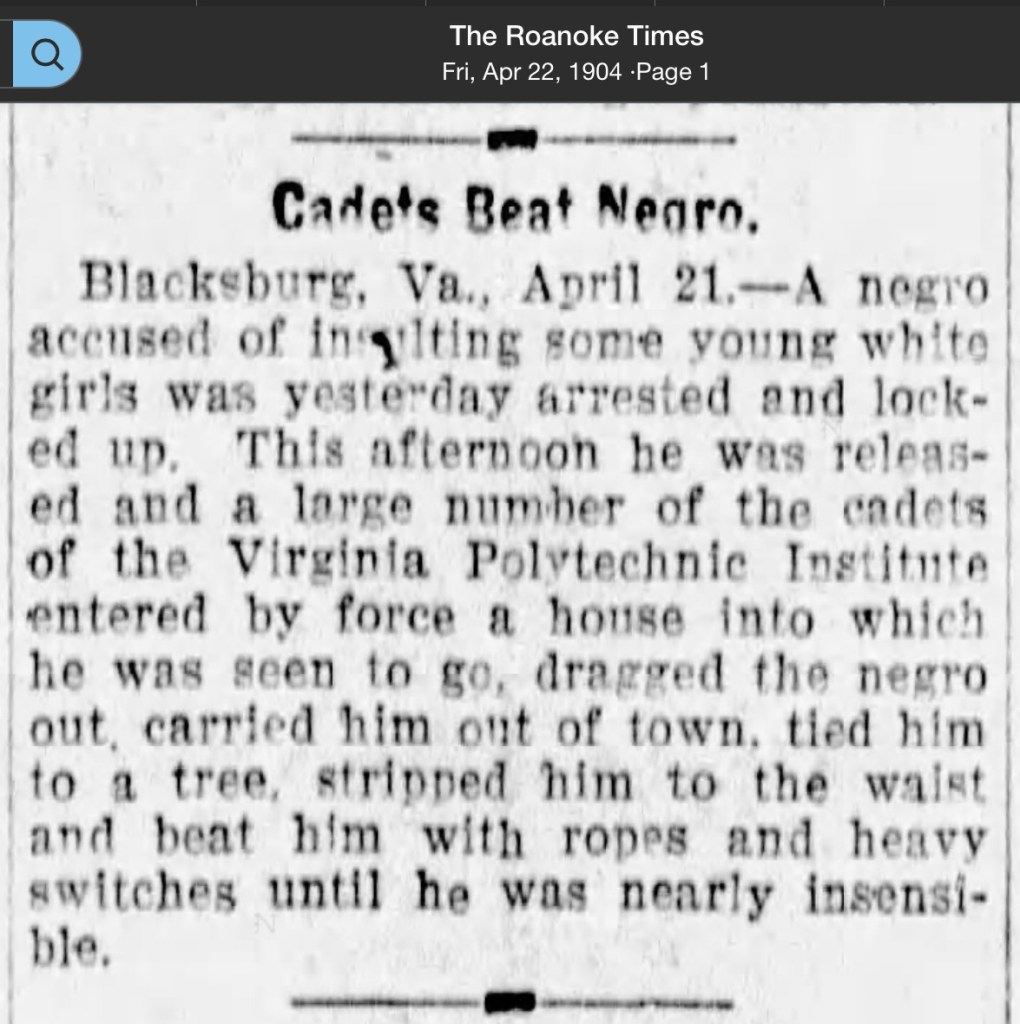
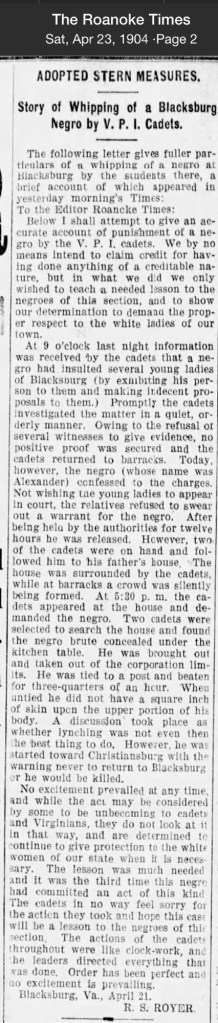
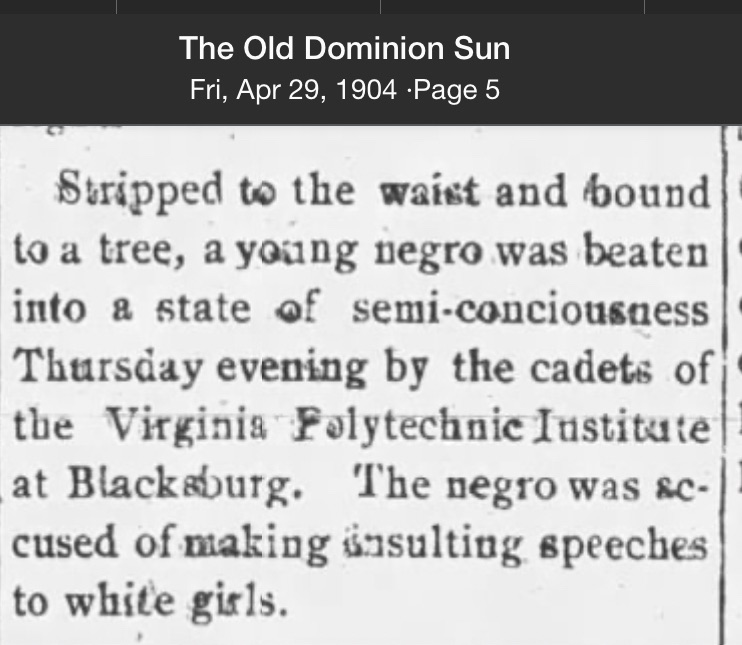
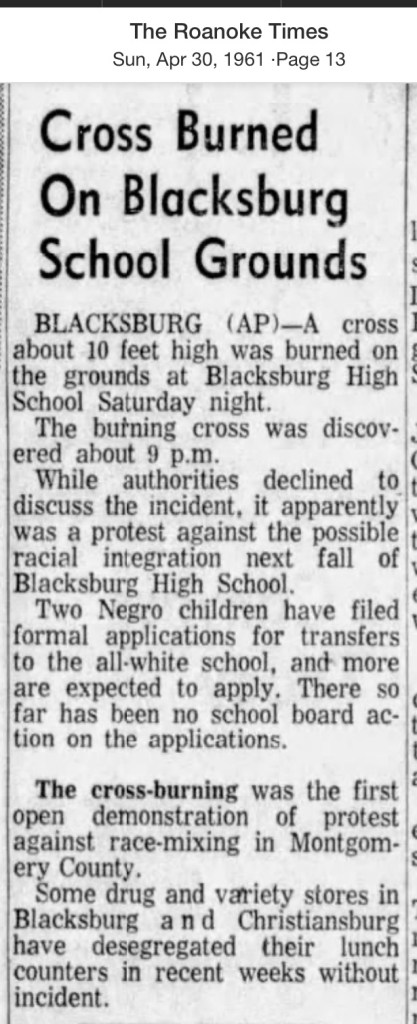
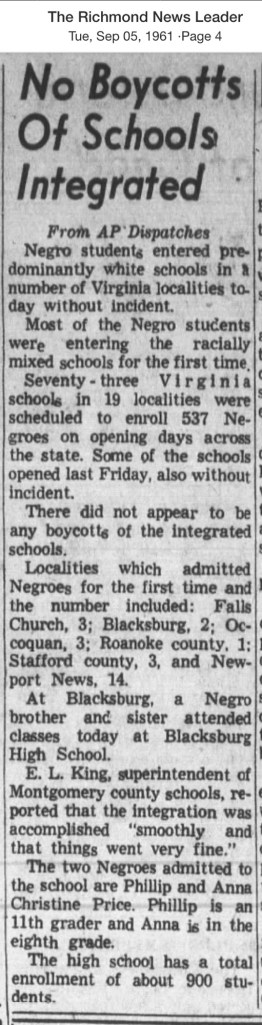
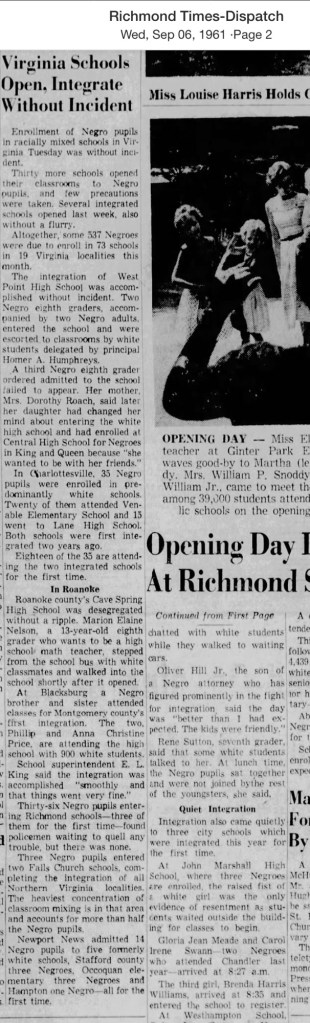
That September, Phillip and Ann Christine Price became the first Black students to integrate Montgomery County schools when they walked into Blacksburg High. According to researcher Tracy A. Martin, they were not alone—their white neighbors walked beside them in solidarity. This act of courage followed a chilling warning: on April 29, 1961, a ten-foot burning cross had been discovered on the school grounds, South Main Street.

In 1962, the school board again delayed the application process for two more students seeking admission. Yearbooks from 1961–1964 suggest that the Price siblings were the only African American students at Blacksburg High during those early years. In the years that followed, more students of color began to appear in the yearbooks. By 1966, the school board closed Christiansburg Institute, and all of the county’s white high schools were finally opened to every student.

Newspaper Articles

April 1961

July 1961

August 1961

September 1961

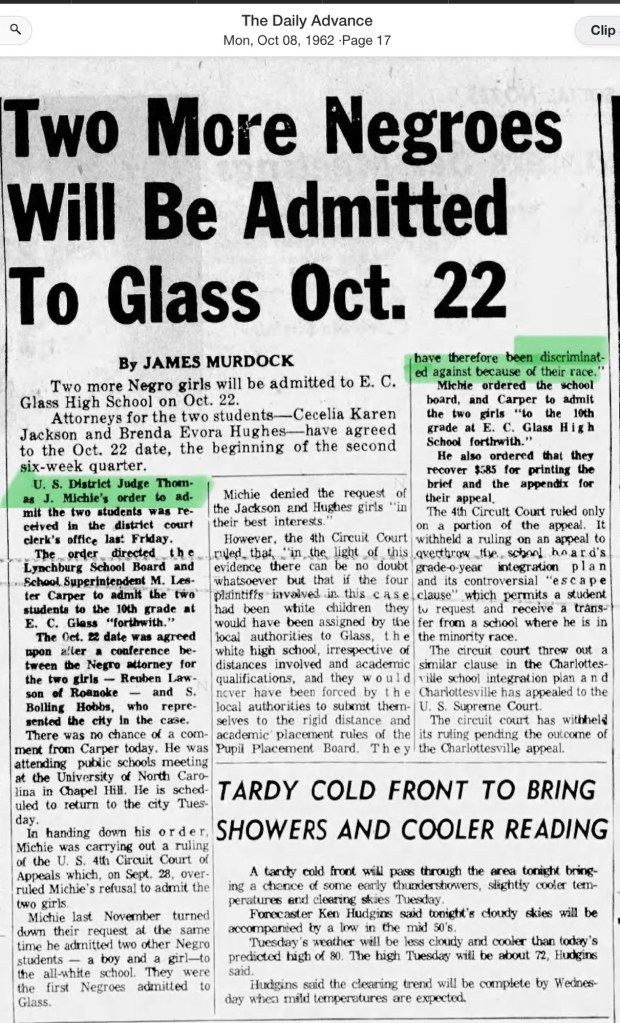
1962 Application of Two Young Women, the Courts Ruling

Montgomery County Resources

Montgomery County, Virginia Resources and the Formation of the County Over Time

National Register of Historic Places Application – 1989

National Register of Historic Places Application – 1989

This searchable document is a rich source of information about the county and its wider connections. For example, it notes that the New River boatmen once lived on Kent Farm, where they were enslaved by James Randle and Margaret Cloyd Kent prior to emancipation (see page 13). Additional details about Kentland and these freedmen can be found in the following postings: Historic Kentland and Historic Wake Forest

The names of some of the black boatmen of 19th-century Montgomery County include Frank Bannister (who was a boatman on the James River before the Civil War), Calvin Bannister, Roland Stuart, George Brown, and Lewis Smith.


Montgomery County Reconnaissance Level Survey, 1986

This report that was written by Gibson Worsham, Dan Pezzoni, Charlotte Worsham, David Roenizer, and others. It addresses the following: 1) Overview of the county’s history, 2) A comprehensive inventory of significant structures and sites in the county and 3) Maps delineating the location of said structures and sites. Similar to the report above, this is a wealth of information about the county.


More information can be found on this website: Gatherings Blacksburg History


The Formation of Montgomery County, Virginia and Why it Matters to African American History of the Region

When Virginia’s earliest European colonial settlers first pushed westward beyond the Blue Ridge Mountains, they entered the border lands already inhabited by Native peoples for thousands of years. As Europeans laid claim to these territories in the 18th century, Virginia’s county boundaries began shifting rapidly to keep pace and the need for local governance.

At first, all of western Virginia was considered part of vast counties based far to the east. Augusta County, created in 1738, stretched from the Blue Ridge to the Mississippi River—a landmass so large it was nearly impossible to govern effectively. As settlement expanded, Augusta was gradually carved into smaller counties.

Botetourt County was created in 1770 out of Augusta, and just two years later, in 1772, Fincastle County was formed to cover the far southwest. But Fincastle itself was short-lived: in 1776, it was split into three new counties—Montgomery, Washington, and Kentucky (the latter eventually becoming the Commonwealth of Kentucky).

Thus, Montgomery County was officially established in 1776, named in honor of General Richard Montgomery, a Revolutionary War hero.

Like most early counties, Montgomery did not remain the same size for long. As population grew and communities demanded closer courts and local representation, Montgomery’s original boundaries were gradually reduced.

  • 1790: Wythe County was formed from Montgomery.
  • 1790: Parts of Montgomery contributed to the creation of Kanawha County (now in West Virginia).
  • 1806: Giles County was carved from Montgomery, Monroe, Wythe, and Tazewell.
  • 1831: Montgomery giving land to Floyd
  • 1839: Montgomery giving land to Pulaski
  • 1892: City of Radford

By the mid-19th century, Montgomery County had taken on the approximate shape we recognize today.

Why This Matters

Tracing these changing boundaries shows how the western border lands of Virginia evolved from a vast Indigenous landscape into the network of counties we know today. When we study Montgomery County’s formation and its changing borders, we are not only tracking political geography—we’re also uncovering how those shifts shaped the daily realities of enslaved people and freedmen. The “line on a map” often meant the difference between where families were recorded, where they could live, and how they could begin to claim freedom and opportunity.

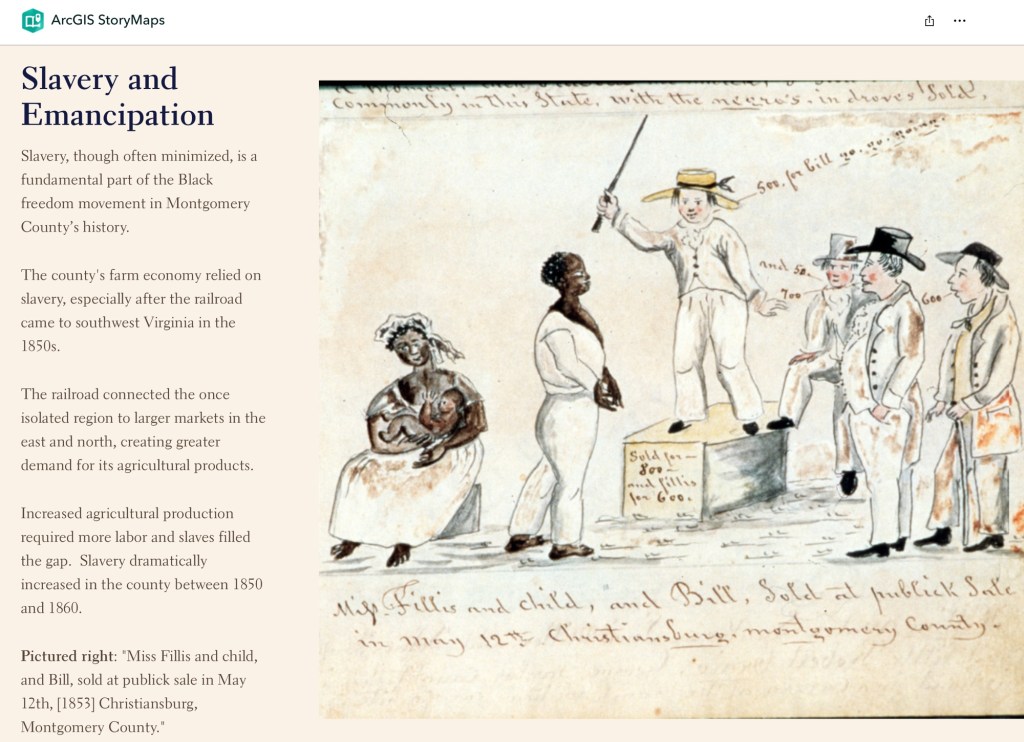
County seats like Christiansburg were not only centers of trade and government but also of the slave market and the courthouse records that tracked the lives of enslaved people. After emancipation, those same courts became the places where freedmen registered marriages, secured contracts, and sought land. As county lines shifted, so too did the jurisdictions that controlled access to justice, opportunity, and community life.

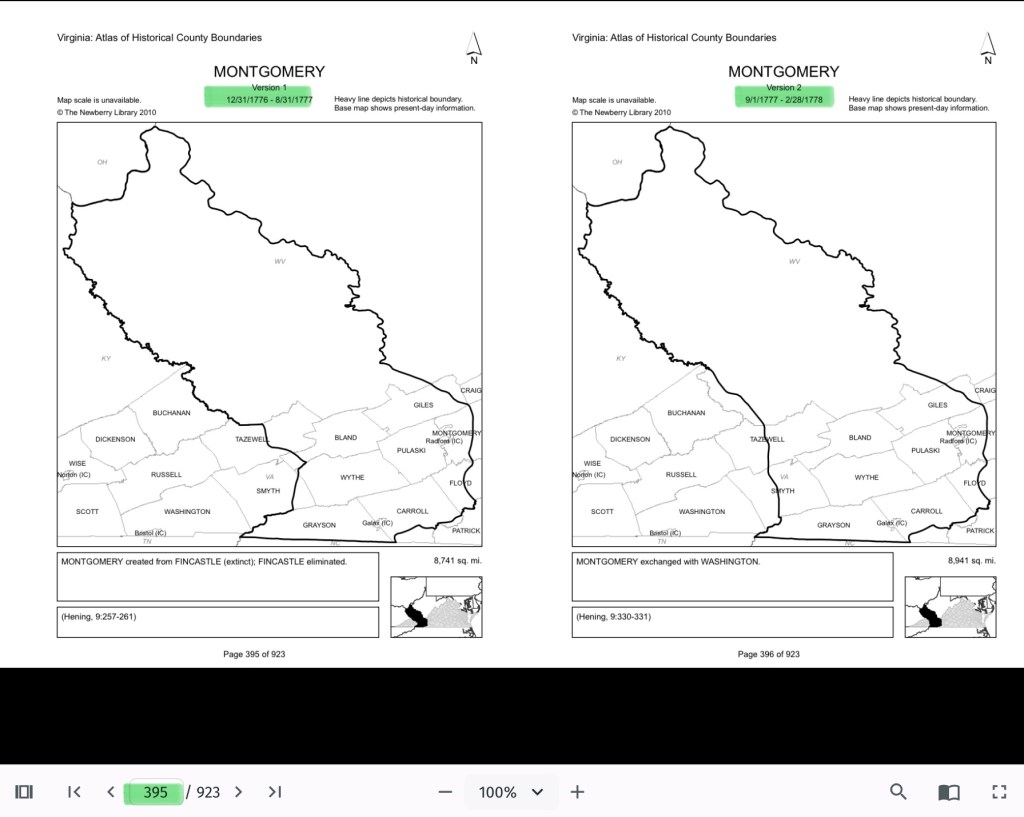
The flip book of maps below is a helpful resource to understand how the boundaries changed with time. Begin on page 395.

Virginia Atlas of Historical County Boundaries

Preserving History: Christiansburg Institute’s Inc. Story Map Project

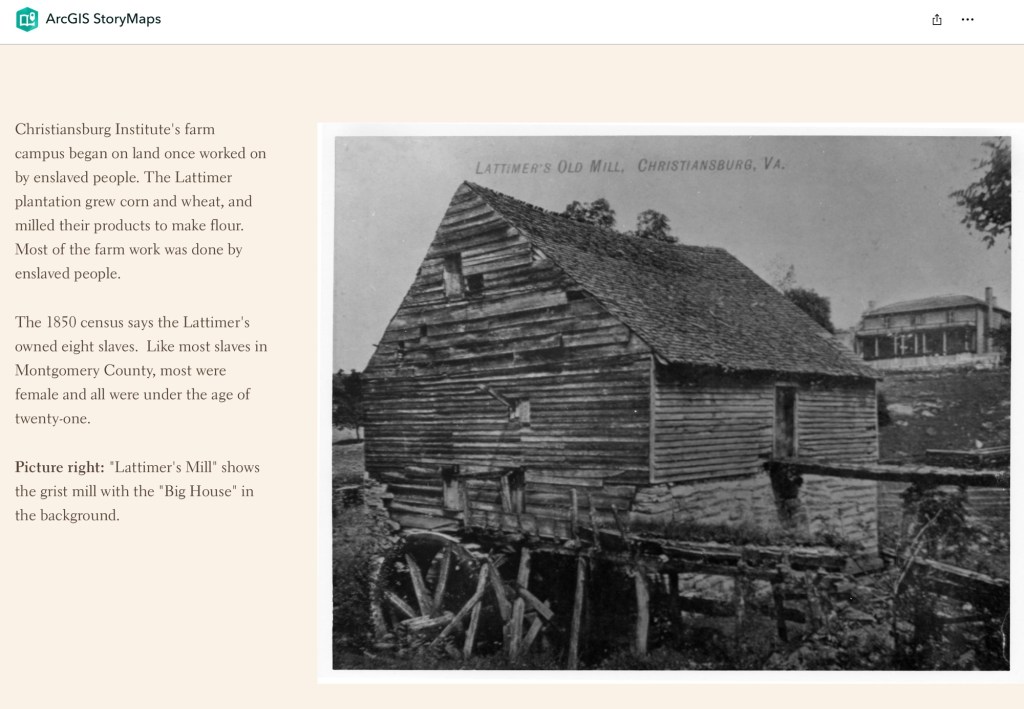
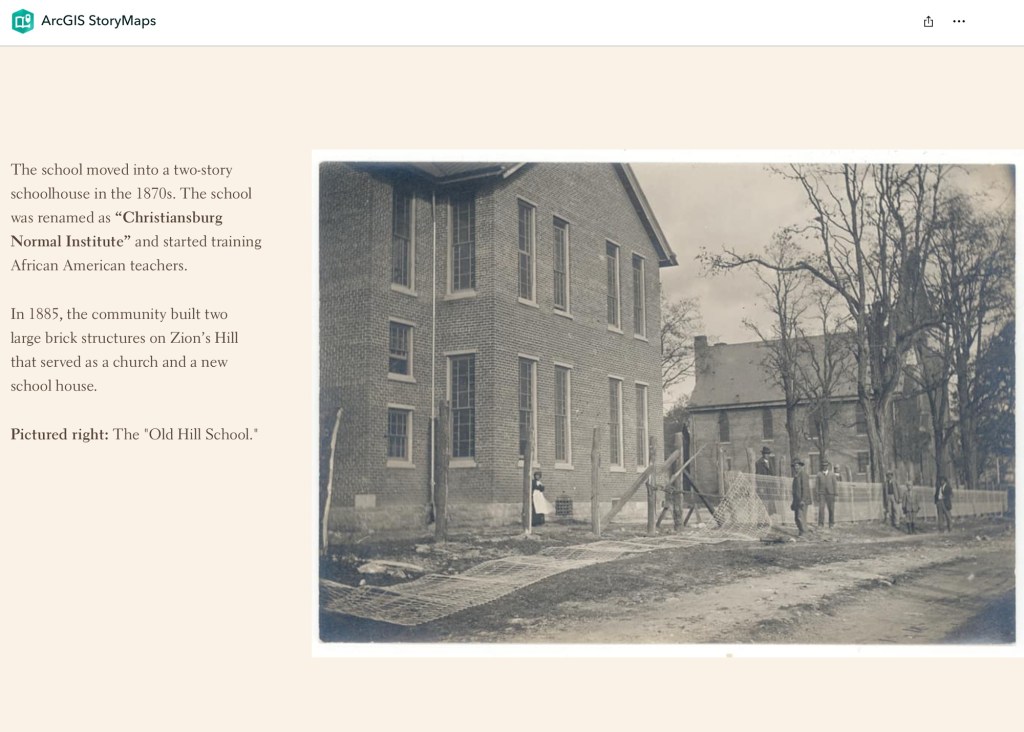
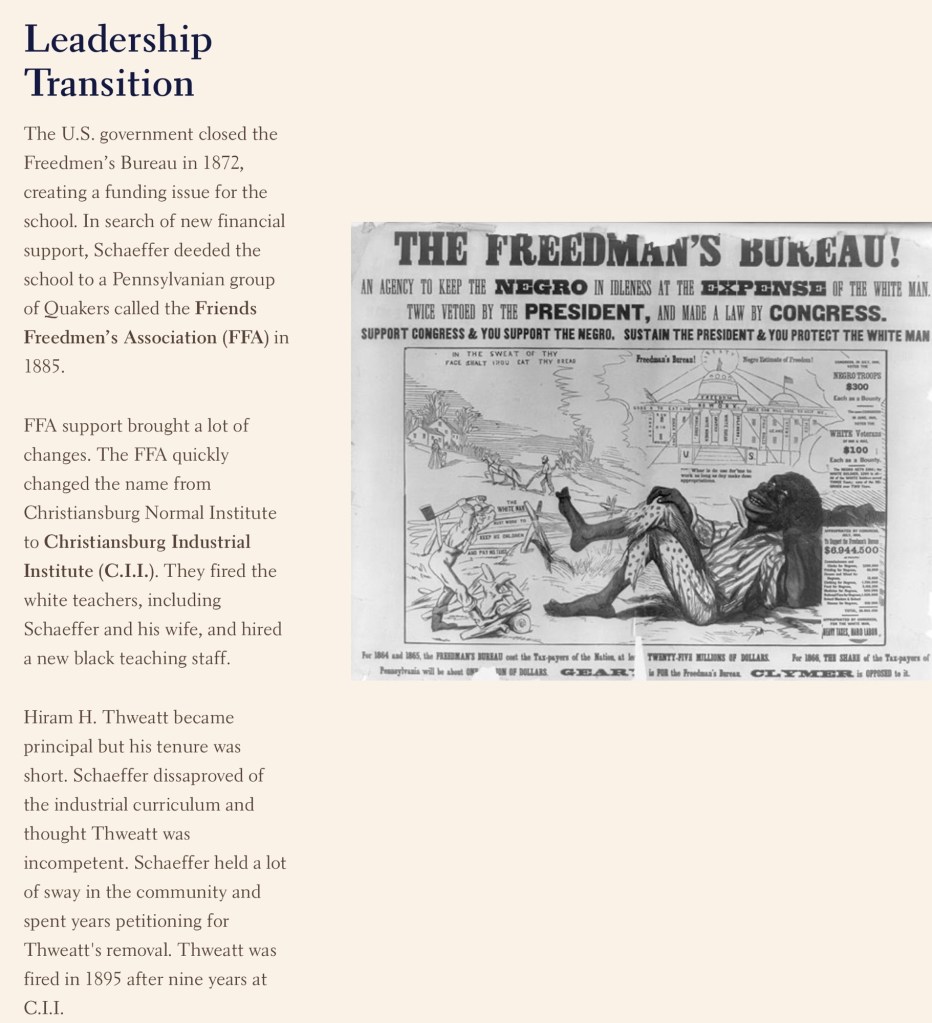
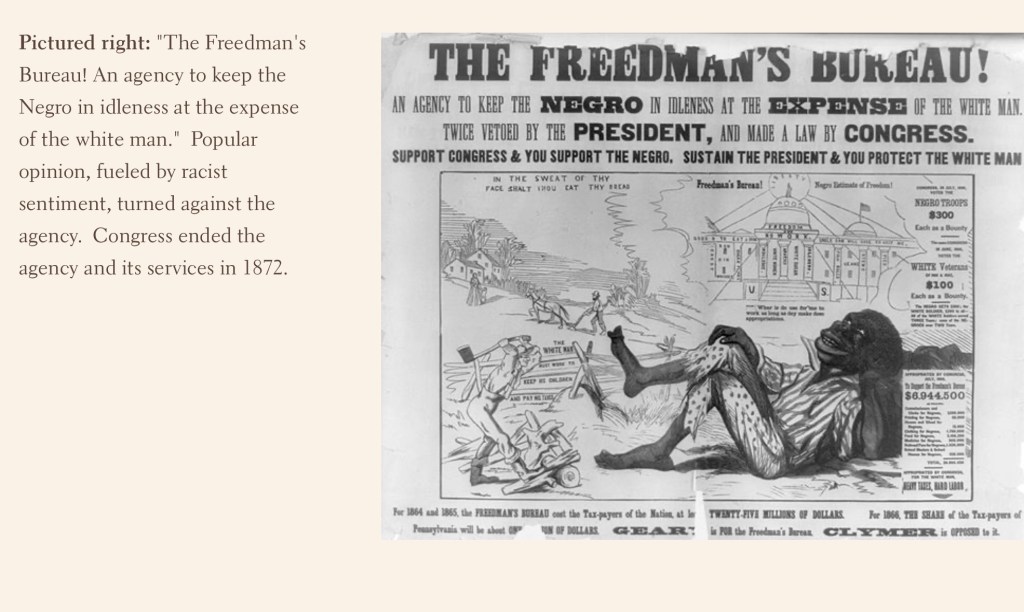
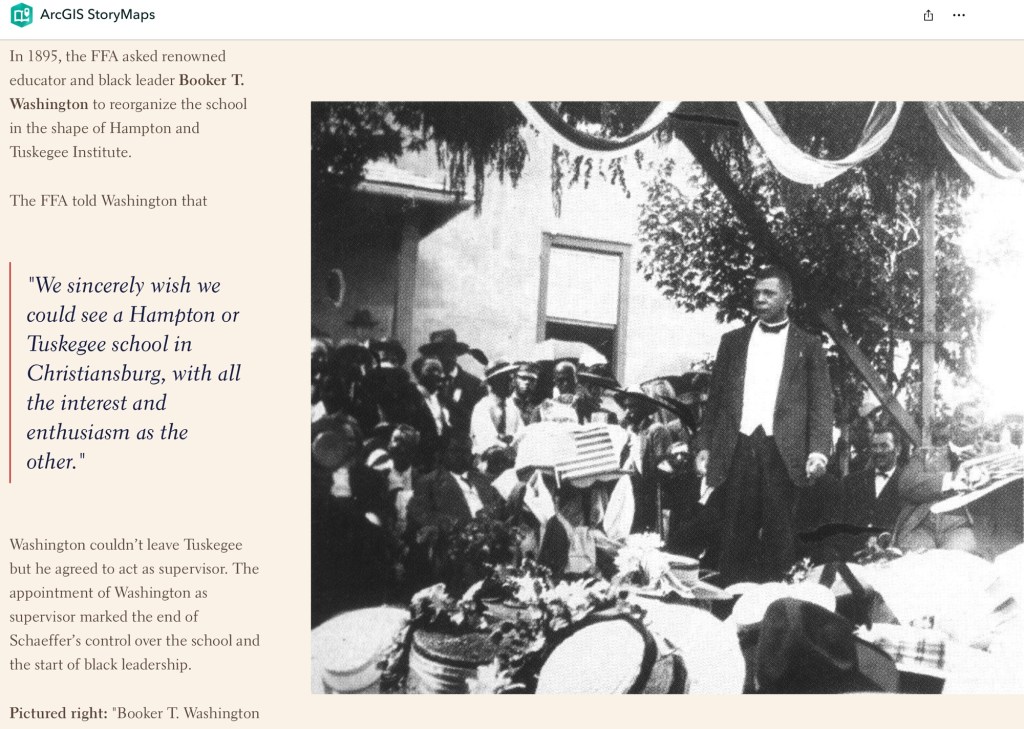
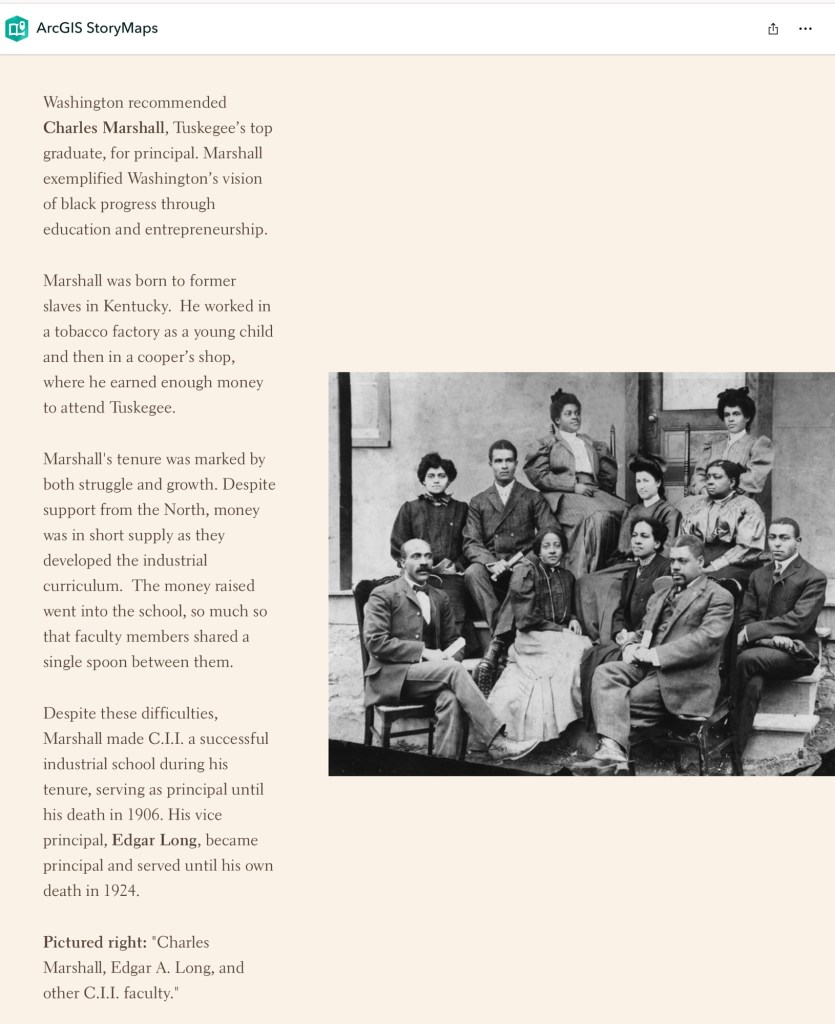
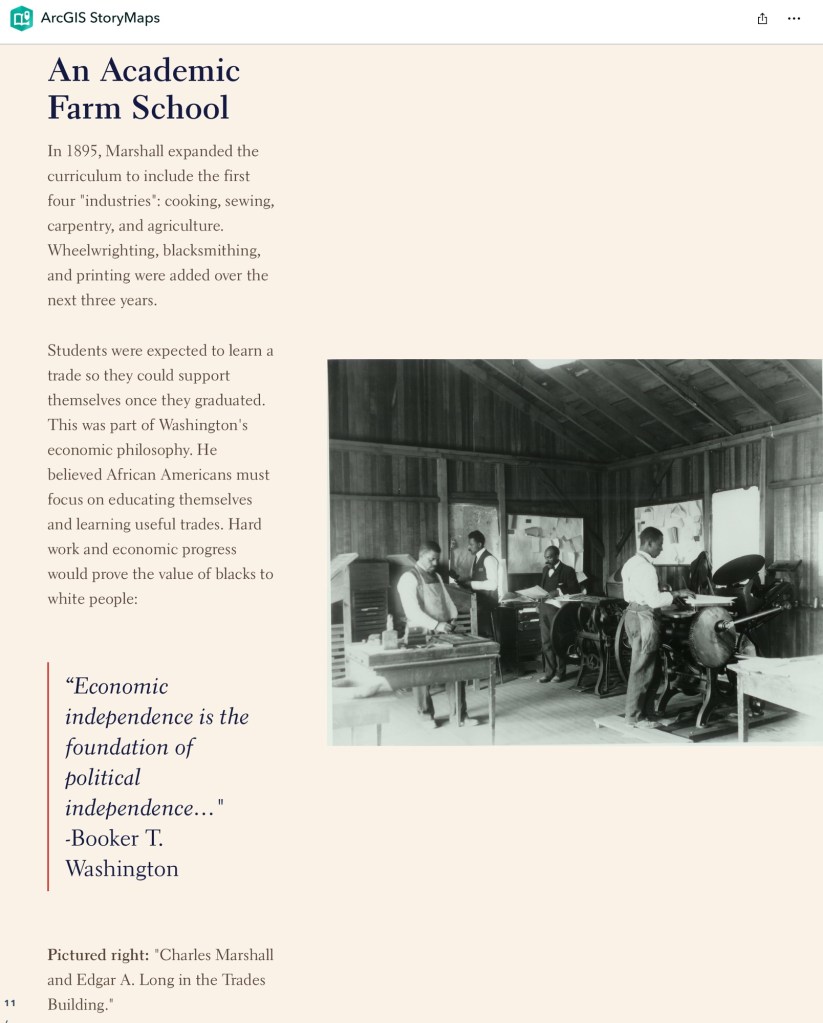
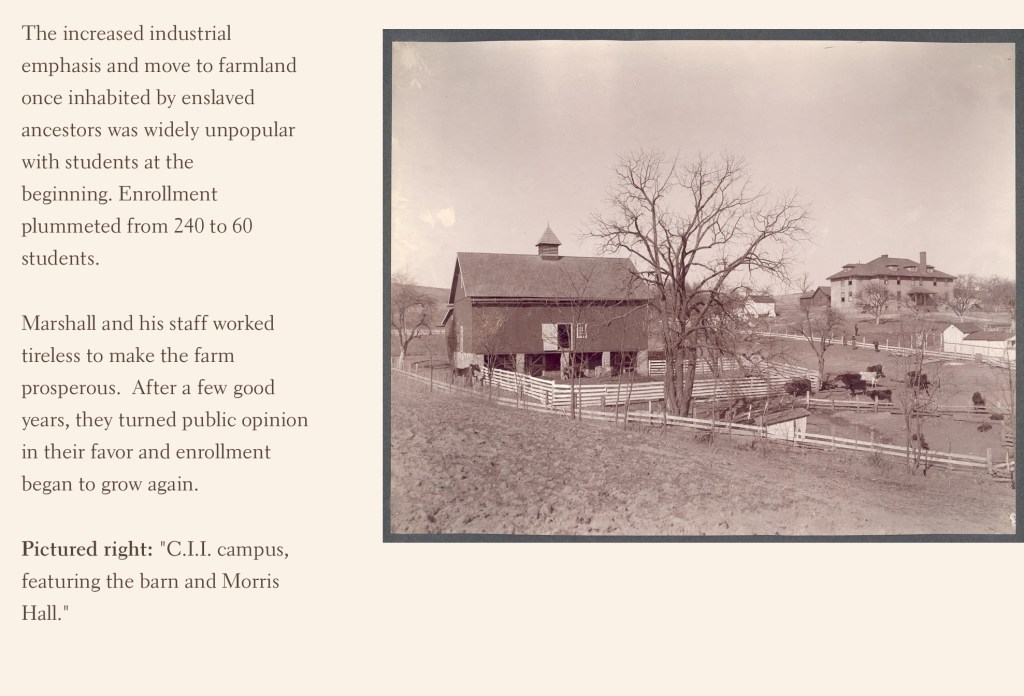
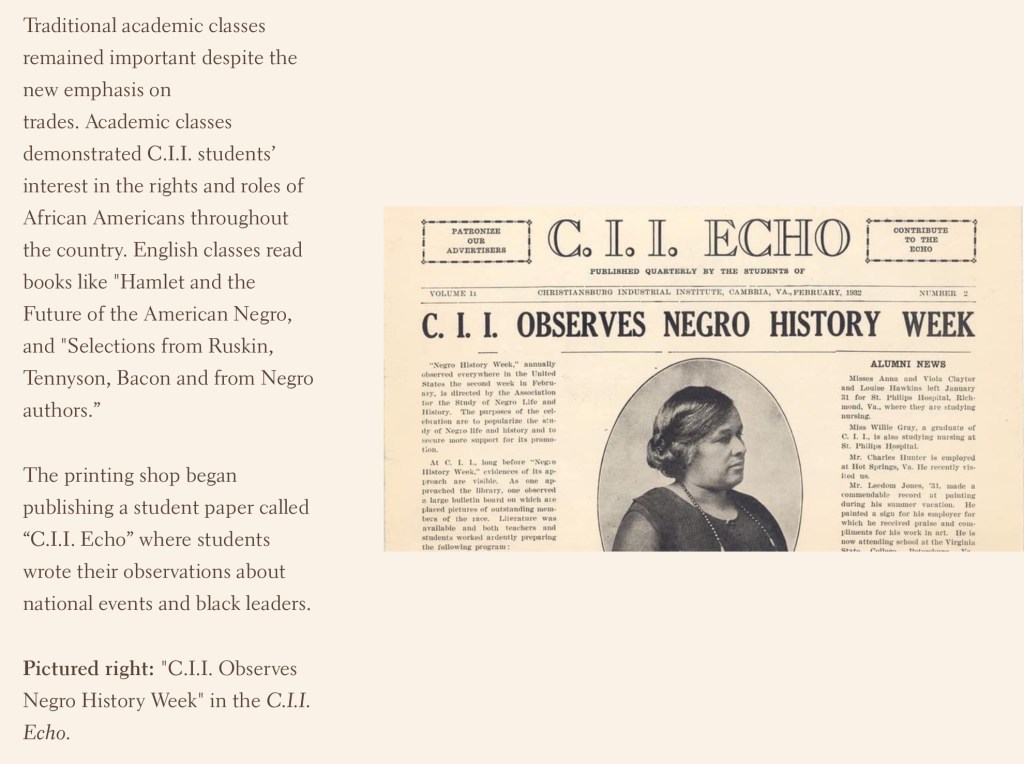
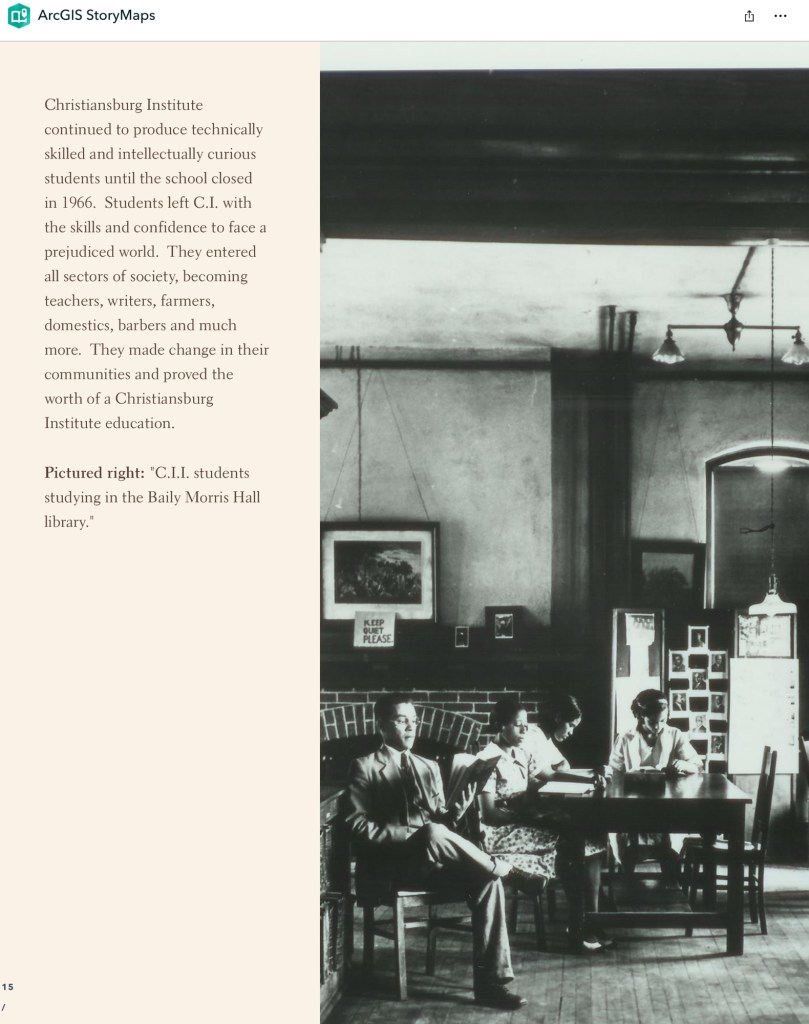
This digital exhibit is a thoughtfully crafted visual timeline highlighting the school’s key milestones and the individuals who shaped its legacy. This work honors the strength, resilience, and vision of the Black community in Montgomery County during the Reconstruction era and beyond.

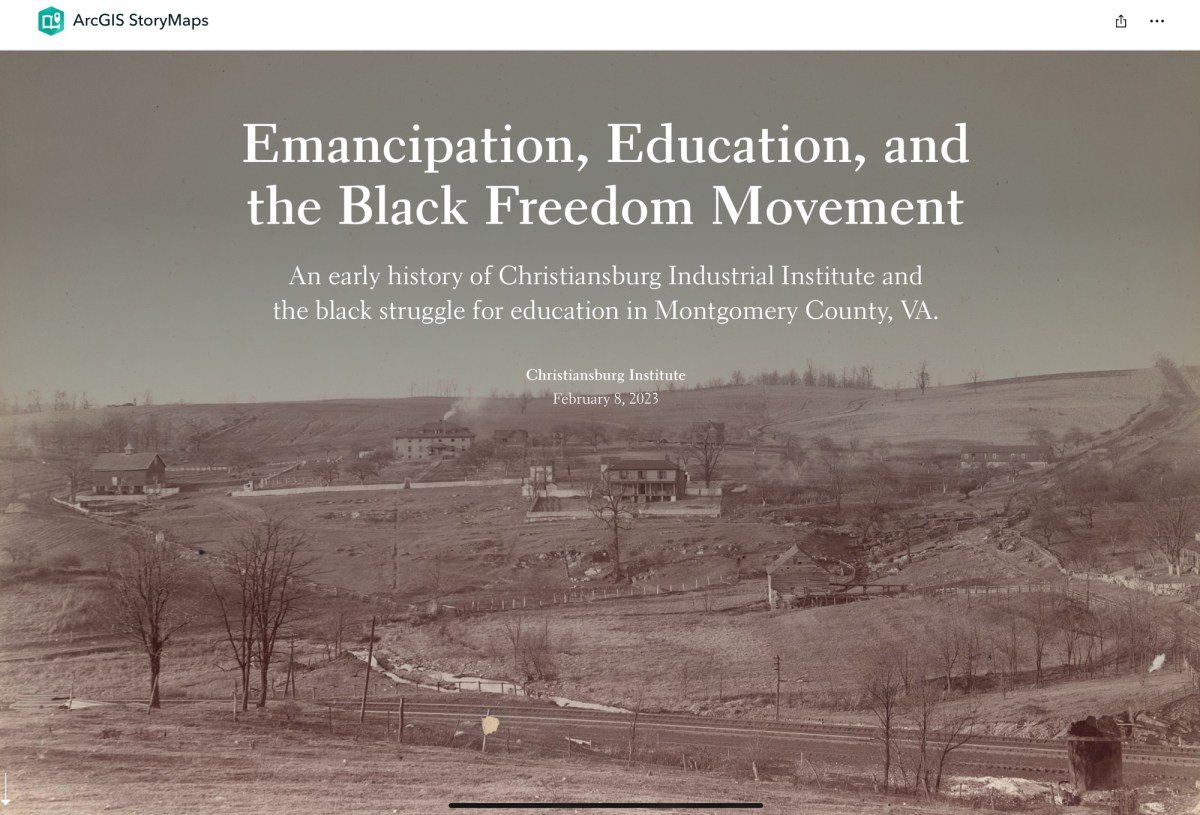
Christiansburg Institute, Inc. has developed an important ArcGIS Story Map that traces the powerful history of the Christiansburg Industrial Institute—an African American school founded between 1866 and 1867 by local freedmen with support from Charles S. Schaeffer, a representative of the Freedmen’s Bureau.

This digital exhibit was curated by Demiah Smith, who thoughtfully crafted a visual timeline highlighting the school’s key milestones and the individuals who shaped its legacy. Her work honors the strength, resilience, and vision of the Black community in Montgomery County during the Reconstruction era and beyond.

To ensure the preservation of this work—especially after Christiansburg Institute, Inc. lost critical funding from the Institute of Museum and Library Services and the National Endowment for the Humanities—we’ve captured and archived the Story Map as images. This way, Demiah’s contribution and the vital story of CI will remain accessible even as the organization faces serious challenges due to the loss of federal support during the DOGE-era funding cuts.

We remain committed to uplifting and preserving this history. Stay tuned as we continue to find ways to support the legacy of the Christiansburg Institute and the people who made it possible.

Christiansburg Industrial Institute, Hill School and the Schaeffer Memorial Baptist Church – 1913 Sanborn Fire Map

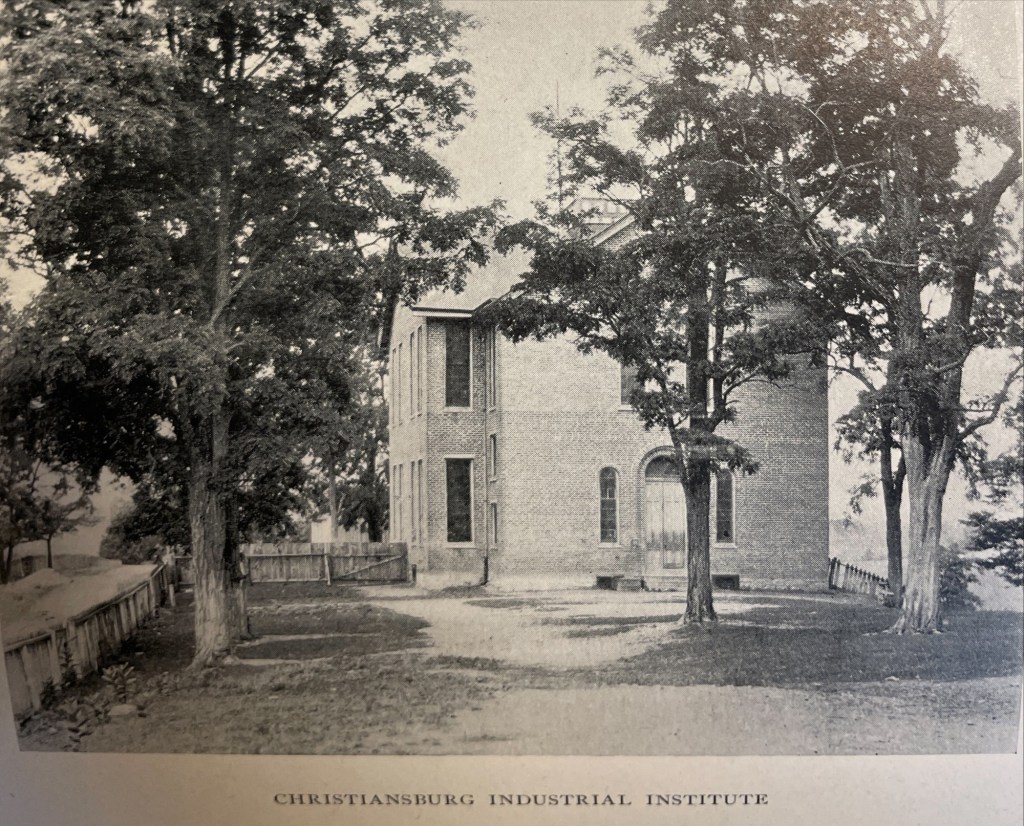
The Sanborn Fire Insurance maps are often the only early glimpse of buildings in rural towns over time. Christiansburg Industrial Institute moved from the Zion Hill location to the Lattimer Plantation site, north west of Christiansburg, at the turn of the 20th Century. This Sanborn Fire Insurance Map from Christiansburg, Montgomery County, Virginia was published by the Sanborn Map Company, dated Sep, 1913. The key to the maps is at the end.

1913 Christiansburg Industrial Institute

1913 Sanborn Fire Insurance Map (Courtesy of the Library of Congress)

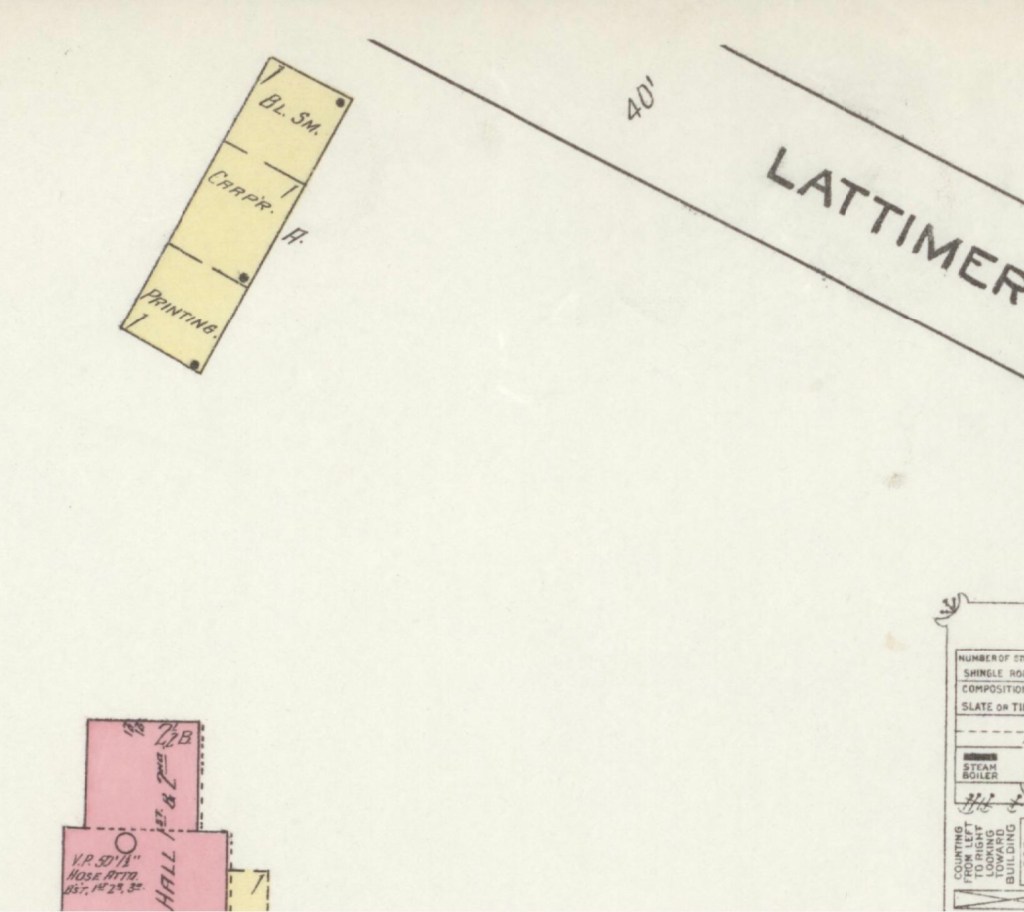
The map is of Christiansburg Industrial Institute, situated north west of Cambria and north of Christiansburg courthouse. Note that frame constructed buildings are coded yellow and red for the solid brick building. The Baily Morris Building which housed the girls dorm, assembly hall, dinning hall and kitchen (close-up below) is heated by steam and lighted by electricity.

“Baily-Morris” Building

The Morris Hall Boys’ Dorm is both red and yellow, denoting built of a combination of building materials. The building is heated by hot water and lighted by electricity. Note that the buildings were supplied with water by 2,500 ft of pipes connected to the 10K gal water tank on the hill. The tank is filled by a Worthington Pump, moving water from a spring.
The girls and boys dorms were named for two Friends’ of the Freedmen of PA, Elliston P. Morris and Joshua L. Baily. They also donated money to construct the water system which was installed in 1907, before either Christiansburg or Blacksburg had a community water system. (A Vision of Education, Selected Writings of Edgar A. Long, Anna Fariello, Ed. Christiansburg Institute, Inc. 2021, pg 86,)

The Lattimer Mansion House, wood framed, was heated by stove and not connected to the water supply. The house was used as classrooms. Note the printing, carpenter and black smith shop close to the entrance road.
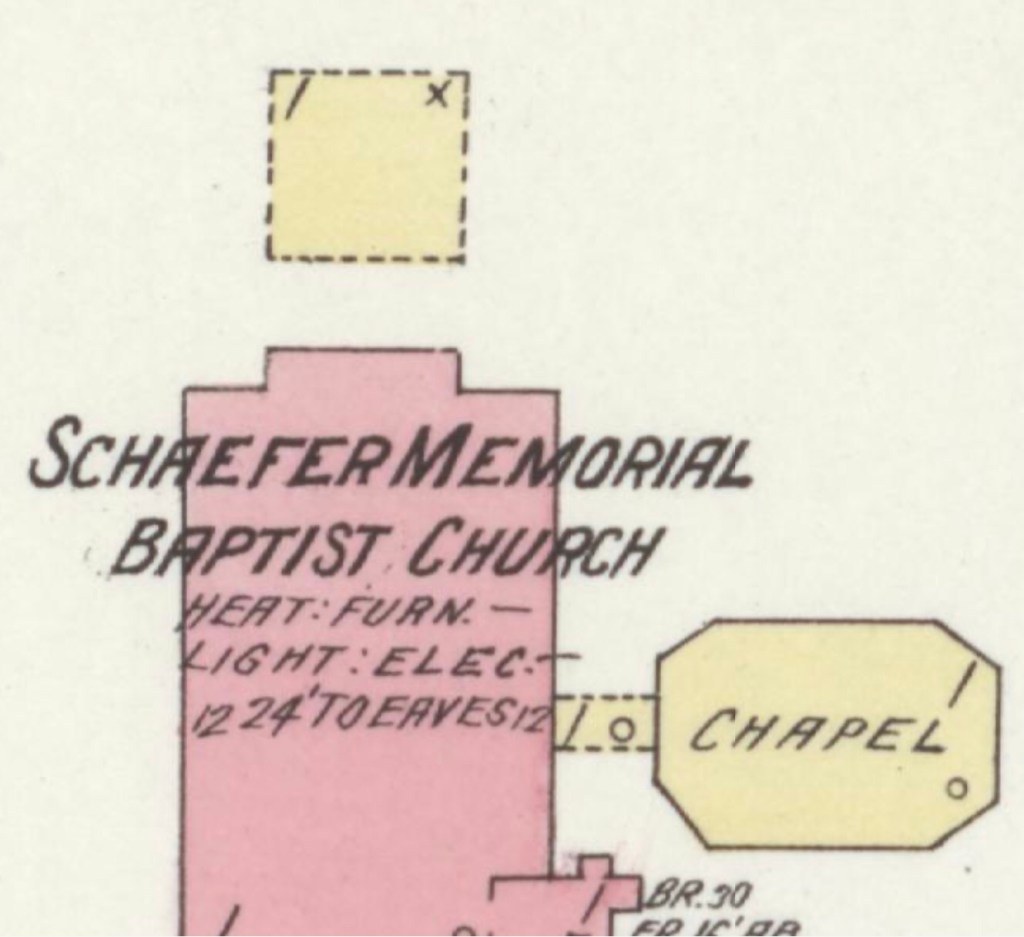
1913 Hill School & Schaeffer Memorial Baptist Church

1913 Sanborn Fire Insurance Map (Courtesy of the Library of Congress)

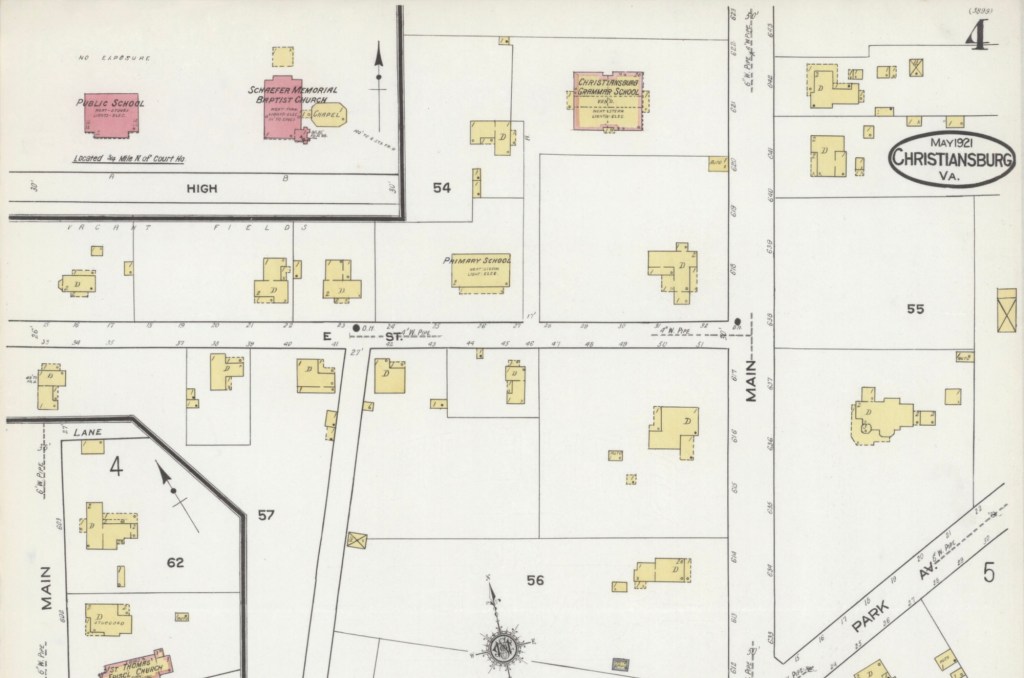
This map is of Zion Hill which is located on the ridge (now High Street) between Cambria and Christiansburg. The brick (red) “Public School” housed the Christiansburg Industrial Institute before that secondary school moved to the Lattimer Plantation property by the turn of 20th century. This brick school, built by 1885, was converted to a primary school for African American children after CII moved. As noted by the Sanborn map, the building was heated by stoves and lighted by electricity.

Image of the Hill School from The Story of a Consecrated Life, Commemorative of Rev. Charles S. Schaeffer by CH Harrison, 1900. High Street is visible.

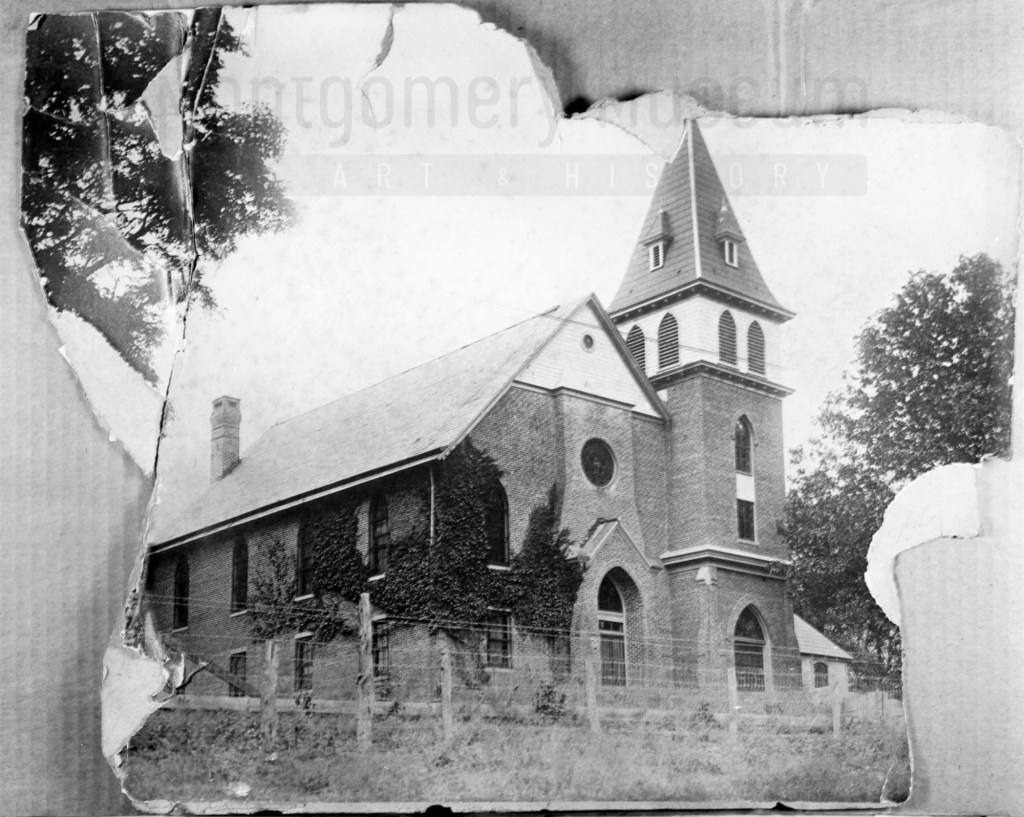
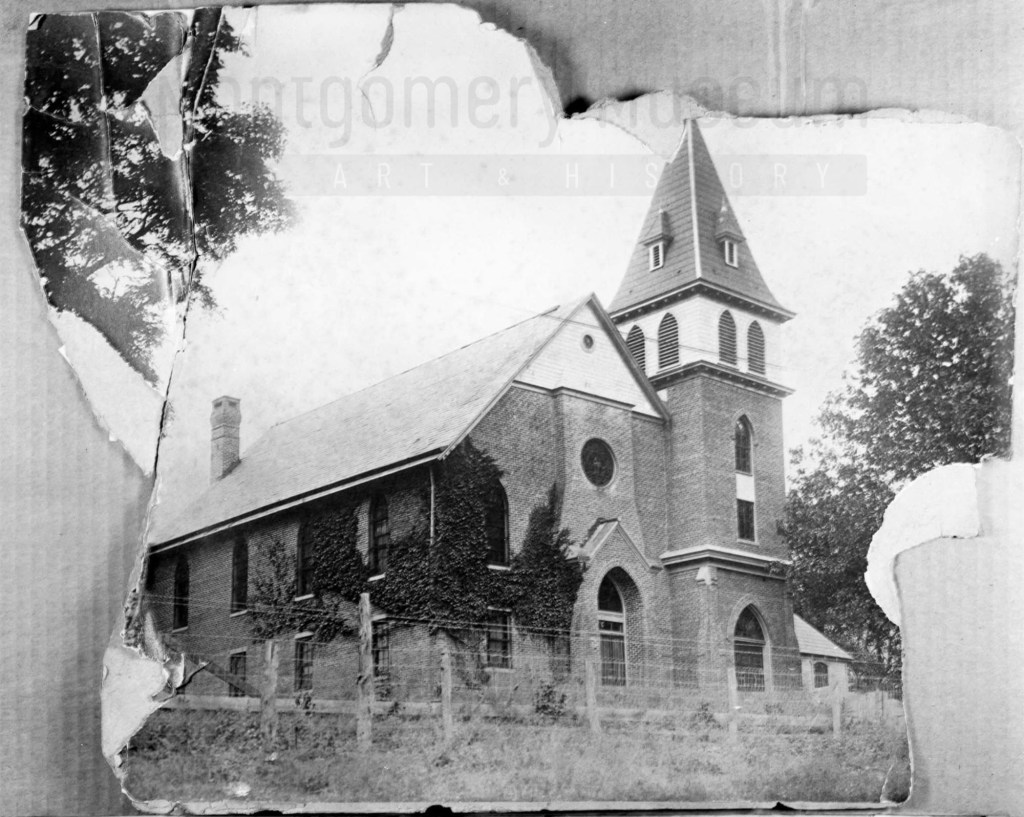
The Schaeffer Memorial Baptist Church is also of brick and built by 1885. Charles S Schaeffer’s memorial brass plaque were unveiled 1 October 1899, after he died in May of that same year. Note the frame chapel to the left (east) of the brick structure.

Image of Schaeffer Memorial Baptist Church from The Story of a Consecrated Life, Commemorative of Rev. Charles S. Schaeffer by CH Harrison, 1900. High Street is visible in the foreground.

On the Sanborn map, note the small frame, 1 story building behind the church? This may be the first school/church building on Zion Hill. The deed (DB S, pg 12, Oct 1868) and Harrison, 1900 * note the existence of this building. The brick school on the 1913 Sanborn map was the third version of this school at this site. The second school on Zion Hill was a 2 story & frame building, used between 1974 and 1885. (The rented Campbell house was the first school but it was not located on Zion Hill.)*

The image of the small school/meeting house shows a one story frame building with hip-roof and double stove-pipes. The dressed limestone block foundation was typical in this area and seen on buildings dating from early 1800s to the turn of the 20th century.

Image of the first school house on Zion Hill from The Story of a Consecrated Life, Commemorative of Rev. Charles S. Schaeffer by CH Harrison, 1900. High Street is visible in the foreground.

* The images and much of the information about Zion Hill comes from The Story of a Consecrated Life, Commemorative of Rev. Charles S. Schaeffer by CH Harrison, 1900.

The last interesting note about the Sanborn map is that the church was 160 feet to the Fire Department. The map did not indicate a source of water.

Deeds to Zion Hill, between the Depot and Christiansburg, VA

Captain Charles S. Schaeffer arrived in Christiansburg soon after the emancipation of enslaved people of Southwestern Virginia. In April 1866 he was appointed as an agent of the Bureau of Refugees, Freedmen, and Abandoned Lands (referred to as the Freedman’s Bureau). Schaeffer was US soldier who asked for to be assigned as an agent in Southwestern Virginia. He was assigned to Giles and Montgomery Counties, with headquarters in Christiansburg, VA.

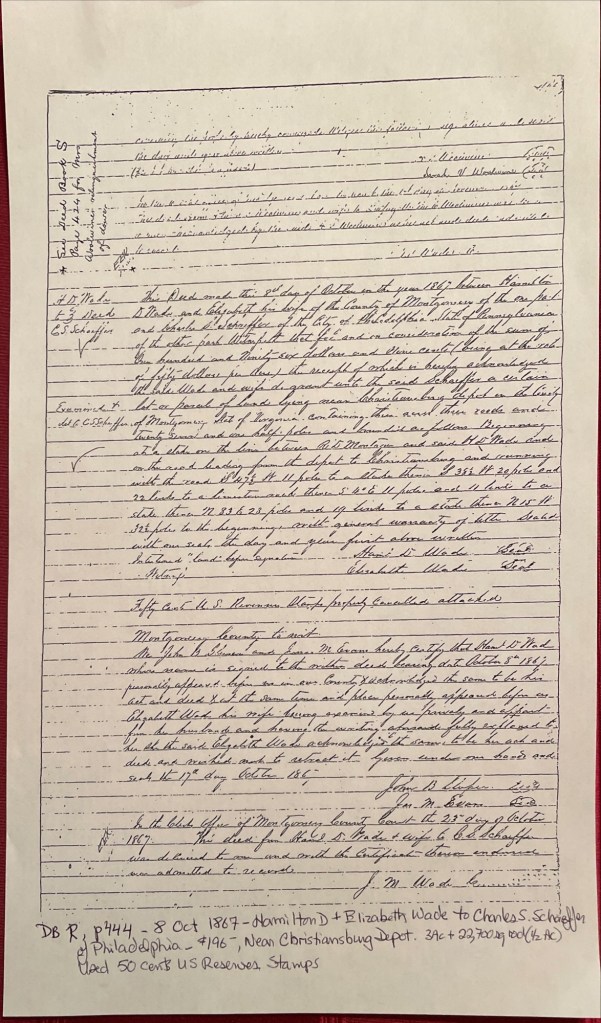
October 8, 1867, Hamilton D. and Elizabeth Wade sold Schaefer about 3.5 acres for $196 on a road leading from the Depot (Cambria*) to the town of Christiansburg (deed book R, pg 444). It is upon this land that Schaefer built a home of stone on the western portion and called it Zion Hill.

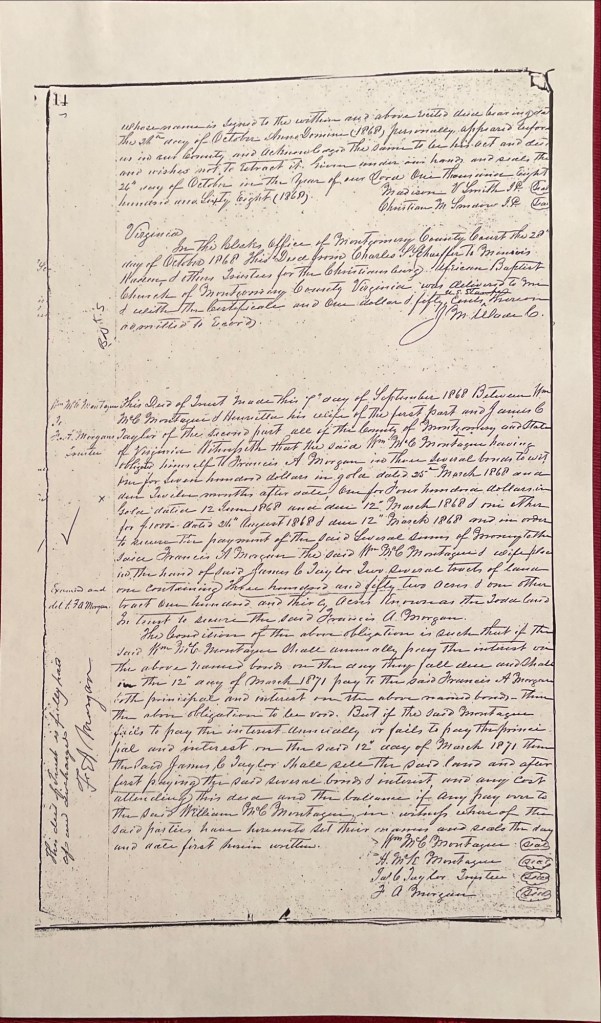
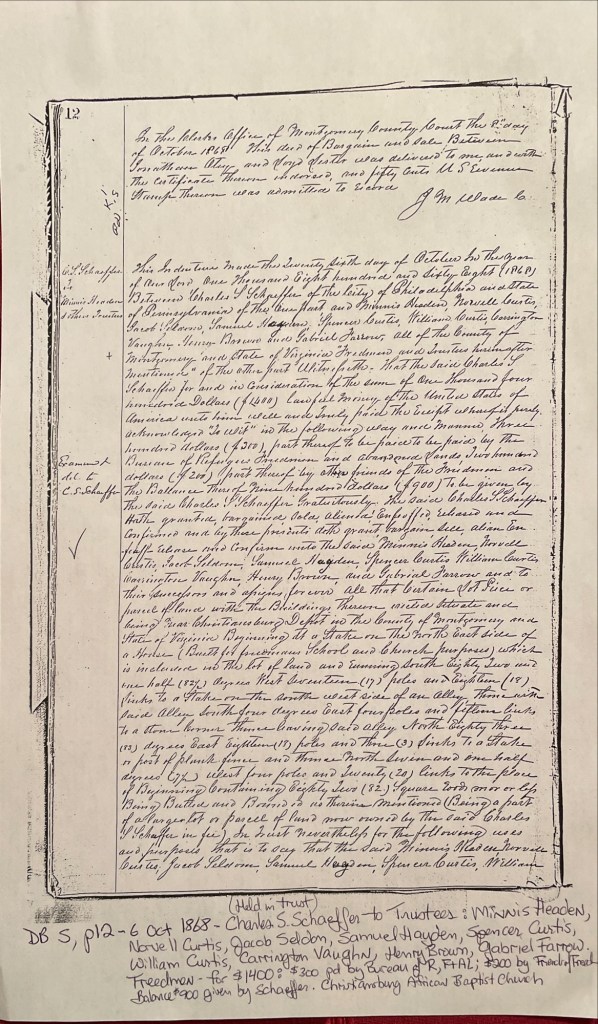
About one year later, October 6, 1868, Schaeffer deeded about a half an acre to the Trustees to be used as a school and the Christiansburg African Baptist Church (deed book S, pg 12). The Trustees: Minnis Headen, Norvell Curtis, Jacob Seldon, Samuel Hayden, Spencer Curtis, William Curtis, Carrington Vaughn, Henry Brown, and Gabriel Farrow. The cost of the land was $1,400. The Freedmen’s Bureau paid $300, the Friends’ of the Freedmen paid $200, & Schaeffer gifted the balance of $900. As noted in the deed a house was on the land, in use as a school and meeting house by the time of this deed. We believe this is the first school at this location. Schaeffer and the Trustees built two other structures with time.

Deed Book R, pg 444. Hamilton D. & Elizabeth Wade to Charles S. Schaeffer
Zion Hill – 1921 Sanborn Fire Map of Christiansburg with the School and Baptist Church in red (brick) at the top, left.

*The Depot was Bangs which then was named Cambria in the late 1890s.