Montgomery County, Virginia – Preserving Our Shared History
Category: Districts
Montgomery County was divided into districts early on and the information shared will be divided as such: Allegheny, Auburn, Blacksburg, & Christiansburg.
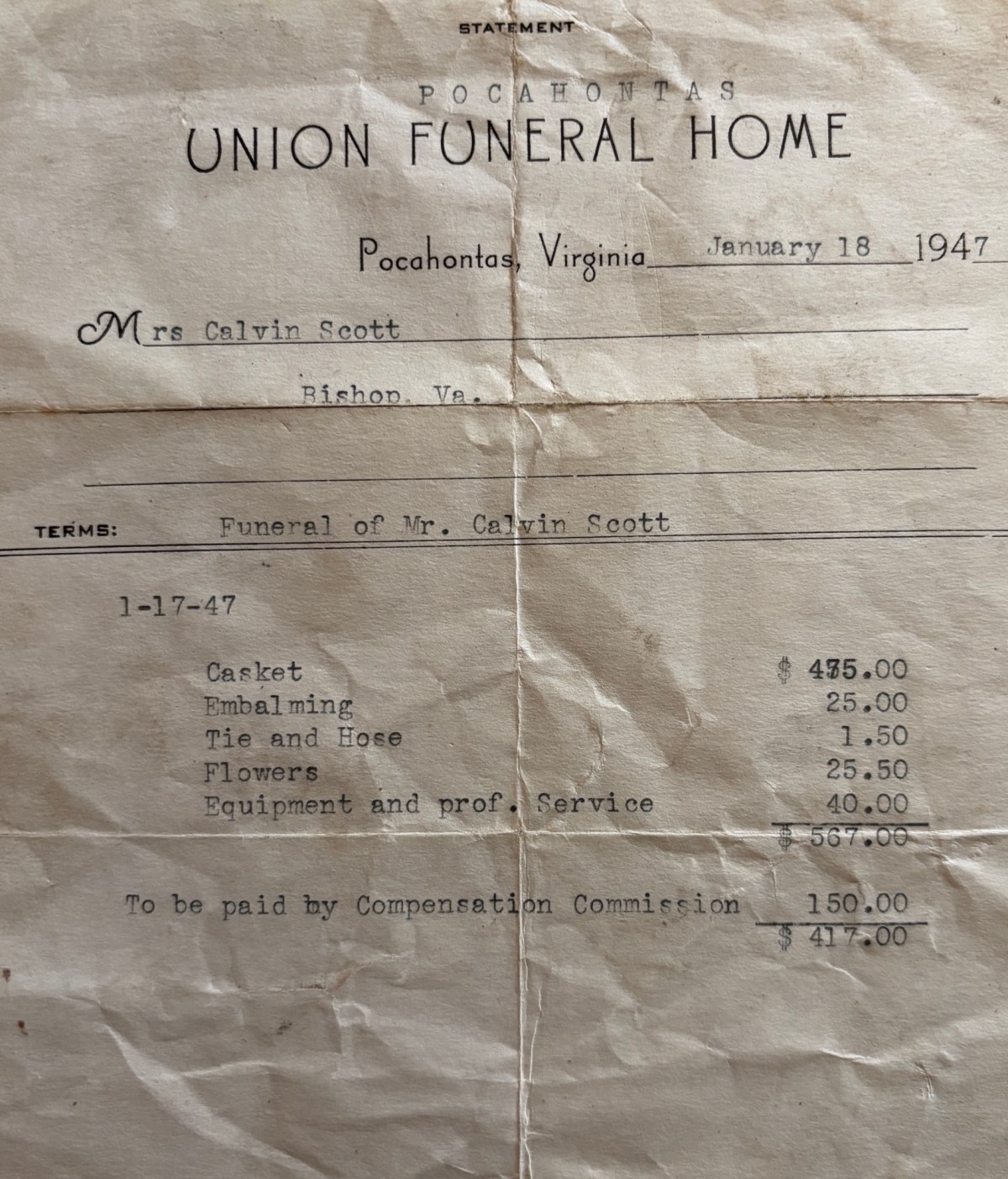
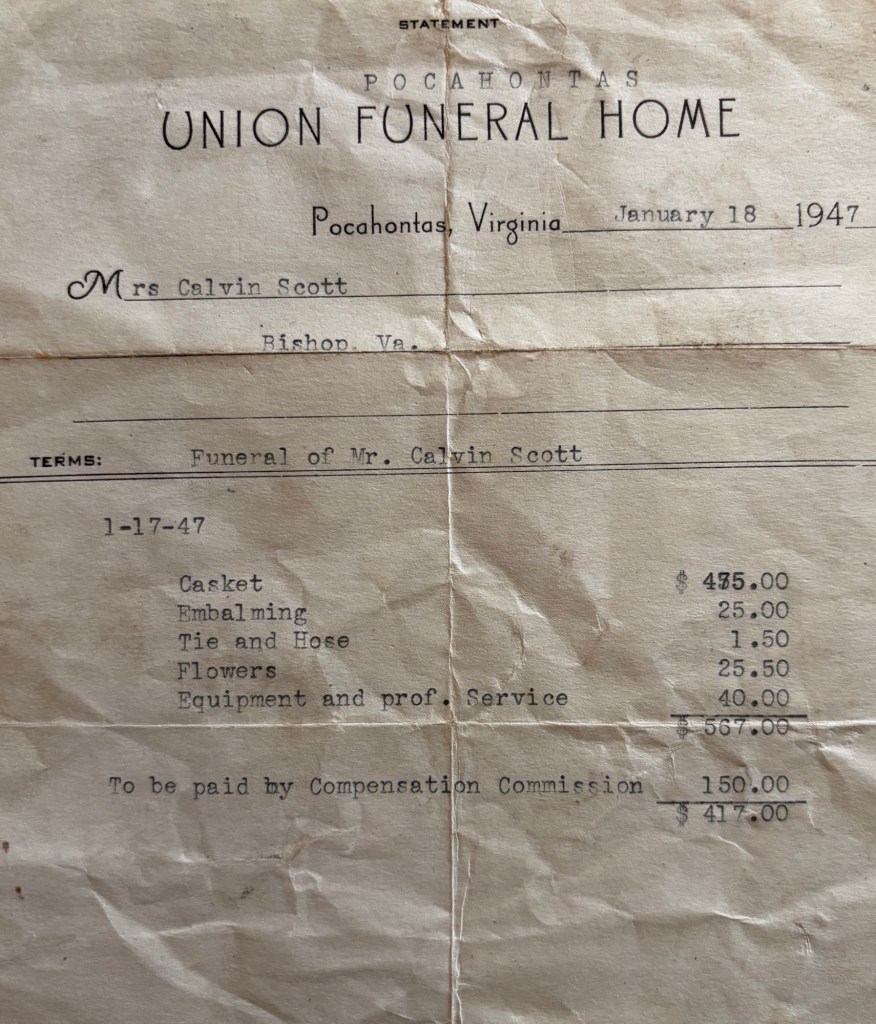
A 1947 funeral statement from Pocahontas, Virginia, reveals just how costly a funeral could be for working families. The $567 bill, equivalent to roughly $8,480 today, helps explain why mutual aid societies were so essential to Black communities across Central Appalachia.
What did it cost to bury someone in 1947?
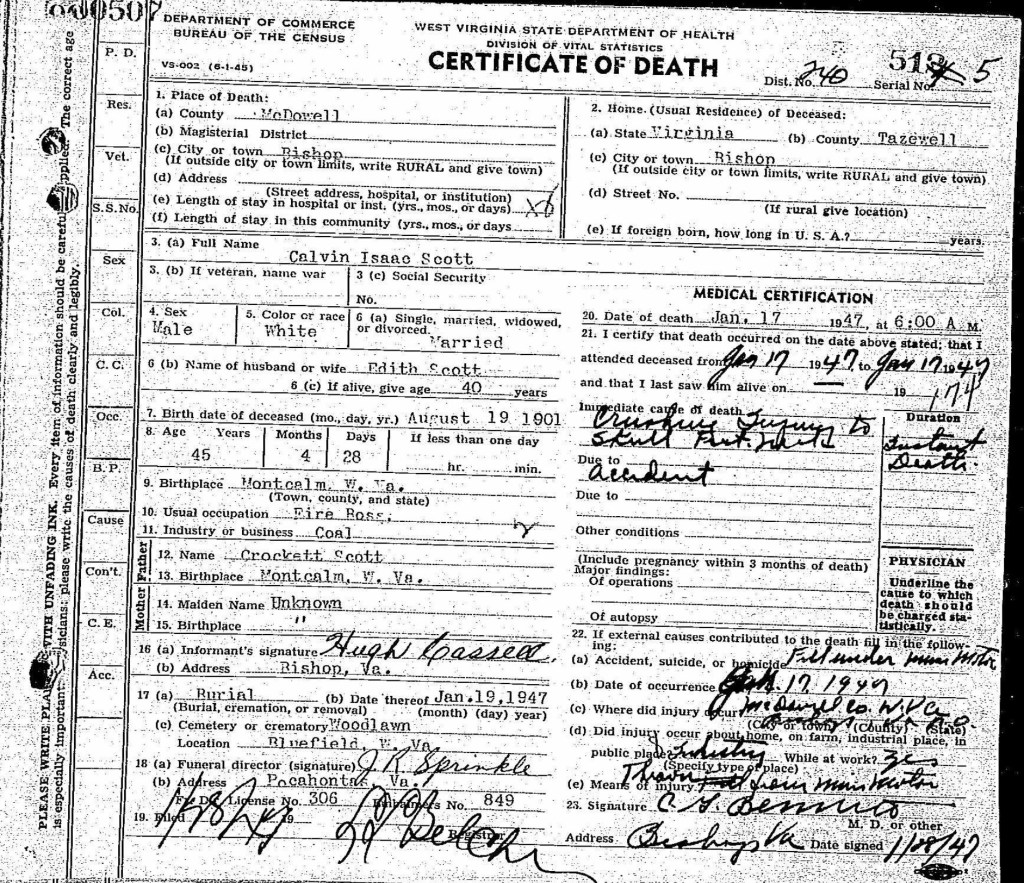
This funeral statement from Union Funeral Home in Pocahontas, Virginia, gives us a rare, detailed answer, while also preserving a small piece of the story of Calvin Isaac Scott and his wife, Edith Scott.
Calvin Isaac Scott, a 45-year-old coal mine fire boss, died on January 17, 1947, following a horrific mining accident. His death certificate records severe crushing injuries to his skull. The following day, January 18, 1947, Union Funeral Home issued this statement to his wife, Edith Scott of Bishop, Virginia.
The total funeral cost was $567, including:
Casket, $475 Embalming, $25 Tie and hose, $1.50 Flowers, $25.50 Equipment and professional service, $40
The Compensation Commission paid $150, leaving Edith Scott and the family with $417 to pay.
In today’s dollars, $417 in 1947 represents roughly $6,245 in purchasing power, while the full $567 would be approximately $8,480. Even a stripped down version of these funeral costs came to $500, equivalent to roughly $7,485 today.
For working families in Central Appalachia, that was a significant financial burden. And this is where the importance of Maggie L. Walker’s St. Luke, the Odd Fellows, and the Household of Ruth becomes even clearer. Mutual aid societies provided a financial safety net when families faced death, illness, and other hardships.
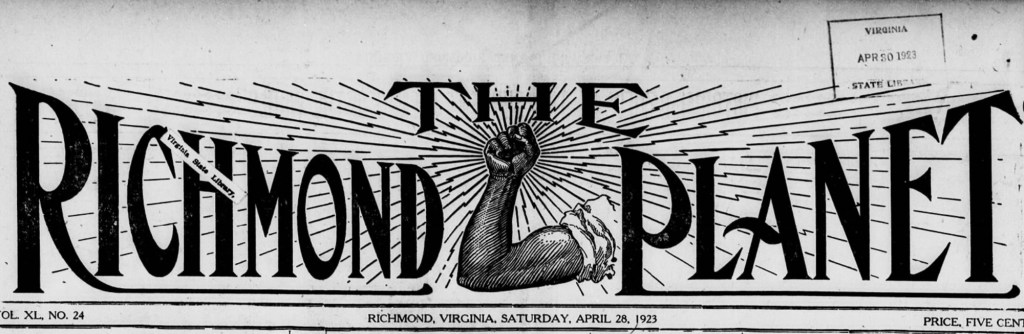
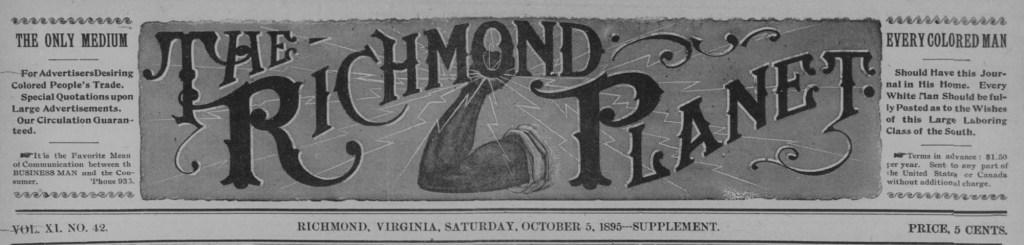
Blacksburg’s history reaches far beyond our local newspapers. A search of The Richmond Planet archives reveals decades of letters and news from our community, reminding us that Blacksburg was part of important conversations across Virginia, and that one of America’s most influential Black newspapers preserved those stories for future generations.
Did you know Blacksburg appears in the pages of The Richmond Planet?
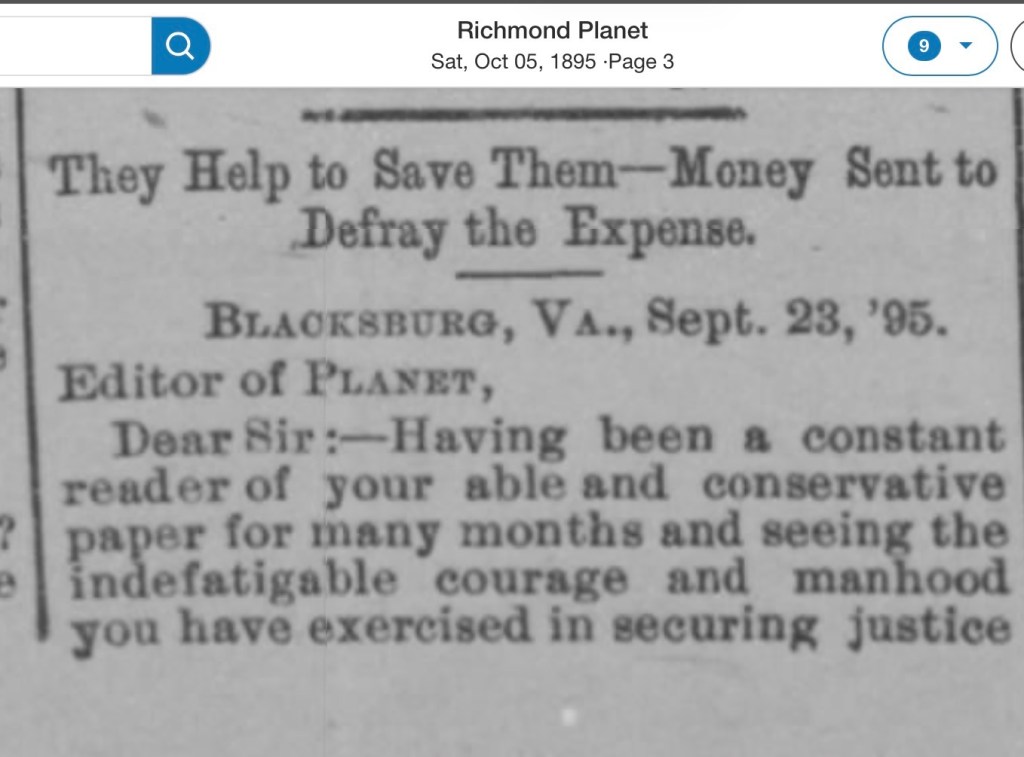
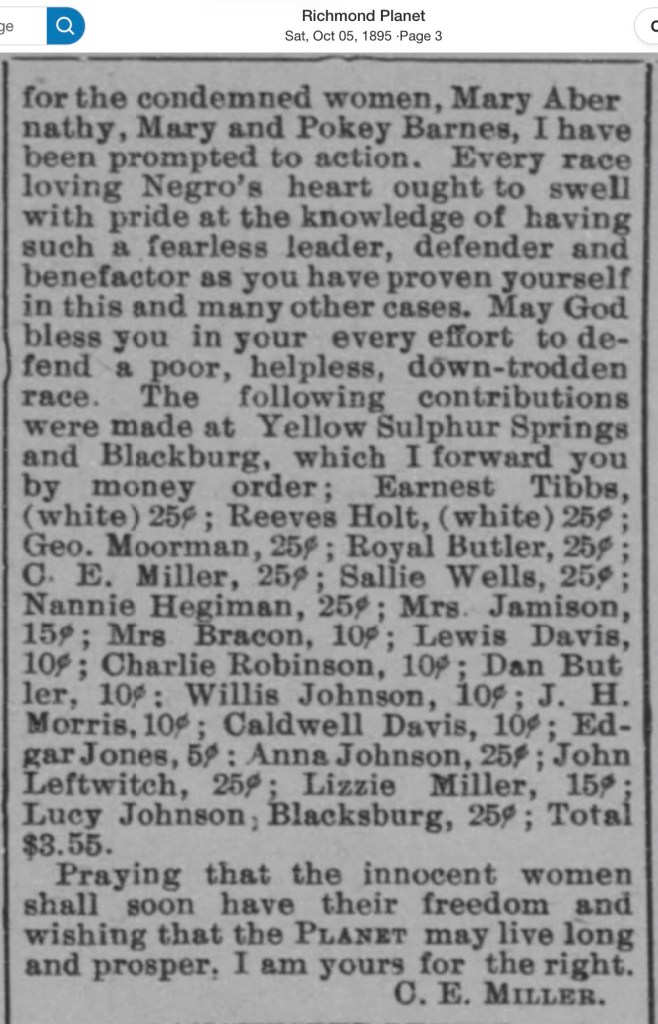
Edited by the legendary John Mitchell, Jr., The Richmond Planet was one of the nation’s most influential Black newspapers. We know people in Blacksburg subscribed to it—in the October 5, 1895, edition, C. A. Miller of Yellow Sulphur Springs wrote to the editor about raising funds here for the defense of two women.
A search of the archives reveals years of letters and news from Blacksburg, including coverage of the 1917 trial of Virginia Tech mathematics professor Charles E. Vawter’s murder of Stockton Heth, Jr.
These stories remind us that Blacksburg was connected to important conversations taking place across Virginia—and The Richmond Planet preserved that history.
5 October 18955 October 1895
Want to read The Richmond Planet? Newspaper.com (paid service) is the easiest to search. Virginia Chronicle, Library of Virginia, is free but not as easy to search.
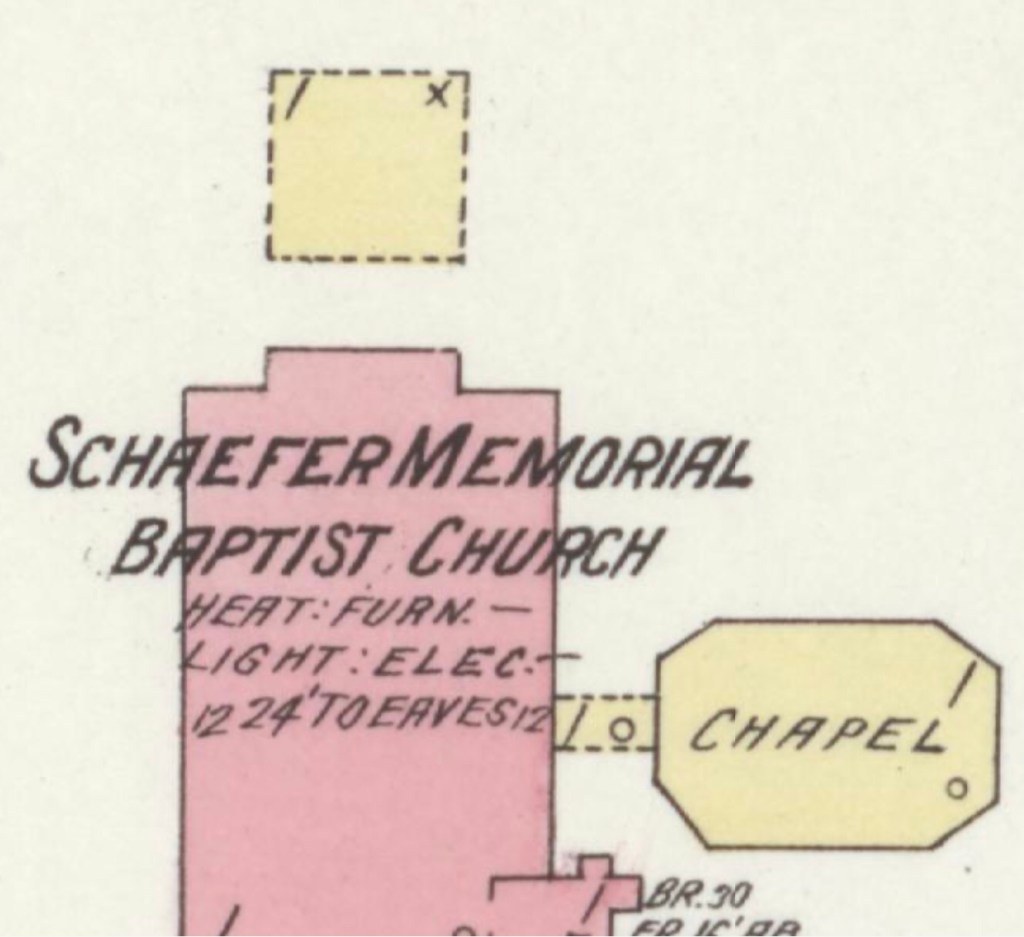
This 1913 Sanborn Fire Map of Christiansburg, Virginia offers a rare glimpse into the heart of the town’s early African American community during segregation. The map identifies key institutions including the Hill School Elementary, the Christiansburg Industrial Institute, and Schaeffer Memorial Baptist Church — places that anchored education, faith, and community life for Black residents in Montgomery County.
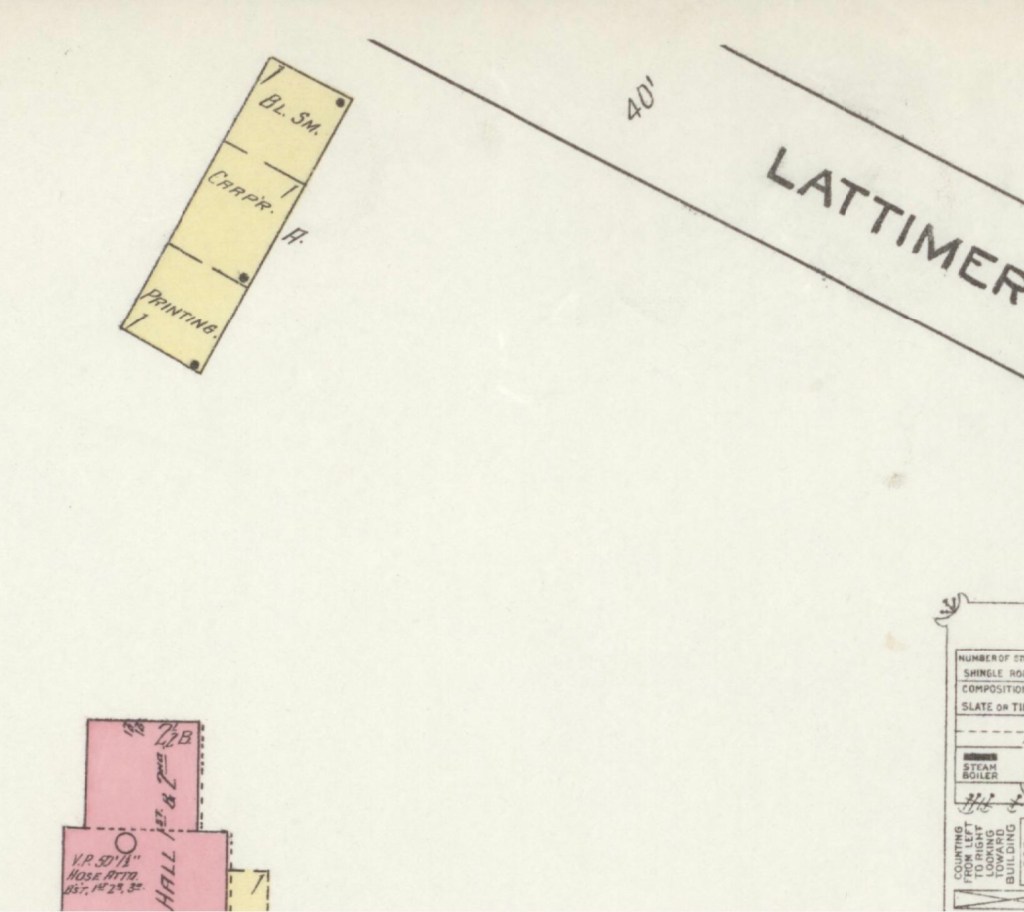
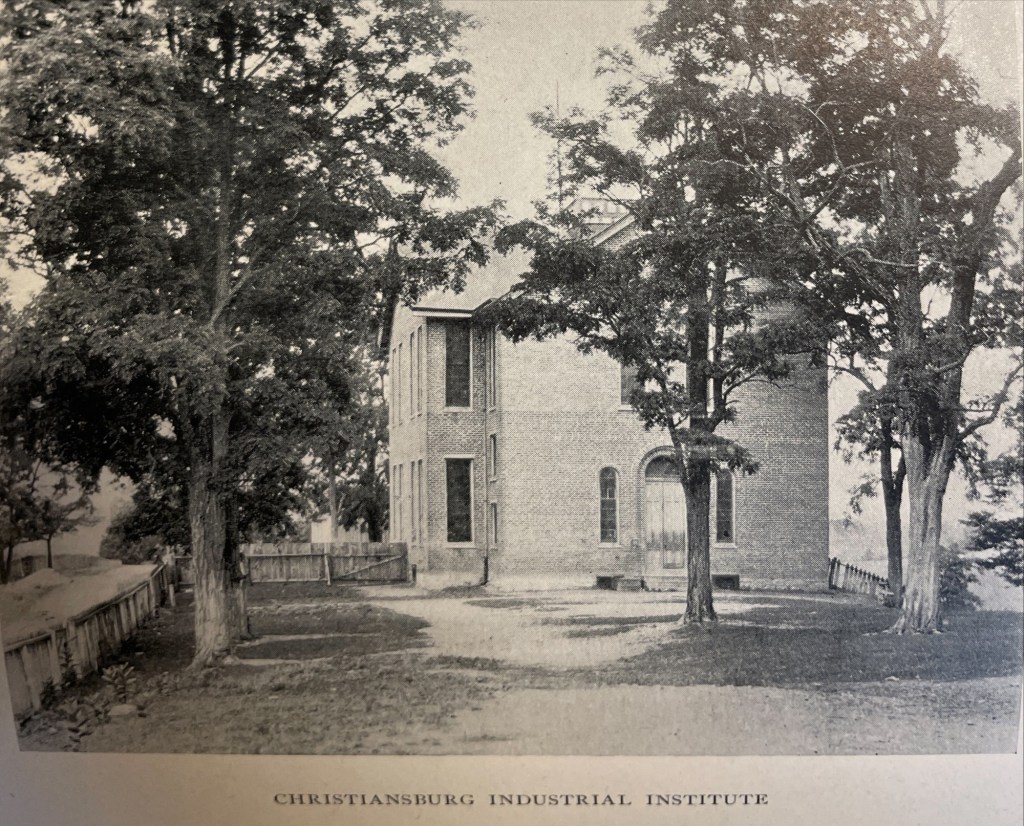
The Sanborn Fire Insurance maps are often the only early glimpse of buildings in rural towns over time. Christiansburg Industrial Institute moved from the Zion Hill location to the Lattimer Plantation site, north west of Christiansburg, at the turn of the 20th Century. This Sanborn Fire Insurance Map from Christiansburg, Montgomery County, Virginia was published by the Sanborn Map Company, dated Sep, 1913. The key to the maps is at the end.
The map is of Christiansburg Industrial Institute, situated north west of Cambria and north of Christiansburg courthouse. Note that frame constructed buildings are coded yellow and red for the solid brick building. The Baily Morris Building which housed the girls dorm, assembly hall, dinning hall and kitchen (close-up below) is heated by steam and lighted by electricity.
“Baily-Morris” Building
The Morris Hall Boys’ Dorm is both red and yellow, denoting built of a combination of building materials. The building is heated by hot water and lighted by electricity. Note that the buildings were supplied with water by 2,500 ft of pipes connected to the 10K gal water tank on the hill. The tank is filled by a Worthington Pump, moving water from a spring.
The girls and boys dorms were named for two Friends’ of the Freedmen of PA, Elliston P. Morris and Joshua L. Baily. They also donated money to construct the water system which was installed in 1907, before either Christiansburg or Blacksburg had a community water system. (A Vision of Education, Selected Writings of Edgar A. Long, Anna Fariello, Ed. Christiansburg Institute, Inc. 2021, pg 86,)
The Lattimer Mansion House, wood framed, was heated by stove and not connected to the water supply. The house was used as classrooms. Note the printing, carpenter and black smith shop close to the entrance road.
1913 Hill School & Schaeffer Memorial Baptist Church
This map is of Zion Hill which is located on the ridge (now High Street) between Cambria and Christiansburg. The brick (red) “Public School” housed the Christiansburg Industrial Institute before that secondary school moved to the Lattimer Plantation property by the turn of 20th century. This brick school, built by 1885, was converted to a primary school for African American children after CII moved. As noted by the Sanborn map, the building was heated by stoves and lighted by electricity.
Image of the Hill School from The Story of a Consecrated Life, Commemorative of Rev. Charles S. Schaeffer by CH Harrison, 1900. High Street is visible.
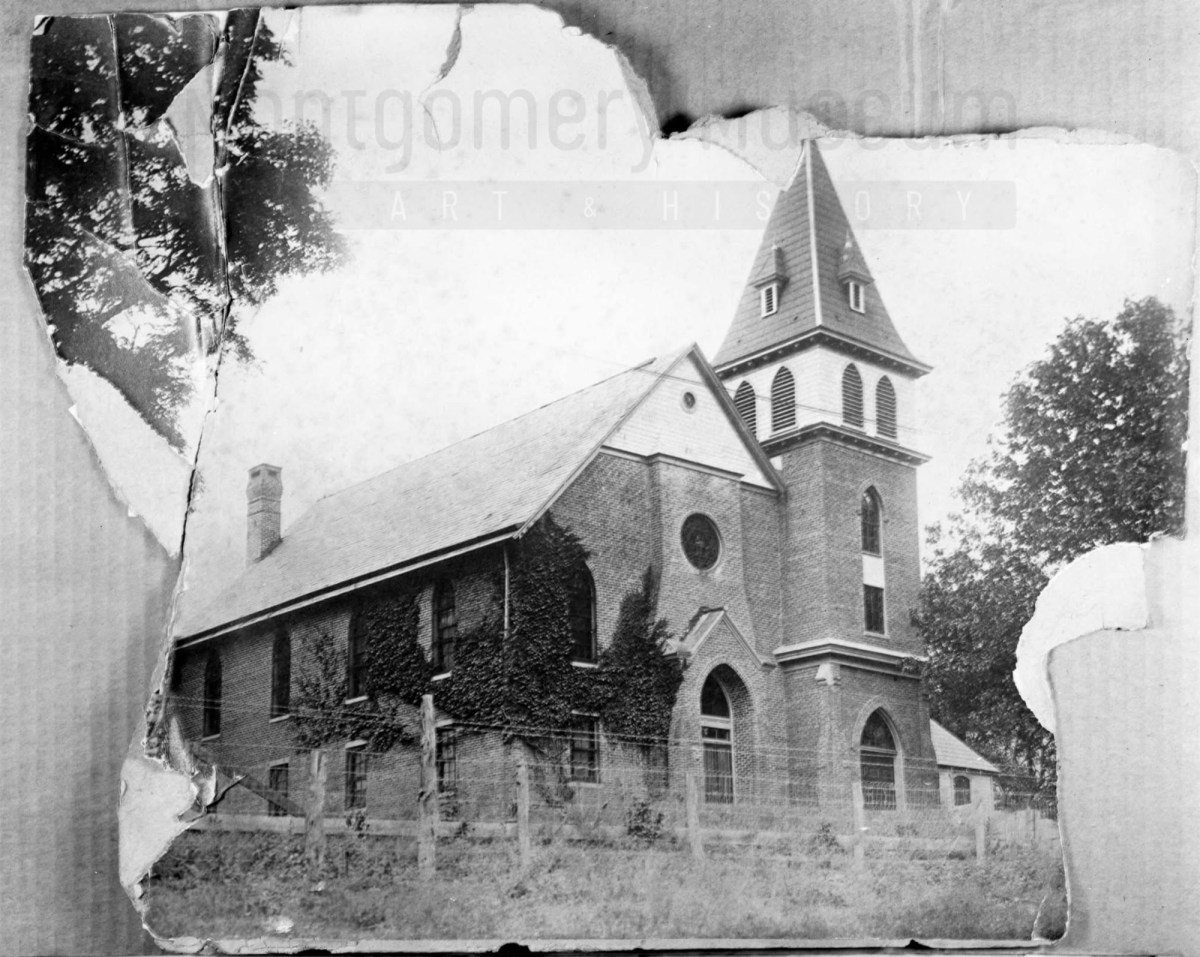
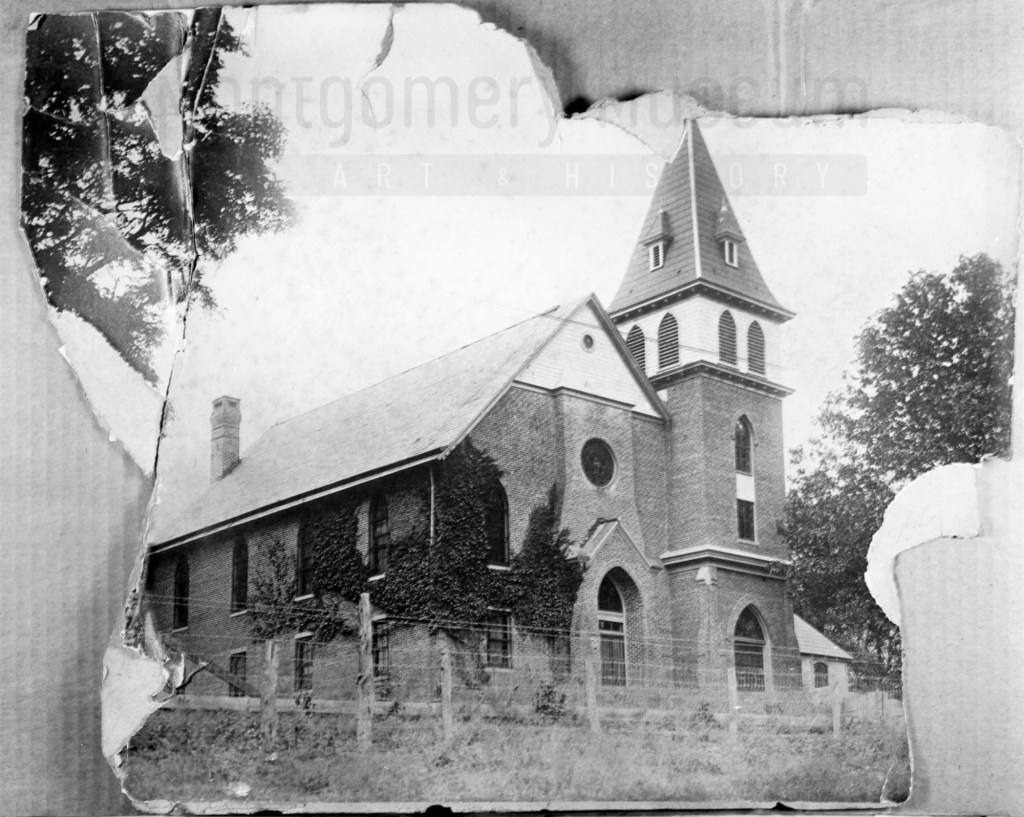
The Schaeffer Memorial Baptist Church is also of brick and built by 1885. Charles S Schaeffer’s memorial brass plaque were unveiled 1 October 1899, after he died in May of that same year. Note the frame chapel to the left (east) of the brick structure.
Image of Schaeffer Memorial Baptist Church from The Story of a Consecrated Life, Commemorative of Rev. Charles S. Schaeffer by CH Harrison, 1900. High Street is visible in the foreground. Later photograph, courtesy of the D.D. Lester Collection, Montgomery Museum of Art & History
On the Sanborn map, note the small frame, 1 story building behind the church? This may be the first school/church building on Zion Hill. The deed (DB S, pg 12, Oct 1868) and Harrison, 1900 * note the existence of this building. The brick school on the 1913 Sanborn map was the third version of this school at this site. The second school on Zion Hill was a 2 story & frame building, used between 1974 and 1885. (The rented Campbell house was the first school but it was not located on Zion Hill.)*
The image of the small school/meeting house shows a one story frame building with hip-roof and double stove-pipes. The dressed limestone block foundation was typical in this area and seen on buildings dating from early 1800s to the turn of the 20th century.
Image of the first school house on Zion Hill from The Story of a Consecrated Life, Commemorative of Rev. Charles S. Schaeffer by CH Harrison, 1900. High Street is visible in the foreground.
The North Fork Valley Rural Historic District spans nine miles and 10,200 acres in Montgomery County, Virginia. Along scenic Route 785, this ArcGIS tour explores geology, farming, social and architectural history—plus schools and churches—across a multi-generational rural landscape.
The North Fork Valley Rural Historic District spans nine miles and 10,200 acres in Montgomery County, Virginia. Along scenic Route 785, this ArcGIS tour explores geology, farming, social and architectural history—plus schools and churches—across a multi-generational rural landscape.
Search the terms “African American” or “enslaved” to uncover information connected to the enslavement of men, women, and children.
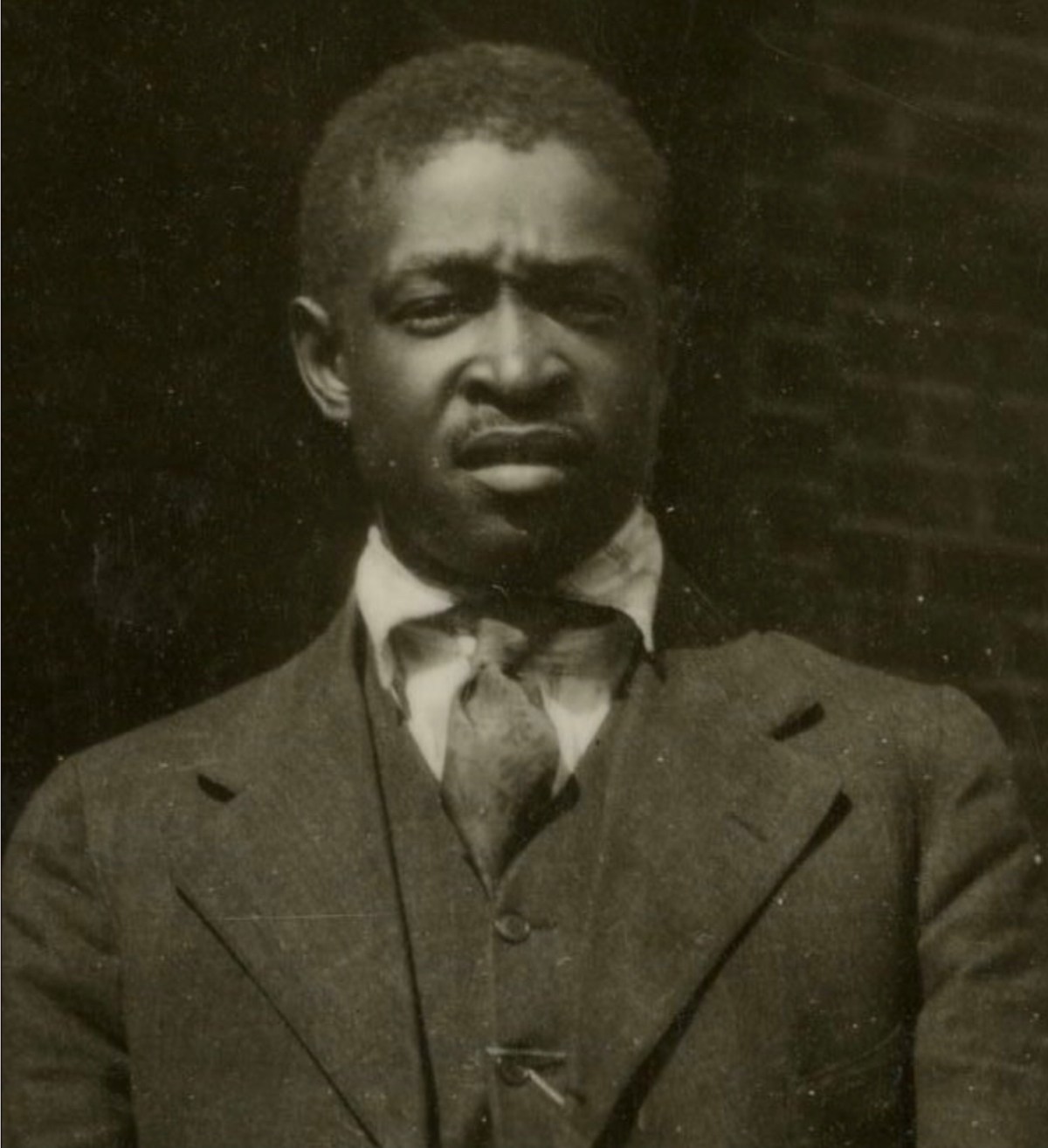
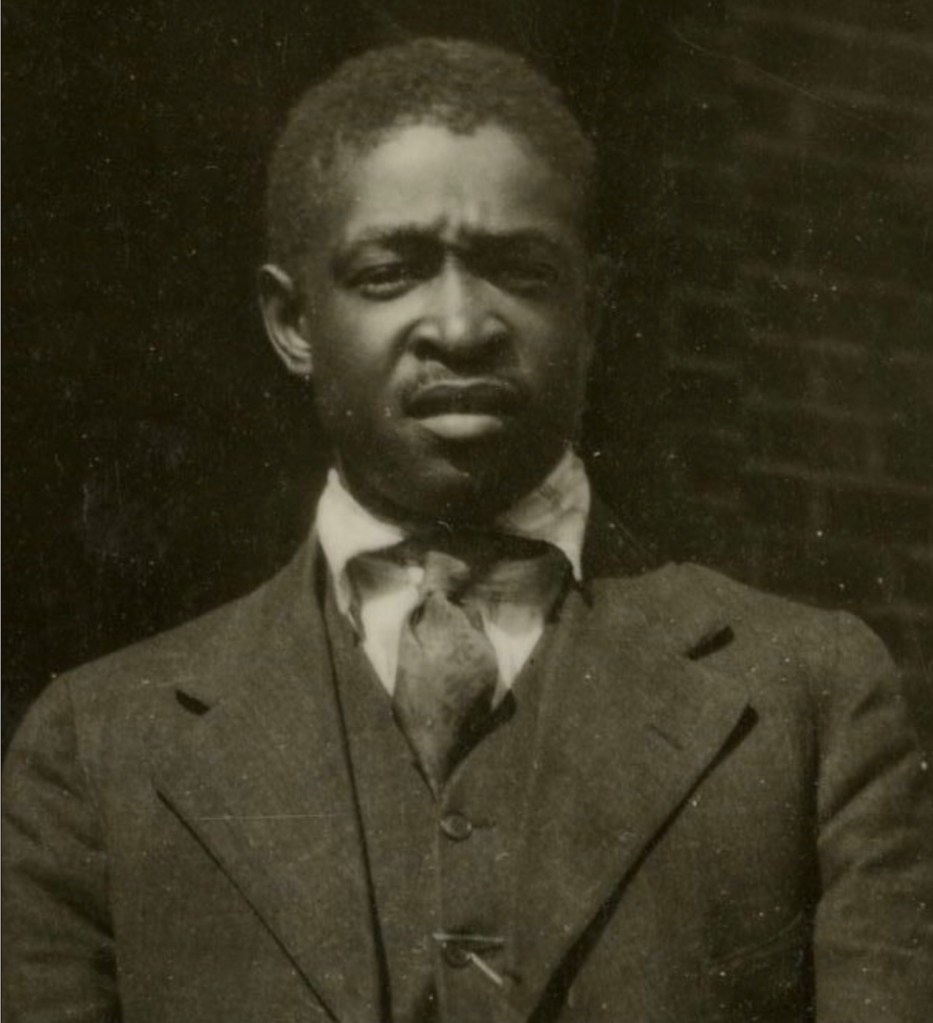
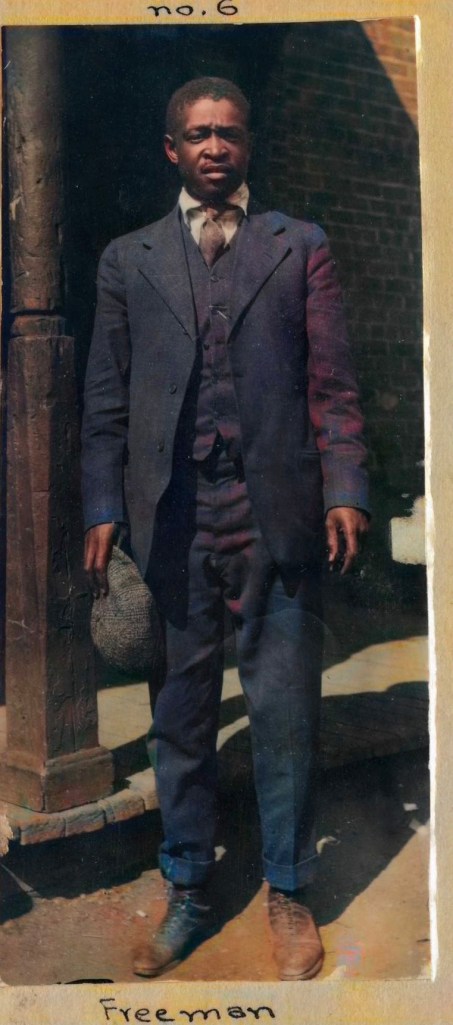
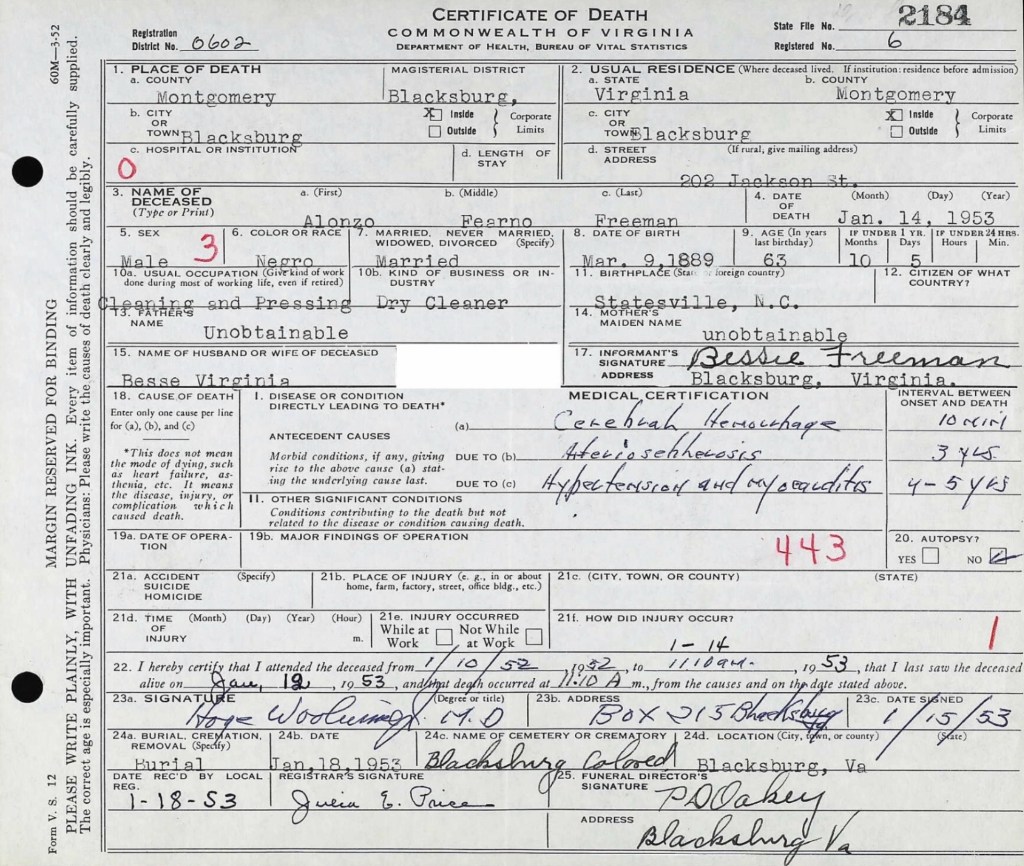
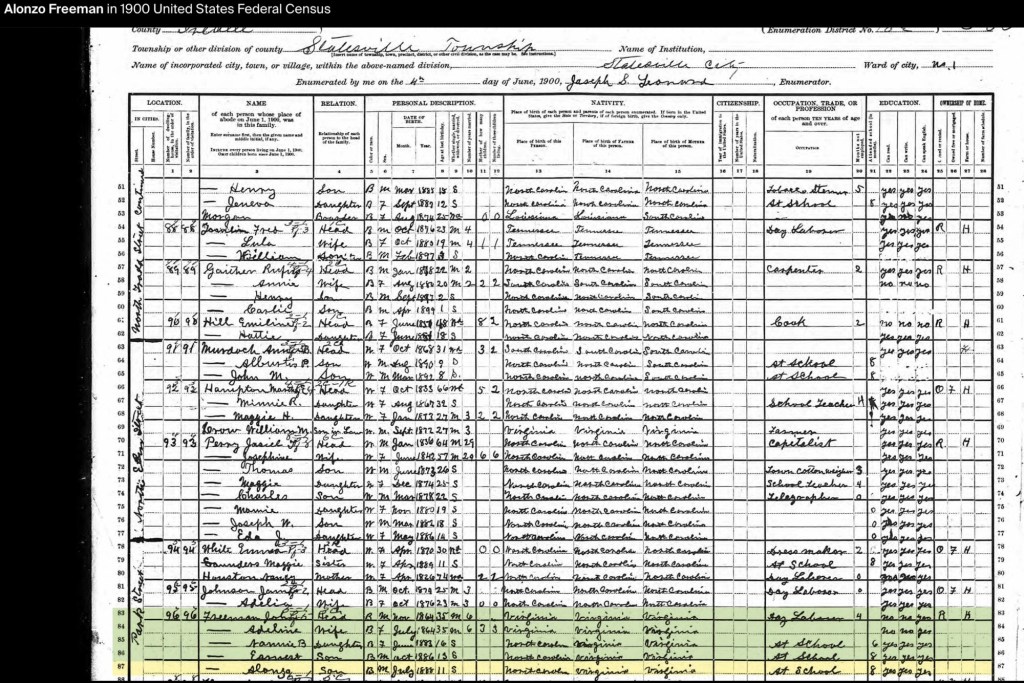
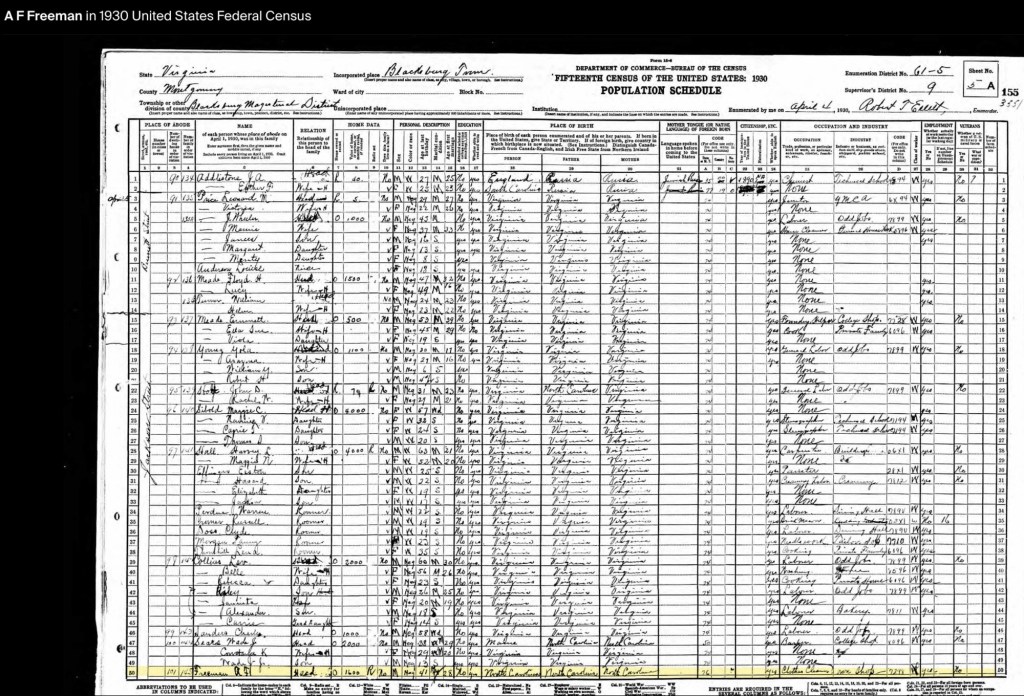
Alonzo Feadore (Fearno) Freeman, Sr. was born on March 10, 1889, in Statesville, North Carolina, to John (b. circa 1864) and Adeline Freeman (b. circa 1864). By the 1900 U.S. Census, John, a day laborer, and Adeline were living with their three children: Nannie B. (b. June 1883), Earnest (b. October 1886), and Alonzo Sr. (b. July 1888, student).
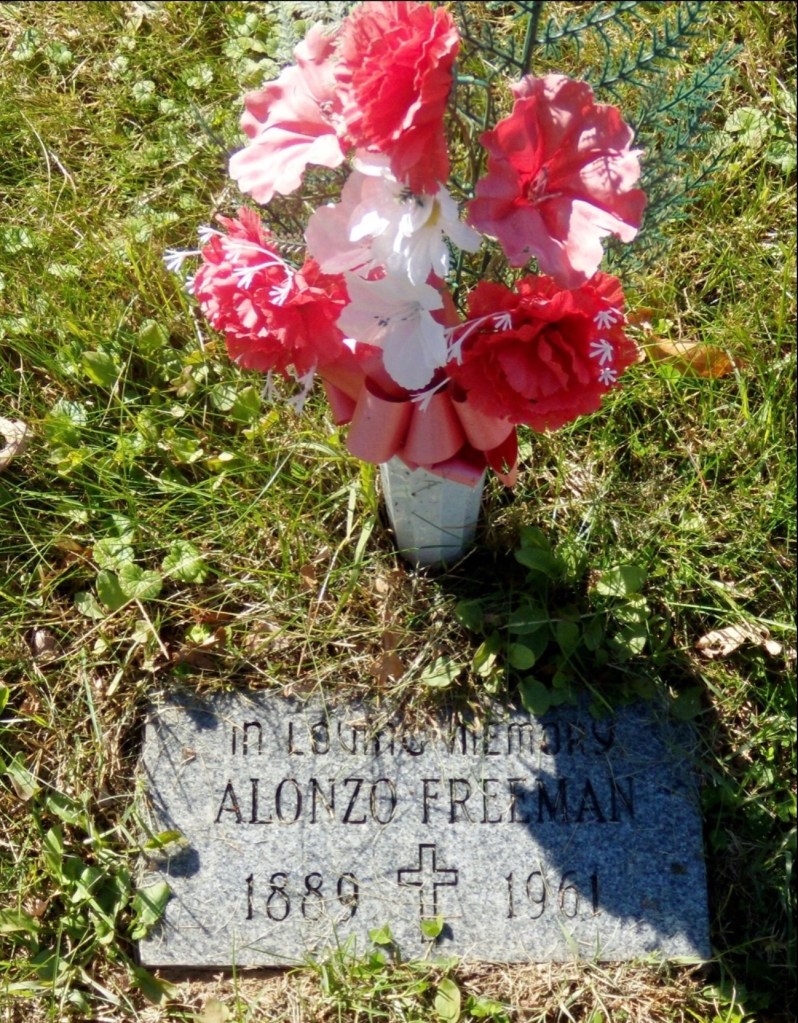
Alonzo F. Freeman (1889-1953)
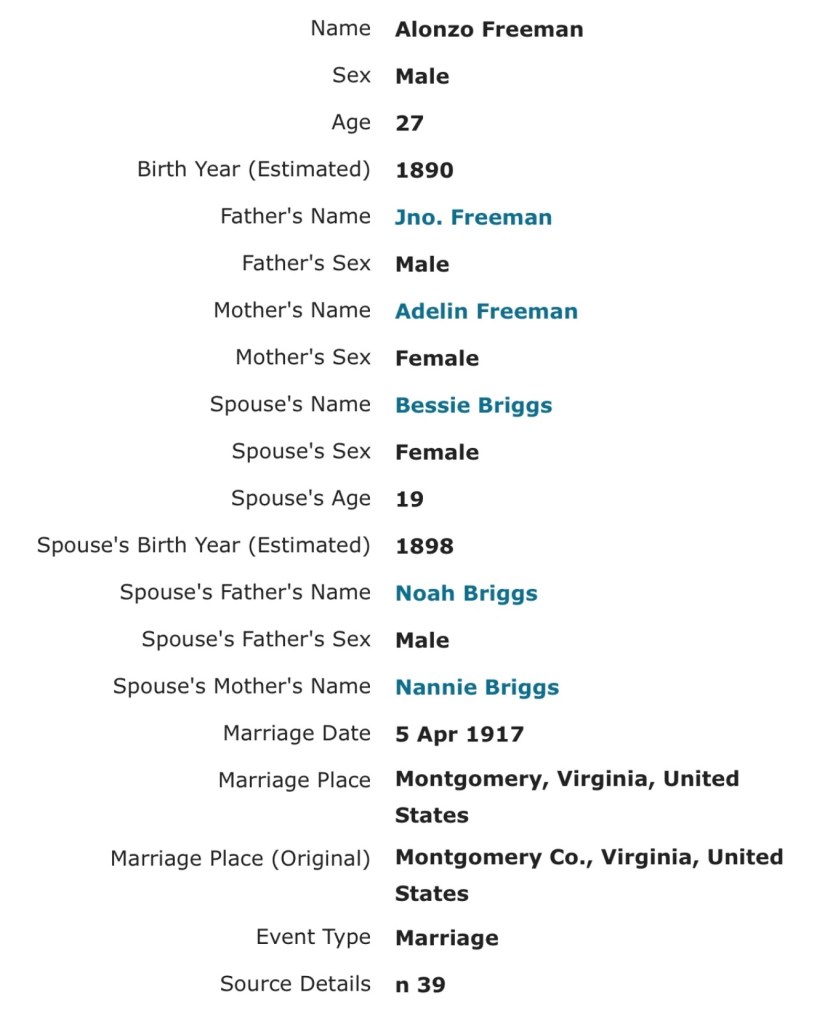
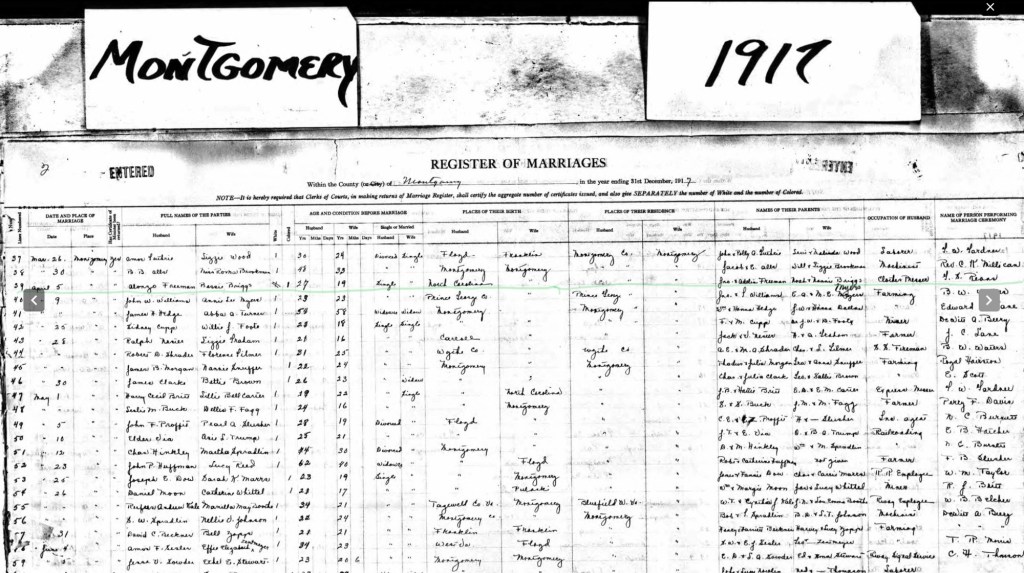
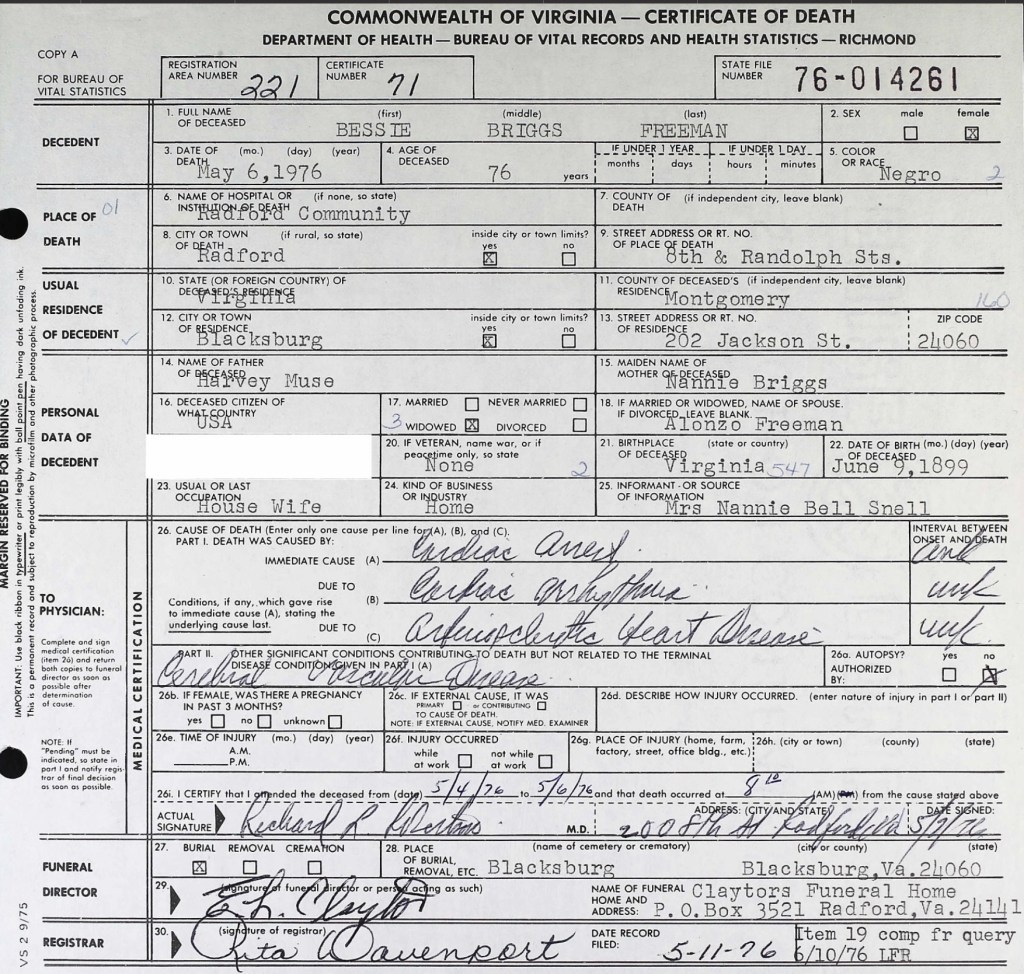
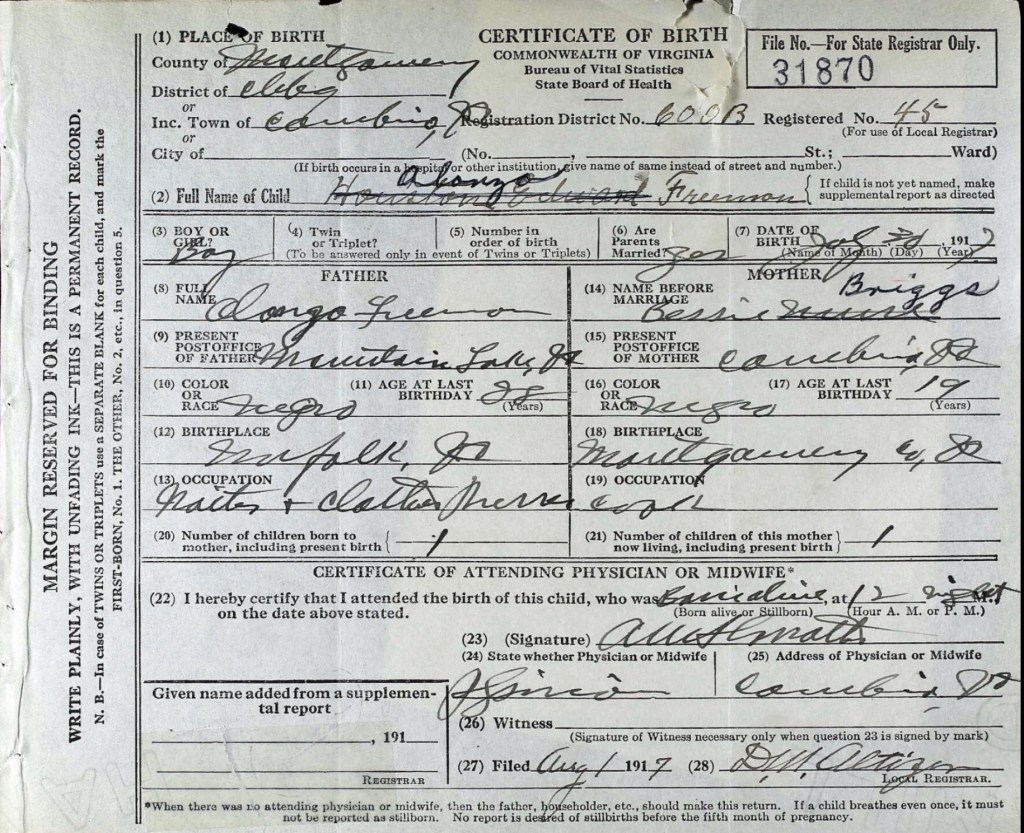
On April 5, 1917, Alonzo married Bessie Virginia Briggs (1899–1976) in Cambria, Virginia. Just a few months later, on July 31, 1917, their first son, Alonzo Freeman Jr., was born in Cambria, Virginia. According to his birth certificate, Alonzo Sr. worked as a waiter and clothes presser at Mountain Lake Resort, Virginia, while Bessie was a cook. During this time, they may have been living with Bessie’s mother and stepfather, who resided near the railroad tracks in Cambria.
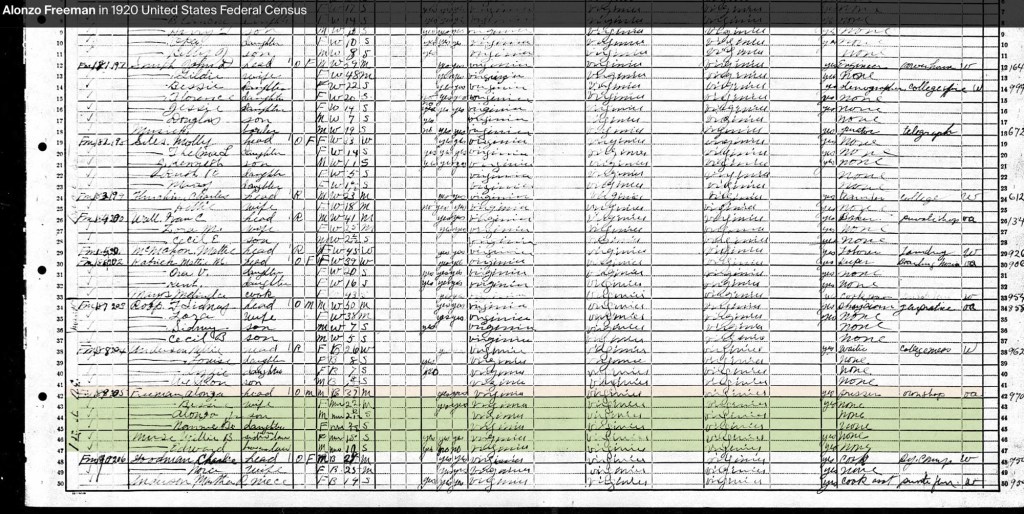
By the 1920 U.S. Census, the Freeman family had settled in Blacksburg, Virginia, on Jackson Street (originally Smithfield Road). Alonzo and Bessie were raising their two children, Alonzo Jr. and Nannie Bell (1919–1987). Also living in the household were Bessie’s siblings, Willie B. Muse and Edward Muse. At this point, Alonzo Sr. owned his home and operated his own pressing and cleaning shop. Their next-door neighbor was Nellie Anderson.
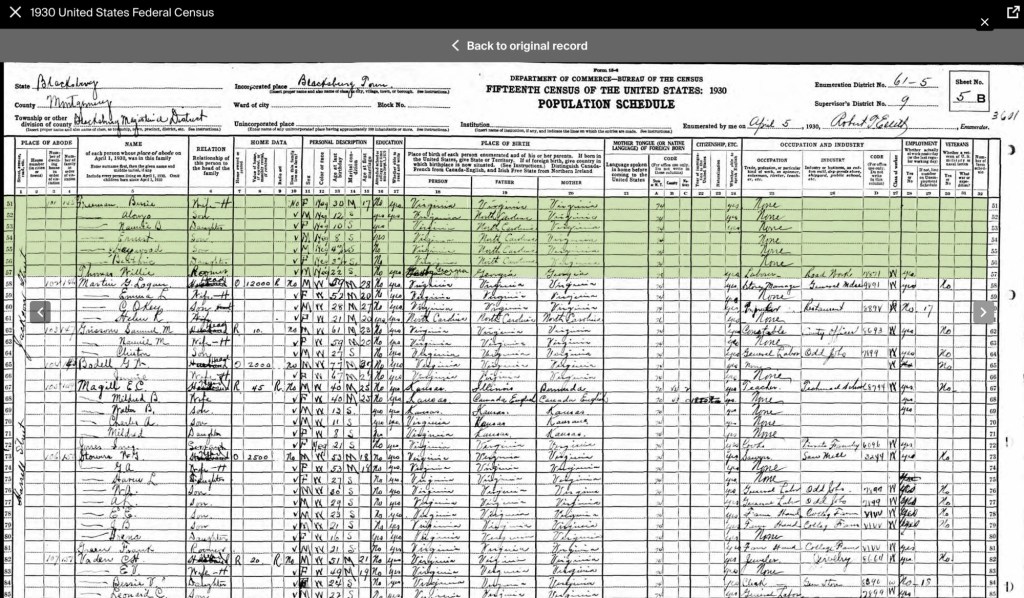
In the 1930s, the Freeman family were living in the same home, now valued at $1,600. They were part of a growing Black community on Jackson and Bennett Streets, surrounded by neighbors such as Wade Sears, Charles Saunders, Lev Collins, John Stolt, Yola Young, Emmett Meade, William Turner, Floyd Meade, Louise Anderson, and Leonard Price. The 1932 Blacksburg City Directory lists Alonzo Sr. as the proprietor of the Blacksburg Press Shop at 302 E. Jackson Street.
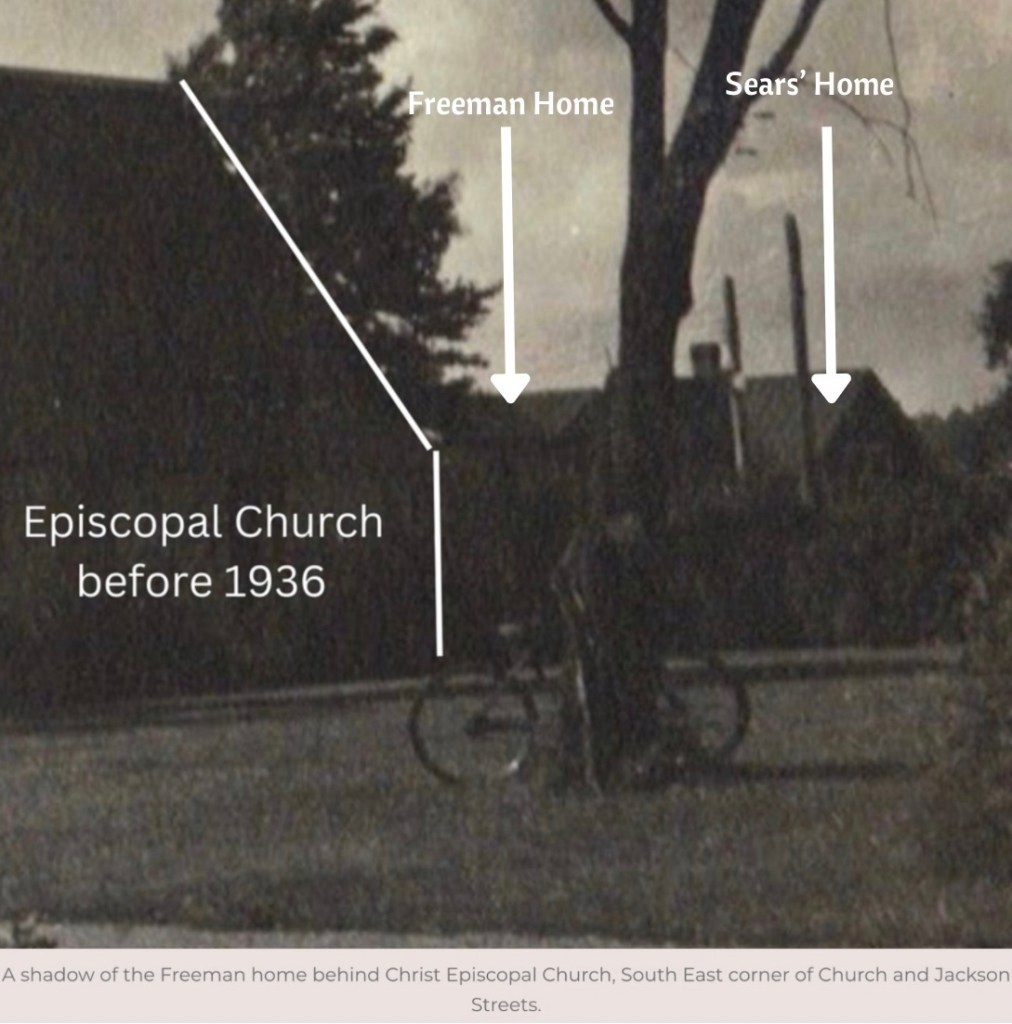
Freeman house is to the left of Christ Episcopal Church, Church and Jackson Streets, prior to 1930s.
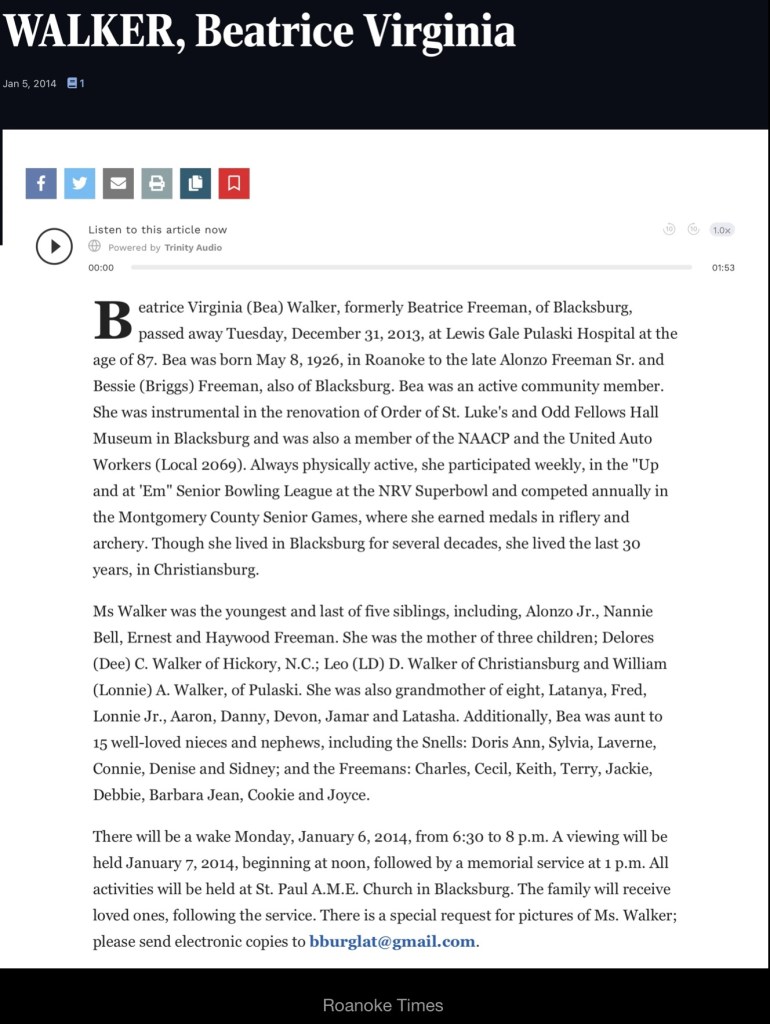
By this decade, the Freemans had expanded their family with three more children: Ernest Linwood (b. 1922), Haywood (1924–1984), and Beatrice (1926–2013). Alonzo Sr. continued to run his cleaning business—the first of its kind in Blacksburg—while Bessie worked for the Episcopal priest, Rev. Richard Martin, and his wife, Jean in the church’s office.
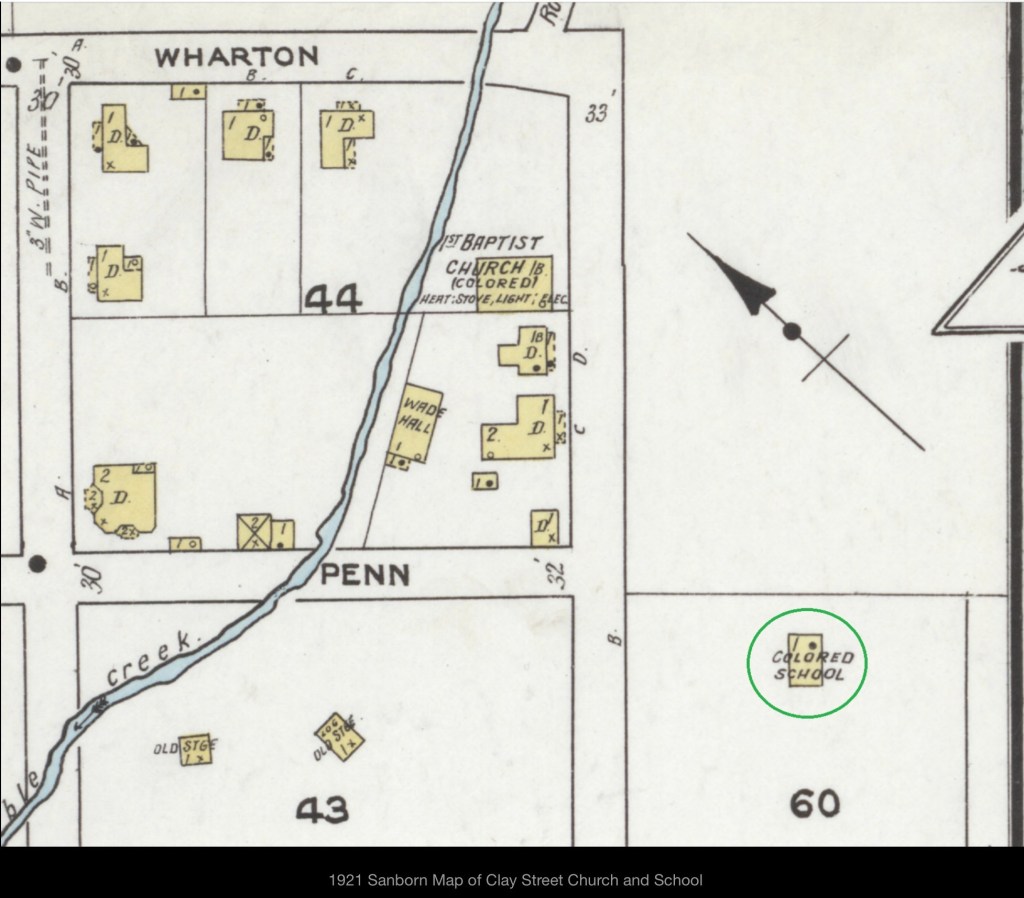
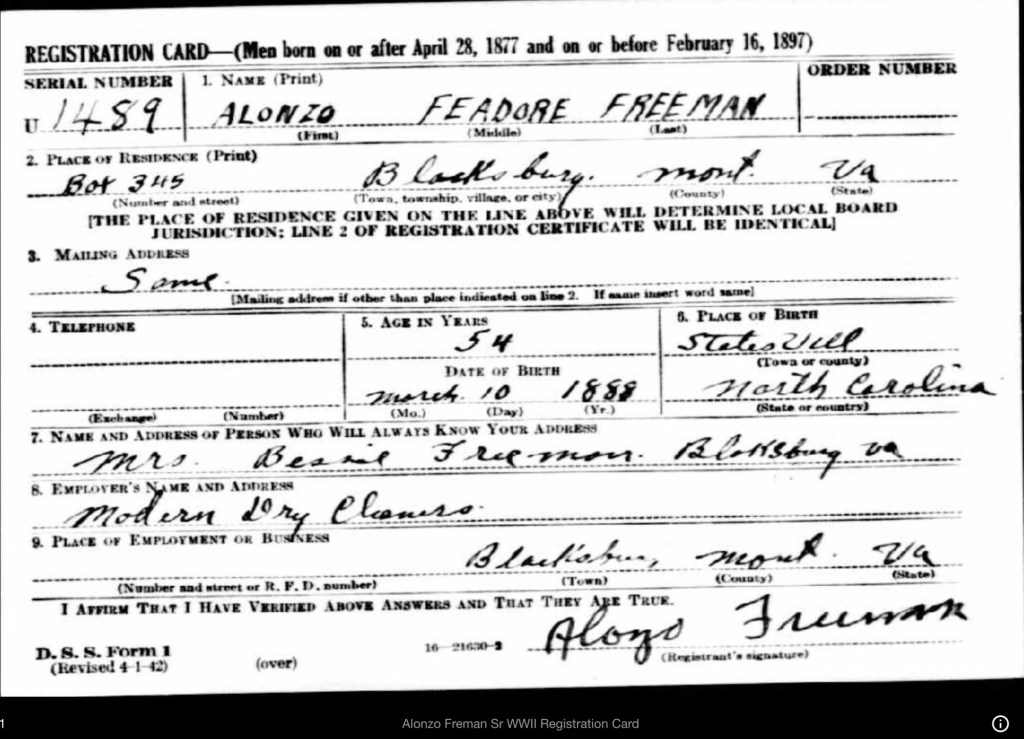
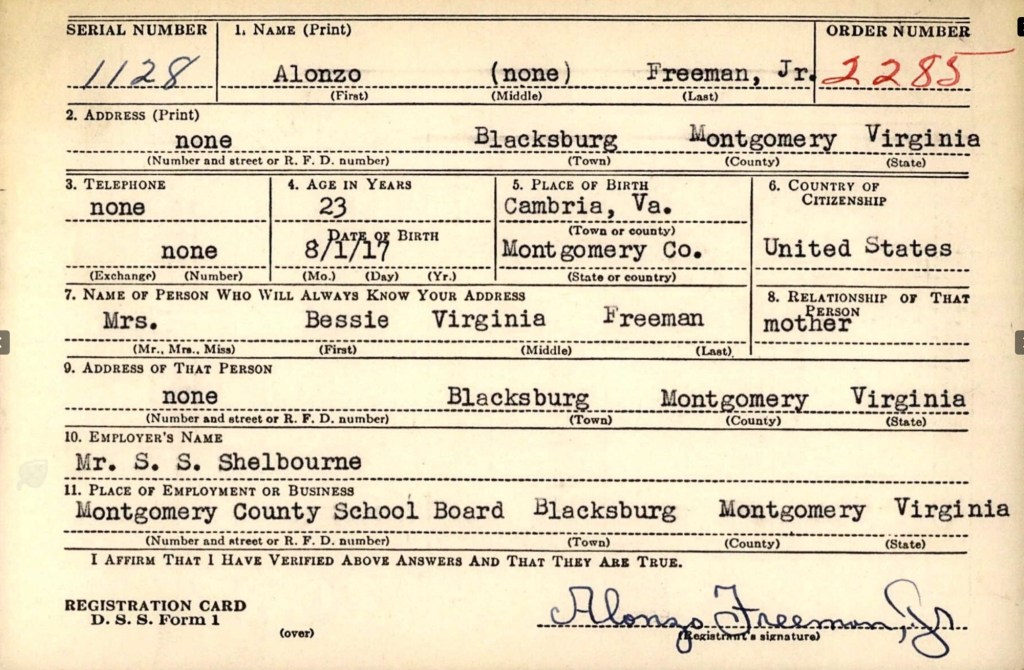
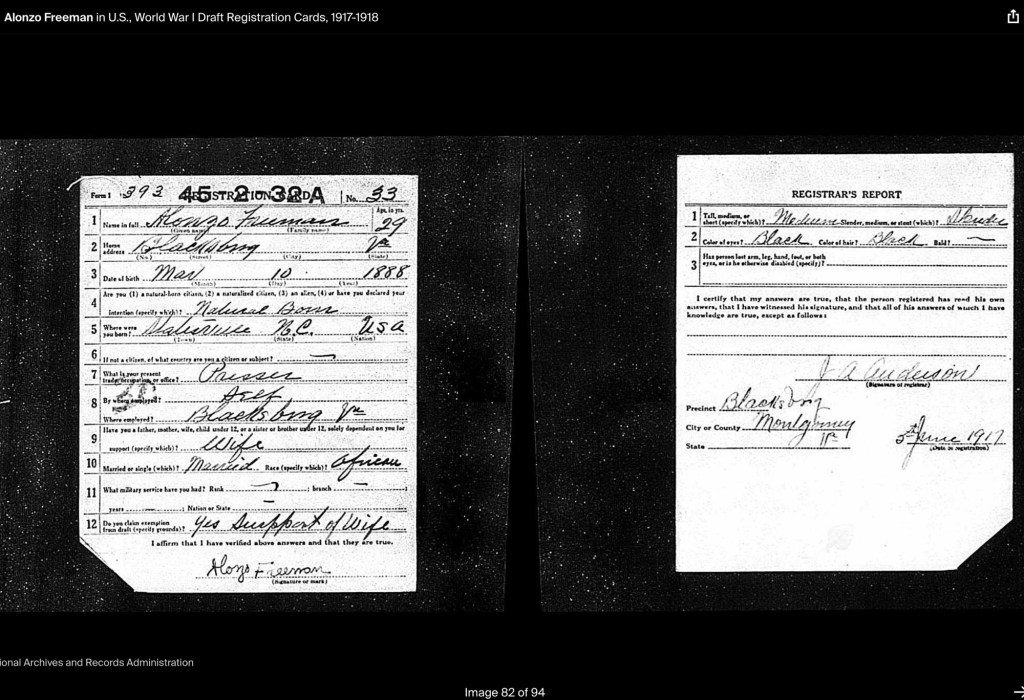
The 1940s marked a pivotal time for the Freeman family, as all the male members registered for the 1942 World War II Draft. These records provided Alonzo Sr.’s full name, Feadore, and documented his business, Modern Dry Cleaners (featured on an early 1950s map of Blacksburg). During this time, Alonzo Jr. served as the principal of the Clay Street Graded School, Linwood worked at the Radford Ordnance Works, and Haywood was employed by Ray Taylor.
1921 Sanborn Fire Map
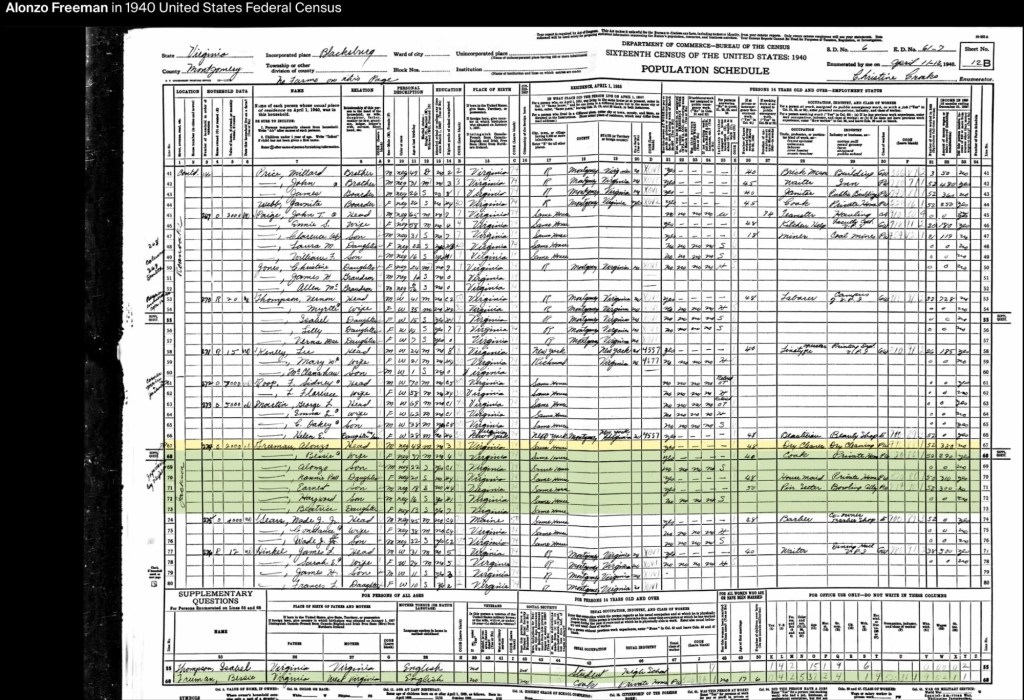
According to the 1940 U.S. Census, all of Alonzo and Bessie Freeman’s children were still living at home. Nannie Bell worked as a private housemaid, while Linwood was employed as a pin setter at the college bowling alley. Alonzo Sr. continued running his cleaning business, and Bessie worked as a private cook.
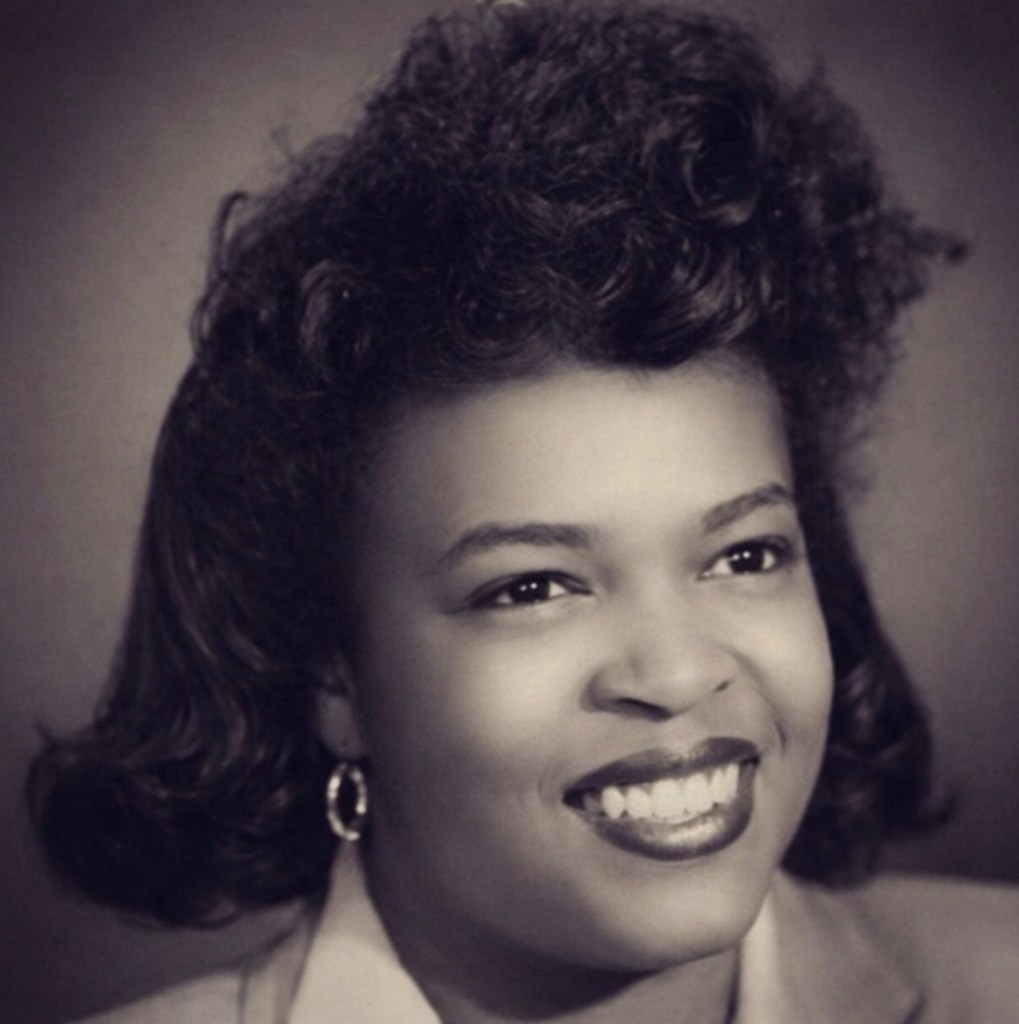
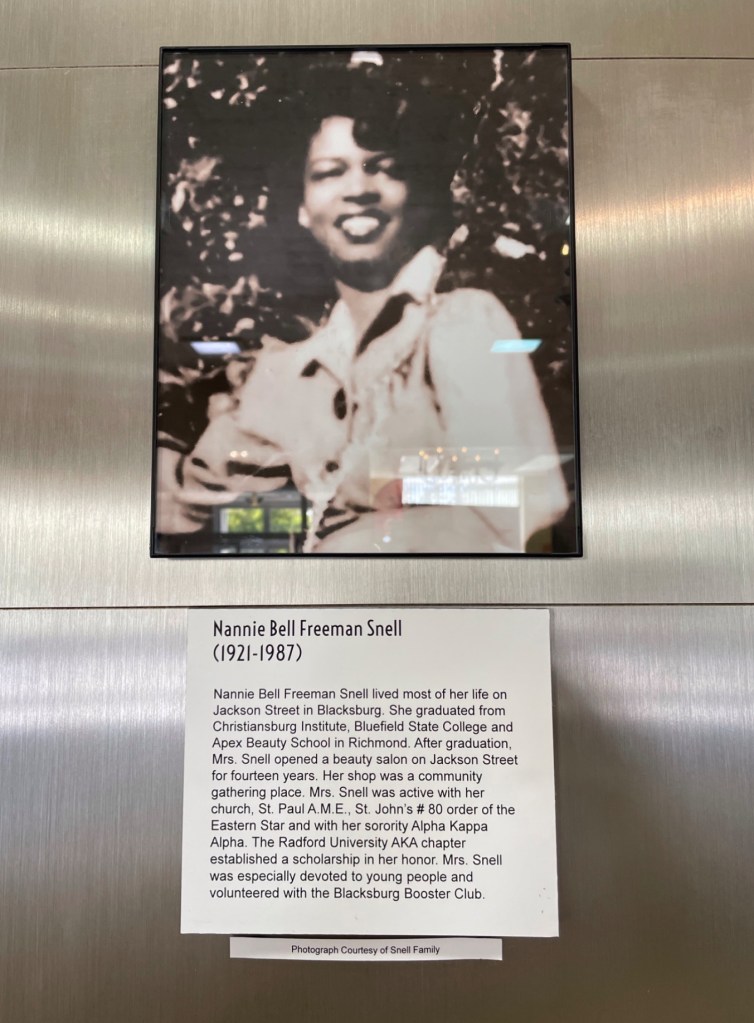
Nannie Bell Freeman Snell (Courtesy of Montgomery Museum of Art & History, repaired image)
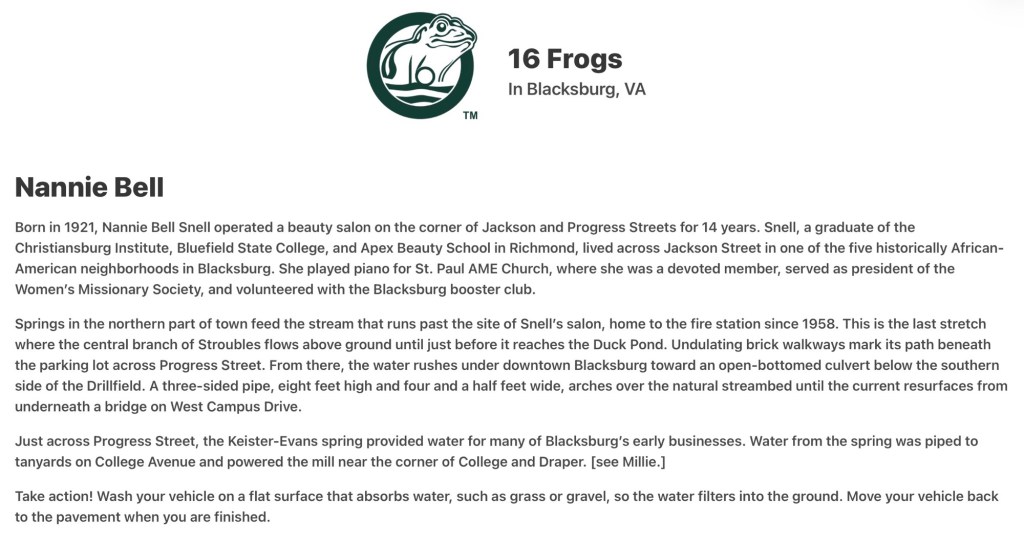
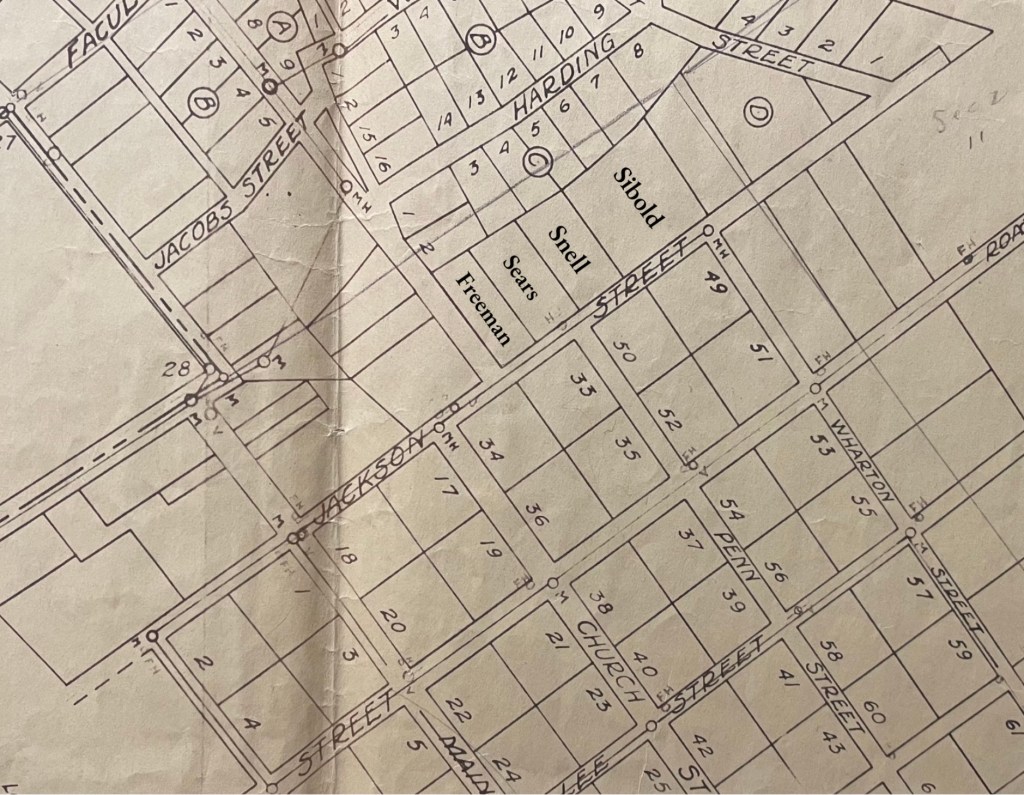
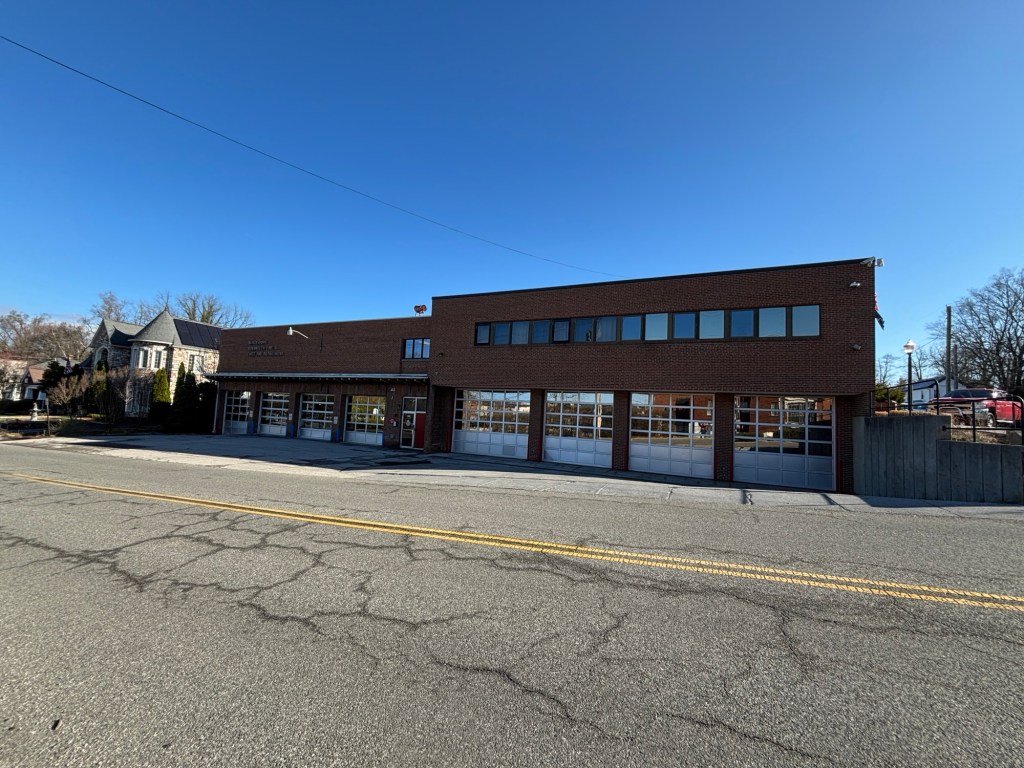
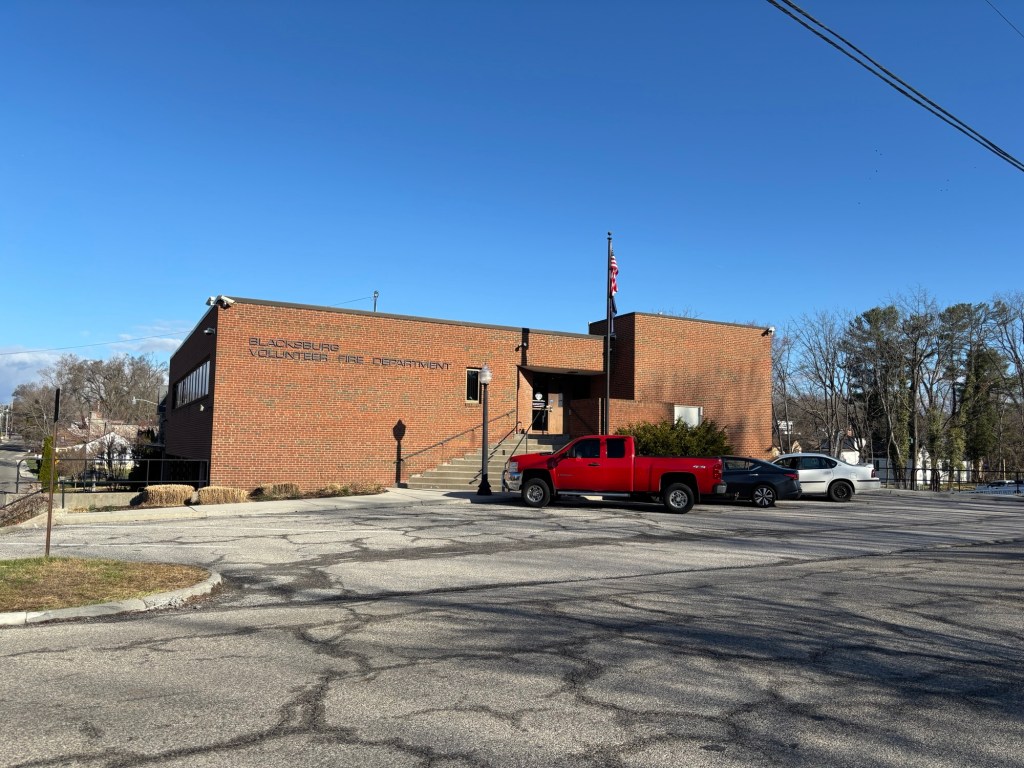
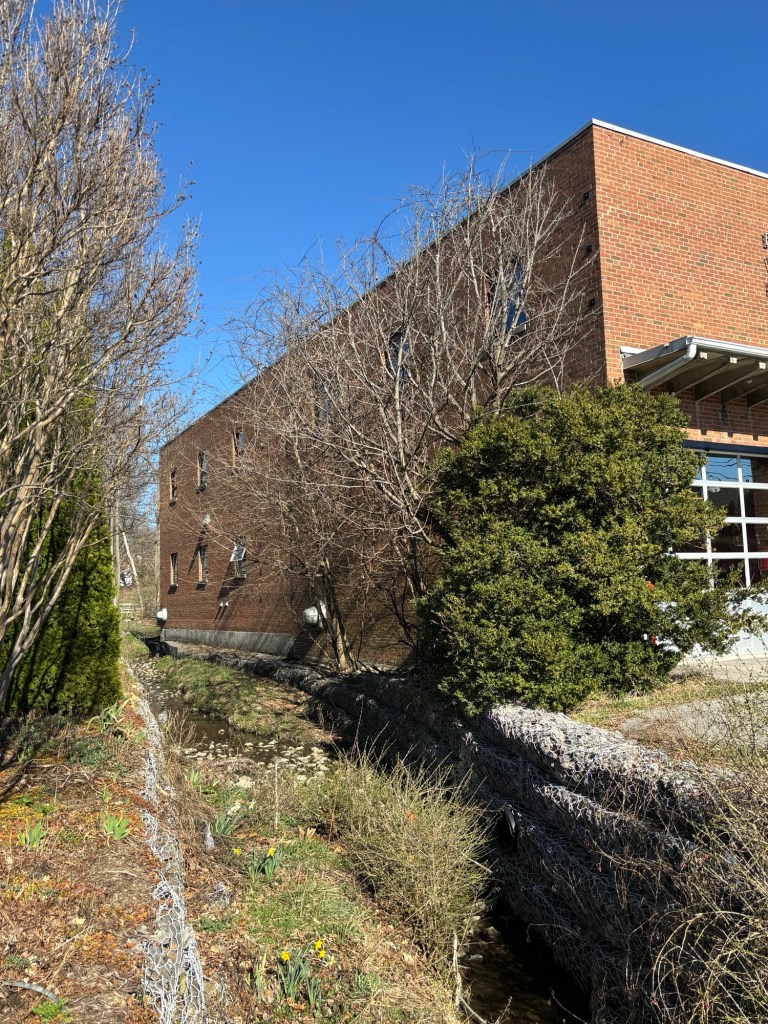
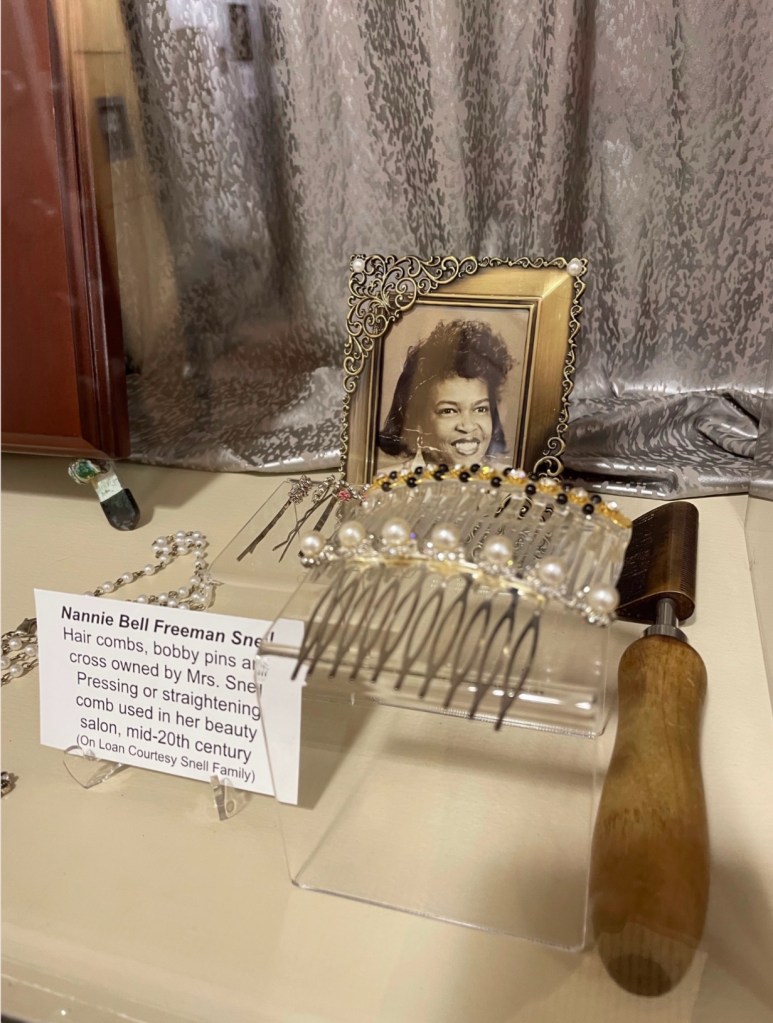
On November 19, 1947, Nannie Bell, now a beautician, married Sidney Grant Snell (1921–1975), a mechanic from Radford. The Snells raised six children and lived at 404 Jackson Street, just down the street from Nannie Bell’s parents, Alonzo and Bessie, who resided at 202 Jackson Street. Only the Snell’s home remains standing today, but the Freeman residence was located at the same corner of Jackson and Progress Streets where the town’s 1958 firehouse now stands. Blacksburg named a frog to honor Nannie Bell.
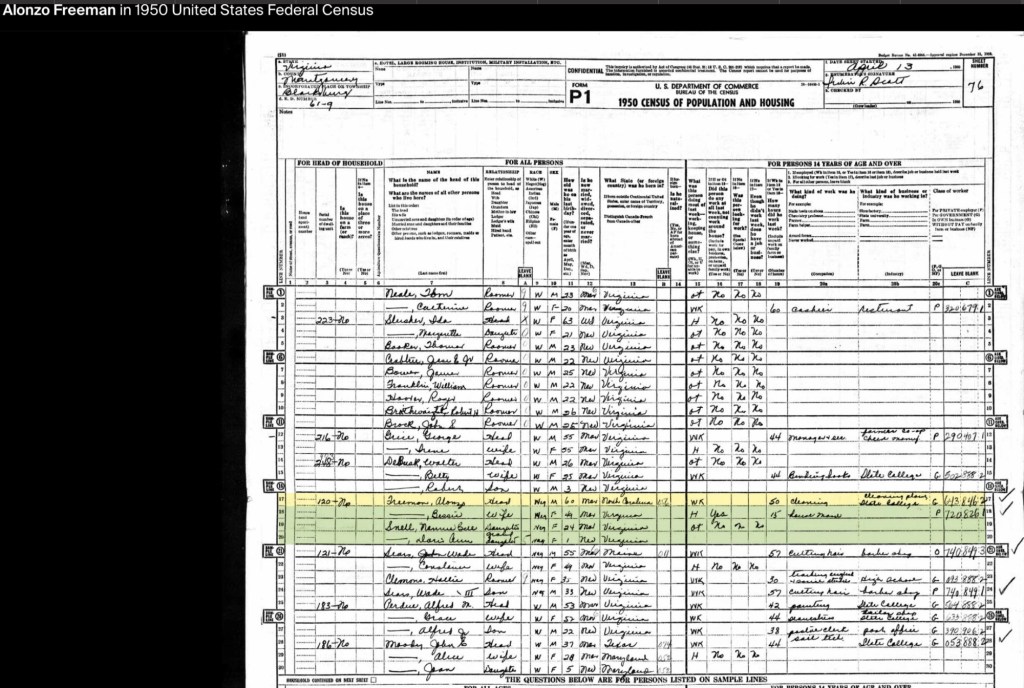
By the 1950 U.S. Census, Alonzo Sr., now in his 60s, was working at Virginia Polytechnic Institute’s Cleaning Plant. Nannie Bell and her daughter, Doris Ann, were living with her parents at the family home. By this time, all three Freeman sons had moved to Washington, D.C., with Linwood living alongside Haywood. Alonzo Jr. had married and was serving as the principal of the Clay Street segregated school before becoming the principal of an elementary school in Baltimore.
Bessie Virginia Briggs Freeman (1899 to 1976)
Bessie’s mother, Nancy Sweeney, was born in 1872 in Christiansburg, Virginia. Her father, Noah Briggs, was the son of George and Jane Briggs. Nancy and Noah were married on February 14, 1894. By the 1900 Census, the Briggs, Green, and Sweeney families—several generations of the same extended family—were living as neighbors in Cambria.
By the 1910 Census, Nancy Sweeney Briggs had married Harvey (Harry) Muse of Cambria, a laborer at the lime kiln. Together, they had four children: Willie B. (b. 1902), Grace (b. 1904), Connie (b. 1906), and Edward (1909–1950). Edward Muse later married Bessie Lynch (b. 1911), and they settled in New Town, where they raised five children: Jean (b. 1932), Constance (b. 1934), Shirley Ann (b. 1936), Edward Jr. (b. 1938), and Harold A. (b. circa 1940). By 1940, Edward Muse was working at the Virginia Polytechnic Institute Monogram Presser Plant alongside his neighbor, John Green, and Alonzo Freeman Sr.
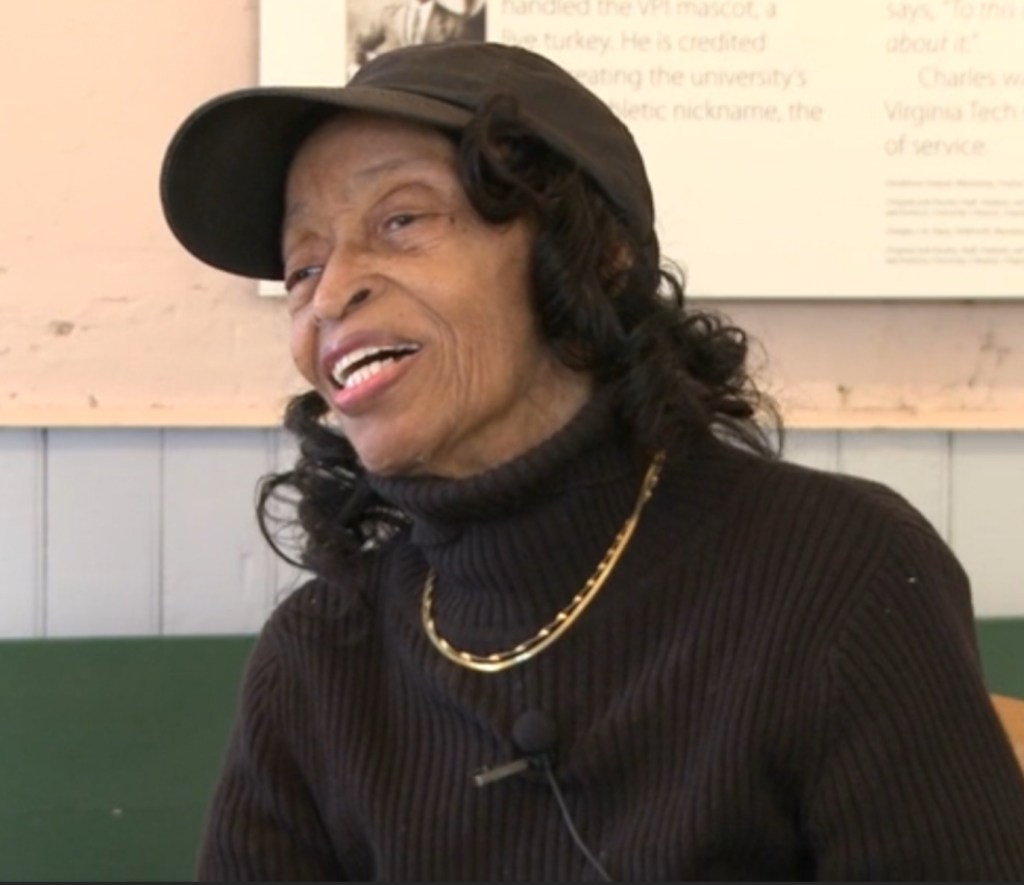
In 2013, Beatrice Freeman Walker, the youngest daughter of Bessie and Alonzo Freeman, participated in an oral history interview now archived at Virginia Tech University Libraries. In this interview, she shared valuable insights into her mother’s work in the homes of prominent community members and her leadership in the Independent Order of St. Luke’s (St. Frances Council #235), which operated out of the shared building in New Town alongside the Odd Fellows and the Household of Ruth. Beatrice also highlighted her mother’s important role in coordinating the return of soldiers for family funerals through the Red Cross.
Beatrice Freeman Walker (courtesy of Virginia Tech University Libraries)
Additionally, the interview sheds light on her father, Alonzo Freeman Sr., and his contributions to the Black community in Blacksburg. Among these was his creation of a weekend retreat for African Americans, called Paradise View, located on land he owned off Grissom Lane—now known as Nellie’s Cave. Beatrice’s recollections provide a crucial window into the history of Black life in Blacksburg and the legacy of her parents.
Notes to Further Explore – Mountain Lake Connection
In her book Kentland at Whitethorne (Walpa Publishing, Blacksburg, VA, 1995), historian Patricia Givens Johnson mentions a “Mrs. Freeman,” who worked as a chambermaid at Mountain Lake Hotel shortly after emancipation. According to Johnson (p. 53), Mrs. Freeman married Bob Jackson, who had been enslaved by James Randal Kent (1792–1867), the owner of Kentland Plantation. Some of their children took the Jackson surname, while others retained the Freeman name. Johnson identifies their children as Flemish Jackson, Bessie, Bob, Qu, and Irene Freeman, noting that they were employed by the hotel well into the 1900s.
This connection warrants further research, but it raises an interesting possibility—when Alonzo Freeman married Bessie Briggs in 1917, he was working at Mountain Lake Hotel as a waiter and clothes presser. Could this employment have been influenced by family ties to the hotel? Further exploration may help clarify the Freeman family’s long-standing connection to Mountain Lake.
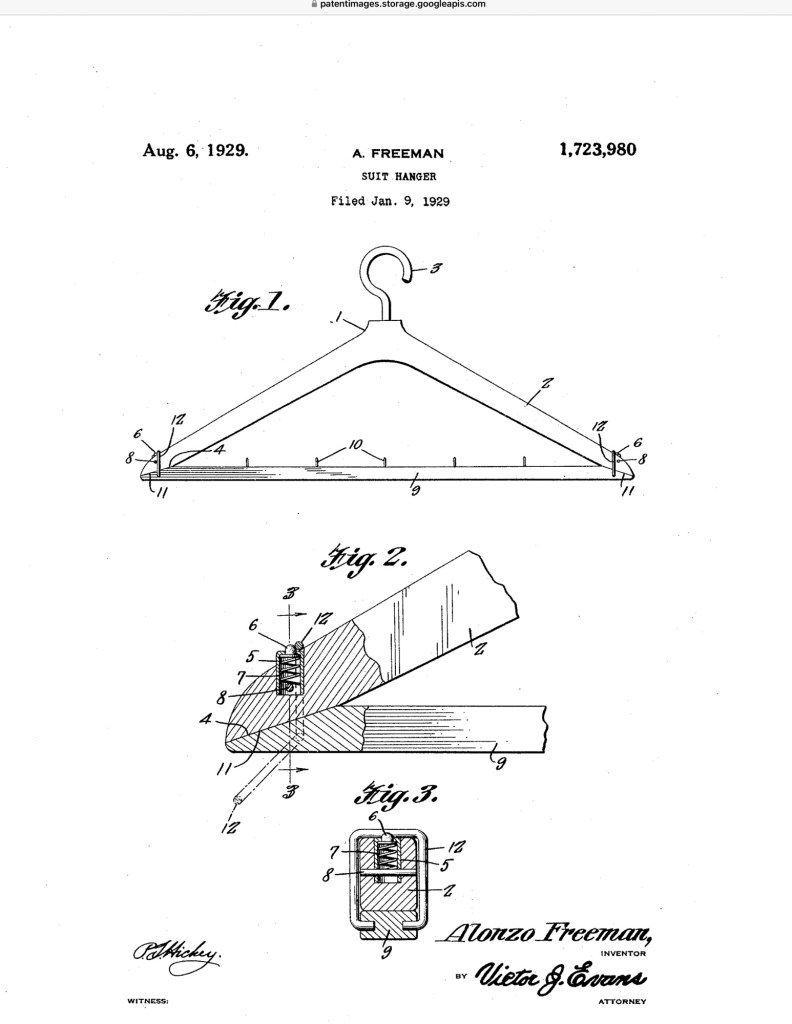
In the winter of 1929, in Blacksburg, Virginia, Alonzo Freeman did something remarkable. While running his clothes-cleaning business during the era of government sanctioned segregation, he took time to solve a practical problem he faced every day.
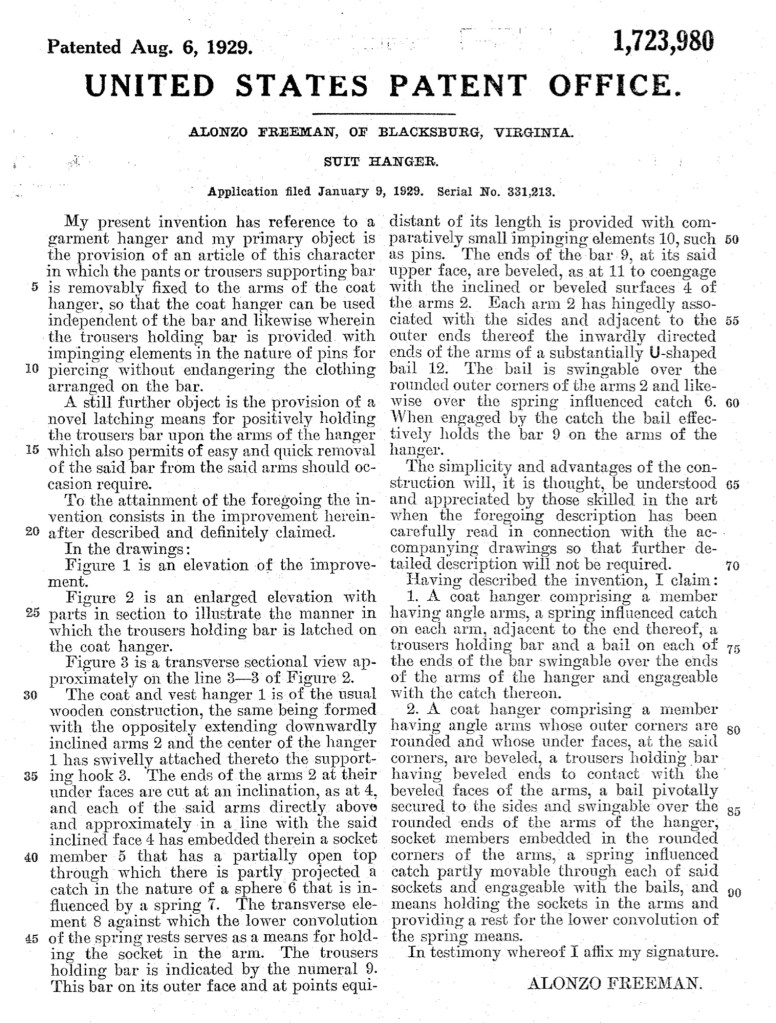
Working with coats, suits, and trousers, Freeman designed a better garment hanger. His invention included a removable bar for trousers and a simple latching mechanism that held the bar securely in place while still allowing it to be quickly removed.
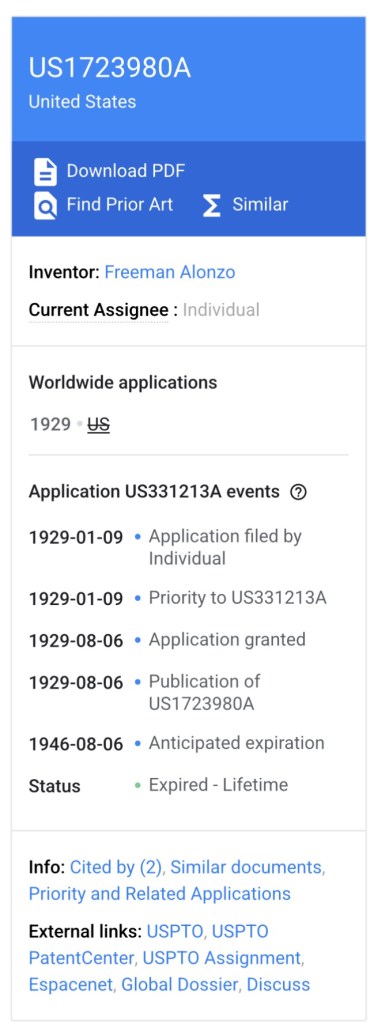
On January 9, 1929, Freeman filed for a patent with the United States Patent and Trademark Office. Later that year, on August 6, he was granted U.S. Patent 1,723,980.
Freeman’s hanger is a reminder that innovation often grows out of everyday work. Even in the face of segregation, Black entrepreneurs and tradesmen were imagining new ideas, improving tools, and shaping their communities.
Gallery
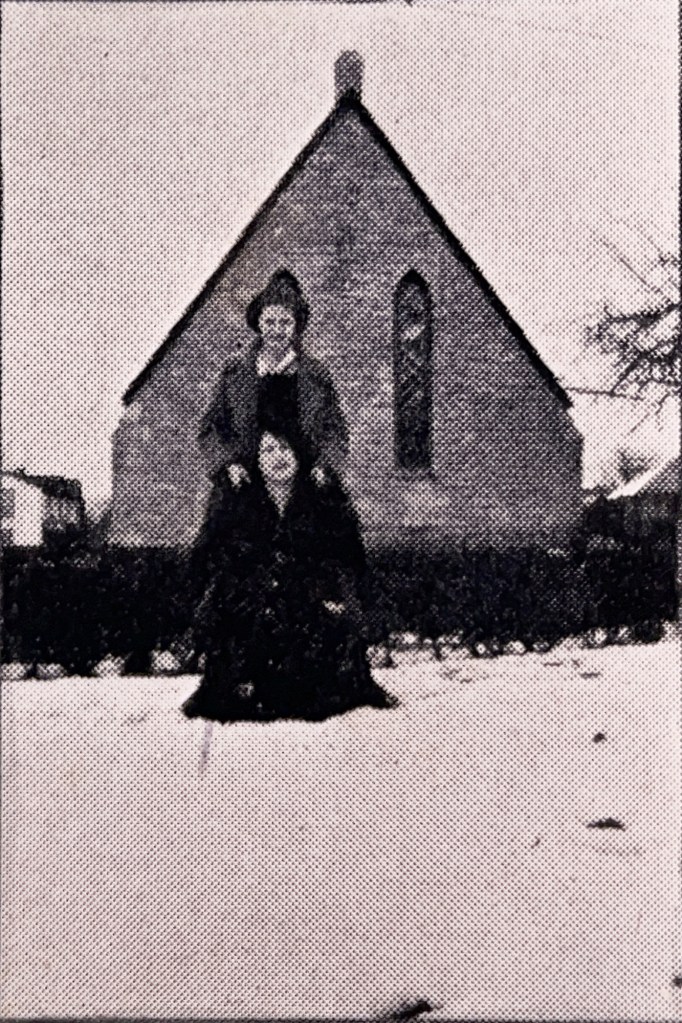
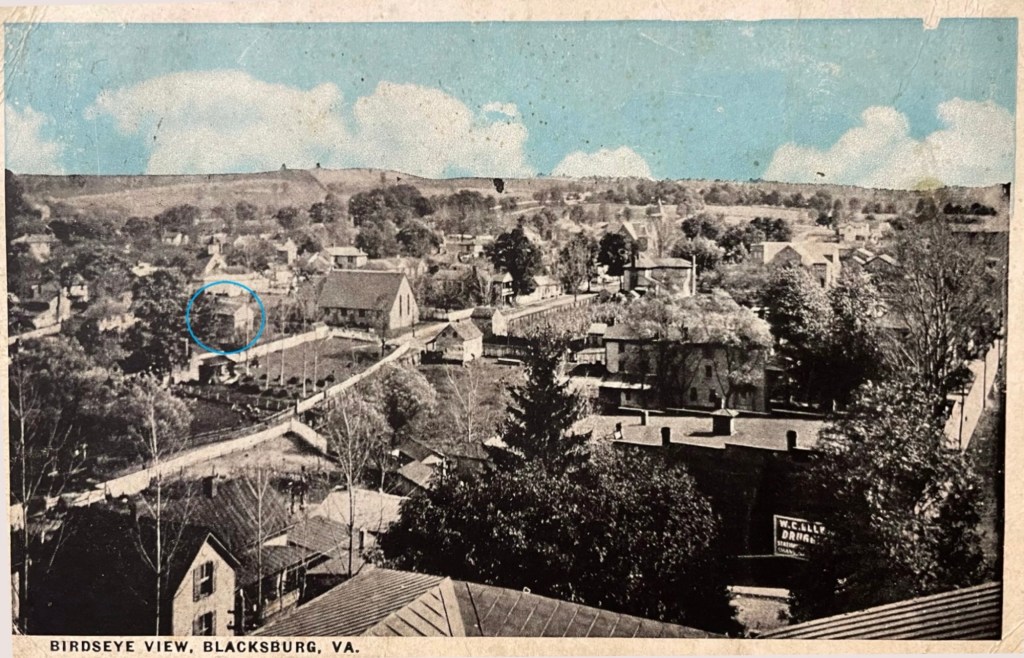
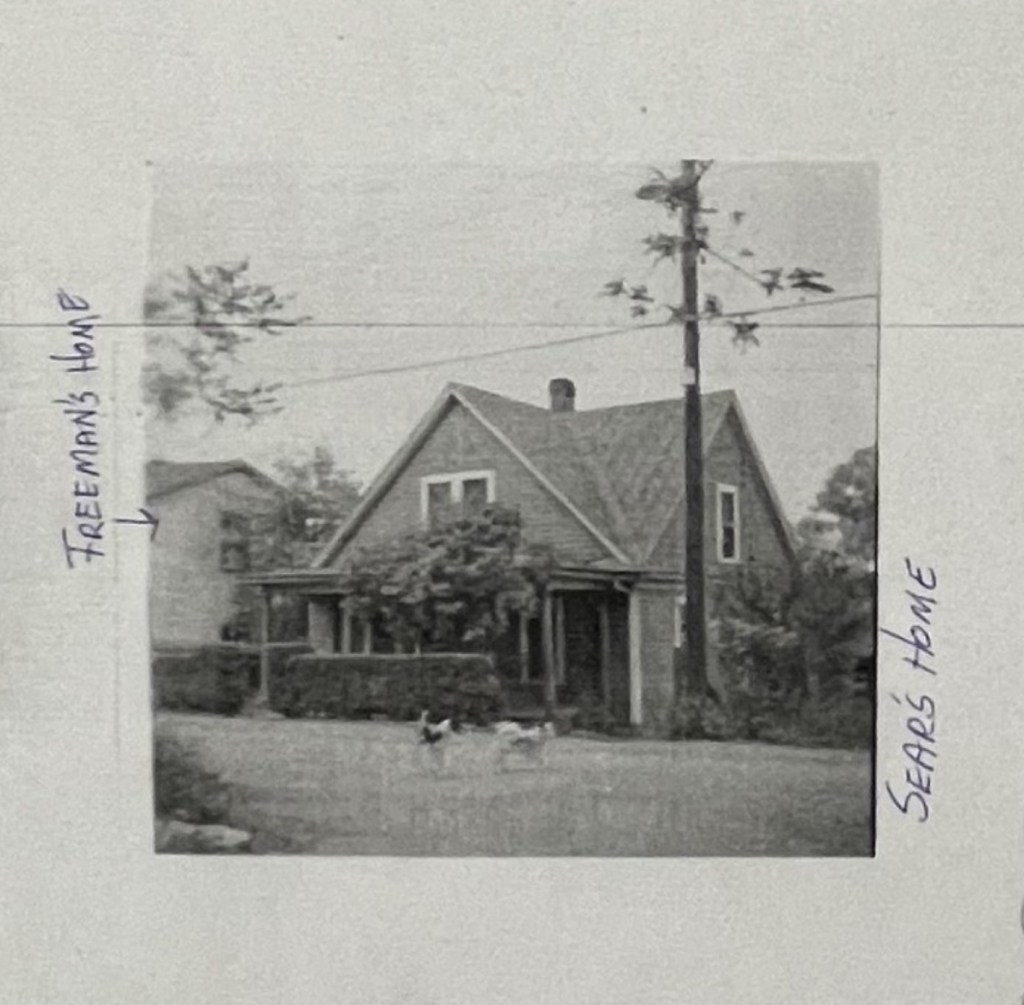
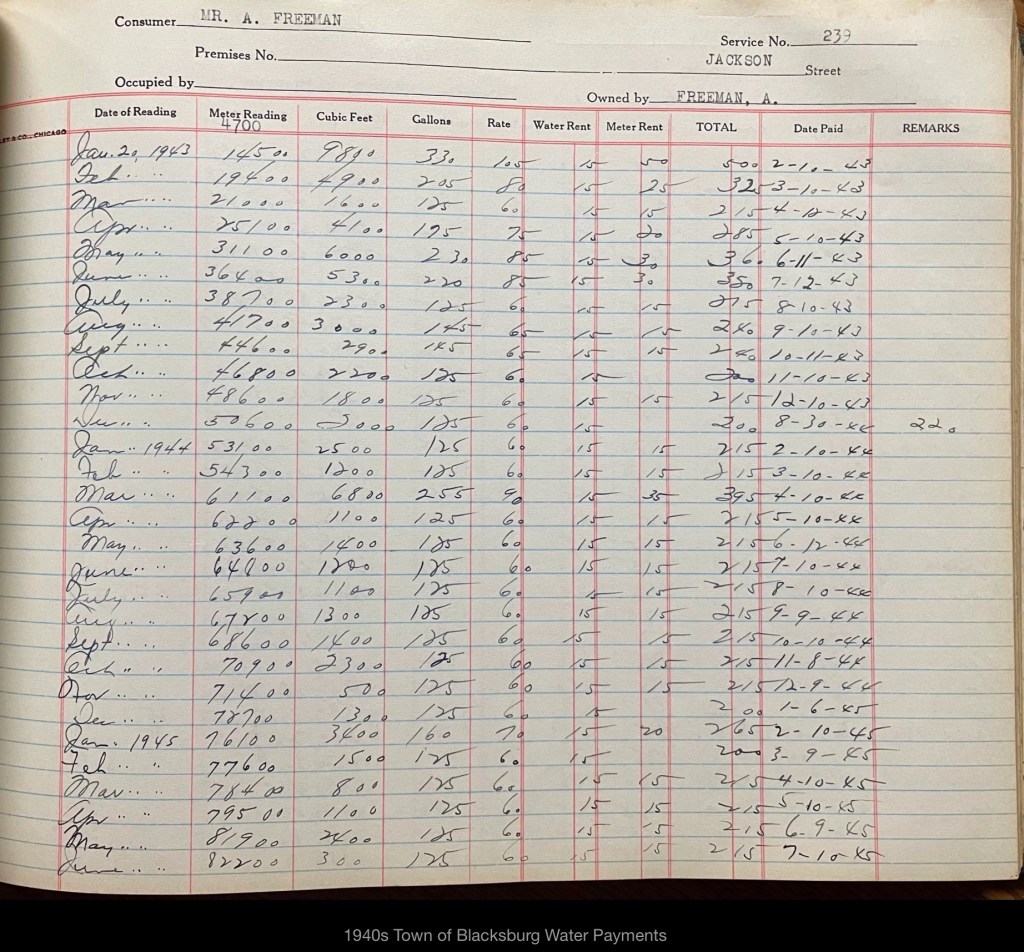
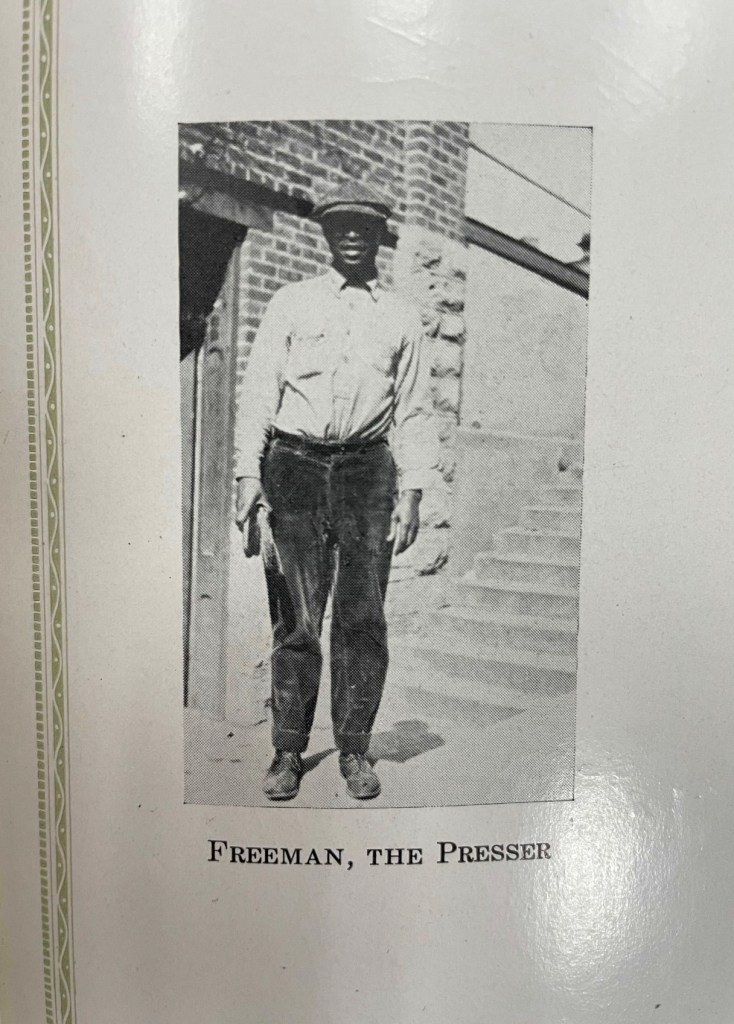
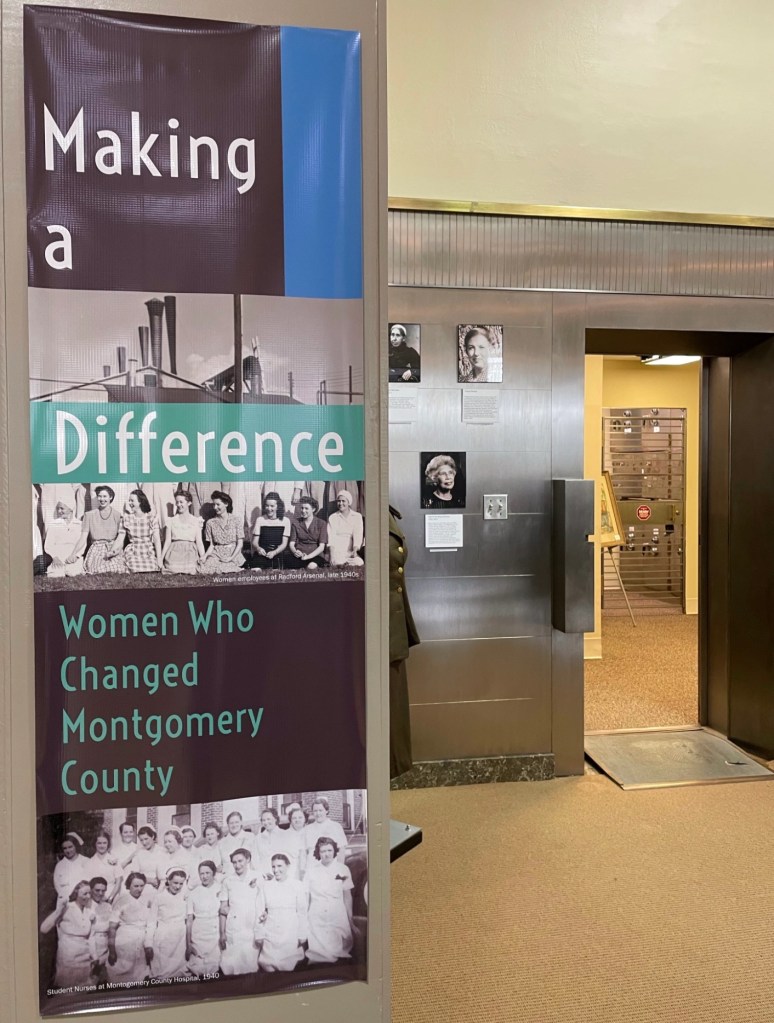
Location of the Freeman’s Home (postcard of Blacksburg prior to 1913, courtesy of Jody Booze-Daniels)Map of Blacksburg prior to 1957 with the families noted. Freeman’s home located west of Wade Sears’ Home prior to 1957, date the firehouse was built. (Martha Shupp Phillips masters thesis, 1948, VPI)The two houses in the background.The Freeman’s home is behind the church (people unknown) to the left of the image. The 1940s town water payment ledger (courtesy of BMCF)West-facing façade of Blacksburg Fire Station #1. The original 1957–58 building appears on the left side of the image, marked by the smaller doors. The Freeman family home once stood on the site where the newer vehicle bays are now located.South-facing façade of Blacksburg Fire Station #1, on the site where the Freeman family’s home once stood.North-facing façade of Blacksburg Fire Station #1. The original 1957–58 building extended about halfway along the brick wall that runs parallel to Stroubles Creek, near the location of Nannie Bell’s frog.Alonzo Freeman, Sr from 1922 Bugle Yearbook. Alonzo Freeman, Sr (source unknown) Freeman family Lee Street Cemetery (now called Southview Memorial Gardens)Alonzo Feadore Freeman WWI registration card. Alonzo Freeman Death CertificateAlonzo and Bessie Marriage Record information.Alonzo and Bessie Marriage Record 1917Alonzo Freeman in Statesville, NC in US Census 1900.Freeman family in Blacksburg, Va on Jackson St (1st St) in US Census 1920Freeman family in Blacksburg, Va on Jackson St (1st St) in US Census 1930Freeman family in Blacksburg, Va on Jackson St (1st St) in US Census 1930. Willie Thomas included, boarder. Freeman family in Blacksburg, Va on Jackson St (1st St) in US Census 1940. Freeman family in Blacksburg, Va on Jackson St (1st St) in US Census 1950Bessie Briggs Freeman obituaryBeatrice Freeman Walker obituaryAlonzo Freeman, Jr WWII registration cardAlonzo Freeman, Jr birth certificateNannie Bell Freeman Snell was featured in a 2022 exhibit at the Montgomery Museum of Art & History titled “Making a Difference: Women Who Changed Montgomery County.” The exhibit recognized women whose leadership, work, and community impact helped shape the history of Montgomery County.Nannie Bell Freeman Snell was featured in a 2022 exhibit at the Montgomery Museum of Art & History titled “Making a Difference: Women Who Changed Montgomery County.”Nannie Bell Freeman Snell was featured in a 2022 exhibit at the Montgomery Museum of Art & History titled “Making a Difference: Women Who Changed Montgomery County.”Alonzo Freeman, Sr WWI registration Card
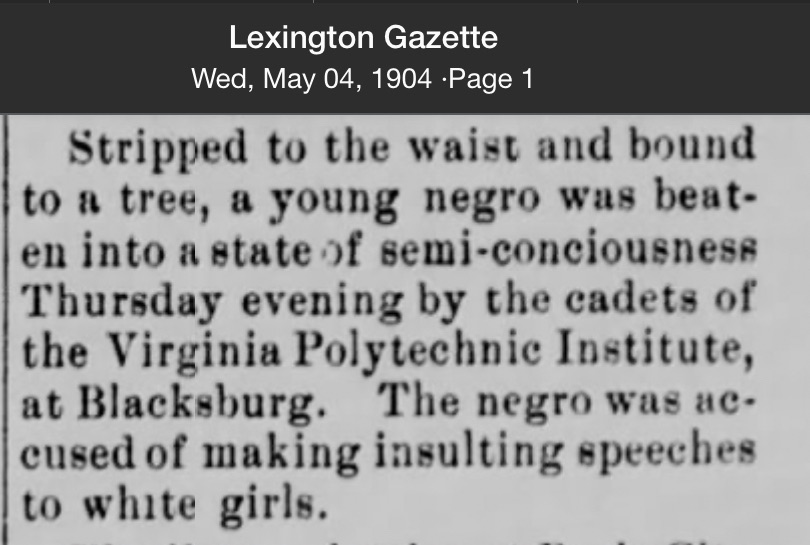
In April 1904, an African American man known only as Alexander was abducted and brutally beaten by Virginia Polytechnic Institute cadets in Blacksburg, Virginia. Publicly justified in a contemporary newspaper account, the attack forced Alexander to flee under threat of death.
This act of racial terror was intended to intimidate Black residents and enforce white supremacy. Naming what occurred—and remembering Alexander—is essential to understanding Blacksburg’s history.
“Stripped to the waist and bound to a tree…” Lexington Gazette, page 1, April 23, 1904
Content Warning
This page contains descriptions of racial violence, including abduction, torture, and threats of lynching. The language quoted from historical sources reflects the racist ideology of the time and is presented for the purpose of documentation and interpretation, not endorsement. Note that “lynching” is defined by the Emmett Till Antilynching Act of 2021. Readers are encouraged to proceed with care.
On April 20, 1904, an African American man identified only as Alexander was abducted, tortured, and nearly killed by cadets from Virginia Polytechnic Institute (then V.P.I.) in Blacksburg, Virginia. The attack was not hidden or denied. It was publicly described and justified in a first-person letter written by a cadet and published in The Roanoke Times on April 23, 1904.
The letter recounts how V.P.I. cadets organized, detained Alexander without legal process, removed him from town limits, tied him to a post, and beat him for approximately forty-five minutes. The author explicitly frames the violence as a “lesson” meant to terrorize Black residents and enforce white supremacy under the pretext of protecting white women. Though lynching was discussed among the attackers, Alexander survived and was forced to flee the area under threat of death if he returned.
We do not know Alexander’s full name or what ultimately happened to him. “Alexander” is the only name recorded, but the letter states that he lived in Blacksburg and had family there. The absence of fuller identification reflects a broader pattern in the historical record, where Black victims of racial terror were often deliberately anonymized while their attackers were named, defended, and celebrated.
The letter was authored by R. S. Royer, a V.P.I. student from Roanoke who was 19 years old at the time and a member of the Class of 1905. Royer later served as president of the German Club, editor-in-chief of The Bugle yearbook, and sergeant-at-arms for his class. Though a junior at the time of the attack, his language and position suggest leadership and ideological commitment to the violence he described.
This account is preserved here not to repeat its justifications, but to confront them. The 1904 attack on Alexander was an act of racial terror carried out by young men acting with confidence, coordination, and impunity. Remembering this event is essential to understanding the lived reality of Black life in Blacksburg at the turn of the twentieth century—and the institutional and communal forces that enabled such violence to occur without consequence.
Help Us Remember Alexander
We do not know Alexander’s full name, age, occupation, or what became of him after he was forced to leave Blacksburg. His partial anonymity reflects a painful truth: Black victims of racial terror were often left unnamed in the historical record, while their attackers were identified and defended.
We invite community members, descendants, researchers, and local historians to help us recover more information about Alexander and the Black community of Blacksburg in the early twentieth century. Family records, oral histories, church records, cemetery information, or other sources may hold pieces of this story.
If you have information or would like to assist with research, please contact us. Remembering Alexander is an act of historical justice.
Historical Note: Contemporary newspapers described the 1904 attack on Alexander as a “whipping,” a term that minimizes what occurred. Alexander was abducted by a mob, taken out of town, tied to a post, beaten for nearly an hour, and threatened with death if he returned.The attackers discussed lynching during the assault. Although Alexander survived, historians recognize this violence as part of the broader system of lynching and racial terror used to intimidate Black communities and enforce white supremacy.
Newspaper Accounts and Transcriptions
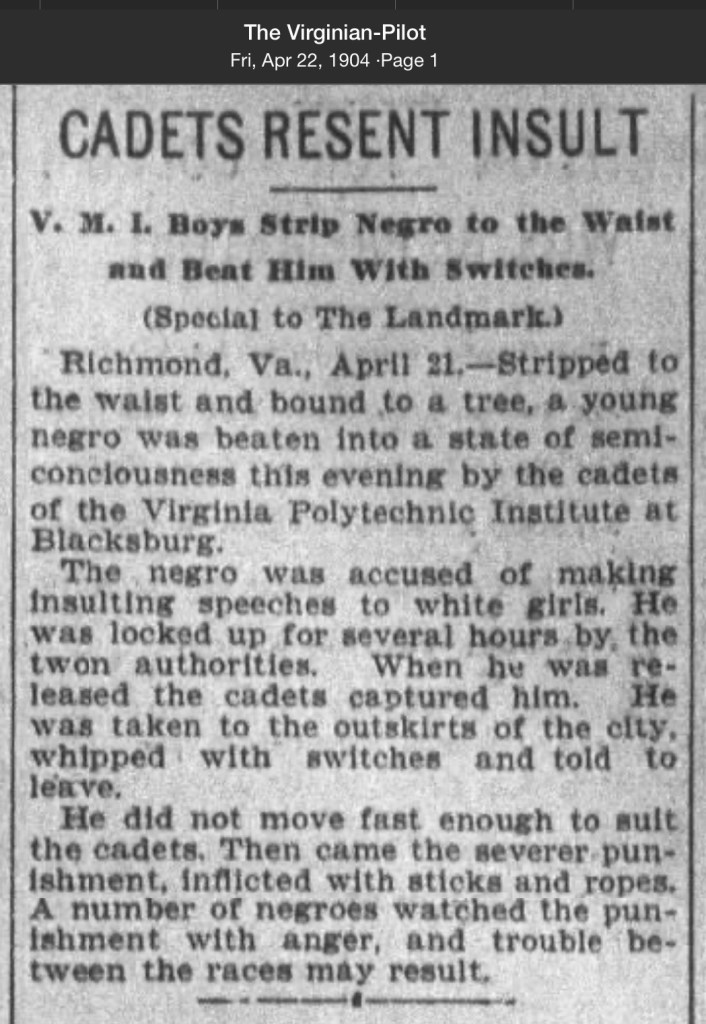
Virginian-Pilot, Fri, April 22, 1904, page 1:
Cadets Resent Insult Richmond, Va., Stripped to the waist and bound to a tree, a young Negro was beaten into a state of semi consciousness this evening by the cadets of the Virginia polytechnic Institute at Blacksburg.
The Negro was accused of making insulting speeches to white girls. He was locked up for several hours by the town authorities. When he was released, the cadets captured him. He was taken to the outskirts of the city, whipped the switches and told to leave.
He did not move fast enough to suit the cadets. Then came the severe punishment, inflicted with sticks and ropes. A number of Negroes watched the punishment with anger, and trouble between the races may result.
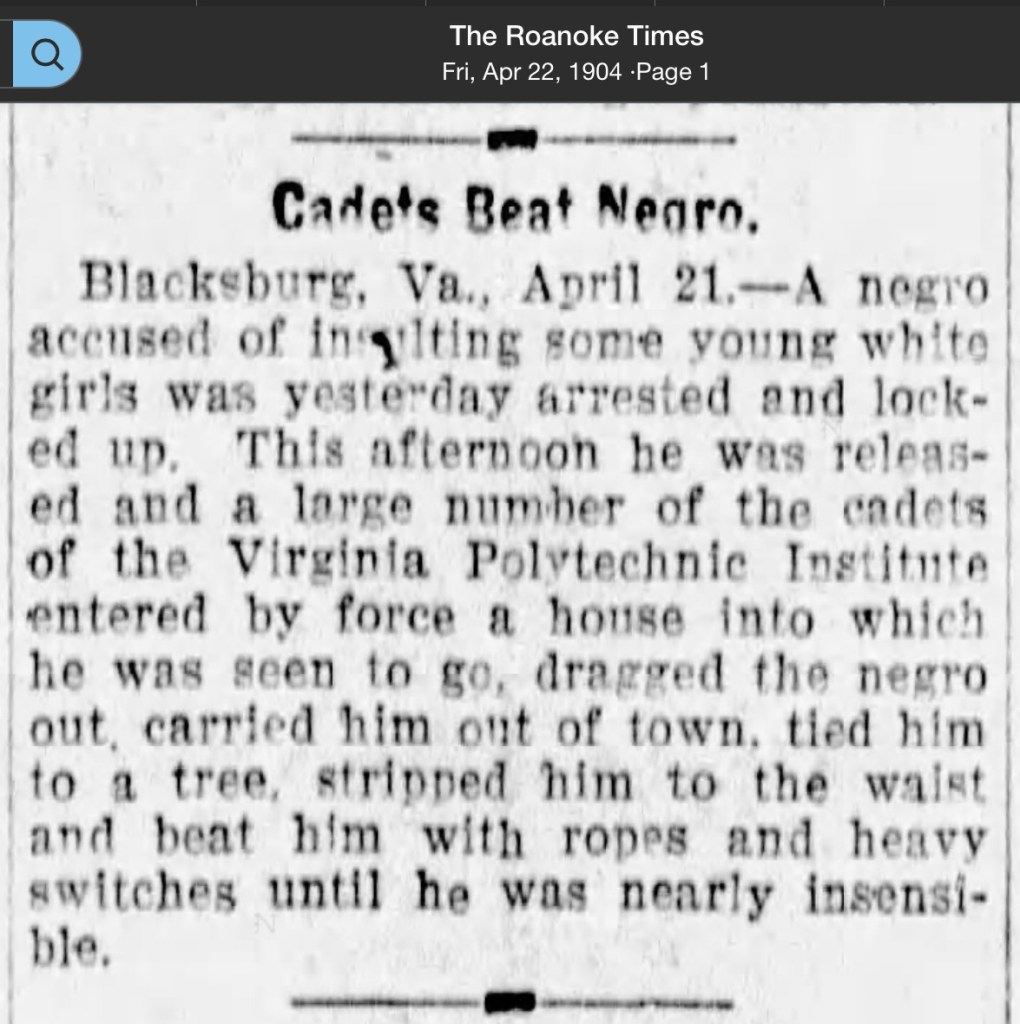
The Roanoke Times, Fri, April 22, 1904, page 1: Cadets Beat Negro Blacksburg, Va., April 21. A Negro accused of insulting some young white girls was yesterday arrested and locked up this afternoon. He was released and a large number of the cadets of the Virginia polite Institute entered by force a house into which he was seen to go, drag the Negro out, carried him out of town, tied him to a tree, stripped him to the waist and beat him with ropes and heavy switches until he was nearly insensible.
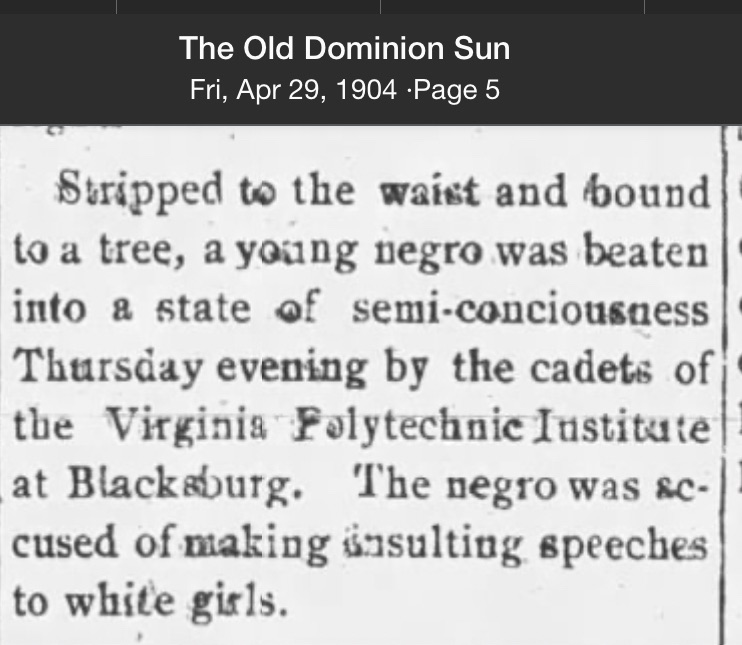
The old Dominion Sun, Fri, April 29, 1904, Page 5: Stripped to the waist and bound to a tree, a young Negro was beaten into a state of semi consciousness Thursday evening by the cadets of Virginia Virginia Tech Institute at Blacksburg. The Negro was accused of making insulting speeches to white girls.
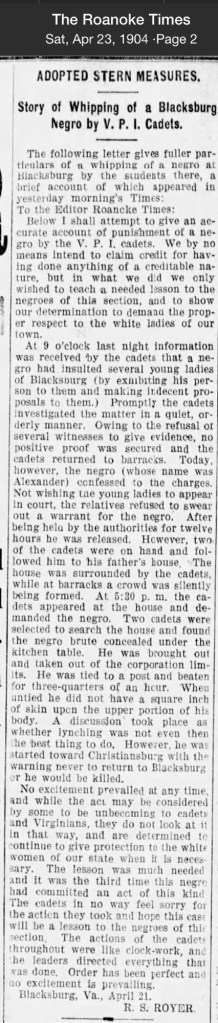
The Roanoke Times, Sat, April 23, 1904, page 2: Adopted Stern Measures Story of Whipping of a Blacksburg Negro by V.P.I. Cadets The following letter gives fuller particulars of a whipping of a Negro at Blacksburg by the students there, a brief account of which appeared in yesterday mornings times: To the editor, Roanoke Times: Below, I shall attempt to give an accurate account of punishment of a Negro by the VPI cadets. We by no means intend to claim credit for having done anything of a credible nature, but in what we did, we only wish to teach a needed lesson to the Negroes of this section, and to show our determination to demand the proper respect to the white ladies of our town.
At 9 o’clock last night information was received by the cadets that a Negro had insulted several young ladies of Blacksburg ( by exhibiting his person to them and making indecent proposals to them.) Promptly, the cadets investigated the matter in a quiet, orderly manner. Owing to the refusal of several witnesses to give evidence, no positive proof was secured, and the cadets returned to barracks. Today, however, the Negro (whose name was Alexander) confessed to the charges. Not wishing the young ladies to appear in court the relatives refused to swear out a warrant for the Negro. After being held by the authorities for 12 hours, he was released. However, two of the cadets were on hand and followed him to his father‘s house. The house was surrounded by the cadets, while at barracks, a crowd was silently being formed. At 5:30 PM, the cadets appeared at the house and demanded the Negro. Two cadets were selected to search the house and found the Negro brute concealed under the kitchen table. He was brought out and taken out of the corporation limits. He was tied to a post and beaten for 3/4 of an hour. When untied he did not have a square inch of skin upon the upper portion of his body. A discussion took place at whether lynching was not even then the best thing to do. However, he was started towards Christiansburg with a warning never to return to Blacksburg where he would be killed.
No excitement prevailed at any time, and while the act may be considered by some to be unbecoming to cadets, and Virginia‘s, they do not look at it in that way, and are determined to continue to give protection to the white women of our state when it is necessary. The lesson was much needed, and it was the third time this Negro had committed an act of this kind. The cadets in no way feel sorry for the action they took and hope this case will be a lesson to the Negroes of the section. The action of the cadets throughout were like clock-work, and the leaders directed everything that was done. Order has been perfect and no excitement is prevailing. Blacksburg, Virginia, April 21. R.S.Royer
Lexington Gazette, Wed, May 04, 1904, page 1. stripped to the waist and bound to a tree, a young Negro was beaten into a state of semi consciousness Thursday evening by the cadets of the Virginia polytechnic Institute, at Blacksburg. The Negro was accused of making insulting speeches to white girls.
Alvin Duval Lester (b. 1947) grew up in Christiansburg and later documented life in Richmond’s Jackson Ward through photography. His 1980s–90s images are featured in Alvin Lester: Portraits of Jackson Ward and Beyond, on view at the Virginia Museum of Fine Arts through March 30, 2026.
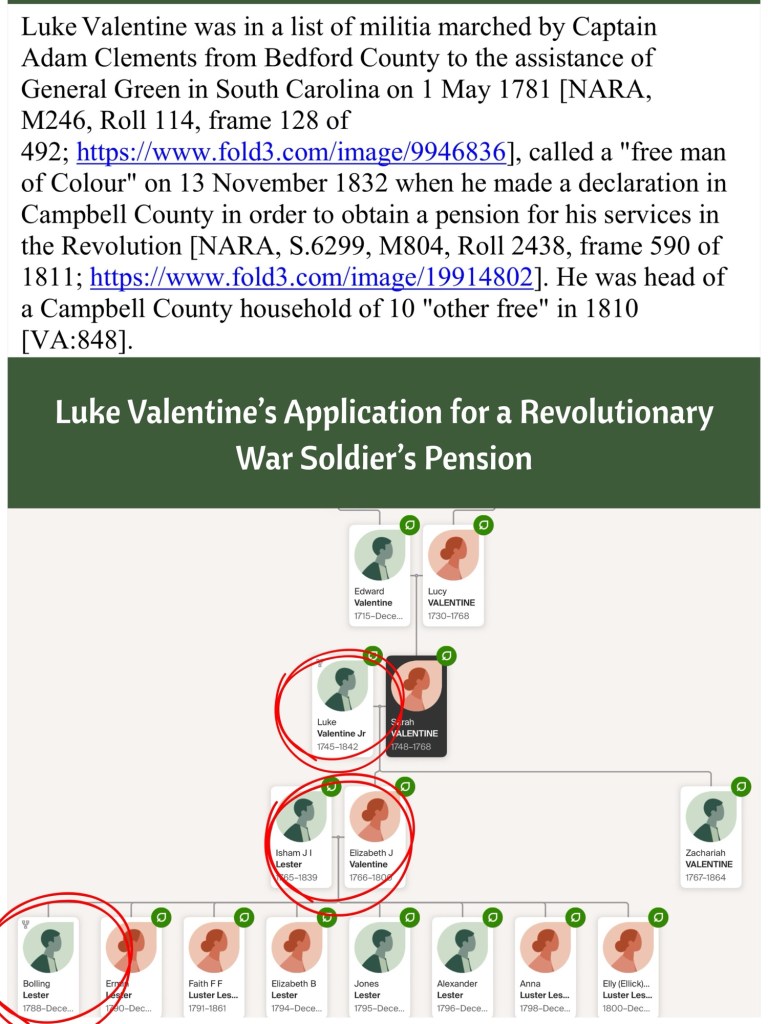
Lester’s family history spans at least five generations of free Black Virginians. Among his ancestors is Luke Valentine, who served in the Revolutionary War, marching from Bedford County to South Carolina in May 1781.
Courtesy of VMFA Museum
Alvin Duval Lester (b. 1947) is another example of the deep connections between Montgomery County families and Jackson Ward in Richmond. Raised in Christiansburg, Virginia, Alvin later documented life in Richmond through his photography. His images of Jackson Ward in the 1980s–90s were featured in the exhibit Alvin Lester: Portraits of Jackson Ward and Beyond. The Virginia Museum of Fine Arts exhibit will run until March 30, 2026 in the Photography Gallery, Richmond, Virginia. Facebook post by the Virginia Museum of Fine Arts
Alvin’s family history can be traced through at least five generations of free Black ancestors. His fourth-great-grandfather, Isham Lester (1765–1839), was listed as free in the 1810 U.S. Census for Lunenburg County. His son Bolling Lester, and grandson John C. Lester, were also born free there. By the 1860 U.S. Census, Bolling Lester had moved his family to Dry Valley in Montgomery County.
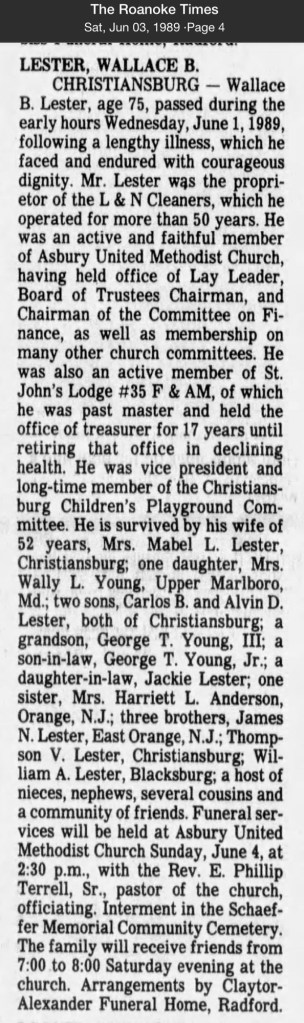
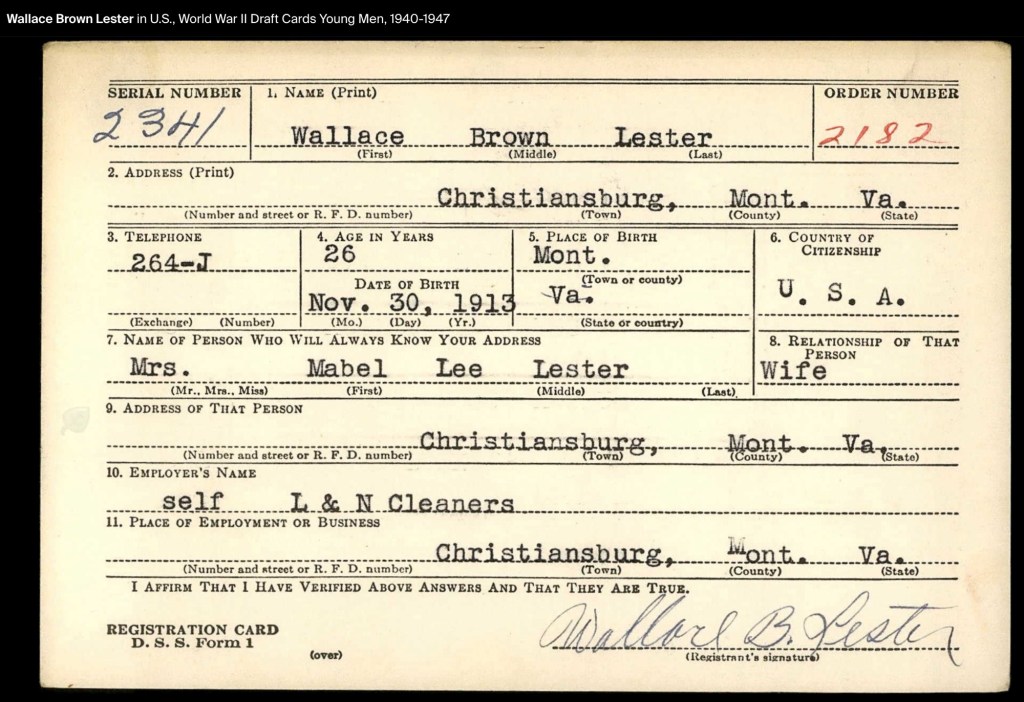
Alvin’s father, Wallace Brown Lester (1913–1989), married Mabel Lee Saunders on June 17, 1937, in Floyd County. The couple lived in Christiansburg, where Wallace owned L&N Cleaners. Alvin’s paternal grandparents were James Niles Wilson Lester (1880–1941) and Fannie Baker Thompson Lester (1886–1987). Fannie was the daughter of Herbert Thompson and Harriett Kincanon. James was the son of John C. Lester (1837–1924) and Annie Pate Lester (1843–1915), both born free in Lunenburg County, Virginia. John C.’s parents were Bolling Lester (1788–?) and Rebecca Barber (1790–1845).
Wallace Brown Lester ObituaryWallace Brown Lester Military RegistrationWallace Brown Lester Military Registration1932 City Directory
Alvin’s great-uncle, John Wynes Lester (1885–1961), taught, farmed and worked as a carpenter at Christiansburg Institute. He and his wife lived on campus until his death. He is buried in the school’s cemetery.
Luke Valentine, Free Black, Application for Revolutionary War Pension
During the American Revolutionary War, free Black men in Virginia played a meaningful—though often overlooked—role in the fight for independence. From the earliest days of the conflict, free Blacks served in militias, state troops, and Continental units, particularly as manpower shortages grew. Virginia law restricted enslaved people from bearing arms, but free Black men could enlist, serve as substitutes, or be mustered alongside white soldiers, especially in local militia companies.
By the later years of the war, Virginia increasingly relied on these men for defense and campaigns beyond the colony’s borders. Their service included marching long distances, guarding supply lines, engaging Loyalist forces, and fighting in the southern theater, where the war was especially intense in 1780–1781.
Luke Valentine, fifth-great grandfather of Alvin Lester’s, is one such example. He appears on a roster of men led by Captain Adam Clements of Bedford County, Virginia, who marched to South Carolina beginning May 1, 1781. This was a critical moment in the war, as Patriot forces sought to counter British advances in the South. Valentine’s inclusion on this roster places him among the free Black Virginians who answered the call to serve far from home in support of American independence.
After the war, some free Black veterans, including Luke Valentine, applied for Revolutionary War pensions. These applications are vital historical records, offering rare documentation of Black military service and affirming that free Blacks were not only present but active participants in the founding struggle of the United States.
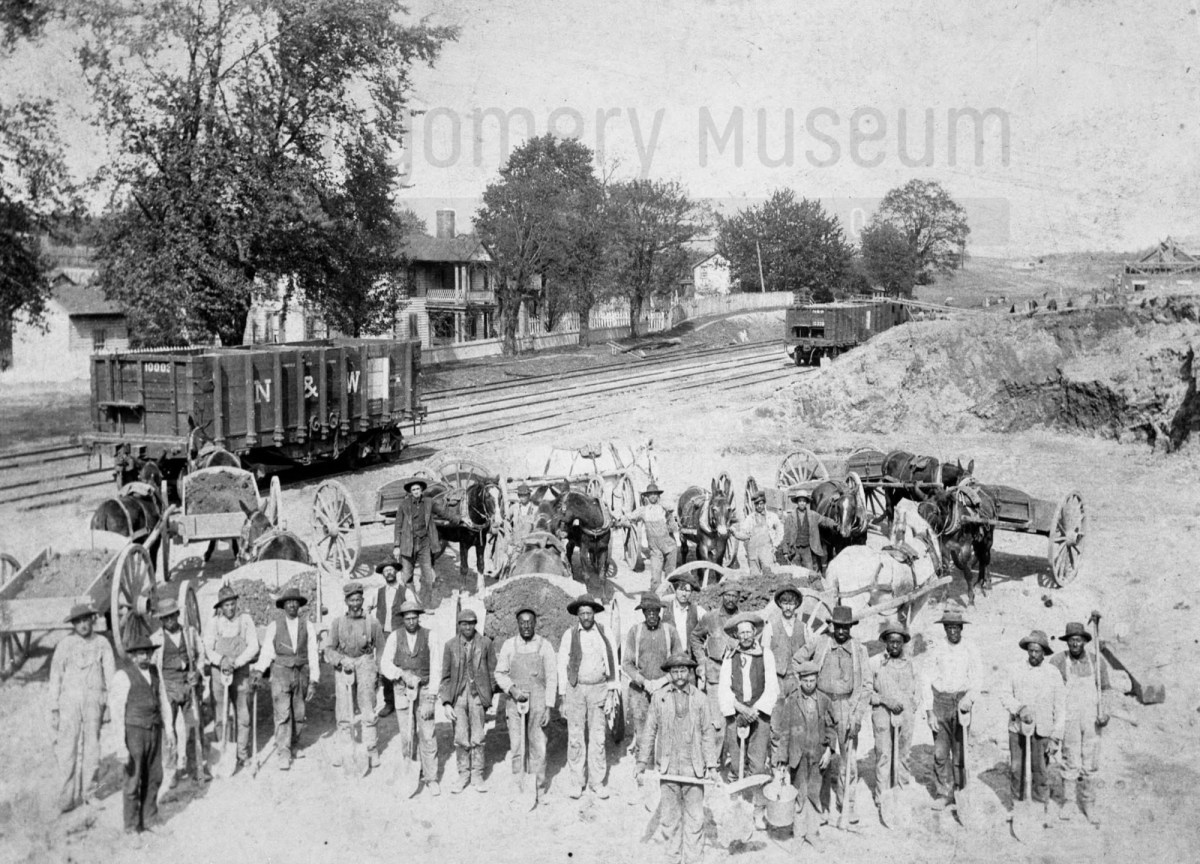
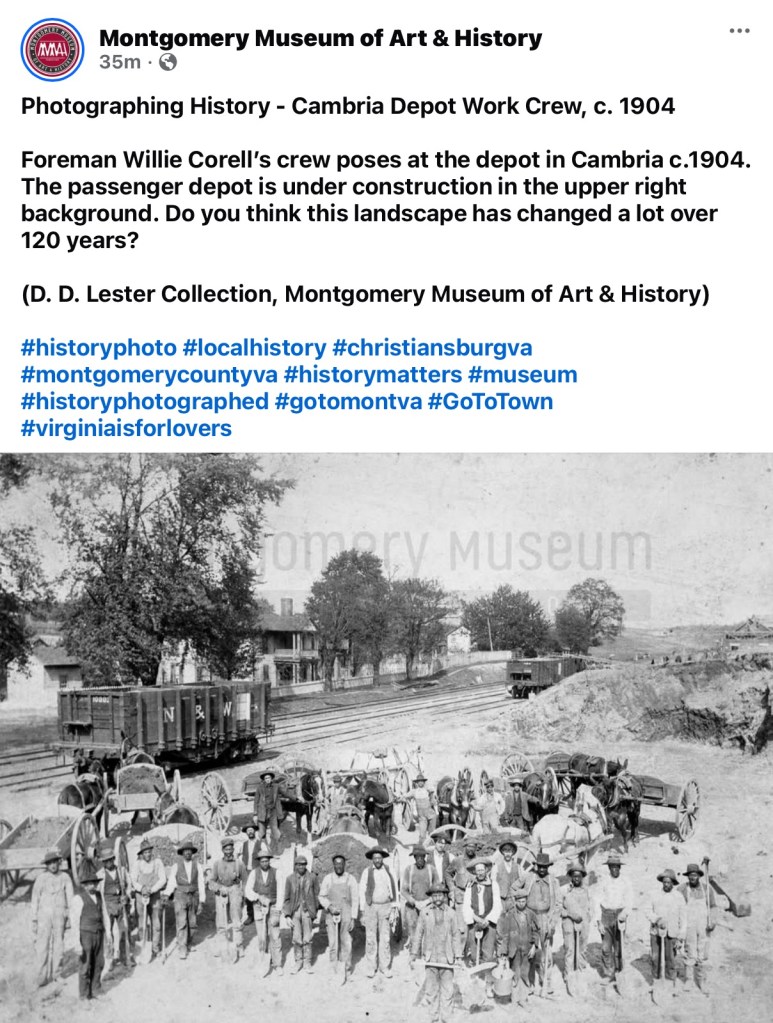
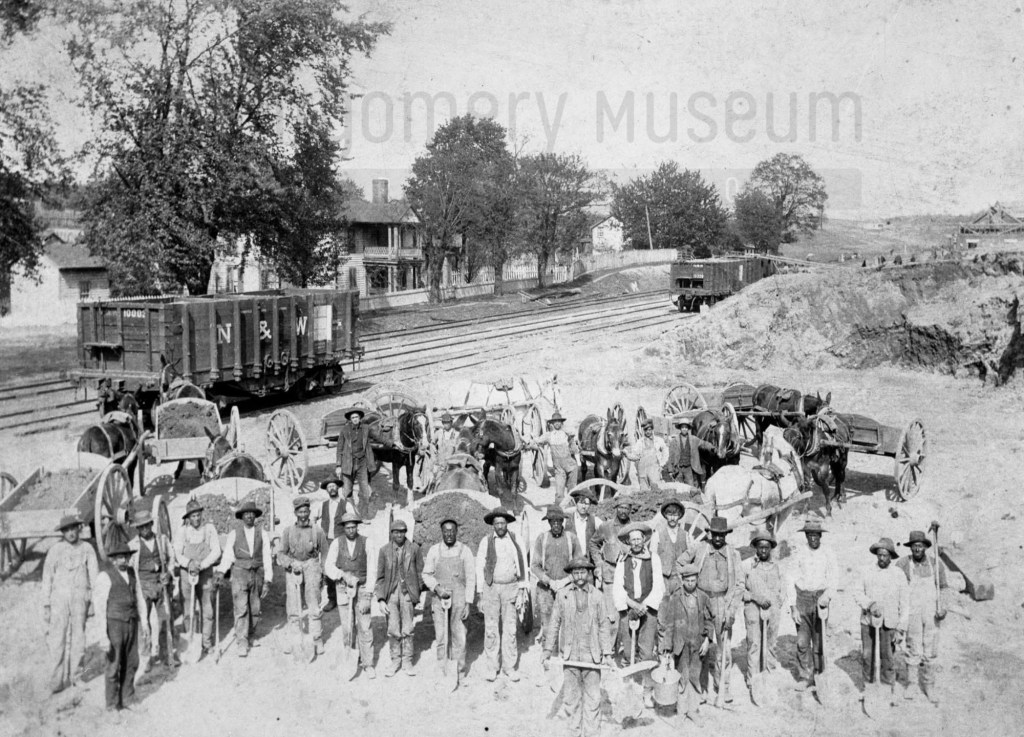
In 1904, a mixed-race crew built the new Cambria, Virginia Depot passenger station. Their faces were captured, but their names were not. As we search census records and explore new tools like AI facial recognition, we hope to uncover who they were — the hands and lives behind this piece of our shared history.
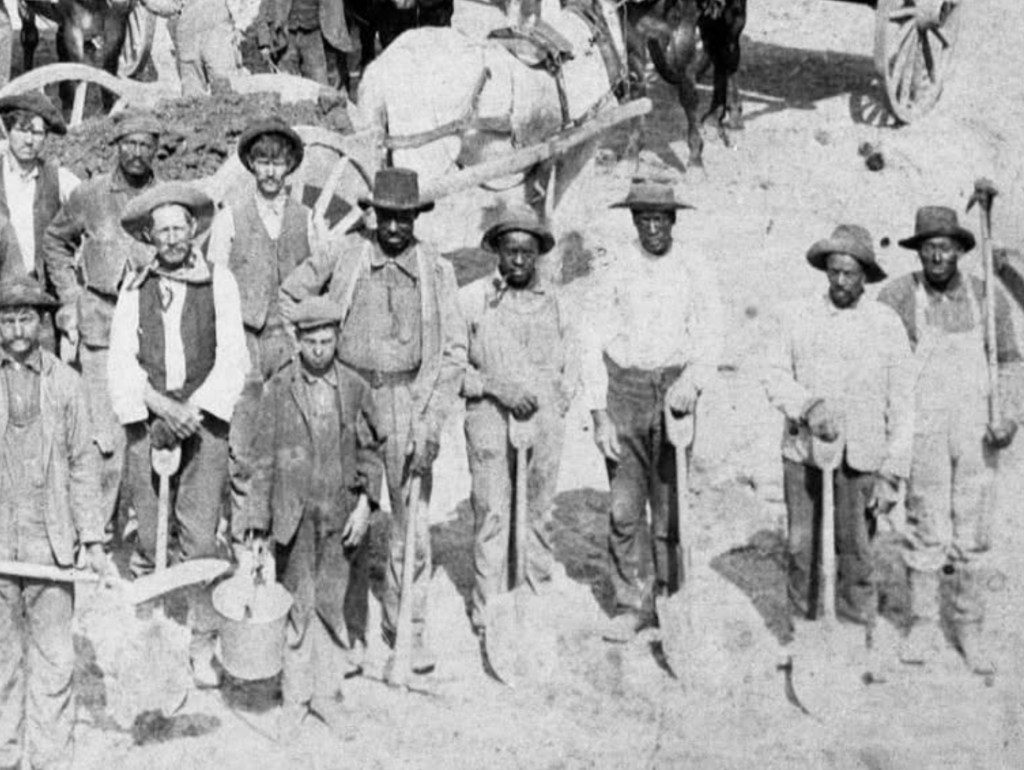
Facebook PostCambria Depot Work Crew, about 1904 (DD Lester Collection, Montgomery Museum of Art & History)Close-up of Cambria Depot Work Crew, about 1904 (DD Lester Collection, Montgomery Museum of Art & History)Close-up of Cambria Depot Work Crew, about 1904 (DD Lester Collection, Montgomery Museum of Art & History)Close-up of Cambria Depot Work Crew, about 1904 (DD Lester Collection, Montgomery Museum of Art & History)
This 1904 photograph captures a work crew—Black and white men together—building the new passenger station for the Cambria, Virginia Depot. It’s a remarkable image of shared labor and community effort during a time of deep segregation.
Yet, like so many images from the early 20th century, the men remain unnamed, except for the foreman, Willie Corell. Their faces look back at us across more than a century, but their identities have been lost to time. Who were they? What were their lives like?
With advancing technology, tools like AI facial recognition may one day help uncover their names and family connections. Until then, our research turns to the 1900 and 1910 census records, where we hope to find traces of the African American laborers who helped shape the Cambria community and build this station that still stands as part of our shared history.
If you have family stories, photographs, or names that might help identify these men, we would love to hear from you. Each clue brings us closer to giving them the recognition they deserve.
The exact location of this church in the Childress area remains unknown. A 1940 school map shows nearby schools but lists only Pine Woods, a Rosenwald-funded African American school. Because schools were often built near churches, the map—and the noted Shelburne home—may offer clues to where the congregation once gathered.
Rough & Ready Church in Childress, Va – Roanoke Times, 05 August 1923, page 20
The exact location of this church in the Childress area is unknown. A 1940 school map identifies local schools but does not mark any African American schools, except Pine Woods School, which was built with Rosenwald funds. In many communities, schools were often situated near churches, so their locations can offer valuable clues. A Shelburne home also appears on this map, suggesting possible connections within the neighborhood.
The Roanoke Times, 05 August 1923, page 20
During a violent electrical storm Monday, lightning struck a son of Authur Shelburne near the colored church “Rough & Ready.”
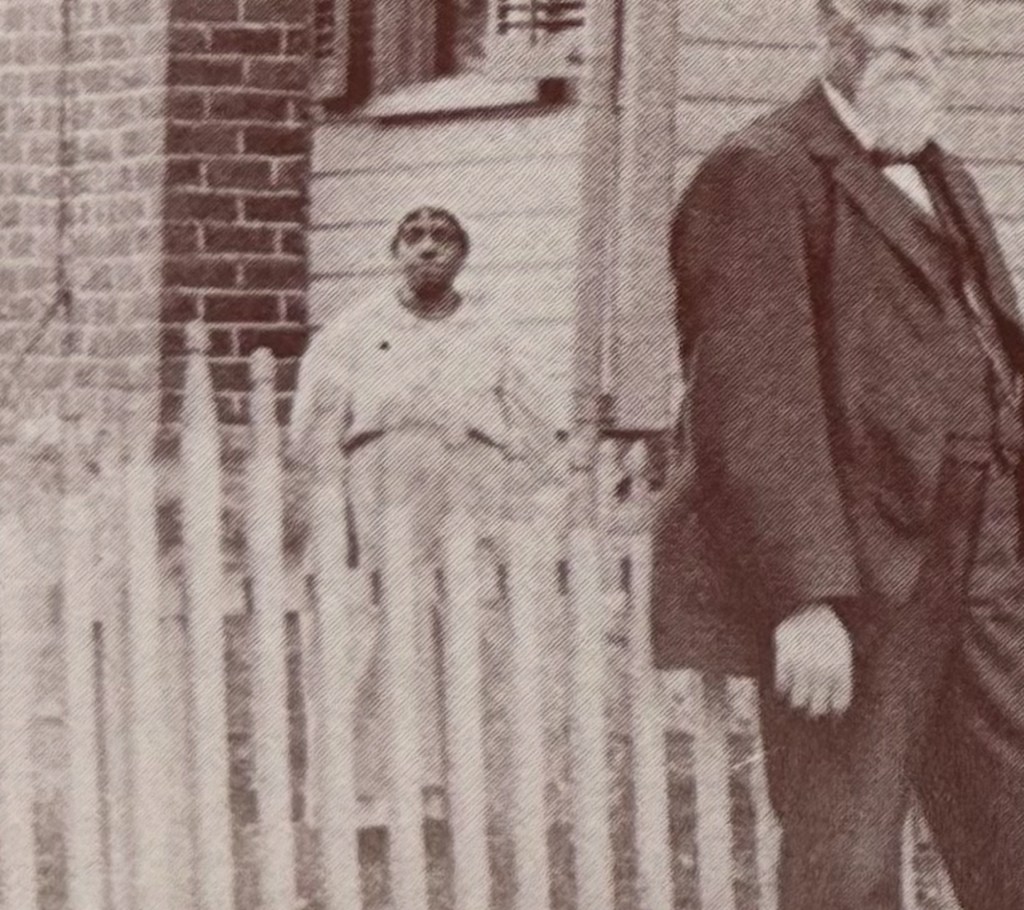
Behind the Lawrence family’s fence on Five Points Road in Riner stands an unidentified African American woman—her name unrecorded, her story unknown. She appears behind Canaan and Mollie Weaver Lawrence, whose wealth came from farming, commerce, and the post office in the late 1800s.
Searching for Her Name
In this photograph, taken in Riner, Virginia, a white family stands proudly in front of their home on Five Points Road, Riner, Virginia. Behind the fence, partially obscured, stands an unidentified African American woman—someone whose name and story have not yet been recorded.
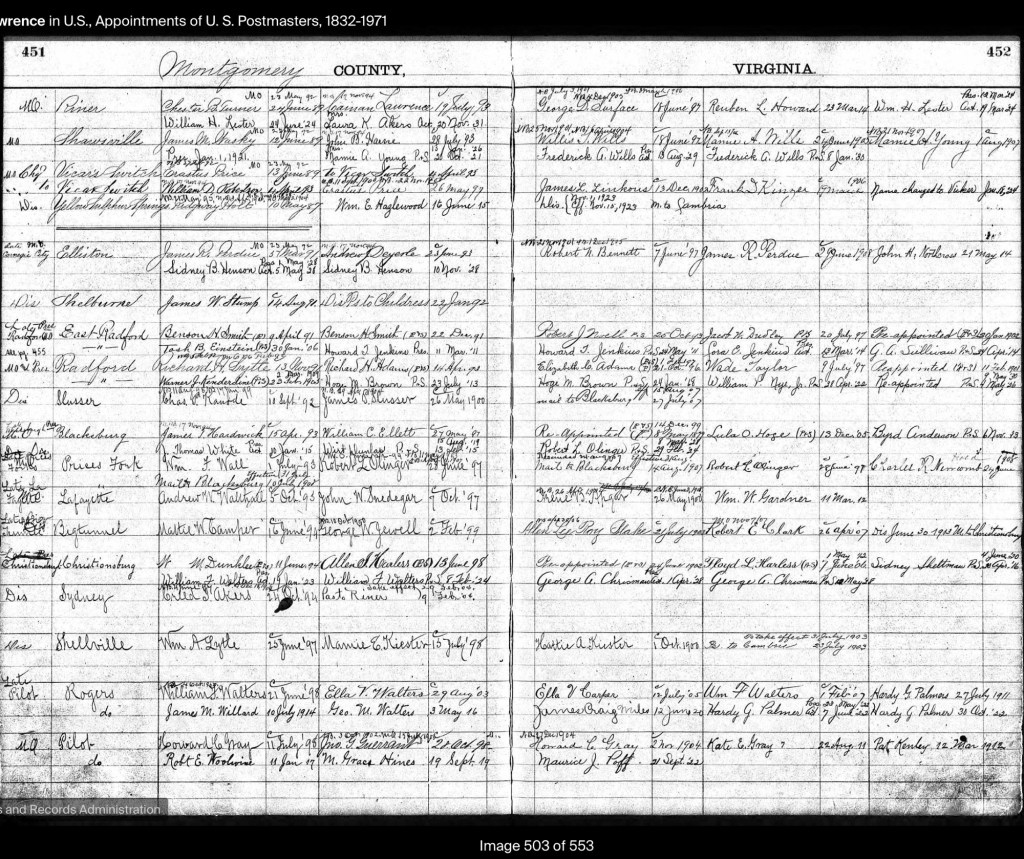
She is pictured behind Canaan (1840–1905) and Mollie E. Weaver Lawrence (1838–1931), whose home and farm once stood at this site. Canaan, a Confederate veteran, was listed as a farmer, D.G. merchant, and postmaster in 1893—the sources of the family’s prosperity. Born in Floyd County, he moved to Auburn by the 1870 census. Mollie, born in Auburn, remained there her entire life.
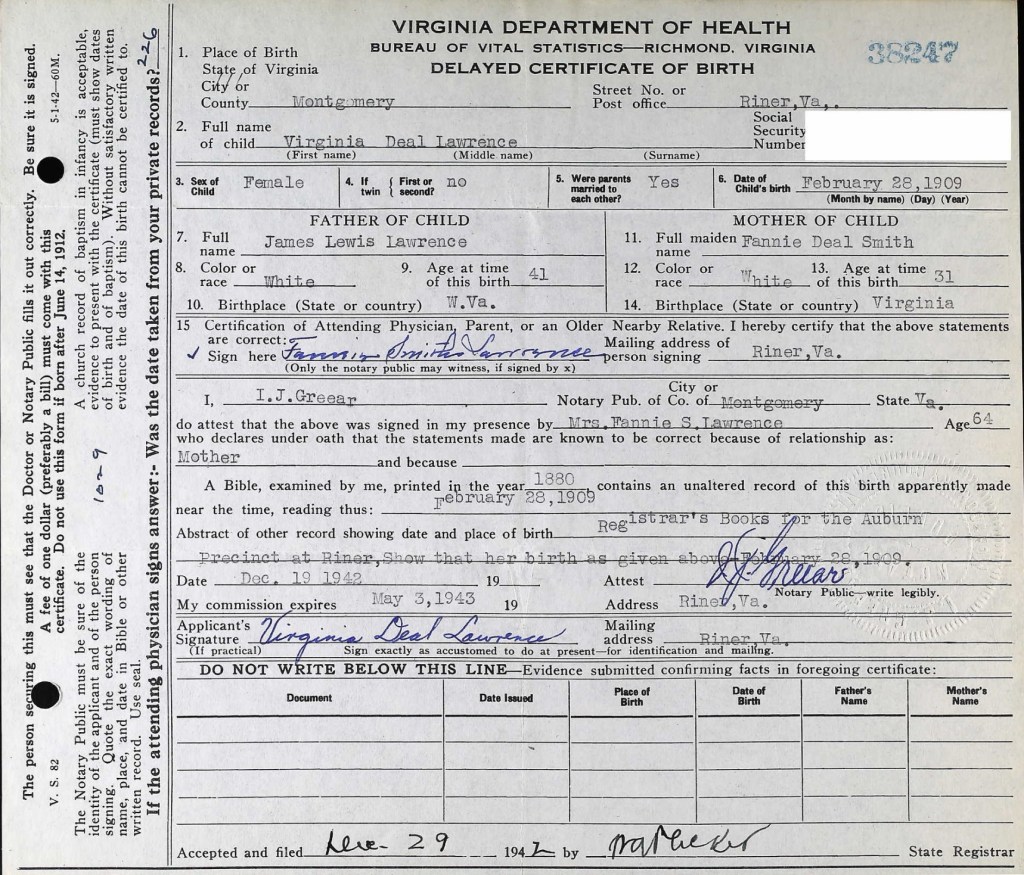
This photograph was shared by their granddaughter, Virginia Deal Lawrence, a longtime teacher at Auburn Elementary School, who preserved many family images and documents. Despite a search through census and local records, the woman’s name remains unknown.
We will continue to look through Virginia Deal’s papers and scrapbooks in hopes of finding a clue.
If you recognize this woman or know anything about the African American community connected to the Lawrence family, please contact us—we would be honored to record her name and story.
Please let us know if you can identify this woman behind the fence.Lawrence Family PhotoCanaan Lawrence1893 Canaan Lawrence was Postmaster of Riner, Va1895 Canaan Lawrence was the Postmaster in Riner, VaMollie Elizabeth Weaver Lawrence Virginia Deal Lawrence, granddaughter of Canaan and Mollie LawrenceThe Riner 1995 Calendar filled with Virginia Deal Lawrence’s photos