Montgomery County Resources

Montgomery County, Virginia Resources and the Formation of the County Over Time

National Register of Historic Places Application – 1989

National Register of Historic Places Application – 1989

This searchable document is a rich source of information about the county and its wider connections. For example, it notes that the New River boatmen once lived on Kent Farm, where they were enslaved by James Randle and Margaret Cloyd Kent prior to emancipation (see page 13). Additional details about Kentland and these freedmen can be found in the following postings: Historic Kentland and Historic Wake Forest

The names of some of the black boatmen of 19th-century Montgomery County include Frank Bannister (who was a boatman on the James River before the Civil War), Calvin Bannister, Roland Stuart, George Brown, and Lewis Smith.


Montgomery County Reconnaissance Level Survey, 1986

This report that was written by Gibson Worsham, Dan Pezzoni, Charlotte Worsham, David Roenizer, and others. It addresses the following: 1) Overview of the county’s history, 2) A comprehensive inventory of significant structures and sites in the county and 3) Maps delineating the location of said structures and sites. Similar to the report above, this is a wealth of information about the county.


More information can be found on this website: Gatherings Blacksburg History


The Formation of Montgomery County, Virginia and Why it Matters to African American History of the Region

When Virginia’s earliest European colonial settlers first pushed westward beyond the Blue Ridge Mountains, they entered the border lands already inhabited by Native peoples for thousands of years. As Europeans laid claim to these territories in the 18th century, Virginia’s county boundaries began shifting rapidly to keep pace and the need for local governance.

At first, all of western Virginia was considered part of vast counties based far to the east. Augusta County, created in 1738, stretched from the Blue Ridge to the Mississippi River—a landmass so large it was nearly impossible to govern effectively. As settlement expanded, Augusta was gradually carved into smaller counties.

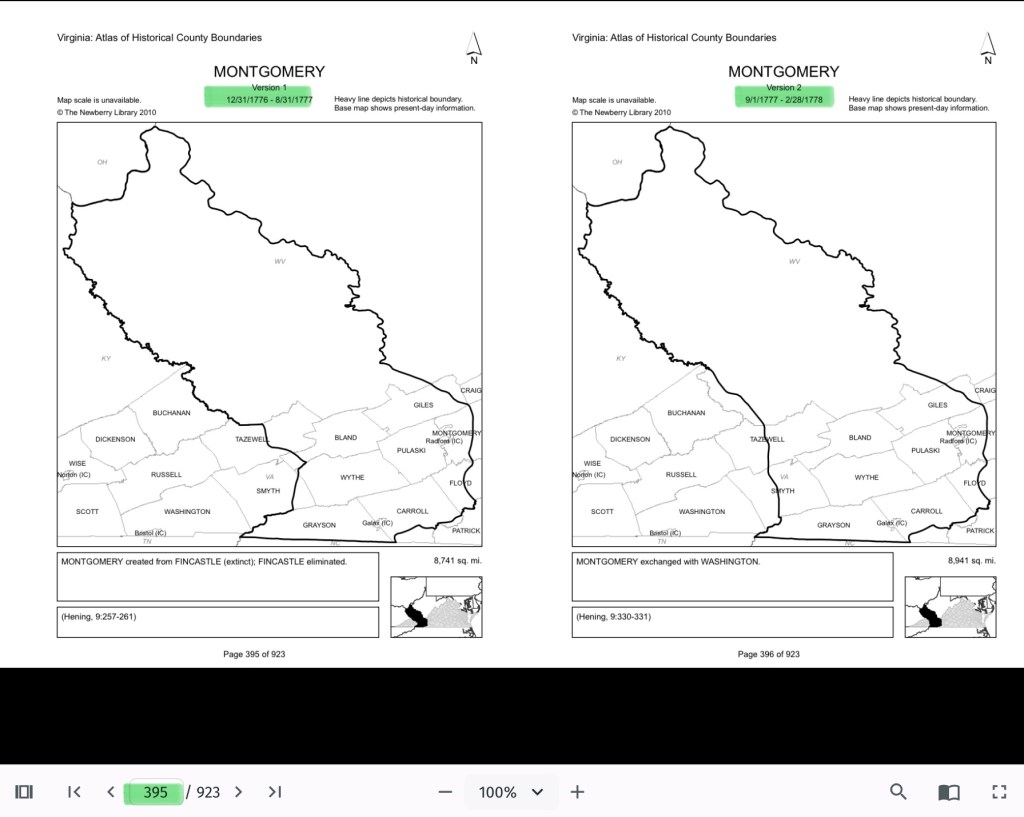
Botetourt County was created in 1770 out of Augusta, and just two years later, in 1772, Fincastle County was formed to cover the far southwest. But Fincastle itself was short-lived: in 1776, it was split into three new counties—Montgomery, Washington, and Kentucky (the latter eventually becoming the Commonwealth of Kentucky).

Thus, Montgomery County was officially established in 1776, named in honor of General Richard Montgomery, a Revolutionary War hero.

Like most early counties, Montgomery did not remain the same size for long. As population grew and communities demanded closer courts and local representation, Montgomery’s original boundaries were gradually reduced.

  • 1790: Wythe County was formed from Montgomery.
  • 1790: Parts of Montgomery contributed to the creation of Kanawha County (now in West Virginia).
  • 1806: Giles County was carved from Montgomery, Monroe, Wythe, and Tazewell.
  • 1831: Montgomery giving land to Floyd
  • 1839: Montgomery giving land to Pulaski
  • 1892: City of Radford

By the mid-19th century, Montgomery County had taken on the approximate shape we recognize today.

Why This Matters

Tracing these changing boundaries shows how the western border lands of Virginia evolved from a vast Indigenous landscape into the network of counties we know today. When we study Montgomery County’s formation and its changing borders, we are not only tracking political geography—we’re also uncovering how those shifts shaped the daily realities of enslaved people and freedmen. The “line on a map” often meant the difference between where families were recorded, where they could live, and how they could begin to claim freedom and opportunity.

County seats like Christiansburg were not only centers of trade and government but also of the slave market and the courthouse records that tracked the lives of enslaved people. After emancipation, those same courts became the places where freedmen registered marriages, secured contracts, and sought land. As county lines shifted, so too did the jurisdictions that controlled access to justice, opportunity, and community life.

The flip book of maps below is a helpful resource to understand how the boundaries changed with time. Begin on page 395.

Virginia Atlas of Historical County Boundaries

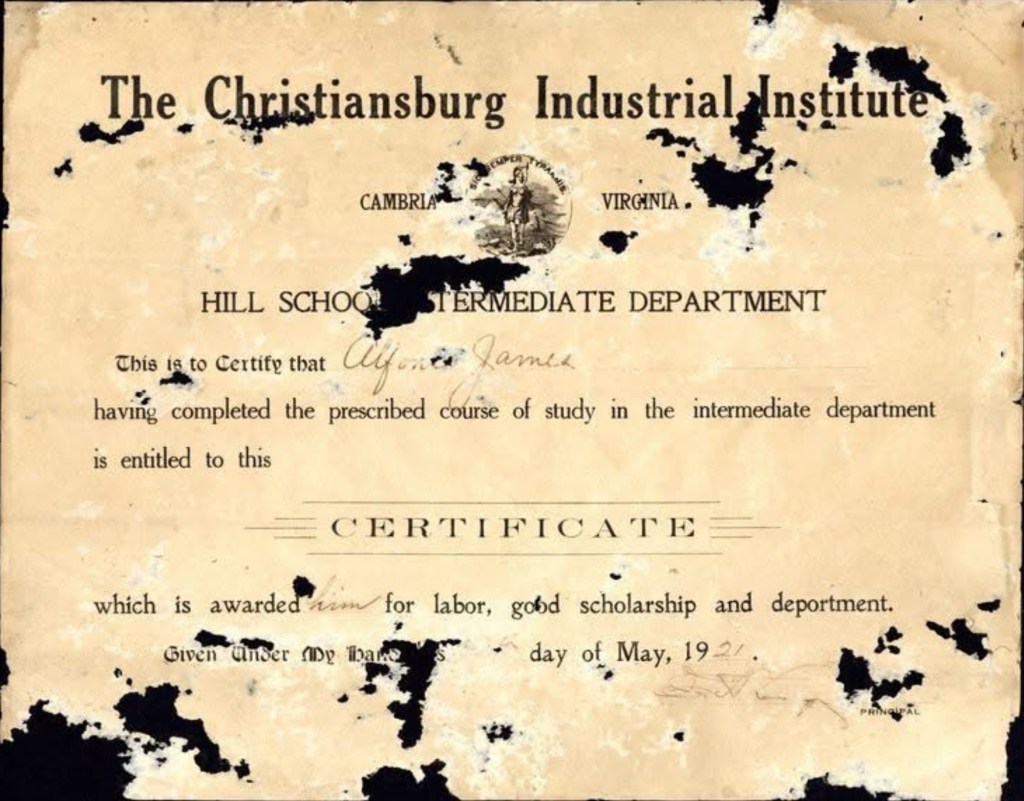
Alfonzo James: A Life Dedicated to Education and Community Service

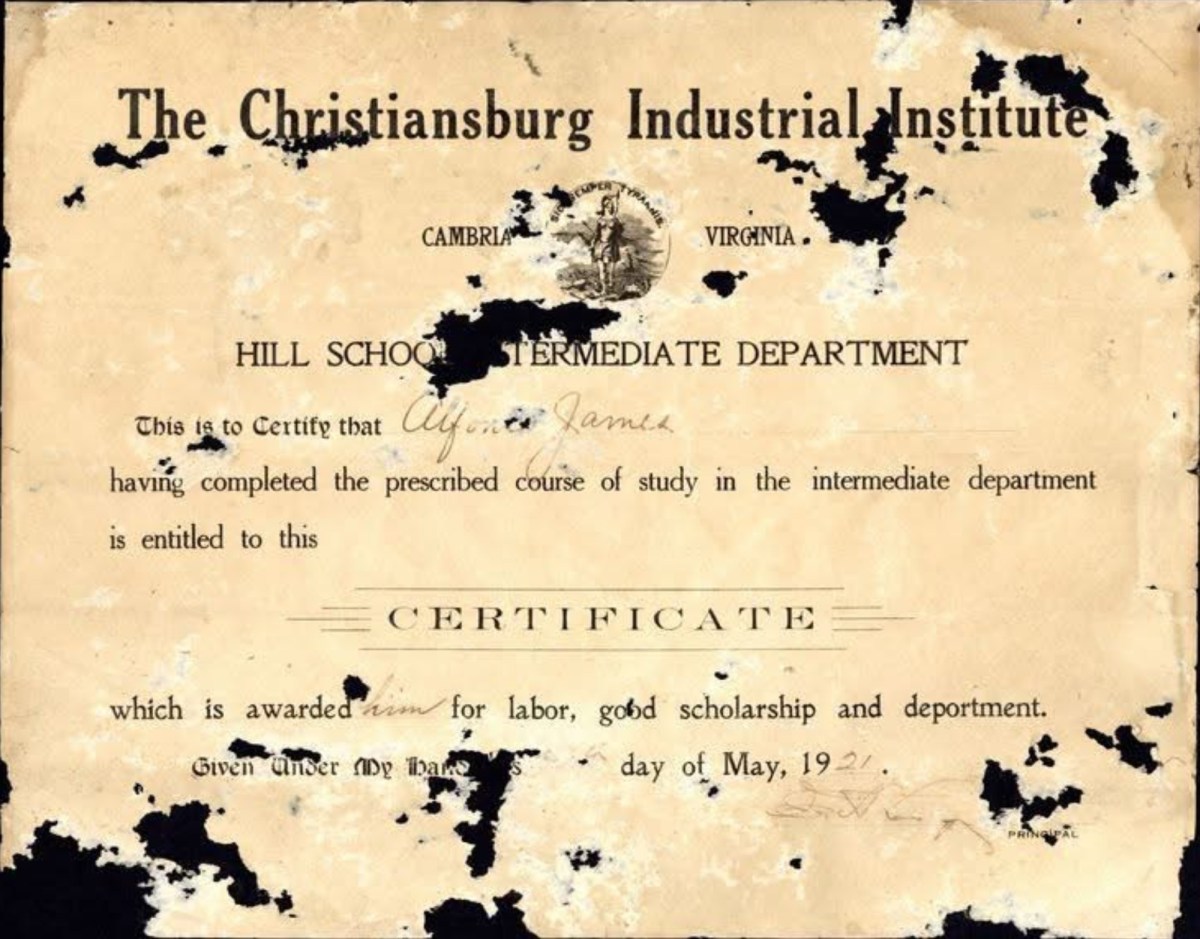
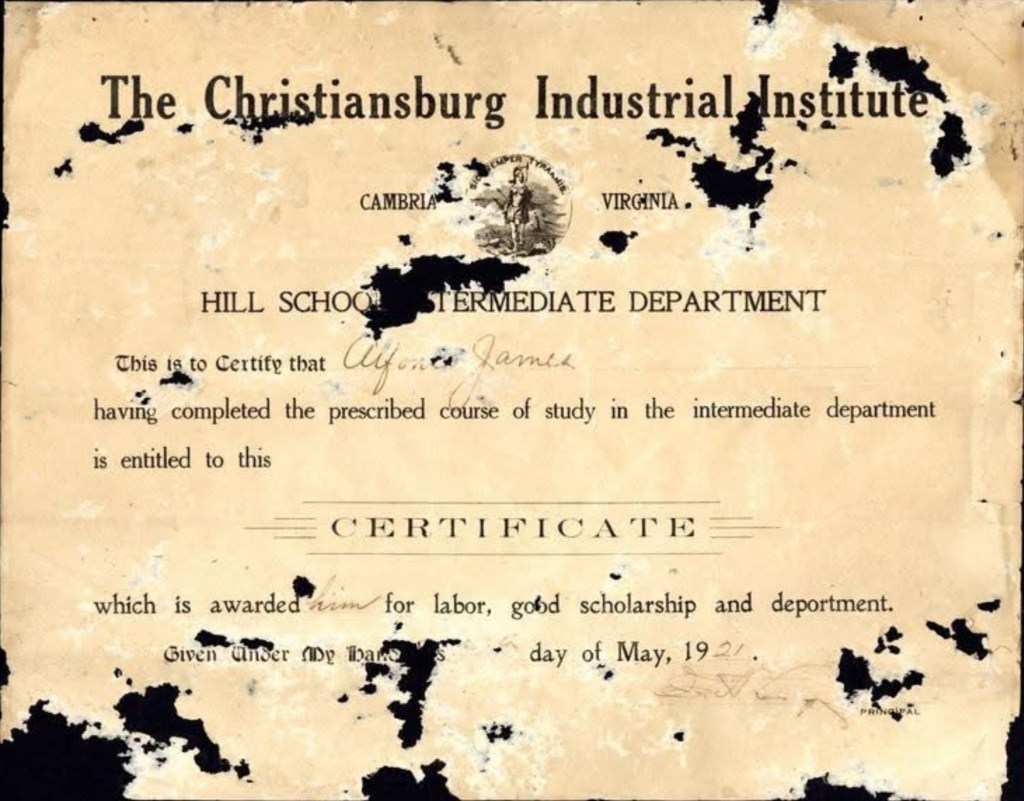
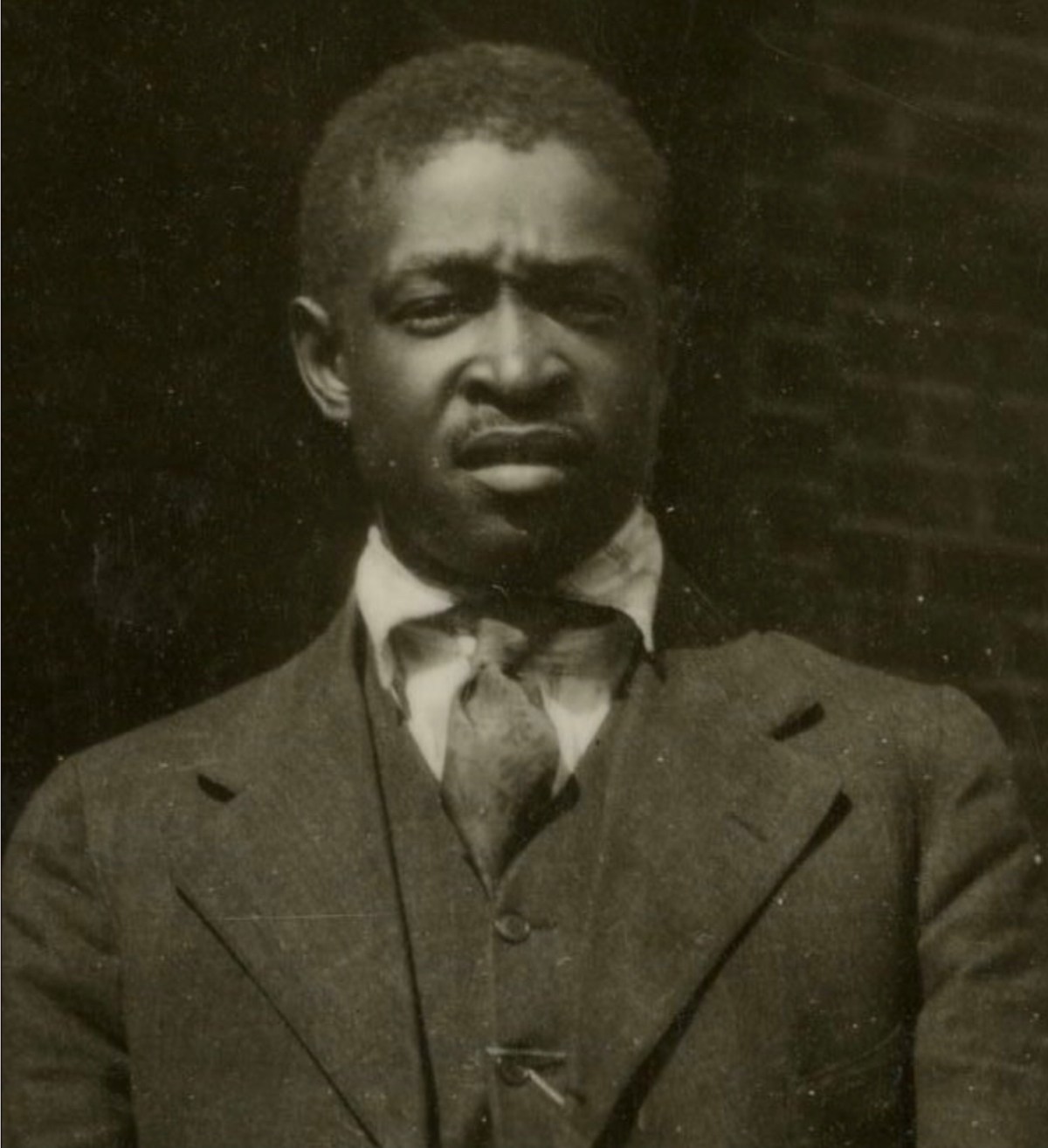
Alfonzo James, born in 1904, was the eldest of three children to John and Mary Campbell James. He graduated from the Hill School in Christiansburg in May 1921.

His father, John James, was born in Pennsylvania and, according to the 1900 U.S. Census, lived as a boarder with Principal Charles L. Marshall of the Christiansburg Institute at the age of 15. This household also included Edgar A. Long, his wife and daughter, Louis Brown (16 years old), and William Gray, a teacher.

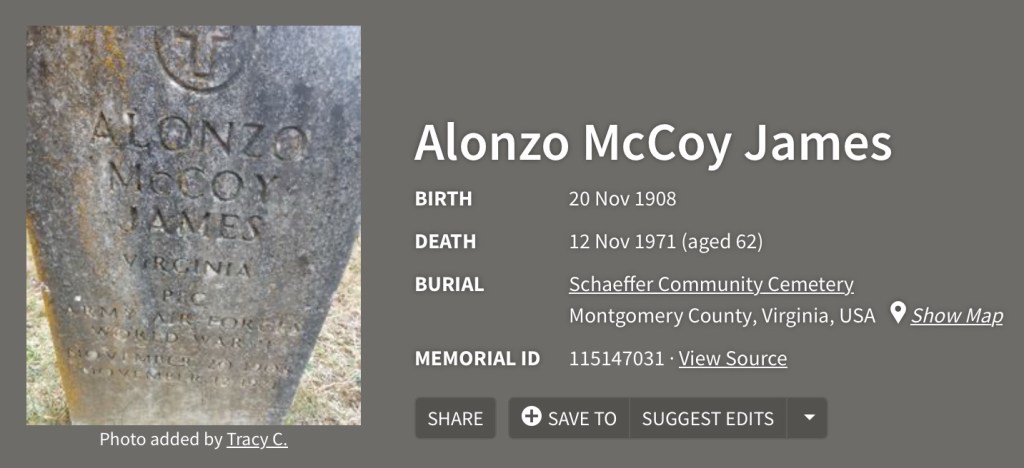
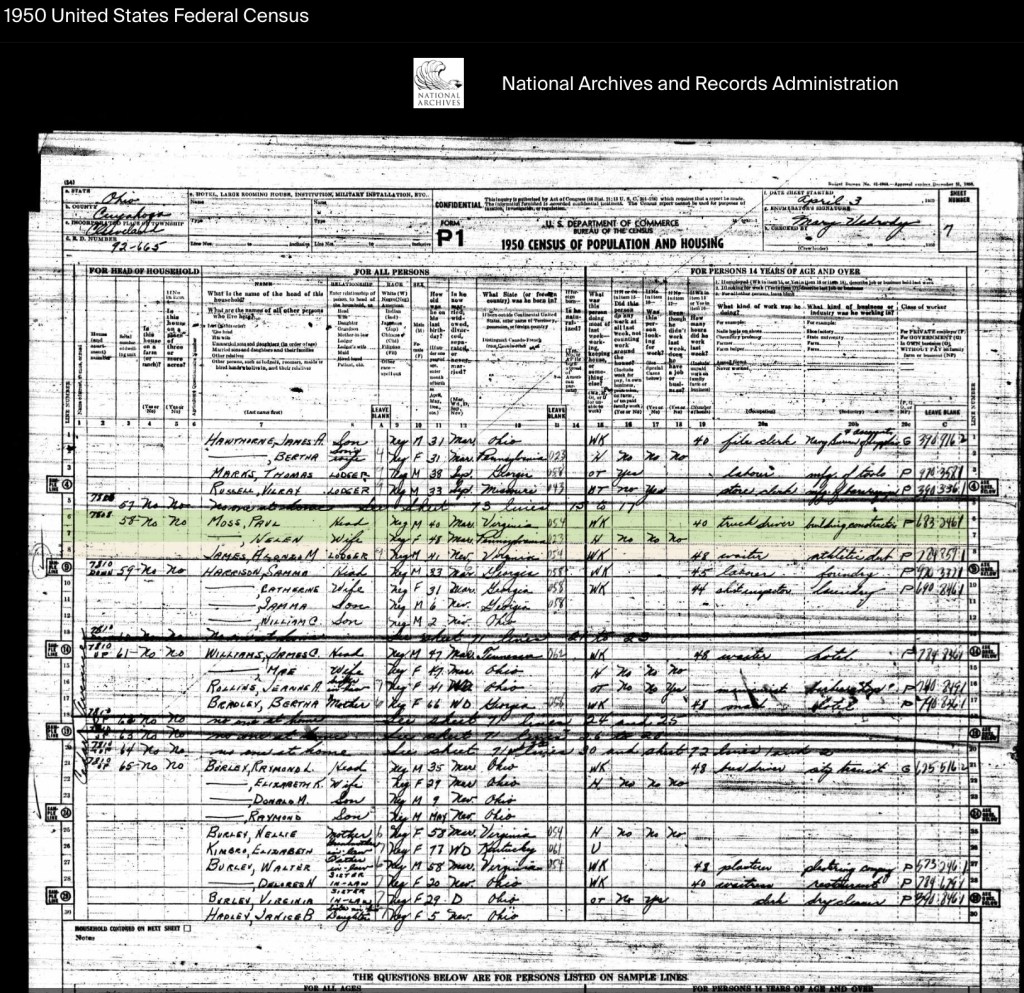
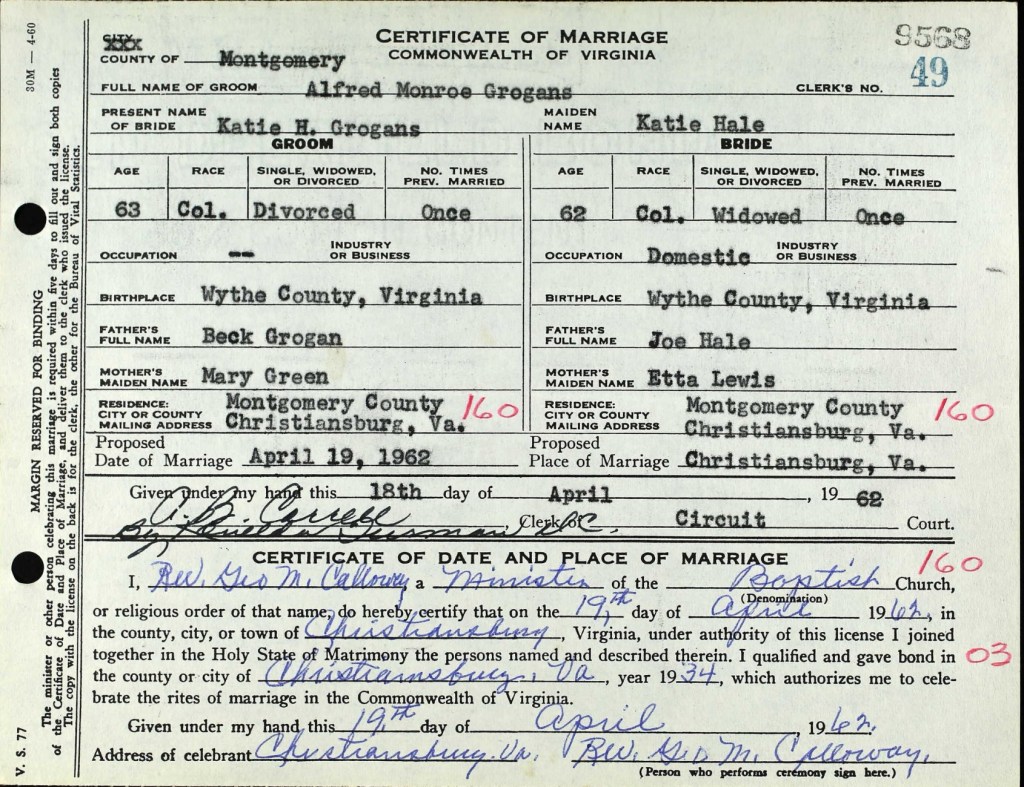
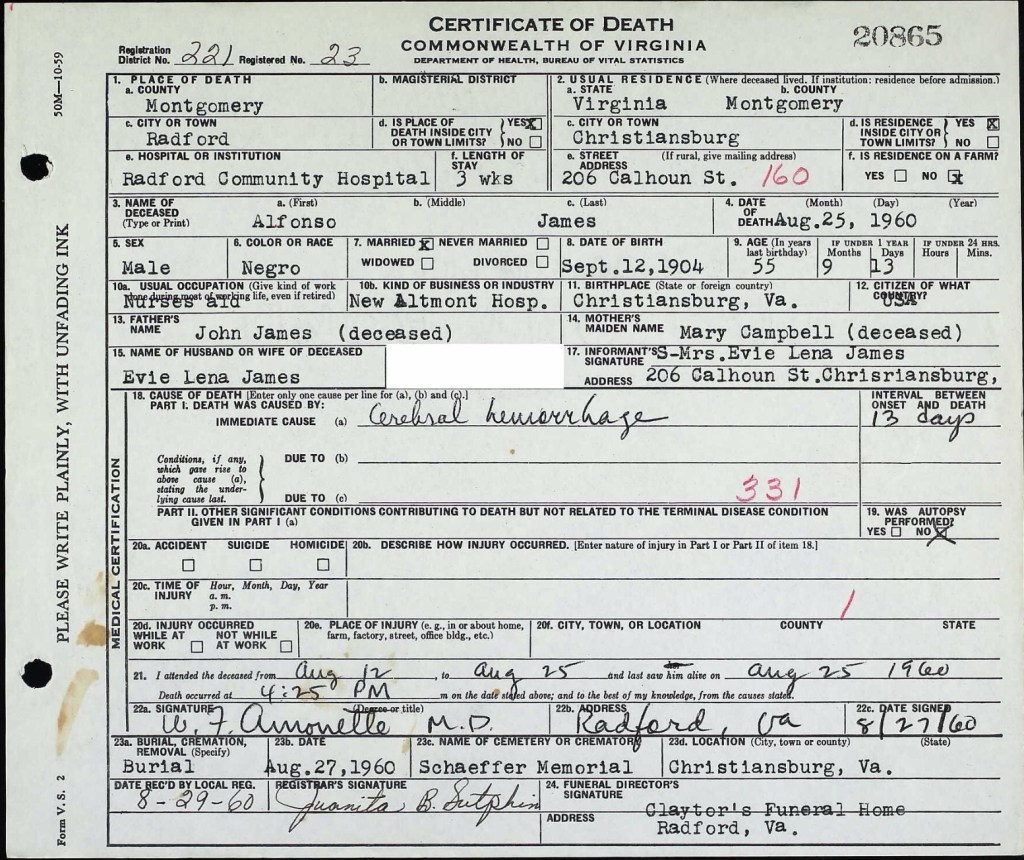
In the 1930 census, Alfonzo was recorded as a public school teacher. Over the years, he held various roles at the New Altamont Hospital in Christiansburg, working as a waiter and eventually as a nurse’s aide by the time of his passing in 1960. In 1946, he married Evie Lena Grogans. He was survived by his two brothers, Robert M. James and Alonzo McCoy James. Evie Grogans James passed away in 1977 and was a valued baker, recognized as Employee of the Month at Radford College.

Alfonzo’s diploma stands as a testament to his commitment to education and service. Preserving this certificate would honor his legacy and ensure that his contributions to the community are remembered.

Courtesy of Christiansburg Institute Digital Archive

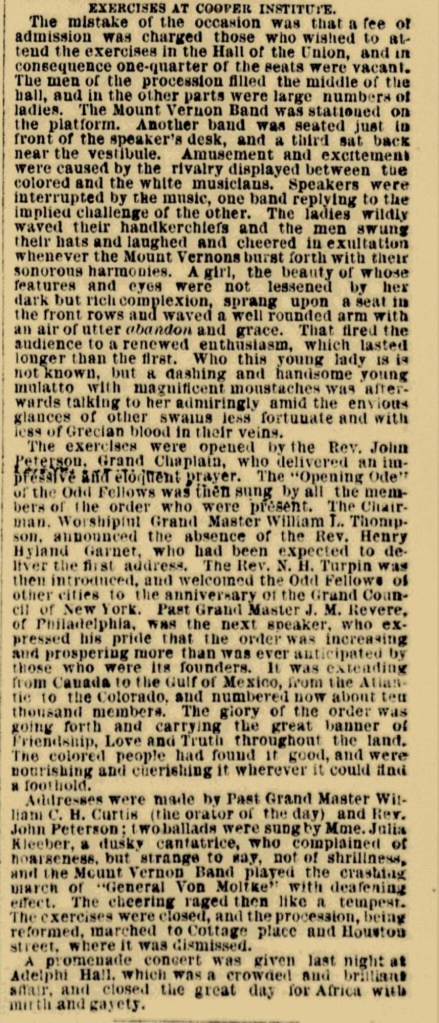
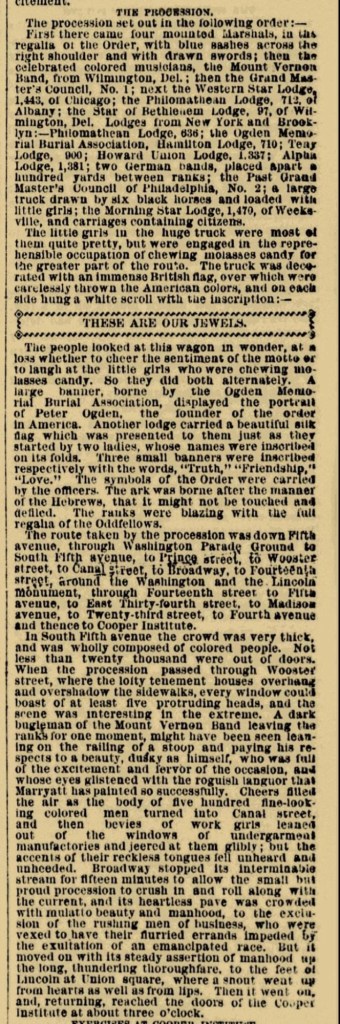
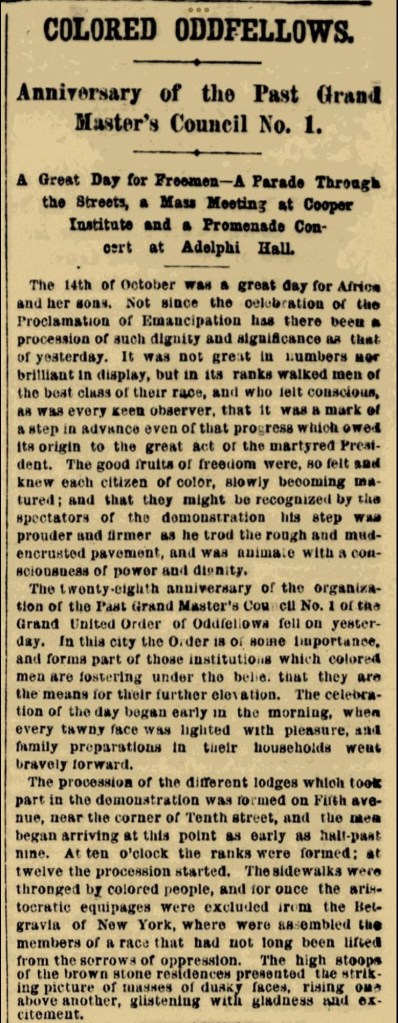
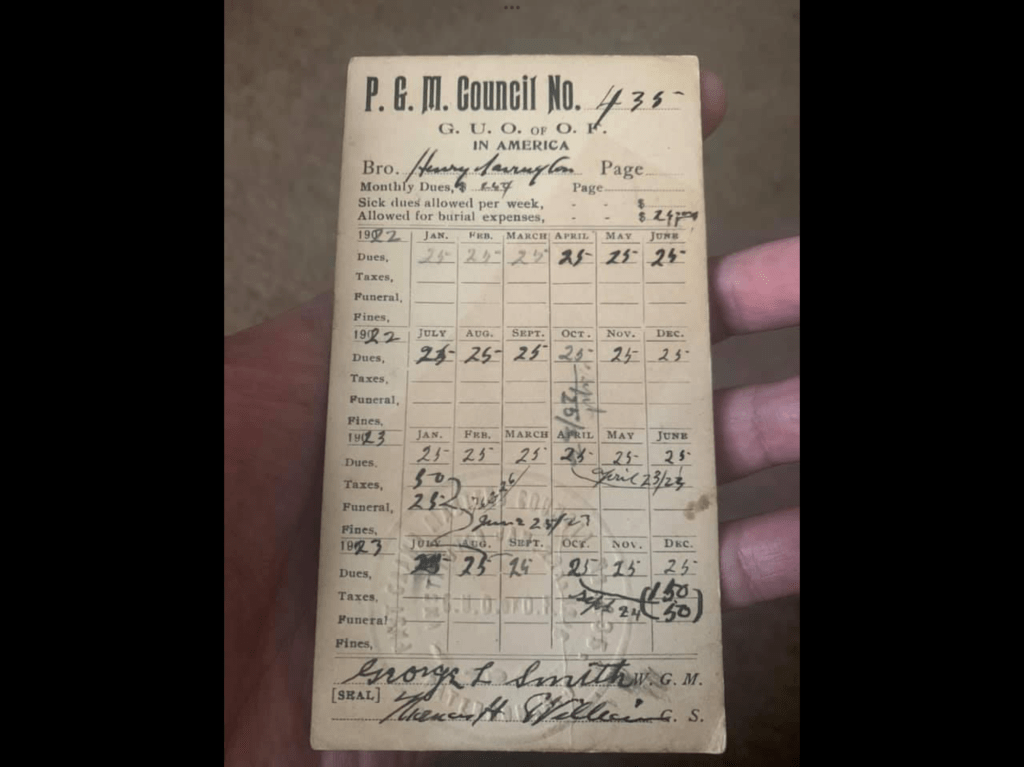
Grand United Order of Odd Fellows Images

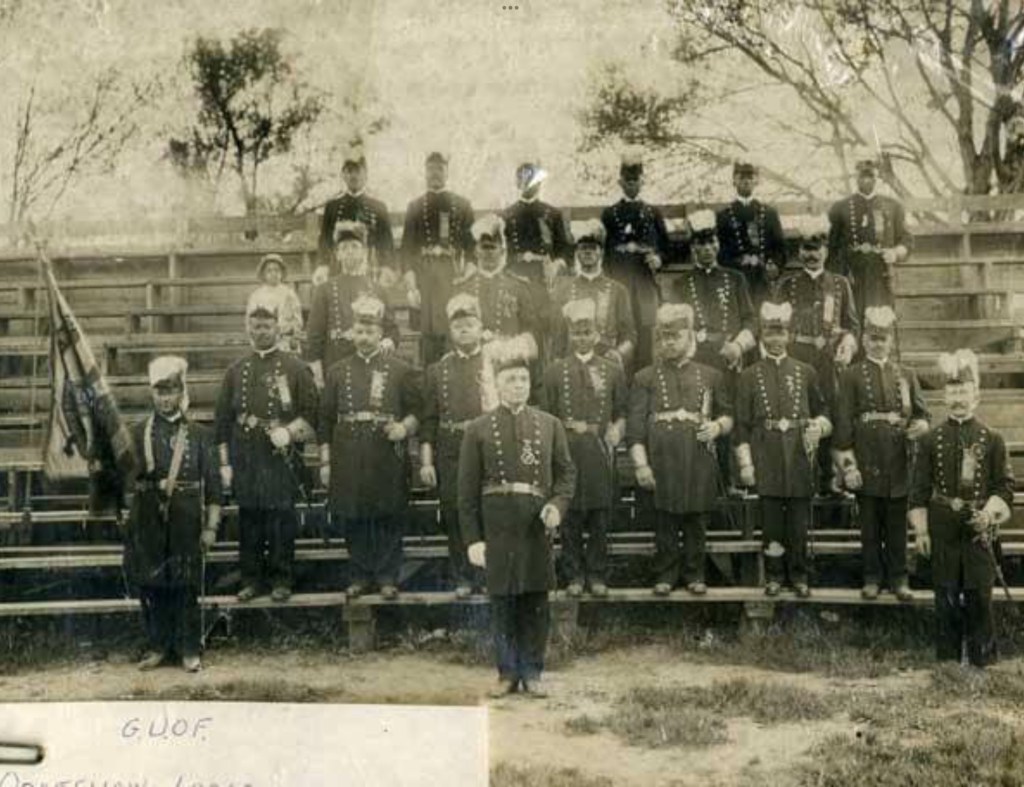
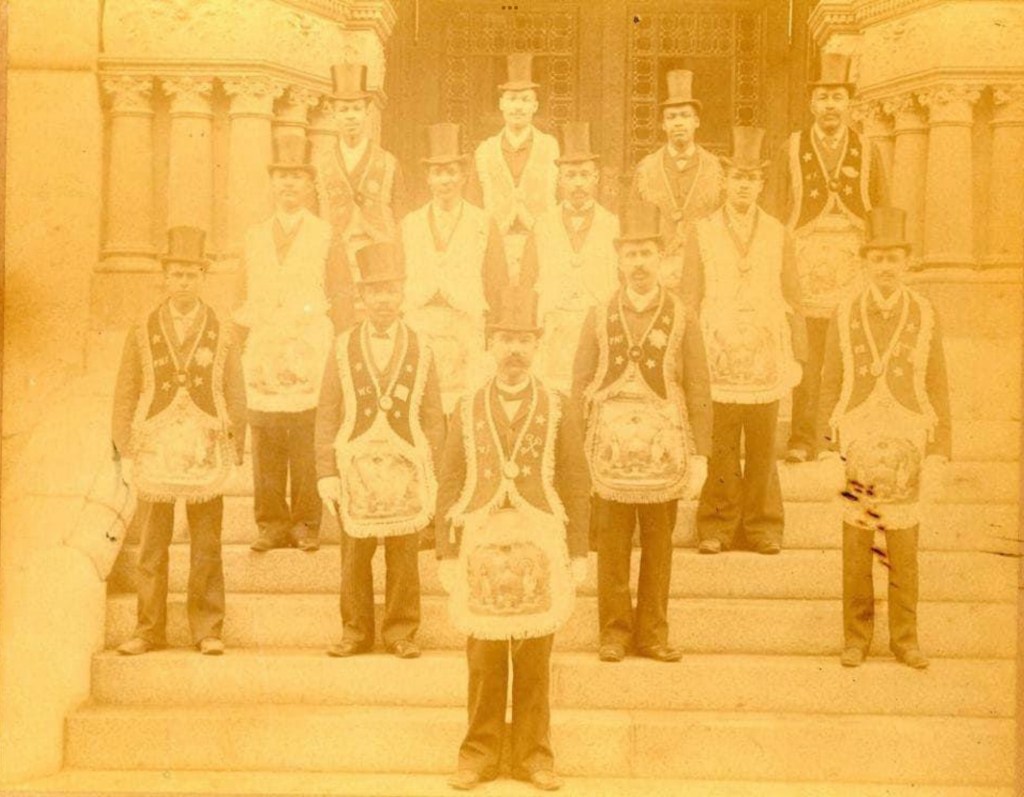
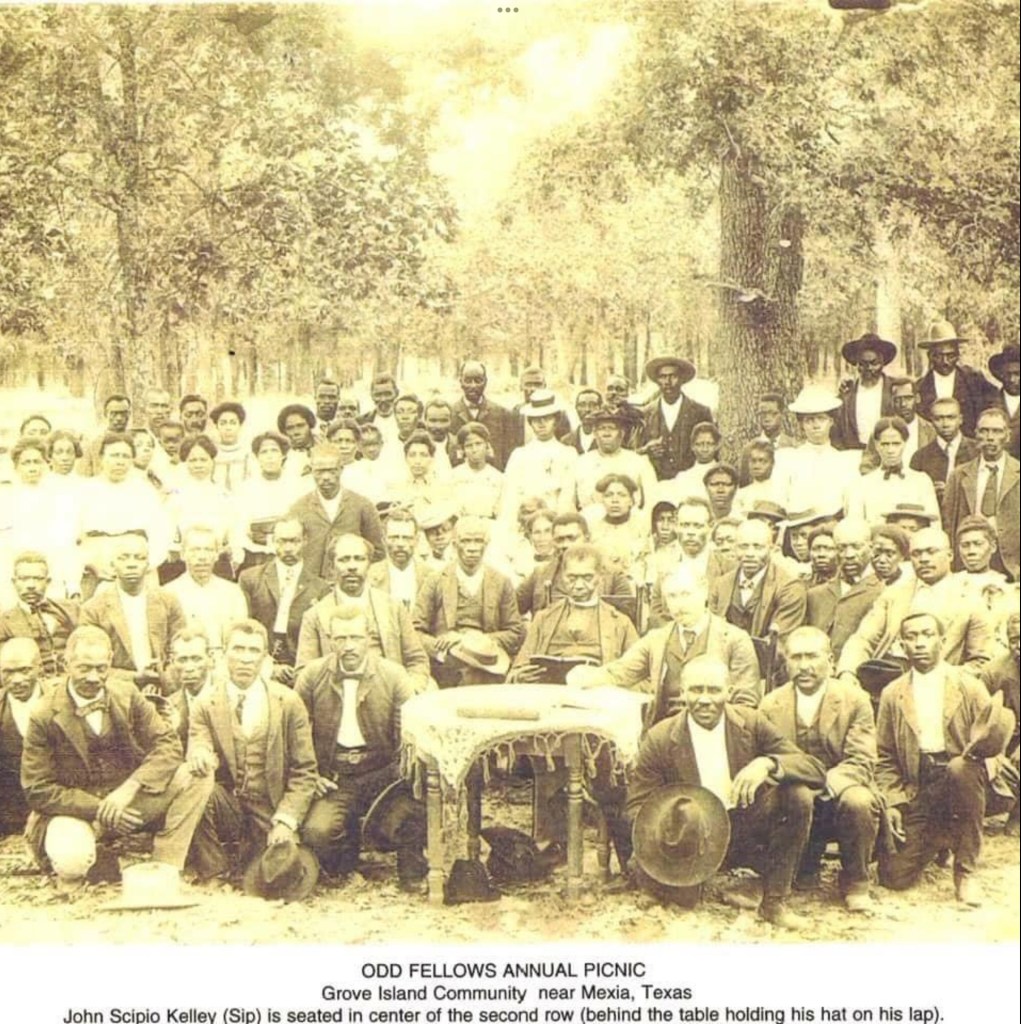
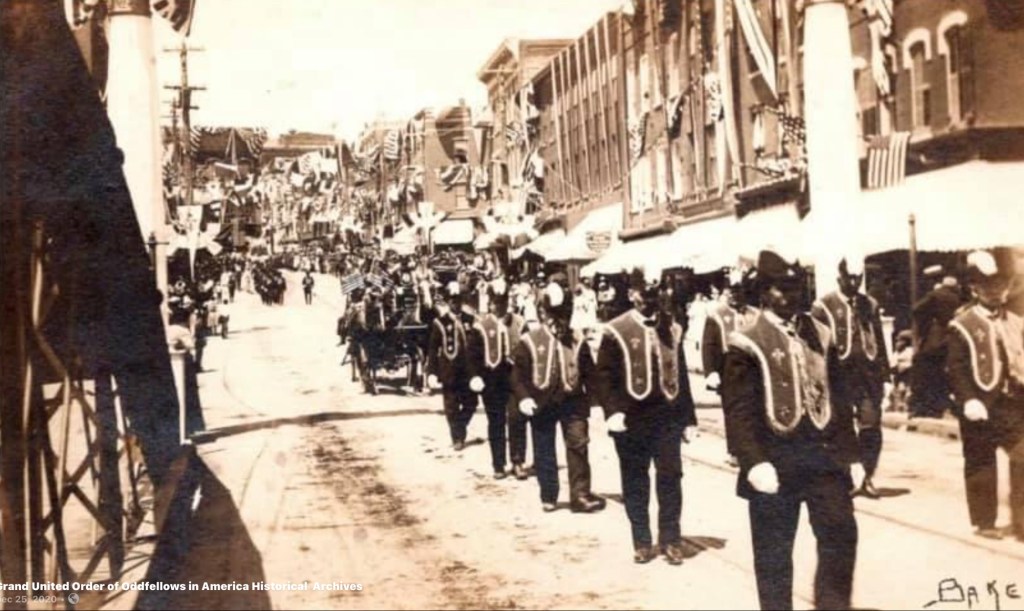
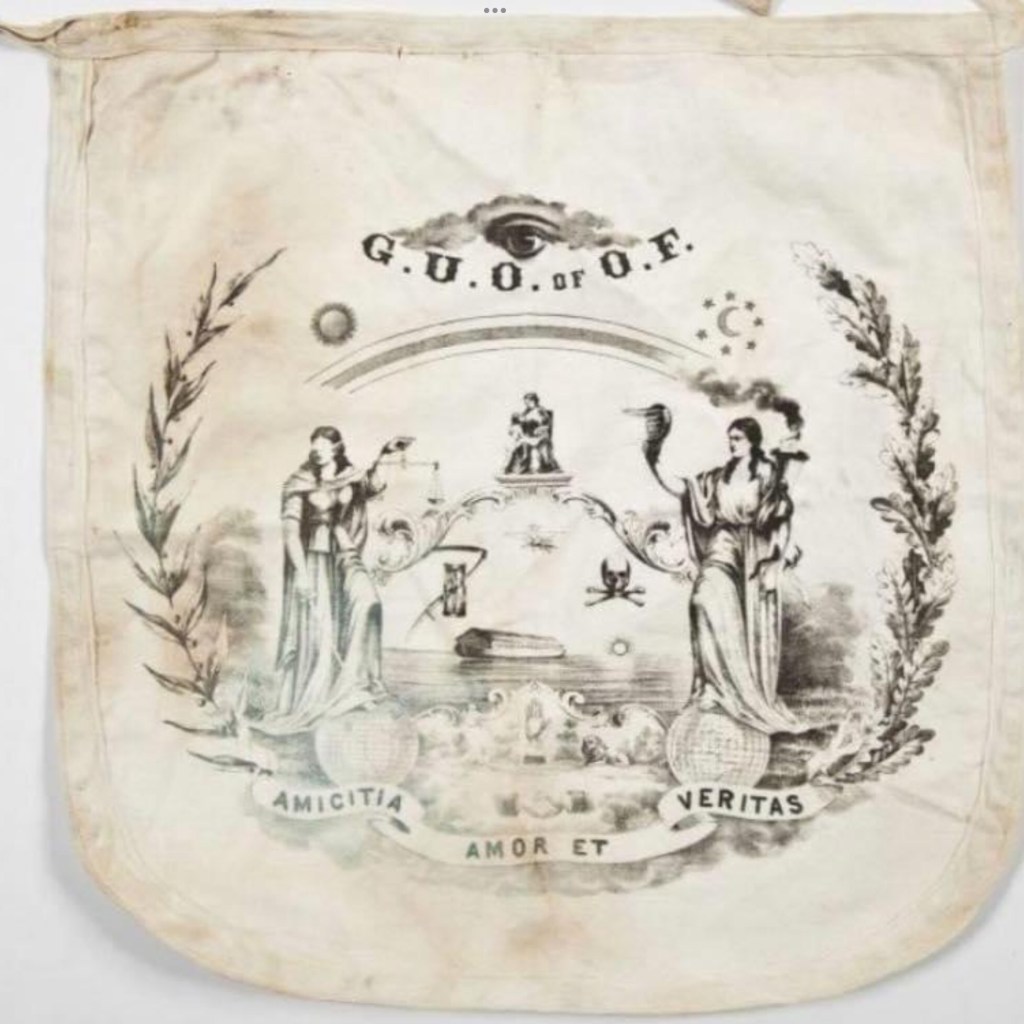
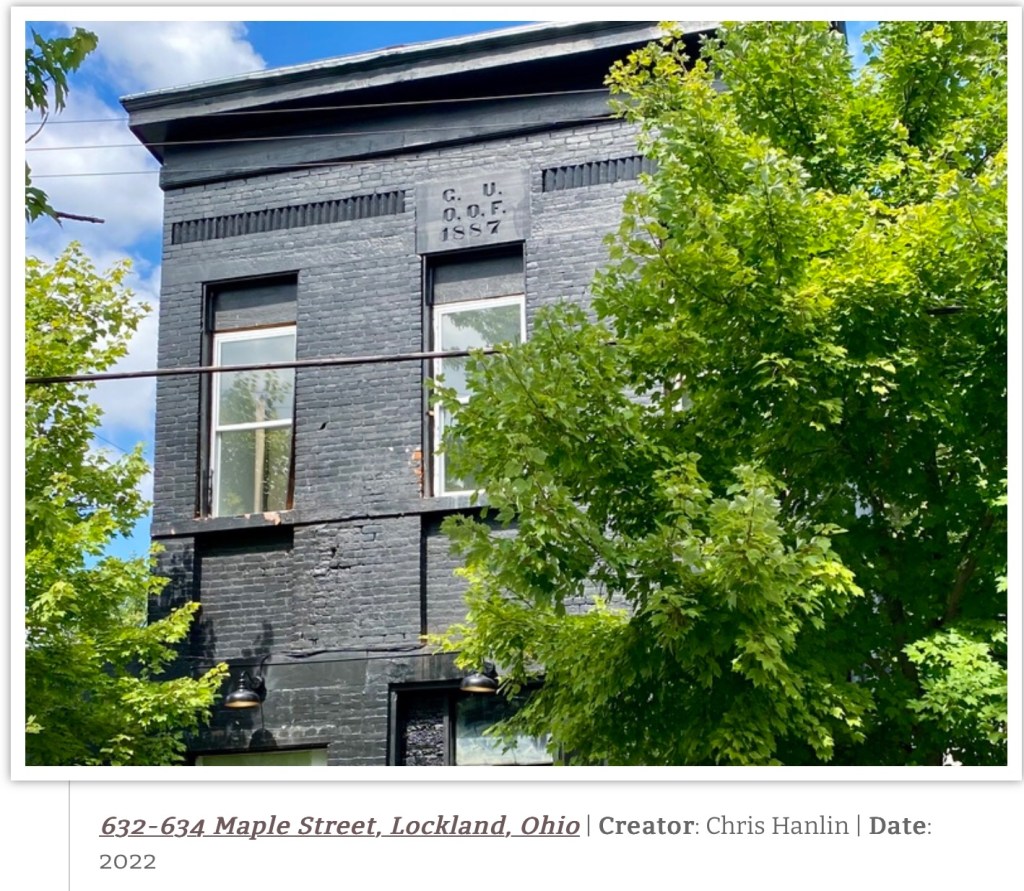
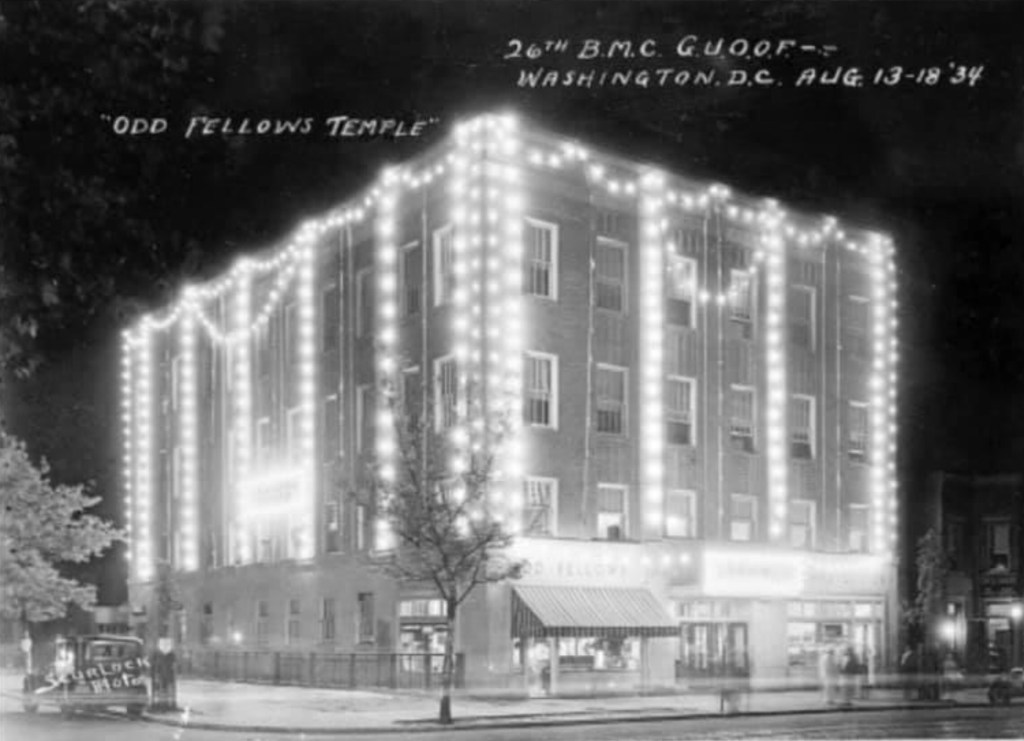
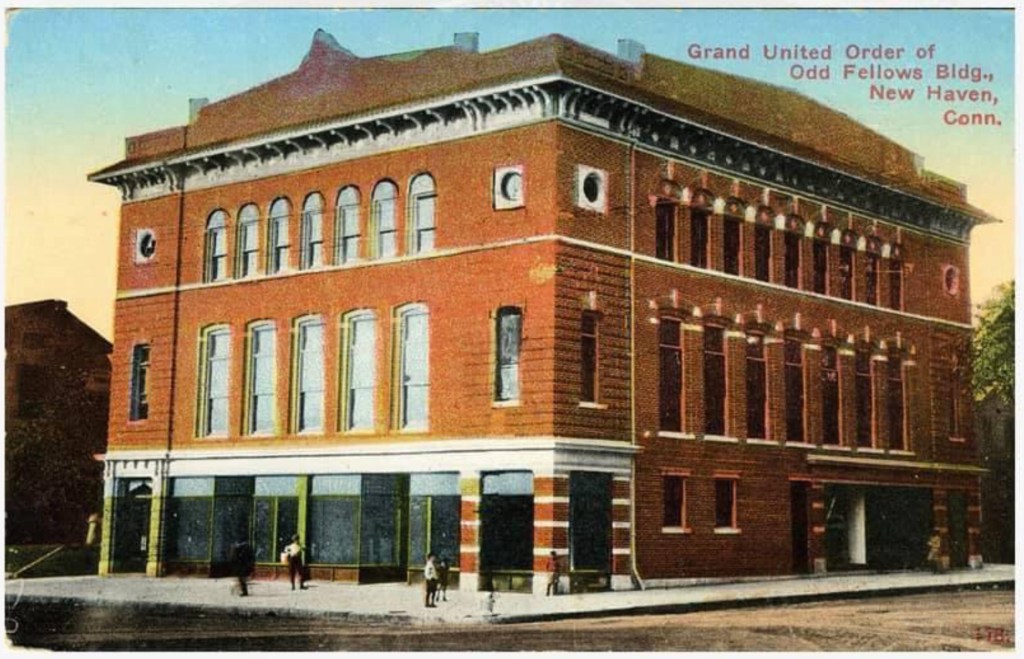
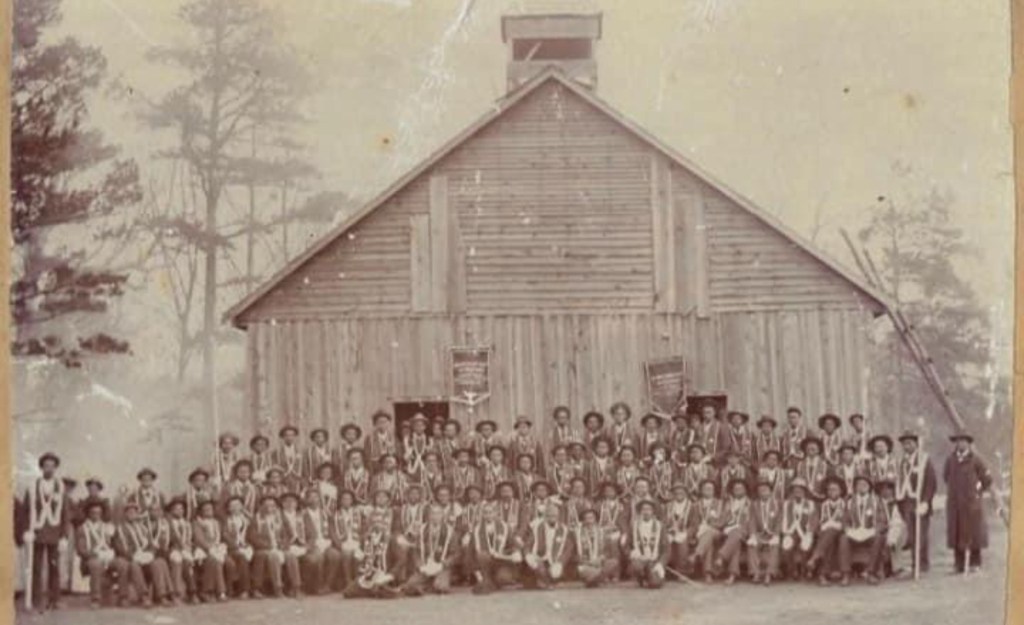
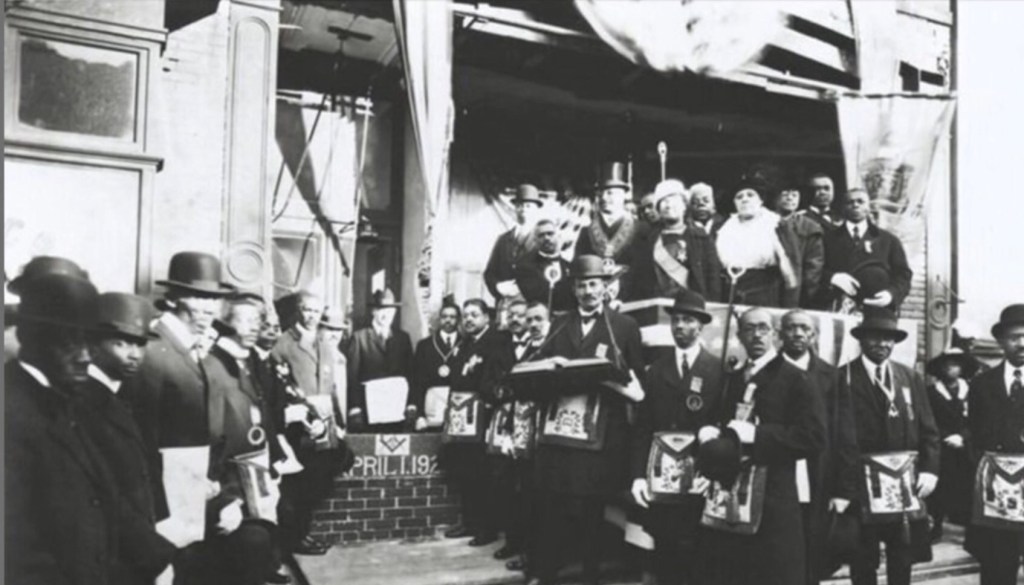
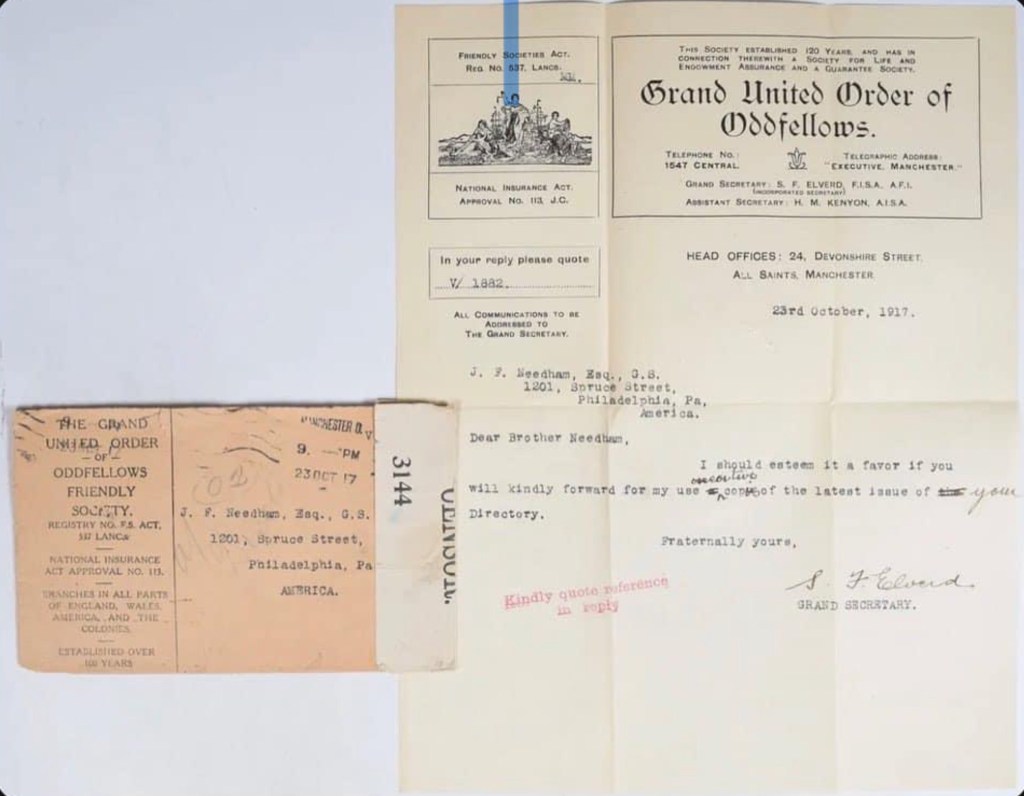
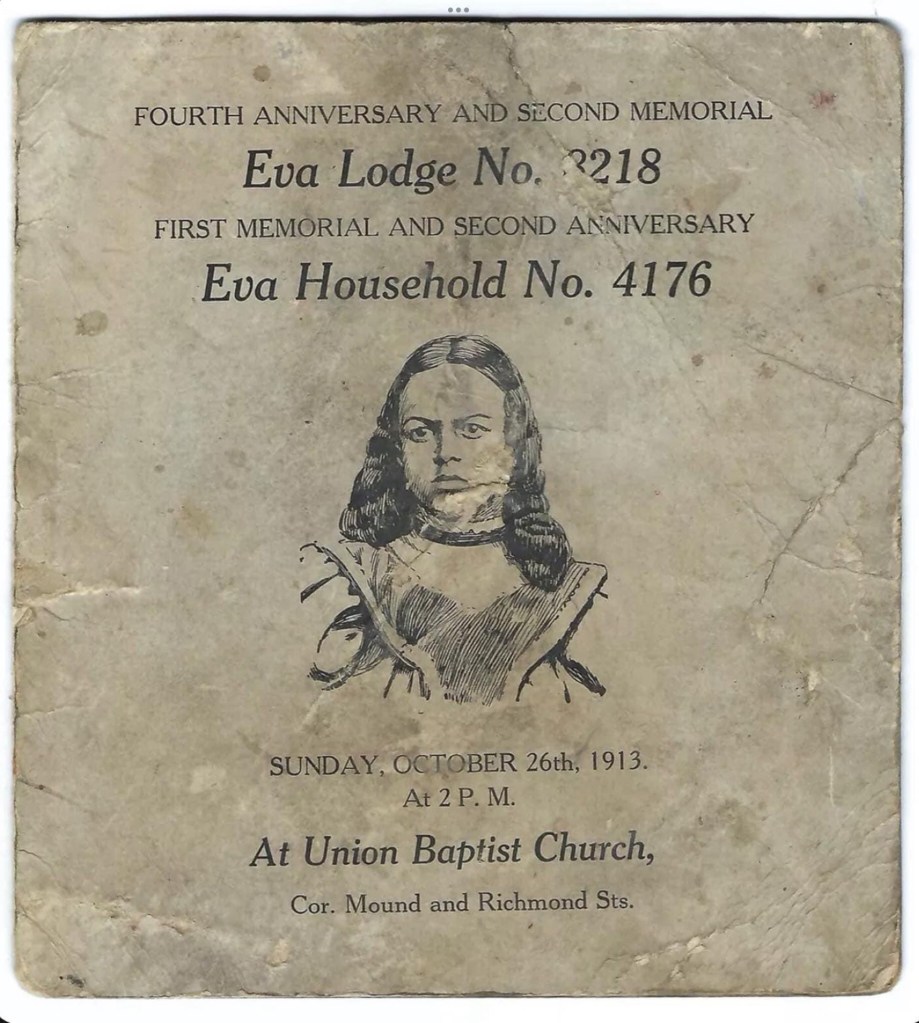
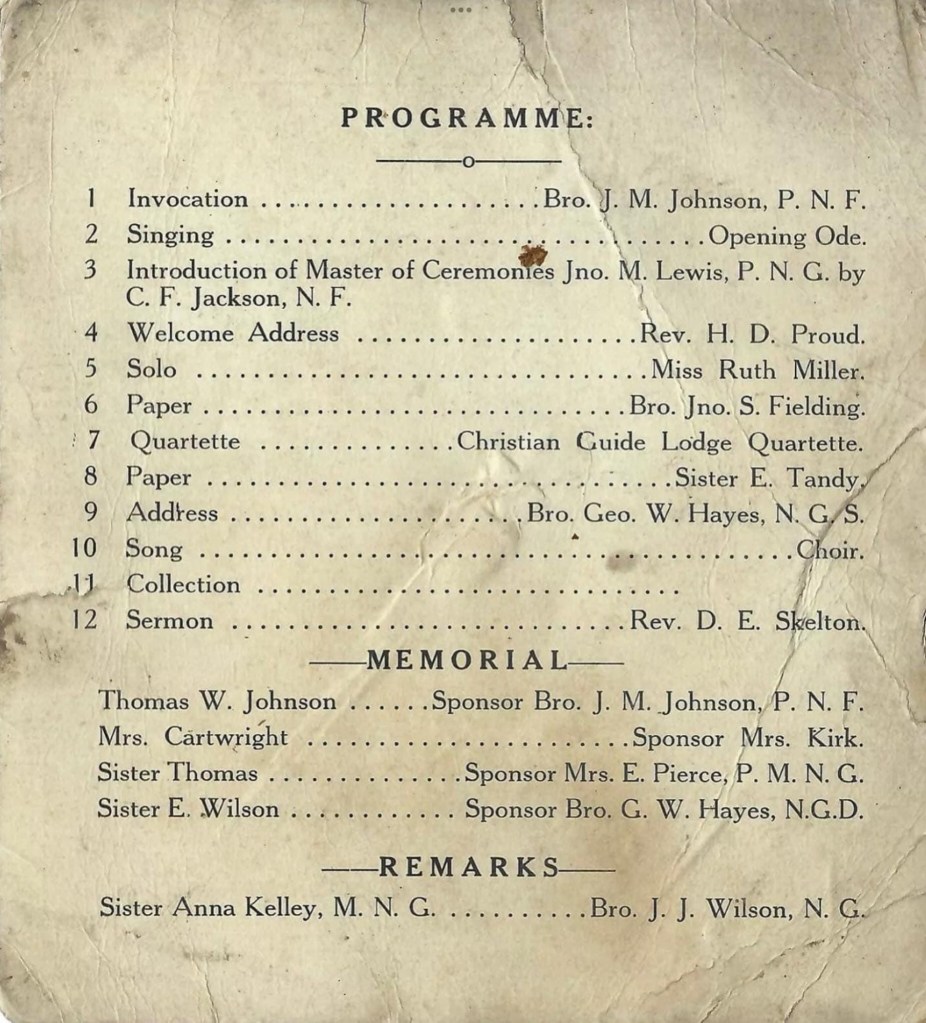
This webpage showcases a photo gallery of rare images featuring ceremonial regalia, equipment, documents, and leaders associated with the Grand United Order of Odd Fellows. While some images lack provenance, they offer valuable visual references for how members of the Blacksburg order may have appeared, especially since no living individuals can provide that information. (Many of these images were collected from eBay, Northern Star Lodge Facebook (No 715 NS) and other places.
Ceremonial Regalia and Equipment

Buildings

Innovative Preservation of GUOOF Sandy Spring Lodge No 6430, Sandy Springs, Maryland

Sandy Spring Lodge, No 6430

Sandy Spring, MD – The Grand United Order of Odd Fellows Lodge No. 6430 has undergone a stunning renovation. Their mission-driven use of the building serves as an inspiring model that could be replicated in Blacksburg. The restoration of the building involved the Advisory Council of Preservation. Check out their Facebook page

Documents

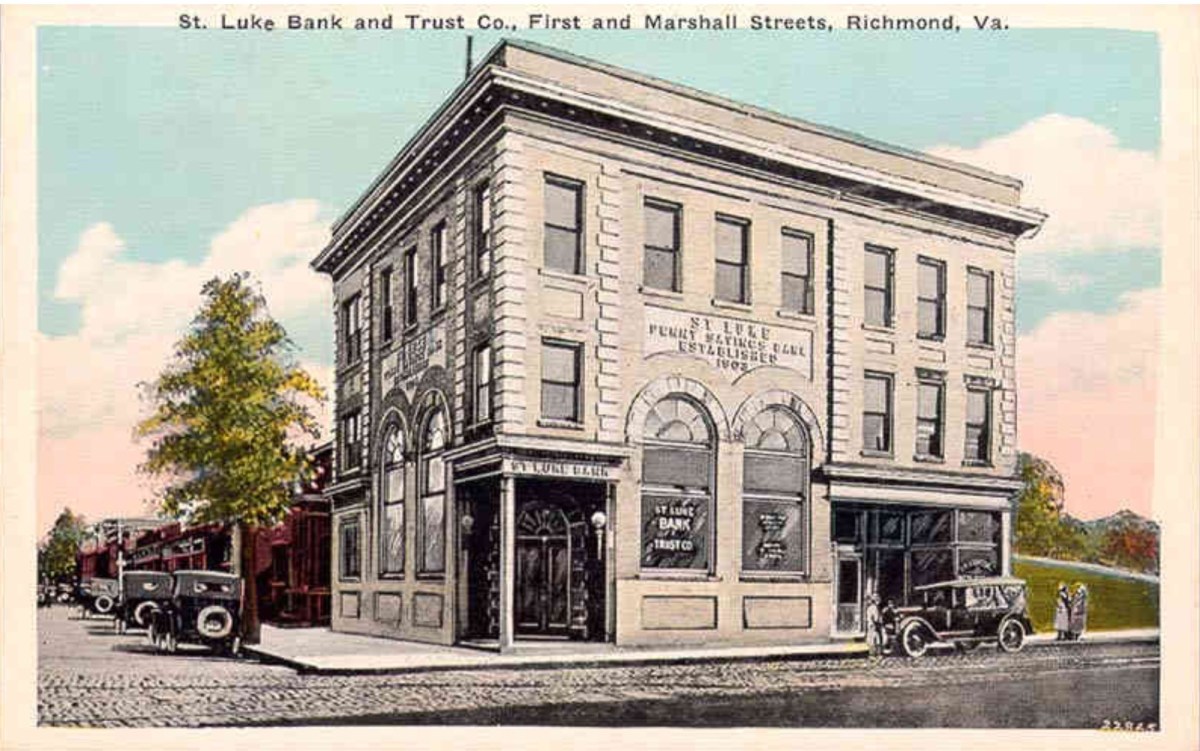
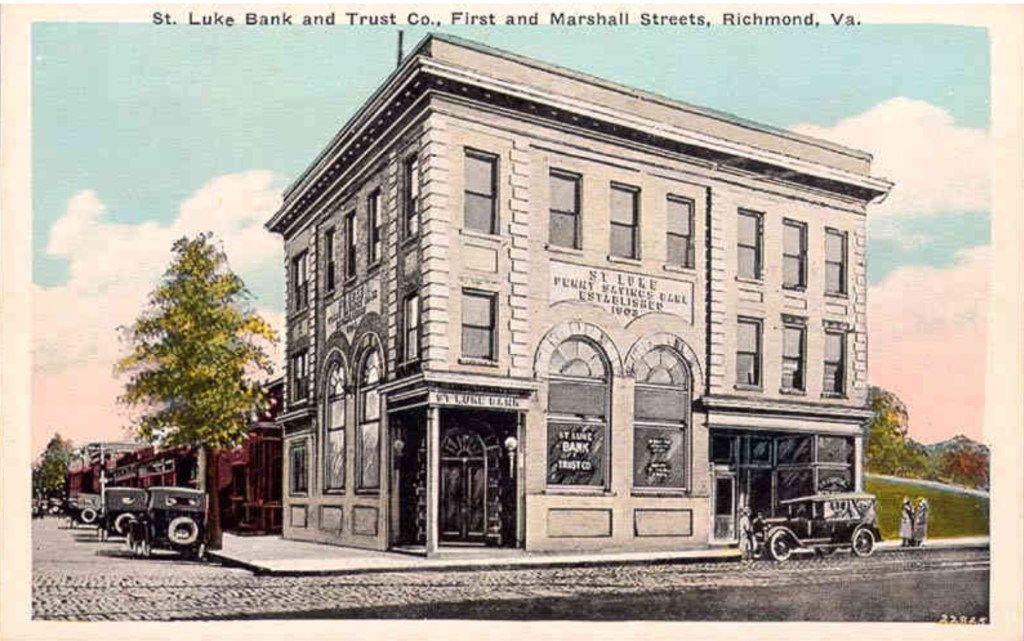
St Luke Bank and Trust Company, Richmond, VA

Who in Blacksburg was traveling by train to and from Richmond, carrying the financial transactions and funds collected by St. Frances Council No. 235.

Resources half million dollars. Depository for Gas and Water Accounts and Taxes of the City of Richmond. Mrs. Maggie L. Walker, Pres.; J. Thomas Newin, Z.D. Lewis, S.W. Robinson, Jr., and P.H. Ford, Vice-Presidents; Emmett C. Burke, Cashier; Melvin D. Walker, Asst. Cashier.
(Courtesy of William Shuman Collection of Richmond, Virginia Postcards, Accession Number 2004-09-12, Special Collections and Archives, James Branch Cabell Library, Virginia Commonwealth University.)

Mrs. Maggie Lena Walker was the first African American woman to serve as a bank president in the United States. The Maggie L. Walker National Historic Site in Richmond honors her remarkable life, legacy, and significant contributions to African American history, with her influence extending even to Blacksburg, Virginia.

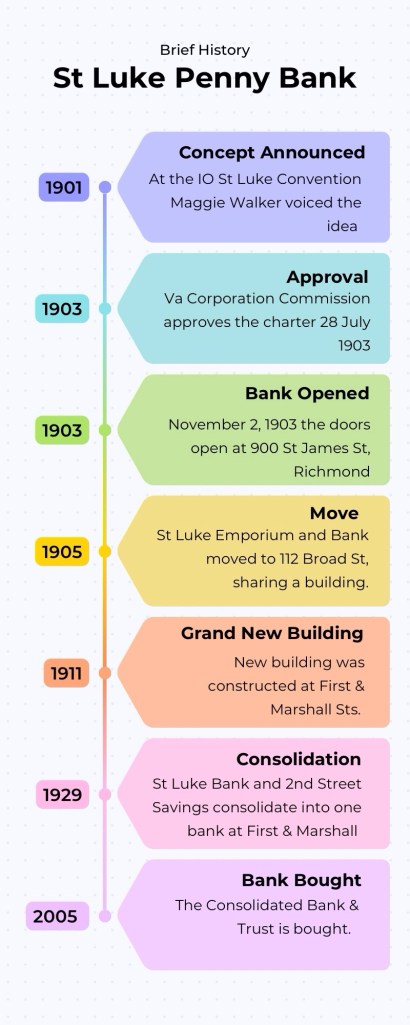
St Luke Penny Savings Bank

Much has been documented about the creation and impact of the Penny Bank in Richmond. What remains to be uncovered is who in Blacksburg was traveling by train to and from Richmond, carrying the financial transactions and funds collected by St. Frances Council No. 235, established by Mrs Maggie Lena Walker, 4 August 1902.

Resources

Maggie L. Walker National Historic Site

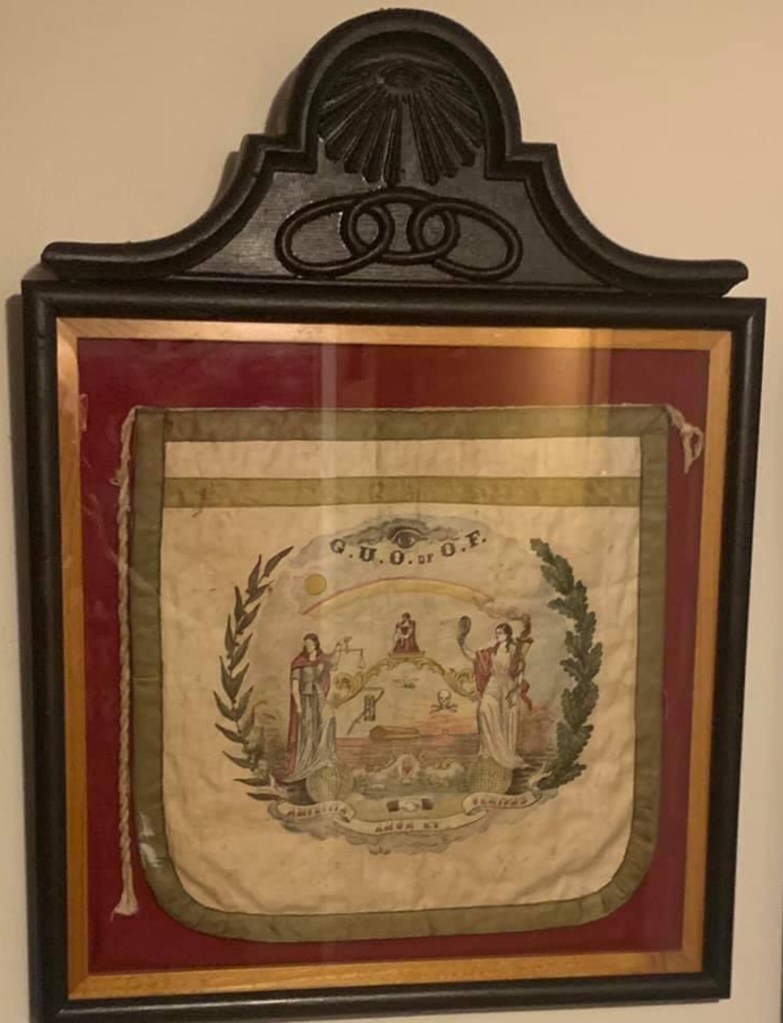
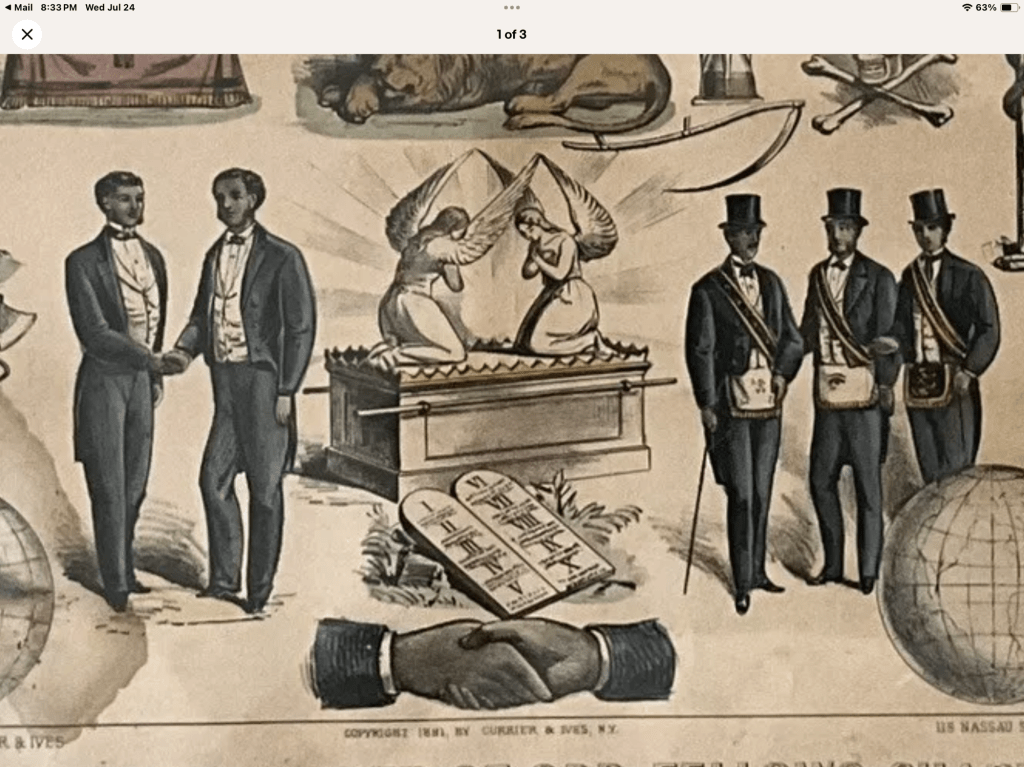
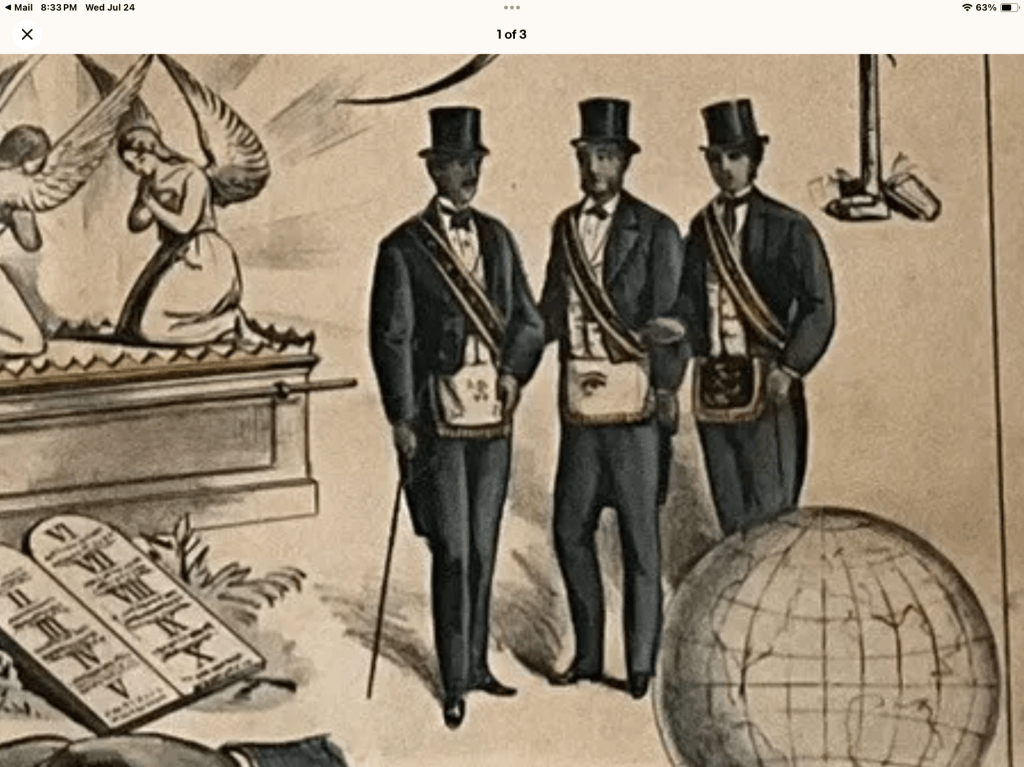
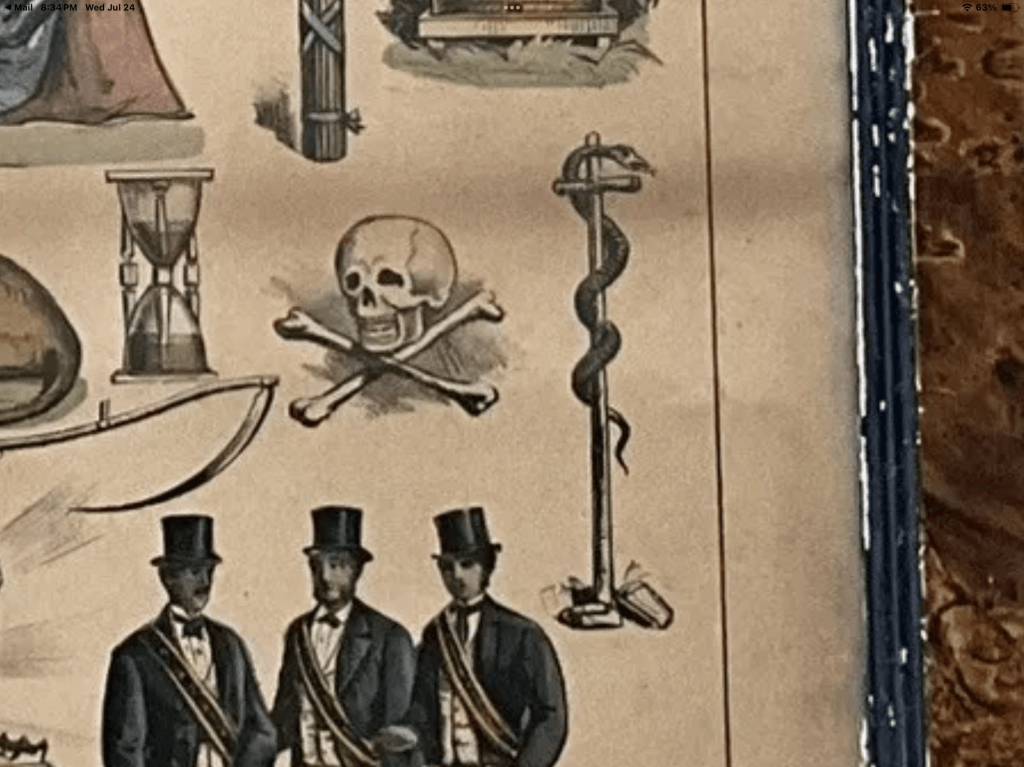
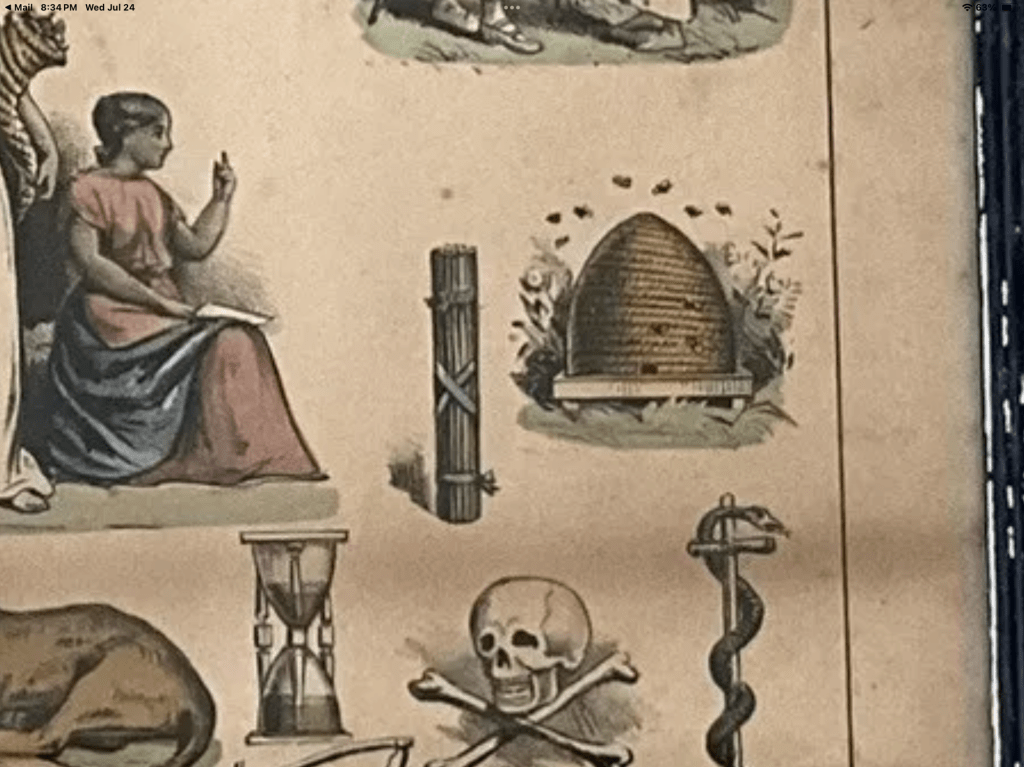
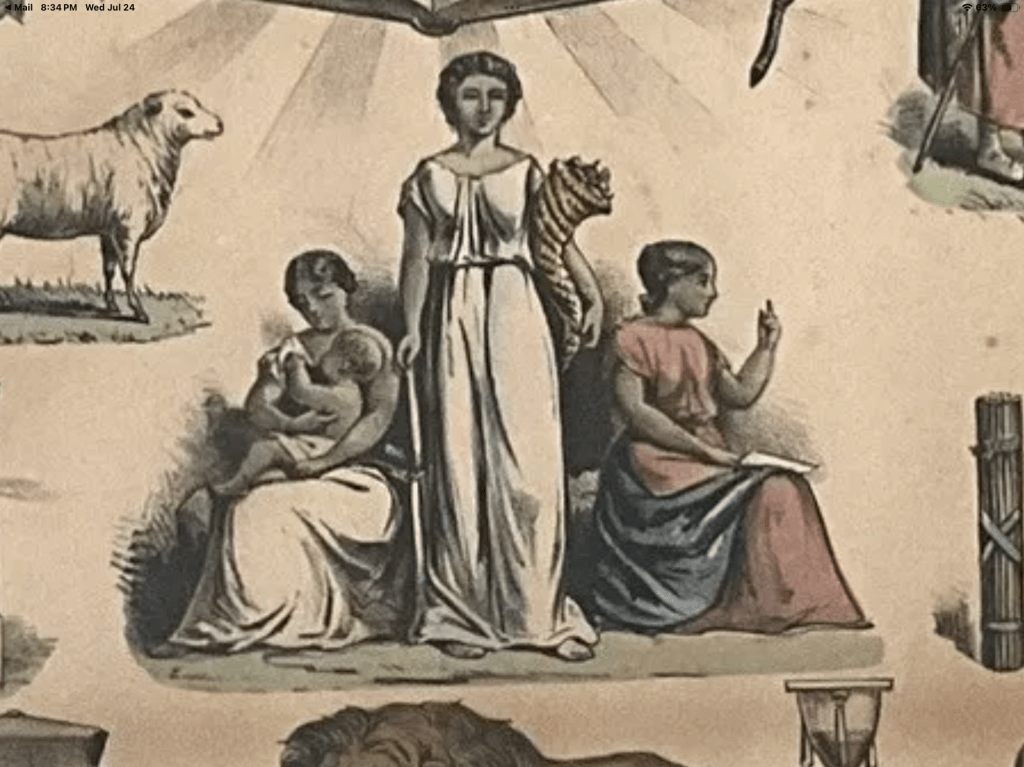
Grand United Order of Odd Fellows and Currier & Ives Print

Symbols hold significant importance for members of the Grand United Order of Odd Fellows (GUOOF).

By the early 1900s, the Grand United Order of Odd Fellows had gained significant popularity, with both men and women joining its secret societies. This benevolent group was established in Blacksburg, Christiansburg and Pulaski, Virginia to improve their communities by providing charitable support to orphans, the sick, and the poor.

Symbols hold significant importance in education and as visual reminders for members of the Grand United Order of Odd Fellows (GUOOF) for several reasons:

  1. Simplification of Complex Ideas: Symbols distill complex concepts into simple, recognizable forms, making it easier to convey teachings and principles.
  2. Memory Aids: They serve as mnemonic devices, helping members remember key teachings, values, and rituals.
  3. Engagement: Visual representations engage members more deeply than text alone, fostering better understanding and retention.
  4. Communication: Symbols transcend language barriers, enabling diverse groups to share common understandings and values.
  5. Constant Presence: They act as continual, visual reminders of the GUOOF’s values and principles, reinforcing them in daily life.
  6. Identity and Unity: Symbols create a sense of belonging and unity among members by providing a shared set of images and meanings.
  7. Moral Guidance: They encapsulate moral and ethical lessons, guiding members in their conduct and decision-making.
  8. Tradition and Continuity: Symbols connect current members to the historical roots and traditions of the GUOOF, promoting continuity and respect for the organization’s heritage.

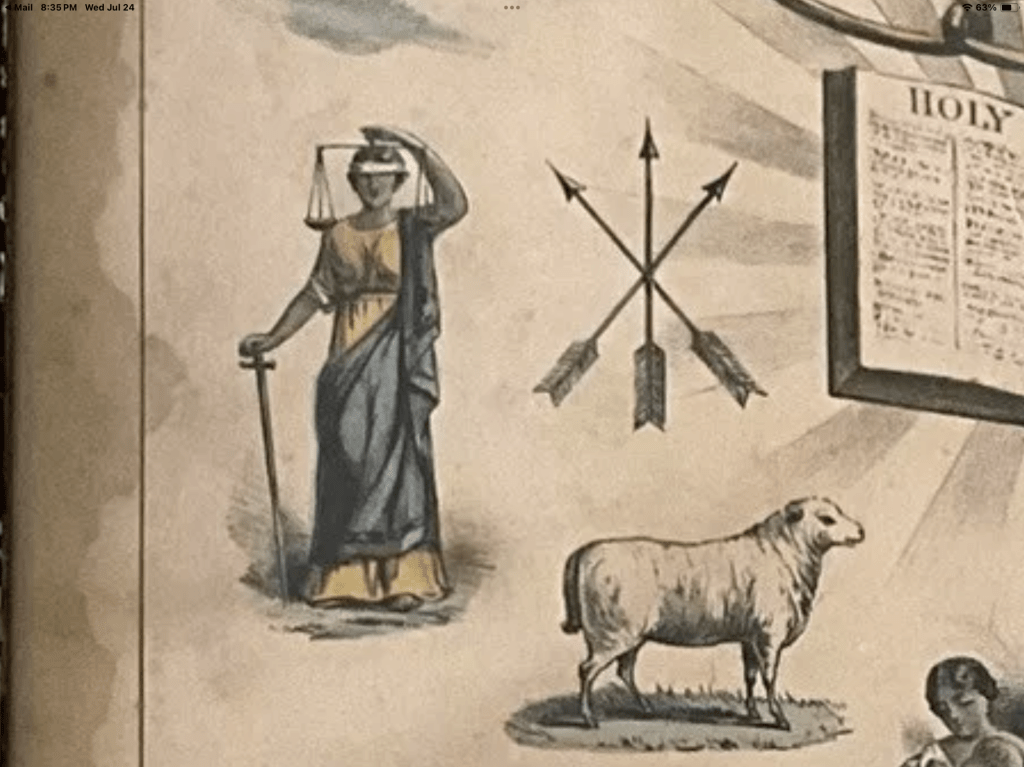
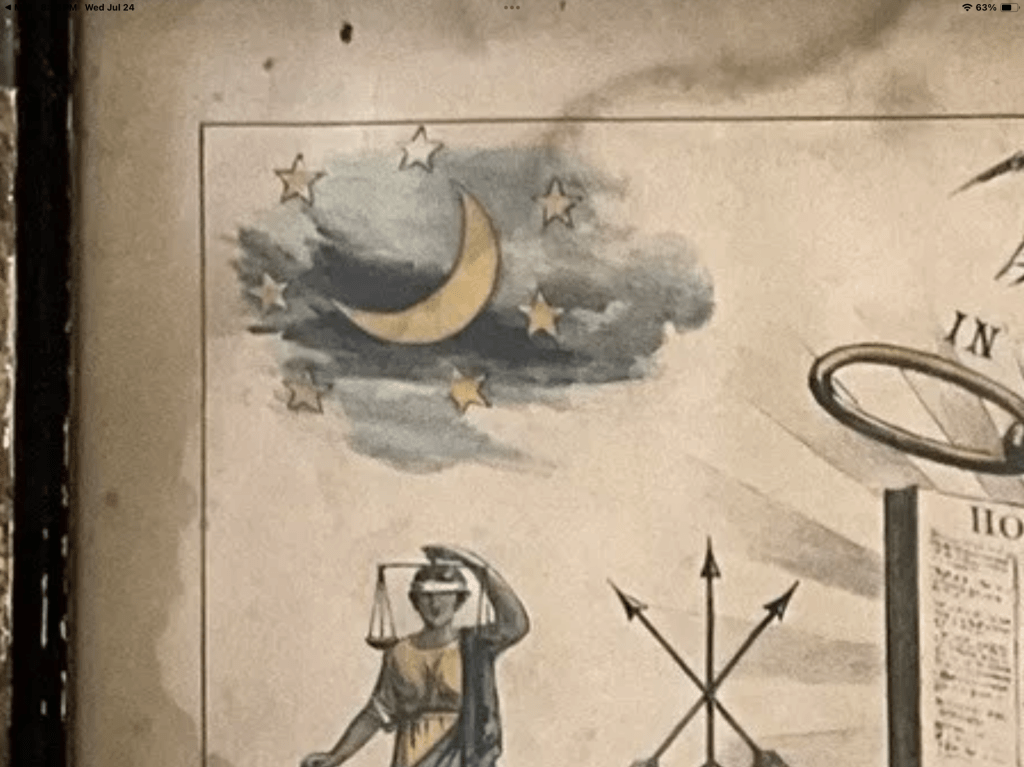
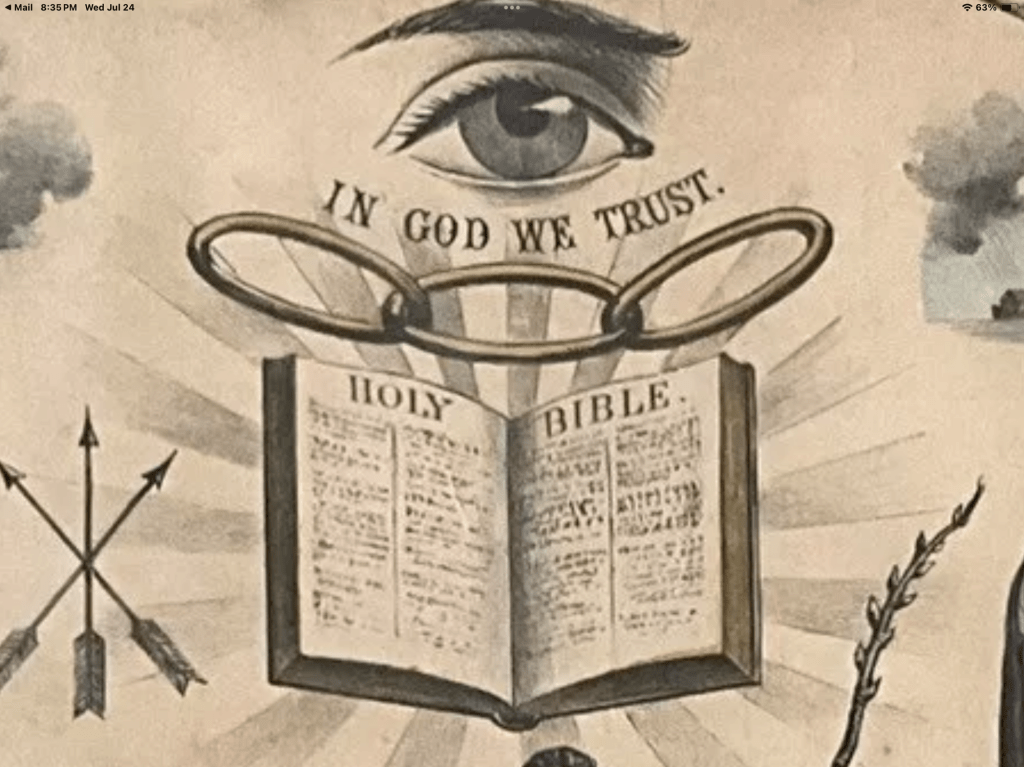
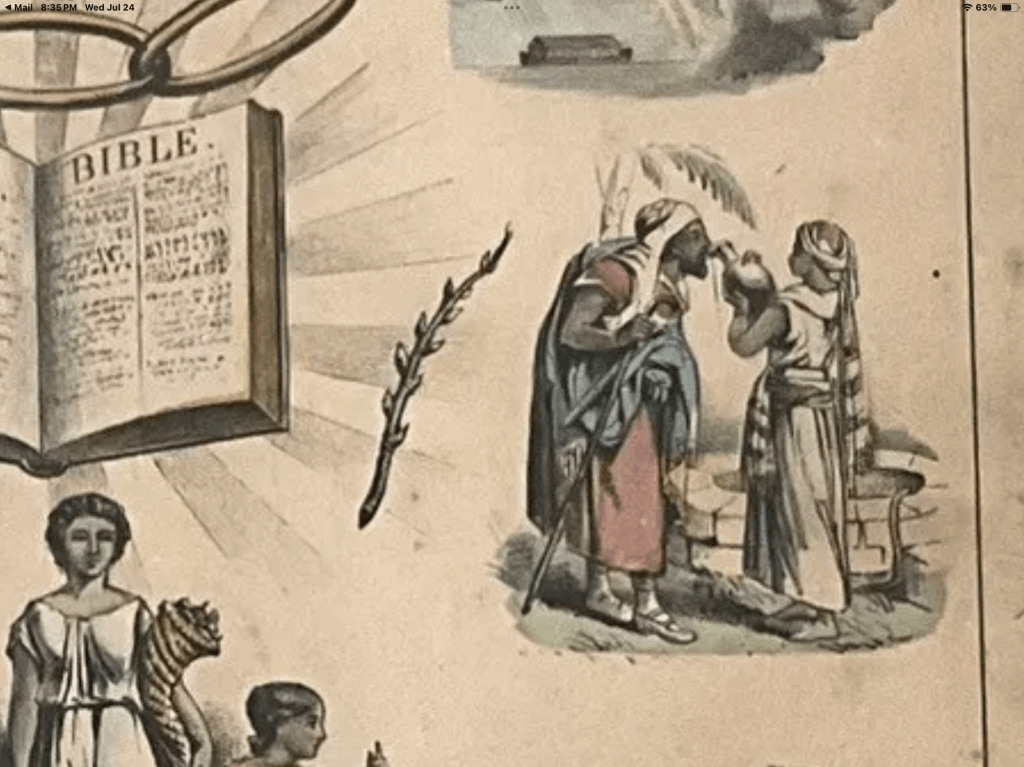
This Currier & Ives of New York 1881 print illustrate the common symbols which the order’s members would recognize and hold dear.

Series: At Work – Tending to the Dead

Collection of Morticians, Undertakers, Funeral Home Directors in Southwest Virginia

Collection of Morticians, Undertakers, Funeral Home Directors in Southwest Virginia

C.C. Williams, Mortician and Ambulance Service, Roanoke Virignia
CC Williams, Mortician & Ambulance Service in Roanoke (The Church News, 1 Feb 1934, pg 4)
R.W. Clark Citizen’s Undertaking Establishment, Roanoke, VA (The Church News, 1 Feb 1934, pg 4)

Sick Benefits & Death Tax – Mutual Aid of the Independent Order of St Luke

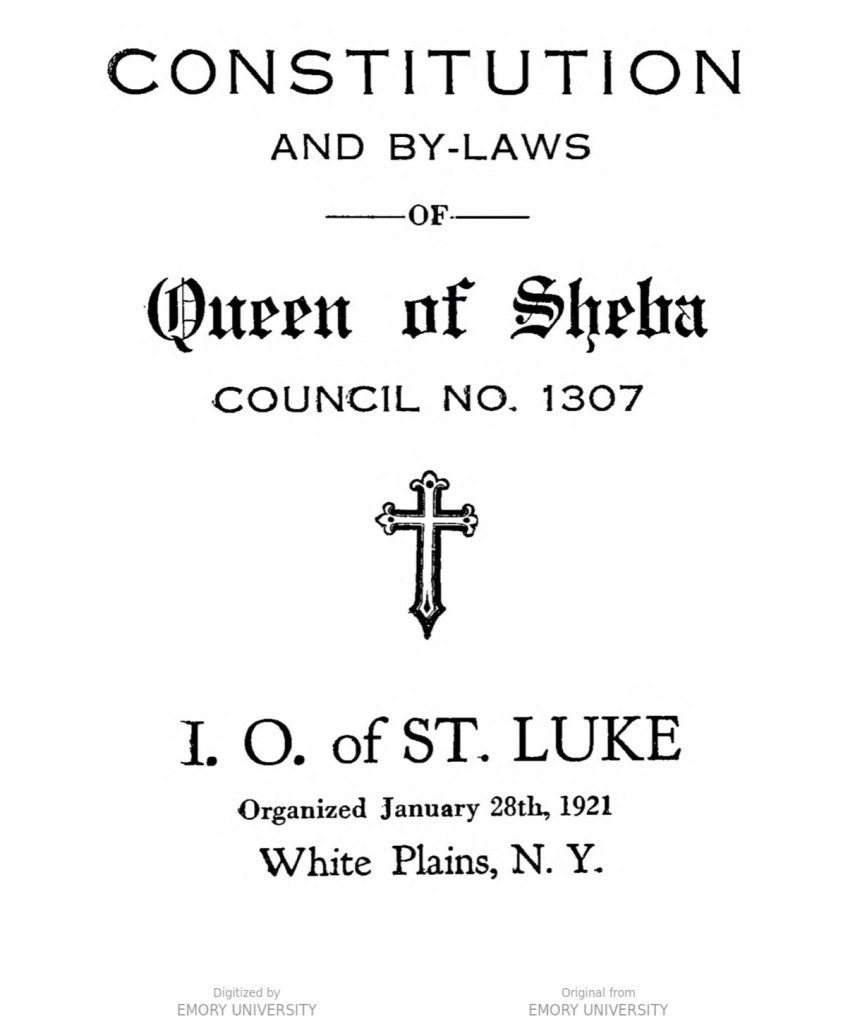
In Blacksburg, Virginia, the Independent Order of St Luke shared the same building with the Grant United Order of Odd Fellows, Tadmore Light 6184, located in New Town. That order’s copy of the Constitution and By-laws may be lost to history, but the Queen of Sheba Council’s 1921 version is fortunately accessible. This document highlights the significance of mutual aid within the framework of the function of the Order of St Luke.

Independent Order of St. Luke. Queen of Sheba Council No. , Randall K. Burkett, Lucy Emanuel, and Amos M. Gailliard. Constitution And By-laws of Queen of Sheba Council No. 1307, I.O. of St. Luke, Organized January 28th, 1921, White Plains, N.Y. [White Plains, N.Y.]: [The Council], 1921.


Madame Maggie J. Walker’s Vision for the Independent Order of St Luke Reflected in the Constitution and By-laws

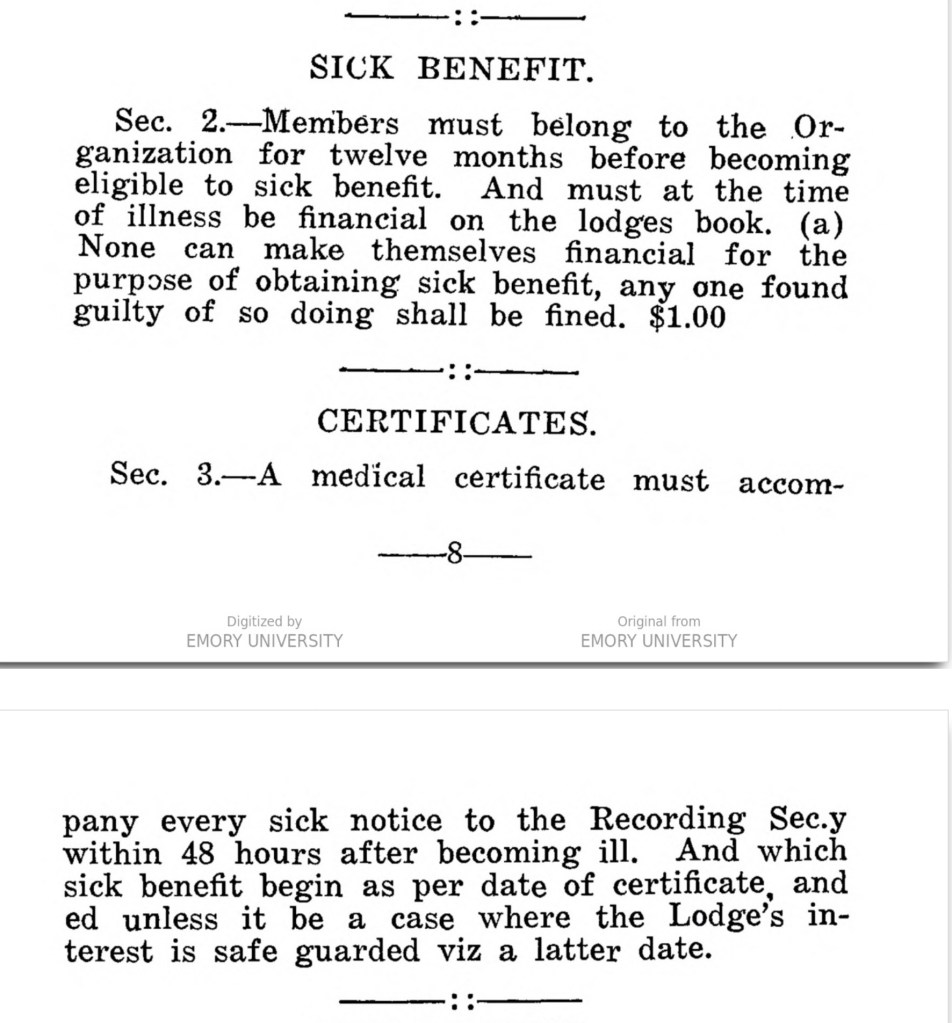
During the Jim Crow era, white-owned firms refused to grant disability and life insurance to the black community. In response, IOSL provided weekly sickness and disability benefits as well as funeral assistance for its members starting in 1895. Similar to contemporary insurance companies, it offered various premium options. Mrs. Walker’s effective leadership in membership drives bolstered the organization’s finances, enabling prompt payment of death claims and reduced premium costs.

Sick Benefit

Members who wished to receive financial support in the event of being sick or disabled, paid monthly dues into the Sick Benefit fund. The Sick Committee manages the implementation of this benefit. The member could receive no more than $35/year. That equates to about $t00 in current value.

Death Taxes and Benefit

Resources:

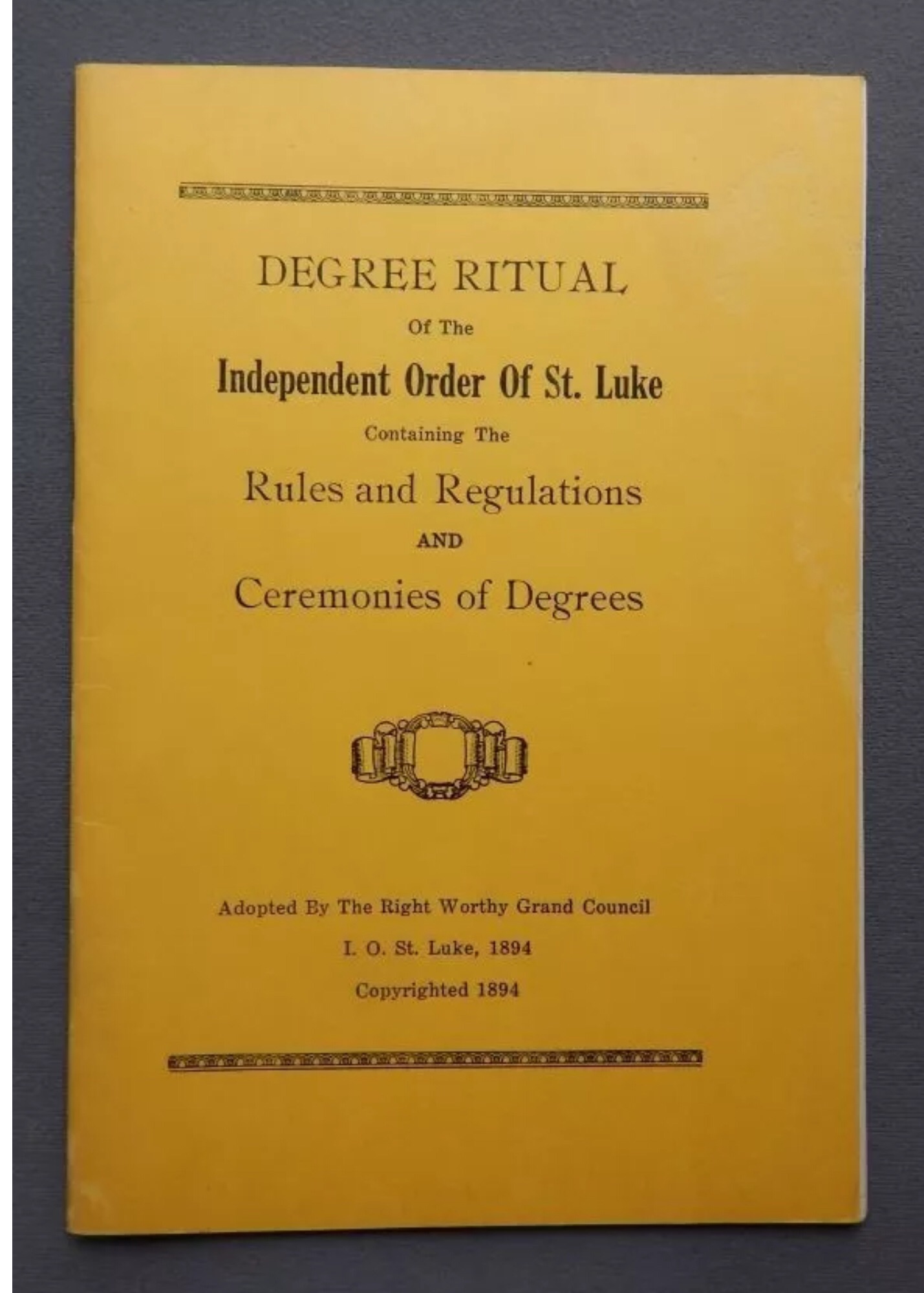
Degree Ritual of the Independent Order of St Luke

Finding Aid – Right Worthy Grand Council, Independent Order
of St. Luke Records, CATALOG NO. MAWA 9388 (COLLECTION), MAGGIE L. WALKER NATIONAL HISTORIC SITE

National Museum of African American Art and Culture

BLACKSBURG [VIRGINIA] ODD FELLOWS RECORDS, 1902-1969 (MS1988-009)

Andrew Jackson Long – Millstone Cutter – Brush Mountain

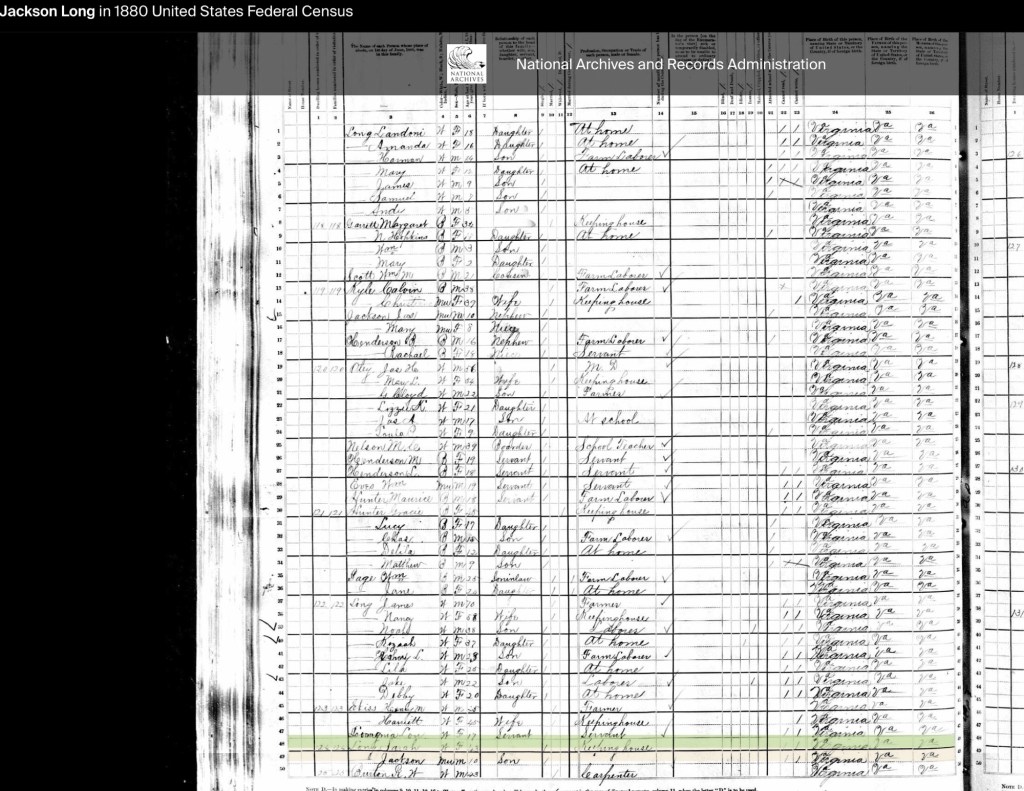
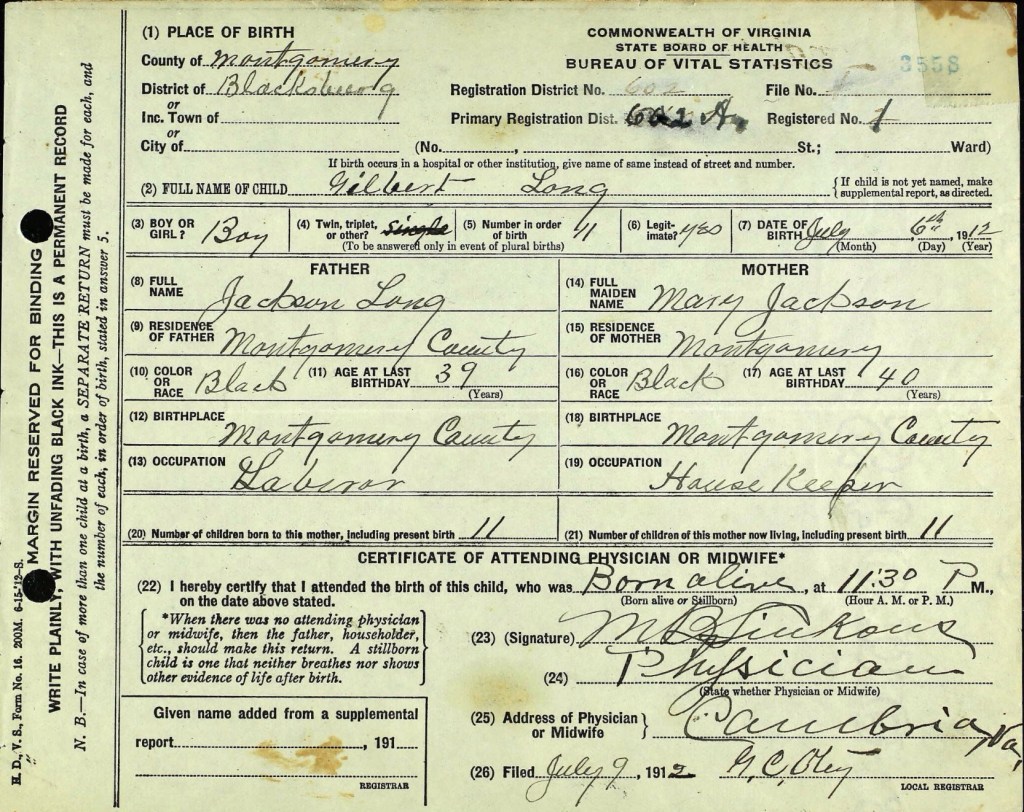
Andrew Jackson “Jack” Long was born in 1870 in Montgomery County as noted in the 1880 & 1900 US Census, and Jackson’s marriage record in 1892. In the 1930 census his birth year was noted as 1872. These documents list Jackson as either “mulatto, black or colored” and Sara/Sarah as “white.” No father was listed.

In the marriage record Jackson’s mother is noted as Sara Long and in the 1880 US Census as Sarah. In the 1880 census Sarah and Jackson are living in the vicinity of other Long families and close to the James Otey farm, Walnut Springs, close to Toms Creek.

On 1 September 1892, Jackson Long (22 yrs, laborer) marries Mary Jackson (21 yrs) by D. Bill Groseclose. Polly Jackson is noted as Mary’s mother.
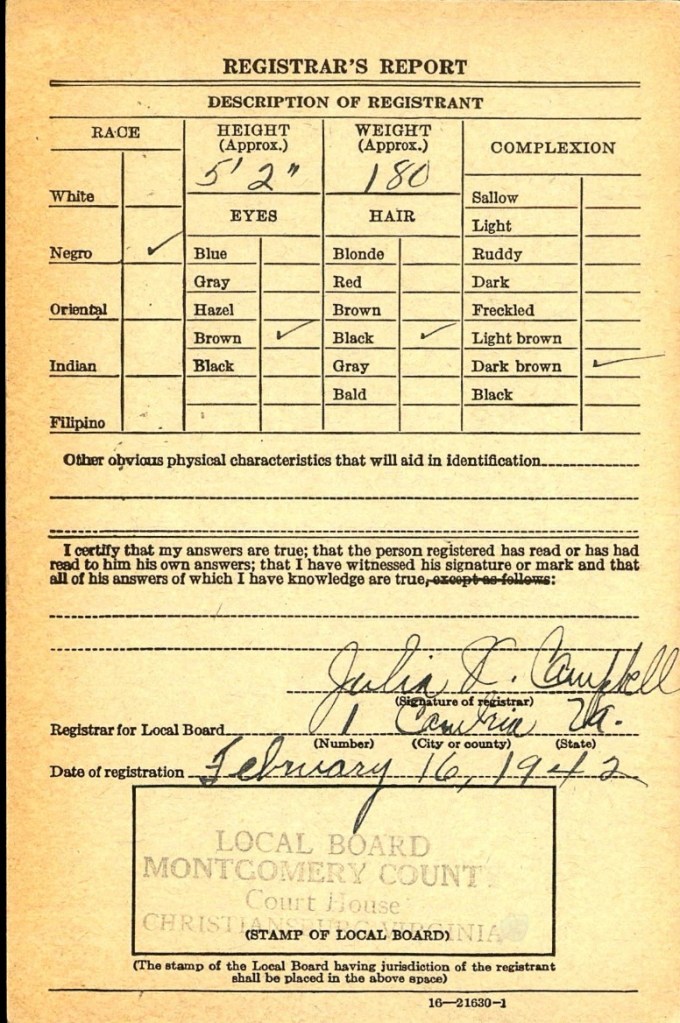
Eight years later the family of 6 appears in the 1900 US Census. Jackson is 26 and a laborer in the stone quarry; Mary, his wife, is 26 and had given birth to 4 children, all still alive: Theodosia,- daughter, born December 1893, 6 yr; Thomas – son, born September 1895, 4 yr; Donald- son, born May 1896, 4 yr; Hary C – son, June 1897, 3 years.

1930 US Census finds the family in Montgomery County, and appears to be living in the same neighborhood. Jackson and Mary own their home, worth $600. He is working in Mill Rock Quarry as a Stone Cutter. The couple are now living with 7 children.

Donald and Thomas are working in the millstone quarry. Thomas is 34 (b. 1906) and Donald is 31 yrs old (b. 1909). Theodore (Ted) is 23 (b. 1917) and his brother Gilbert 13 (b. 1917) are working on a dairy farm and Mason is 22 (b. 1918) and working on a “truck” vegetable farm. The two daughters, Eva is 19 (b. 1911) and Annie 16 yrs (b. 1914) are at home.

The birth certificate for Gilbert add to the Long’s story. He is listed as the 11th child, born on 6 July 1912 to 39 yrs old Jackson Long and Mary Jackson Long, age 40, housekeeper. M.B. Linkous was the attending physician in Cambria.

Resources

Millstone Manufacture in Virginia: Interviews with the Last Two Brush Mountain Millstone Makers, Ed by Charles D. Hockensmith, 1999.

Charles D. Hockensmith mentions Jackson Long and his sons, Donald and Ted Long, as stonecutters working in the Brush Mountain Millstone quarry.

The conglomerate millstone makers of New York and Virginia in the United States by CHARLES D. HOCKENSMITH

The conglomerate millstone makers of New York and Virginia in the United States

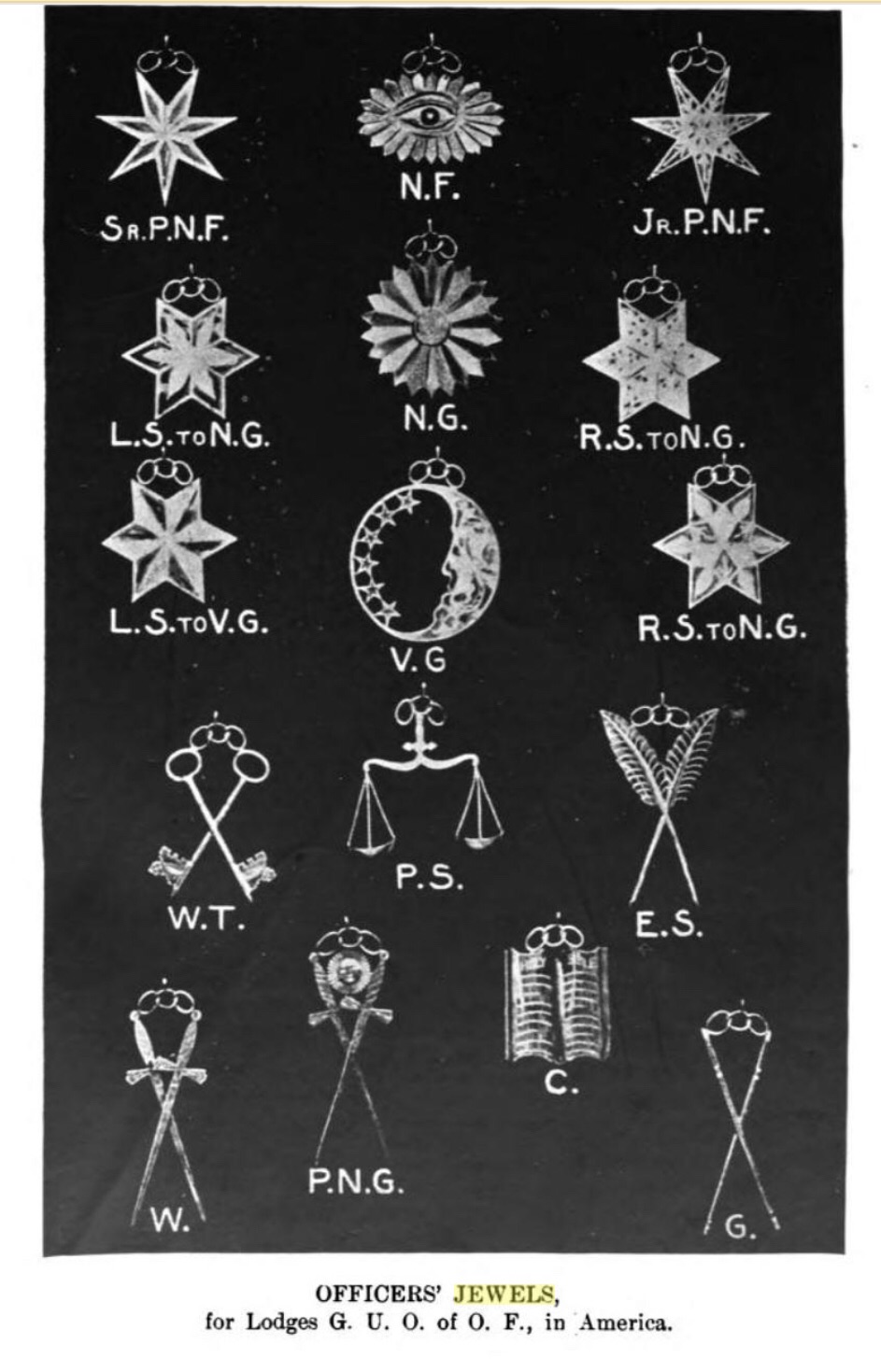
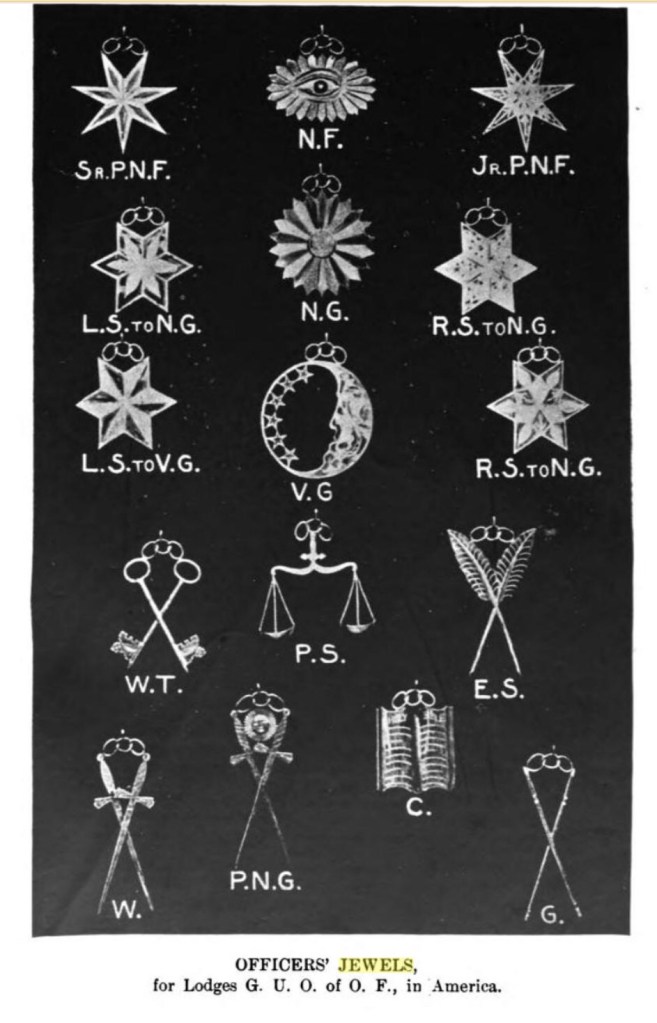
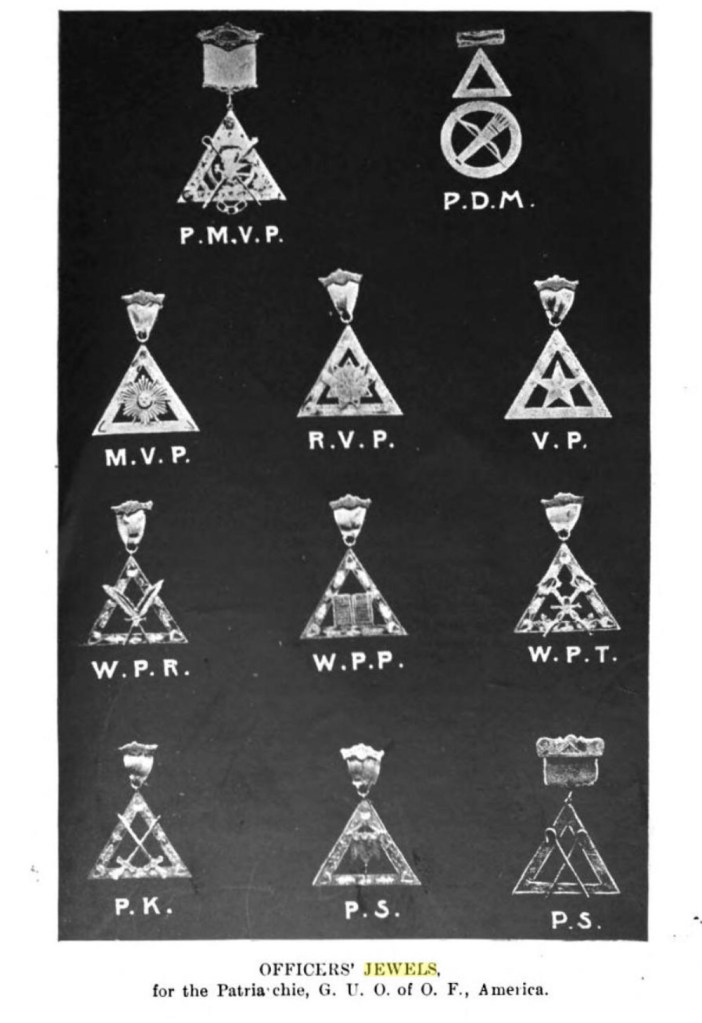
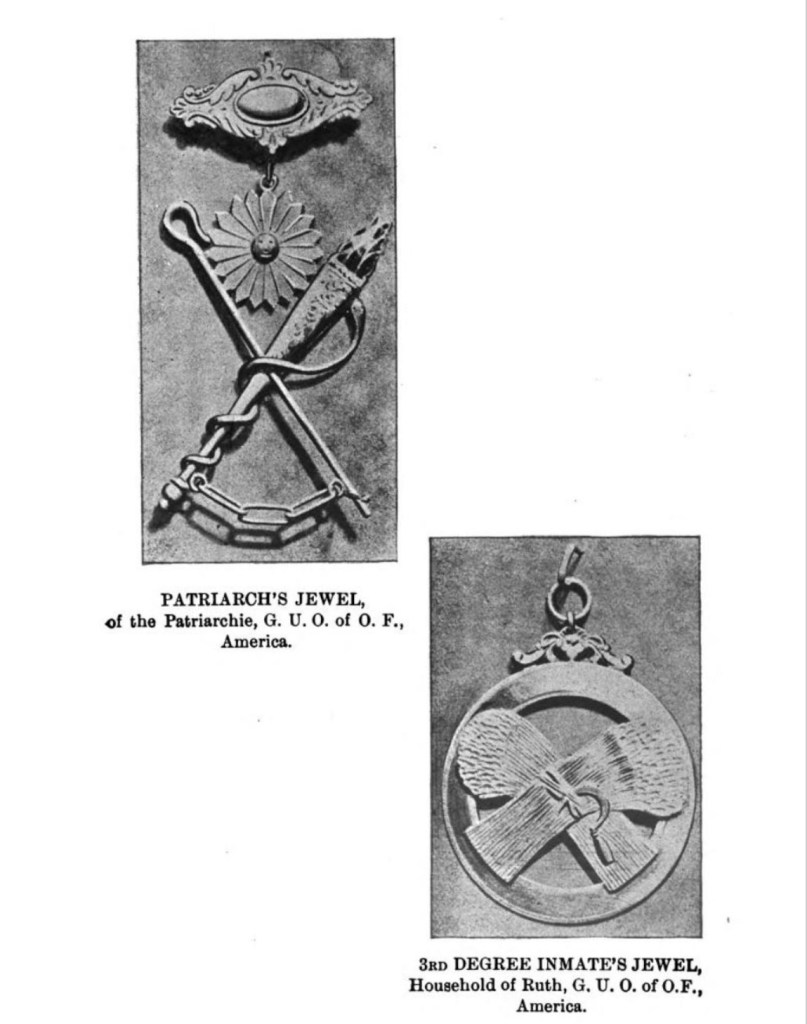
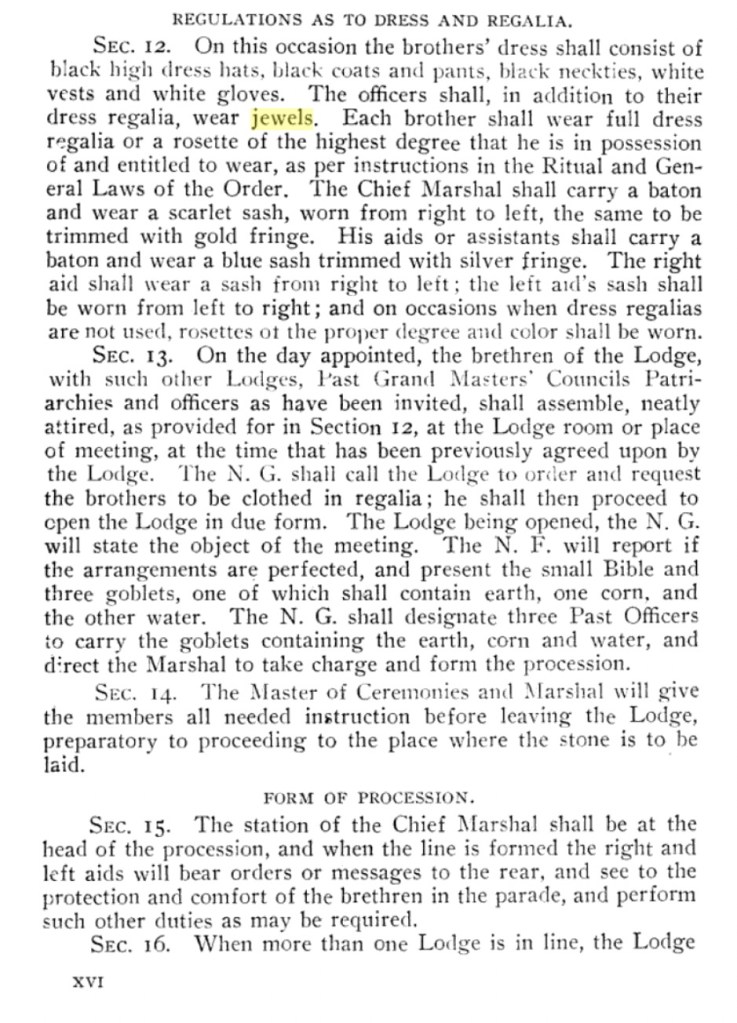
Grand United Order of Odd Fellows Regalia Jewels

The regalia worn by members is described in this 1902 book:

The Official History and Manual of the Grand United Order of Odd Fellows in …

By Charles H. Brooks

Understanding the Degrees, Titles and Symbols on the Lodge Level

  1. Initiate – white
  2. Appointed Officers – star, often 5 pointed
    • Worthy Treasurer (crossed keys)
    • Warden (crossed swords)
    • Worthy Chaplain (Bible, black)
    • Guardian (crossed baton)
    • Right and Left Supporter to NG (RSNG or LSNG, 6-pointed star)
    • Right and Left Supporter to VG (RSG or LSG, 6-pointed star)
  3. Elective Secretary – emerald (crossed quill); Permanent Secretary (balance)
  4. Vice Grand – blue (moon & stars)
  5. Noble Grand – Scarlet (sun and rays)
  6. Past Noble Grand – Golden (heart in hand, crosses swords)
  7. Noble Father – Excelsior, (Seeing-Eye in the night).
  8. Past Noble Father (Permanent Noble Father), (7-pointed star).

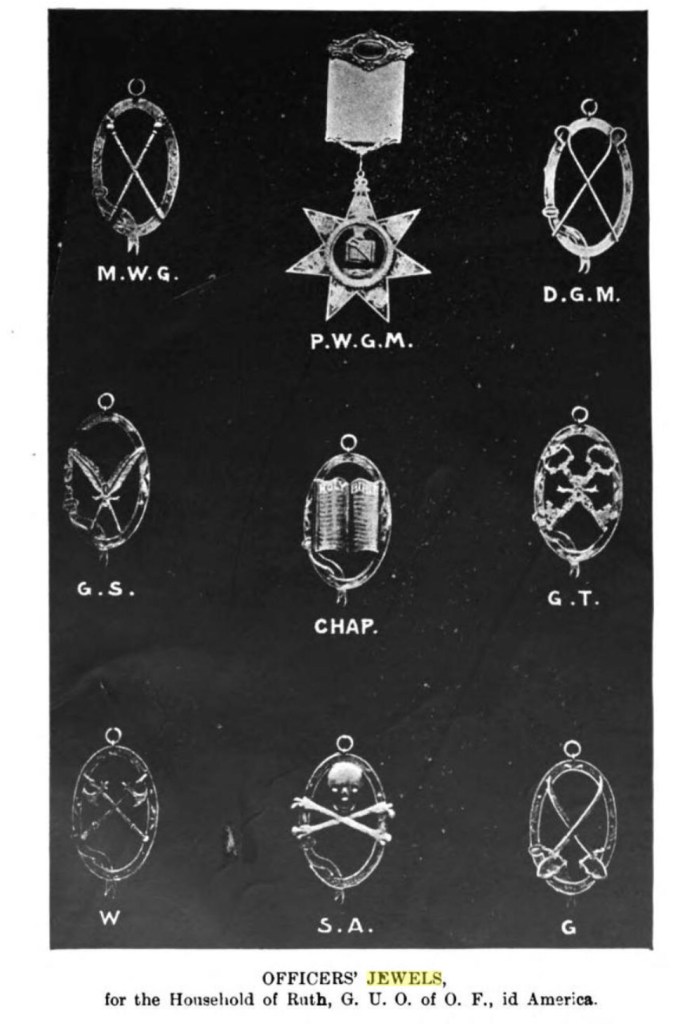
Understanding the Degrees, Titles and Symbols on the District Level

  • Grand Treasurer (crossed keys)
  • Grand Secretary – (crossed quill)
  • Warden (crossed axes)
  • Guards (crossed sword)
  • S.A. (skull & cross bones)
  • Master Worthy Grand (crossed batons)
  • District Grand Master – (crossed shepherd hooks)
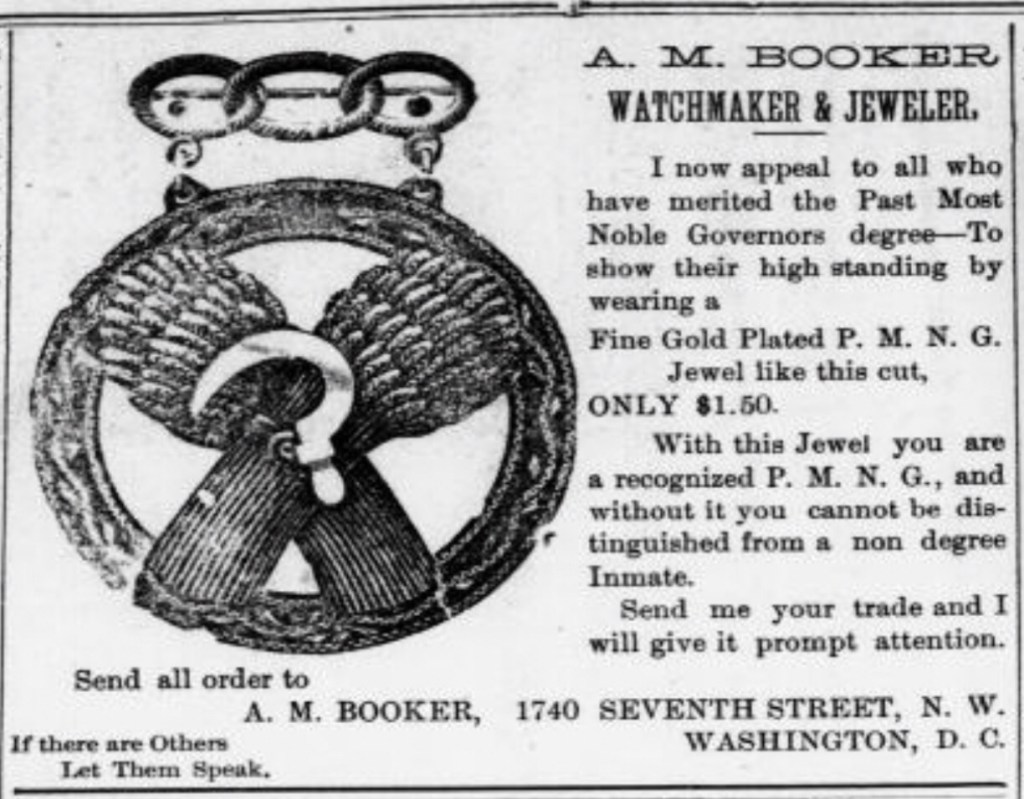
  • Past Worthy Grand Master – wheat & scythe and 7-pointed star

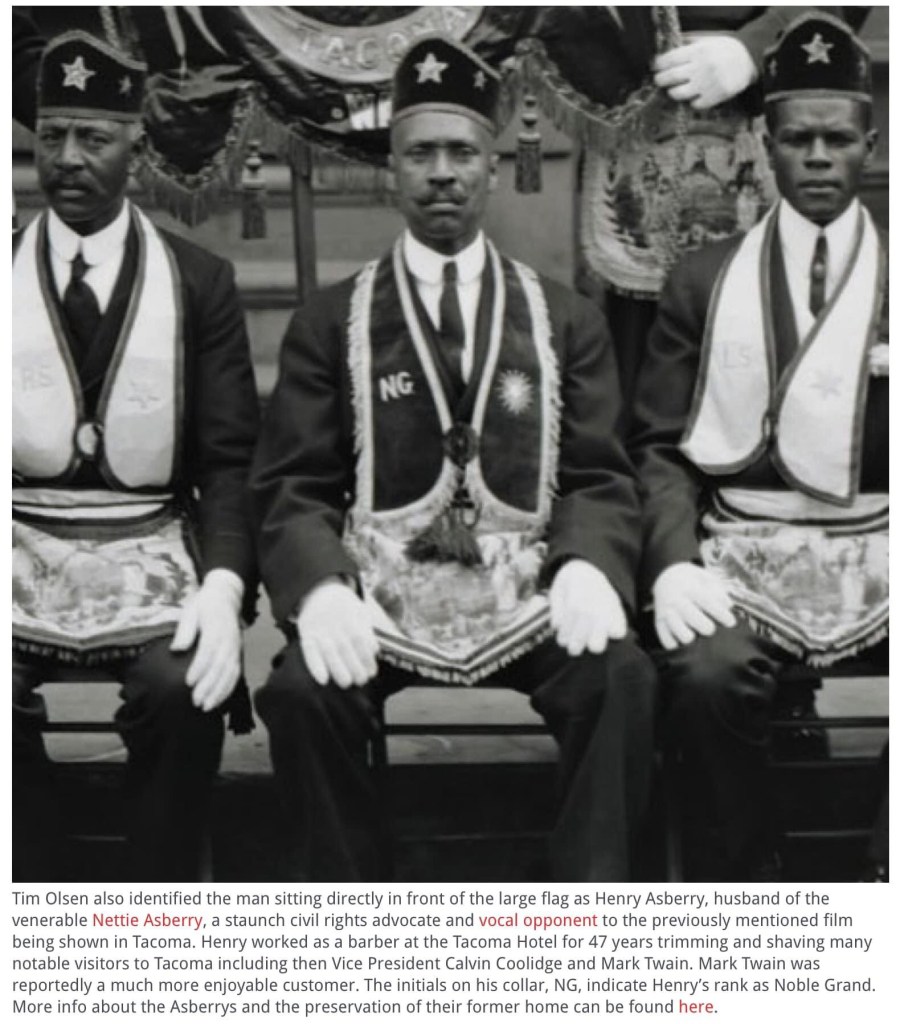
The structure of Grand United Order of Odd Fellows is reflected in the regalia worn by the members. This is an amazing image that was posted in the article from Tacoma, Washington, a long way from rural Blacksburg of the time. But the collars, staffs, swords and hats plus the proximity of the men to the Noble Grand leader provide a glimpse of the hierarchy. Note the two men on both sides of the GN. LS and RS stand for Left and Right Supporter. Grit City Magazine, Feb 2023


Grand United Order of Odd Fellows in America (1843-present) By: Michael Barga

Blacksburg, VA Tadmore Light #6184 Lodge Explored


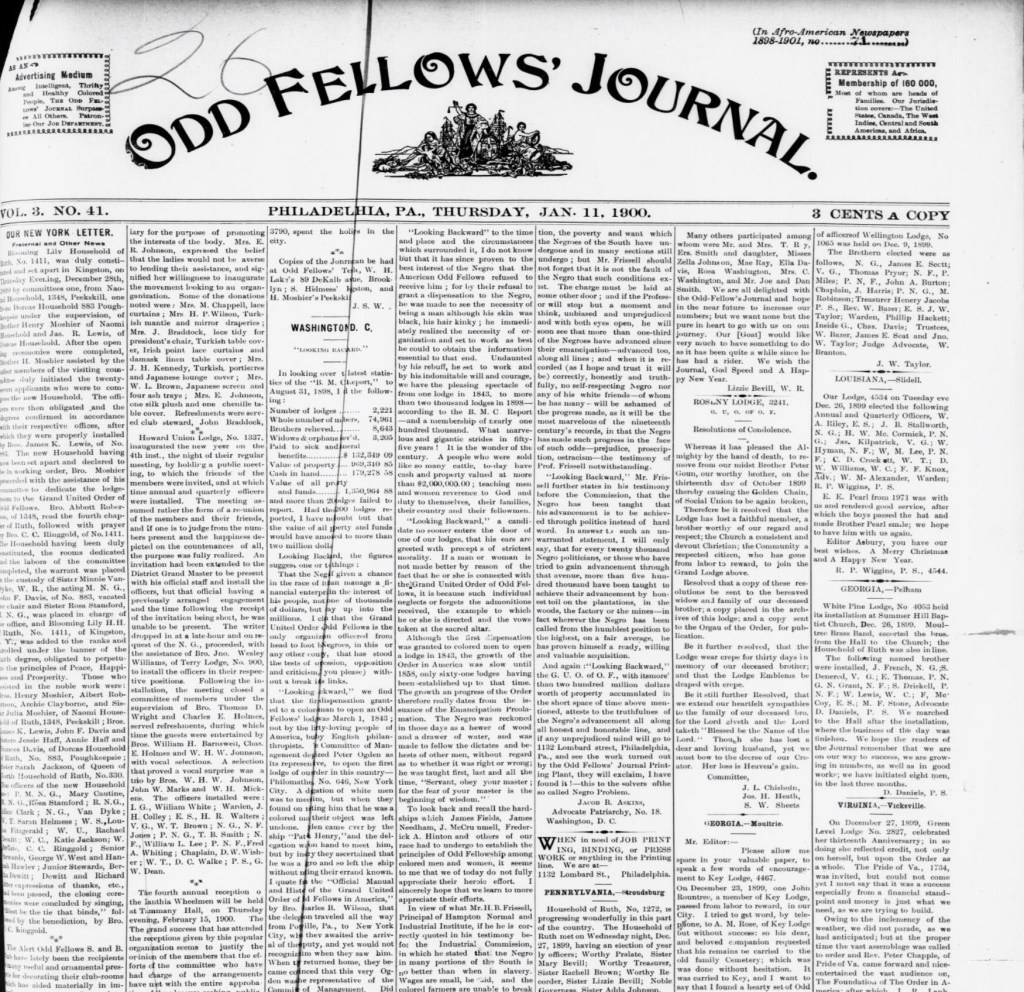
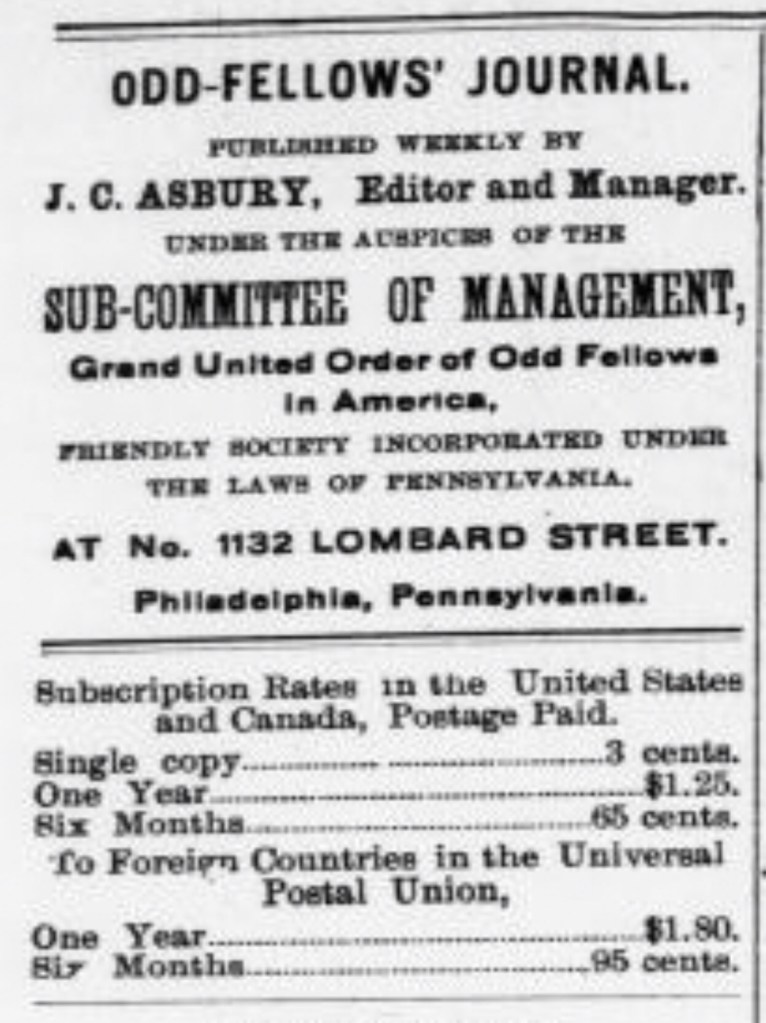
More Regalia Images from the Odd Fellows Journal, 1900.

Asbury, J. C. Odd Fellows’ Journal. (Philadelphia, Pa.), Vol. 3, No. 41, Ed. 1 Thursday, January 11, 1900; Philadelphia, Pennsylvania. (https://texashistory.unt.edu/ark:/67531/metapth523664/: accessed January 16, 2024),University of North Texas Libraries.


Iconography

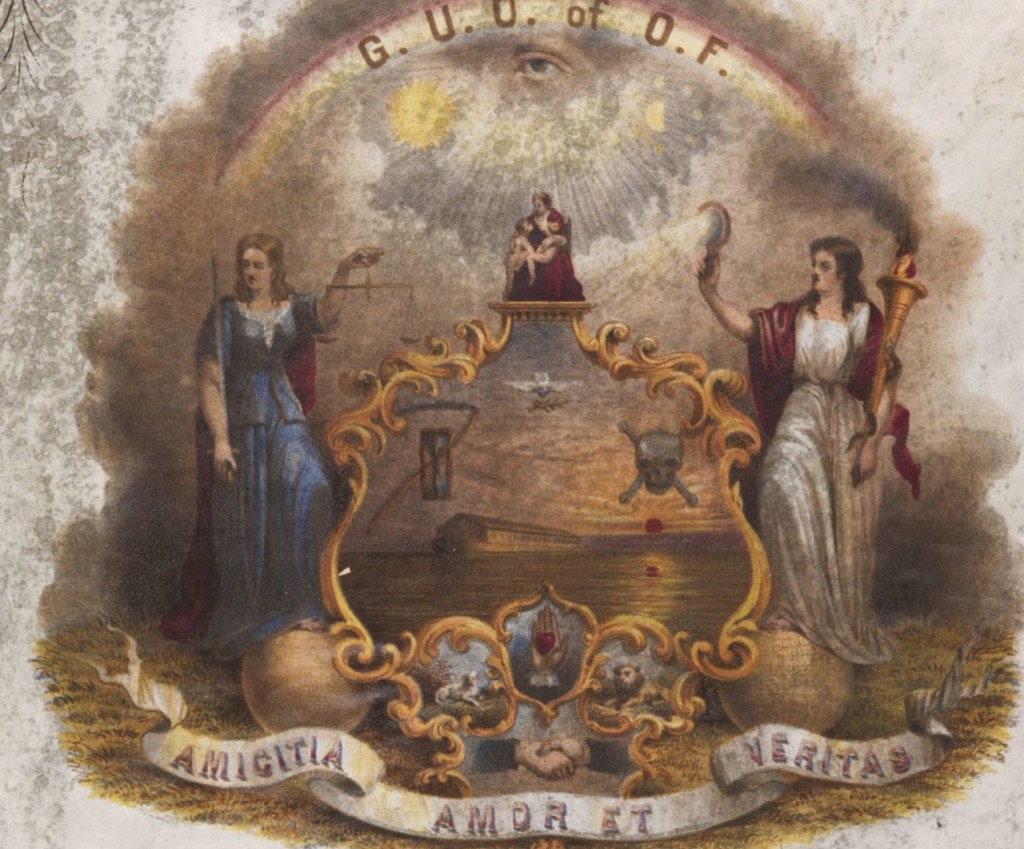
Iconography that is associate with GUOOF is featured and explained by The Library of Philadelphia based on the 1843 chromolithograph created by D.B. Bowser (1820-1900), an African American artist. The symbols used include: “sickle & hourglass, dove, skull & crossbones, lamb, heart-in-hand, lion, seeing eye in the night sky and under a rainbow.”

The Library of Philadelphia

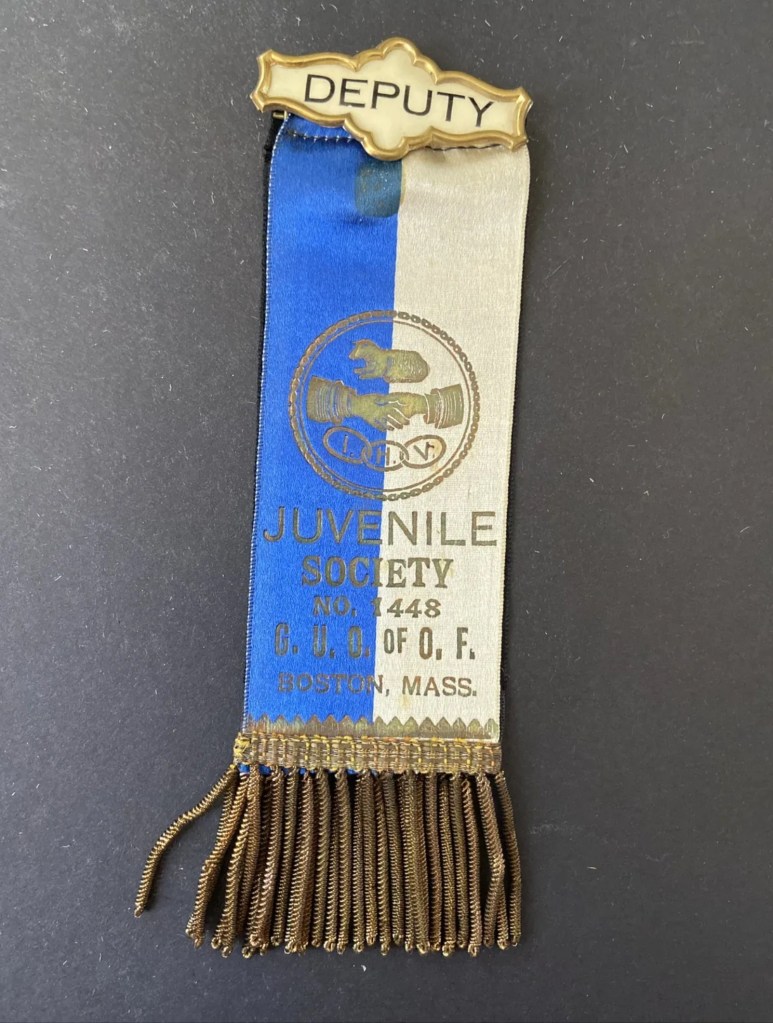
Juvenile Society, the Juvenile Branch of Odd Fellows.

The Grand United Order of Odd Fellows and the House of Ruth created the Juvenile Branch on September 13, 1897 for all children from age 3 to 16. Their parents did not have to be a member of the order. In support of families, the 4th Sunday of September was designated “Children’s Day.” The Juvenile Branch became known as the Juvenile Society.

Clip for a badge, front
Back

Independent Order of St Luke

The St. Luke and Odd Fellows Hall, located on Gilbert Street in Blacksburg, stands as the sole remaining historic building from the once vibrant African American neighborhood of New Town. With two floors, it hosted both sacred ceremonies and administrative functions, contrary to the misconception that ceremonies were exclusive to the second floor. The Rules & Regulations book includes a diagram detailing the assigned places for desks and officers, clarifying this aspect.

Floding Company Manufactures Catalog and the KKK Uniform Manufacture

Courtesy of Virginia Tech Special Collections & University Archives

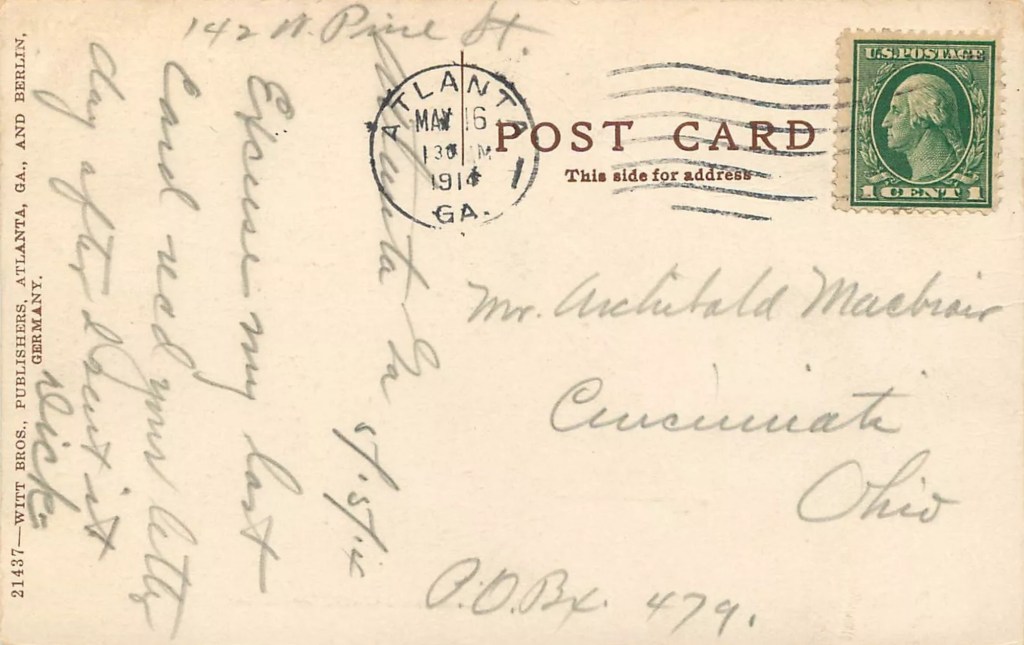
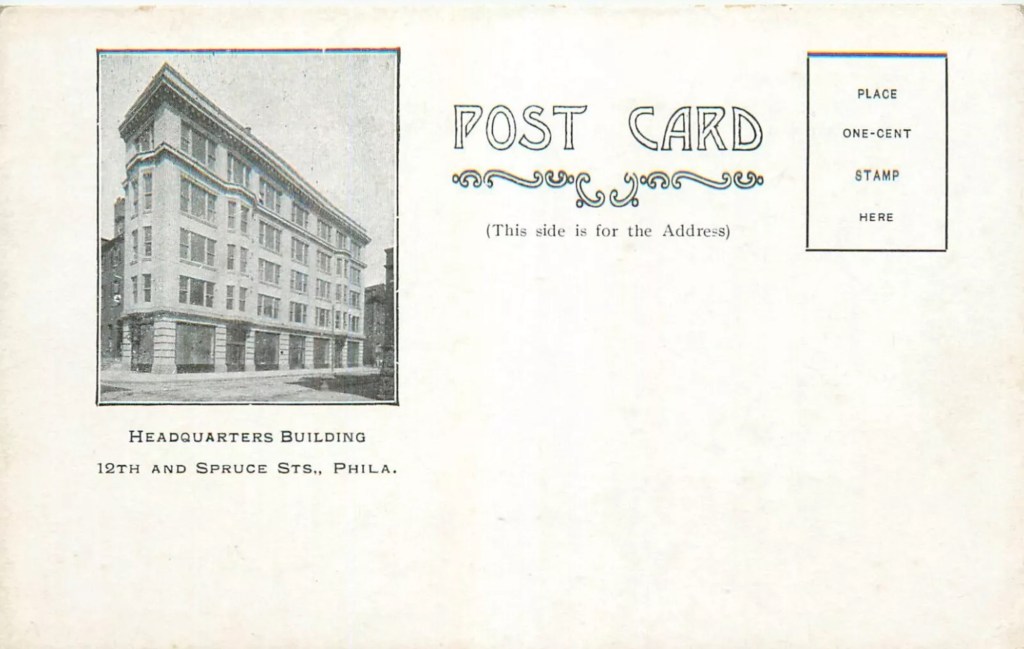
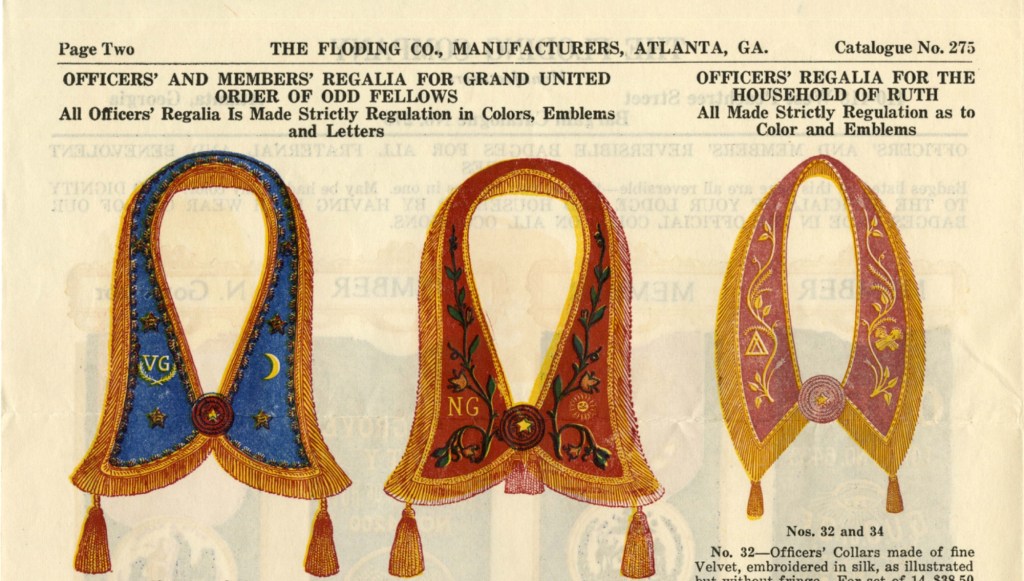
How did the Orders in Blacksburg acquire their regalia? The Floding Company Manufacturers Catalog (Ms1988-009)

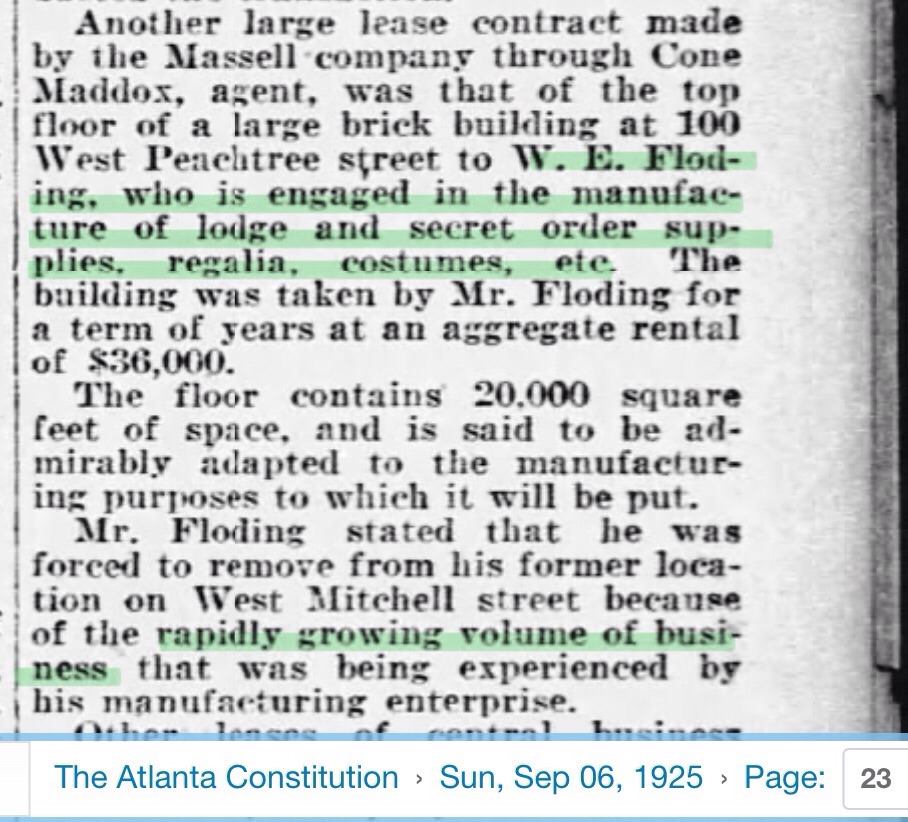
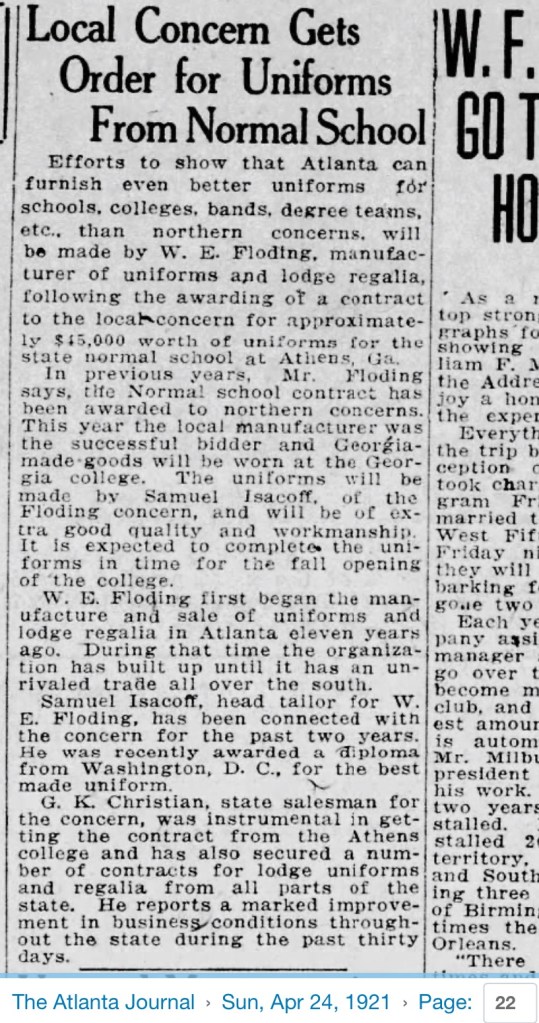
From 1875 to 1964, the Floding Regalia Company, based in Atlanta, produced regalia. Owned by W.E. Floding, the company supplied regalia to African American fraternal organizations and secretive costume to, most likely, the KKK.

In 1925 Mr Floding moving his manufacturing to a large space in Atlanta due to the expanding sales of secretive regalia and costume. However, Floding was also financially linked to Atlanta KKK activities under Edward Young Clarke, who was convicted of violating the Mann Act by assaulting and then transporting a woman across state lines. In 1927, Clarke and Rev. JR Straton were instrumental in creating a competing organization to the KKK, pledging operations to other states. Clarke, Imperial Wizard 1915-1922, was booted out of the KKK but started a parallel group. See clipping below.

Souvenir Medal from 14-20 September 1908 Atlantic City, NJ Gathering

The Green Book 1949

Christiansburg Institute, Inc provides an excellent tour of Montgomery County historic sites, including much information about the Morgan family who owned and ran the Eureka Hotel.

The famous Green Book guide points travelers to seek the Eureka Hotel in Christiansburg. This hotel was located on Depot Street, east of Franklin street.

Courtesy of the Henry Ford Collection
Eureka Hotel

The Eureka Hotel was on the left side of Depot Street, at the top right section of this map. The Morgan family owned and operated the hotel from the 1930 to 1970. After that time the building was used as Rosalie’s Soul Kitchen (Rosalie Paige, 1983 to 1985), grocery store, beauty shop, barber, and taxi stand. Burrell and Rae Morgan along with S.B. Morgan, Burrell’s brother owned the establishments along with other businesses in Christiansburg.

The Roanoke Times, 13 December 2000 (photo Gene Dalton, Roanoke Times)

Memories of the Soul Kitchen and Eureka Hotel.

One building due to be demolished with the mill was a haven for black-owned businesses through the decades.

Like the S&M Mill, the Eureka Hotel has seen better days.

The front is covered with a hodgepodge of different sidings in various stages of decay. The glass is missing to a second-floor picture window, leaving a blue room with a broken chandelier exposed to winde, rain and worse.

The tough old building still looks sturdy, but like the mill, is slated for destruction because it’s worth much less than the land it sits on.

Bruce Reynolds inherited both buildings, which are near the intersection of Depot and North Franklin streets. He has put the 1.3 acre site on the market for $500,000 and is having the old hotel and half of the mill demolished.

Perched at the edge of a traditionally black neighborhood, the building had been The Eureka Hotel, lodging for blacks during segregation. From the 1930s to the ’70s, the Morgan family owned and operated it as a combination grocery store, beauty parlor, barber shop, gas station and taxi stand. In the early ’80s it had a fling as Rosalie’s Soul Kitchen.

Julie Morgan Hardy said she’s glad they’re tearing the “eyesore” down.

She grew up in the building’s second floor apartment and helped her parents, Burrell and Rae Morgan, run the first-floor store, selling bread, canned goods, cookies, candy and other items. She even drove a cab sometimes.

Her parents’ dedication to that store, along with her father’s second job as a railroad postal clerk, put her and her four siblings through college, she said.

By Tom Angleberger, The Roanoke Times, 13 December 2000

In the 1932 Christiansburg, Va Directory Wm B (Burrell) & Ray Morgan were listed at 204 Depot Street (taxi driver) along with his brother S.B. Morgan (taxi driver) and William Morgan. Daisy Morgan was listed as the proprietor of the Sterling Cafe (101 1/2 Depot). William Morgan at 204 Depot was the brother of Burrell and S.B. Morgan.

1932 Christiansburg Directory

In the 1962 Christiansburg Directory S.B. Morgan, Taxi Co was located at 100 Depot, Burrell Morgan residence was 10 Depot (Eureka Hotel), & Mrs Daisy Morgan was living at 119 Depot.

Courtesy of Montgomery Museum of Art & History, Christiansburg, Va

Obituary for Senior Barrett Morgan (S.B.) Roanoke Times, 23 June 1990

Senior Barrett Morgan, age 75, departed this life June 20, 1990, at the Montgomery County Regional Hospital after a short illness. He was born October 12, 1914, in Buxton, Iowa, the son of the late William Morgan and Ella P. Morgan. He was a faithful member of the Shaeffer Memorial Baptist Church in Christiansburg, Va., where he served as Chairman of the Trustee Board and past Chairman of the Deacon Board. He was the owner and founder of the S.B. Morgan Cafe and Taxi Company in Christiansburg, Va., having served the community for over fifty years. He was also a member of the Montgomery County Branch of the N.A.A.C.P. He was preceded in death by his wife, Mrs. Lucy Holmes Morgan; one son and a sister, Annette Simmons. His survivors are one daughter, Ruth M. Crisp of Washington, D. C.; a son-in-law, James R. Crisp, also of Washington, D. C.; one granddaughter, and two great-grandchildren; one brother, Mr. Burrell Morgan of Christiansburg, Va. Funeral services will be Sunday at 2:00 p.m. at the Shaeffer Memorial Baptist Church, Christiansburg, Va., with Dr. C. L. Brown officiating. Burial will be at the Shaeffer Memorial Cemetery, Christiansburg, Va. Viewing will be Saturday from 7:00 until 9:00 p.m. at the Claytor-Alexander and Penn Funeral Home, Radford, Va. The body will be placed in the church one hour prior to service. Claytor-Alexander and Penn Funeral Home in charge of the arrangements.


University of Virginia post for S.B. Morgan and their Green Book online exhibit