Celebrating Alvin Duval Lester’s Photography

Alvin Duval Lester (b. 1947) grew up in Christiansburg and later documented life in Richmond’s Jackson Ward through photography. His 1980s–90s images are featured in Alvin Lester: Portraits of Jackson Ward and Beyond, on view at the Virginia Museum of Fine Arts through March 30, 2026.

Lester’s family history spans at least five generations of free Black Virginians. Among his ancestors is Luke Valentine, who served in the Revolutionary War, marching from Bedford County to South Carolina in May 1781.

Courtesy of VMFA Museum

Alvin Duval Lester (b. 1947) is another example of the deep connections between Montgomery County families and Jackson Ward in Richmond. Raised in Christiansburg, Virginia, Alvin later documented life in Richmond through his photography. His images of Jackson Ward in the 1980s–90s were featured in the exhibit Alvin Lester: Portraits of Jackson Ward and Beyond. The Virginia Museum of Fine Arts exhibit will run until March 30, 2026 in the Photography Gallery, Richmond, Virginia. Facebook post by the Virginia Museum of Fine Arts

Alvin’s family history can be traced through at least five generations of free Black ancestors. His fourth-great-grandfather, Isham Lester (1765–1839), was listed as free in the 1810 U.S. Census for Lunenburg County. His son Bolling Lester, and grandson John C. Lester, were also born free there. By the 1860 U.S. Census, Bolling Lester had moved his family to Dry Valley in Montgomery County.

Alvin’s father, Wallace Brown Lester (1913–1989), married Mabel Lee Saunders on June 17, 1937, in Floyd County. The couple lived in Christiansburg, where Wallace owned L&N Cleaners. Alvin’s paternal grandparents were James Niles Wilson Lester (1880–1941) and Fannie Baker Thompson Lester (1886–1987). Fannie was the daughter of Herbert Thompson and Harriett Kincanon. James was the son of John C. Lester (1837–1924) and Annie Pate Lester (1843–1915), both born free in Lunenburg County, Virginia. John C.’s parents were Bolling Lester (1788–?) and Rebecca Barber (1790–1845).
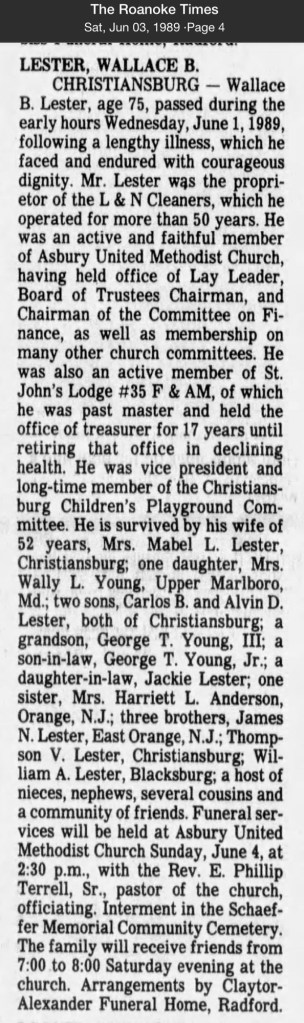
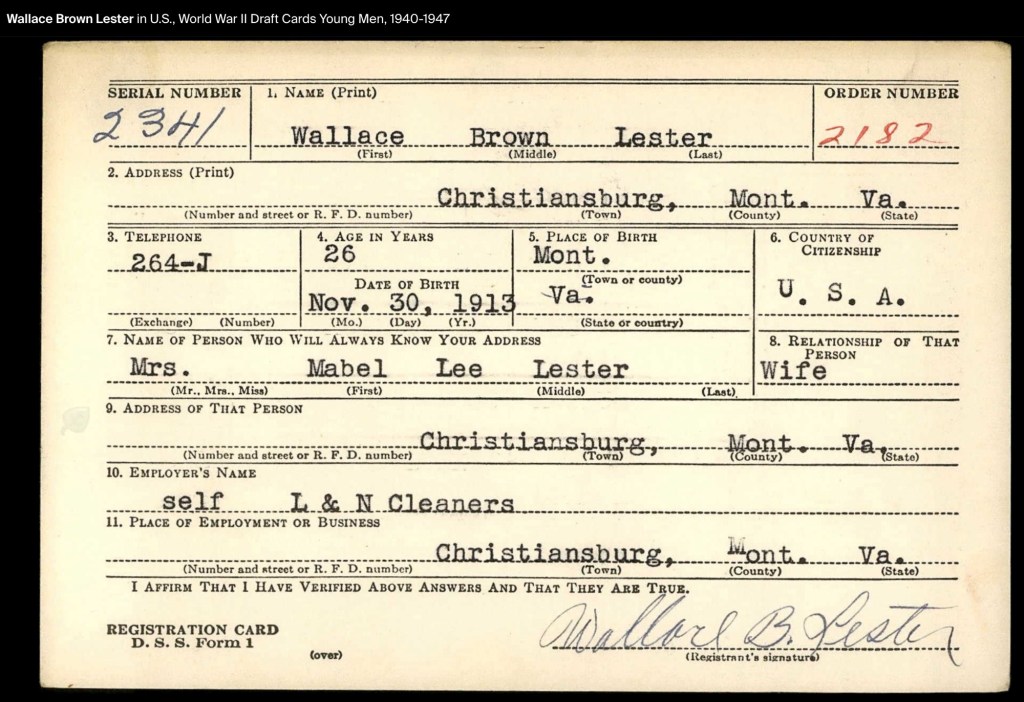
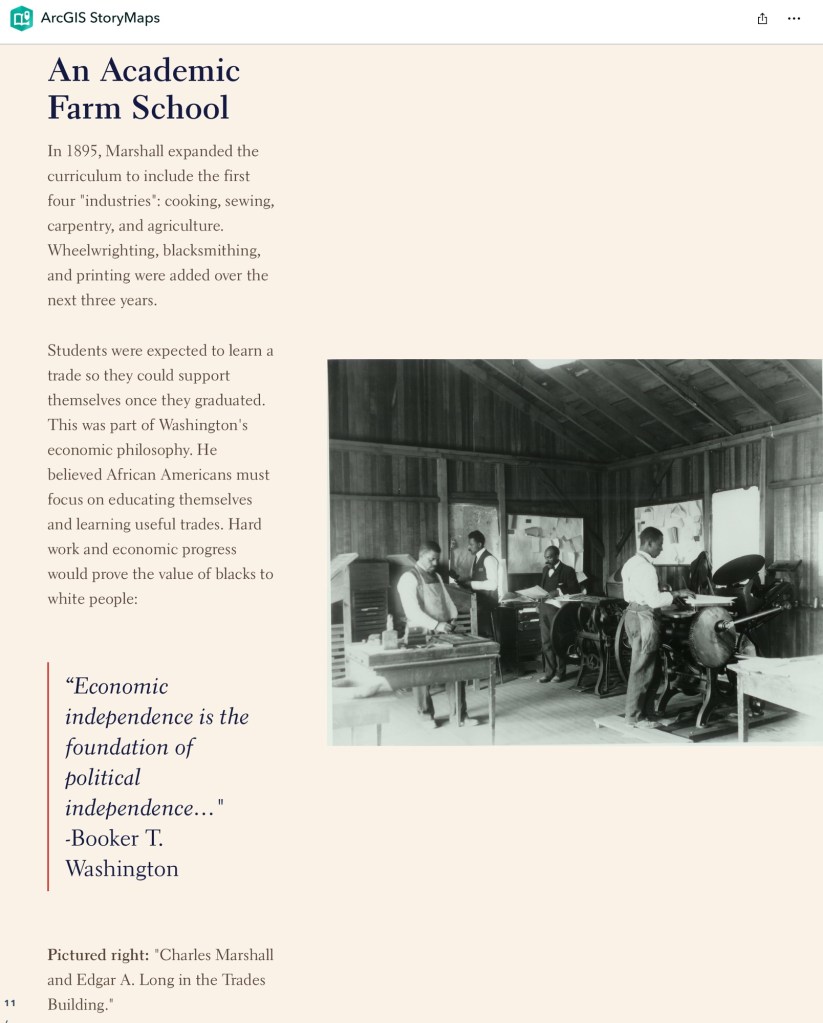
Alvin’s great-uncle, John Wynes Lester (1885–1961), taught, farmed and worked as a carpenter at Christiansburg Institute. He and his wife lived on campus until his death. He is buried in the school’s cemetery.

Luke Valentine, Free Black, Application for Revolutionary War Pension

During the American Revolutionary War, free Black men in Virginia played a meaningful—though often overlooked—role in the fight for independence. From the earliest days of the conflict, free Blacks served in militias, state troops, and Continental units, particularly as manpower shortages grew. Virginia law restricted enslaved people from bearing arms, but free Black men could enlist, serve as substitutes, or be mustered alongside white soldiers, especially in local militia companies.

By the later years of the war, Virginia increasingly relied on these men for defense and campaigns beyond the colony’s borders. Their service included marching long distances, guarding supply lines, engaging Loyalist forces, and fighting in the southern theater, where the war was especially intense in 1780–1781.
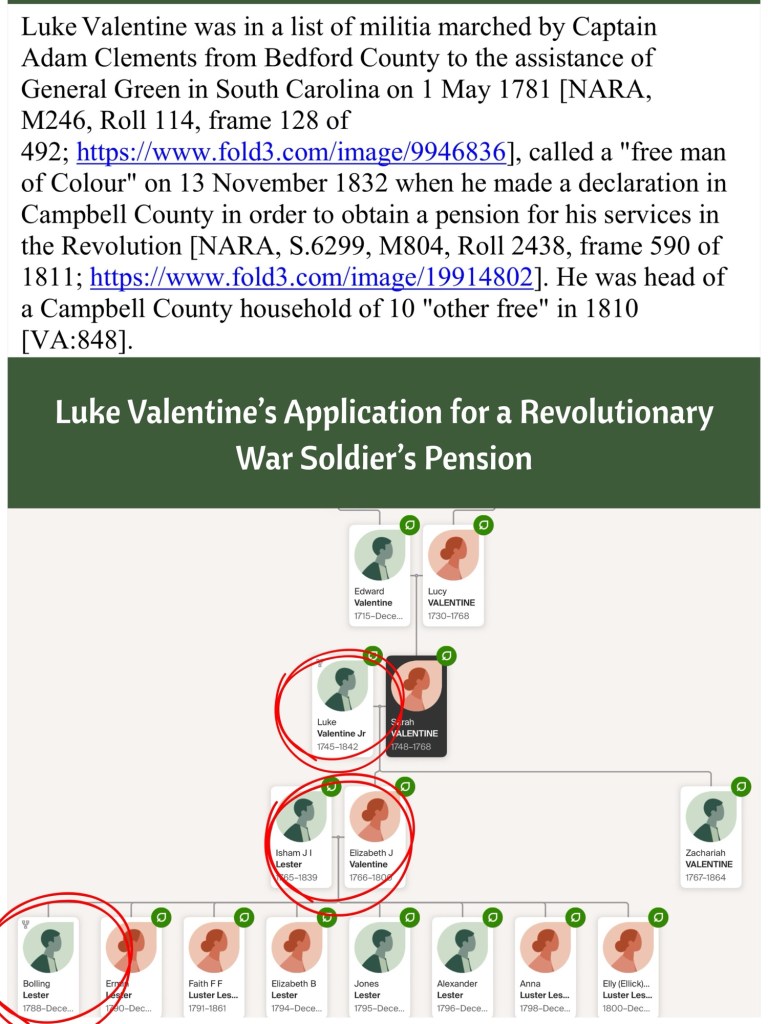
Luke Valentine, fifth-great grandfather of Alvin Lester’s, is one such example. He appears on a roster of men led by Captain Adam Clements of Bedford County, Virginia, who marched to South Carolina beginning May 1, 1781. This was a critical moment in the war, as Patriot forces sought to counter British advances in the South. Valentine’s inclusion on this roster places him among the free Black Virginians who answered the call to serve far from home in support of American independence.

After the war, some free Black veterans, including Luke Valentine, applied for Revolutionary War pensions. These applications are vital historical records, offering rare documentation of Black military service and affirming that free Blacks were not only present but active participants in the founding struggle of the United States.
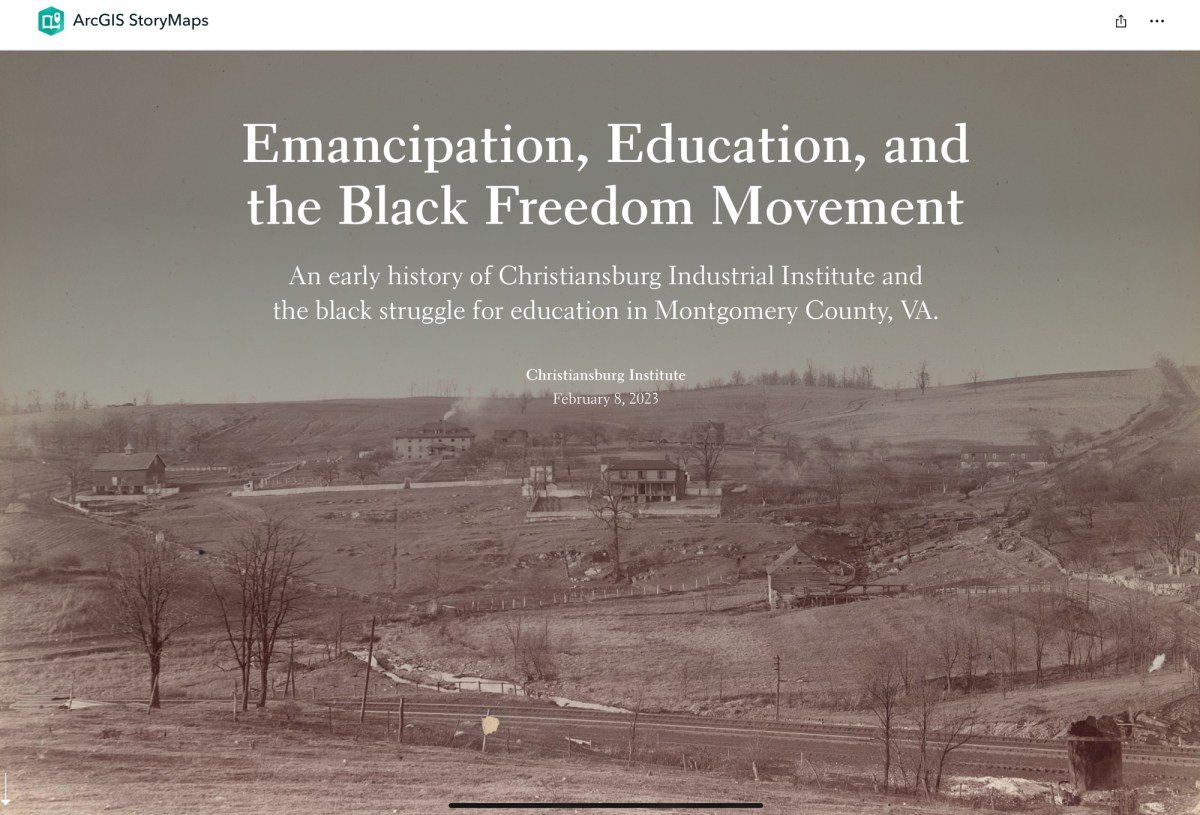
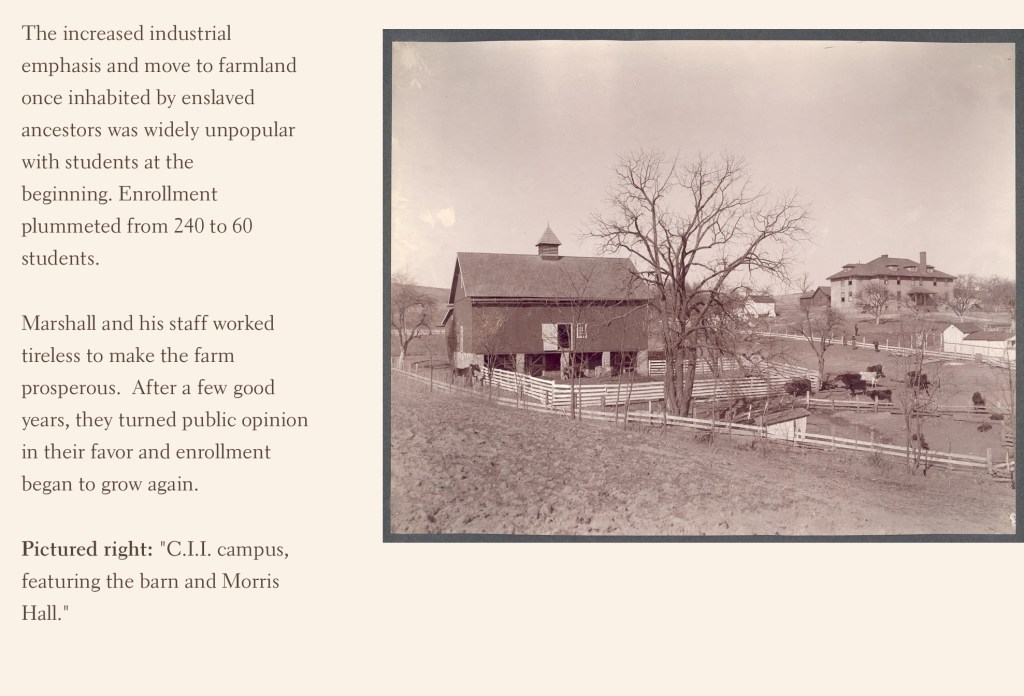
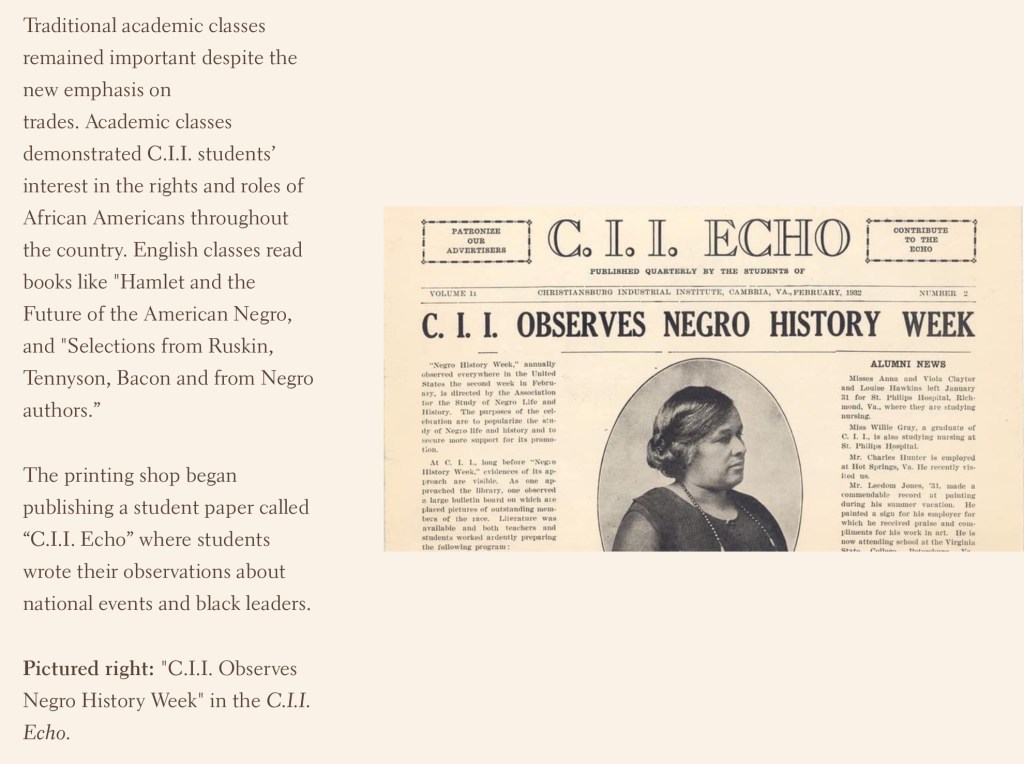
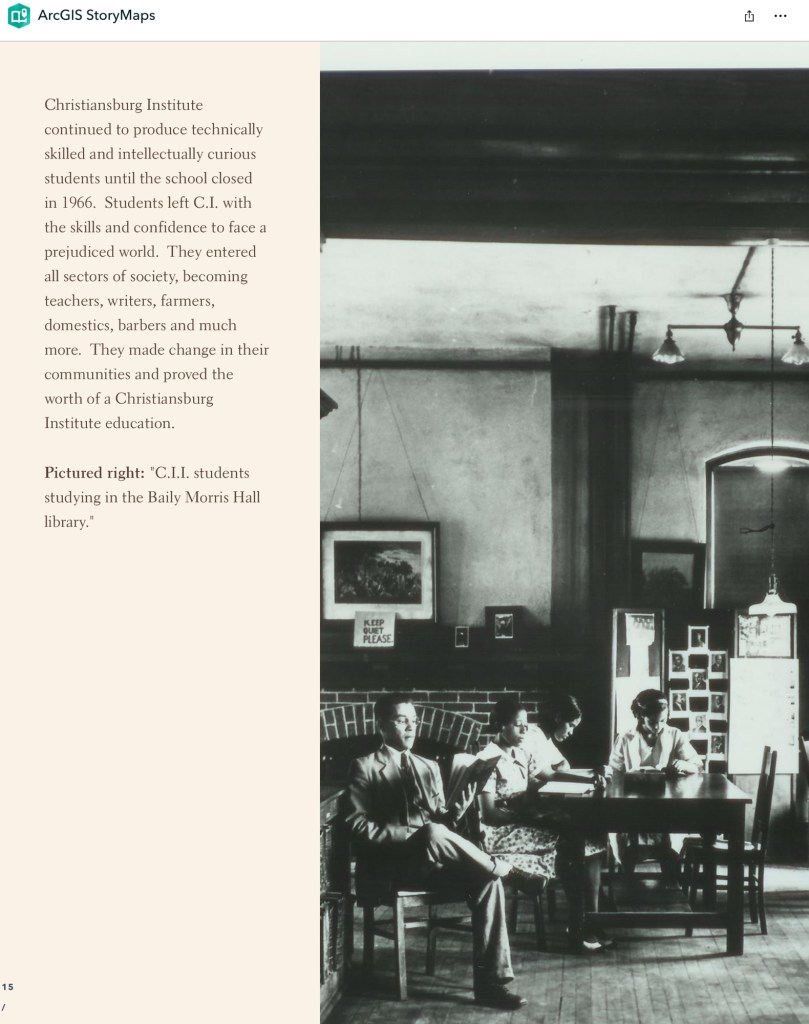
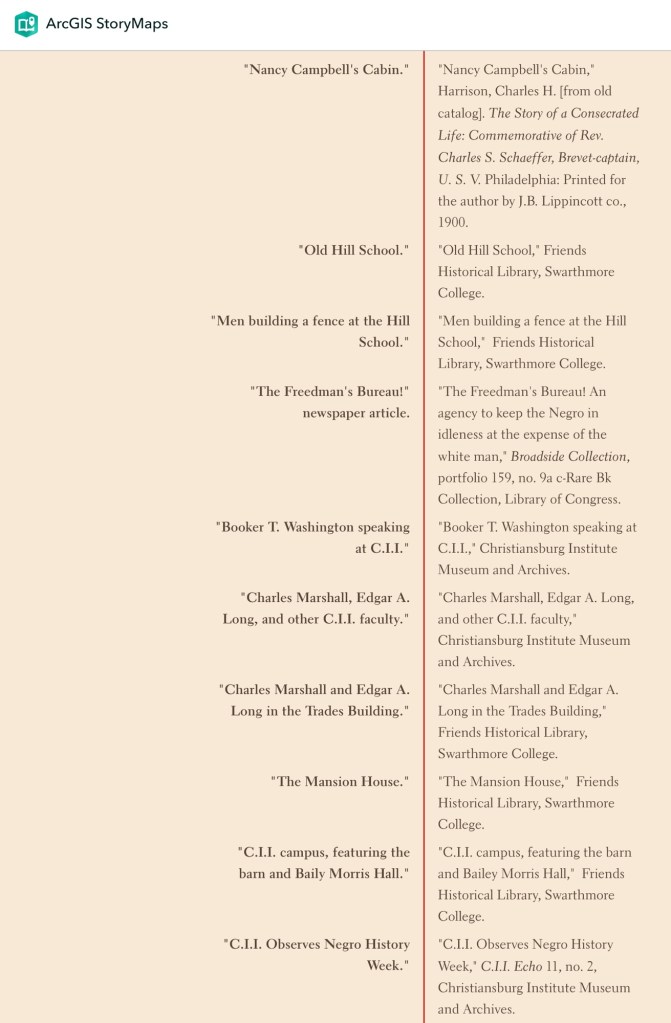
Preserving History: Christiansburg Institute’s Inc. Story Map Project

This digital exhibit is a thoughtfully crafted visual timeline highlighting the school’s key milestones and the individuals who shaped its legacy. This work honors the strength, resilience, and vision of the Black community in Montgomery County during the Reconstruction era and beyond.

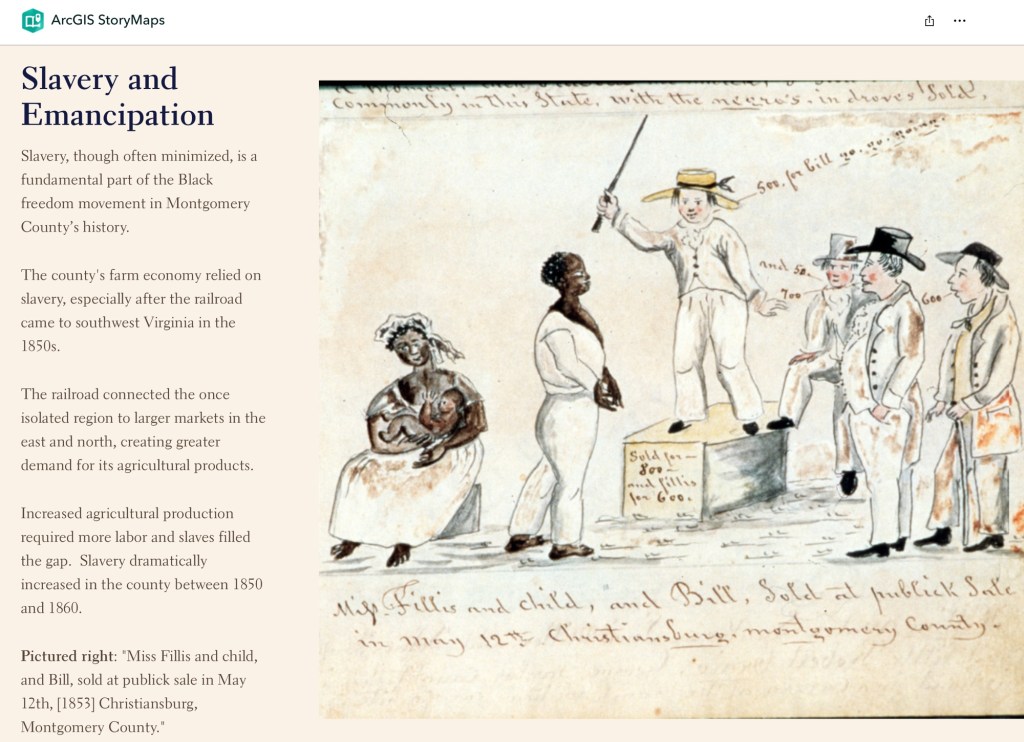
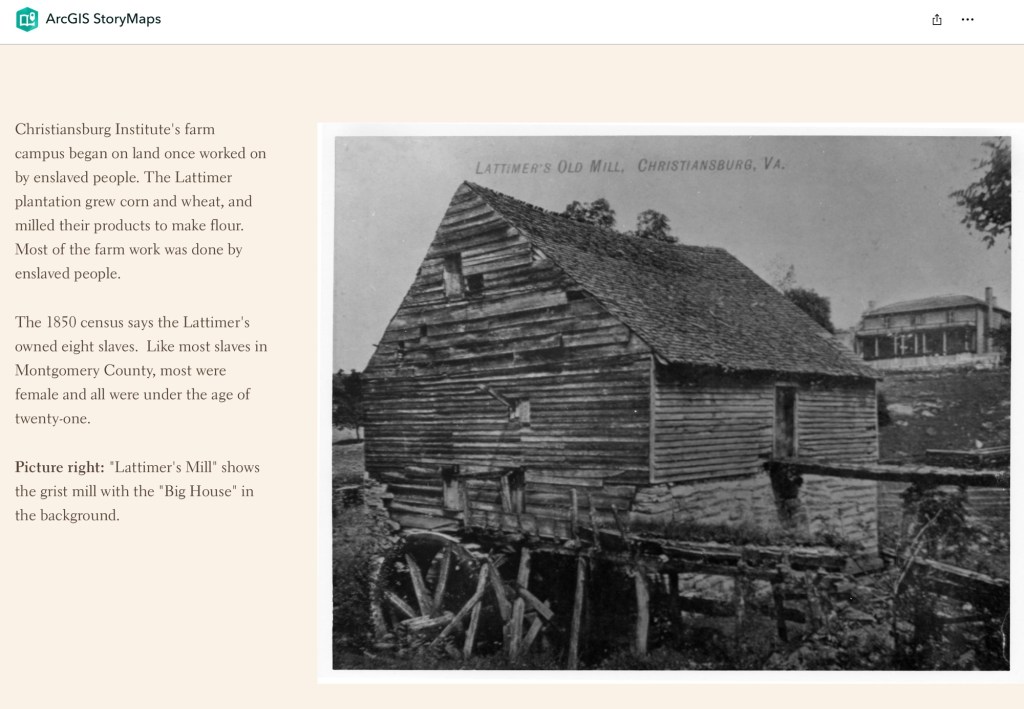
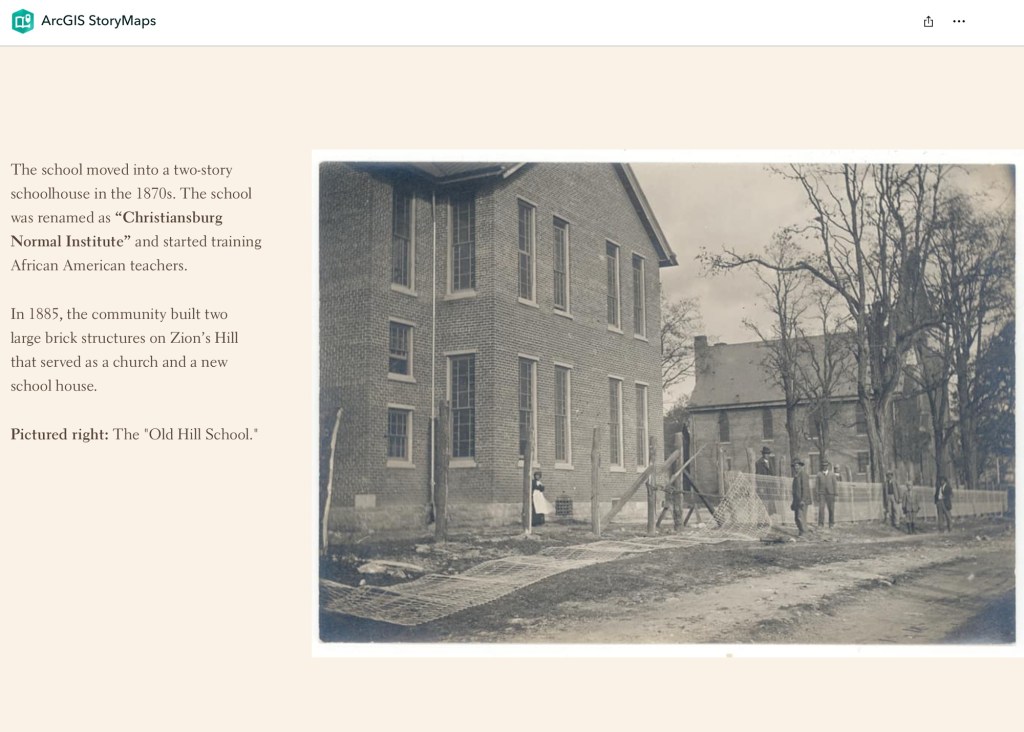
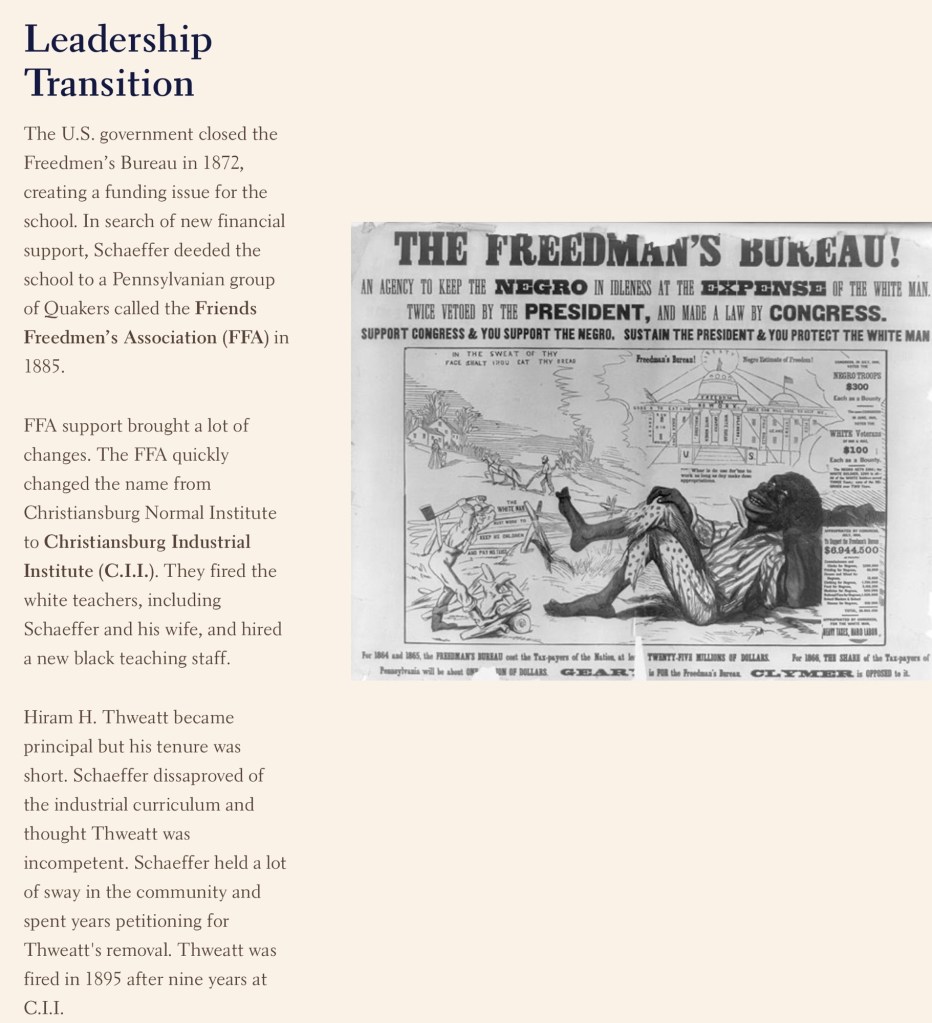
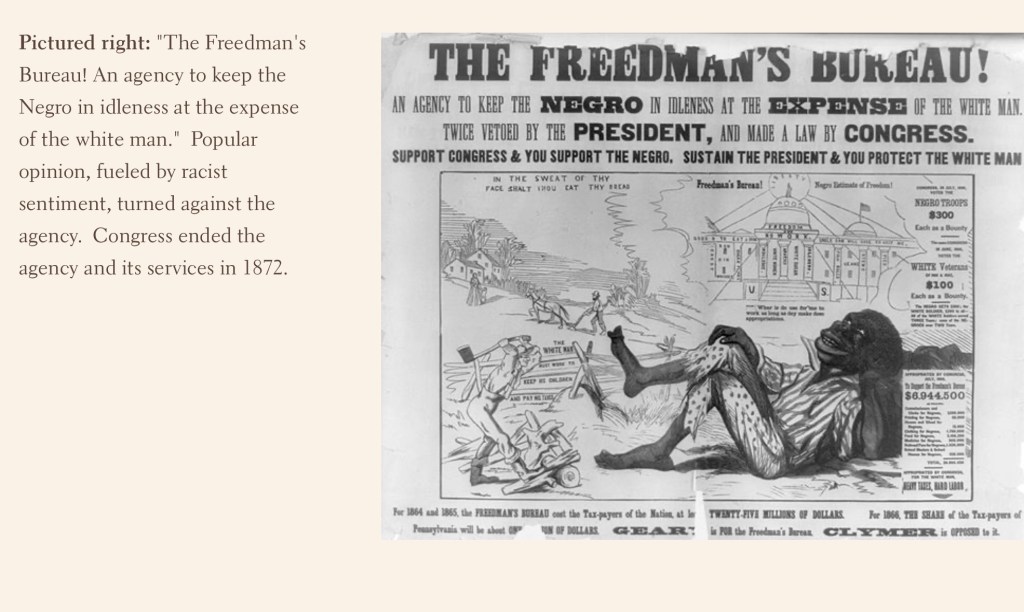
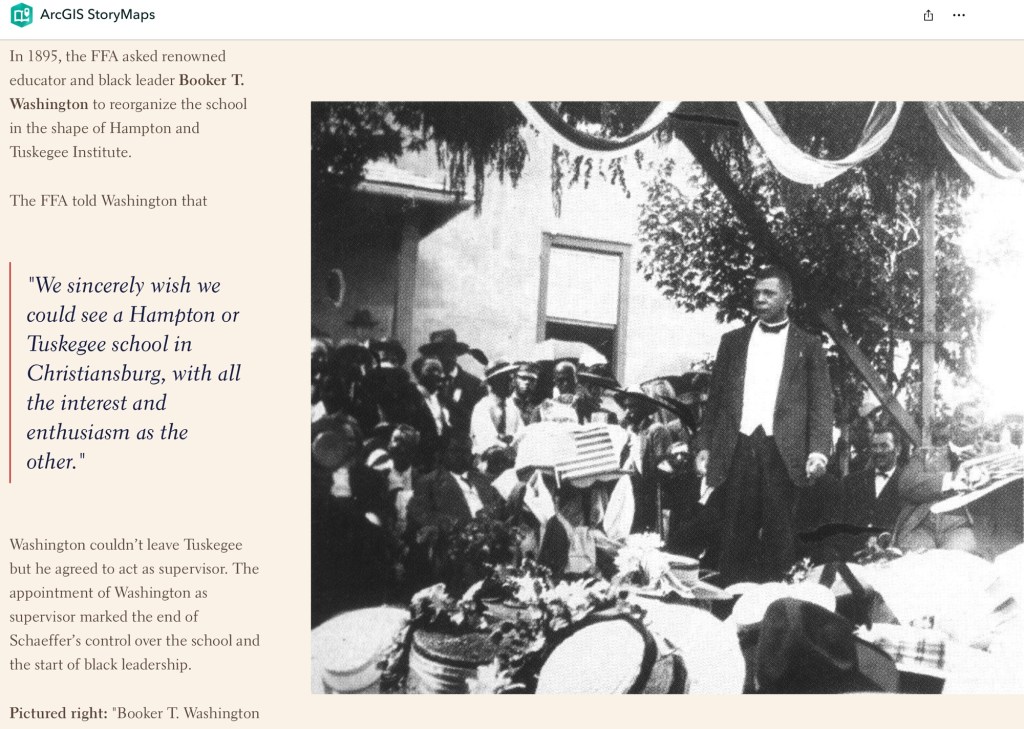
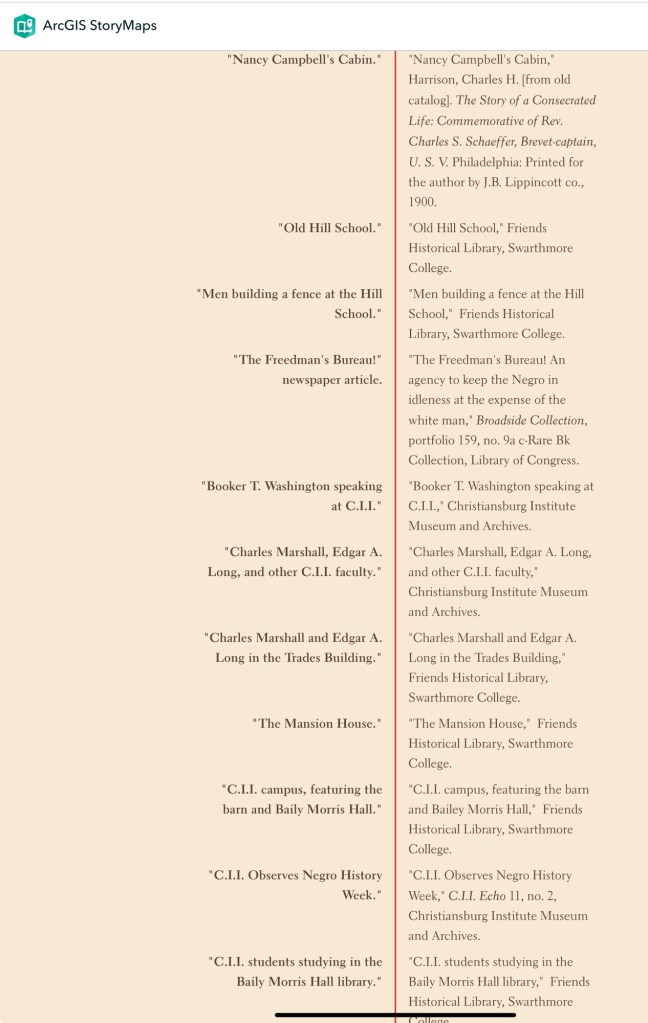
Christiansburg Institute, Inc. has developed an important ArcGIS Story Map that traces the powerful history of the Christiansburg Industrial Institute—an African American school founded between 1866 and 1867 by local freedmen with support from Charles S. Schaeffer, a representative of the Freedmen’s Bureau.

This digital exhibit was curated by Demiah Smith, who thoughtfully crafted a visual timeline highlighting the school’s key milestones and the individuals who shaped its legacy. Her work honors the strength, resilience, and vision of the Black community in Montgomery County during the Reconstruction era and beyond.

To ensure the preservation of this work—especially after Christiansburg Institute, Inc. lost critical funding from the Institute of Museum and Library Services and the National Endowment for the Humanities—we’ve captured and archived the Story Map as images. This way, Demiah’s contribution and the vital story of CI will remain accessible even as the organization faces serious challenges due to the loss of federal support during the DOGE-era funding cuts.

We remain committed to uplifting and preserving this history. Stay tuned as we continue to find ways to support the legacy of the Christiansburg Institute and the people who made it possible.

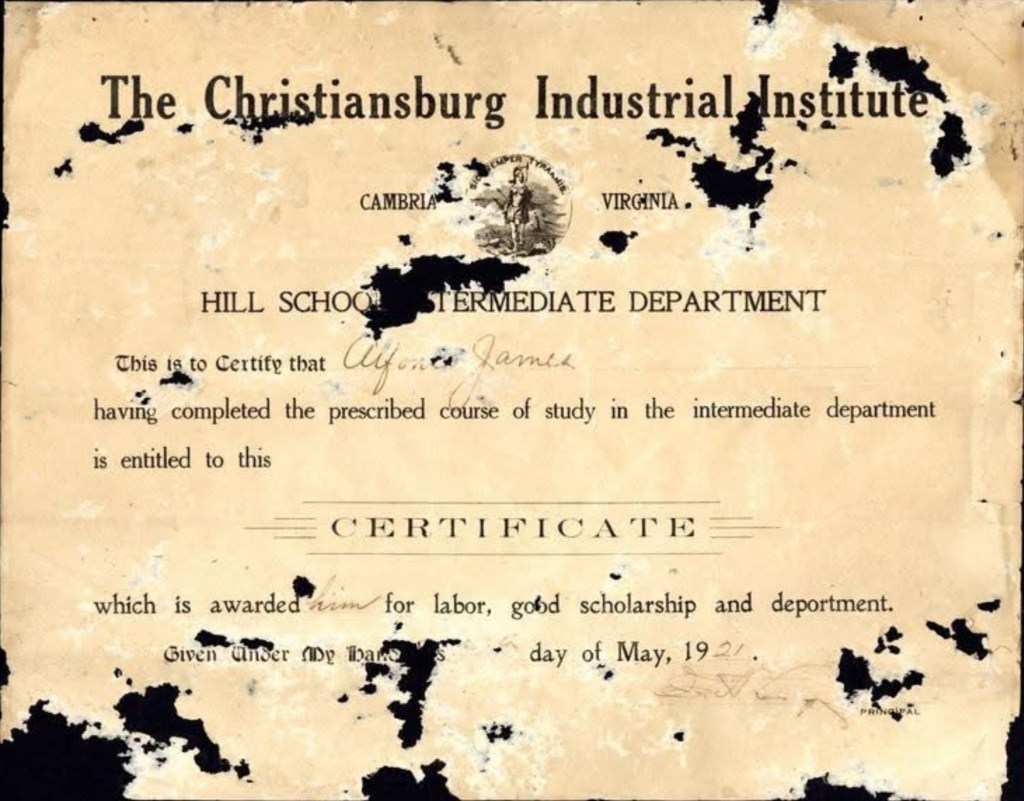
Alfonzo James: A Life Dedicated to Education and Community Service

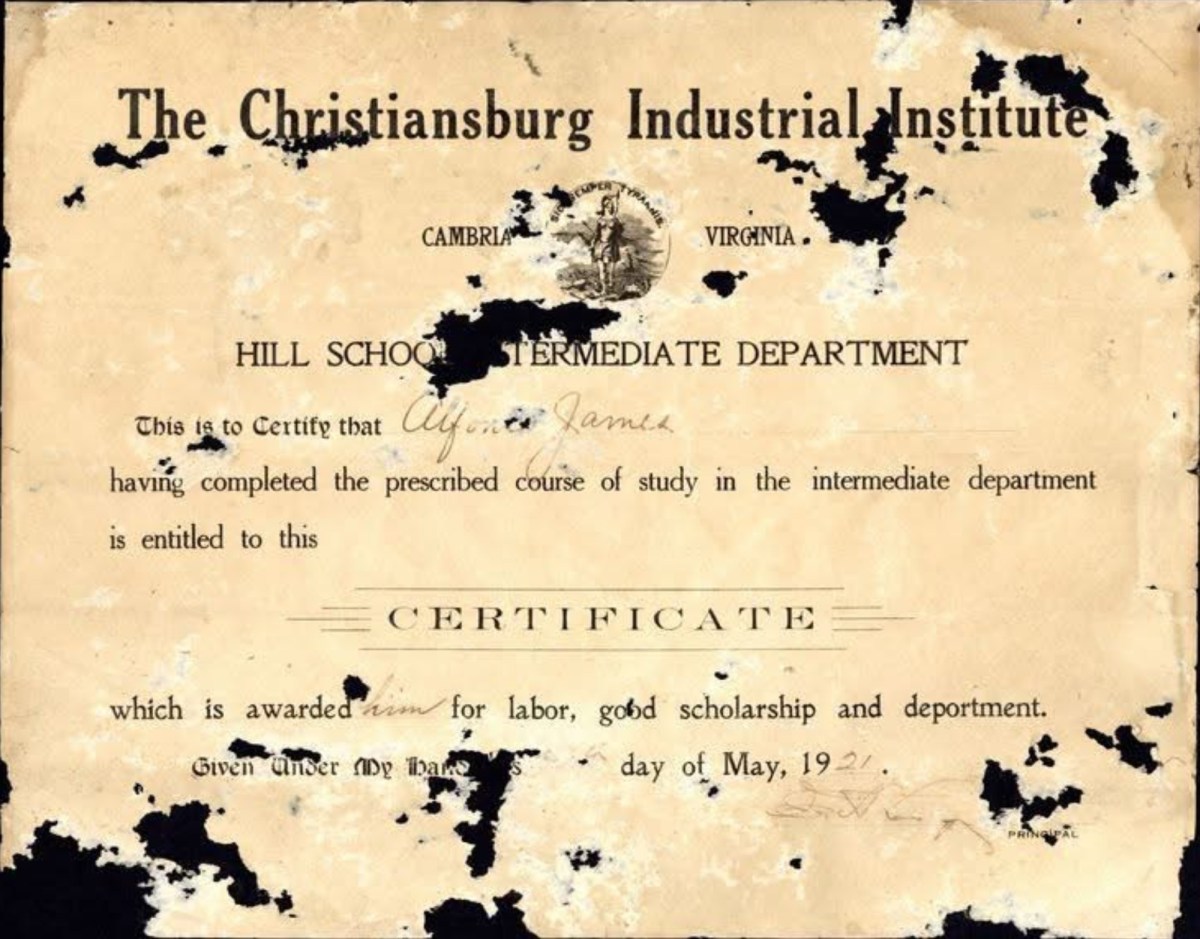
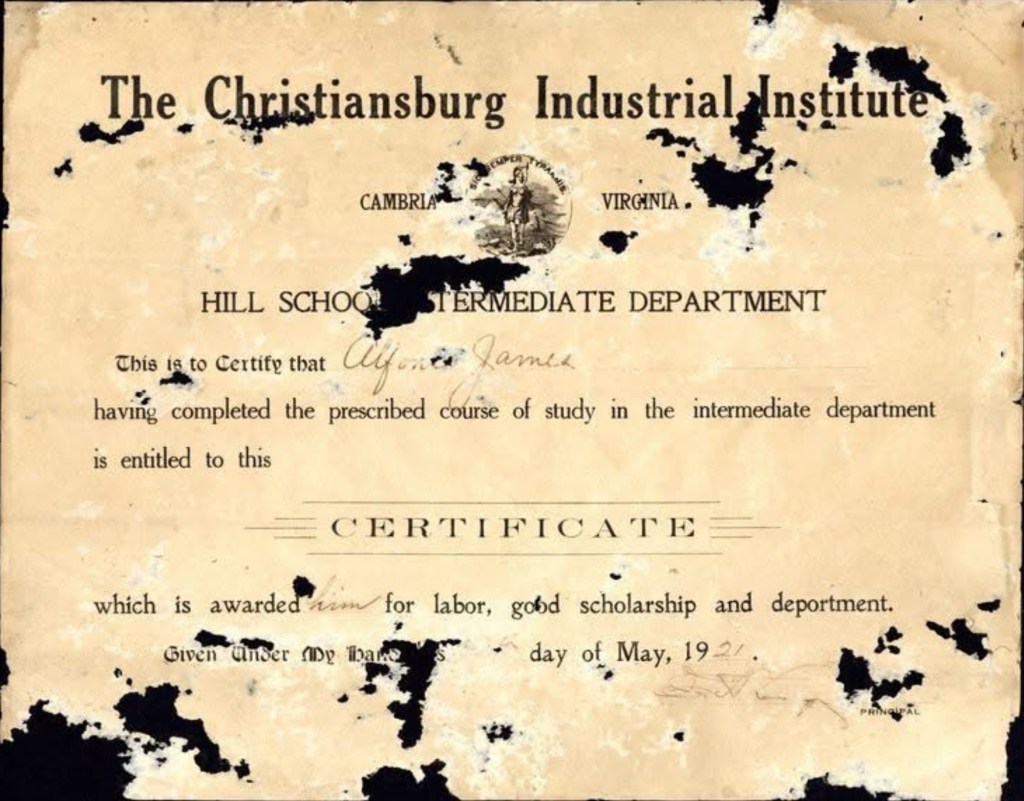
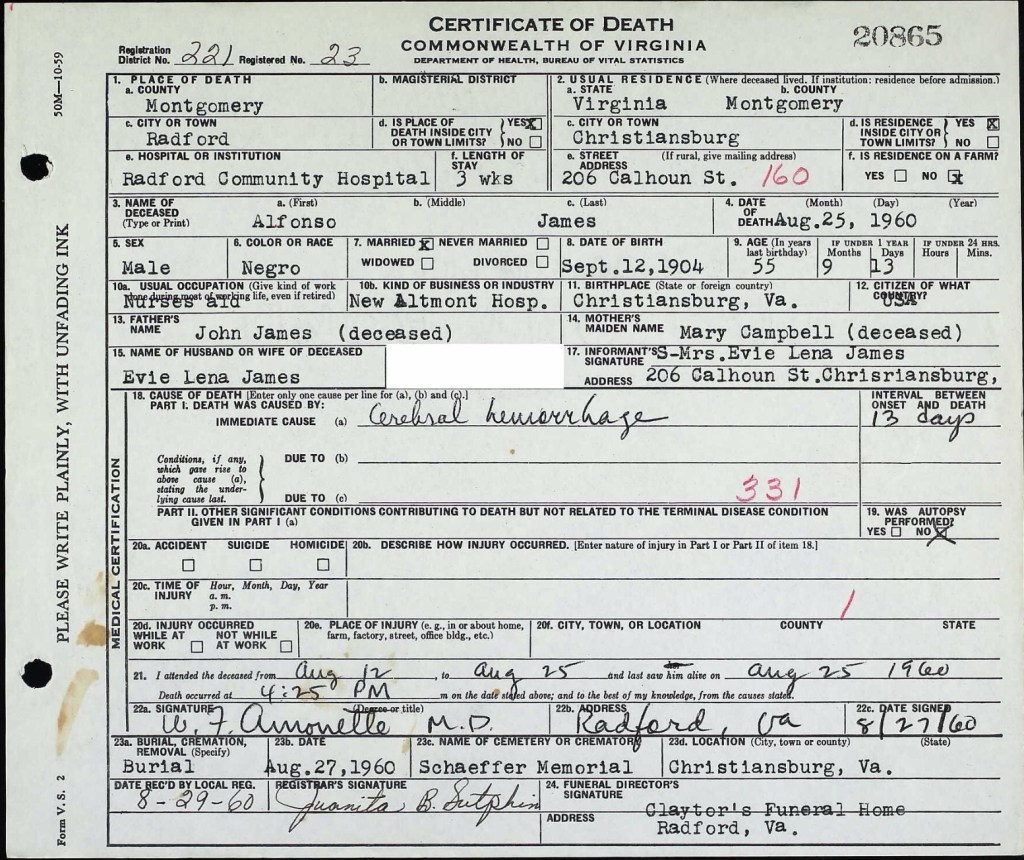
Alfonzo James, born in 1904, was the eldest of three children to John and Mary Campbell James. He graduated from the Hill School in Christiansburg in May 1921.

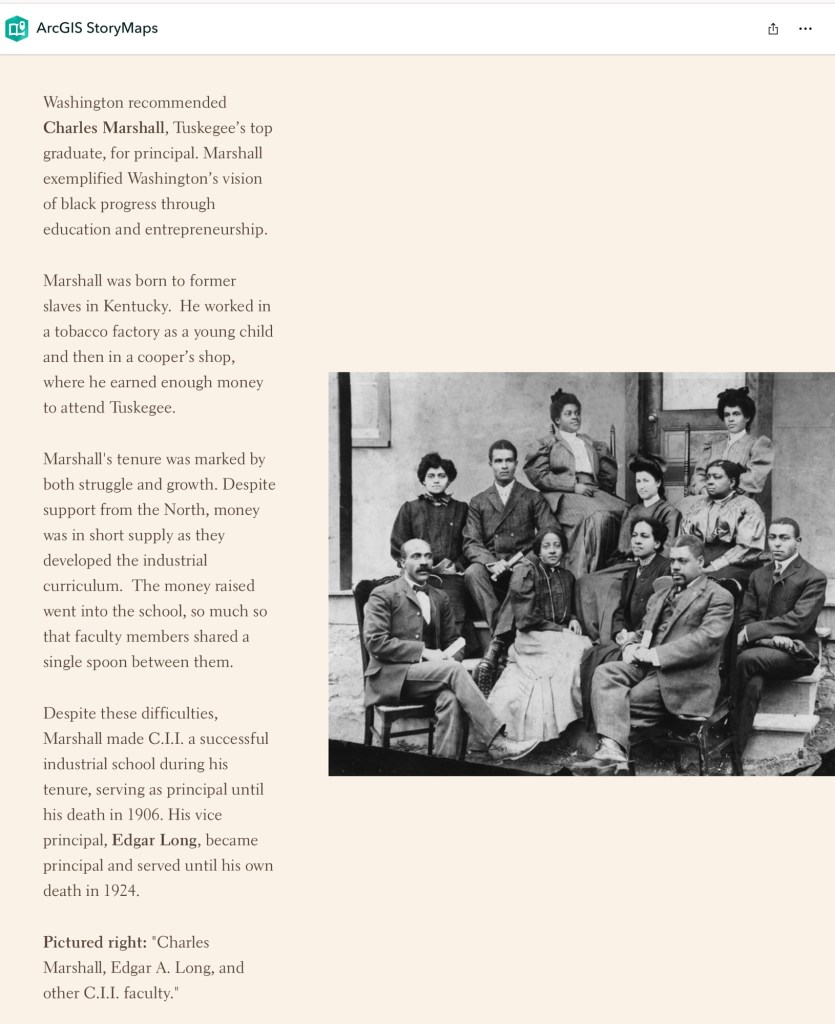
His father, John James, was born in Pennsylvania and, according to the 1900 U.S. Census, lived as a boarder with Principal Charles L. Marshall of the Christiansburg Institute at the age of 15. This household also included Edgar A. Long, his wife and daughter, Louis Brown (16 years old), and William Gray, a teacher.

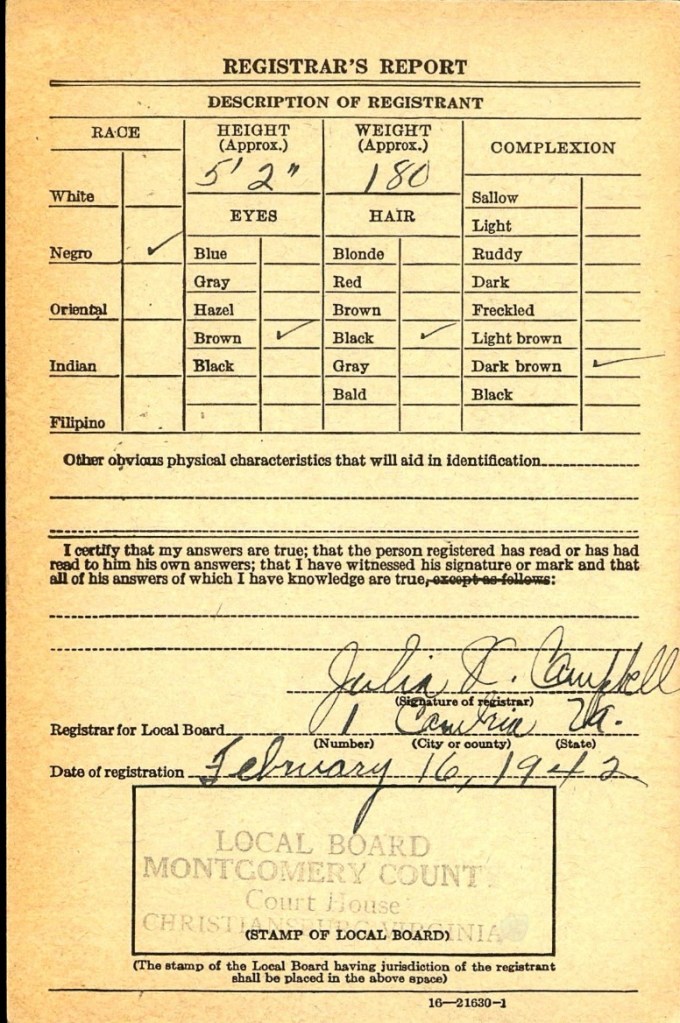
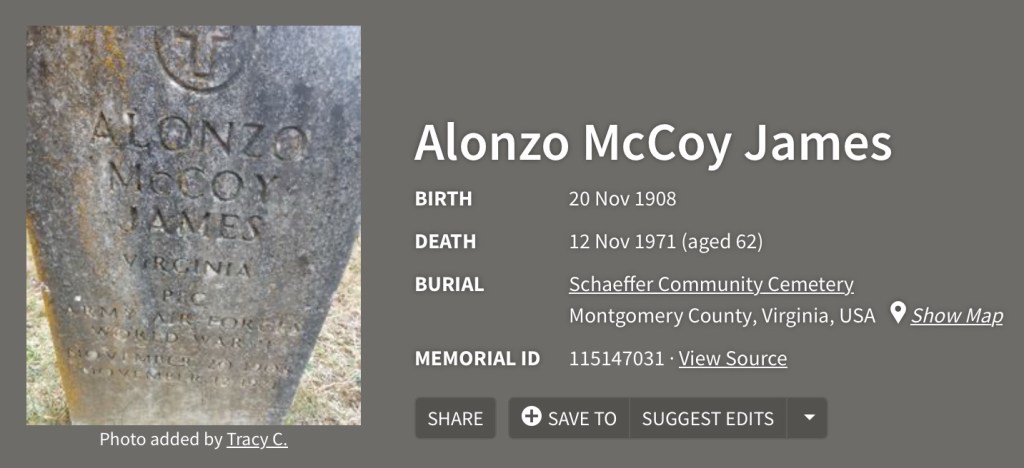
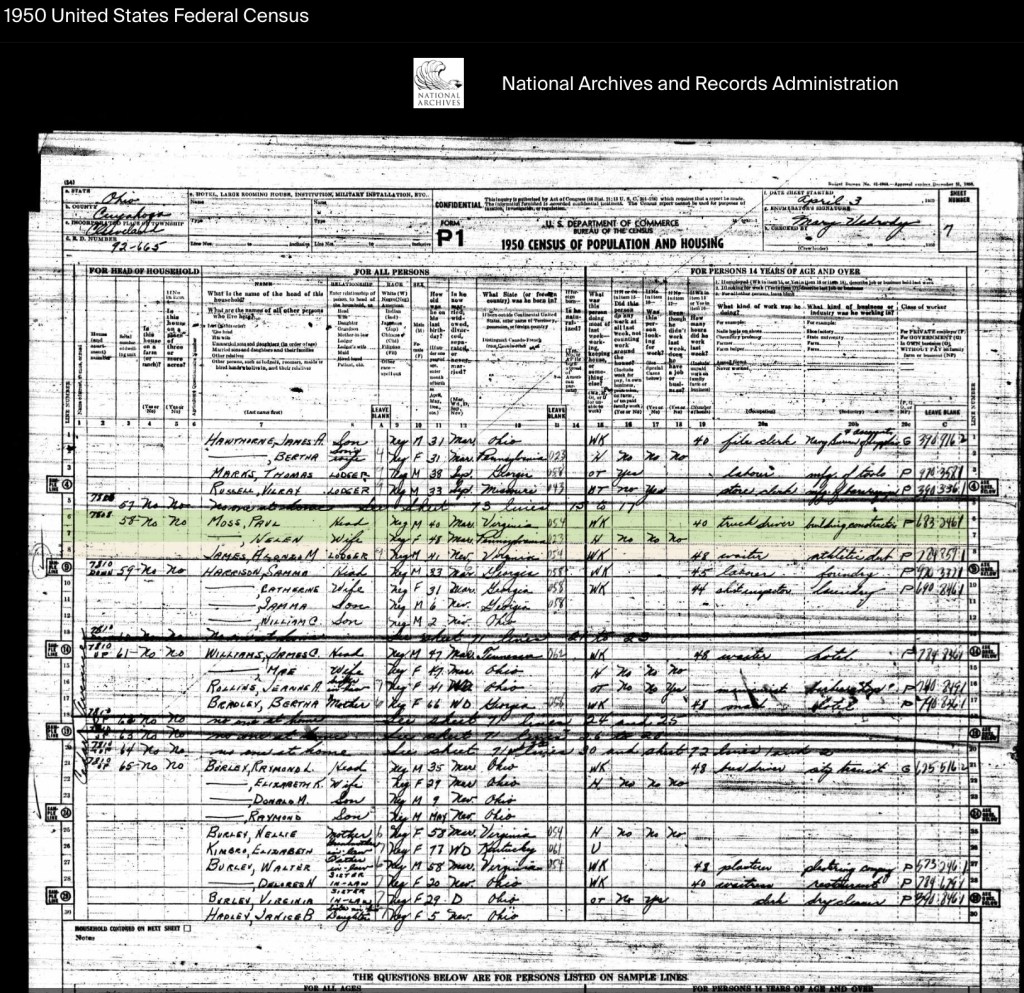
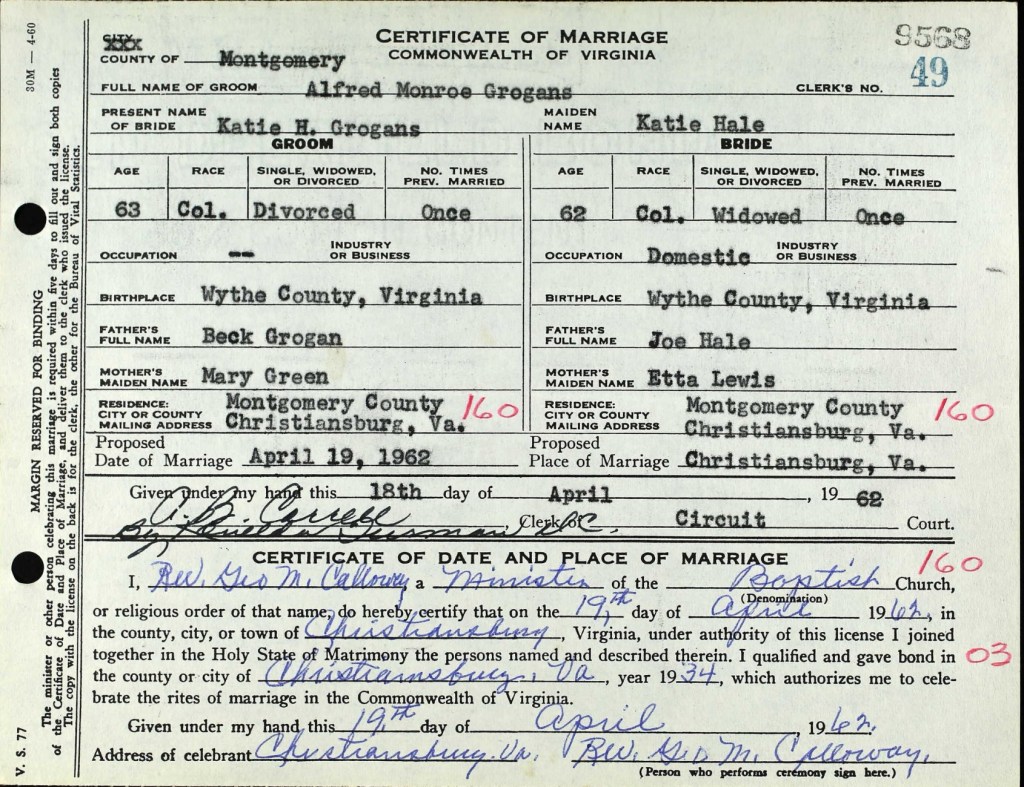
In the 1930 census, Alfonzo was recorded as a public school teacher. Over the years, he held various roles at the New Altamont Hospital in Christiansburg, working as a waiter and eventually as a nurse’s aide by the time of his passing in 1960. In 1946, he married Evie Lena Grogans. He was survived by his two brothers, Robert M. James and Alonzo McCoy James. Evie Grogans James passed away in 1977 and was a valued baker, recognized as Employee of the Month at Radford College.

Alfonzo’s diploma stands as a testament to his commitment to education and service. Preserving this certificate would honor his legacy and ensure that his contributions to the community are remembered.

Courtesy of Christiansburg Institute Digital Archive

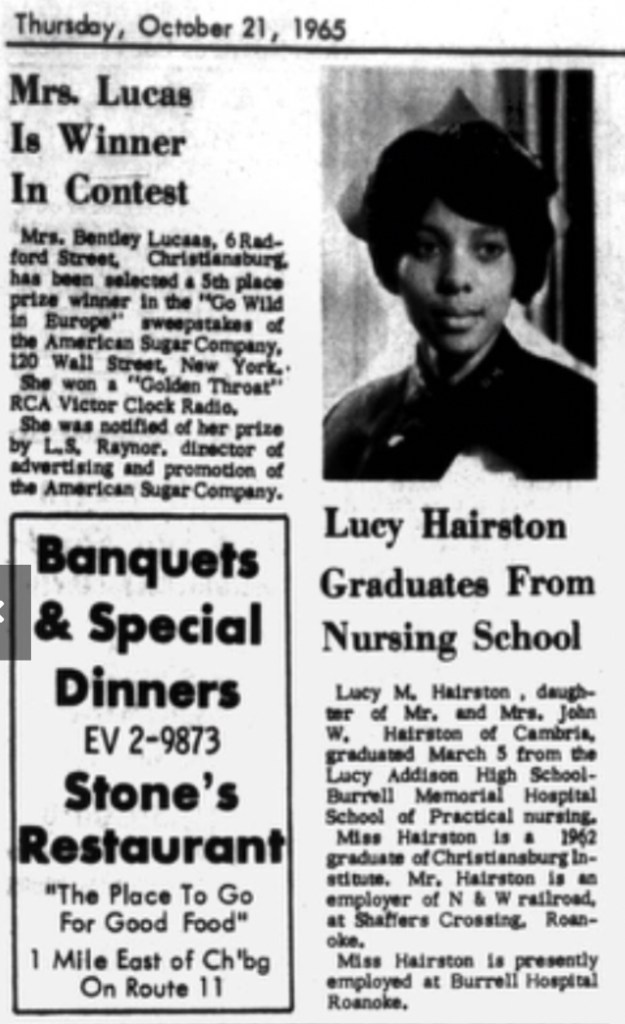
Graduation Series: Lucy Hairston Graduates from Nursing School (Lucy Maleta Hairston)

Montgomery News Messenger, 21 October 1965

“Lucy M. Hairston, daughter of Mr. And Mrs. John W. Hairston of Cambria, graduated March 5 from the Lucy Addison High School-Burrell Memorial Hospital School of Practical nursing.

Miss Hairston is a 1962 graduate of Christiansburg Institute. Mr. Hairston is an employer of N & W railroad, at Schaffer’s Crossing, Roanoke.

Miss Hairston is presently employed at Burrell Hospital”