The Year 1961—Blacksburg High School Leads County in Desegregation

In 1961, Blacksburg High School became the first in Montgomery County to admit African American students, paving the way for full integration of all county high schools by 1966.

Montgomery County, Virginia, was slow to dismantle enforced racial separation in its schools, not doing so until September 1961. Neighboring counties followed a similar pace—Floyd in January 1961 and Pulaski in September 1961. (Martin, Black Education in Montgomery County 1939–1966, Virginia Tech master’s thesis, 1996).

After the U.S. Supreme Court’s 1954 Brown v. Board of Education ruling outlawed segregation, Montgomery County resisted. The school board leaned on “states’ rights” arguments and used tactics from Virginia’s Gray Commission—such as controlling student assignments and offering tuition grants to white families—to delay integration for years.

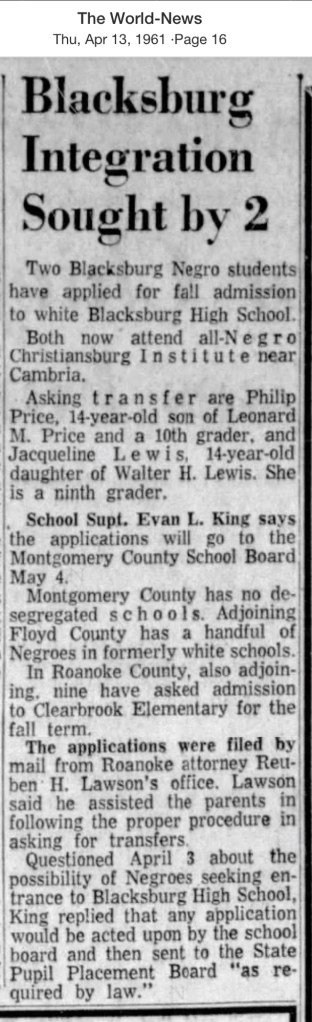
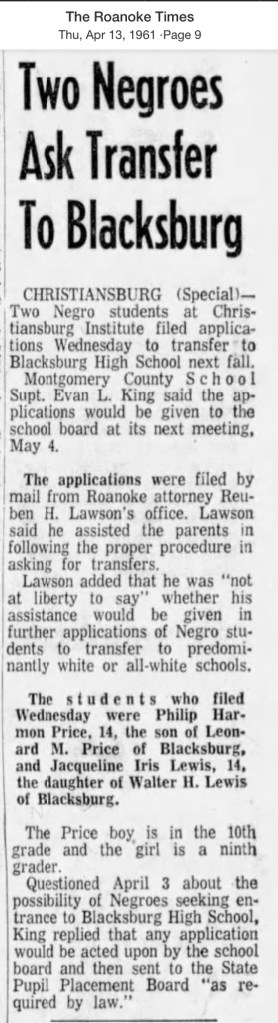
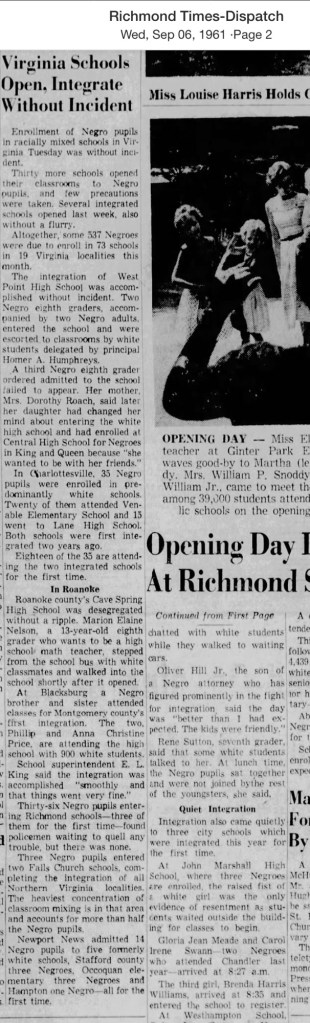
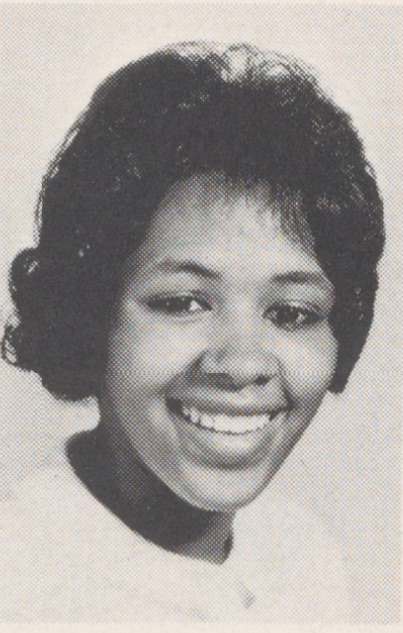
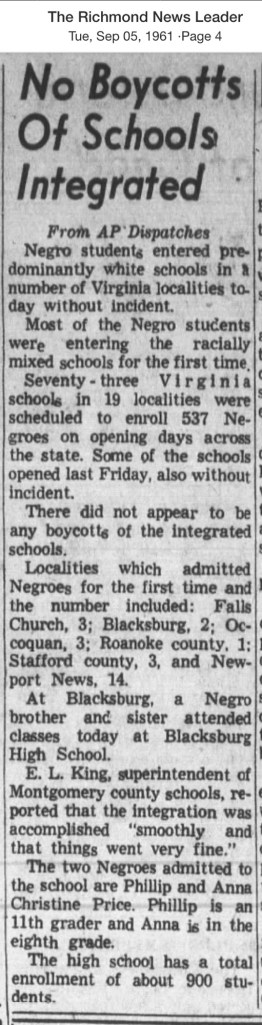
Amidst this resistance, three students from Christiansburg Institute applied to transfer to the all-white Blacksburg High School, which then enrolled about 900 students. They were siblings Phillip H. Price (15) and Ann Christine Price (13), along with Jacqueline Iris Lewis (14). With support from NAACP attorney Reuben E. Lawson of Roanoke, their applications went before the State Pupil Placement Board. Phillip and Ann Christine were admitted for the 1961 school year, but Jacqueline’s request was denied on the grounds of “academic standards”—a requirement never applied to white students.

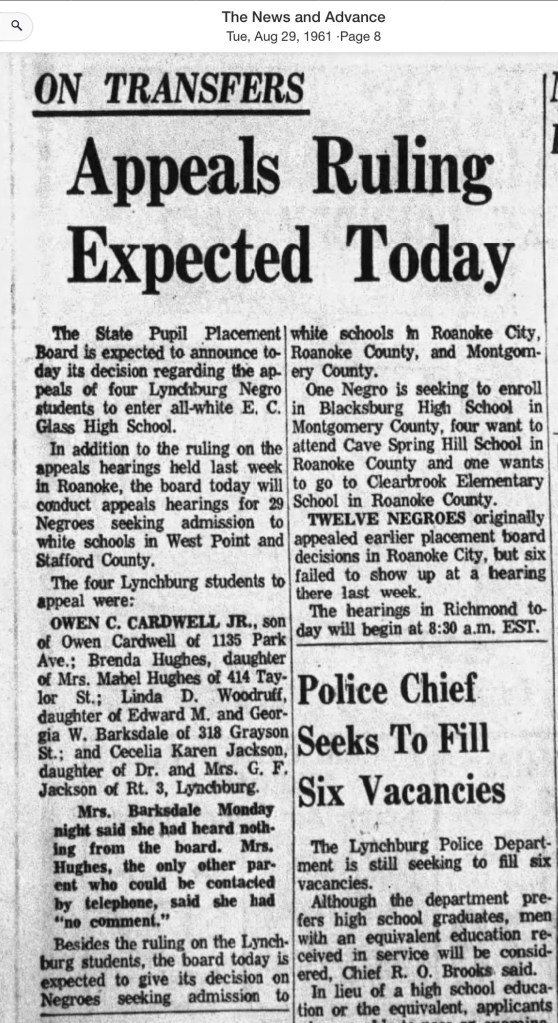
On August 23, 1961, Jacqueline and her father, Walter H. Lewis, traveled to Roanoke for the hearing, an intimidating experience for a 14-year-old. The Board delayed its ruling for a week before denying her appeal. That fall, Jacqueline remained at Christiansburg Institute.

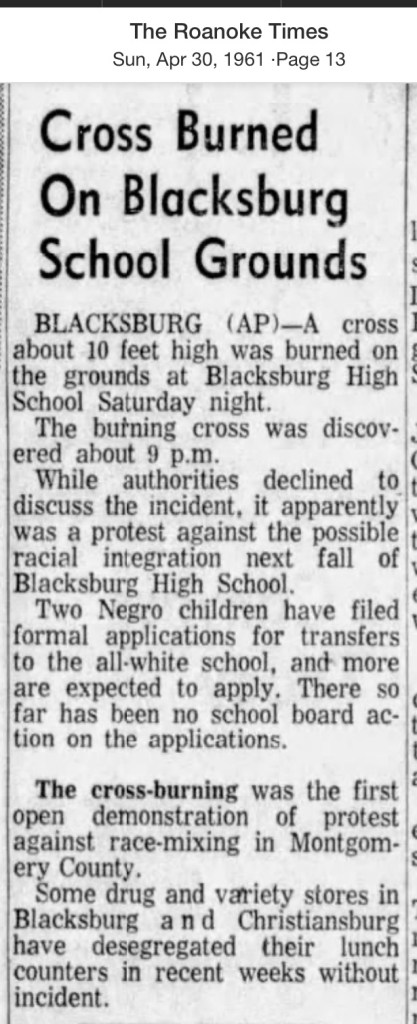
That September, Phillip and Ann Christine Price became the first Black students to integrate Montgomery County schools when they walked into Blacksburg High. According to researcher Tracy A. Martin, they were not alone—their white neighbors walked beside them in solidarity. This act of courage followed a chilling warning: on April 29, 1961, a ten-foot burning cross had been discovered on the school grounds, South Main Street.

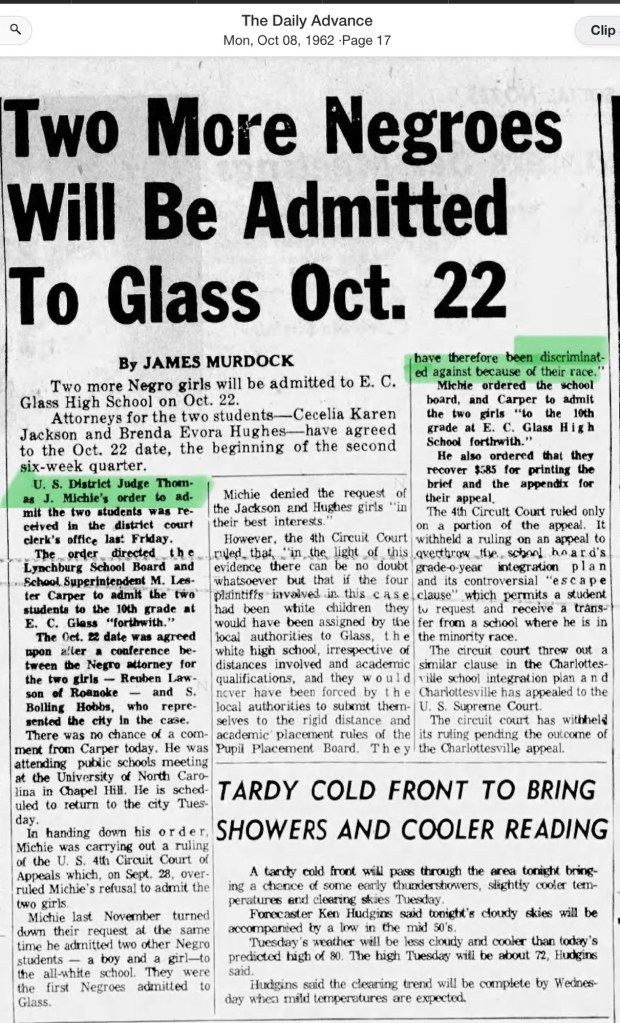
In 1962, the school board again delayed the application process for two more students seeking admission. Yearbooks from 1961–1964 suggest that the Price siblings were the only African American students at Blacksburg High during those early years. In the years that followed, more students of color began to appear in the yearbooks. By 1966, the school board closed Christiansburg Institute, and all of the county’s white high schools were finally opened to every student.

Newspaper Articles

April 1961

July 1961

August 1961
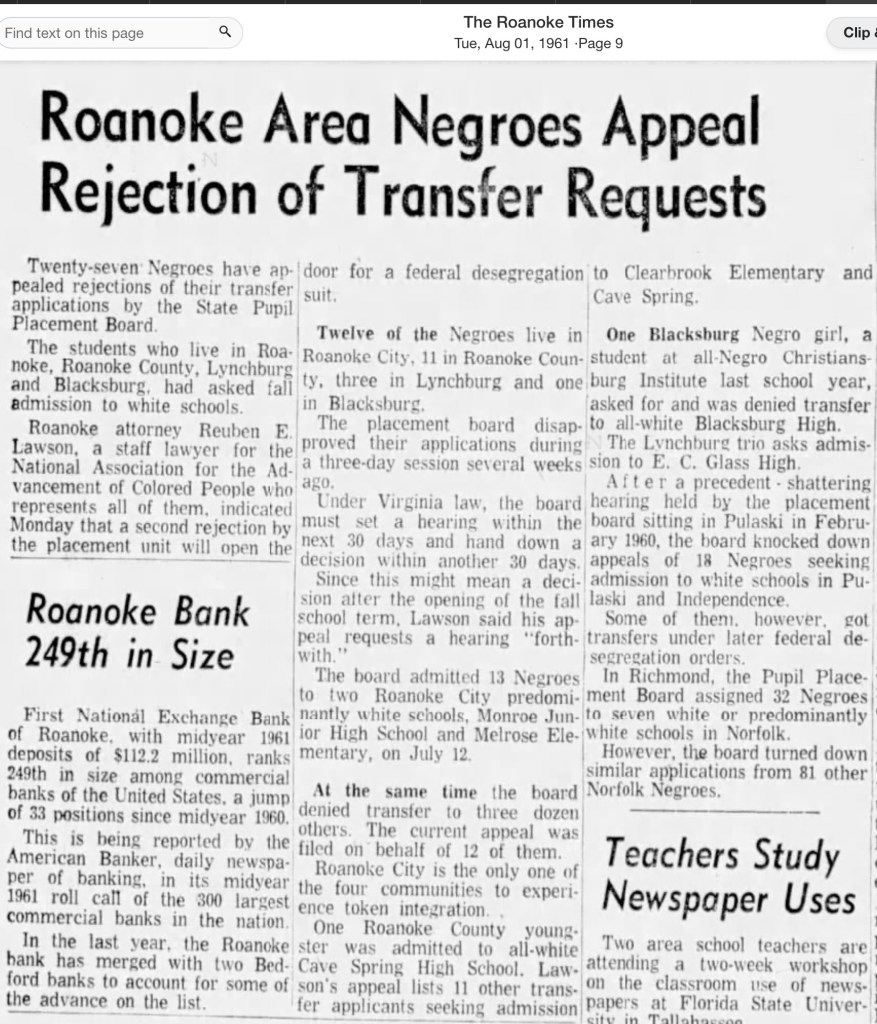
September 1961
1962 Application of Two Young Women, the Courts Ruling

Montgomery County Resources

Montgomery County, Virginia Resources and the Formation of the County Over Time

National Register of Historic Places Application – 1989

National Register of Historic Places Application – 1989

This searchable document is a rich source of information about the county and its wider connections. For example, it notes that the New River boatmen once lived on Kent Farm, where they were enslaved by James Randle and Margaret Cloyd Kent prior to emancipation (see page 13). Additional details about Kentland and these freedmen can be found in the following postings: Historic Kentland and Historic Wake Forest

The names of some of the black boatmen of 19th-century Montgomery County include Frank Bannister (who was a boatman on the James River before the Civil War), Calvin Bannister, Roland Stuart, George Brown, and Lewis Smith.


Montgomery County Reconnaissance Level Survey, 1986

This report that was written by Gibson Worsham, Dan Pezzoni, Charlotte Worsham, David Roenizer, and others. It addresses the following: 1) Overview of the county’s history, 2) A comprehensive inventory of significant structures and sites in the county and 3) Maps delineating the location of said structures and sites. Similar to the report above, this is a wealth of information about the county.


More information can be found on this website: Gatherings Blacksburg History


The Formation of Montgomery County, Virginia and Why it Matters to African American History of the Region

When Virginia’s earliest European colonial settlers first pushed westward beyond the Blue Ridge Mountains, they entered the border lands already inhabited by Native peoples for thousands of years. As Europeans laid claim to these territories in the 18th century, Virginia’s county boundaries began shifting rapidly to keep pace and the need for local governance.

At first, all of western Virginia was considered part of vast counties based far to the east. Augusta County, created in 1738, stretched from the Blue Ridge to the Mississippi River—a landmass so large it was nearly impossible to govern effectively. As settlement expanded, Augusta was gradually carved into smaller counties.

Botetourt County was created in 1770 out of Augusta, and just two years later, in 1772, Fincastle County was formed to cover the far southwest. But Fincastle itself was short-lived: in 1776, it was split into three new counties—Montgomery, Washington, and Kentucky (the latter eventually becoming the Commonwealth of Kentucky).

Thus, Montgomery County was officially established in 1776, named in honor of General Richard Montgomery, a Revolutionary War hero.

Like most early counties, Montgomery did not remain the same size for long. As population grew and communities demanded closer courts and local representation, Montgomery’s original boundaries were gradually reduced.

  • 1790: Wythe County was formed from Montgomery.
  • 1790: Parts of Montgomery contributed to the creation of Kanawha County (now in West Virginia).
  • 1806: Giles County was carved from Montgomery, Monroe, Wythe, and Tazewell.
  • 1831: Montgomery giving land to Floyd
  • 1839: Montgomery giving land to Pulaski
  • 1892: City of Radford

By the mid-19th century, Montgomery County had taken on the approximate shape we recognize today.

Why This Matters

Tracing these changing boundaries shows how the western border lands of Virginia evolved from a vast Indigenous landscape into the network of counties we know today. When we study Montgomery County’s formation and its changing borders, we are not only tracking political geography—we’re also uncovering how those shifts shaped the daily realities of enslaved people and freedmen. The “line on a map” often meant the difference between where families were recorded, where they could live, and how they could begin to claim freedom and opportunity.

County seats like Christiansburg were not only centers of trade and government but also of the slave market and the courthouse records that tracked the lives of enslaved people. After emancipation, those same courts became the places where freedmen registered marriages, secured contracts, and sought land. As county lines shifted, so too did the jurisdictions that controlled access to justice, opportunity, and community life.

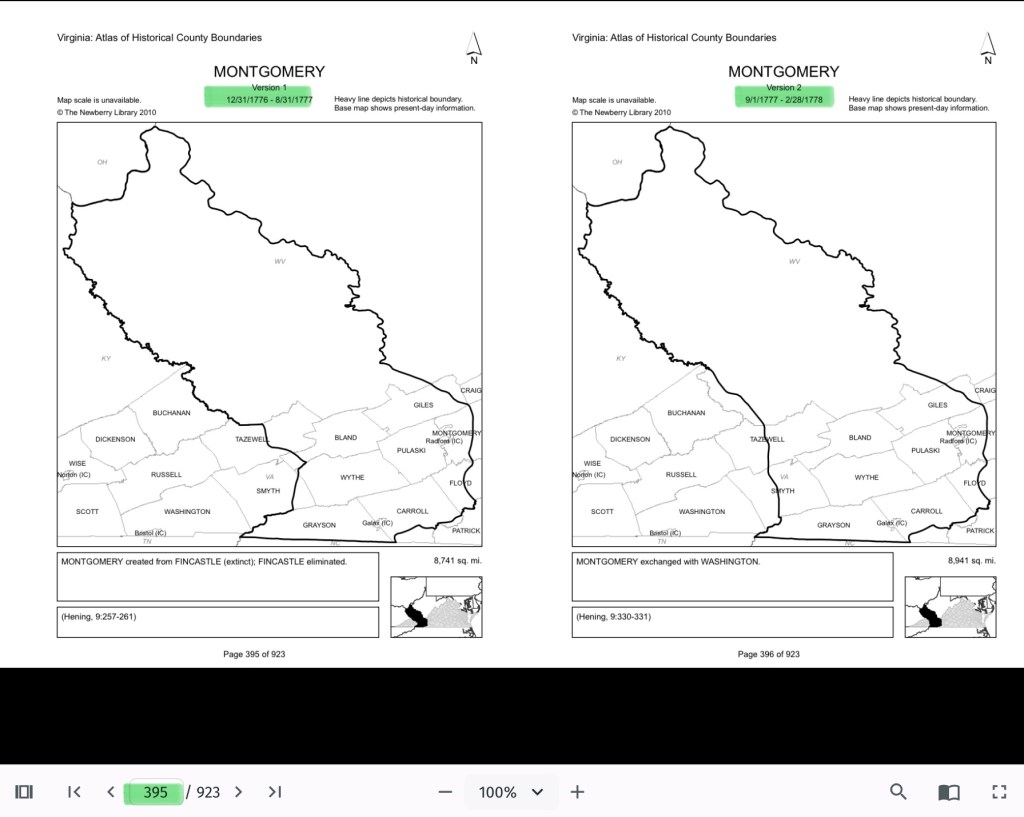
The flip book of maps below is a helpful resource to understand how the boundaries changed with time. Begin on page 395.

Virginia Atlas of Historical County Boundaries

Frederick Douglass and the Meaning of Independence

On July 5, 1852, Frederick Douglass delivered his powerful speech, “What to the Slave Is the Fourth of July?” to the Rochester Ladies’ Anti-Slavery Society at Corinthian Hall in Rochester, New York. In it, he confronted the meaning of Independence Day from the perspective of those still enslaved, asking what freedom could mean in a nation that denied it to millions.

On July 5, 1852, Frederick Douglass delivered his powerful speech, “What to the Slave Is the Fourth of July?” to the Rochester Ladies’ Anti-Slavery Society at Corinthian Hall in Rochester, New York. In it, he confronted the meaning of Independence Day from the perspective of those still enslaved, asking what freedom could mean in a nation that denied it to millions.

The copies of both the full version and excerpts are available.

Excerpt Versions

Full Versions

Audio Versions

Context and Biographical Information

Back Story Radio – excellent production and provides insightful context to the time and place.

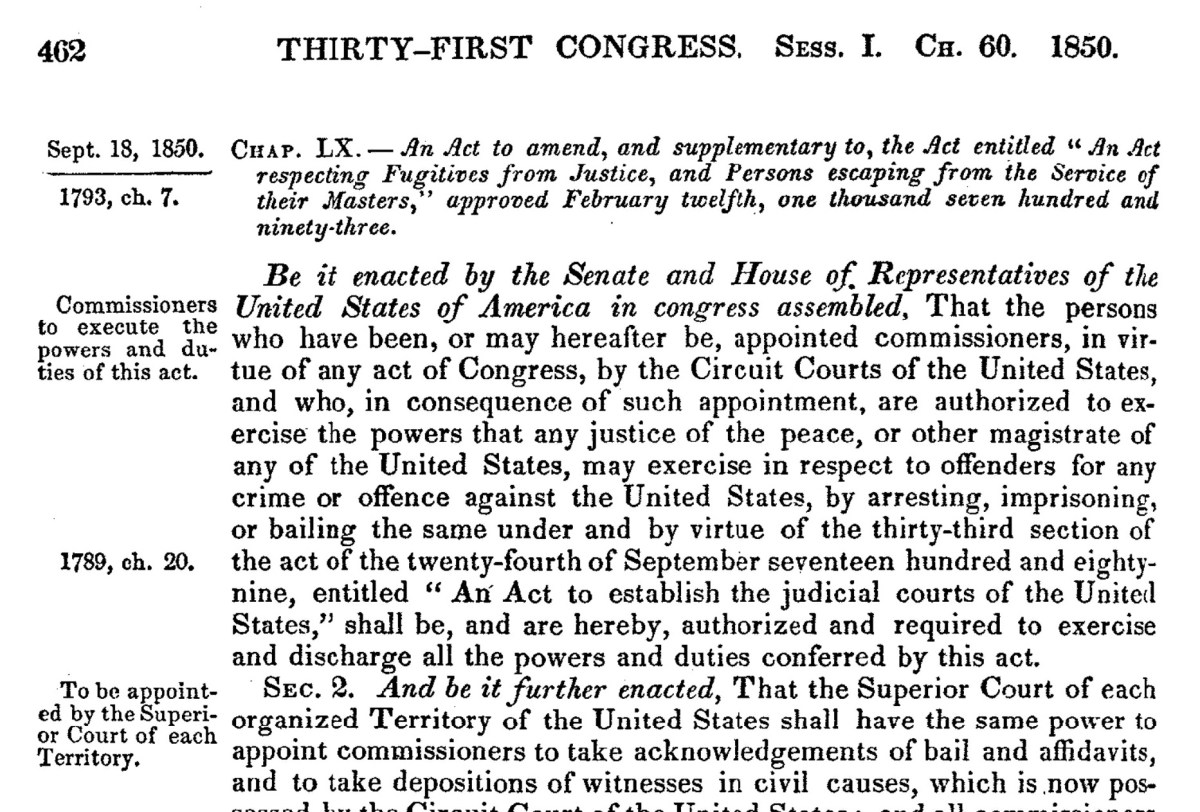
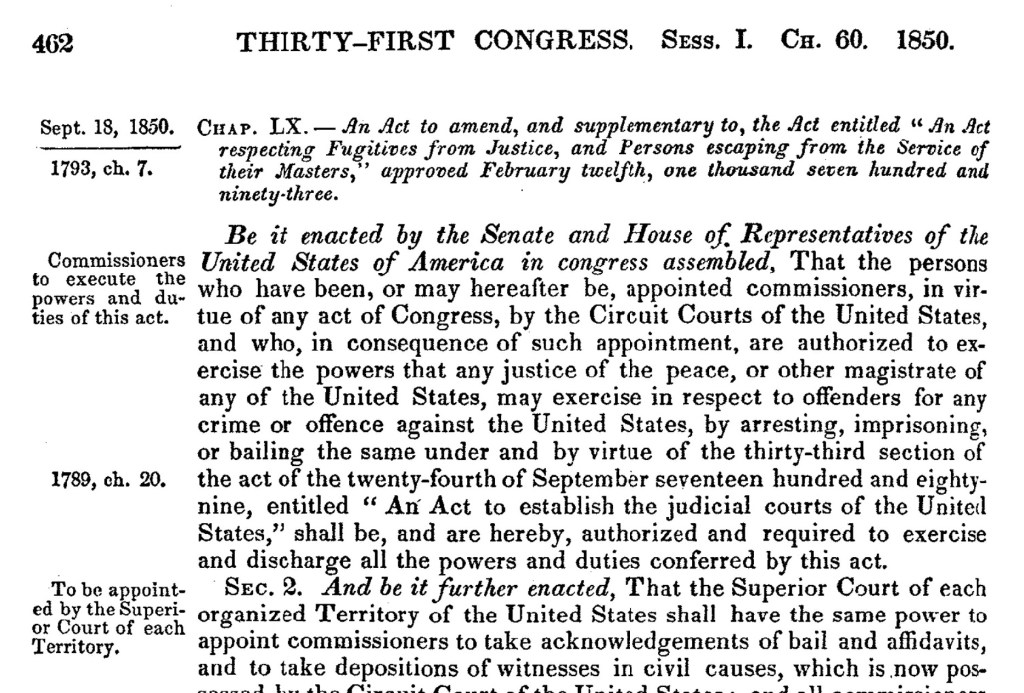
The Compromise of 1850 included the Fugitive Slave Act, a federal law signed just two years before Mr. Douglass’s 1852 speech. As historian Eric Foner has noted, this act demonstrates that pro-slavery states were willing to abandon their usual defense of states’ rights when it came to protecting the institution of chattel slavery. Eric Foner on the Fugitive Slave Act.

The U.S. Statutes at Large, Volume 9 (1845-1847), 29th through 31st Congress.

EdSiteMent , National Endowment for the Humanities, provides information, context and lesson plans.

Library of Congress, papers and documents of Frederick Douglass

Original Biographies that are available online

Timeline of Mr Douglass’ life, presented by the Library of Congress. Brief Summary Based on the Library of Congress

Frederick Douglass married Anna Murray in 1838. Together, they had five children: Rosetta (1839), Lewis Henry (1840), Frederick Jr. (dates vary, likely born around 1842–1843), Charles Remond (1844), and Annie (1849). The family moved to Rochester, New York in 1847, where Douglass continued his abolitionist work.

In 1859, following the failed John Brown raid, Douglass fled briefly to Canada to avoid arrest, returning in 1860—the same year his daughter Annie died. That year, Abraham Lincoln was elected president, and South Carolina became the first state to secede from the Union.

During the Civil War, slavery was abolished in Washington, D.C. in 1862, and the Emancipation Proclamation took effect in 1863, freeing enslaved people in Confederate states. That year, Douglass met with President Lincoln to advocate for Black soldiers and equal treatment.

On April 9, 1865, General Lee surrendered to Grant, effectively ending the Civil War. Lincoln was assassinated five days later. The 13th Amendment, abolishing slavery, was ratified later that year.

Douglass remained active during Reconstruction, fighting for civil rights and women’s suffrage. In 1870, the 15th Amendment guaranteed the right to vote regardless of race. That same year, after a suspicious fire at their Rochester home, the Douglass family moved to Washington, D.C., where Douglass was nominated for vice president by the Equal Rights Party, alongside presidential candidate Victoria Woodhull.

In 1874, Douglass became president of the Freedmen’s Savings Bank in a final effort to save the institution, which was failing and held the savings of many newly freed people. In 1875, Congress passed a Civil Rights Act to combat public discrimination, but in 1883 the U.S. Supreme Court rules the act was unconstitutional.

By 1877, Douglass had been appointed U.S. Marshal for the District of Columbia and later purchased a home in Anacostia (now Cedar Hill). Anna Murray Douglass, his wife of 43 years, died in 1881. He married Helen Pitts in 1884.

From 1889 to 1891, Douglass served as U.S. minister to Haiti and chargé d’affaires to Santo Domingo. He died unexpectedly in 1895.

Quotes From “What To A Slave Is the Fourth of July?”

Now, take the Constitution according to its plain reading, and I defy the presentation of a single proslavery clause in it.  On the other hand it will be found to contain principles and purposes, entirely hostile to the existence of slavery. . . . 

Great streams are not easily turned from channels, worn deep in the course of ages. They may sometimes rise in quiet and stately majesty, and inundate the land, refreshing and fertilizing the earth with their mysterious properties. They may also rise in wrath and fury, and bear away, on their angry waves, the accumulated wealth of years of toil and hardship. They, however, gradually flow back to the same old channel, and flow on as serenely as ever. But, while the river may not be turned aside, it may dry up, and leave nothing behind but the withered branch, and the unsightly rock, to howl in the abyss—sweeping wind, the sad tale of departed glory. As with rivers so with nations.

Genealogy of Slavery – Center for Studying Stricture of Race – Roanoke College

This website serves as an important resource for understanding the history and legacy of slavery in our region. It contains information collected from Roanoke County sources about more than 4,000 enslaved individuals.

https://www.roanoke.edu/a-z/center_for_studying_structures_of_race/projects_x71825

Genealogy of Slavery – Center for Studying Stricture of Race – Roanoke College

This website serves as an important resource for understanding the history and legacy of slavery in our region. It contains information collected from Roanoke County sources about more than 4,000 enslaved individuals. Many of the family names of enslaved African Americans recorded here also appear in neighboring Montgomery County, making this work deeply relevant to our local history. In addition, the family names of many individuals who enslaved others are found in the Roanoke primary sources.

The purpose of this page is to document and connect these shared names, with the hope of bringing to light the lives of those too often lost to history and deepening our understanding of the enduring legacy of slavery in Montgomery County and beyond.

More names will be added with time.

Family Names of Enslaved African Americans in Montgomery County

Brown

  • William Brown – enslaved by William Watts. “In IAS Book 4, the partition of the lands and other property of Edward Watts, William Brown is listed among the enslaved individuals that were bequeathed to Edward Watts’s daughter, Alice W. Morris. A value of $1,700.00 was placed on William Brown.”; Inventory, Appraisements, and Sales Book 4, Roanoke County Archives.

Calloway

Campbell

  • George Campbell – “George Campbell was listed in an indenture agreement: “…bind unto the said Lewis Zirkle a boy of colour named George Campbell until he arrives to the free age of twenty one which will be on the 25th day of June 1854.”
    In the Common Law book, it was ordered that the Overseers of the Poor bind out George, “a boy of color,” to Lewis Zinkle.”;
    Common Law Orders – A – May 1838 – May 1840, Roanoke County Archives.

Saunders/Sanders

Family Names of Enslavers in Montgomery County

Evans

  • Elizabeth Evans (List of first names of people they enslaved), “Elizabeth was listed in Michael Shepard’s property appraisement as having purchased enslaved people after Michael’s death. In the record, Elizabeth purchase” the enslaved people Joe, Nancy, and an unrecorded named child for $675.00.” She was possible daughter of Jonathan Evans. “Elizabeth’s son was William Evans and her husband was William W. Evans.”; Common Law Orders – B – June 1840 – July 1843, Roanoke County Archives

Kent

Kyle

Oliver

Wyatts

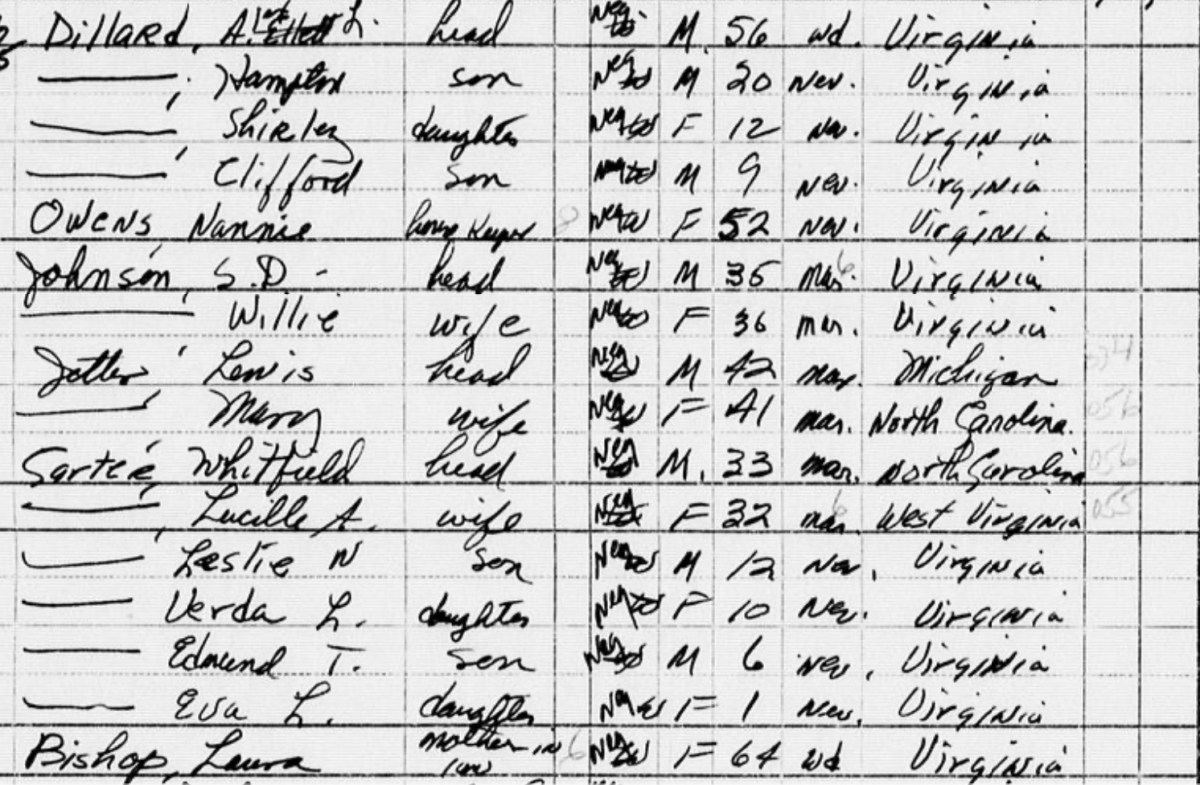
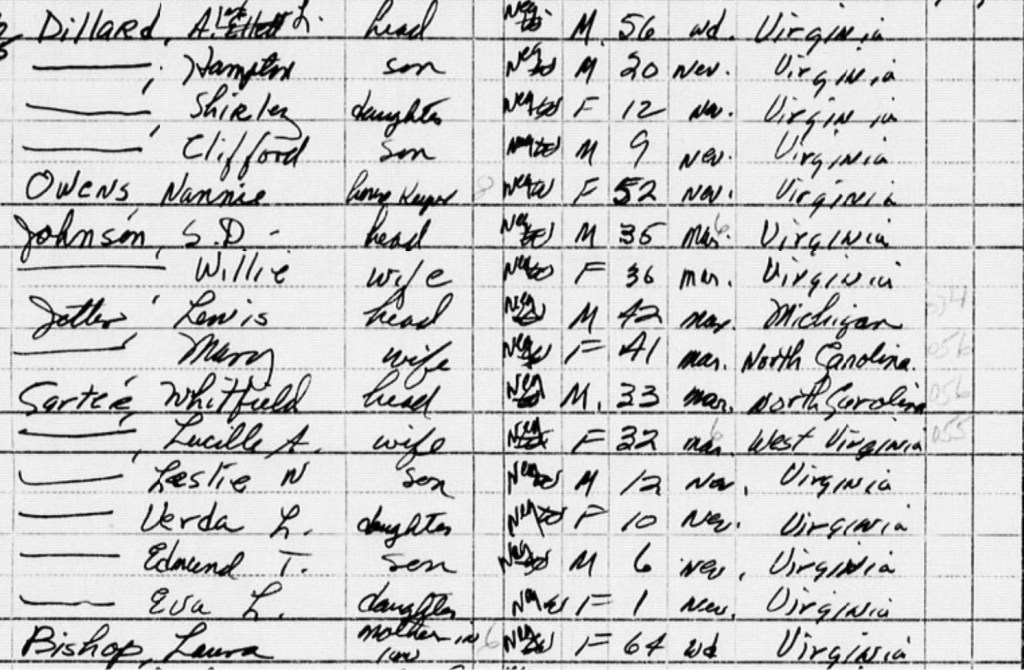
Primary Source: US Population Census of Montgomery County, Virginia

The U.S. Population Census is a crucial tool for exploring family history, especially for African Americans in Appalachia, where tracing lineage is often challenging due to the lasting impacts of slavery, limited documentation, and systemic discrimination.

The U.S. Population Census is a crucial tool for exploring family history, especially for African Americans in Appalachia, where tracing lineage is often challenging due to the lasting impacts of slavery, limited documentation, and systemic discrimination. Census records provide valuable insights by identifying ancestors across generations, shedding light on social and economic conditions, mapping migration patterns, and uncovering extended family and community networks. By using these records, researchers can reconstruct family histories and help tell the stories of those who have been underrepresented in the history of our Appalachian region.

Enslaved People Named in Wills: Enslaved by Michael Price (1718-1802, father) and Michael Price (1748-1839, son)

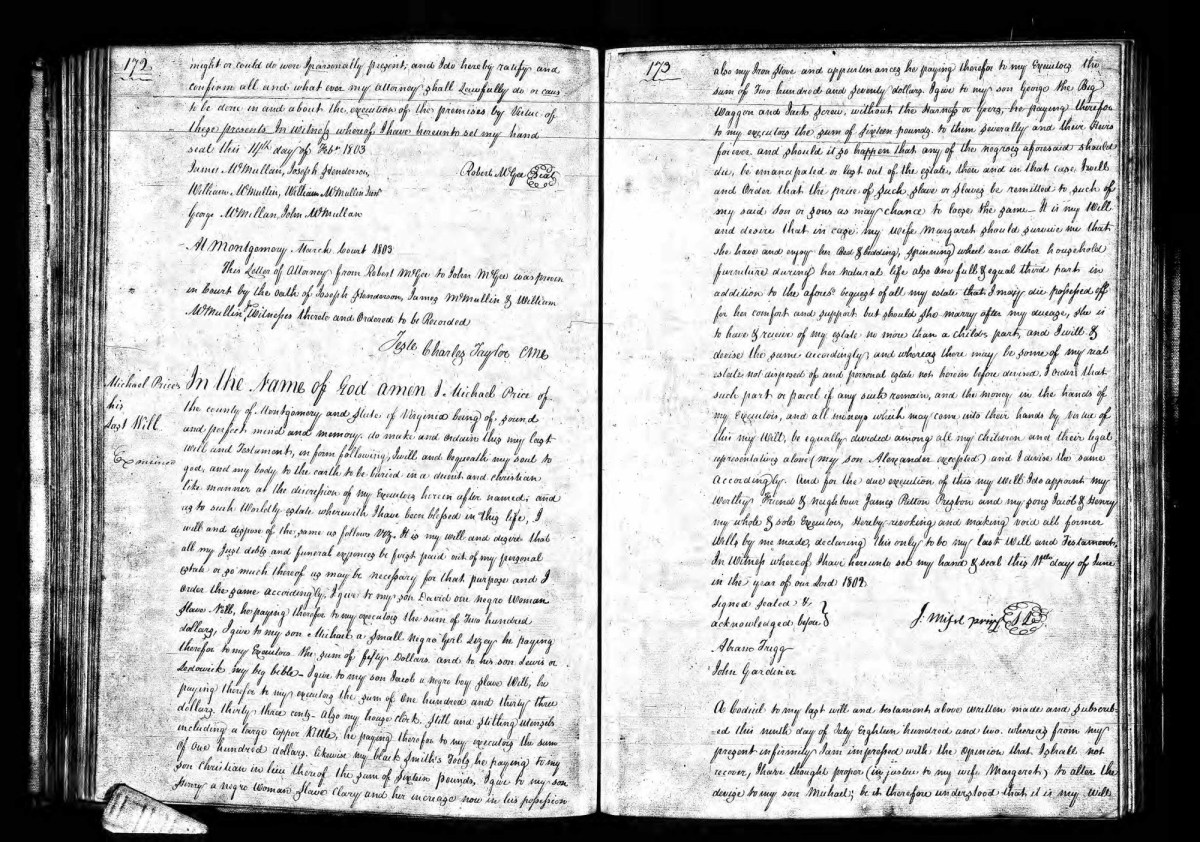
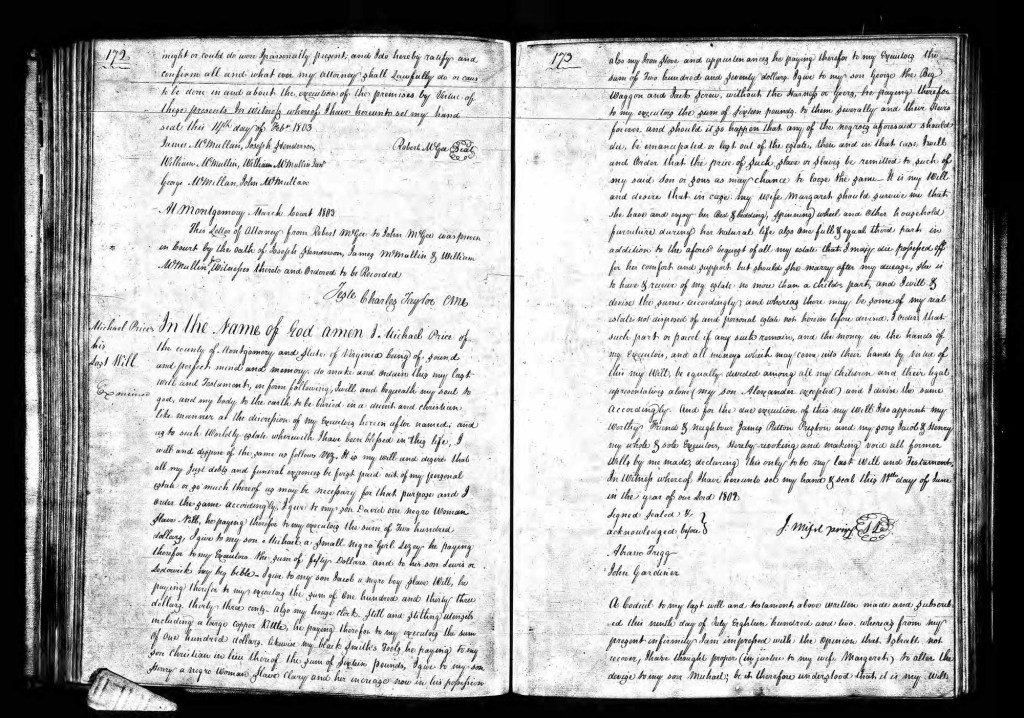
Michael Price (1718-1802) Will

Michael Price wrote his will on 11 June 1802, witnesses by Abram Trigg and John Gardiner. James Patton Preston and his sons, Jacob and Henry Price were his executors. The will was proved on 09 July 1802. According to the 1788 Tax list, Michale was taxed for two enslaved people.

Summary

  • Son David inherited an enslaved woman named Nall for $200.
  • Son Michael inherited a small girl, Lizey for $50
  • Son Jacob inherited Will, paying $133
  • Perry inherited Clary with her “increase.”

Michael Price (1748-1839) Will

Michael Price wrote his will on 12 March 1835. witnessed by Jacob Shell, Jacob Harless, and Samuel Smith. The executors were Alexander Price (son), David Keister, Phillip Harless, and Peter Keister, proved on 12 March 1839. According to the 1788 Tax list, Michale held no enslaved people.

Summary

  • Wife, Esther Francisco Price inherited Liz and her two children, Maria and Ben. Upon Esther’s death she may “dispose” of Maria and/or Ben, but Liz was to be retained by the family. Liz was given the choice of which child she would become property.
  • Son Alexander inherited David and Sam.

Livey was alive in 1802 and was passed to Michael Price’s son, also named Michael. When Michael Price died in 1839, a woman named Liv and her two children, Maria and Ben, were mentioned in his estate. After his death, Liv was inherited by Esther Francisco Price, who was living with her son, Alexander Price.

Further research is needed to trace the lives of those held in bondage by the early Price family.

Primary Source Series: Congress Investigates KKK 1872

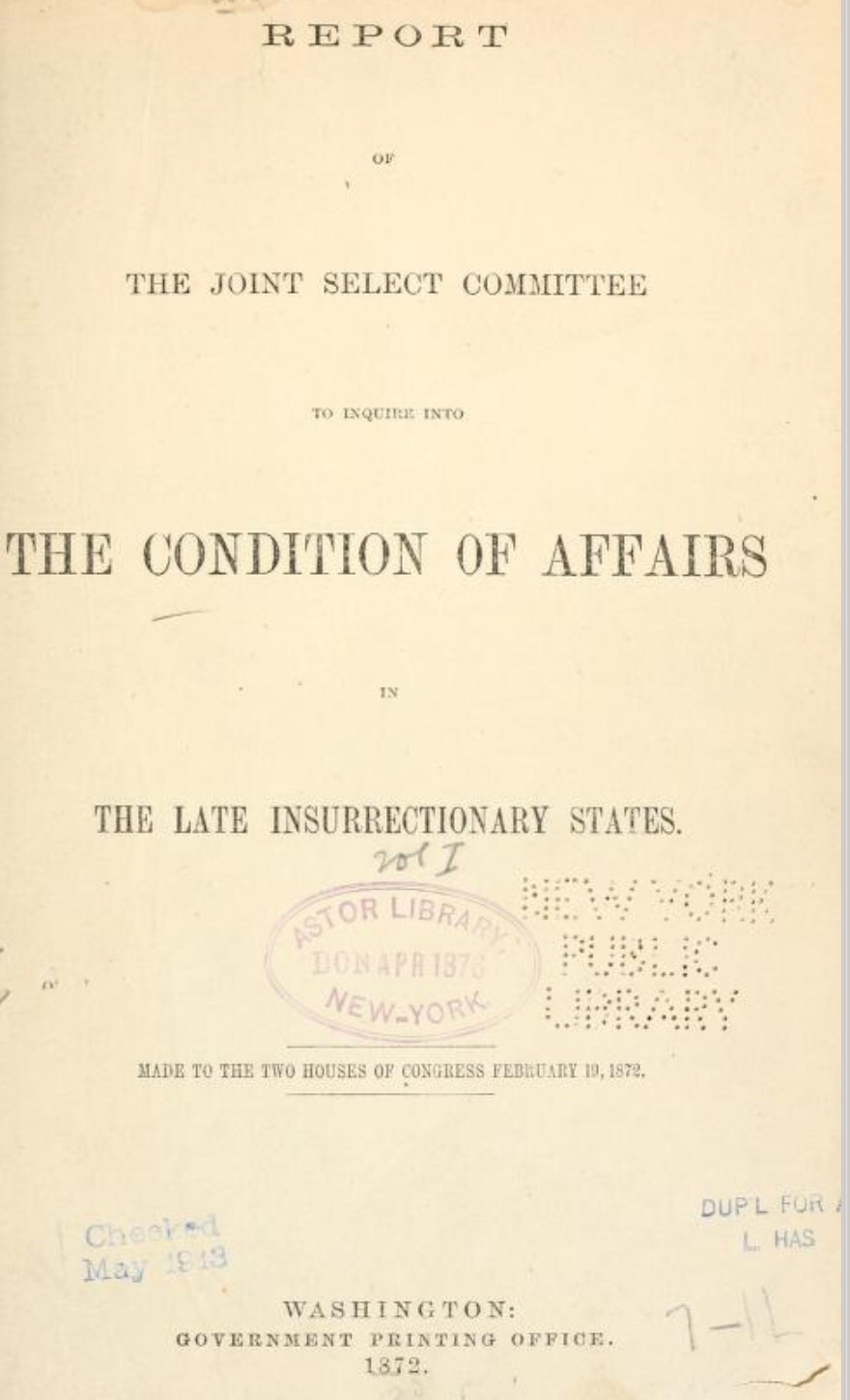
In 1872, a 13-volume compilation of reports and testimonies, including those from previously enslaved individuals, documented a Congressional committee’s investigation into the Ku Klux Klan and other insurrectionary movements in the former Confederate states.

Report of the Joint Select Committee to Inquire into the Condition of Affairs in the Late Insurrectionary States by United States. Congress. Joint Select Committee on the Condition of Affairs in the Late Insurrectionary States

In 1872, a 13-volume compilation of reports and testimonies, including those from previously enslaved individuals, documented a Congressional committee’s investigation into the Ku Klux Klan and other insurrectionary movements in the former Confederate states.

While Virginia is absent from this congressional report, the testimonies offer valuable insights into the beliefs, attitudes, misconceptions, and misdirections surrounding the mistreatment of newly freed people residing in the former Confederate states.

The Enslaved of Charles Black Family and the Virginia Tech Campus Legacy

Andrew, Eliza and Daniel

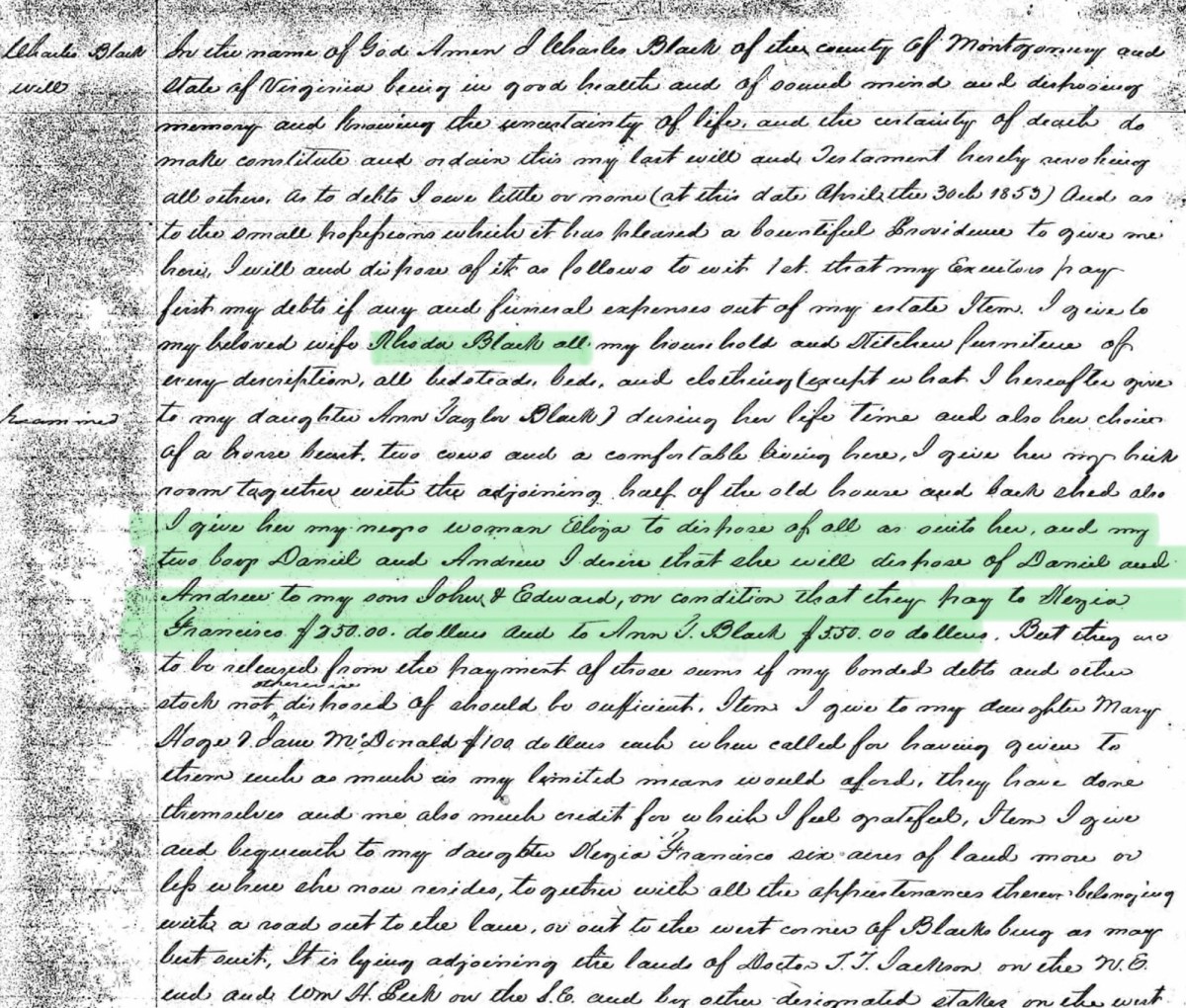
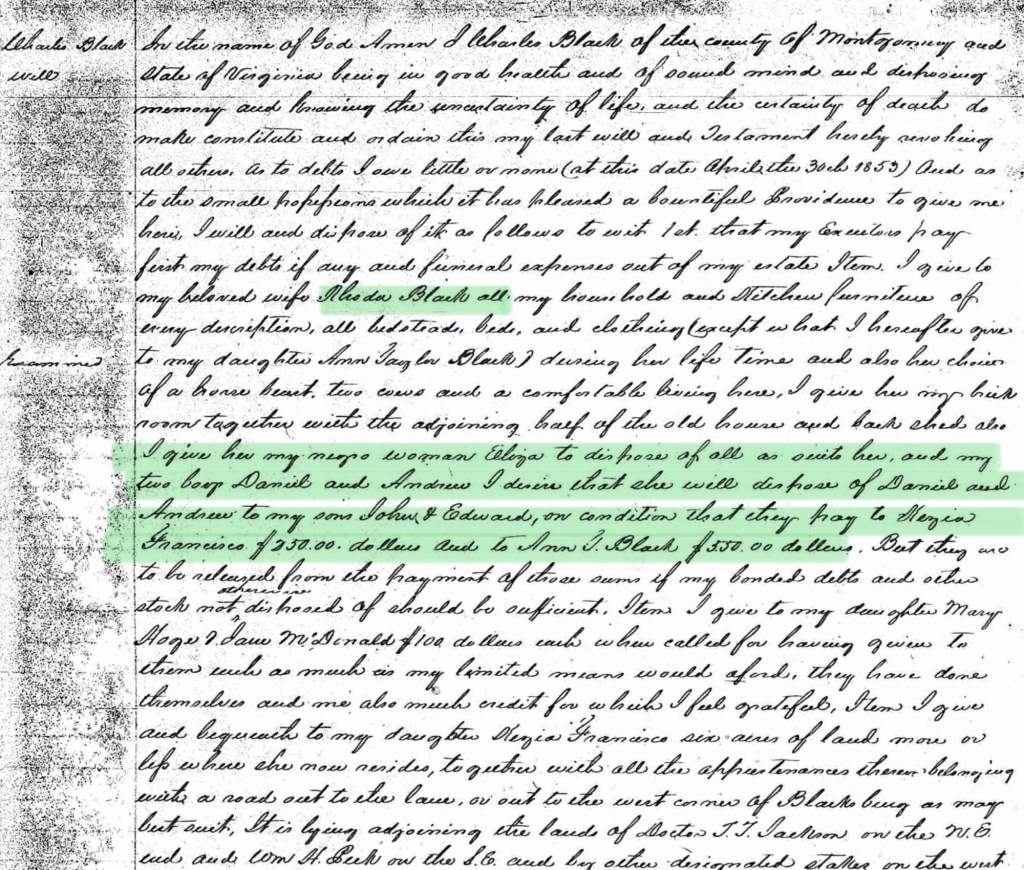
This is the last will and testament of Charles Black (1796-1853), son of John Black (1755-1845) and nephew of William Black, namesake of the Town of Blacksburg, Virginia. Charles died 1853 and his will was proved in Montgomery County, by Rice D. Montague, Clerk.

Quote: “I give her [my beloved wife Rhoda Black] my negro woman Eliza to dispose of all as suits her, and my two boys Daniel and Andrew I desire that she will dispose of Daniel and Andrew to my sons John & Edward, on condition that they pay to Kezia Francisco $750.00. dollars and to Ann T. Black $550.00 dollars.” 

Rhoda McDonald Black (1805-1859), wife and mother of Keziah Black Francisco (1830-1903), Ann Taylor “Nannie” Black (1837-1903), John Black A. (1831-1899), and Edward Black (1835-1912).

Much of Charles and Rhoda Black’s land becomes part of Virginia Tech campus after the death of Charles and Rhoda.

Page 1 Charles Black Last Will & Testament, Montgomery County Court House
Page 2

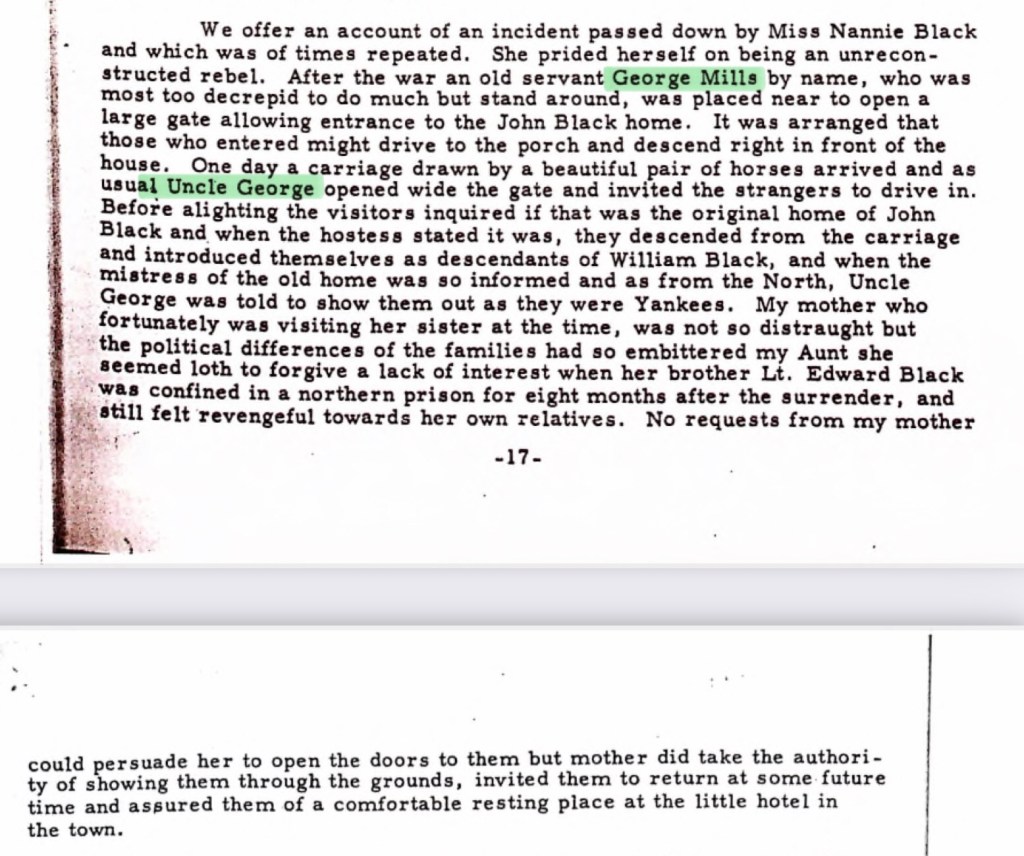
George Mills, Servant

Blacks and Other Families: A Compilation of Mrs. William Armstead Porter (née Nannie Francisco) Researcher, Genealogist, Heraldic Artist. Richmond, Virginia, 1934

George Mills is noted as “After the war an old servant George Mills by name….” in Nannie Francisco Porter’s , daughter of Keziah Black Francisco.


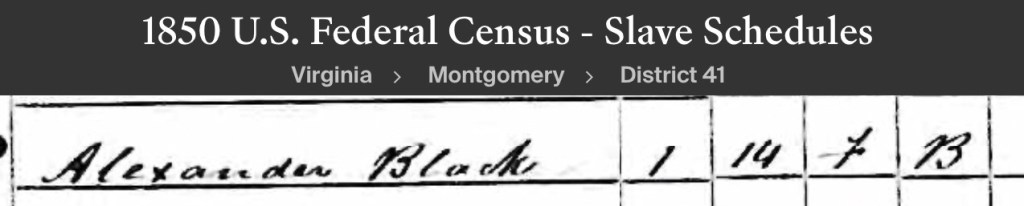
The 1850 Slave Schedule for Montgomery County does not name the people held against their will and provide a documentation of the slave owners. Charles Black’s will notes three people, a woman and two men, not four as noted below. No proof yet, but perhaps Eliza is the one listed female. Daniel and Andrew are likely one of these three people.

Alexander Black is the brother of Charles Black.


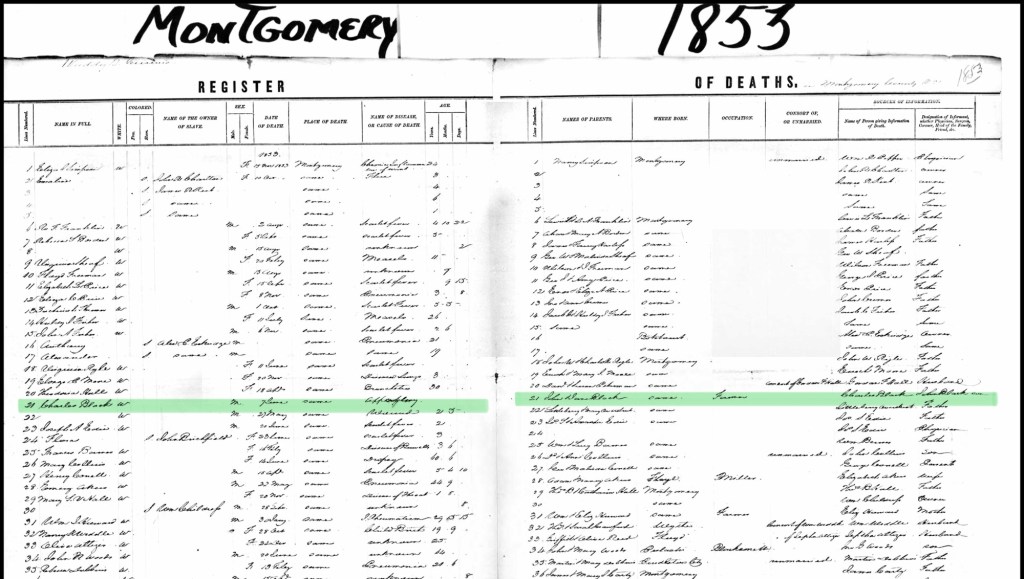
Register of Death of Enslaved by their owners

In 1853, one of Charles Black’s enslaved men reportedly died from apoplexy. This explains why his will only mentioned two men and one woman.

Montgomery County (Va.) Cohabitation Register

Montgomery County (Va.) Cohabitation Register. This register records the name of the husband, his age, place of birth, residence, occupation, last owner, last owner’s residence, name of the wife, her age, place of birth, residence, last owner, last owner’s residence, name of children with the ages of each, and the date of commencement of cohabitation. Of note is the wide range of localities reported as the former slaves’ places of birth

Montgomery County (Va.) Register of Colored Persons Cohabiting Together as Husband and Wife, 1866 Feb. 27. N.p., 1866. Print

This document is very valuable and now that it has been digitized it is accessible. Please read the description and historical note by the Library of Virginia: (accessed 3 March 2024)

Direct Link to the pages as images and as a transcription

Montgomery County, Va Register of Colored Persons Cohabiting Together as Husband & Wife, 1866 Feb. 27 – citation and supporting information.

Description
Montgomery County (Va.) Register of Colored Persons of Montgomery County, State of Virginia, cohabiting together as Husband and Wife on 27th February 1866. Also commonly called Montgomery County (Va.) Cohabitation Register. This register records the name of the husband, his age, place of birth, residence, occupation, last owner, last owner’s residence, name of the wife, her age, place of birth, residence, last owner, last owner’s residence, name of children with the ages of each, and the date of commencement of cohabitation. Of note is the wide range of localities reported as the former slaves’ places of birth

Montgomery County (Va.) Register of Colored Persons Cohabiting Together as Husband and Wife, 1866 Feb. 27. N.p., 1866. Print.

Historical Note
 Note

Montgomery County was named for Richard Montgomery, who was killed in the American assault on Quebec late in 1775. It was formed from Fincastle County in 1776. Part of Botetourt County was added in 1789, and part of Pulaski County was added in 1842.

The Virginia legislature passed an act on 27 February 1866 to legalize the marriages of former slaves who had been cohabiting as of that date. See Virginia Acts of Assembly, 1866-1867, Chapter 18, An act to amend and re-enact the 14th section of chapter 108 of the Code of Virginia for 1860, in regard to registers of marriage; and to legalize the marriages of colored persons now cohabiting as husband and wife.

The federal Bureau of Refugees, Freedmen, and Abandoned Lands directed the Assistant Superintendents of the states to order the county clerks to make a registry of such cohabiting couples. See Circular No. 11, dated 19 March 1866, in Orders, Circulars, Circular Letters, and Letters of Instruction, vol. 2 (1866). Bureau of Refugees, Freedmen, and Abandoned Lands, Records of the Assistant Commissioner for the State of Virginia, 1865-1869. Miscellaneous reel 3880, Library of Virginia. National Archives microfilm M1048 (reel 41), Record Group 105.

Montgomery County (Va.) Register of Colored Persons Cohabiting Together as Husband and Wife, 1866 Feb. 27. N.p., 1866. Print.