Celebrating Alvin Duval Lester’s Photography

Alvin Duval Lester (b. 1947) grew up in Christiansburg and later documented life in Richmond’s Jackson Ward through photography. His 1980s–90s images are featured in Alvin Lester: Portraits of Jackson Ward and Beyond, on view at the Virginia Museum of Fine Arts through March 30, 2026.

Lester’s family history spans at least five generations of free Black Virginians. Among his ancestors is Luke Valentine, who served in the Revolutionary War, marching from Bedford County to South Carolina in May 1781.

Courtesy of VMFA Museum

Alvin Duval Lester (b. 1947) is another example of the deep connections between Montgomery County families and Jackson Ward in Richmond. Raised in Christiansburg, Virginia, Alvin later documented life in Richmond through his photography. His images of Jackson Ward in the 1980s–90s were featured in the exhibit Alvin Lester: Portraits of Jackson Ward and Beyond. The Virginia Museum of Fine Arts exhibit will run until March 30, 2026 in the Photography Gallery, Richmond, Virginia. Facebook post by the Virginia Museum of Fine Arts

Alvin’s family history can be traced through at least five generations of free Black ancestors. His fourth-great-grandfather, Isham Lester (1765–1839), was listed as free in the 1810 U.S. Census for Lunenburg County. His son Bolling Lester, and grandson John C. Lester, were also born free there. By the 1860 U.S. Census, Bolling Lester had moved his family to Dry Valley in Montgomery County.

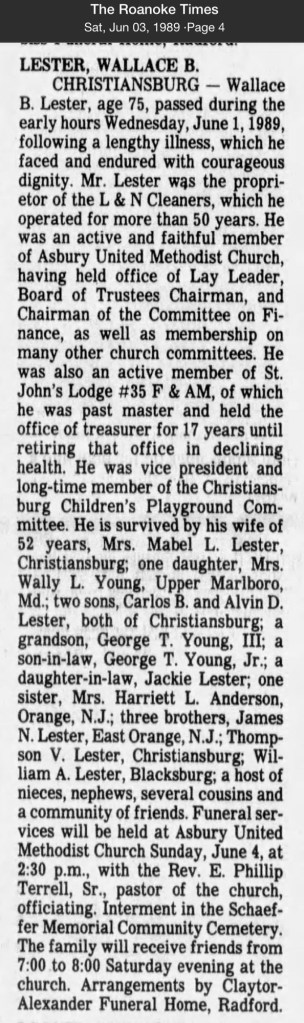
Alvin’s father, Wallace Brown Lester (1913–1989), married Mabel Lee Saunders on June 17, 1937, in Floyd County. The couple lived in Christiansburg, where Wallace owned L&N Cleaners. Alvin’s paternal grandparents were James Niles Wilson Lester (1880–1941) and Fannie Baker Thompson Lester (1886–1987). Fannie was the daughter of Herbert Thompson and Harriett Kincanon. James was the son of John C. Lester (1837–1924) and Annie Pate Lester (1843–1915), both born free in Lunenburg County, Virginia. John C.’s parents were Bolling Lester (1788–?) and Rebecca Barber (1790–1845).
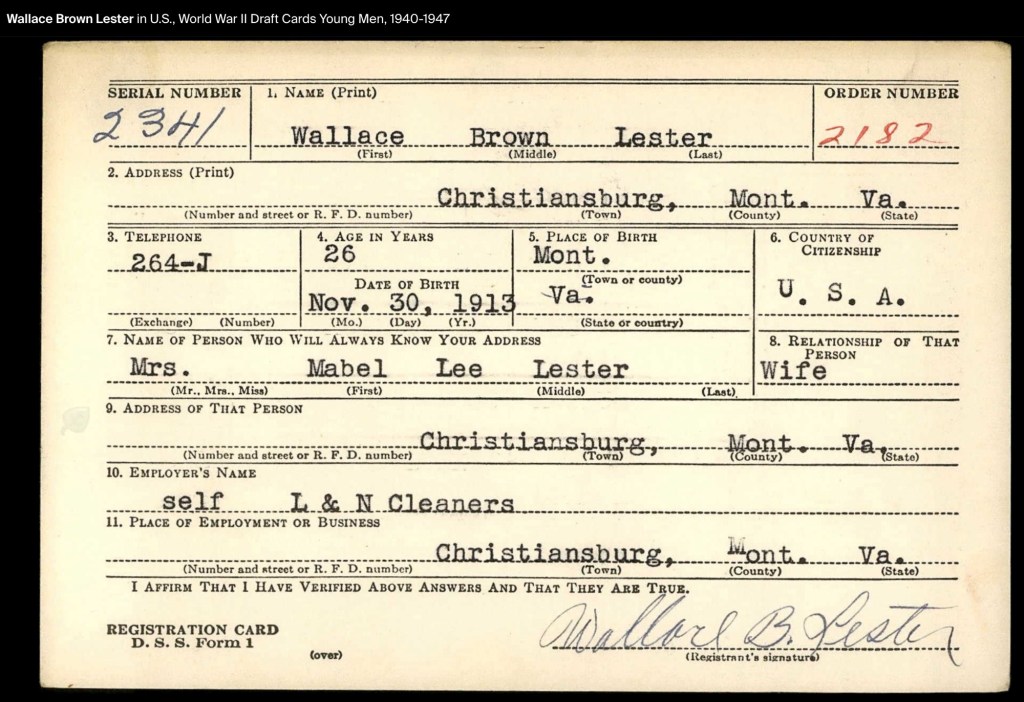
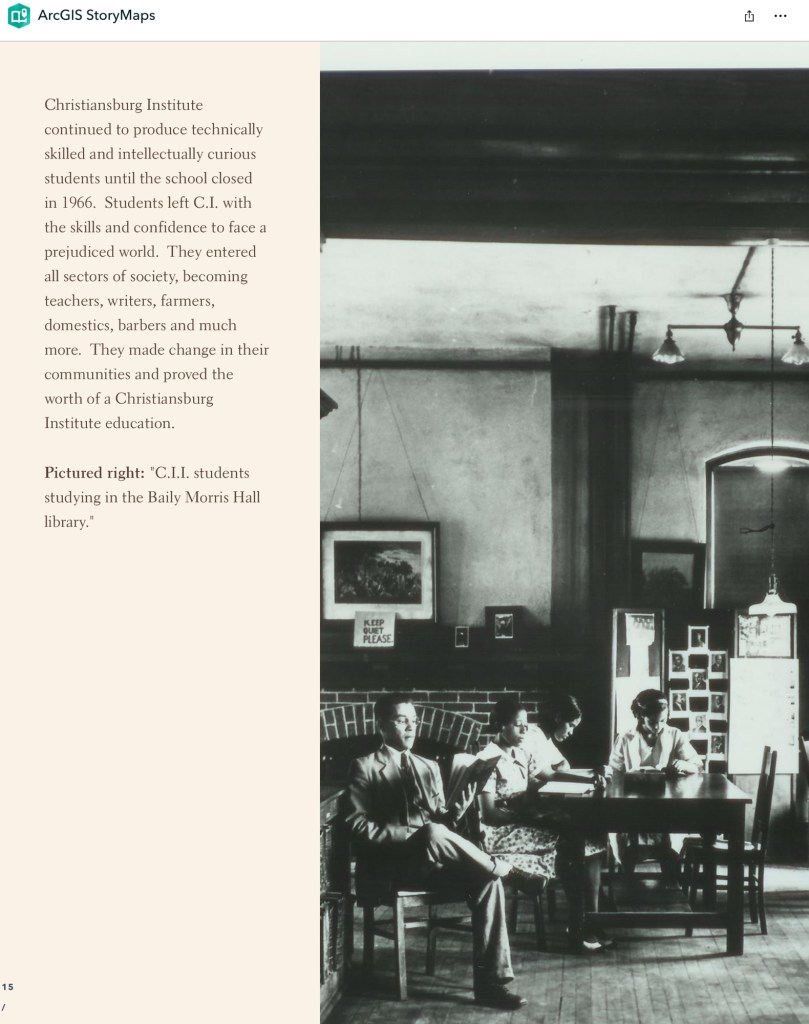
Alvin’s great-uncle, John Wynes Lester (1885–1961), taught, farmed and worked as a carpenter at Christiansburg Institute. He and his wife lived on campus until his death. He is buried in the school’s cemetery.

Luke Valentine, Free Black, Application for Revolutionary War Pension

During the American Revolutionary War, free Black men in Virginia played a meaningful—though often overlooked—role in the fight for independence. From the earliest days of the conflict, free Blacks served in militias, state troops, and Continental units, particularly as manpower shortages grew. Virginia law restricted enslaved people from bearing arms, but free Black men could enlist, serve as substitutes, or be mustered alongside white soldiers, especially in local militia companies.

By the later years of the war, Virginia increasingly relied on these men for defense and campaigns beyond the colony’s borders. Their service included marching long distances, guarding supply lines, engaging Loyalist forces, and fighting in the southern theater, where the war was especially intense in 1780–1781.
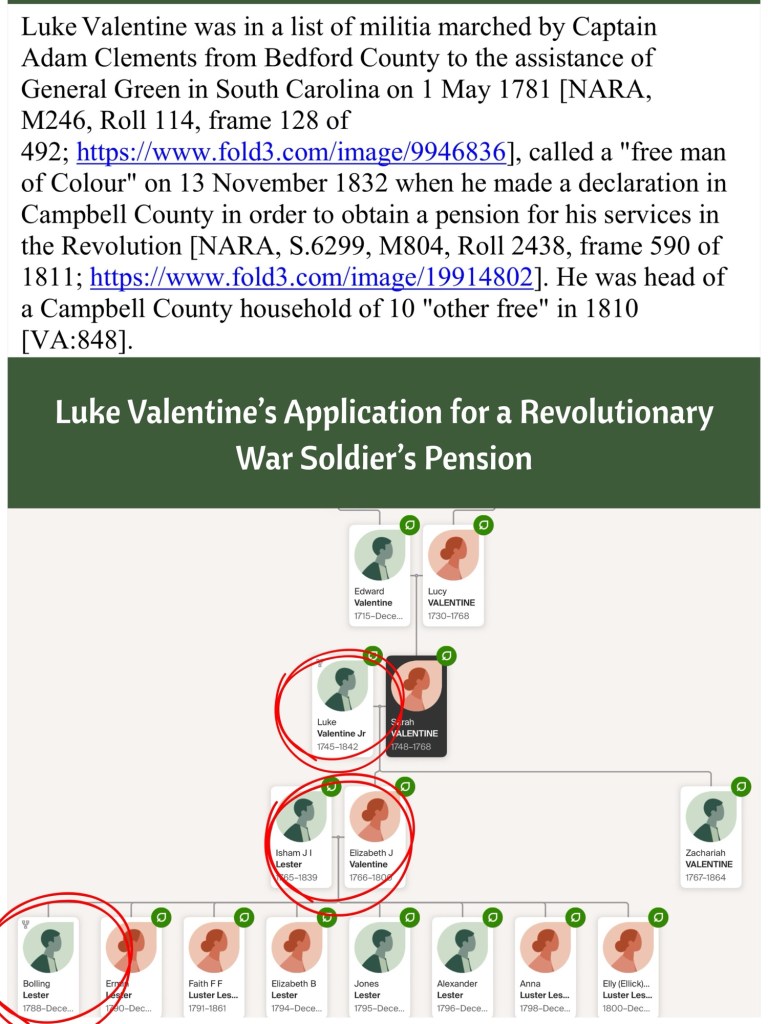
Luke Valentine, fifth-great grandfather of Alvin Lester’s, is one such example. He appears on a roster of men led by Captain Adam Clements of Bedford County, Virginia, who marched to South Carolina beginning May 1, 1781. This was a critical moment in the war, as Patriot forces sought to counter British advances in the South. Valentine’s inclusion on this roster places him among the free Black Virginians who answered the call to serve far from home in support of American independence.

After the war, some free Black veterans, including Luke Valentine, applied for Revolutionary War pensions. These applications are vital historical records, offering rare documentation of Black military service and affirming that free Blacks were not only present but active participants in the founding struggle of the United States.
Searching for Their Name – Cambria, VA

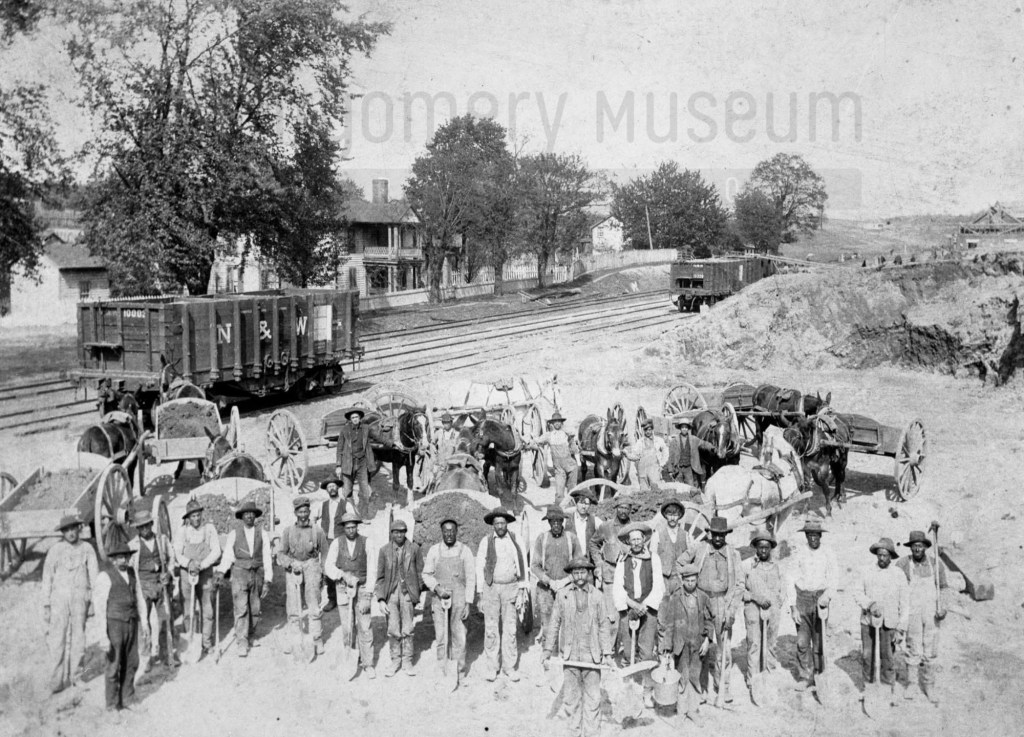
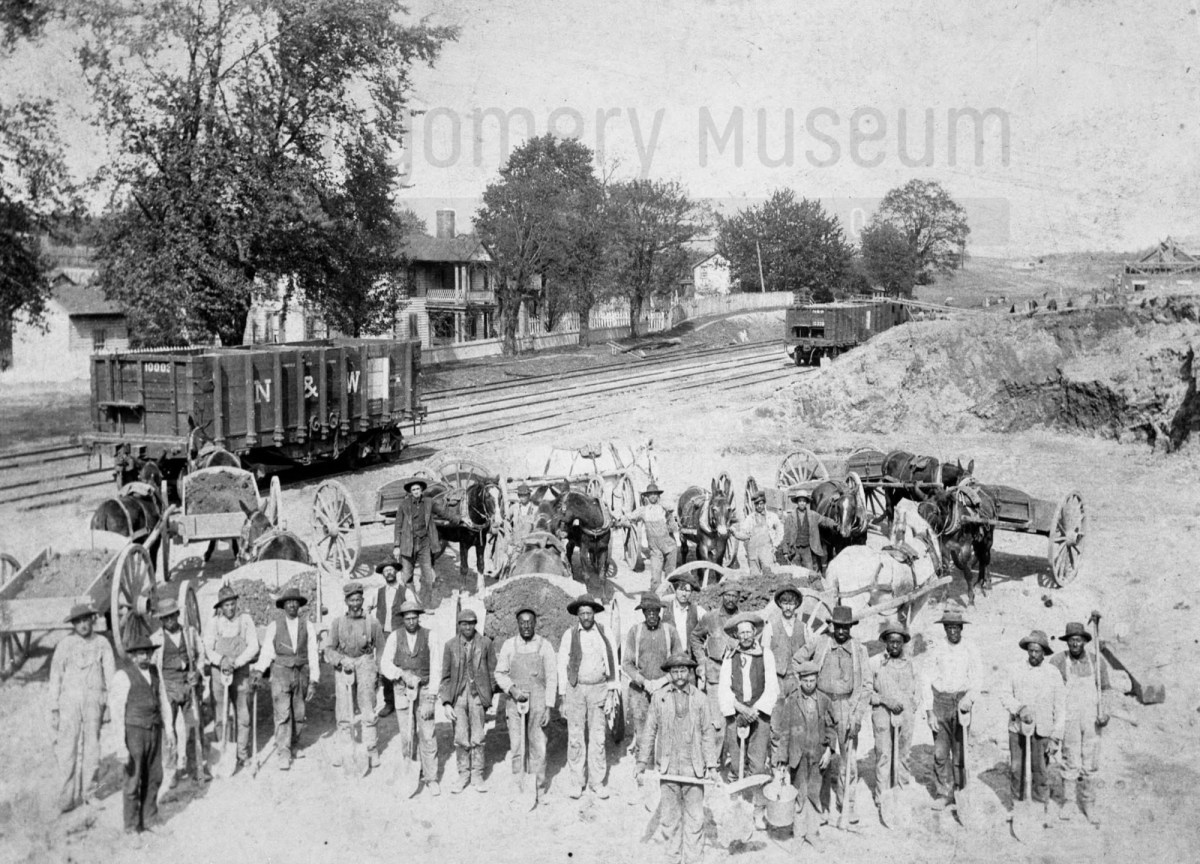
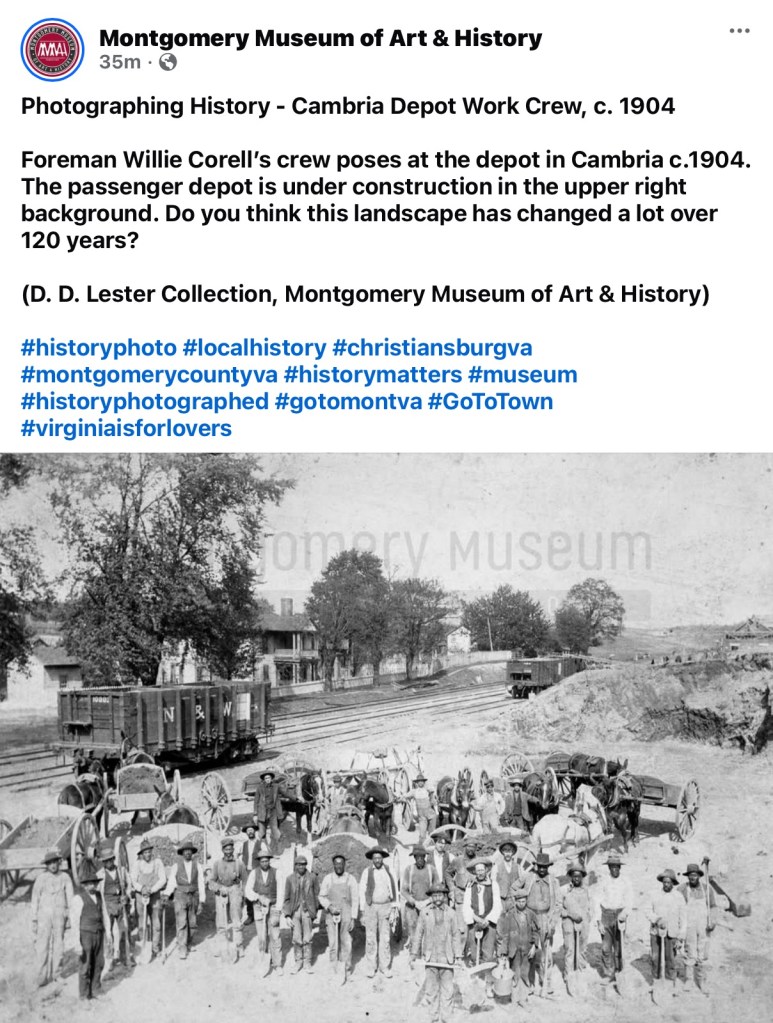
In 1904, a mixed-race crew built the new Cambria, Virginia Depot passenger station. Their faces were captured, but their names were not. As we search census records and explore new tools like AI facial recognition, we hope to uncover who they were — the hands and lives behind this piece of our shared history.

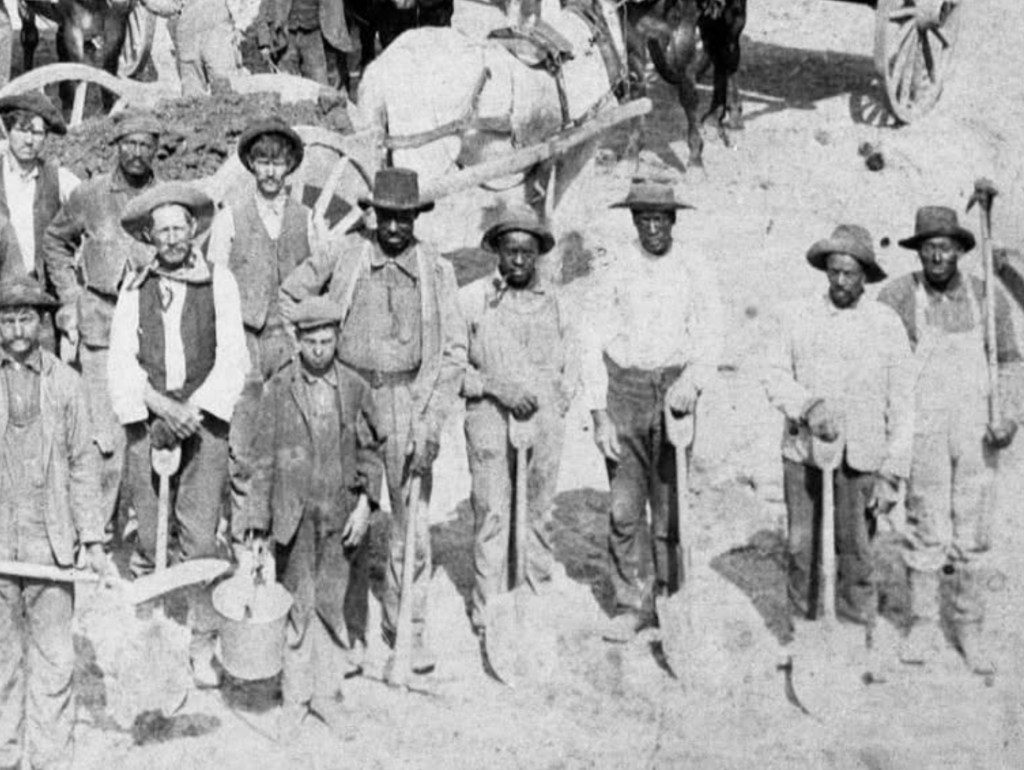
This 1904 photograph captures a work crew—Black and white men together—building the new passenger station for the Cambria, Virginia Depot. It’s a remarkable image of shared labor and community effort during a time of deep segregation.

Yet, like so many images from the early 20th century, the men remain unnamed, except for the foreman, Willie Corell. Their faces look back at us across more than a century, but their identities have been lost to time. Who were they? What were their lives like?

With advancing technology, tools like AI facial recognition may one day help uncover their names and family connections. Until then, our research turns to the 1900 and 1910 census records, where we hope to find traces of the African American laborers who helped shape the Cambria community and build this station that still stands as part of our shared history.

If you have family stories, photographs, or names that might help identify these men, we would love to hear from you. Each clue brings us closer to giving them the recognition they deserve.

The Fisk University Rosenwald School Digital Collection is Now Public!

Fisk University has released its Rosenwald School Digital Collection, preserving and sharing the history of these vital institutions. In Montgomery County, the collection highlights schools built through the determination of African American communities in Elliston, Pine Woods, Shawsville, and Wake Forest.

Fisk University has made its Rosenwald School Digital Collection publicly accessible, a significant step in preserving and sharing the history of these important institutions. For Montgomery County, the collection documents the Rosenwald Schools established through the determination and vision of African American communities in Elliston, Pine (Piney) Woods near Riner, Shawsville, and Wake Forest.

Although only the Wake Forest school remains today—adapted for use as a private residence—the collection ensures that the legacy of all three schools endures. These schools stand as a testament to community leadership, resilience, and the transformative power of education during the early twentieth century.
The Story of Rosenwald Schools

The website (scroll down) offers a wealth of information: the story of Julius Rosenwald and his vision, the purpose of the school fund, the significance of the school designs, and the requirement that African American communities contribute a share of the cost. Visitors will also find maps, photographs, and documentation of schools across the region and beyond.

Elliston School

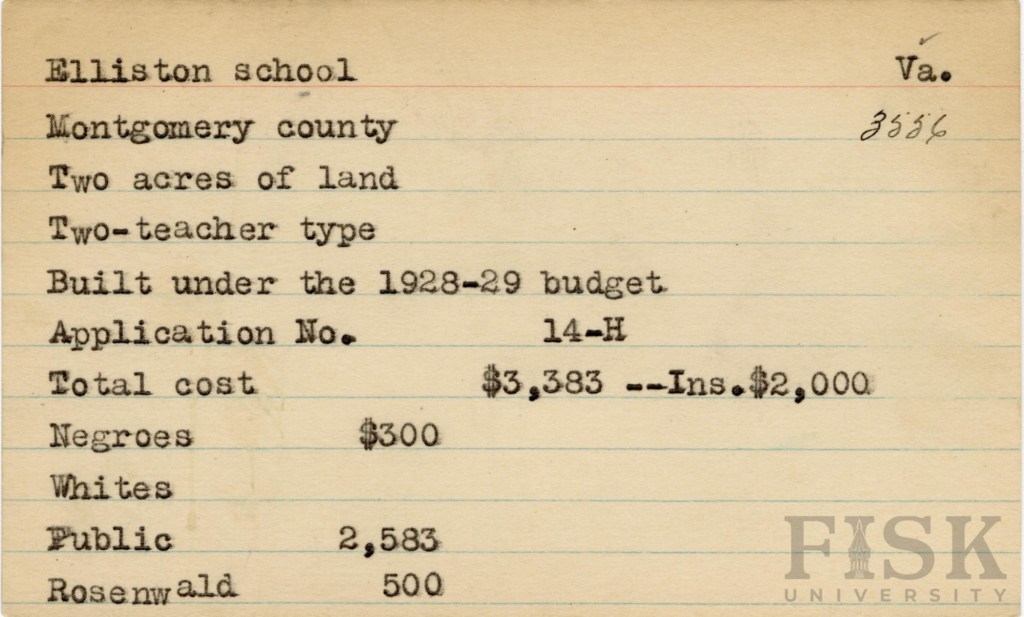
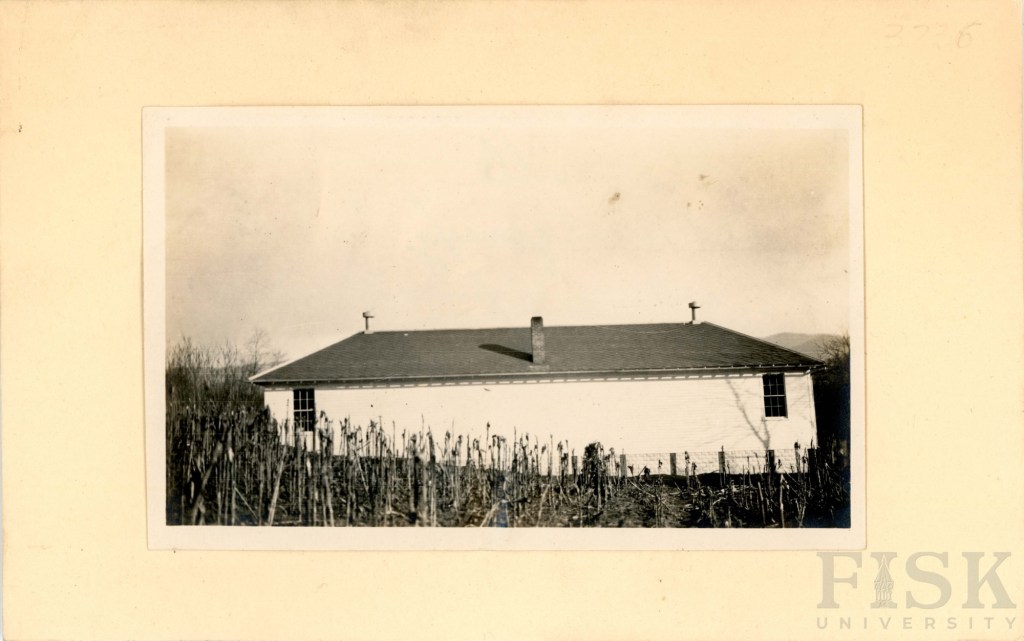
Built in 1928–1929, the Elliston Rosenwald School reflects the determination of the local African American community to provide better educational opportunities for their children. Families in Elliston raised $300 toward the project, which was matched by $500 from the Rosenwald Fund and $2,583 from the Montgomery County School Board.

The school stood on two acres of land and housed two classrooms, each with its own teacher. The school was located on Brake Road, in the Allegheny School District. The legacy: the Elliston Rosenwald School was a center of learning, community, and pride during an era when access to education was hard-won.

Pine Woods School

The Pine Woods Rosenwald School (Piney Woods) was built in a two-teacher design under the supervision of Tuskegee University. The school was sited on Piney Woods Road, in the Auburn School District. While the exact construction date is unknown, records indicate the total cost was $1,075. Of that amount, the Rosenwald Fund contributed $300, the African American community raised $275, and the Montgomery County School Board provided $500.

Unlike white schools of the period, which were fully funded by the School Board, African American families were required to make direct financial contributions toward the construction of their schools. This inequity underscores both the systemic barriers they faced and the extraordinary commitment of the Pine Woods community to ensuring education for their children.
Shawsville School

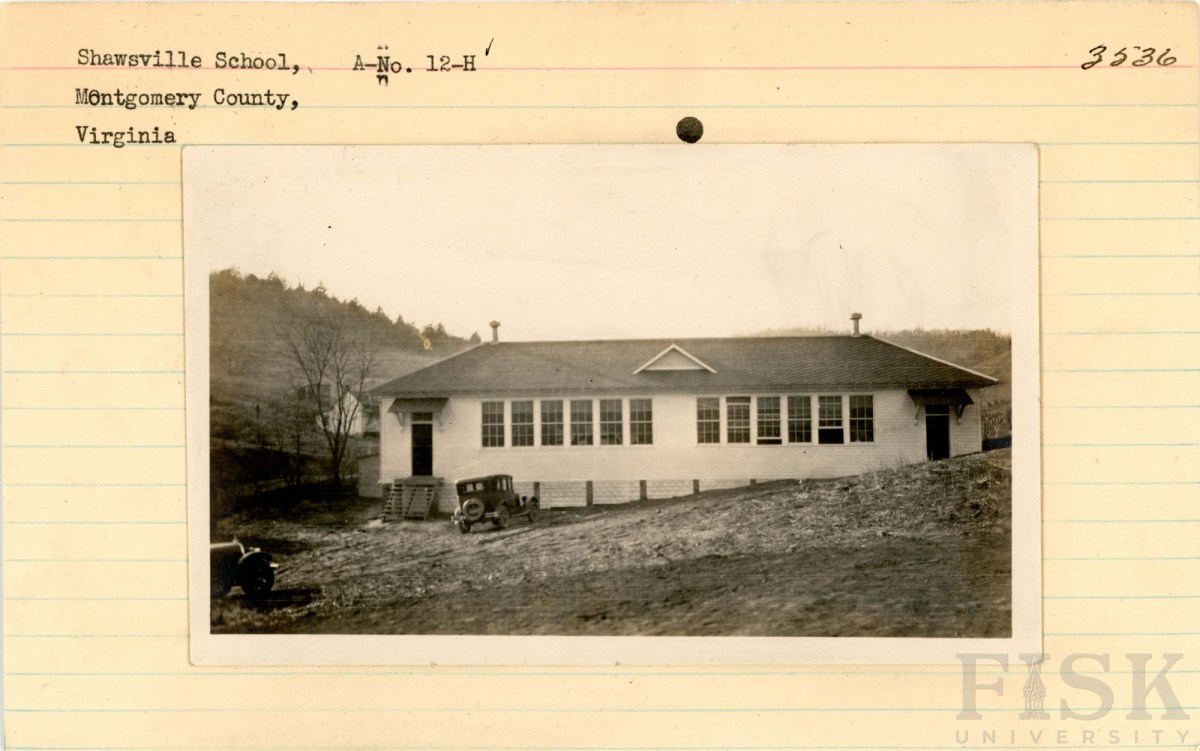
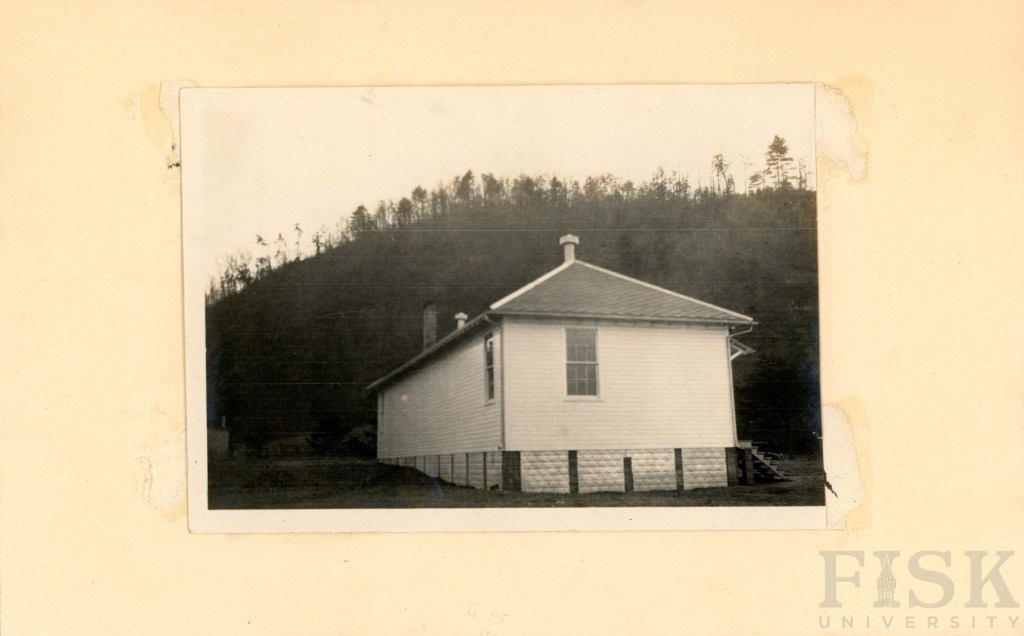
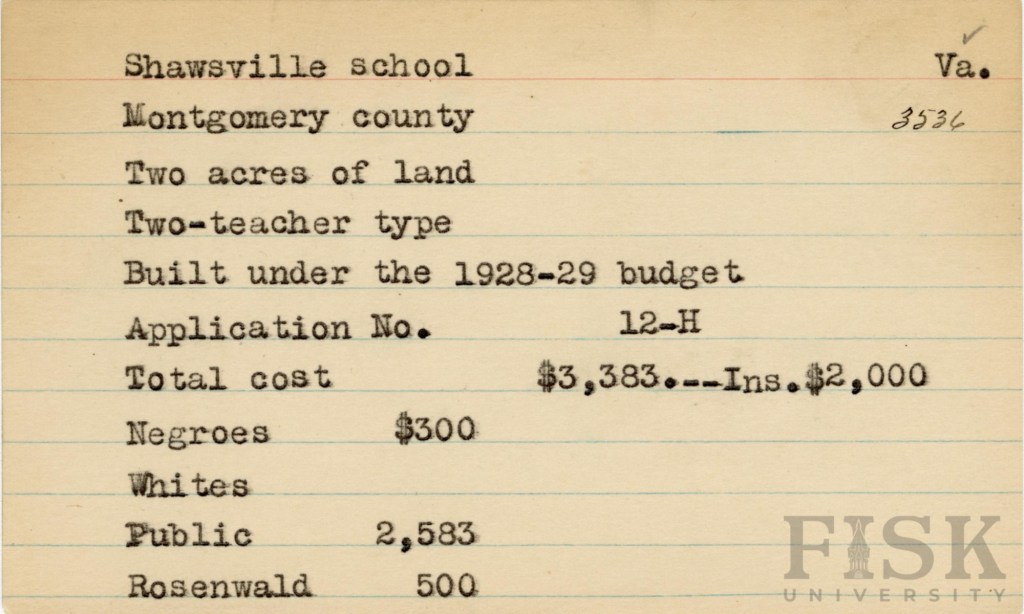
Constructed between 1928 and 1929, the Shawsville Rosenwald School followed a two-teacher design overseen by the Montgomery County School Board. The total cost of $3,383 was shared among the Rosenwald Fund ($500), the African American community ($300), and the Montgomery County School Board ($2,583).

At the time, Shawsville, of the Allegheny School District, was a thriving hub, energized by railroad service and new road (US Route 11) construction projects. These opportunities drew African American laborers and rail workers to the area, many of whom invested their limited resources into building a school for their children. Their contributions—financial and communal—stand as a testament to the determination of Shawsville’s African American families to secure education despite inequities in public funding.

Wake Forest School

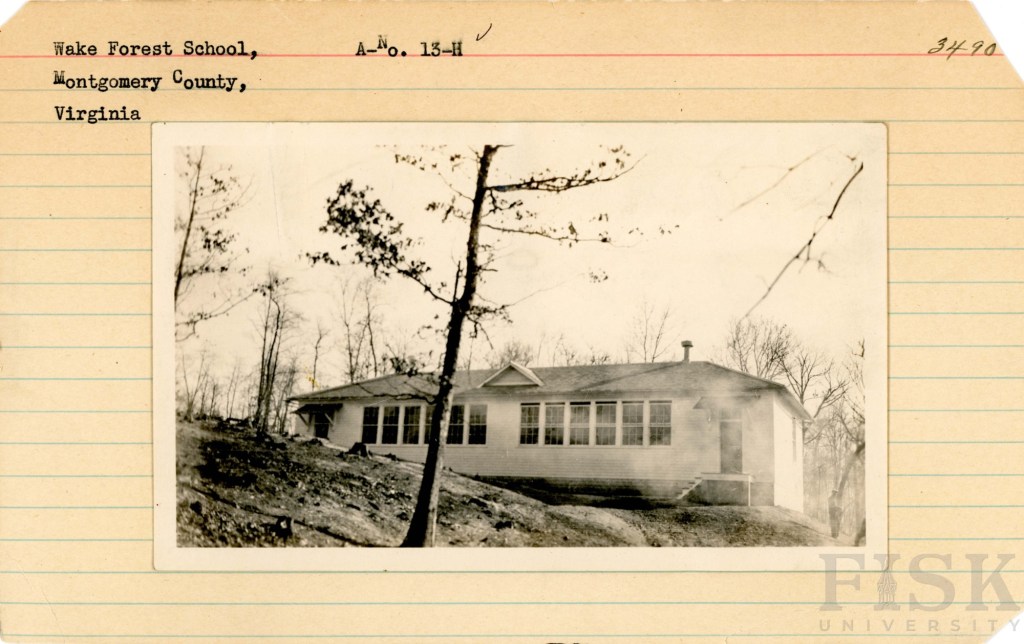
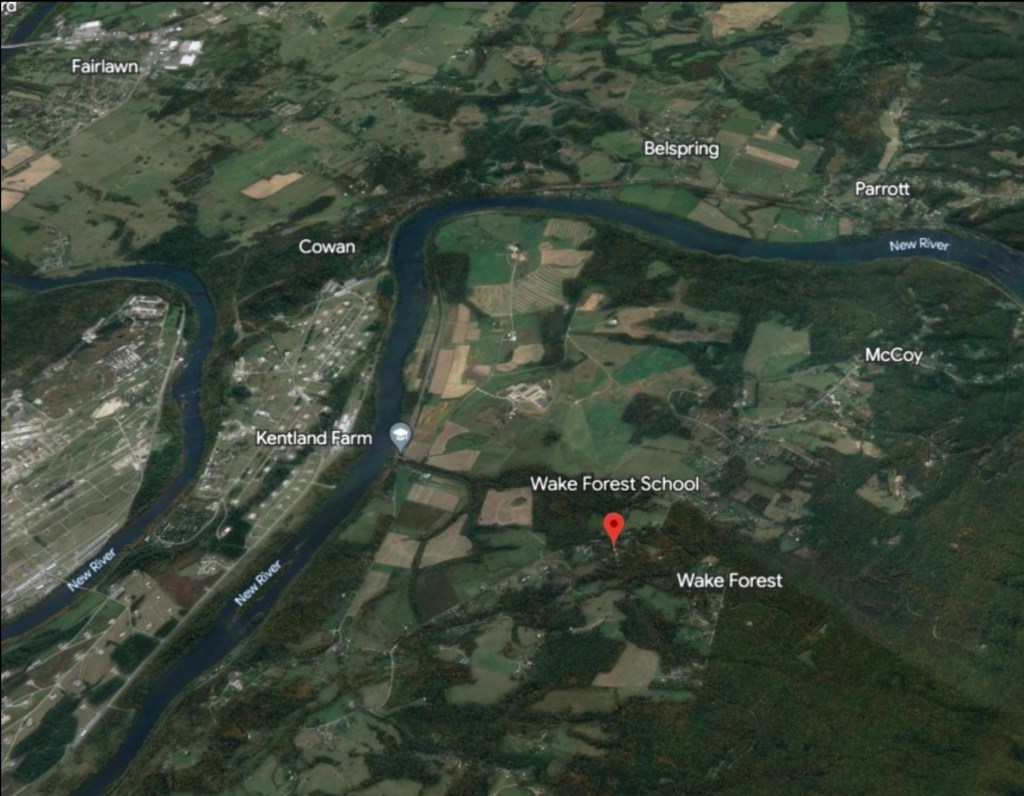
Constructed between 1928 and 1929, the Wake Forest Rosenwald School followed a two-teacher design on a two-acre site, in the Blacksburg School District, overseen by the Montgomery County School Board. The project cost $3,383, with funding shared by the Rosenwald Fund ($500), the African American community ($426 in 1928, about $7,500 in today’s value), and the Montgomery County School Board ($2,457). This school is now a private residence.

The Wake Forest community at this time was made up of independent farmers, farm laborers, boatmen, railroad workers, teamsters, and domestic workers. As coal extraction began to rise and reshape the region’s economy, African American families recognized that education would be essential for their children’s future. By pooling their resources—despite economic hardship—they ensured access to schooling that could open paths beyond the limits of labor and provide new opportunities for the next generation.

Crayon Enlargement Portraits – Lost Faces

Crayon Enlargement Portraits were popular between the late 1890s and early 1900s. They provided an affordable way to capture and display large-format portraits, offering an alternative to the more expensive painted portraits of the time.

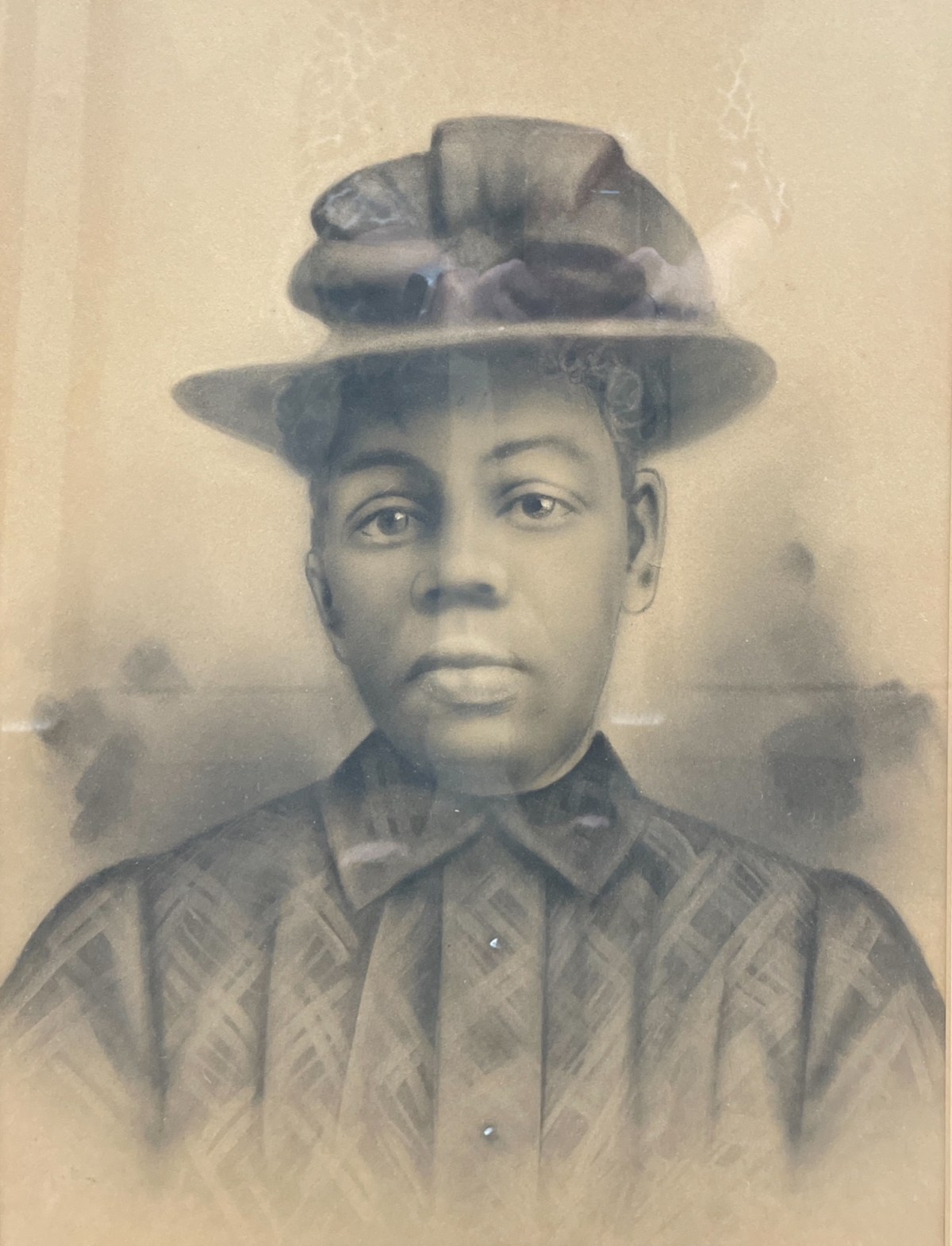
Crayon Enlargement Portraits were popular between the late 1890s and early 1900s. They provided an affordable way to capture and display large-format portraits, offering an alternative to the more expensive painted portraits of the time. The process involved taking a negative made by a local photographer and sending it to a specialist who used a solar enlarger to expose the image onto specially processed salted photographic paper. Because the enlargement process often emphasized imperfections on the negative plate, an artist would enhance the black-and-white print with pencil and crayon media, sometimes adding color.

The unidentified African American portraits featured on this website have been donated to local museums or found in antique shops. They are presented here in the hope of eventually identifying the individuals and preserving their stories.

Portrait of an unknown man (Courtesy of Montgomery Museum of Art and History)
Portrait of an unknown man, found in a New Town house, Blacksburg, Va (Courtesy of Montgomery Museum of Art and History)
Portrait of an unknown woman (Courtesy of Montgomery Museum of Art and History)
Portrait of an unknown man (Courtesy of Christiansburg Institute, Inc)

Resources

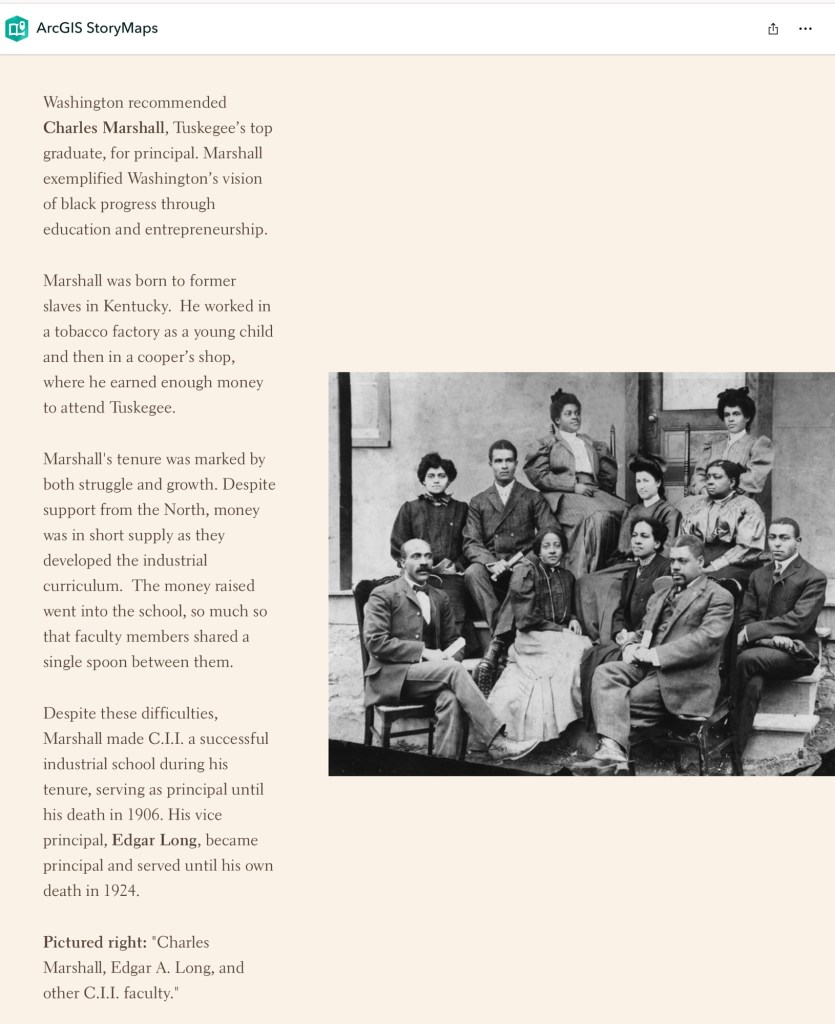
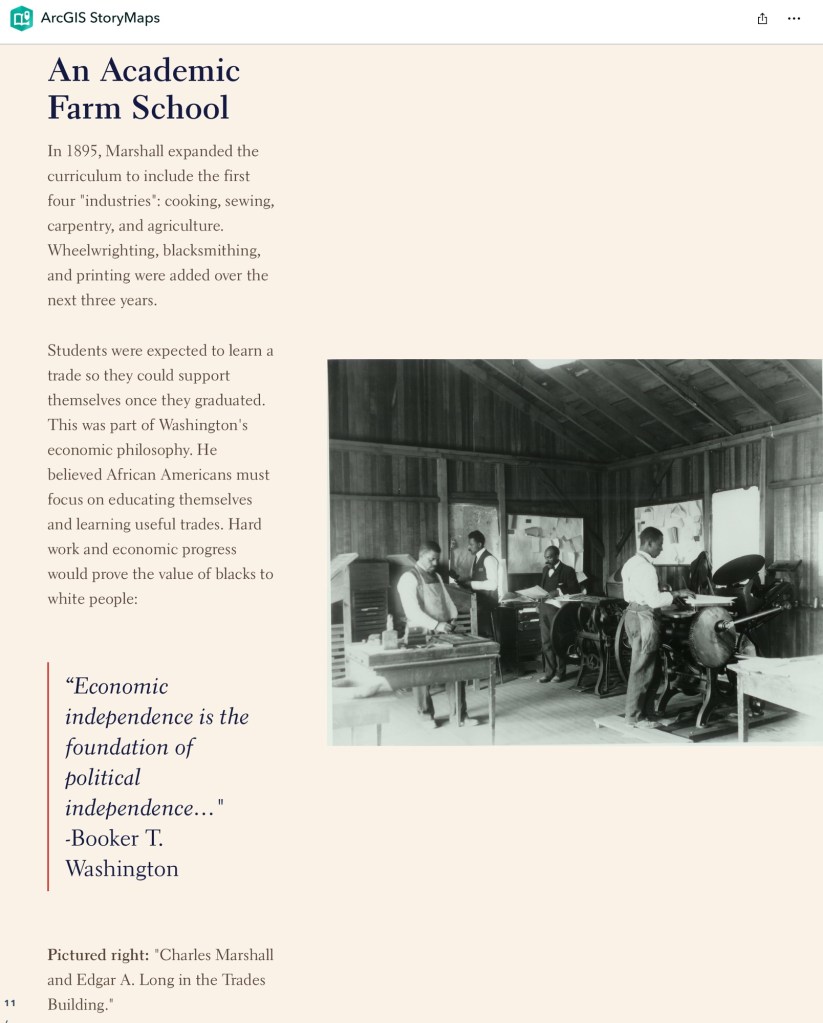
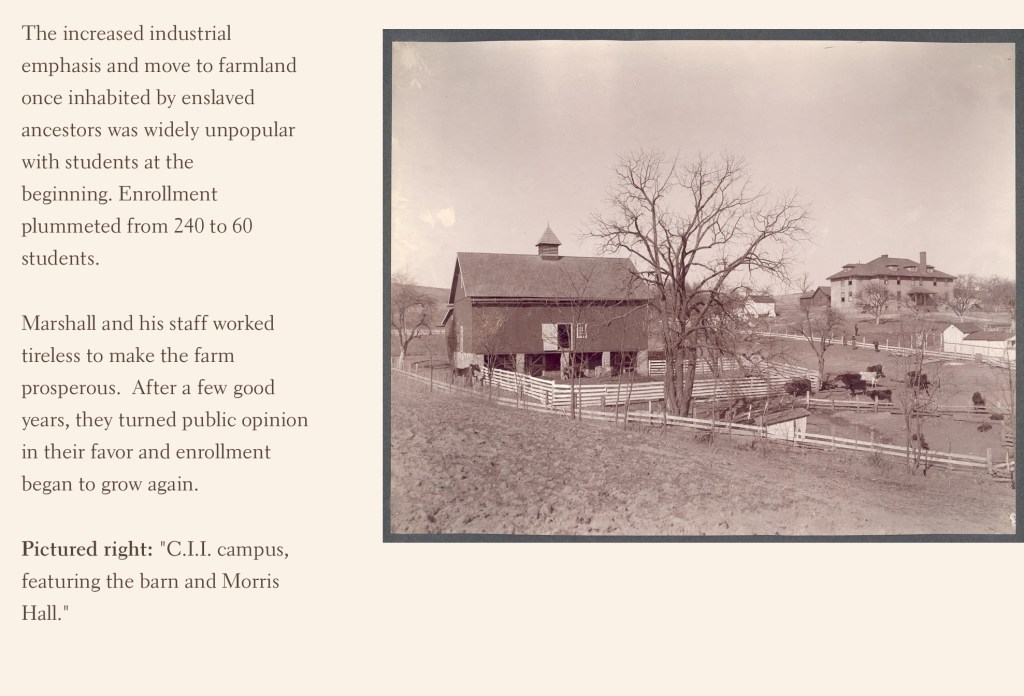
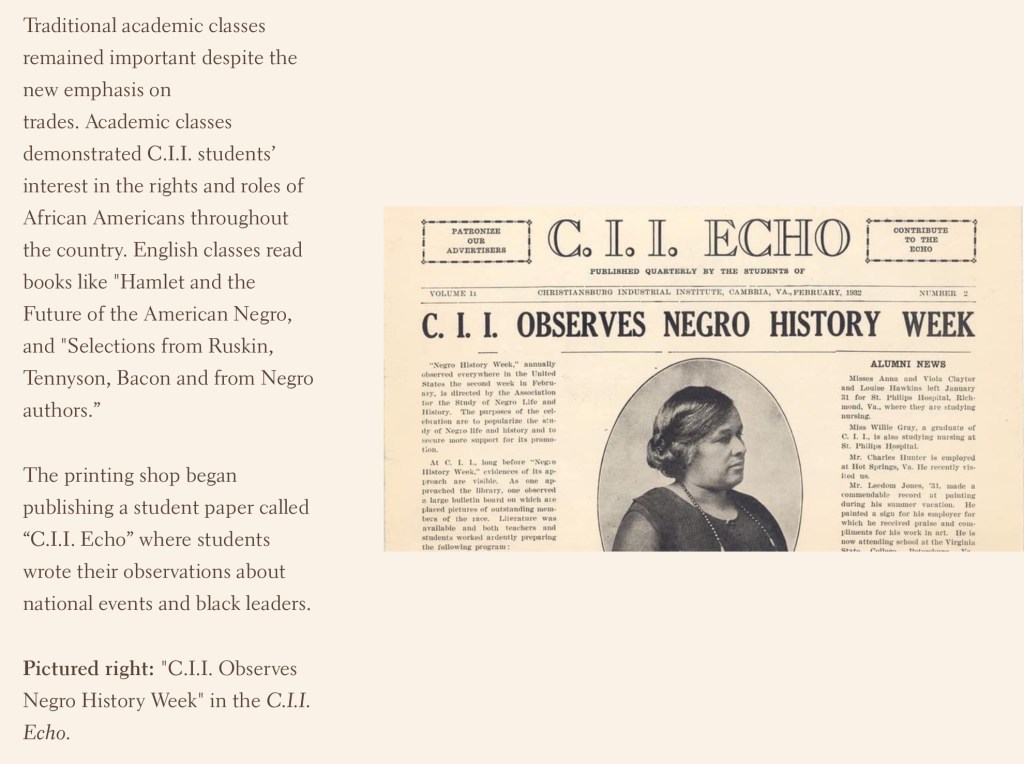
Preserving History: Christiansburg Institute’s Inc. Story Map Project

This digital exhibit is a thoughtfully crafted visual timeline highlighting the school’s key milestones and the individuals who shaped its legacy. This work honors the strength, resilience, and vision of the Black community in Montgomery County during the Reconstruction era and beyond.

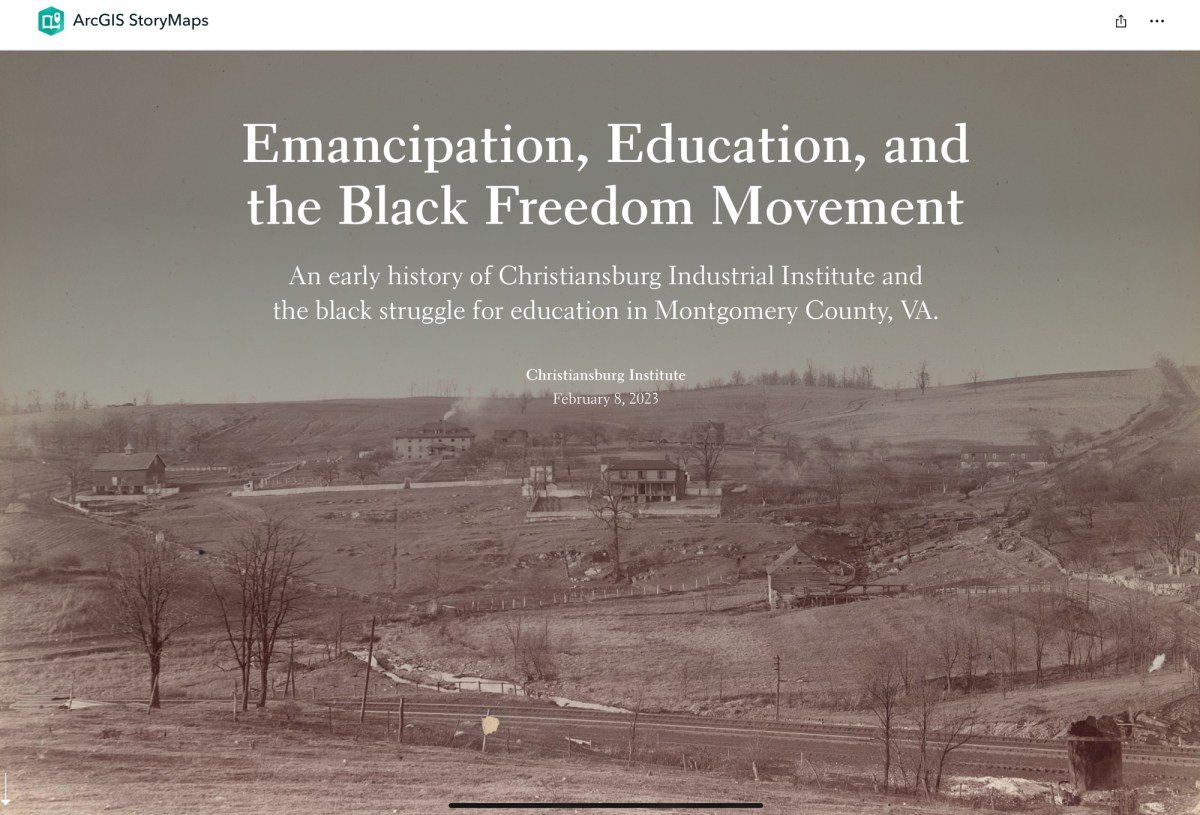
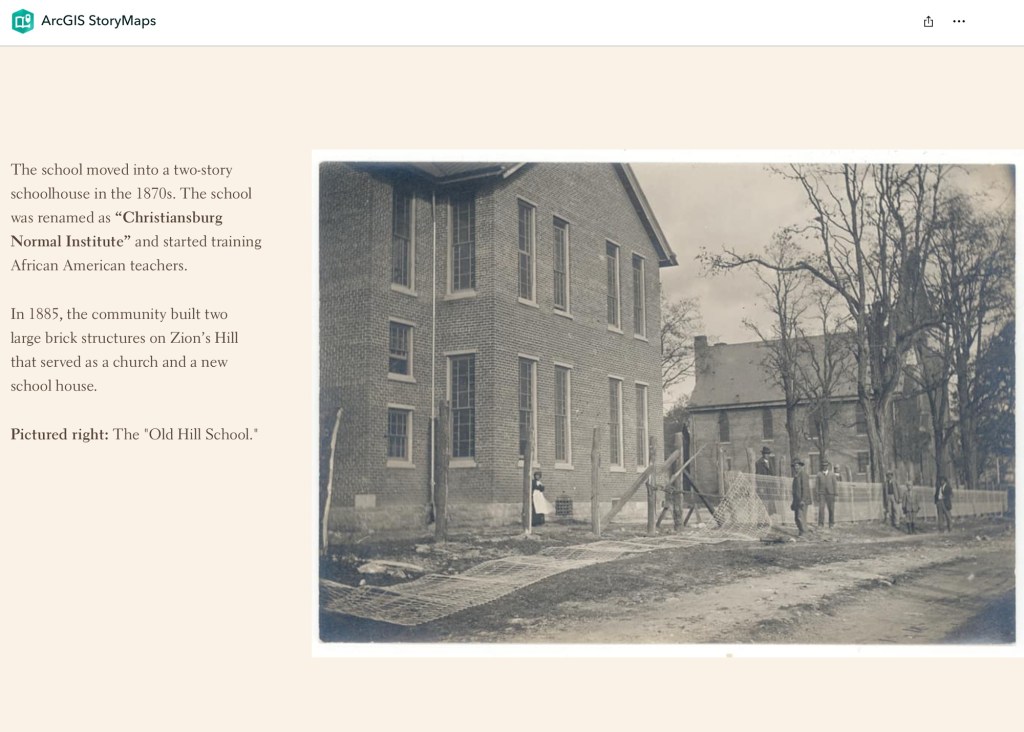
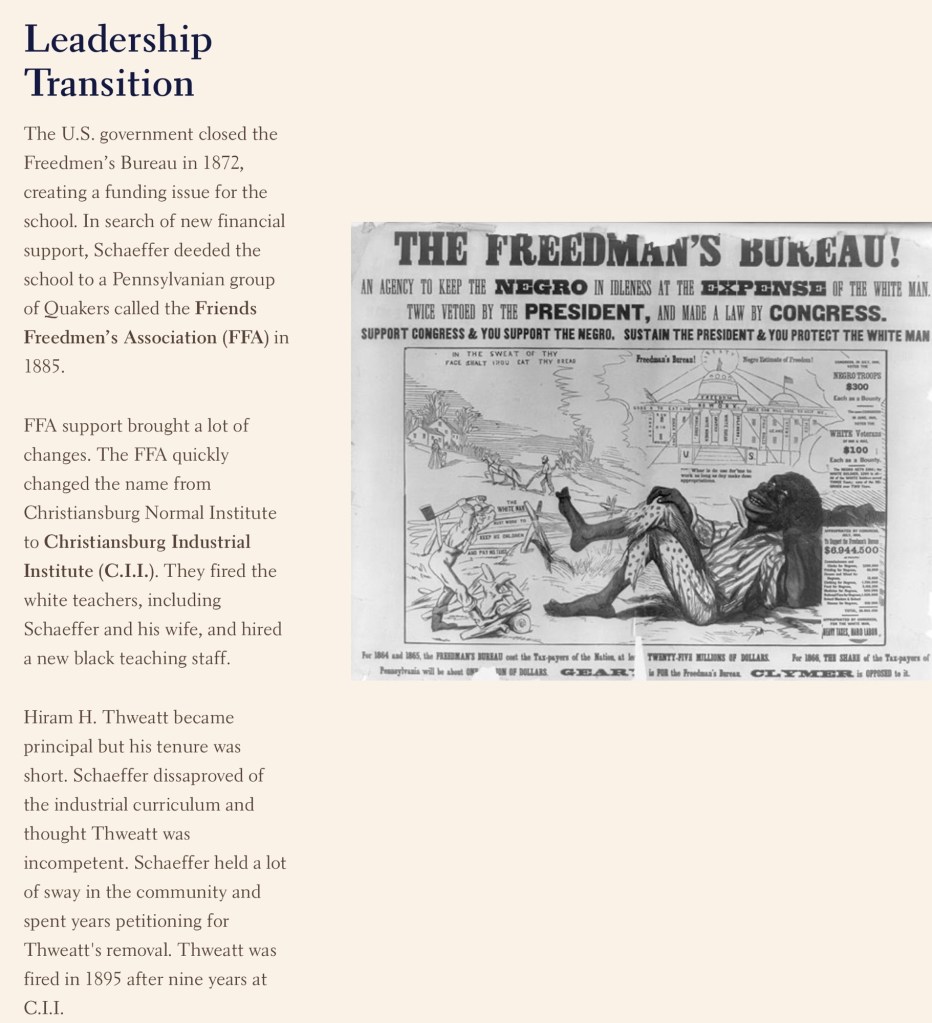
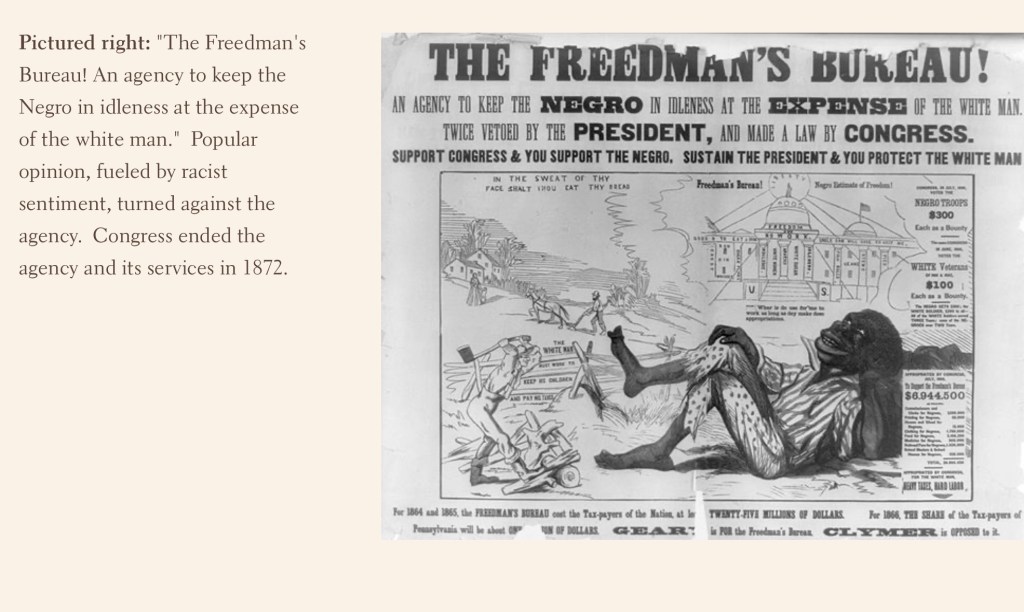
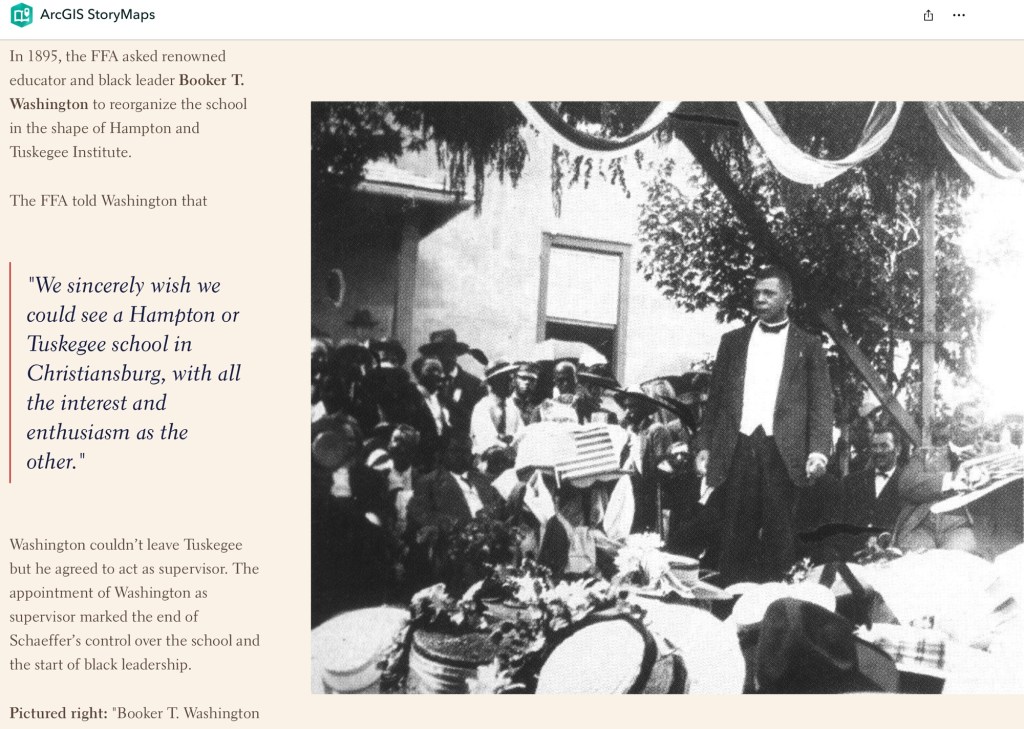
Christiansburg Institute, Inc. has developed an important ArcGIS Story Map that traces the powerful history of the Christiansburg Industrial Institute—an African American school founded between 1866 and 1867 by local freedmen with support from Charles S. Schaeffer, a representative of the Freedmen’s Bureau.

This digital exhibit was curated by Demiah Smith, who thoughtfully crafted a visual timeline highlighting the school’s key milestones and the individuals who shaped its legacy. Her work honors the strength, resilience, and vision of the Black community in Montgomery County during the Reconstruction era and beyond.

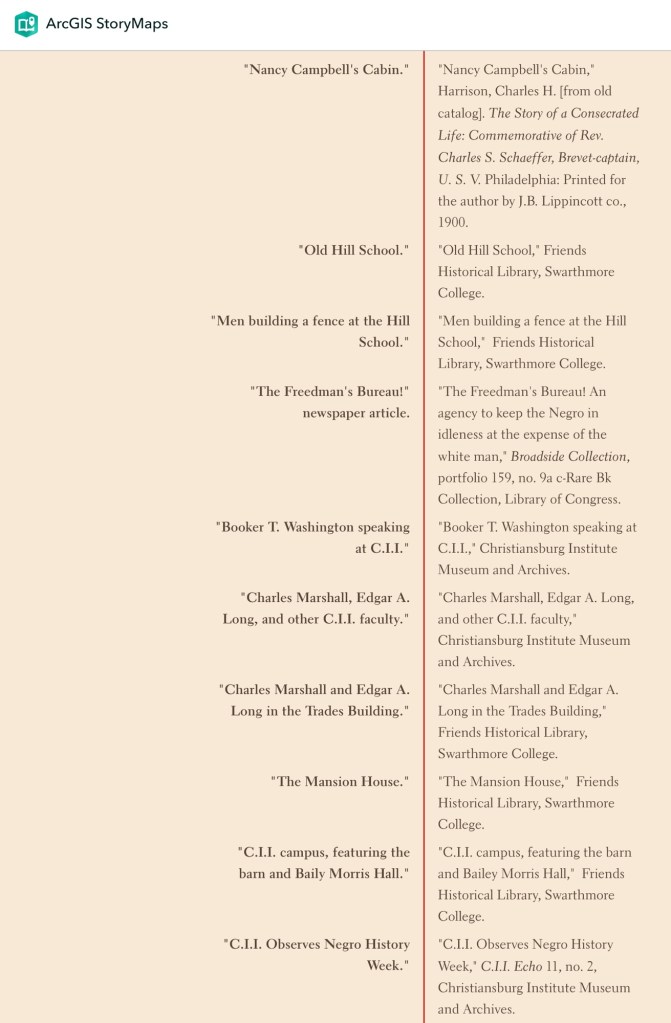
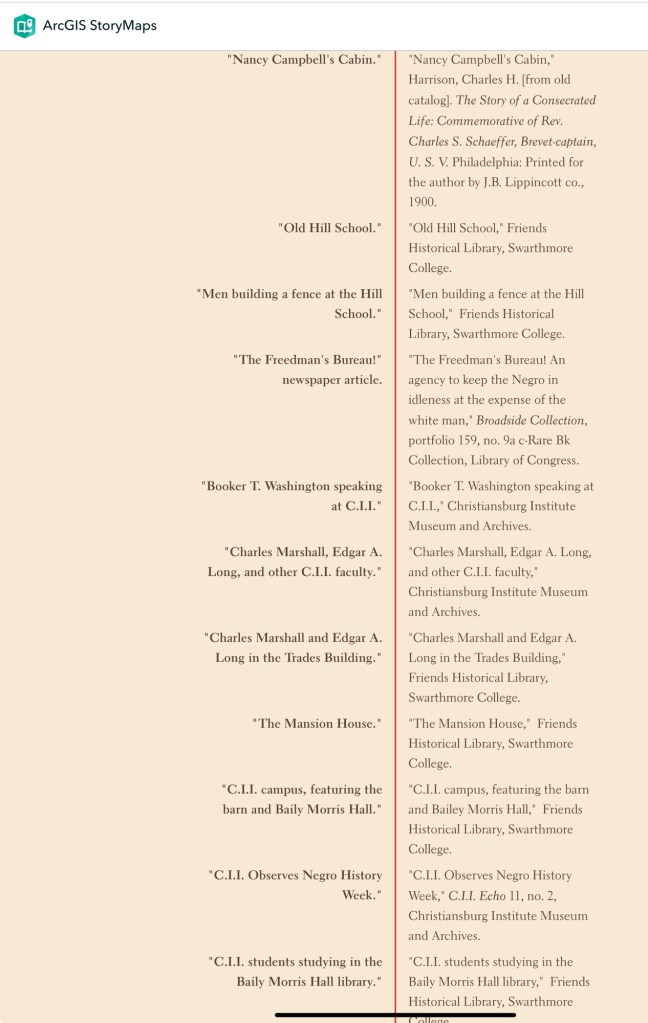
To ensure the preservation of this work—especially after Christiansburg Institute, Inc. lost critical funding from the Institute of Museum and Library Services and the National Endowment for the Humanities—we’ve captured and archived the Story Map as images. This way, Demiah’s contribution and the vital story of CI will remain accessible even as the organization faces serious challenges due to the loss of federal support during the DOGE-era funding cuts.

We remain committed to uplifting and preserving this history. Stay tuned as we continue to find ways to support the legacy of the Christiansburg Institute and the people who made it possible.

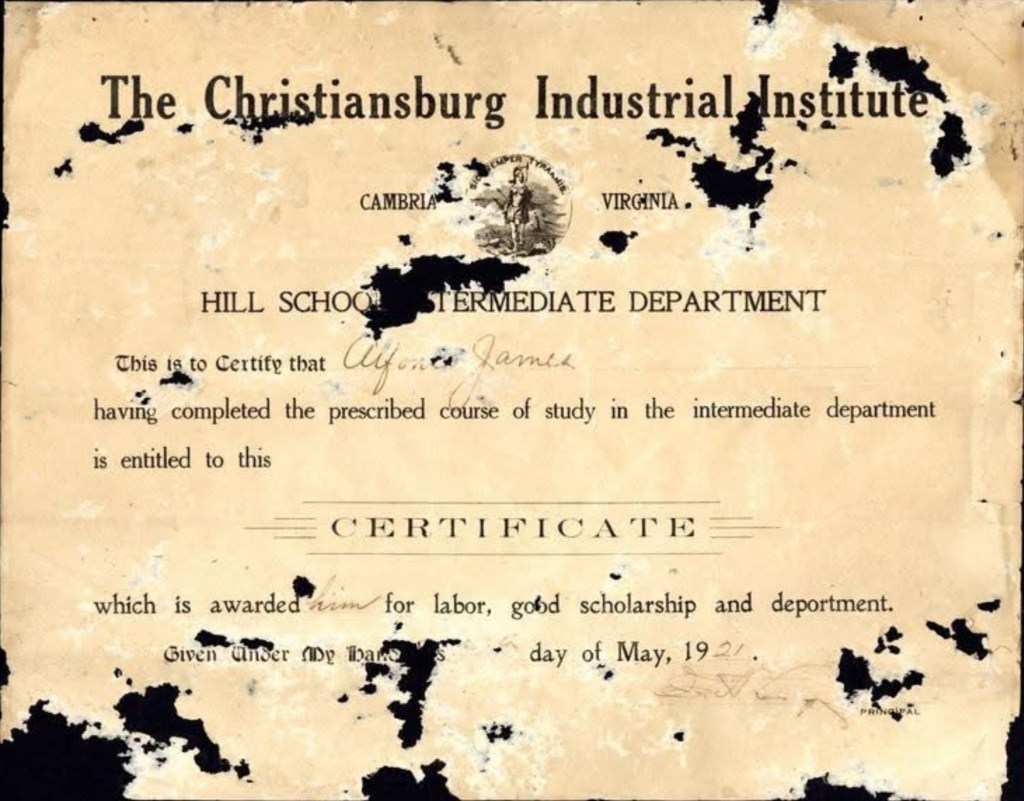
Alfonzo James: A Life Dedicated to Education and Community Service

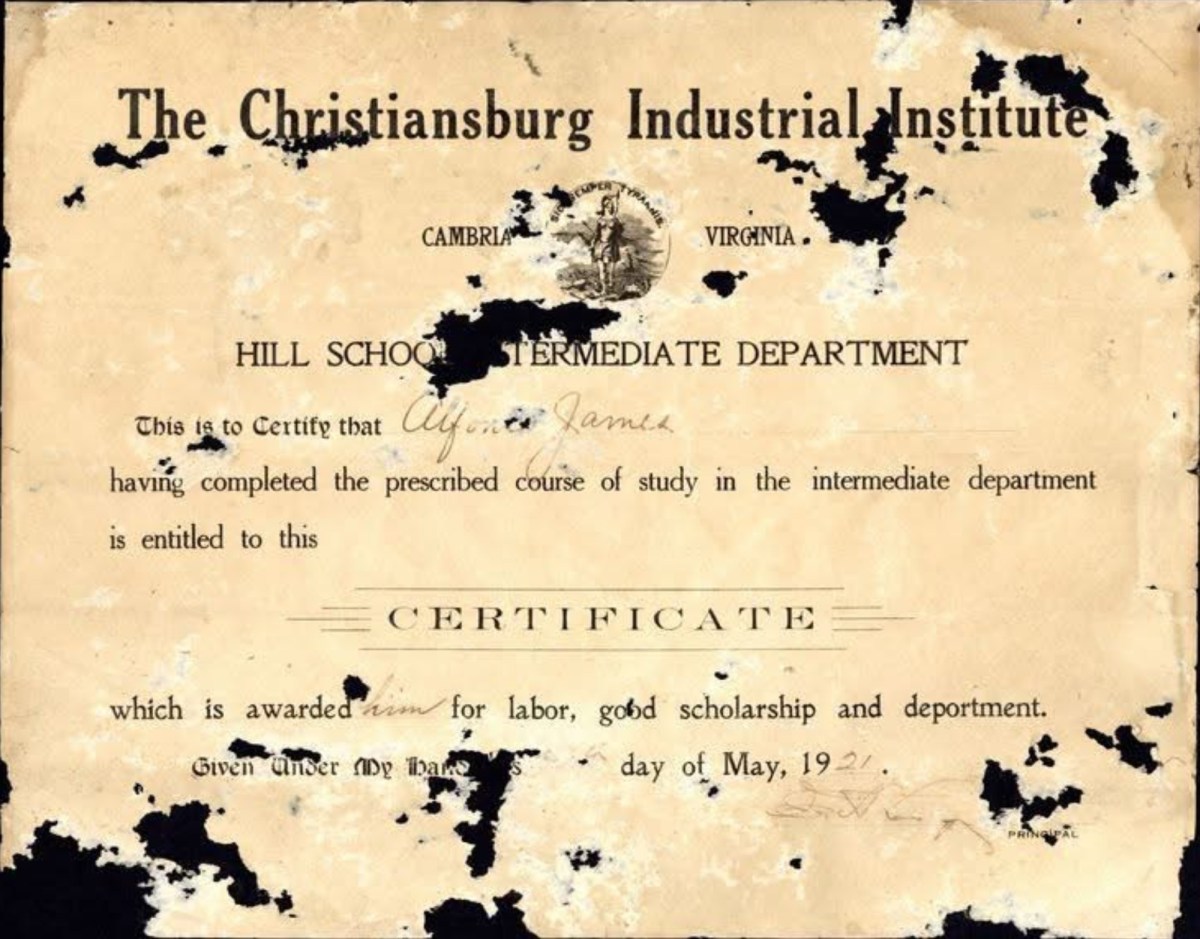
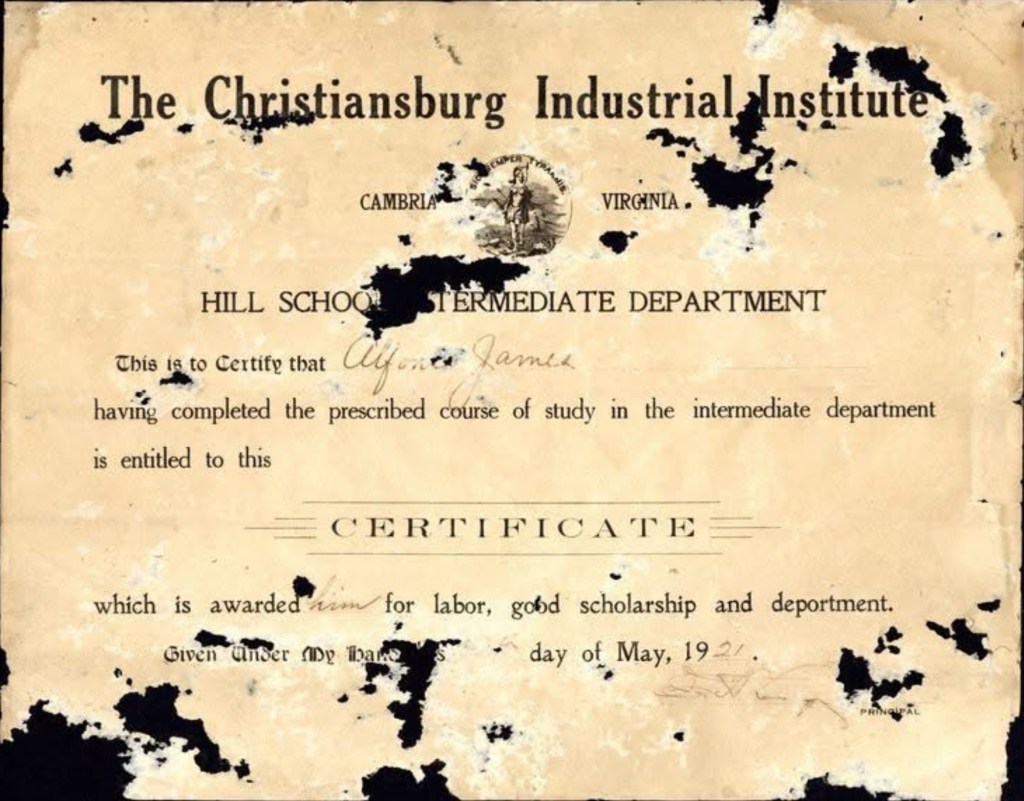
Alfonzo James, born in 1904, was the eldest of three children to John and Mary Campbell James. He graduated from the Hill School in Christiansburg in May 1921.

His father, John James, was born in Pennsylvania and, according to the 1900 U.S. Census, lived as a boarder with Principal Charles L. Marshall of the Christiansburg Institute at the age of 15. This household also included Edgar A. Long, his wife and daughter, Louis Brown (16 years old), and William Gray, a teacher.

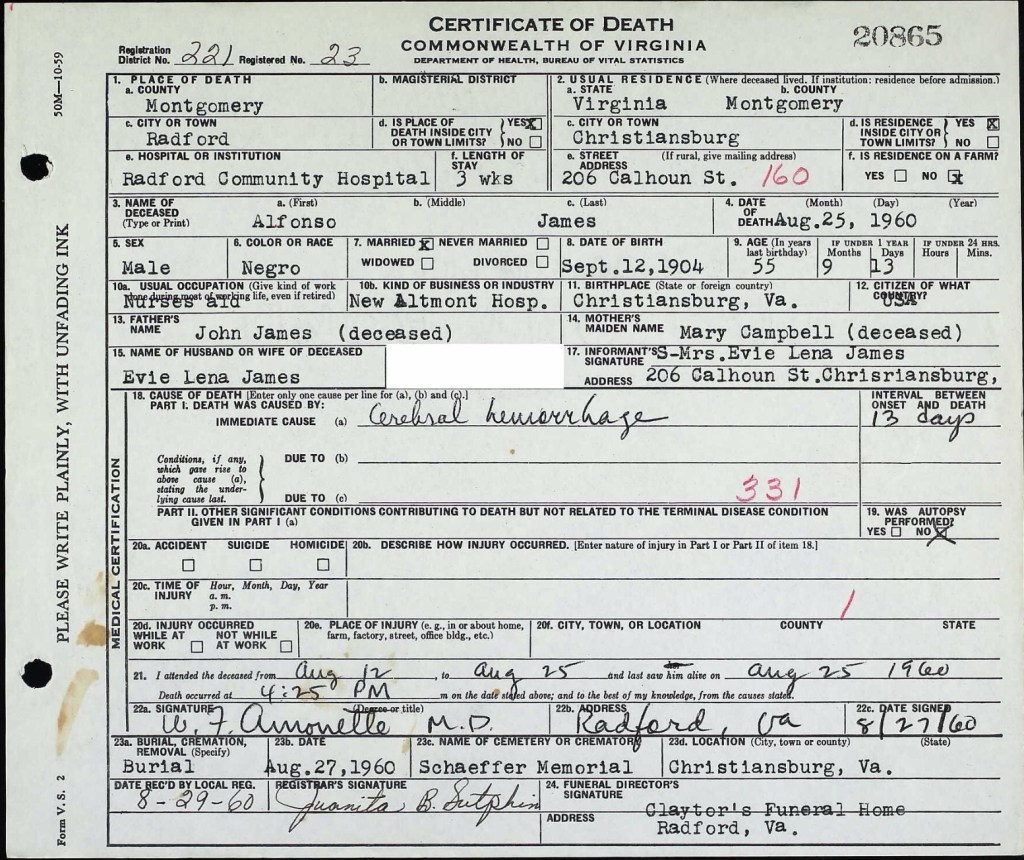
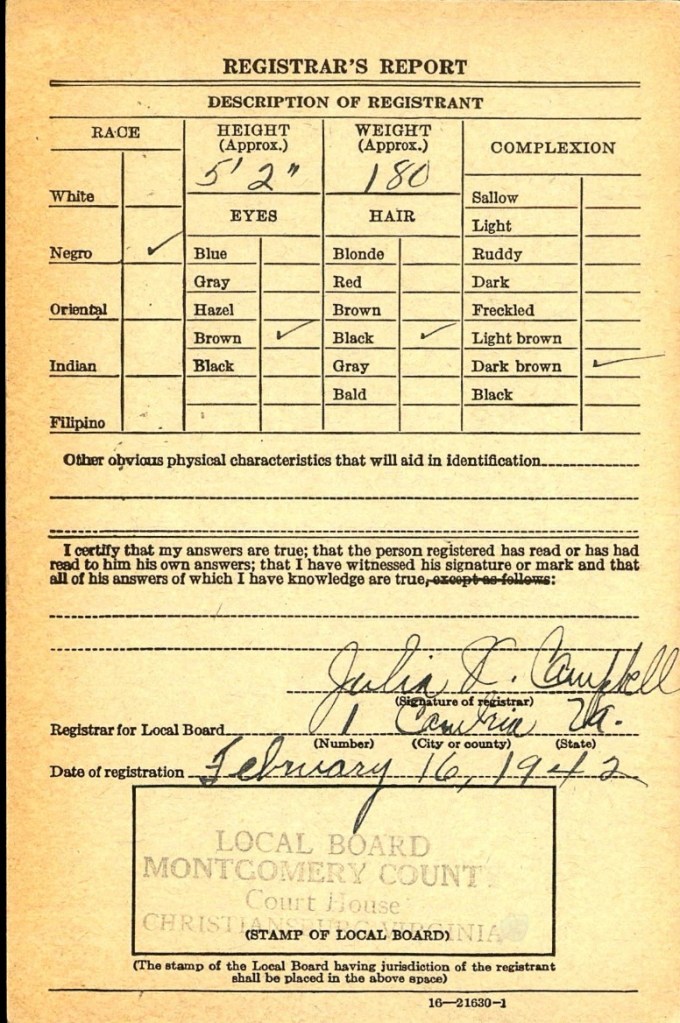
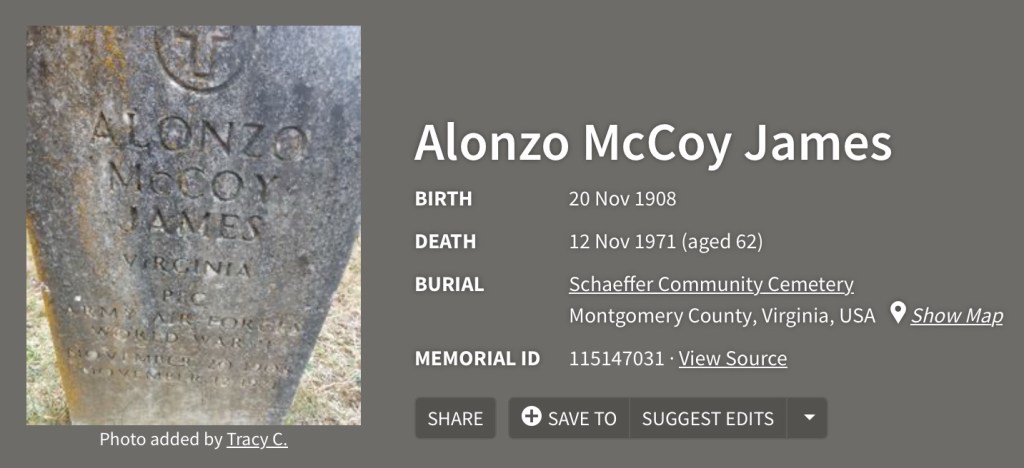
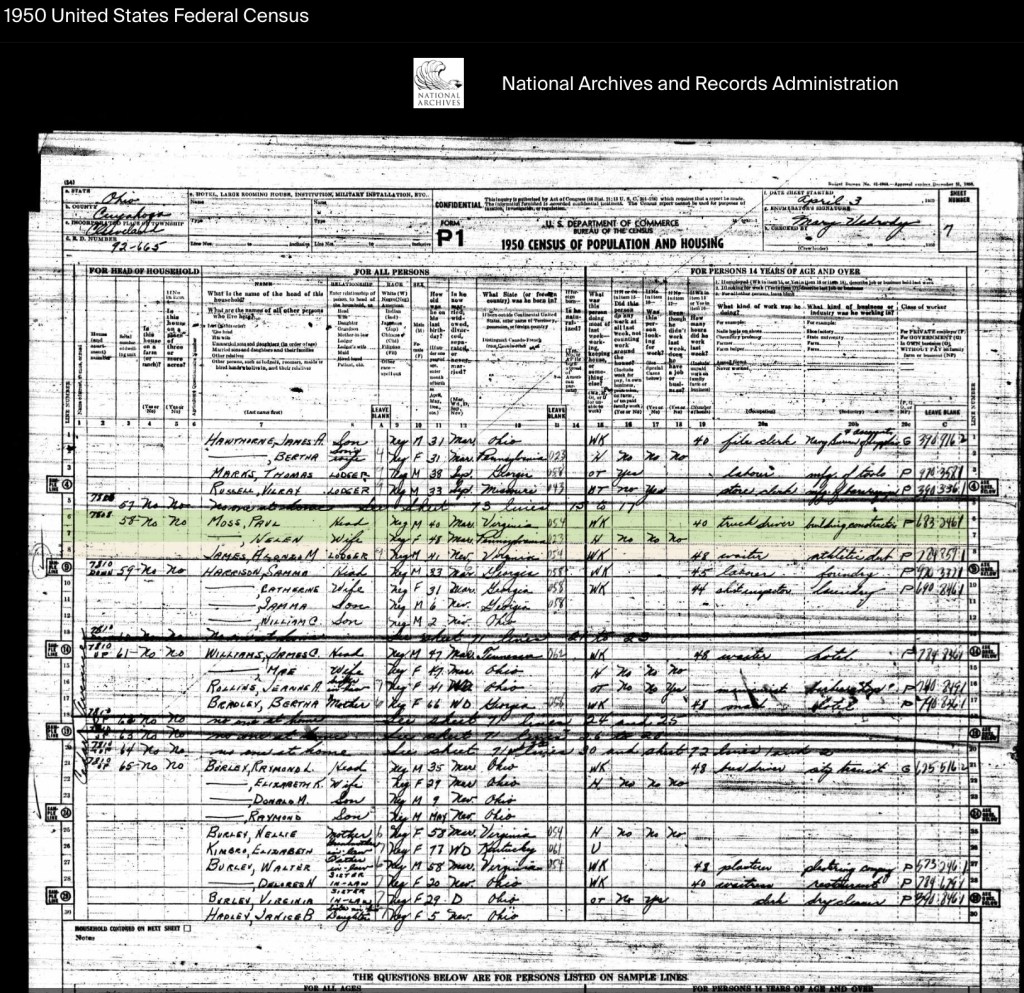
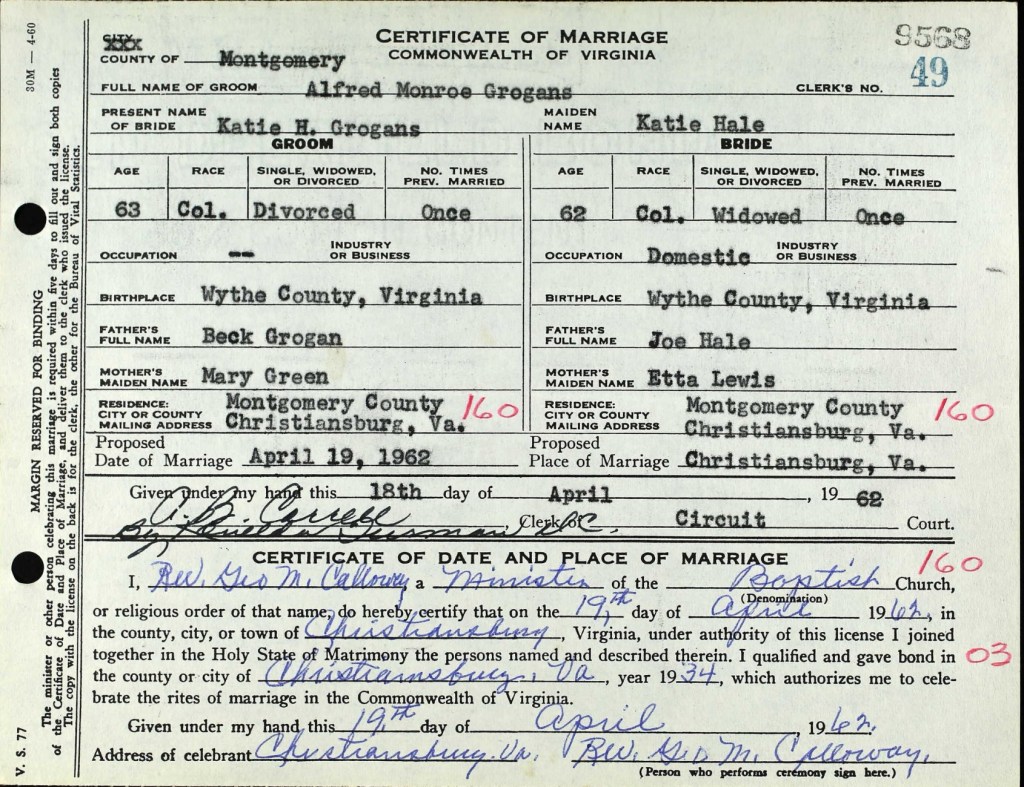
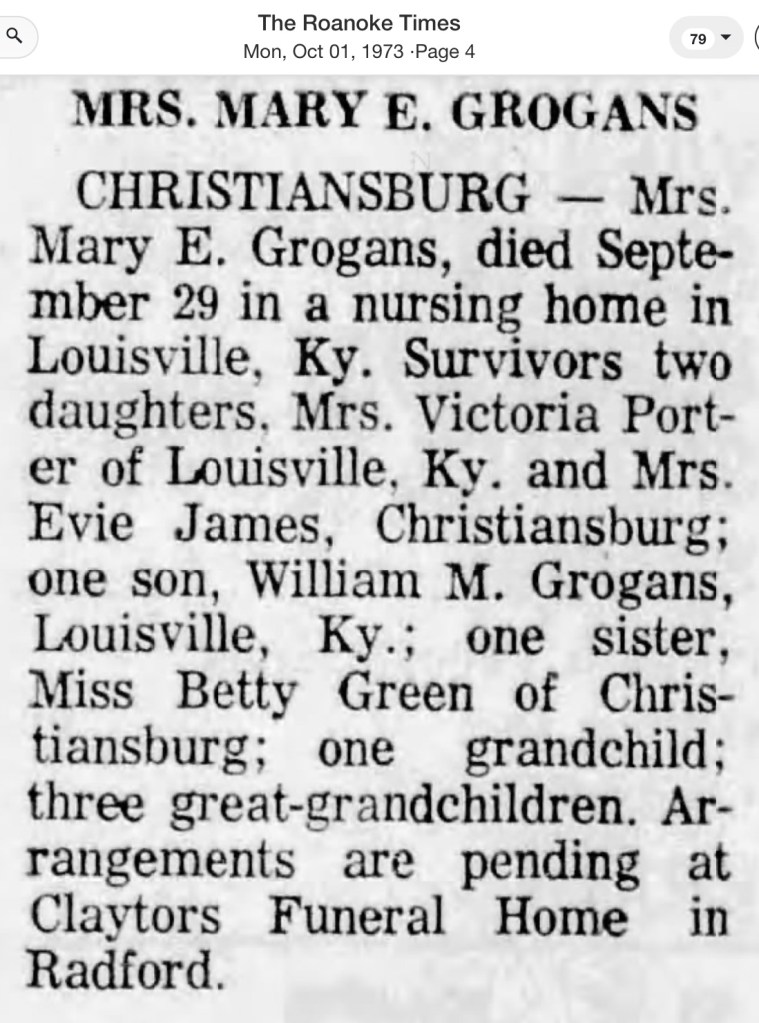
In the 1930 census, Alfonzo was recorded as a public school teacher. Over the years, he held various roles at the New Altamont Hospital in Christiansburg, working as a waiter and eventually as a nurse’s aide by the time of his passing in 1960. In 1946, he married Evie Lena Grogans. He was survived by his two brothers, Robert M. James and Alonzo McCoy James. Evie Grogans James passed away in 1977 and was a valued baker, recognized as Employee of the Month at Radford College.

Alfonzo’s diploma stands as a testament to his commitment to education and service. Preserving this certificate would honor his legacy and ensure that his contributions to the community are remembered.

Courtesy of Christiansburg Institute Digital Archive

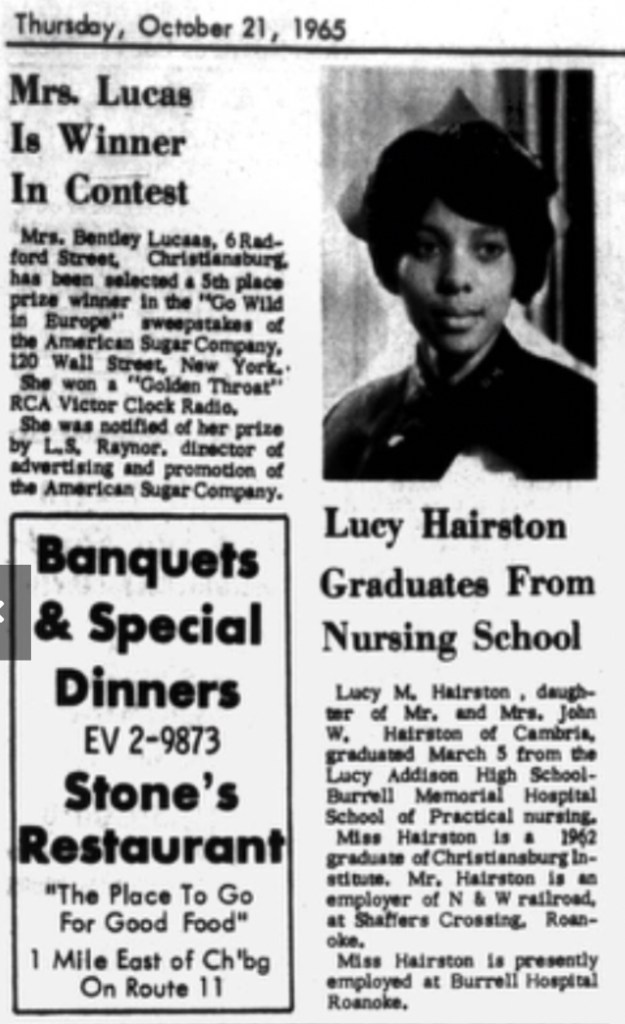
Graduation Series: Lucy Hairston Graduates from Nursing School (Lucy Maleta Hairston)

Montgomery News Messenger, 21 October 1965

“Lucy M. Hairston, daughter of Mr. And Mrs. John W. Hairston of Cambria, graduated March 5 from the Lucy Addison High School-Burrell Memorial Hospital School of Practical nursing.

Miss Hairston is a 1962 graduate of Christiansburg Institute. Mr. Hairston is an employer of N & W railroad, at Schaffer’s Crossing, Roanoke.

Miss Hairston is presently employed at Burrell Hospital”

Montgomery County (Va.) Cohabitation Register

Montgomery County (Va.) Cohabitation Register. This register records the name of the husband, his age, place of birth, residence, occupation, last owner, last owner’s residence, name of the wife, her age, place of birth, residence, last owner, last owner’s residence, name of children with the ages of each, and the date of commencement of cohabitation. Of note is the wide range of localities reported as the former slaves’ places of birth

Montgomery County (Va.) Register of Colored Persons Cohabiting Together as Husband and Wife, 1866 Feb. 27. N.p., 1866. Print

This document is very valuable and now that it has been digitized it is accessible. Please read the description and historical note by the Library of Virginia: (accessed 3 March 2024)

Direct Link to the pages as images and as a transcription

Montgomery County, Va Register of Colored Persons Cohabiting Together as Husband & Wife, 1866 Feb. 27 – citation and supporting information.

Description
Montgomery County (Va.) Register of Colored Persons of Montgomery County, State of Virginia, cohabiting together as Husband and Wife on 27th February 1866. Also commonly called Montgomery County (Va.) Cohabitation Register. This register records the name of the husband, his age, place of birth, residence, occupation, last owner, last owner’s residence, name of the wife, her age, place of birth, residence, last owner, last owner’s residence, name of children with the ages of each, and the date of commencement of cohabitation. Of note is the wide range of localities reported as the former slaves’ places of birth

Montgomery County (Va.) Register of Colored Persons Cohabiting Together as Husband and Wife, 1866 Feb. 27. N.p., 1866. Print.

Historical Note
 Note

Montgomery County was named for Richard Montgomery, who was killed in the American assault on Quebec late in 1775. It was formed from Fincastle County in 1776. Part of Botetourt County was added in 1789, and part of Pulaski County was added in 1842.

The Virginia legislature passed an act on 27 February 1866 to legalize the marriages of former slaves who had been cohabiting as of that date. See Virginia Acts of Assembly, 1866-1867, Chapter 18, An act to amend and re-enact the 14th section of chapter 108 of the Code of Virginia for 1860, in regard to registers of marriage; and to legalize the marriages of colored persons now cohabiting as husband and wife.

The federal Bureau of Refugees, Freedmen, and Abandoned Lands directed the Assistant Superintendents of the states to order the county clerks to make a registry of such cohabiting couples. See Circular No. 11, dated 19 March 1866, in Orders, Circulars, Circular Letters, and Letters of Instruction, vol. 2 (1866). Bureau of Refugees, Freedmen, and Abandoned Lands, Records of the Assistant Commissioner for the State of Virginia, 1865-1869. Miscellaneous reel 3880, Library of Virginia. National Archives microfilm M1048 (reel 41), Record Group 105.

Montgomery County (Va.) Register of Colored Persons Cohabiting Together as Husband and Wife, 1866 Feb. 27. N.p., 1866. Print.

The Dates for Odd Fellows Lodge in the New River Valley and Roanoke – Grand United Order of Odd Fellows

The founding of the GUOOF lodges in this middle Appalachian area began in the early 1870s. The list to date:


Other Fraternal Orders in the Area

The Christiansburg, St John’s, is a Masonic Lodge, #35 which still exists.

More information about the Blacksburg Hall

Facebook information about the Blacksburg Hall with three organizations in one place

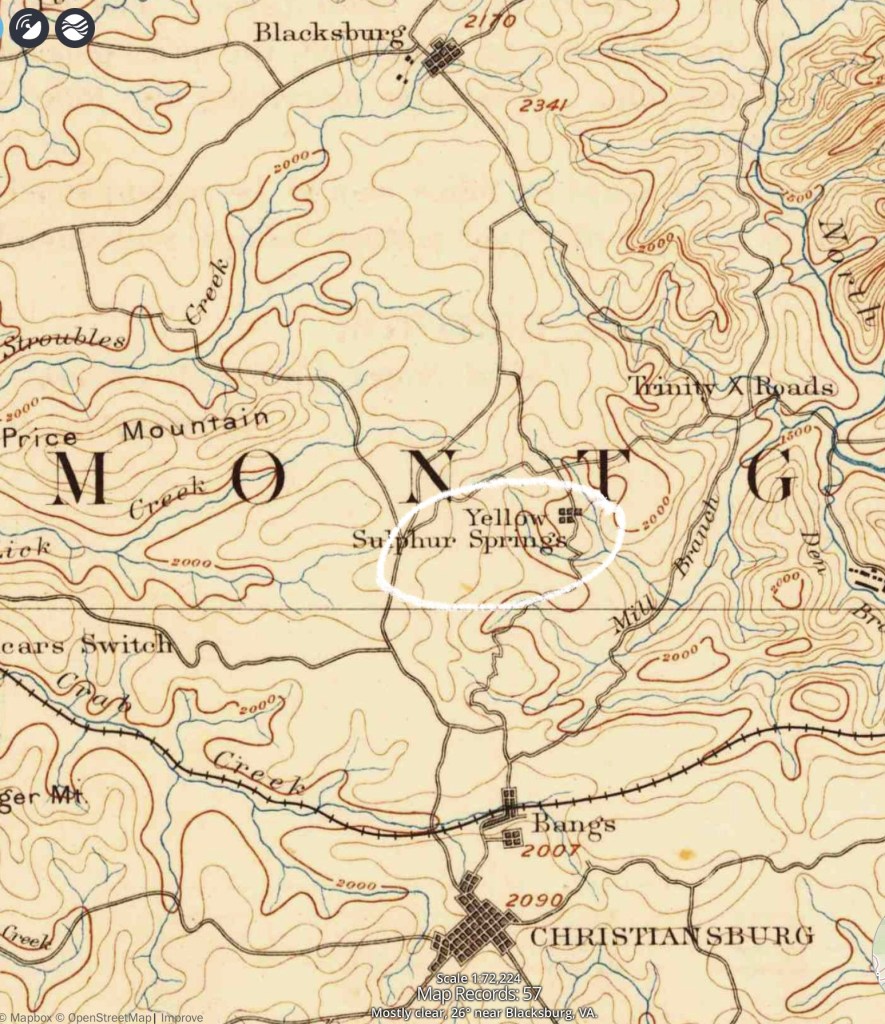
“America’s Greatest Colored Resort” – Yellow Sulphur Springs, Montgomery County

HISTORIC AMERICAN LANDSCAPES SURVEY National Park Service
U.S. Department of the Interior report.

https://www.loc.gov/item/va2213/

https://tile.loc.gov/storage-services/master/pnp/habshaer/va/va2200/va2213/data/va2213data.pdf

A consortium of African American investors bought Yellow Sulphur Springs in 1926 and entertained African American guests. These men were closely associated with Henry Street businesses in Roanoke, according to this report. The adventure was short-lived as it was sold in 1929.

Maps of the Springs in reference with Blacksburg and Christiansburg. USGS Historic Maps