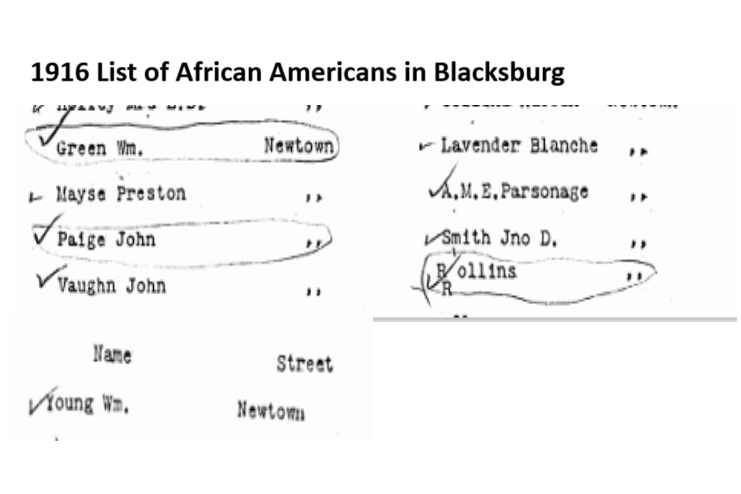
Noted as the Mayor’s Docket List of 1916 (origin unknown)
The following African Americans were listed in this list as living in Newtown (one word): William Green, Preston Mayse, John Paige, John Vaughn, William Young, Blanche Lavender, A.M.E. Parsonage, John D Smith and B. Rollins.
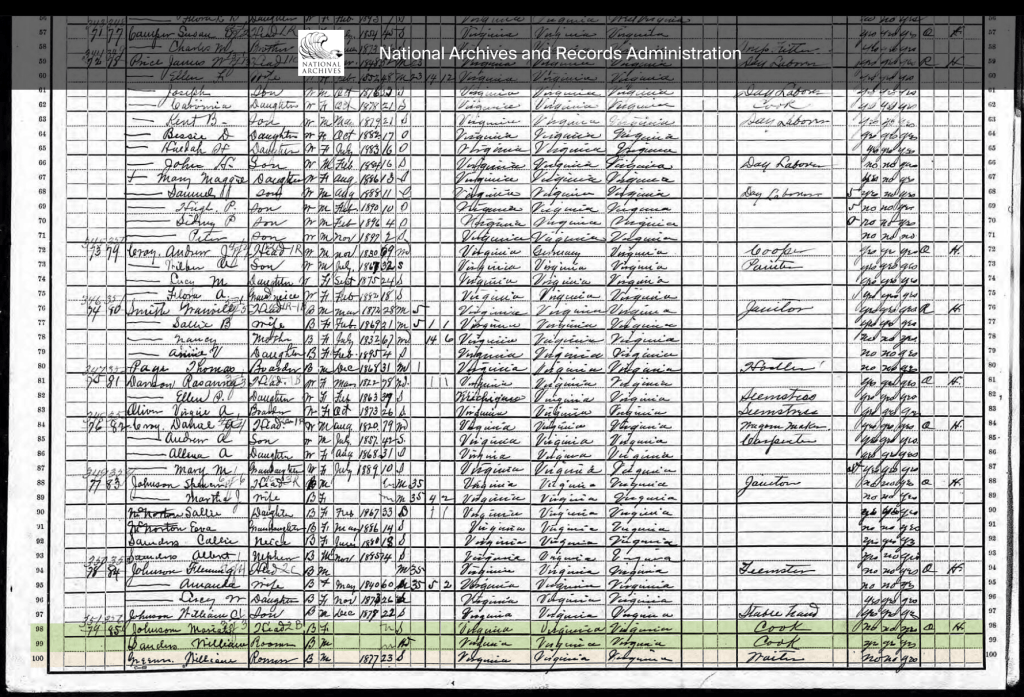
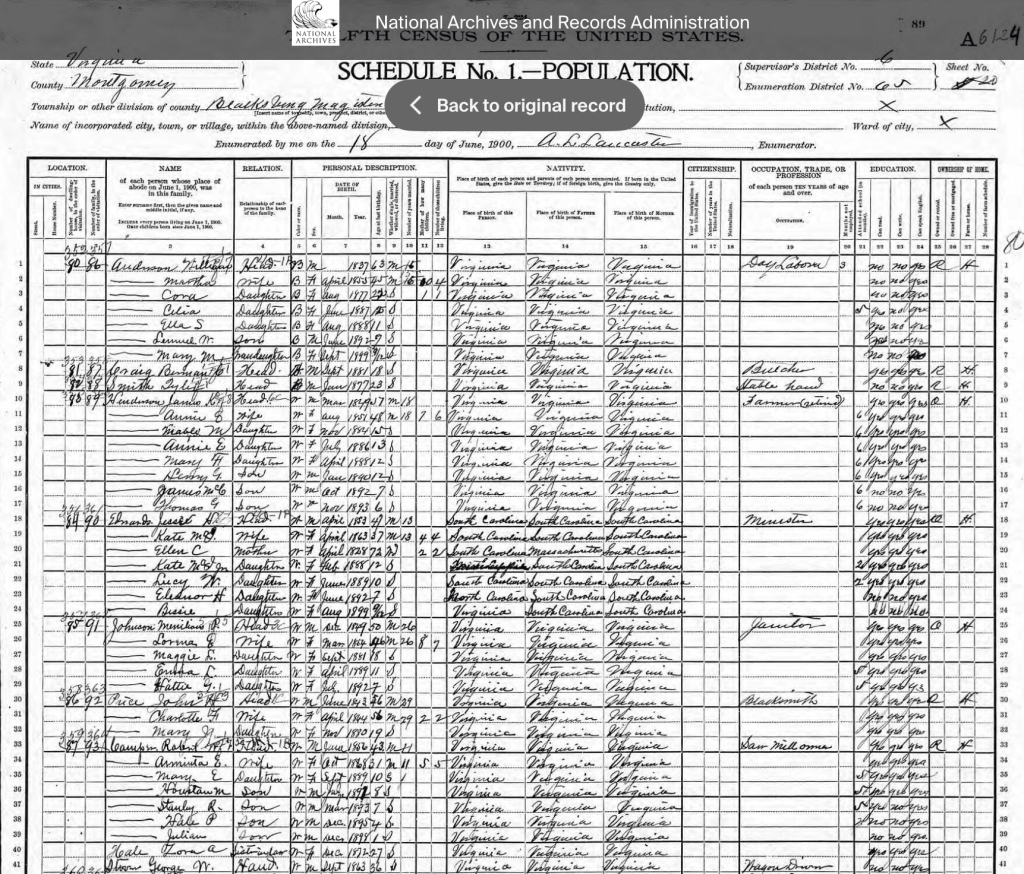
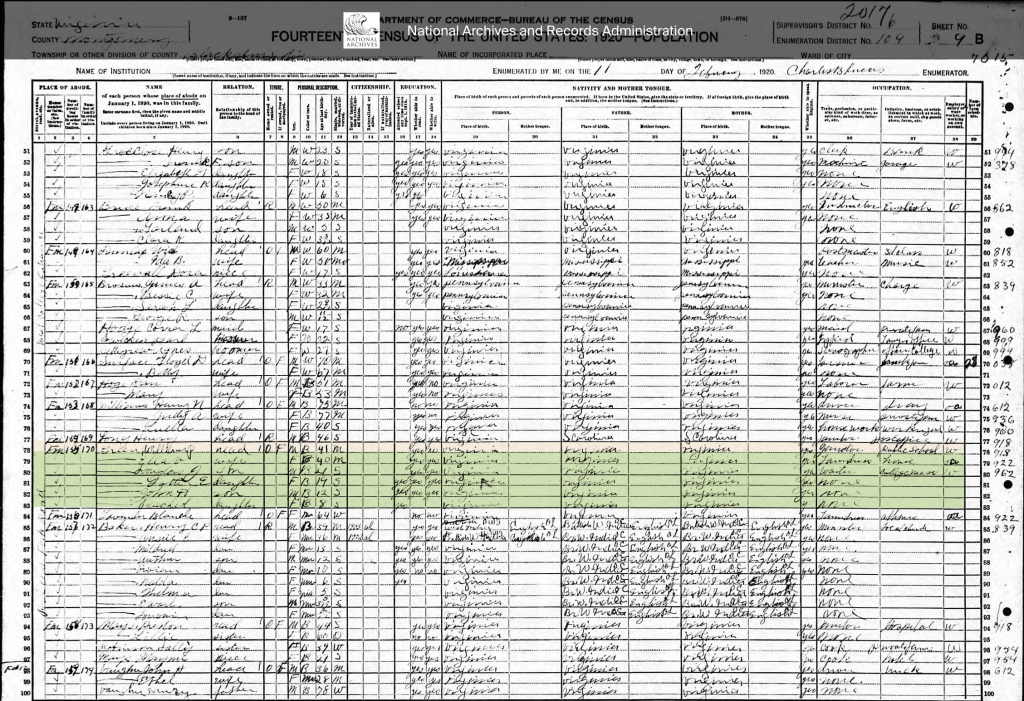
William Palmer Green, Preston Mays/Mayse, John Vaughn, William Young, Blanche Lavender, AME Parsonage, John D Smith and John B. Rollins are found in the various US Population Census.
1900 Population Census, National Archives & Records Administration1900 Population Census, National Archives & Records Administration1910 Population Census, National Archives & Records Administration1910 Population Census, National Archives & Records Administration1920 Population Census, National Archives & Records Administration1930 Population Census, National Archives & Records Administration1930 Population Census, National Archives & Records Administration1940 Population Census, National Archives & Records AdministrationEarly 1900 Map of Blacksburg and New Town
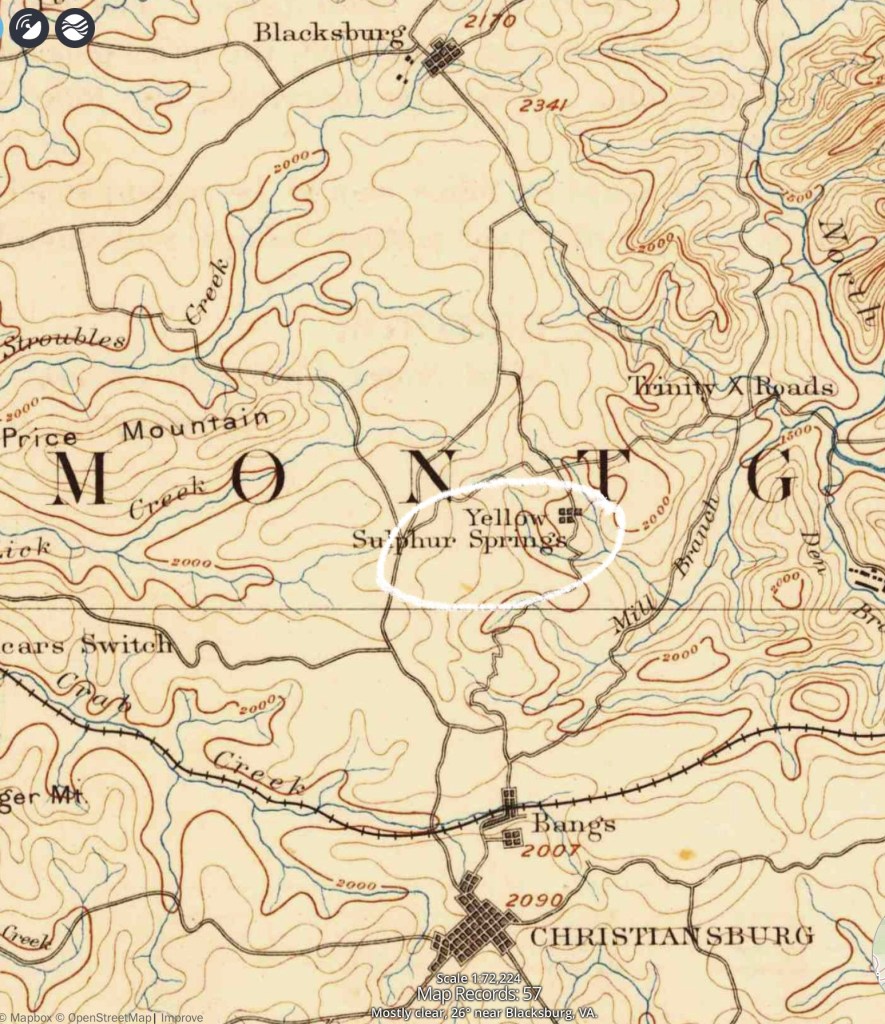
A consortium of African American investors bought Yellow Sulphur Springs in 1926 and entertained African American guests. These men were closely associated with Henry Street businesses in Roanoke, according to this report. The adventure was short-lived as it was sold in 1929.
Maps of the Springs in reference with Blacksburg and Christiansburg. USGS Historic Maps
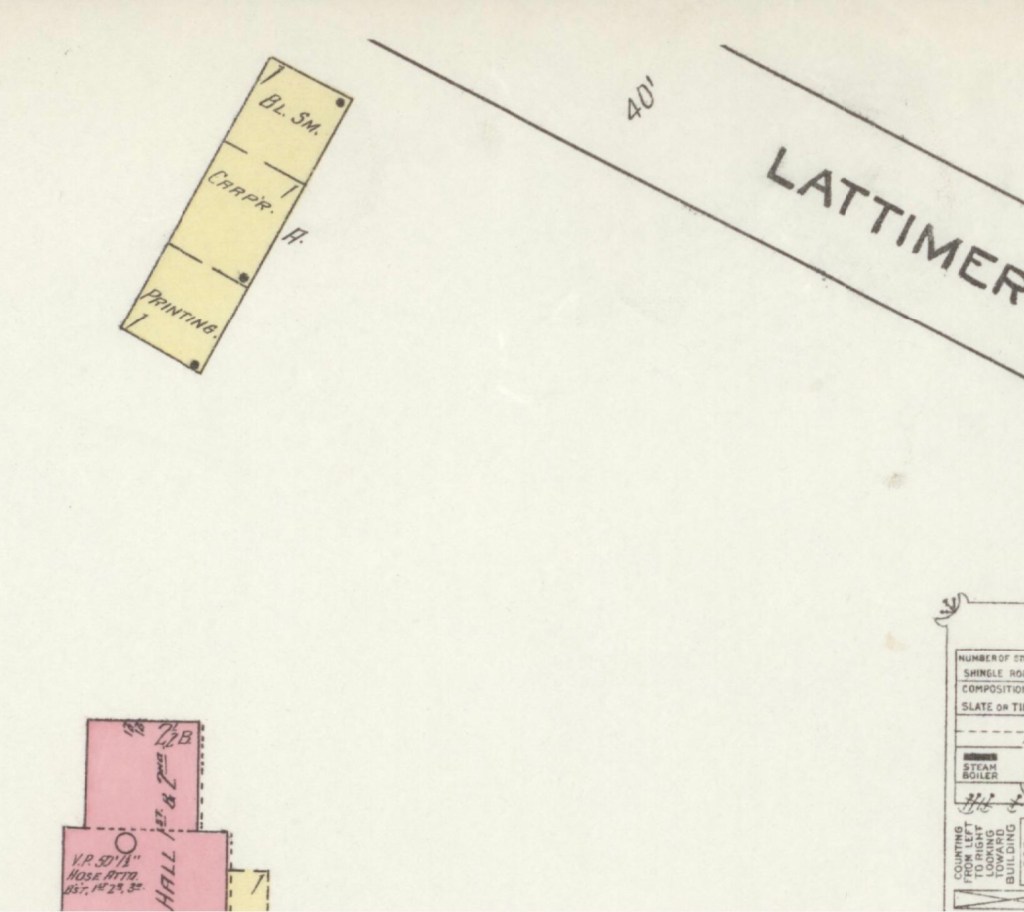
The Sanborn Fire Insurance maps are often the only early glimpse of buildings in rural towns over time. Christiansburg Industrial Institute moved from the Zion Hill location to the Lattimer Plantation site, north west of Christiansburg, at the turn of the 20th Century. This Sanborn Fire Insurance Map from Christiansburg, Montgomery County, Virginia was published by the Sanborn Map Company, dated Sep, 1913. The key to the maps is at the end.
The map is of Christiansburg Industrial Institute, situated north west of Cambria and north of Christiansburg courthouse. Note that frame constructed buildings are coded yellow and red for the solid brick building. The Baily Morris Building which housed the girls dorm, assembly hall, dinning hall and kitchen (close-up below) is heated by steam and lighted by electricity.
“Baily-Morris” Building
The Morris Hall Boys’ Dorm is both red and yellow, denoting built of a combination of building materials. The building is heated by hot water and lighted by electricity. Note that the buildings were supplied with water by 2,500 ft of pipes connected to the 10K gal water tank on the hill. The tank is filled by a Worthington Pump, moving water from a spring.
The girls and boys dorms were named for two Friends’ of the Freedmen of PA, Elliston P. Morris and Joshua L. Baily. They also donated money to construct the water system which was installed in 1907, before either Christiansburg or Blacksburg had a community water system. (A Vision of Education, Selected Writings of Edgar A. Long, Anna Fariello, Ed. Christiansburg Institute, Inc. 2021, pg 86,)
The Lattimer Mansion House, wood framed, was heated by stove and not connected to the water supply. The house was used as classrooms. Note the printing, carpenter and black smith shop close to the entrance road.
1913 Hill School & Schaeffer Memorial Baptist Church
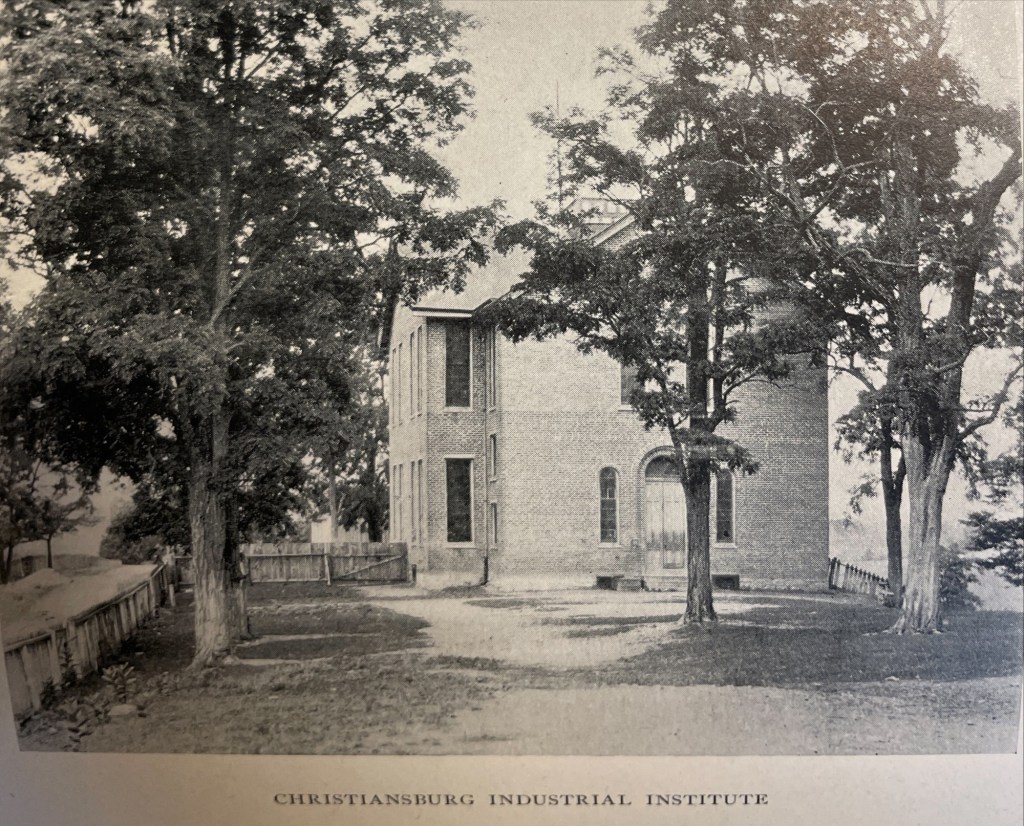
This map is of Zion Hill which is located on the ridge (now High Street) between Cambria and Christiansburg. The brick (red) “Public School” housed the Christiansburg Industrial Institute before that secondary school moved to the Lattimer Plantation property by the turn of 20th century. This brick school, built by 1885, was converted to a primary school for African American children after CII moved. As noted by the Sanborn map, the building was heated by stoves and lighted by electricity.
Image of the Hill School from The Story of a Consecrated Life, Commemorative of Rev. Charles S. Schaeffer by CH Harrison, 1900. High Street is visible.
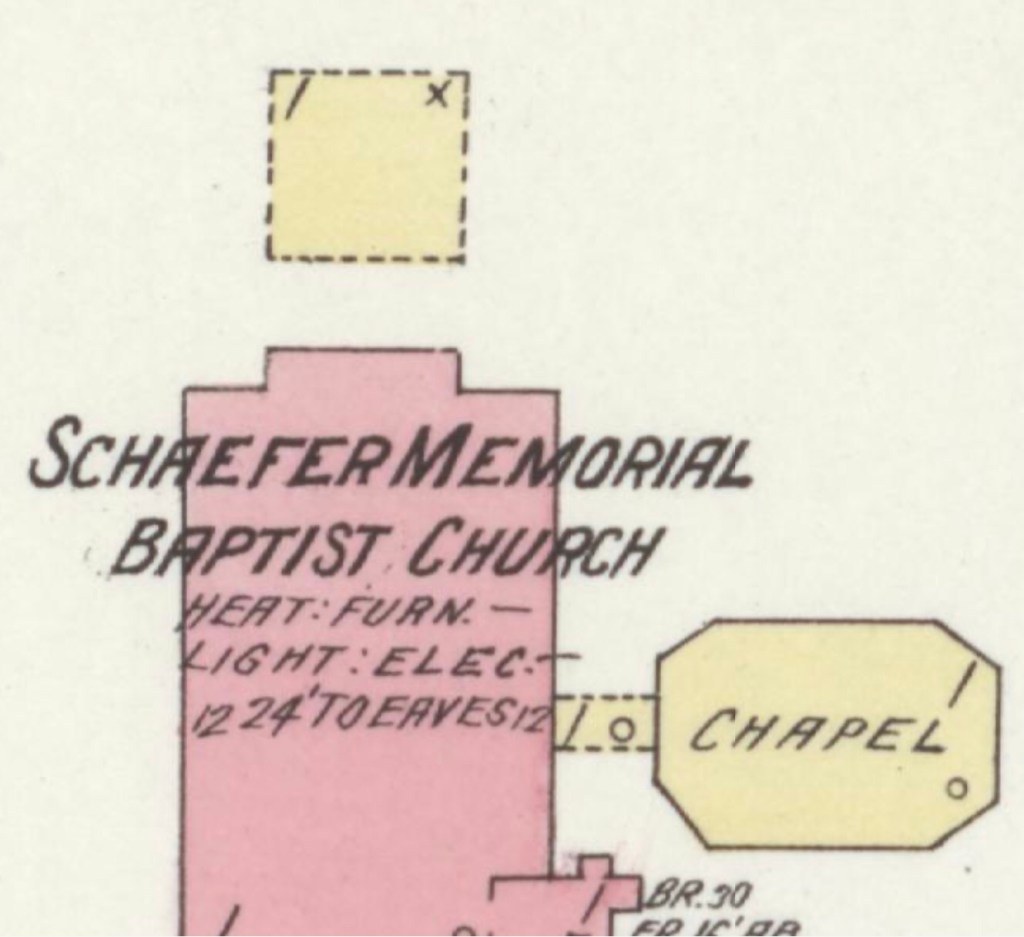
The Schaeffer Memorial Baptist Church is also of brick and built by 1885. Charles S Schaeffer’s memorial brass plaque were unveiled 1 October 1899, after he died in May of that same year. Note the frame chapel to the left (east) of the brick structure.
Image of Schaeffer Memorial Baptist Church from The Story of a Consecrated Life, Commemorative of Rev. Charles S. Schaeffer by CH Harrison, 1900. High Street is visible in the foreground.
On the Sanborn map, note the small frame, 1 story building behind the church? This may be the first school/church building on Zion Hill. The deed (DB S, pg 12, Oct 1868) and Harrison, 1900 * note the existence of this building. The brick school on the 1913 Sanborn map was the third version of this school at this site. The second school on Zion Hill was a 2 story & frame building, used between 1974 and 1885. (The rented Campbell house was the first school but it was not located on Zion Hill.)*
The image of the small school/meeting house shows a one story frame building with hip-roof and double stove-pipes. The dressed limestone block foundation was typical in this area and seen on buildings dating from early 1800s to the turn of the 20th century.
Image of the first school house on Zion Hill from The Story of a Consecrated Life, Commemorative of Rev. Charles S. Schaeffer by CH Harrison, 1900. High Street is visible in the foreground.
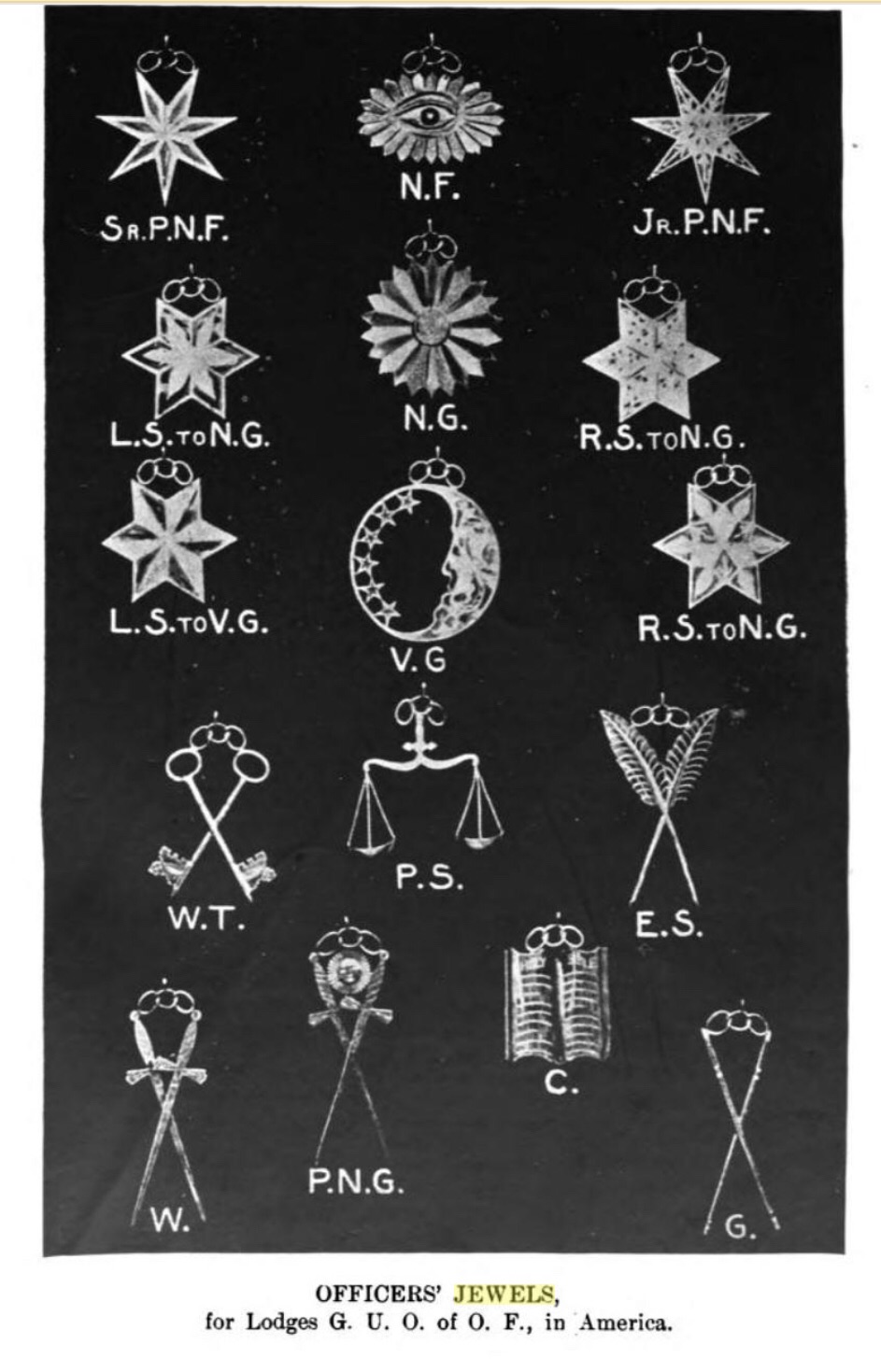
Past Noble Grand – Golden (heart in hand, crosses swords)
Noble Father – Excelsior, (Seeing-Eye in the night).
Past Noble Father (Permanent Noble Father), (7-pointed star).
Understanding the Degrees, Titles and Symbols on the District Level
Grand Treasurer (crossed keys)
Grand Secretary – (crossed quill)
Warden (crossed axes)
Guards (crossed sword)
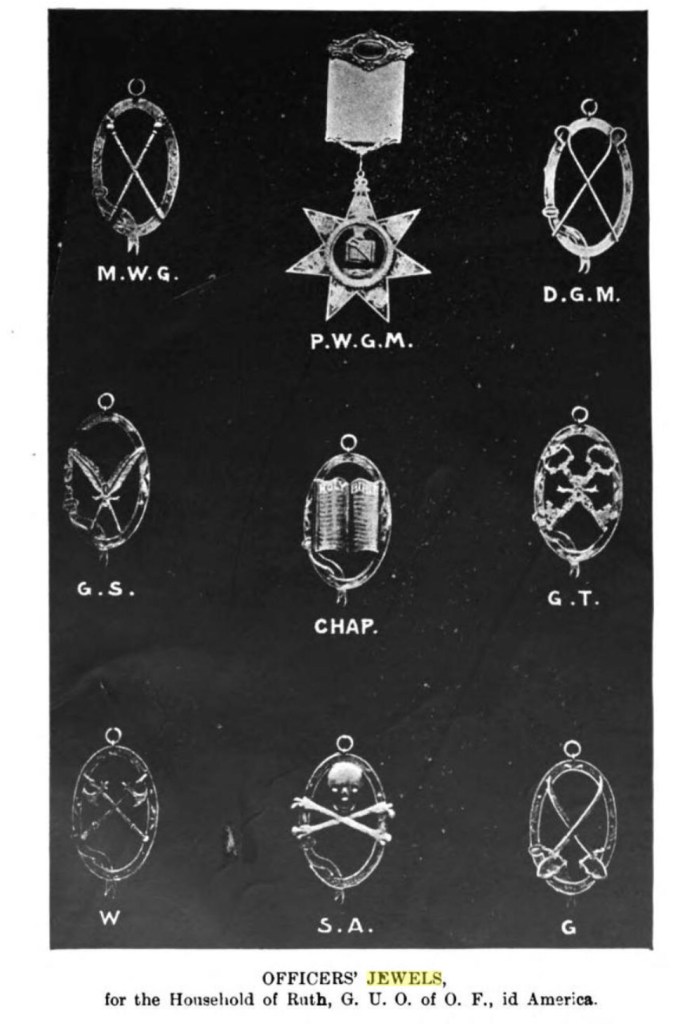
S.A. (skull & cross bones)
Master Worthy Grand (crossed batons)
District Grand Master – (crossed shepherd hooks)
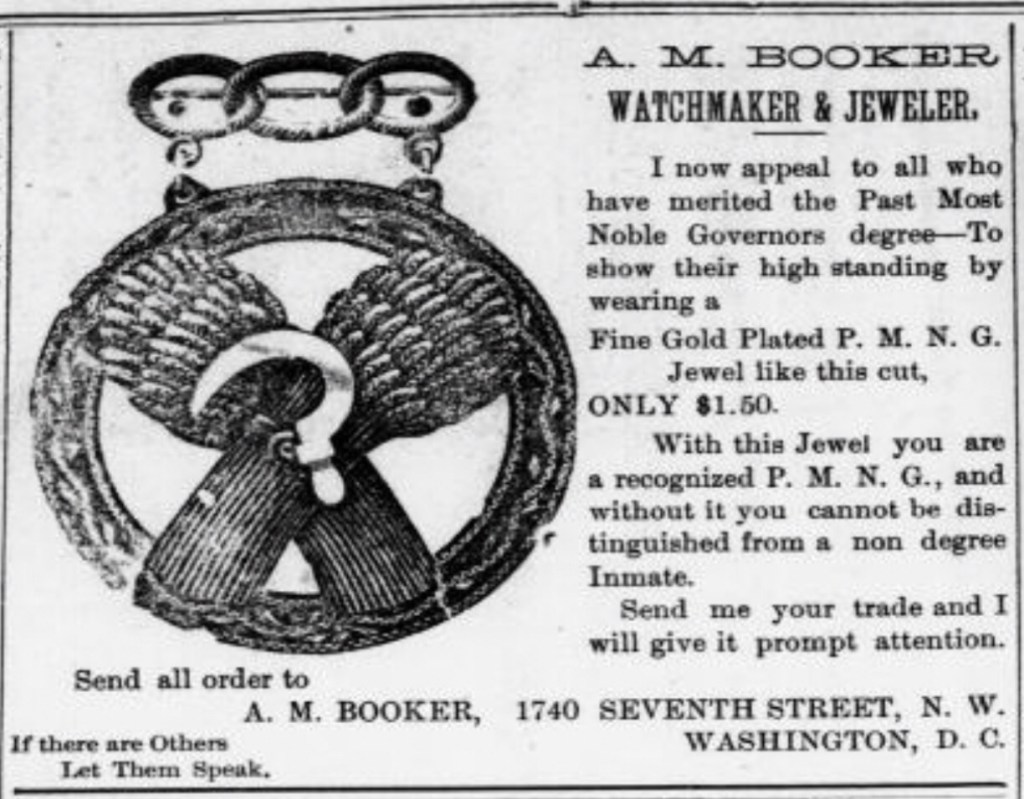
Past Worthy Grand Master – wheat & scythe and 7-pointed star
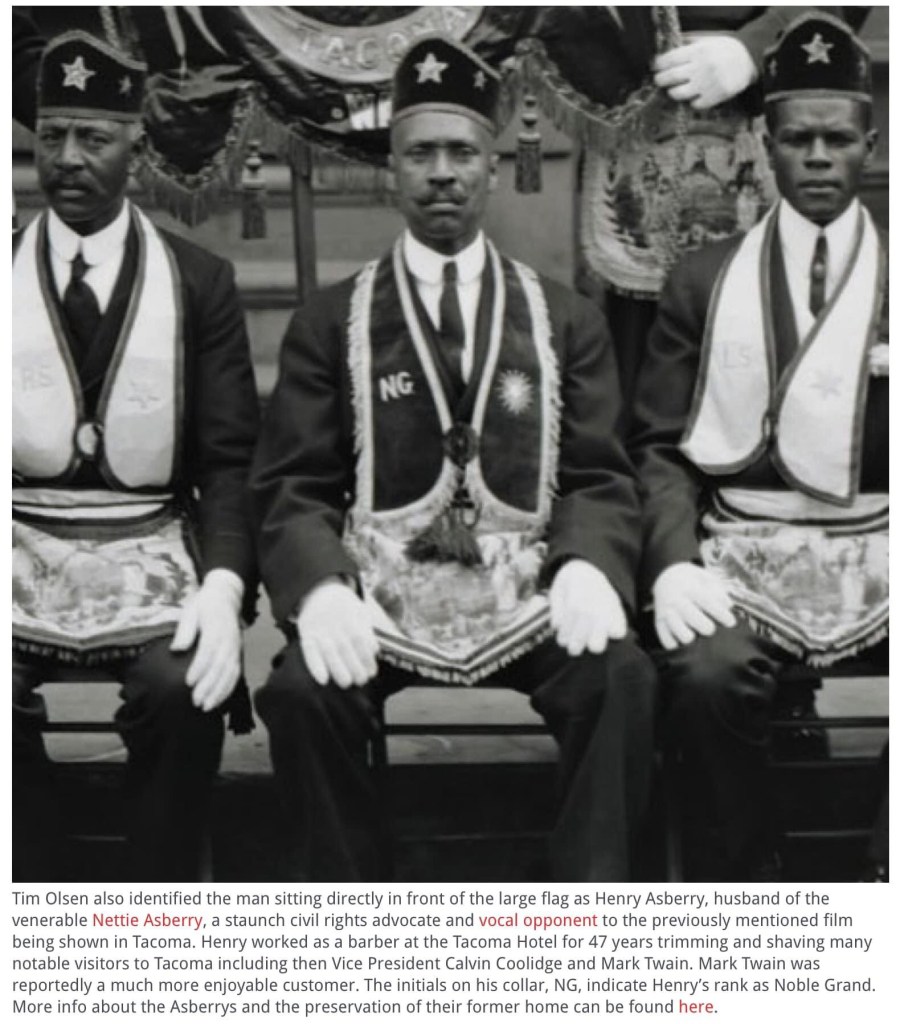
The structure of Grand United Order of Odd Fellows is reflected in the regalia worn by the members. This is an amazing image that was posted in the article from Tacoma, Washington, a long way from rural Blacksburg of the time. But the collars, staffs, swords and hats plus the proximity of the men to the Noble Grand leader provide a glimpse of the hierarchy. Note the two men on both sides of the GN. LS and RS stand for Left and Right Supporter. Grit City Magazine, Feb 2023
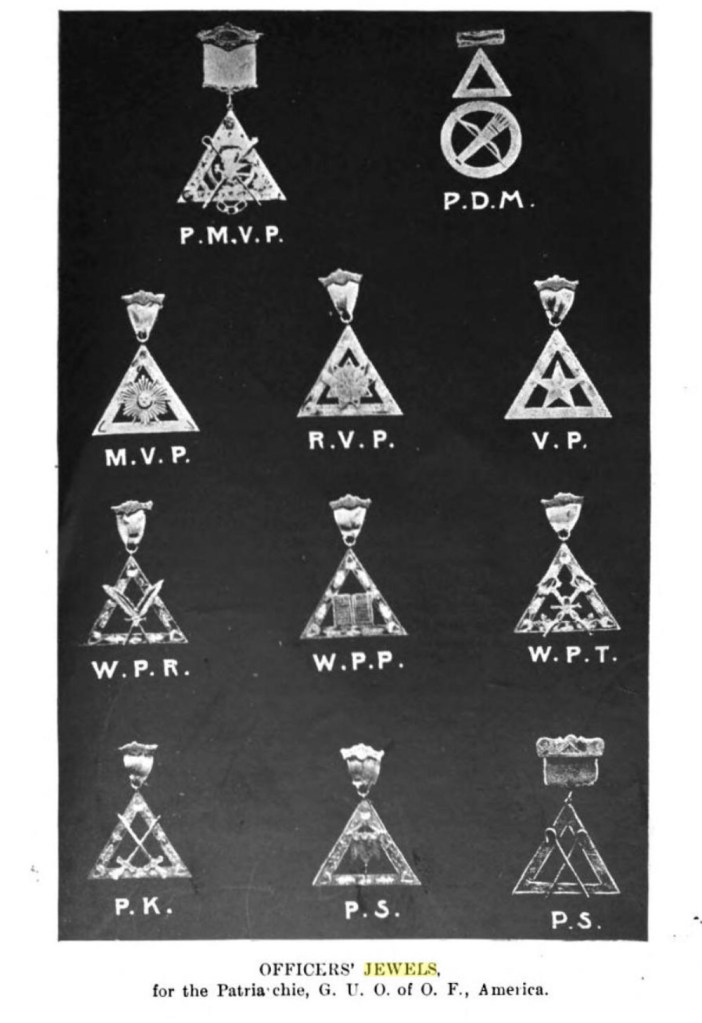
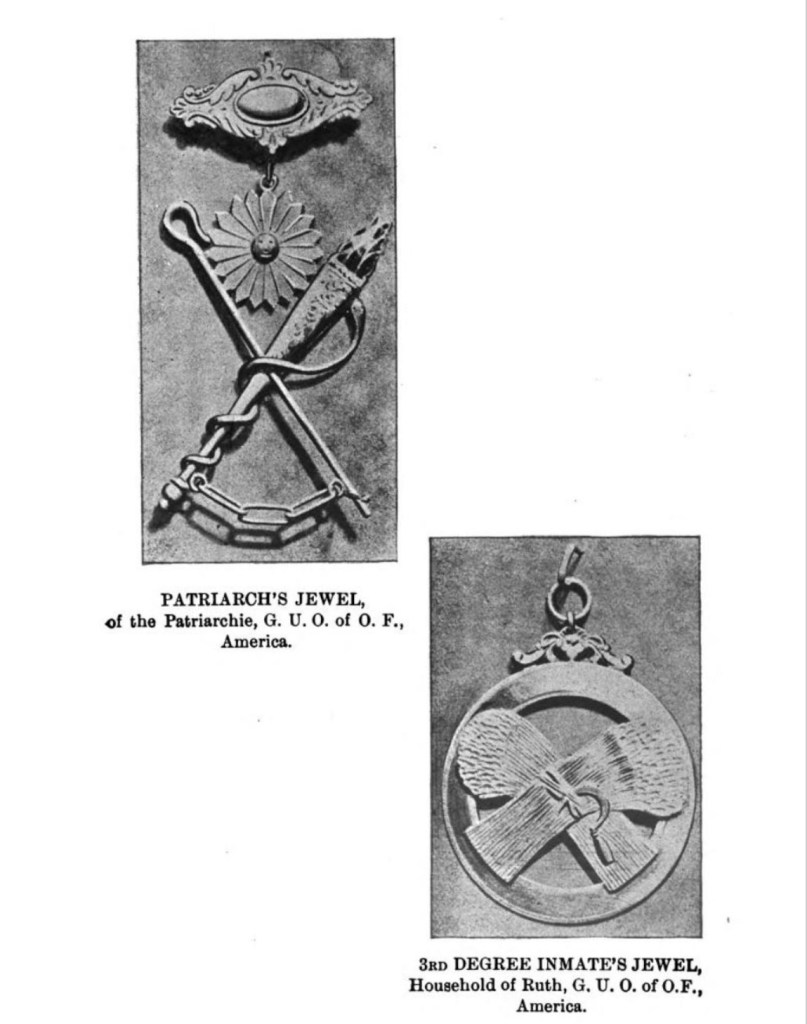
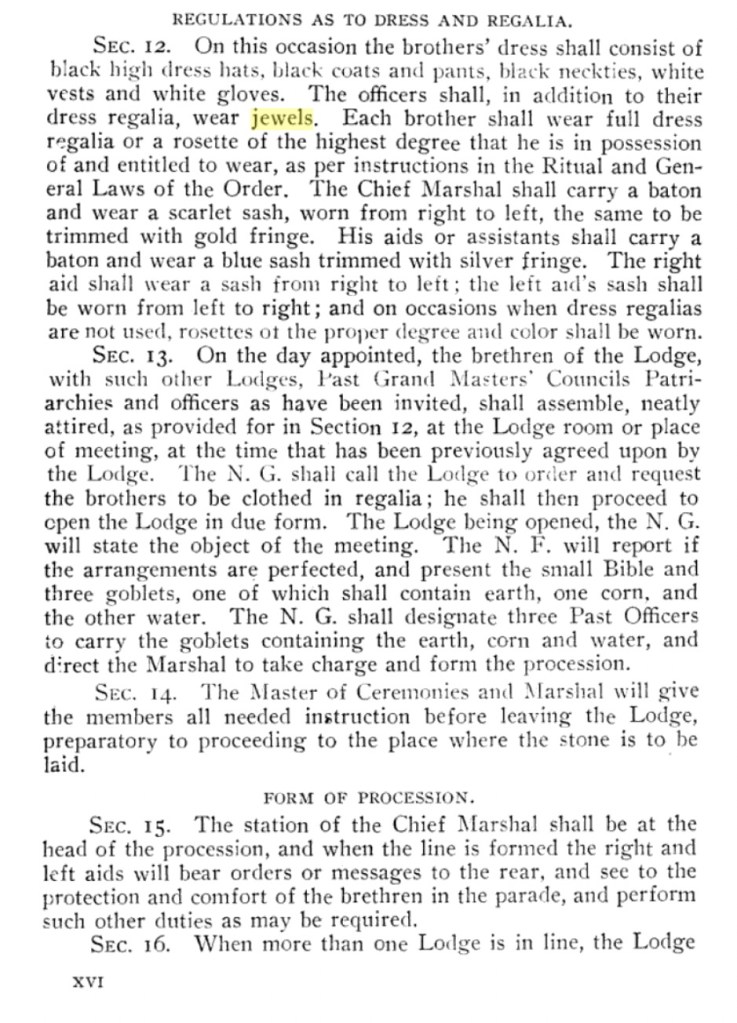
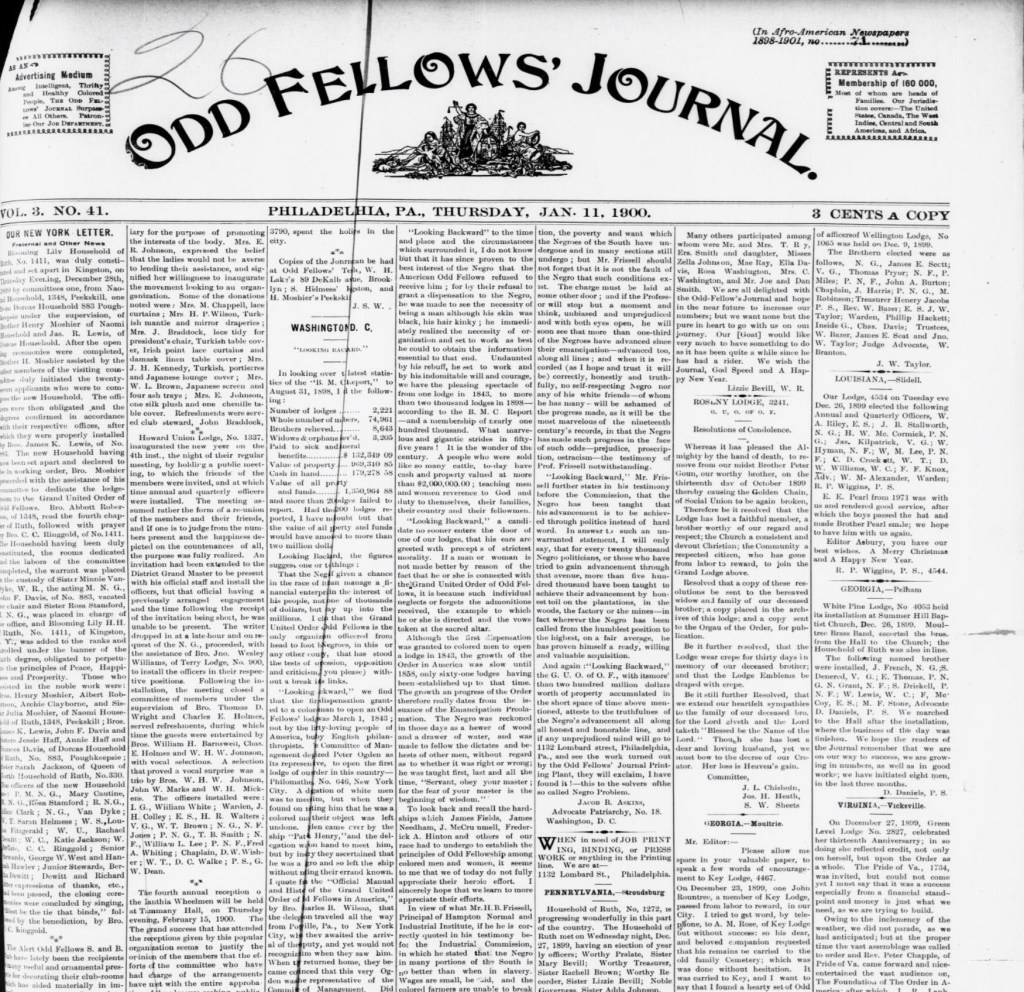
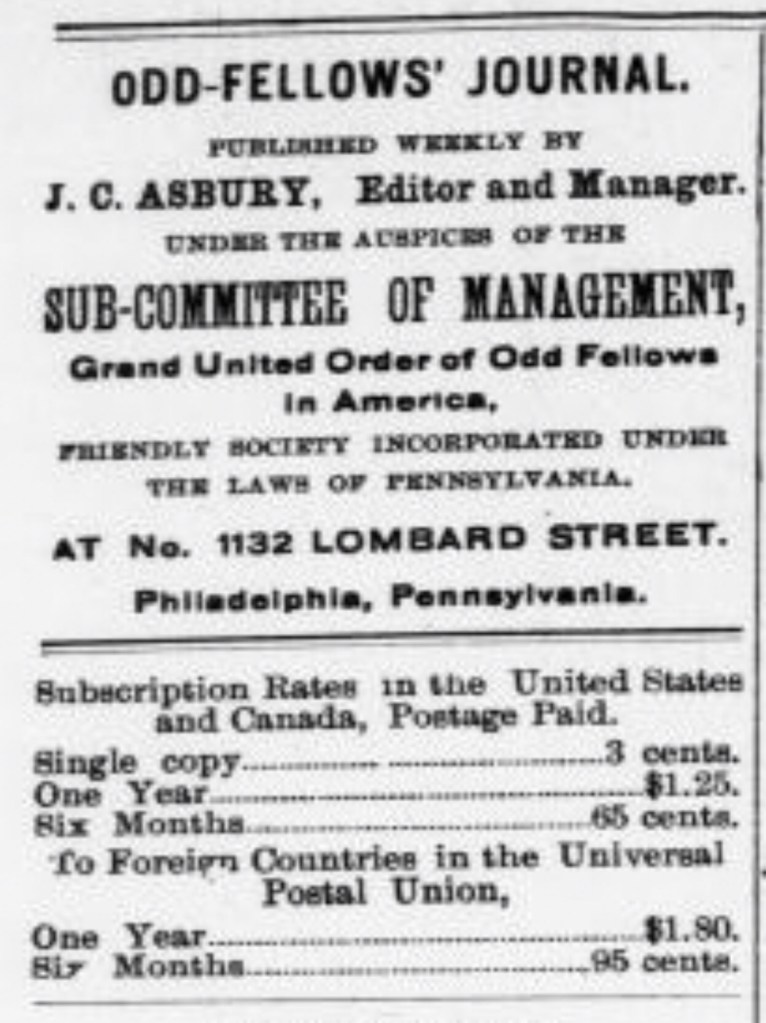
More Regalia Images from the Odd Fellows Journal, 1900.
Asbury, J. C. Odd Fellows’ Journal. (Philadelphia, Pa.), Vol. 3, No. 41, Ed. 1 Thursday, January 11, 1900; Philadelphia, Pennsylvania. (https://texashistory.unt.edu/ark:/67531/metapth523664/: accessed January 16, 2024),University of North Texas Libraries.
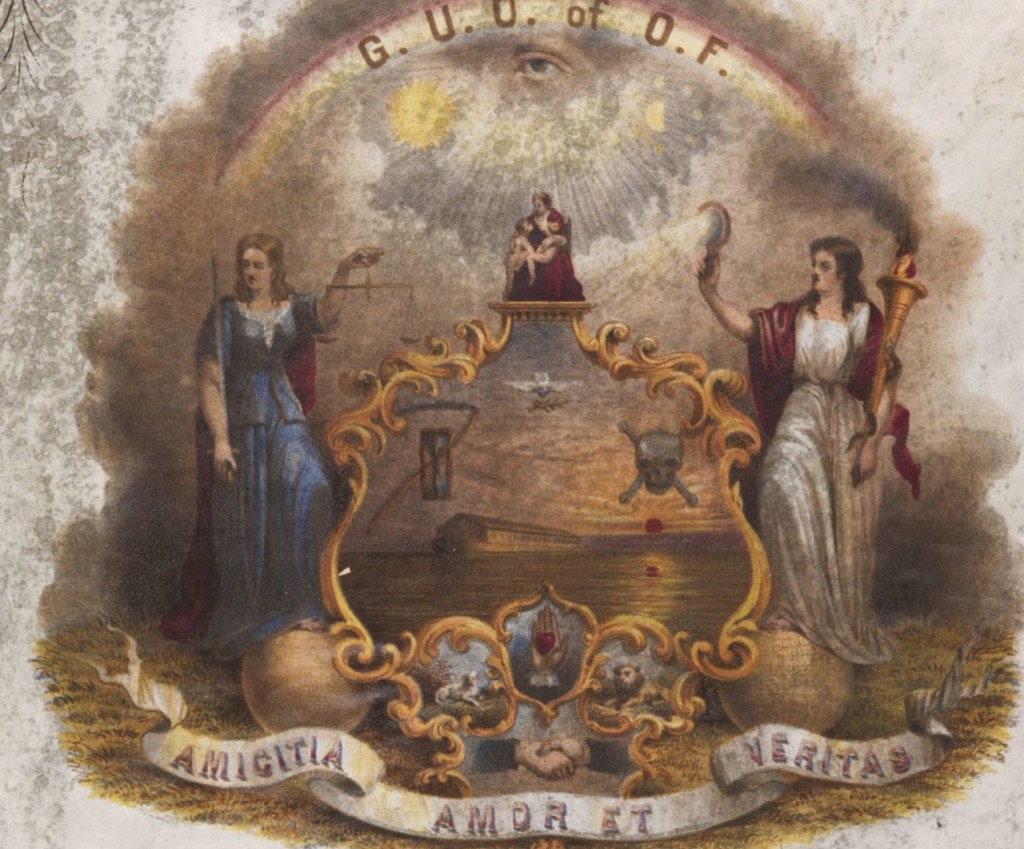
Iconography
Iconography that is associate with GUOOF is featured and explained by The Library of Philadelphia based on the 1843 chromolithograph created by D.B. Bowser (1820-1900), an African American artist. The symbols used include: “sickle & hourglass, dove, skull & crossbones, lamb, heart-in-hand, lion, seeing eye in the night sky and under a rainbow.”
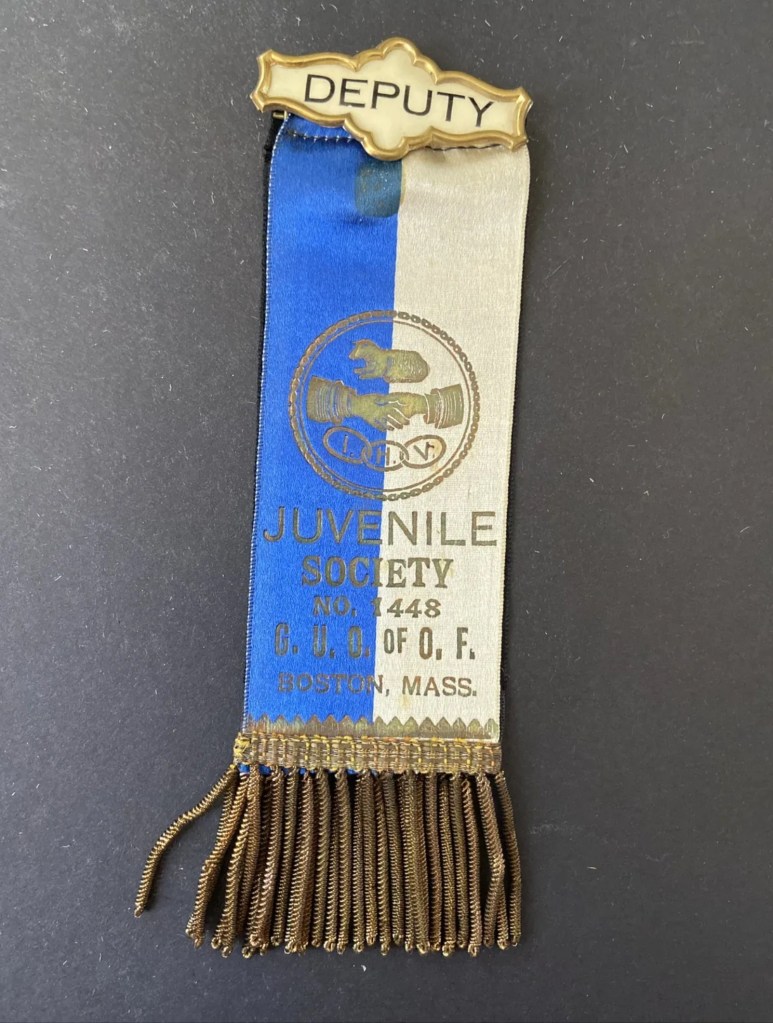
Juvenile Society, the Juvenile Branch of Odd Fellows.
The Grand United Order of Odd Fellows and the House of Ruth created the Juvenile Branch on September 13, 1897 for all children from age 3 to 16. Their parents did not have to be a member of the order. In support of families, the 4th Sunday of September was designated “Children’s Day.” The Juvenile Branch became known as the Juvenile Society.
Courtesy of Scottish Rite MuseumClip for a badge, frontBack
Independent Order of St Luke
The St. Luke and Odd Fellows Hall, located on Gilbert Street in Blacksburg, stands as the sole remaining historic building from the once vibrant African American neighborhood of New Town. With two floors, it hosted both sacred ceremonies and administrative functions, contrary to the misconception that ceremonies were exclusive to the second floor. The Rules & Regulations book includes a diagram detailing the assigned places for desks and officers, clarifying this aspect.
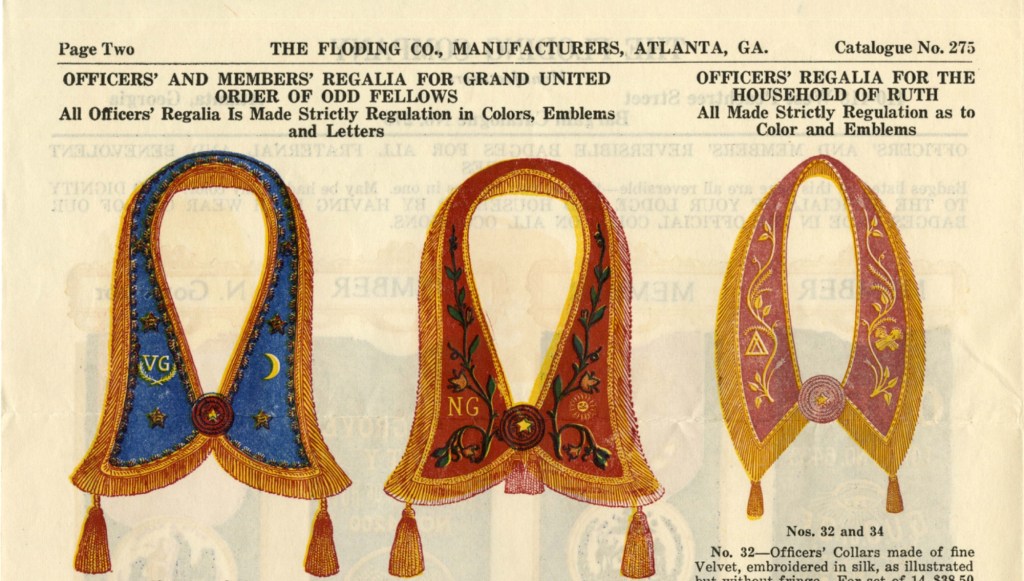
Floding Company Manufactures Catalog and the KKK Uniform Manufacture
Courtesy of Virginia Tech Special Collections & University Archives
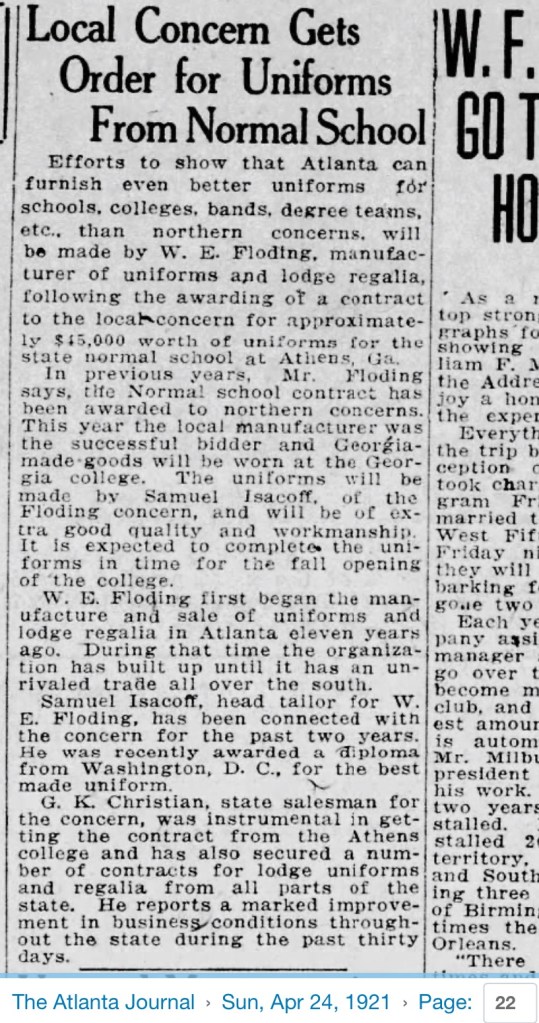
From 1875 to 1964, the Floding Regalia Company, based in Atlanta, produced regalia. Owned by W.E. Floding, the company supplied regalia to African American fraternal organizations and secretive costume to, most likely, the KKK.
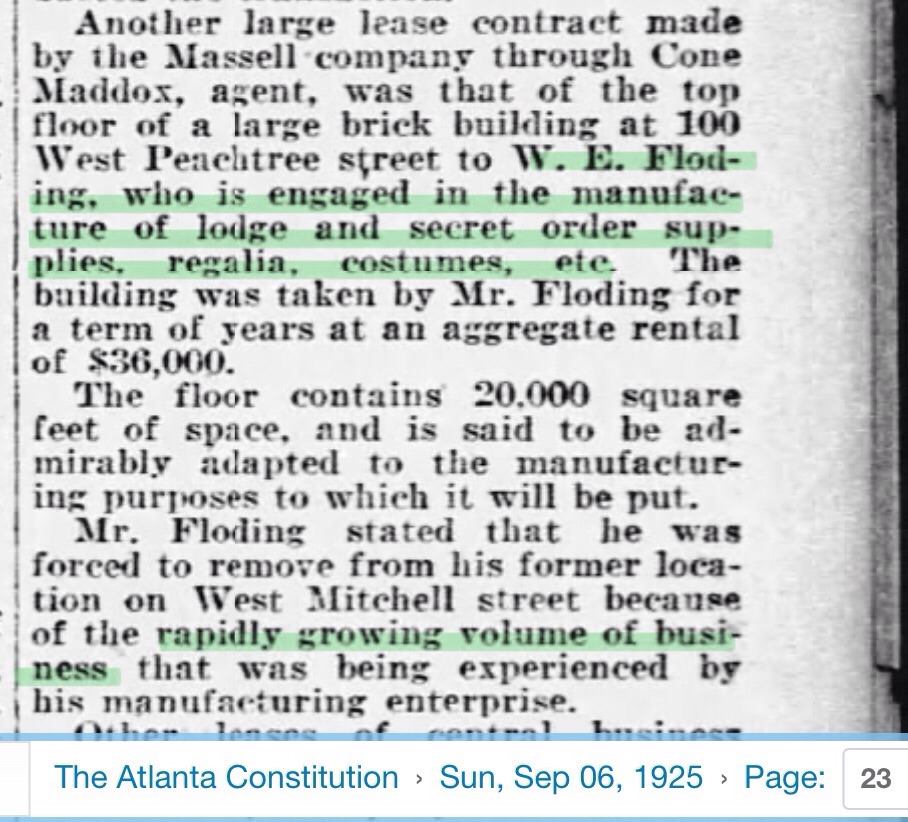
In 1925 Mr Floding moving his manufacturing to a large space in Atlanta due to the expanding sales of secretive regalia and costume. However, Floding was also financially linked to Atlanta KKK activities under Edward Young Clarke, who was convicted of violating the Mann Act by assaulting and then transporting a woman across state lines. In 1927, Clarke and Rev. JR Straton were instrumental in creating a competing organization to the KKK, pledging operations to other states. Clarke, Imperial Wizard 1915-1922, was booted out of the KKK but started a parallel group. See clipping below.
Souvenir Medal from 14-20 September 1908 Atlantic City, NJ Gathering























 Gathering African American History