Searching for Her Name – Lawrence Family Photo

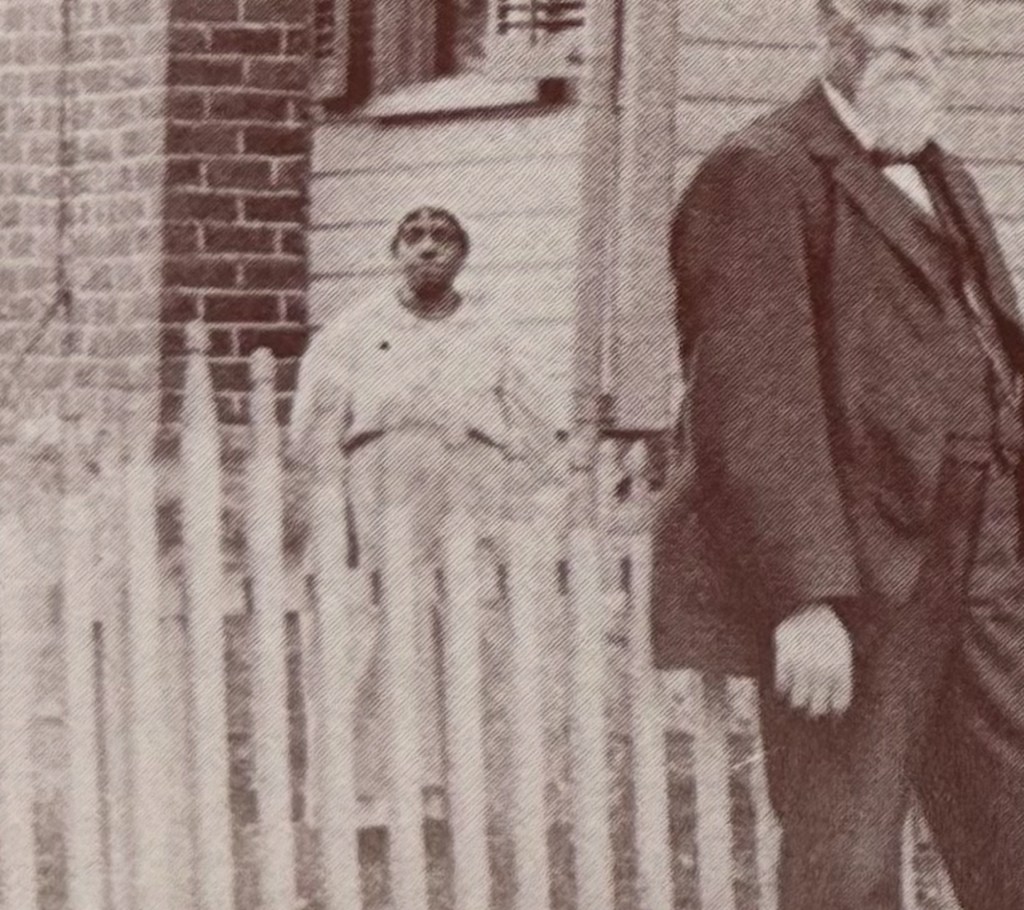
Behind the Lawrence family’s fence on Five Points Road in Riner stands an unidentified African American woman—her name unrecorded, her story unknown. She appears behind Canaan and Mollie Weaver Lawrence, whose wealth came from farming, commerce, and the post office in the late 1800s.

Searching for Her Name

In this photograph, taken in Riner, Virginia, a white family stands proudly in front of their home on Five Points Road, Riner, Virginia. Behind the fence, partially obscured, stands an unidentified African American woman—someone whose name and story have not yet been recorded.

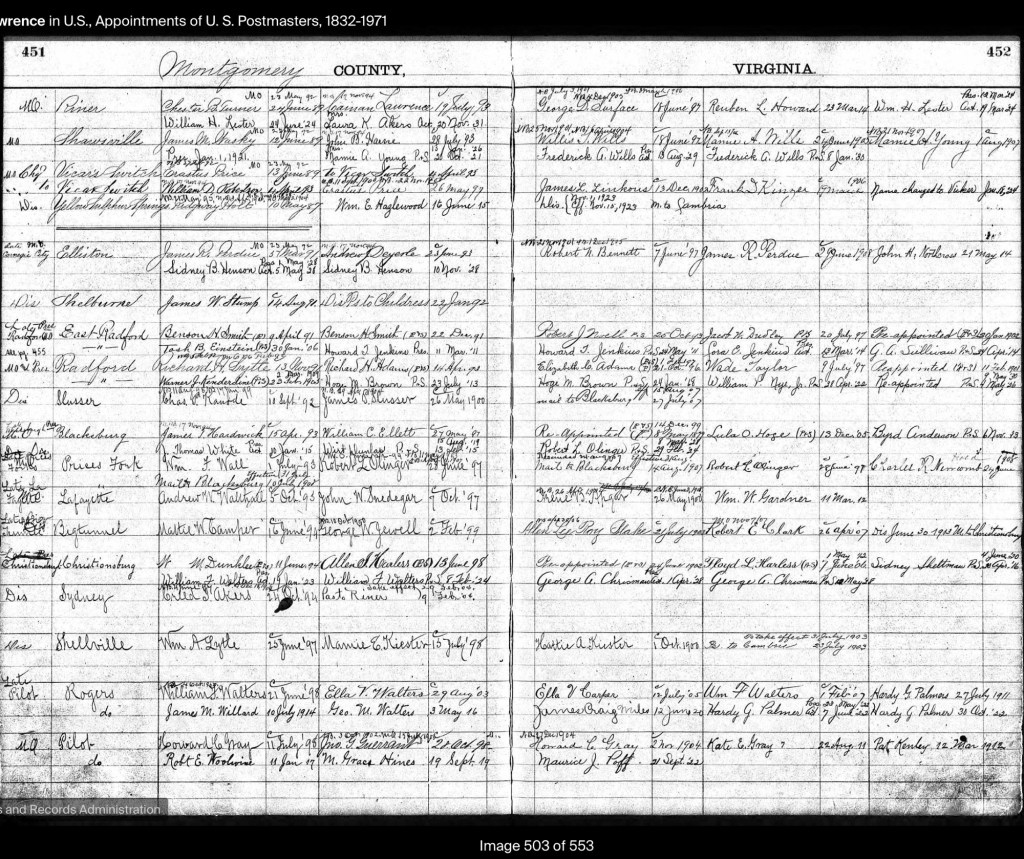
She is pictured behind Canaan (1840–1905) and Mollie E. Weaver Lawrence (1838–1931), whose home and farm once stood at this site. Canaan, a Confederate veteran, was listed as a farmer, D.G. merchant, and postmaster in 1893—the sources of the family’s prosperity. Born in Floyd County, he moved to Auburn by the 1870 census. Mollie, born in Auburn, remained there her entire life.

This photograph was shared by their granddaughter, Virginia Deal Lawrence, a longtime teacher at Auburn Elementary School, who preserved many family images and documents. Despite a search through census and local records, the woman’s name remains unknown.

We will continue to look through Virginia Deal’s papers and scrapbooks in hopes of finding a clue.

If you recognize this woman or know anything about the African American community connected to the Lawrence family, please contact us—we would be honored to record her name and story.

Please let us know if you can identify this woman behind the fence.

Hidden Histories: Family Stories Beyond Montgomery County

Hidden Histories: Family Stories Beyond Montgomery County
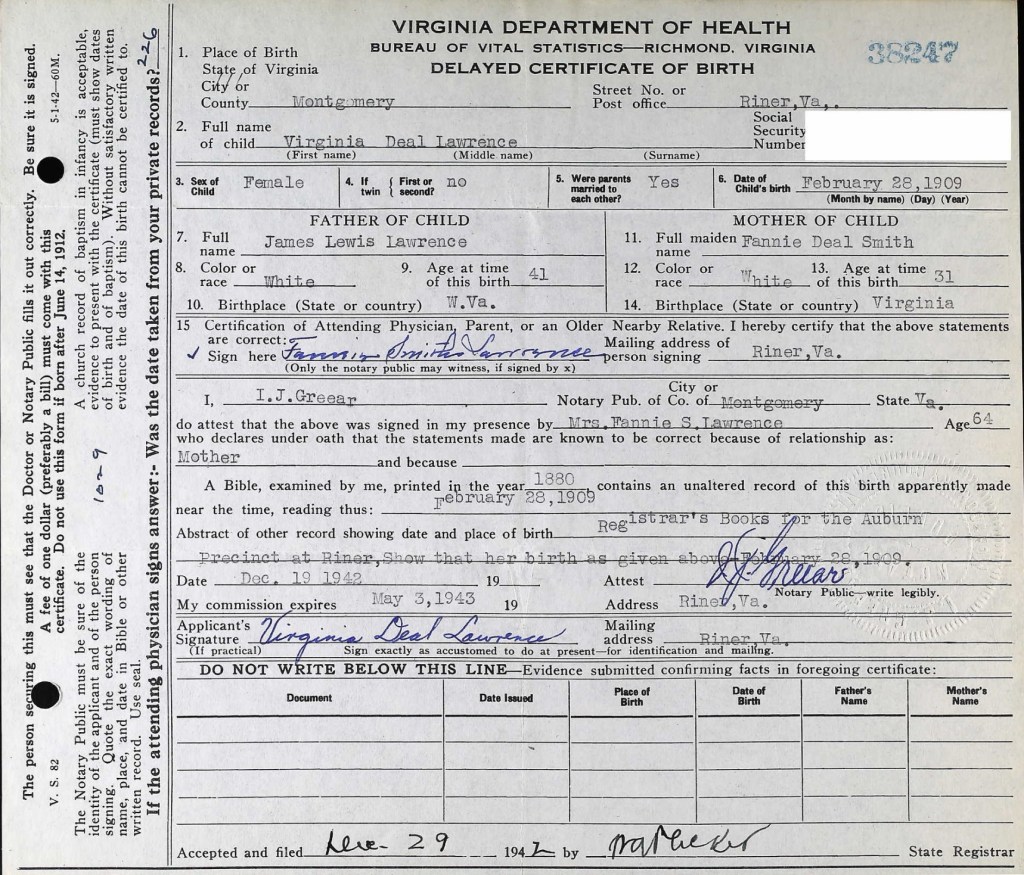
When researching local history, we often come across carefully documented African American family histories that have no direct link to Montgomery County, Virginia. These stories are too valuable to leave hidden.

This page will share those findings so they might reach descendants searching for their past. Even without local ties, they speak to the wider story of resilience, migration, and community.

If you recognize a name or place, we invite you to connect—your memory could help bring another family’s history to light.


BRUMMAGE FAMILY

During our research on the Brumage family, we visited with the Clarence Brummage family in Homestead, FL. We were warmly greeted and all the information he could recall was told to me. 

On our return to California, I stopped at the Morman Library in Salt Lake City to see what records could be found and how far back I could take the family. I will start with the family of Clarence.

Clarence Brummage was born 16 June 1920 in Cochran, Georgia. His father was Tom (Booten) Brummage and his mother was Josephine Clark. Clarence was in the army during World War II. He married Everlena Trammeall, 31 October 1950 in Collins, Georgia. Daughter of Roy Trammeal, Everlena was born 16 March 1926 and was killed in a car accident 3 November 1977 in Homestead, FL.

Clarence and Everlena had nine children: Clarence Jr., b. 3 October 1952, Jeanette, b. 17 January 1956, Evelyn Ann, b. 26 April 1957, Ina Mae, b. 26 May 1958, in Cochran, Georgia, Dwight Wayne, b. 16 January 1961, Decatur, Alabama, Dorothy Jean, b. 7 August 1962, Pensacola, Florida, Michael Anthony, b. 9 March 1964, Daytona Beach, Florida, Josephine, b. 14 September 1965, Miami, Florida, and Donald Lee, b. 1 March 1968, Miami, Florida.

Clarence said he was raised by Dornest (Donna) Grandhoun and that she gave him the name of Brummage. Tom (Booten) Brummage worked for John Anderson in Cochran and Clarence remembers him as being 7 ft. tall.

Clarence has a sister, Sarah Lee Brummage Kemp who lives in Cochran. His mother Josephine Clark died in Florida. Josephine’s mother’s name was Sarah Woodfork and they all attended the Mt. Zion Baptist Church in Cochran.

On the 1900 census in Pulaski County (later changed to Beckley County in 1912 [Georgia]) Georgina Brummage, b. October 1854 is listed with sons Miles, b.March 1882 and Thomas, b. November 1890. I am assuming that Thomas is the father of Clarence. They were living in the Colhran district. Also in the same area is Hannah Jackson, b. 1867, her children were Wilson Brummage, b. November 1883, Lou Brummage, b. June 1885 and Charity Brummage, b. July 1888.

The family of Charley Brummage, born December 1877, his wife Zilla, b. June 1876, and their daughter Vinie, b. September 1899. This family lived Della Brummage, age 37, b. January 1863. Her children Anna Lee, b. April 1896. They lived in Hawkinsville.

1882, Lizzie, b. August 1885, John b. November 1887, Jeffries, b. November. In Ward County, Georgia, I found Amie Brumage with sons David, Henry, Bogene, and daughters Neppie, Nora and Lulu E. 

1990 census was burned so I next read the 1880 census. On this census I found the following. Trank Brummage, age 25, living in Pulaski County, he was working for Reuben Waters. Frank was single, a laborer, maimed, crippled or disabled, could not read or write, his parents were born in Georgia. There were no Brummages listed in Pulaski County in 1870 or 1860 so where Frank Brummage obtained the name of Brummage is a mystery. At least I found Tom (Booten) Brummage. I had hoped to find where this family, at one time, were slaves to a Brummage family but I could not find any proof of this.

I did call a James Brumage in Newport, Virginia and he was also black. He did not know where he obtained the name of Brumage.

Someone with the name of Brumage/Brummage had to be in the area during the Civil War or shortly afterward for the name to be taken by the families I found.

Crayon Enlargement Portraits – Lost Faces

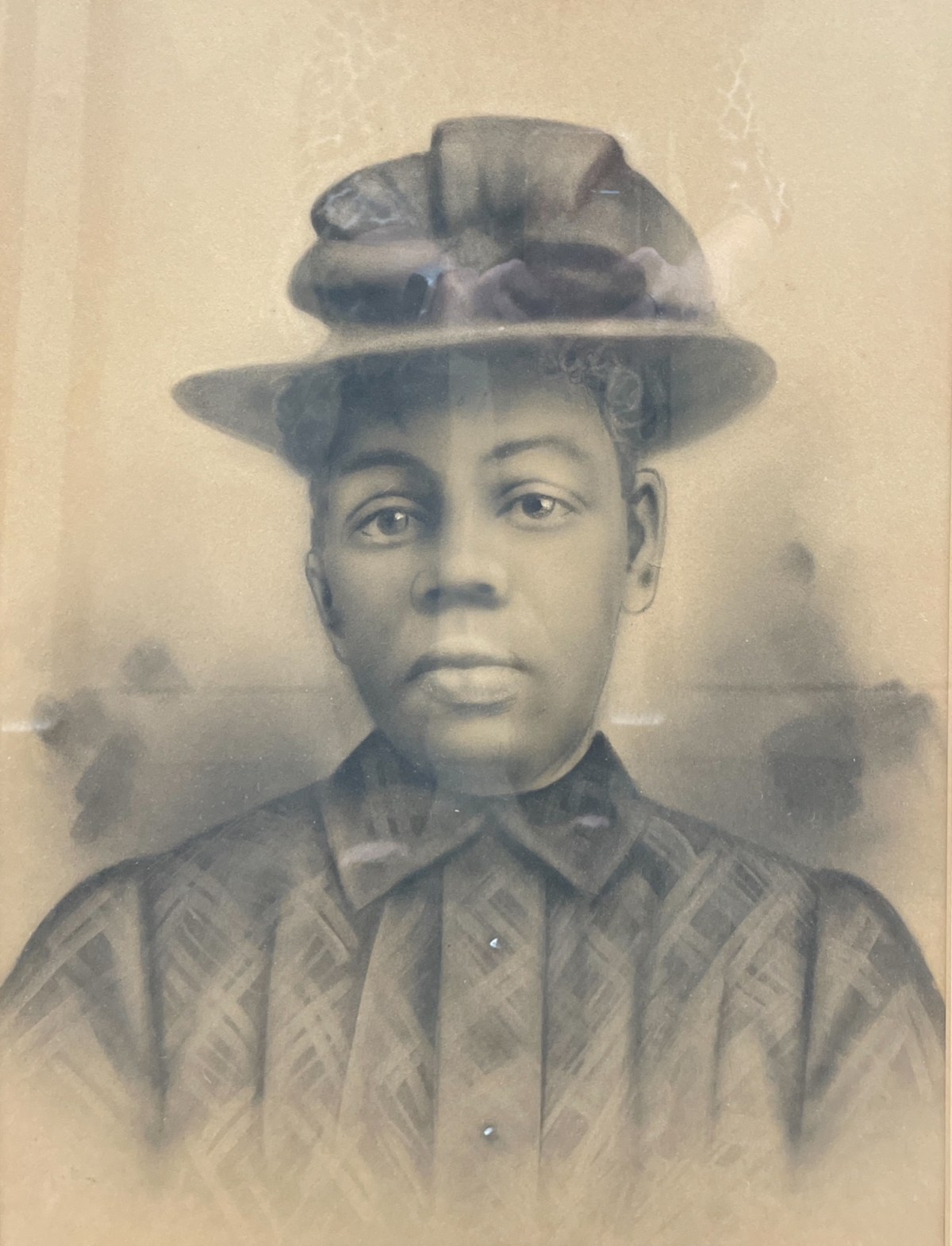
Crayon Enlargement Portraits were popular between the late 1890s and early 1900s. They provided an affordable way to capture and display large-format portraits, offering an alternative to the more expensive painted portraits of the time.

Crayon Enlargement Portraits were popular between the late 1890s and early 1900s. They provided an affordable way to capture and display large-format portraits, offering an alternative to the more expensive painted portraits of the time. The process involved taking a negative made by a local photographer and sending it to a specialist who used a solar enlarger to expose the image onto specially processed salted photographic paper. Because the enlargement process often emphasized imperfections on the negative plate, an artist would enhance the black-and-white print with pencil and crayon media, sometimes adding color.

The unidentified African American portraits featured on this website have been donated to local museums or found in antique shops. They are presented here in the hope of eventually identifying the individuals and preserving their stories.

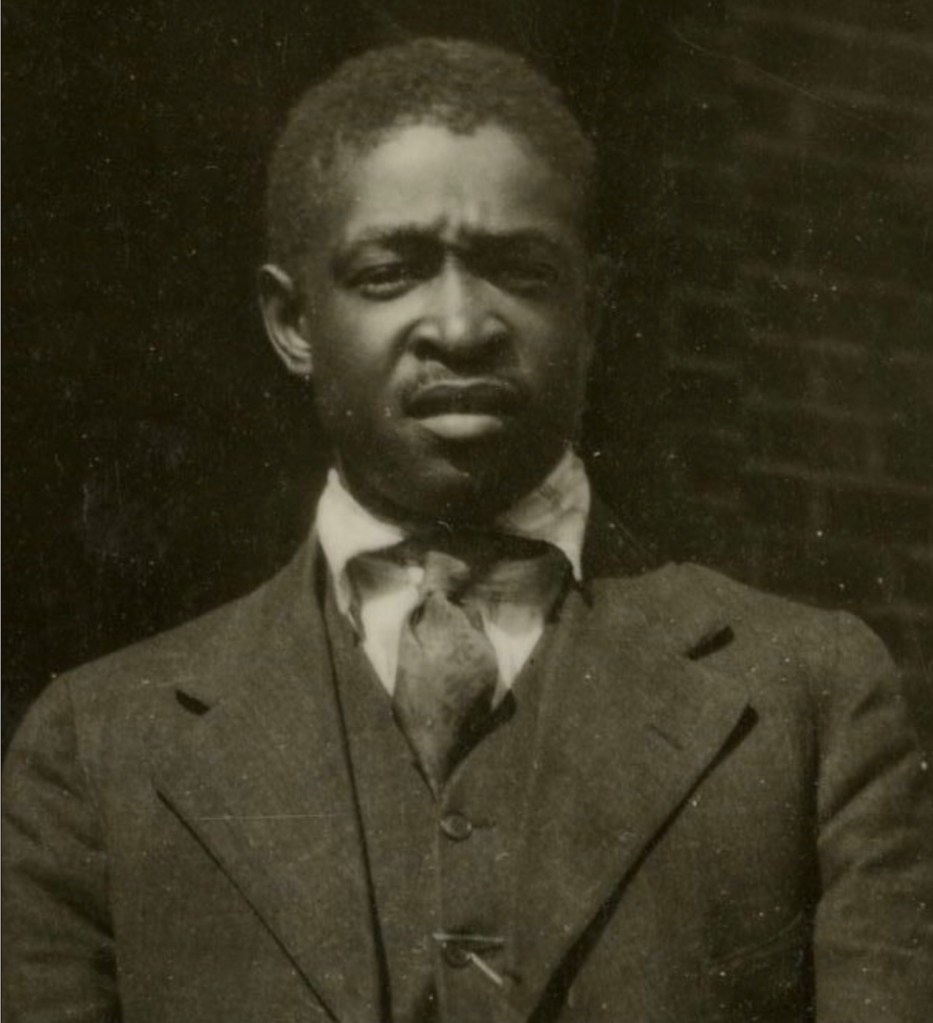
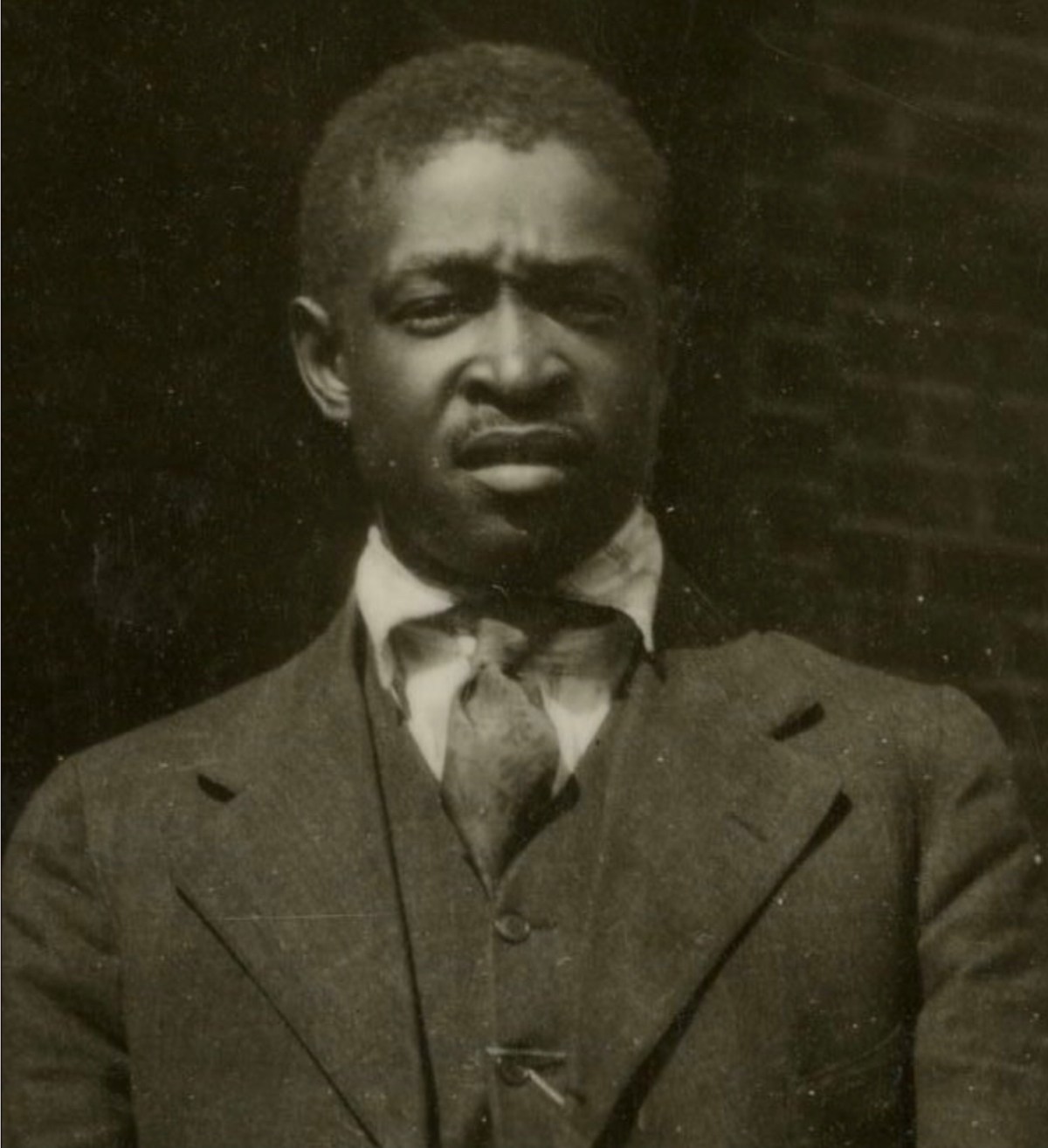
Portrait of an unknown man (Courtesy of Montgomery Museum of Art and History)
Portrait of an unknown man, found in a New Town house, Blacksburg, Va (Courtesy of Montgomery Museum of Art and History)
Portrait of an unknown woman (Courtesy of Montgomery Museum of Art and History)
Portrait of an unknown man (Courtesy of Christiansburg Institute, Inc)

Resources

Genealogy of Slavery – Center for Studying Stricture of Race – Roanoke College

This website serves as an important resource for understanding the history and legacy of slavery in our region. It contains information collected from Roanoke County sources about more than 4,000 enslaved individuals.

https://www.roanoke.edu/a-z/center_for_studying_structures_of_race/projects_x71825

Genealogy of Slavery – Center for Studying Stricture of Race – Roanoke College

This website serves as an important resource for understanding the history and legacy of slavery in our region. It contains information collected from Roanoke County sources about more than 4,000 enslaved individuals. Many of the family names of enslaved African Americans recorded here also appear in neighboring Montgomery County, making this work deeply relevant to our local history. In addition, the family names of many individuals who enslaved others are found in the Roanoke primary sources.

The purpose of this page is to document and connect these shared names, with the hope of bringing to light the lives of those too often lost to history and deepening our understanding of the enduring legacy of slavery in Montgomery County and beyond.

More names will be added with time.

Family Names of Enslaved African Americans in Montgomery County

Brown

  • William Brown – enslaved by William Watts. “In IAS Book 4, the partition of the lands and other property of Edward Watts, William Brown is listed among the enslaved individuals that were bequeathed to Edward Watts’s daughter, Alice W. Morris. A value of $1,700.00 was placed on William Brown.”; Inventory, Appraisements, and Sales Book 4, Roanoke County Archives.

Calloway

Campbell

  • George Campbell – “George Campbell was listed in an indenture agreement: “…bind unto the said Lewis Zirkle a boy of colour named George Campbell until he arrives to the free age of twenty one which will be on the 25th day of June 1854.”
    In the Common Law book, it was ordered that the Overseers of the Poor bind out George, “a boy of color,” to Lewis Zinkle.”;
    Common Law Orders – A – May 1838 – May 1840, Roanoke County Archives.

Saunders/Sanders

Family Names of Enslavers in Montgomery County

Evans

  • Elizabeth Evans (List of first names of people they enslaved), “Elizabeth was listed in Michael Shepard’s property appraisement as having purchased enslaved people after Michael’s death. In the record, Elizabeth purchase” the enslaved people Joe, Nancy, and an unrecorded named child for $675.00.” She was possible daughter of Jonathan Evans. “Elizabeth’s son was William Evans and her husband was William W. Evans.”; Common Law Orders – B – June 1840 – July 1843, Roanoke County Archives

Kent

Kyle

Oliver

Wyatts

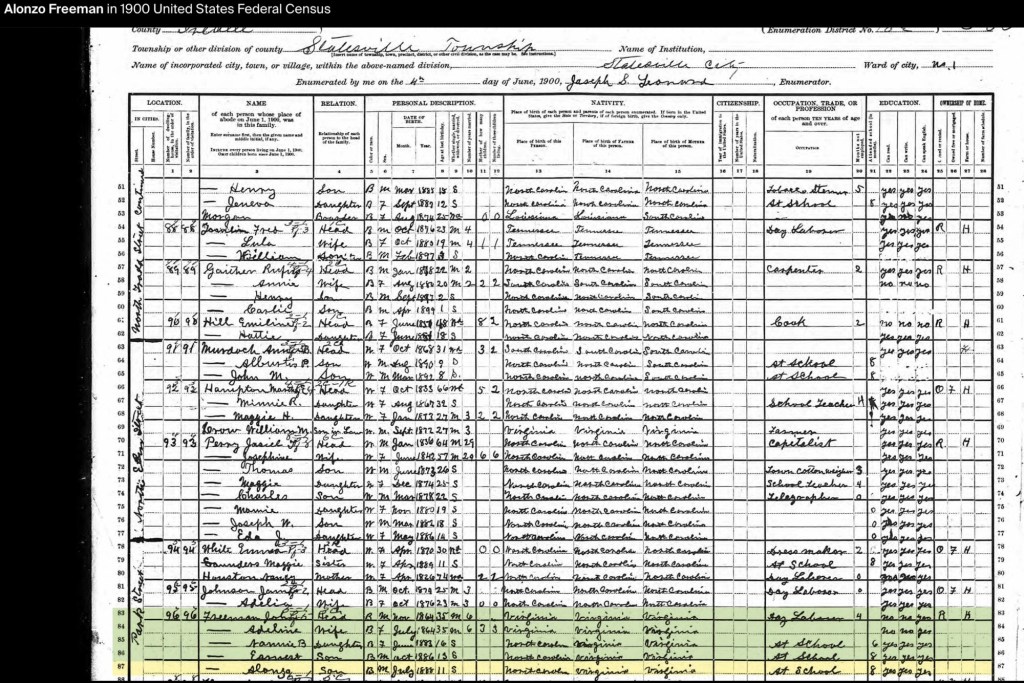
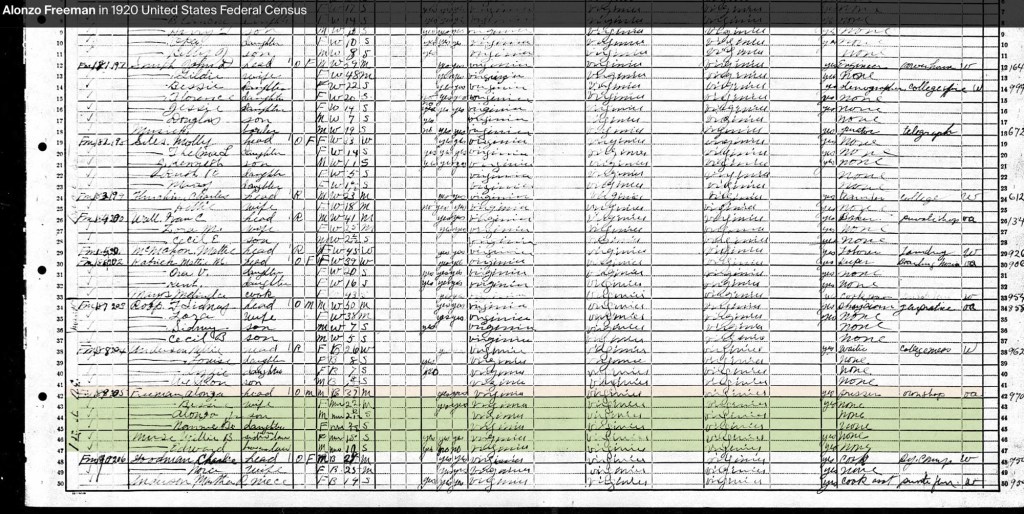
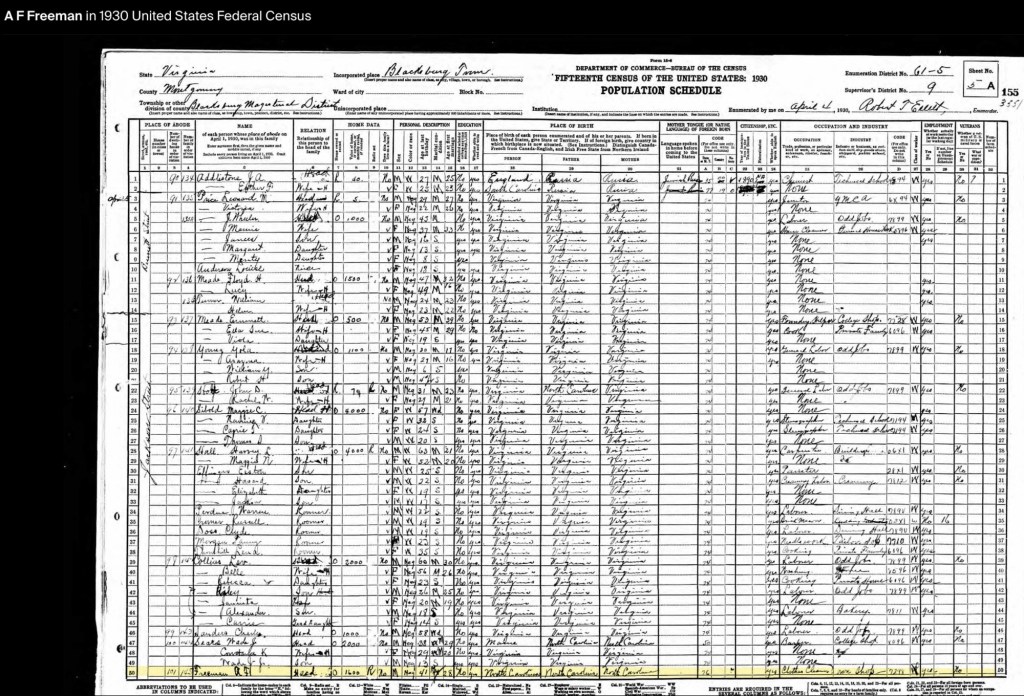
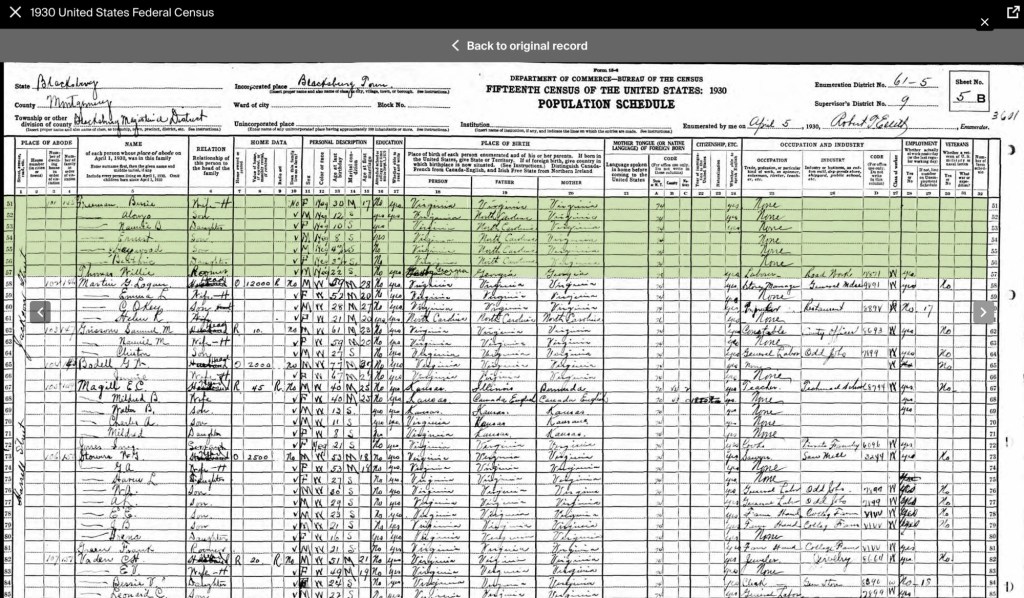
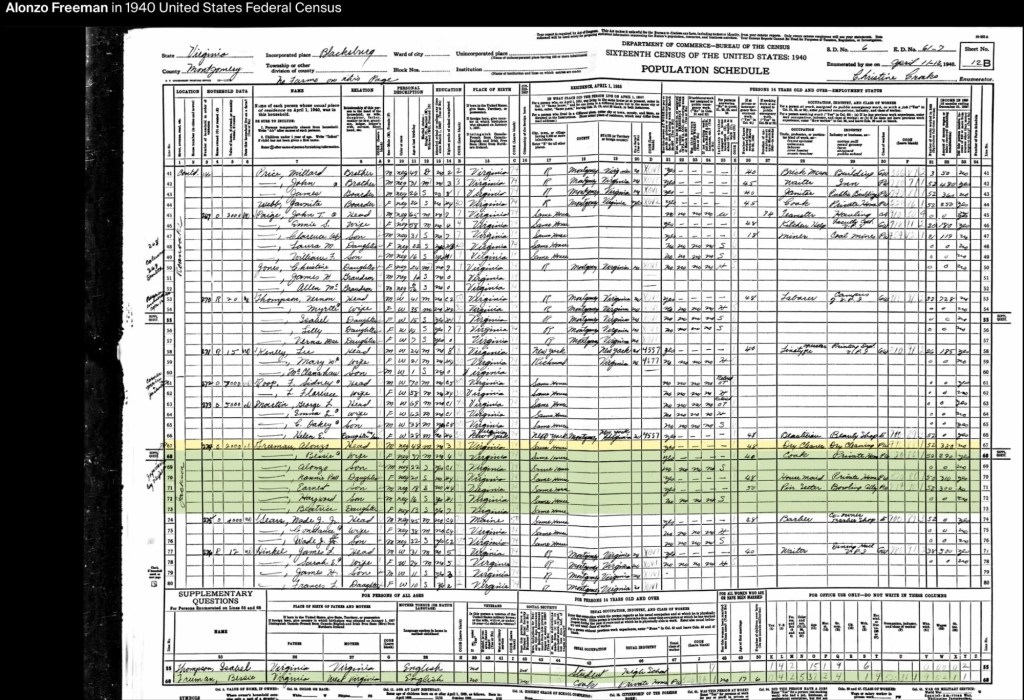
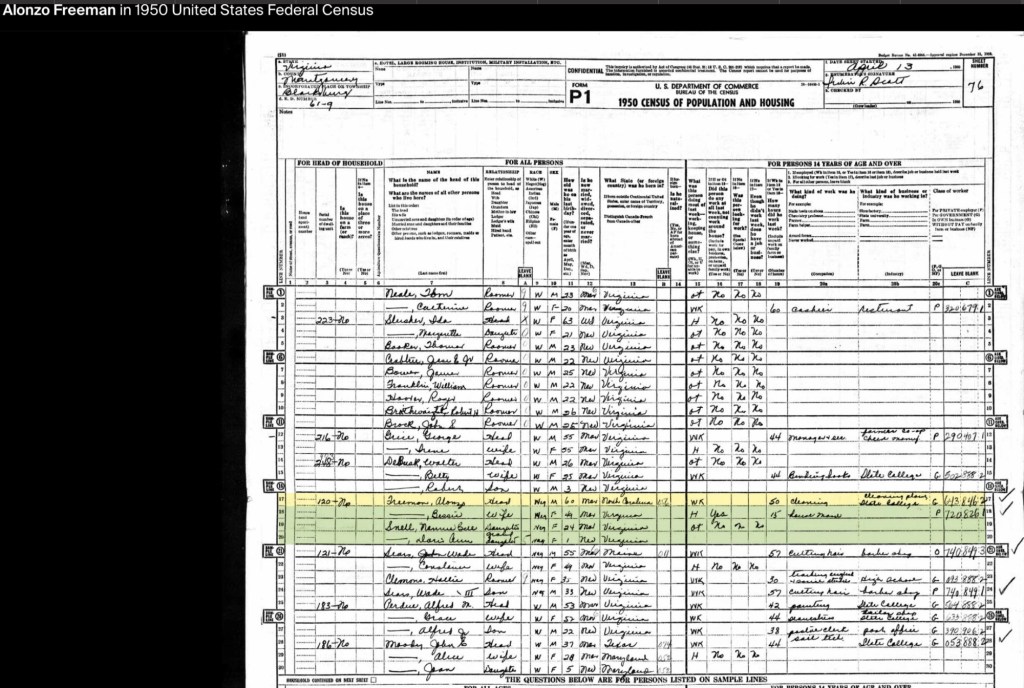
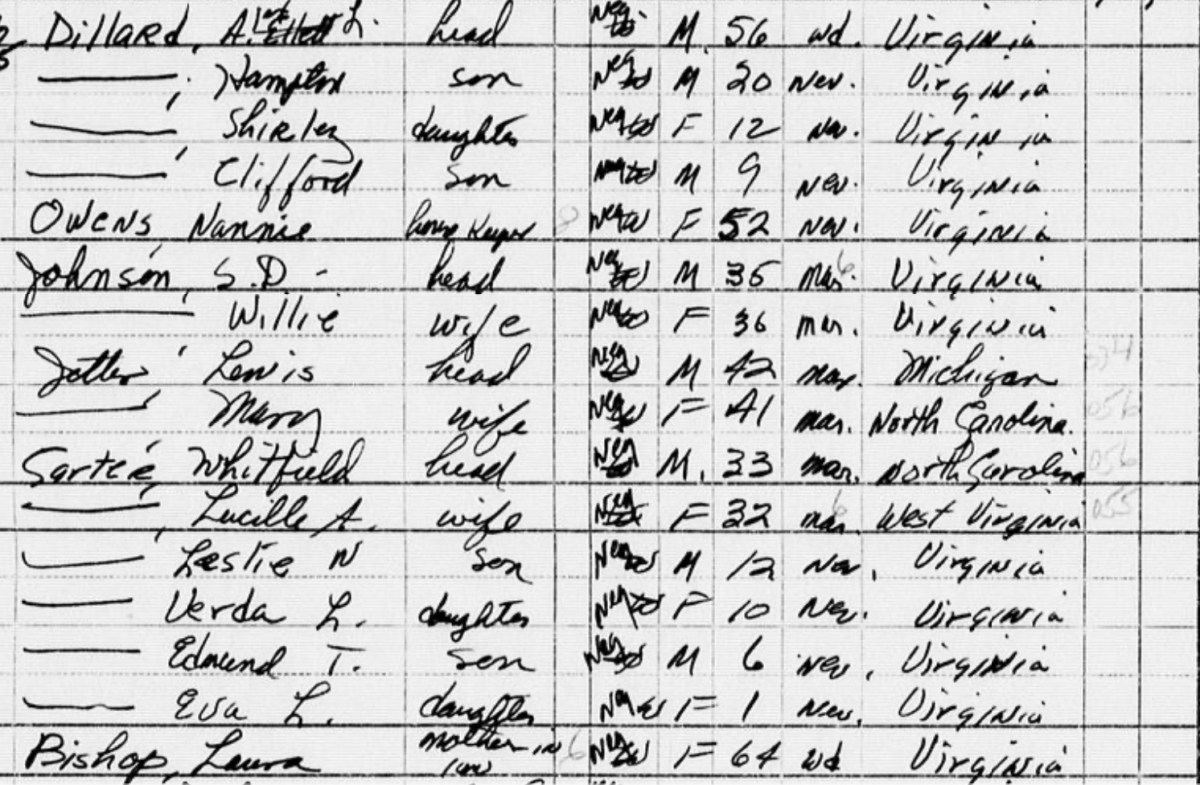
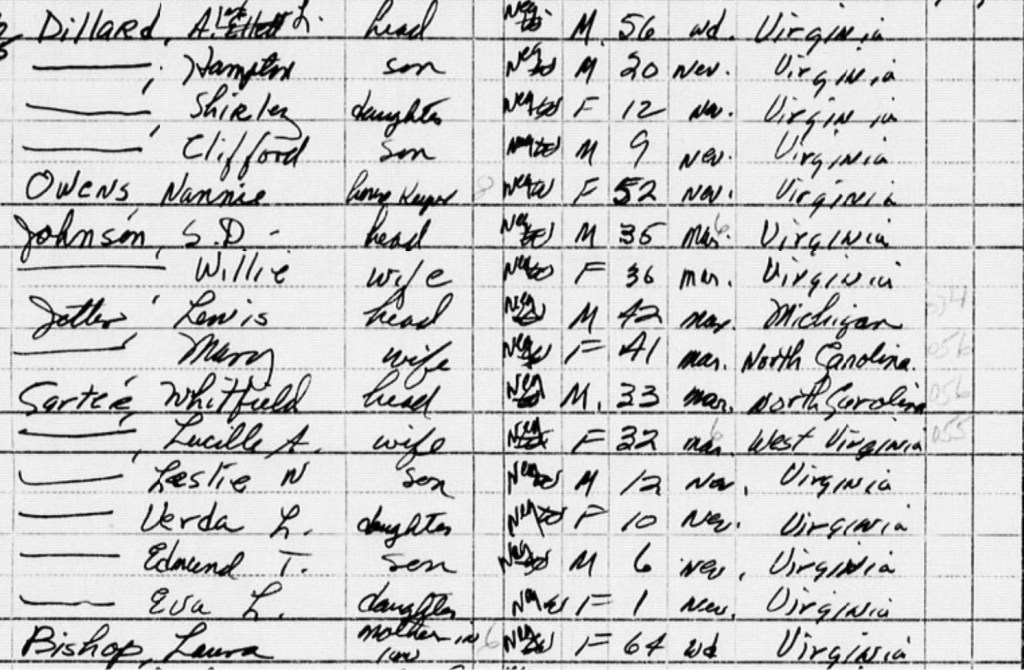
Primary Source: US Population Census of Montgomery County, Virginia

The U.S. Population Census is a crucial tool for exploring family history, especially for African Americans in Appalachia, where tracing lineage is often challenging due to the lasting impacts of slavery, limited documentation, and systemic discrimination.

The U.S. Population Census is a crucial tool for exploring family history, especially for African Americans in Appalachia, where tracing lineage is often challenging due to the lasting impacts of slavery, limited documentation, and systemic discrimination. Census records provide valuable insights by identifying ancestors across generations, shedding light on social and economic conditions, mapping migration patterns, and uncovering extended family and community networks. By using these records, researchers can reconstruct family histories and help tell the stories of those who have been underrepresented in the history of our Appalachian region.

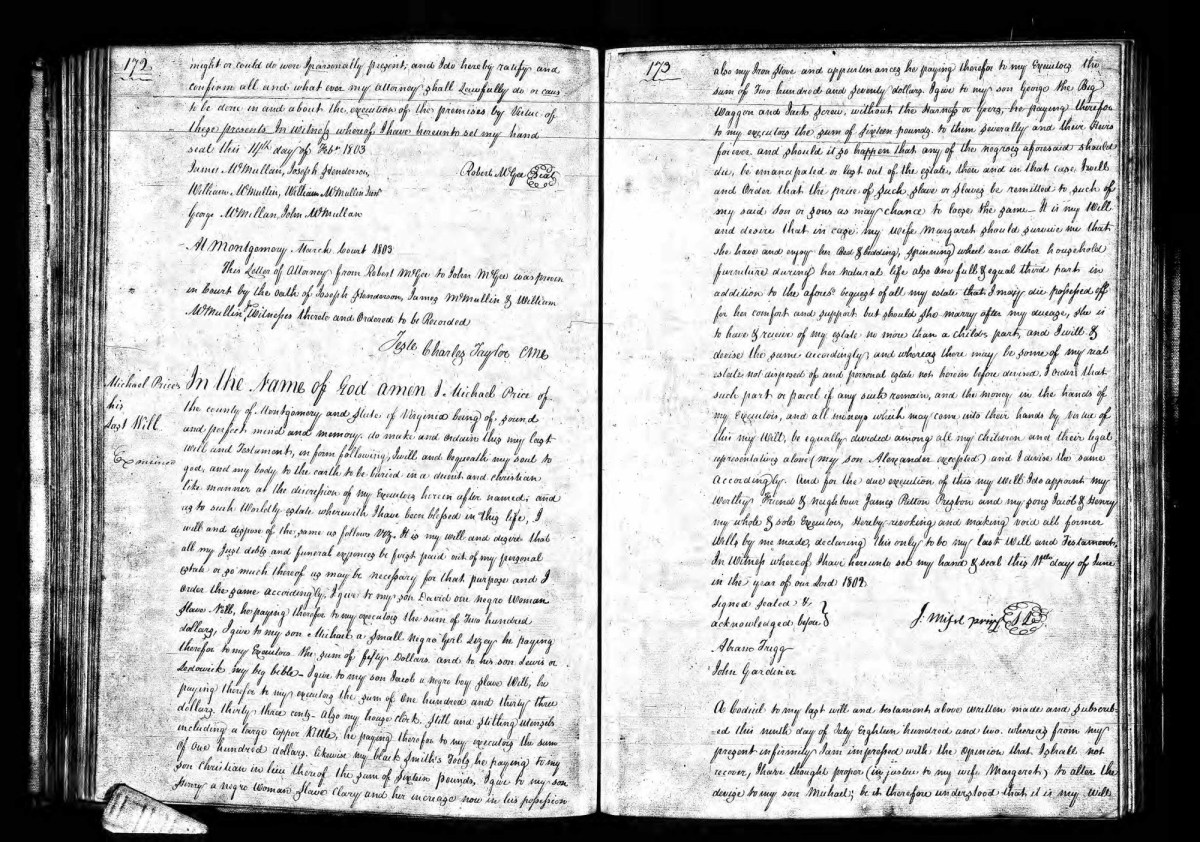
Enslaved People Named in Wills: Enslaved by Michael Price (1718-1802, father) and Michael Price (1748-1839, son)

Michael Price (1718-1802) Will

Michael Price wrote his will on 11 June 1802, witnesses by Abram Trigg and John Gardiner. James Patton Preston and his sons, Jacob and Henry Price were his executors. The will was proved on 09 July 1802. According to the 1788 Tax list, Michale was taxed for two enslaved people.

Summary

  • Son David inherited an enslaved woman named Nall for $200.
  • Son Michael inherited a small girl, Lizey for $50
  • Son Jacob inherited Will, paying $133
  • Perry inherited Clary with her “increase.”

Michael Price (1748-1839) Will

Michael Price wrote his will on 12 March 1835. witnessed by Jacob Shell, Jacob Harless, and Samuel Smith. The executors were Alexander Price (son), David Keister, Phillip Harless, and Peter Keister, proved on 12 March 1839. According to the 1788 Tax list, Michale held no enslaved people.

Summary

  • Wife, Esther Francisco Price inherited Liz and her two children, Maria and Ben. Upon Esther’s death she may “dispose” of Maria and/or Ben, but Liz was to be retained by the family. Liz was given the choice of which child she would become property.
  • Son Alexander inherited David and Sam.

Livey was alive in 1802 and was passed to Michael Price’s son, also named Michael. When Michael Price died in 1839, a woman named Liv and her two children, Maria and Ben, were mentioned in his estate. After his death, Liv was inherited by Esther Francisco Price, who was living with her son, Alexander Price.

Further research is needed to trace the lives of those held in bondage by the early Price family.

Reconstruction Era Documents and Freedmen Bureau Timeline

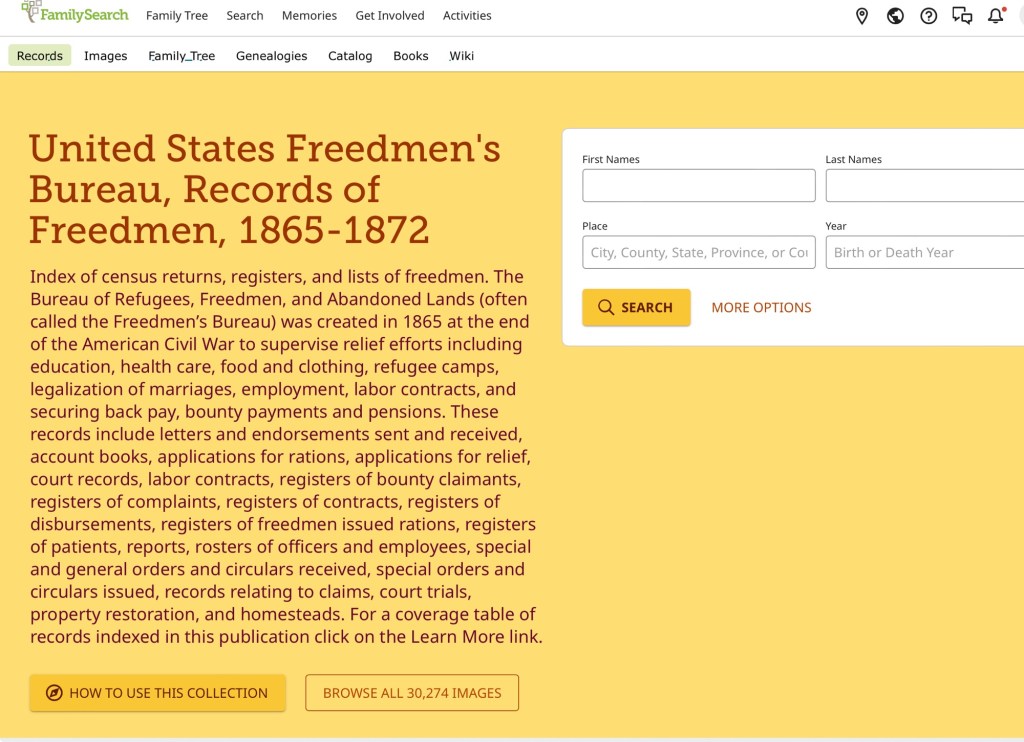
The Index of census returns, registers, and lists of freedmen is overseen by the Bureau of Refugees, Freedmen, and Abandoned Lands, commonly known as the Freedmen’s Bureau. Established in 1865 after the American Civil War, its responsibilities include supervising relief efforts such as education, healthcare, food, clothing, refugee camps, marriage legalization, employment, labor contracts, and ensuring back pay, bounty payments, and pensions.

Family Search records are free but registration is required.

United States Freedmen’s Bureau, Records of Freedmen – FamilySearch Historical Records

What is available:

  • Virginia, Roll 130, Registers of freedmen sent to New England states, 1866-1867
  • Virginia, Wytheville, Roll 198, Census returns of the black population of Montgomery, Grayson, Smyth, Giles, Roanoke, Craig, and Floyd Counties, 1865 (Images 214-412)
  • Virginia, Christianburg, Roll 68, Census returns of blacks in Montgomery County

Transcription Abbreviations

The transcription project is done by the public and not complete.

Click here to search on a name

History of the Freedman’s Bureau, official title: The Bureau of Refugees, Freedmen, and Abandoned Lands

A helpful explanation and timeline is provided on page 9 of this document, hosted by Family Search. “Records of the Field Offices for the State of Virginia.”

https://www.familysearch.org/ark:/61903/3:1:S3HT-DWR3-MLN?view=index&action=view

Seven Year Timeline of the Bureau of Refugees, Freedmen, and Abandoned Lands (Freedmen’s Bureau): March 1865 to June 1872.

September 2, 1862: “President Lincoln issued the Preliminary Emancipation Proclamation, declaring that as of January 1, 1863 “all persons held as slaves within any State, or designated part of a State, the people whereof shall then be in rebellion against the United States shall be then, thenceforward, and forever free.”” (Library of Congress)

January 1, 1863: President Lincoln issued the Emancipation Proclamation

April 9, 1865: Lee surrenders to Grant at Appomattox, ending the Civil War.

Juneteenth, 1865 – Smithsonian’s National Museum of African American of History & Culture

  • National – 3 March 1865: the bureau was created by the War Department of the US Government. Commissioners and Assistant Commissioners as well as General Superintendent of Schools were established.
  • Virginia – June 1865 to May 1866: Orlando Brown established an office and operated as Commissioner of Virginia, in Richmond.
  • Virginia – 4 July 1865 to 14 April 1867: Virginia Bureau is organized into 10 districts with an Agent/Superintendent in charge.
  • Mont. Co – Sept 1865: Buel Carter became the 8th District’s first Superintendent, establishing an office in Christiansburg but move the office to Wythville in September of the same year.
  • National – Oct 1865 to Jan 1867: Rev. John W. Alvord became Inspector of Finances and Schools to address schools.
  • Mont. Co – May 1866: Capt Charles S. Schaeffer arrives in Christiansburg as the agent, working under Brevet Maj. George P. Sherwood became Superintendent of the 8th District in June 1866.
  • Virginia – May 1866 to Aug 1866: Maj. Gen. Alfred H. Terry is Assistant Commissioner, Richmond.
  • National – 16 July 1866: the Bureau of Freedmen is extended by Congress.
  • Virginia – Aug 1866 to March 1867: Maj. Gen. John M. Schofield is named Assistant Commissioner .
  • Virginia – 15 April 1867: The state is reorganization into 10 Sub-districts with Sub-Assistant Commissioner in charge.
  • Mont. Co- 15 April 1867: District 8 , the central office remained in Wythville. CA Schaeffer remained in Christiansburg.
  • Virginia – March 1867 to May 1869: Orlando Bowen becomes Assistant Commissioner and Superintendent of Education.
  • National – 6 July 1968: The Bureau of Freedmen is extended for the last time.
  • National – 25 July 1868: Congress removes the Bureau’s Assistant Commissioners from the states, but claim agents remain in place.
  • Mont. Co. – Dec 1868: Freedmen’s Bureau closes its Christiansburg office. Schaeffer retained as Assistant Superintendent of Education.
  • Virginia – 1 Jan 1869: the 10 Virginia districts are reorganized into 8 Education Sub Districts and Assistant Superintendent of Schools are appointed.
  • Virginia – 1870: New constitution was ratified which included Public School Funding for all children as a requirement. By 1870 the legislation was set to allow this to happen, though the education would be segregated.
  • National- Summer 1870: Superintendents of Education removed and headquarters staff reduced.
  • National – 30 June 1872: The Freedmen’s Bureau was terminated by Congress.

Montgomery County (Va.) Cohabitation Register

Montgomery County (Va.) Cohabitation Register. This register records the name of the husband, his age, place of birth, residence, occupation, last owner, last owner’s residence, name of the wife, her age, place of birth, residence, last owner, last owner’s residence, name of children with the ages of each, and the date of commencement of cohabitation. Of note is the wide range of localities reported as the former slaves’ places of birth

Montgomery County (Va.) Register of Colored Persons Cohabiting Together as Husband and Wife, 1866 Feb. 27. N.p., 1866. Print

This document is very valuable and now that it has been digitized it is accessible. Please read the description and historical note by the Library of Virginia: (accessed 3 March 2024)

Direct Link to the pages as images and as a transcription

Montgomery County, Va Register of Colored Persons Cohabiting Together as Husband & Wife, 1866 Feb. 27 – citation and supporting information.

Description
Montgomery County (Va.) Register of Colored Persons of Montgomery County, State of Virginia, cohabiting together as Husband and Wife on 27th February 1866. Also commonly called Montgomery County (Va.) Cohabitation Register. This register records the name of the husband, his age, place of birth, residence, occupation, last owner, last owner’s residence, name of the wife, her age, place of birth, residence, last owner, last owner’s residence, name of children with the ages of each, and the date of commencement of cohabitation. Of note is the wide range of localities reported as the former slaves’ places of birth

Montgomery County (Va.) Register of Colored Persons Cohabiting Together as Husband and Wife, 1866 Feb. 27. N.p., 1866. Print.

Historical Note
 Note

Montgomery County was named for Richard Montgomery, who was killed in the American assault on Quebec late in 1775. It was formed from Fincastle County in 1776. Part of Botetourt County was added in 1789, and part of Pulaski County was added in 1842.

The Virginia legislature passed an act on 27 February 1866 to legalize the marriages of former slaves who had been cohabiting as of that date. See Virginia Acts of Assembly, 1866-1867, Chapter 18, An act to amend and re-enact the 14th section of chapter 108 of the Code of Virginia for 1860, in regard to registers of marriage; and to legalize the marriages of colored persons now cohabiting as husband and wife.

The federal Bureau of Refugees, Freedmen, and Abandoned Lands directed the Assistant Superintendents of the states to order the county clerks to make a registry of such cohabiting couples. See Circular No. 11, dated 19 March 1866, in Orders, Circulars, Circular Letters, and Letters of Instruction, vol. 2 (1866). Bureau of Refugees, Freedmen, and Abandoned Lands, Records of the Assistant Commissioner for the State of Virginia, 1865-1869. Miscellaneous reel 3880, Library of Virginia. National Archives microfilm M1048 (reel 41), Record Group 105.

Montgomery County (Va.) Register of Colored Persons Cohabiting Together as Husband and Wife, 1866 Feb. 27. N.p., 1866. Print.