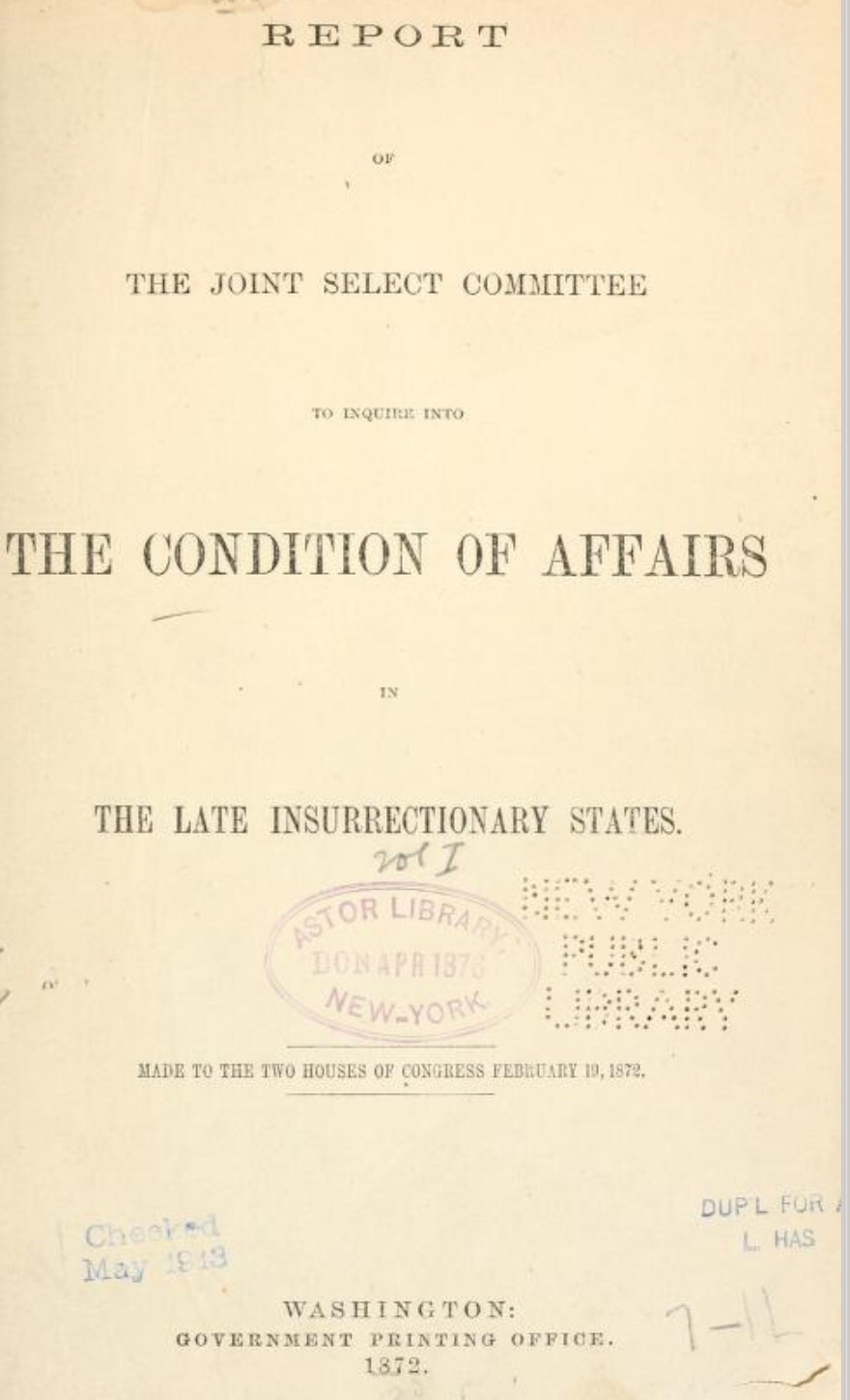
In 1872, a 13-volume compilation of reports and testimonies, including those from previously enslaved individuals, documented a Congressional committee’s investigation into the Ku Klux Klan and other insurrectionary movements in the former Confederate states.
While Virginia is absent from this congressional report, the testimonies offer valuable insights into the beliefs, attitudes, misconceptions, and misdirections surrounding the mistreatment of newly freed people residing in the former Confederate states.
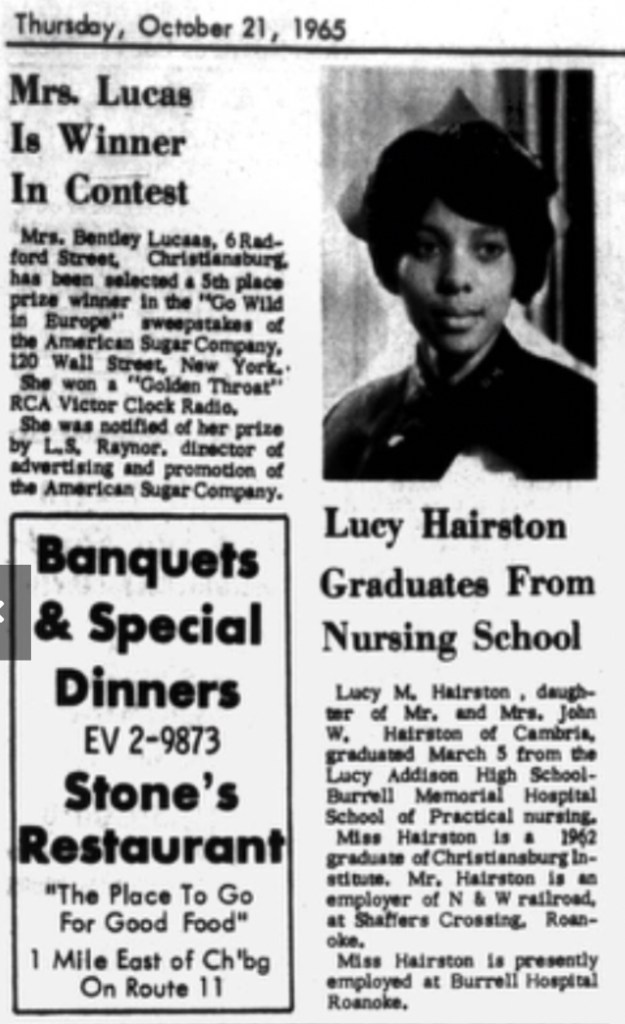
“Lucy M. Hairston, daughter of Mr. And Mrs. John W. Hairston of Cambria, graduated March 5 from the Lucy Addison High School-Burrell Memorial Hospital School of Practical nursing.
Miss Hairston is a 1962 graduate of Christiansburg Institute. Mr. Hairston is an employer of N & W railroad, at Schaffer’s Crossing, Roanoke.
Miss Hairston is presently employed at Burrell Hospital”
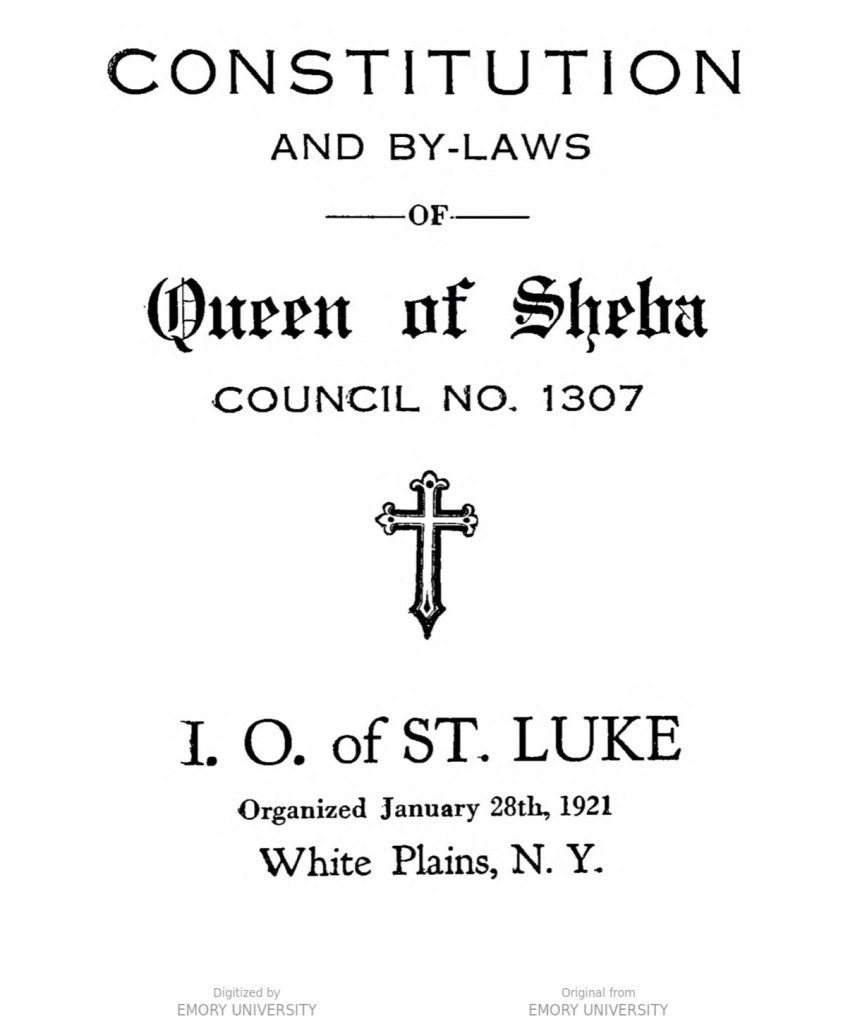
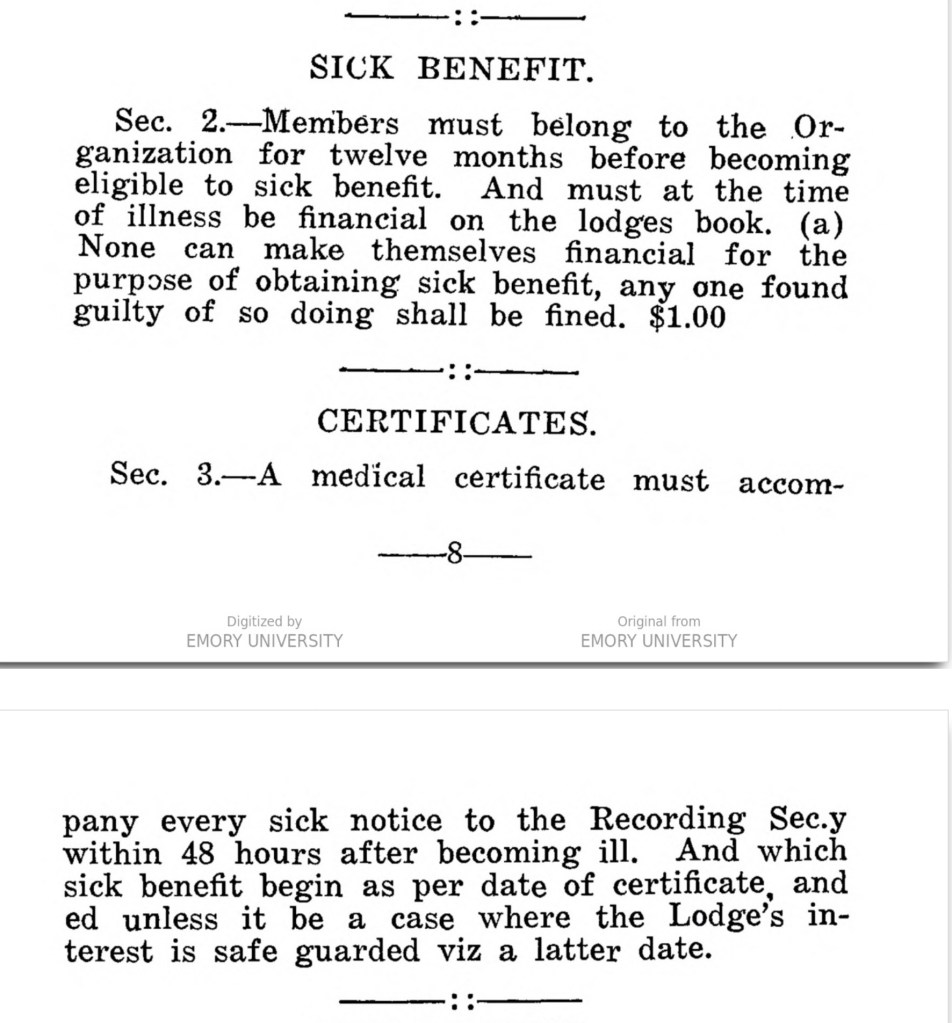
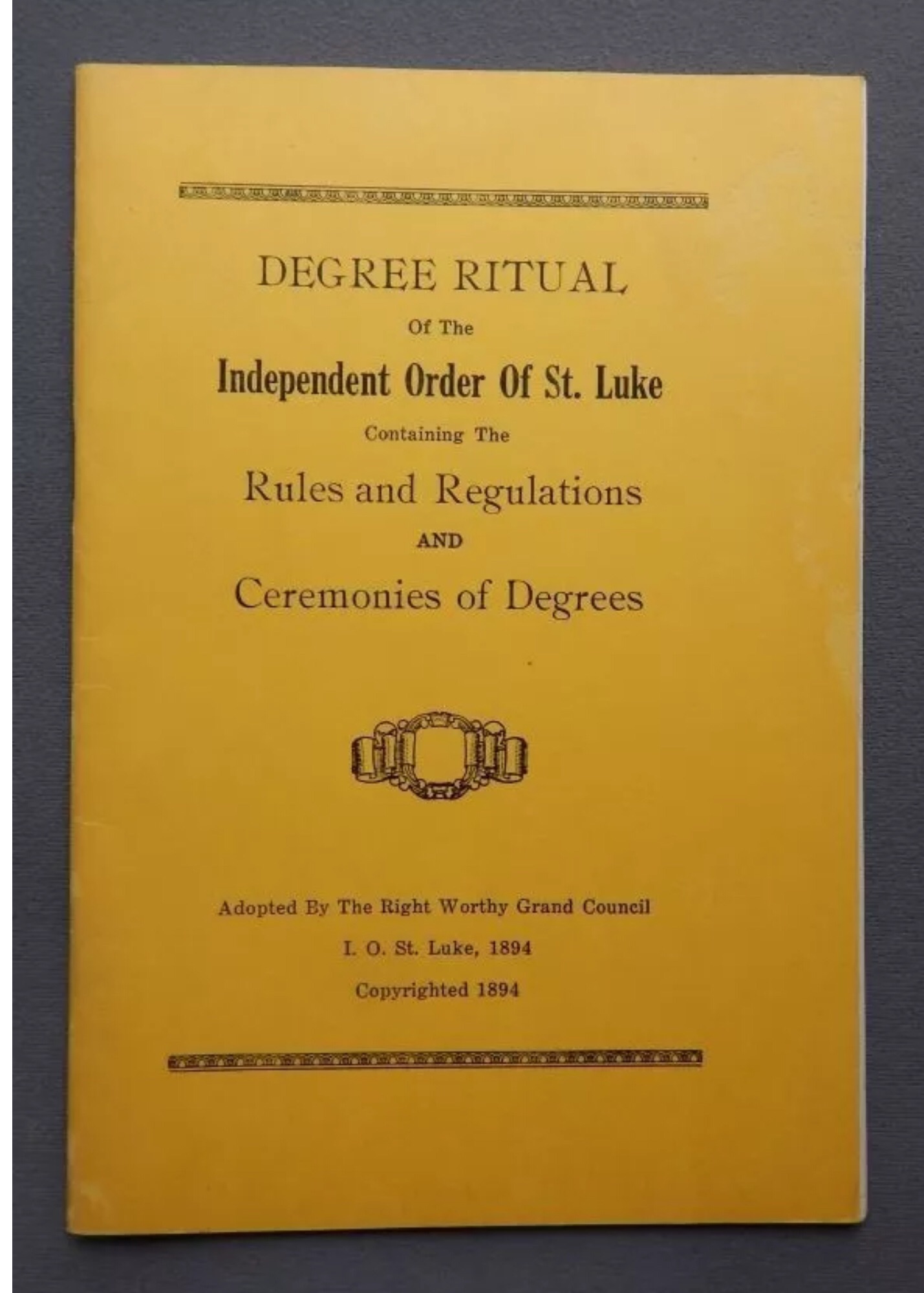
In Blacksburg, Virginia, the Independent Order of St Luke shared the same building with the Grant United Order of Odd Fellows, Tadmore Light 6184, located in New Town. That order’s copy of the Constitution and By-laws may be lost to history, but the Queen of Sheba Council’s 1921 version is fortunately accessible. This document highlights the significance of mutual aid within the framework of the function of the Order of St Luke.
Independent Order of St. Luke. Queen of Sheba Council No. , Randall K. Burkett, Lucy Emanuel, and Amos M. Gailliard. Constitution And By-laws of Queen of Sheba Council No. 1307, I.O. of St. Luke, Organized January 28th, 1921, White Plains, N.Y. [White Plains, N.Y.]: [The Council], 1921.
Madame Maggie J. Walker’s Vision for the Independent Order of St Luke Reflected in the Constitution and By-laws
During the Jim Crow era, white-owned firms refused to grant disability and life insurance to the black community. In response, IOSL provided weekly sickness and disability benefits as well as funeral assistance for its members starting in 1895. Similar to contemporary insurance companies, it offered various premium options. Mrs. Walker’s effective leadership in membership drives bolstered the organization’s finances, enabling prompt payment of death claims and reduced premium costs.
Sick Benefit
Members who wished to receive financial support in the event of being sick or disabled, paid monthly dues into the Sick Benefit fund. The Sick Committee manages the implementation of this benefit. The member could receive no more than $35/year. That equates to about $t00 in current value.
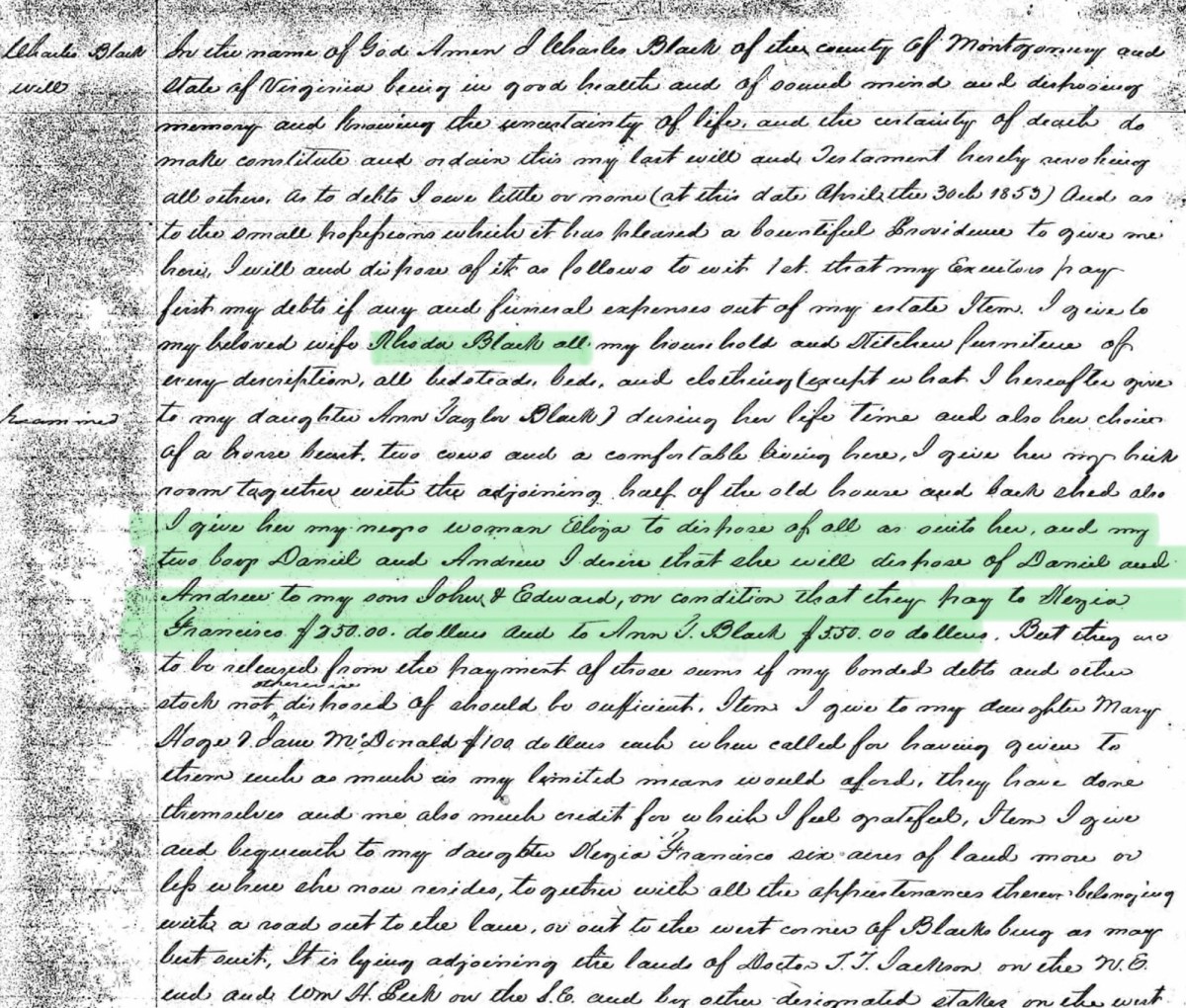
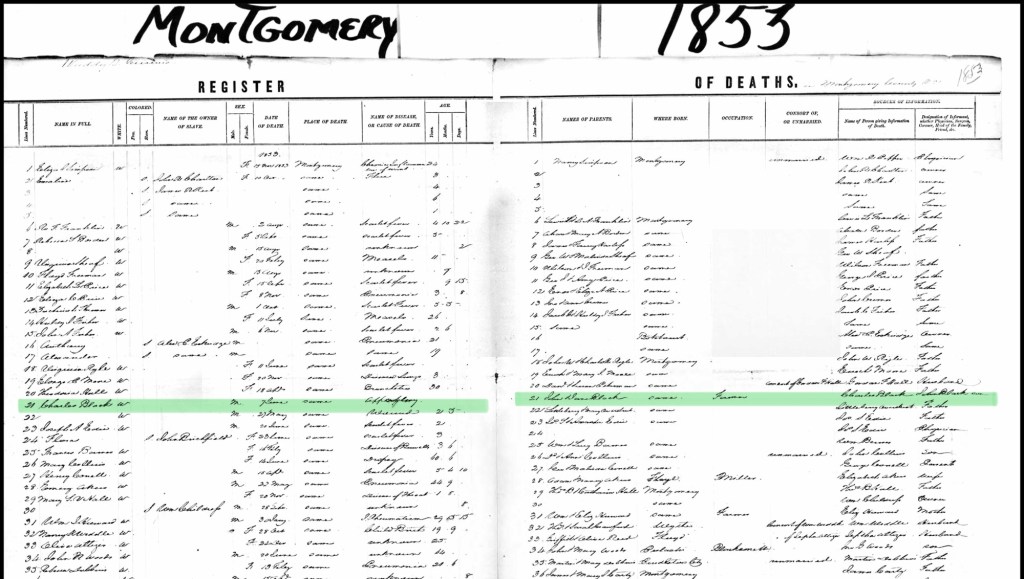
This is the last will and testament of Charles Black (1796-1853), son of John Black (1755-1845) and nephew of William Black, namesake of the Town of Blacksburg, Virginia. Charles died 1853 and his will was proved in Montgomery County, by Rice D. Montague, Clerk.
Quote: “I give her [my beloved wife Rhoda Black] my negro woman Eliza to dispose of all as suits her, and my two boys Daniel and Andrew I desire that she will dispose of Daniel and Andrew to my sons John & Edward, on condition that they pay to Kezia Francisco $750.00. dollars and to Ann T. Black $550.00 dollars.”
Rhoda McDonald Black (1805-1859), wife and mother of Keziah Black Francisco (1830-1903), Ann Taylor “Nannie” Black (1837-1903), John Black A. (1831-1899), and Edward Black (1835-1912).
Much of Charles and Rhoda Black’s land becomes part of Virginia Tech campus after the death of Charles and Rhoda.
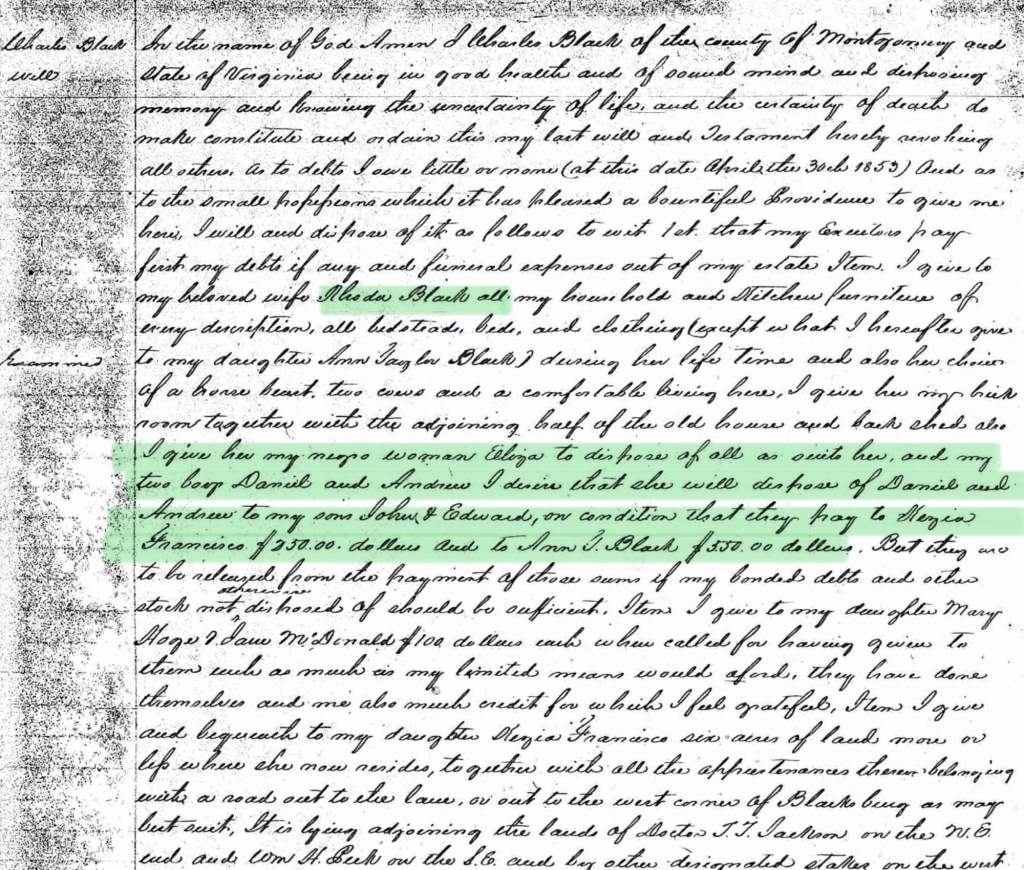
Page 1 Charles Black Last Will & Testament, Montgomery County Court HousePage 2
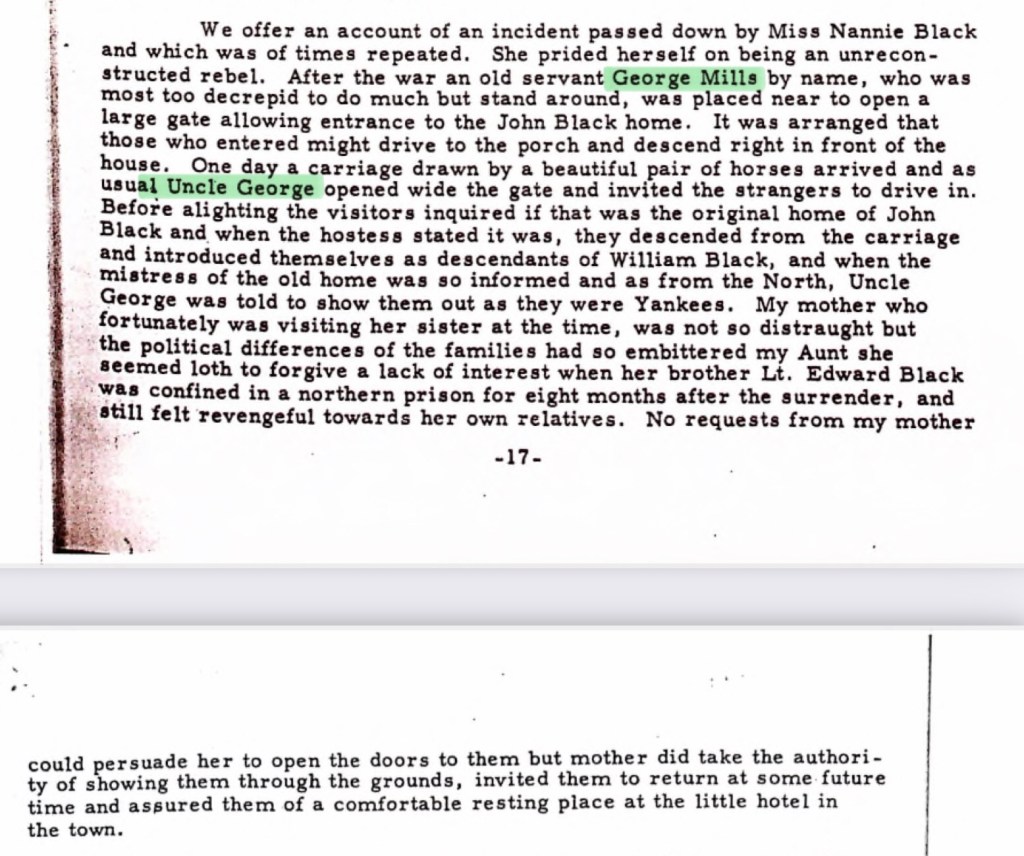
George Mills is noted as “After the war an old servant George Mills by name….” in Nannie Francisco Porter’s , daughter of Keziah Black Francisco.
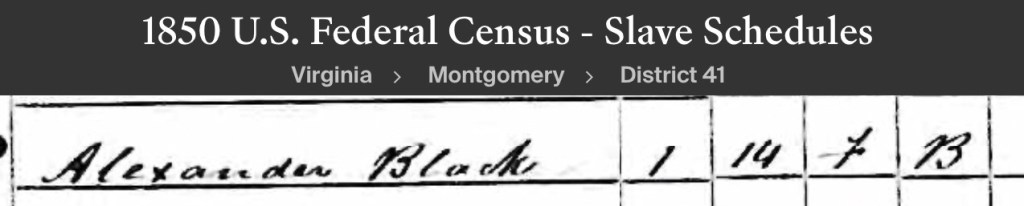
The 1850 Slave Schedule for Montgomery County does not name the people held against their will and provide a documentation of the slave owners. Charles Black’s will notes three people, a woman and two men, not four as noted below. No proof yet, but perhaps Eliza is the one listed female. Daniel and Andrew are likely one of these three people.
Alexander Black is the brother of Charles Black.
1859 Slave Schedule for Charles Black (3 years before his death)1850 Slave Schedule for Alexander BlackRegister of Death of Charles Black
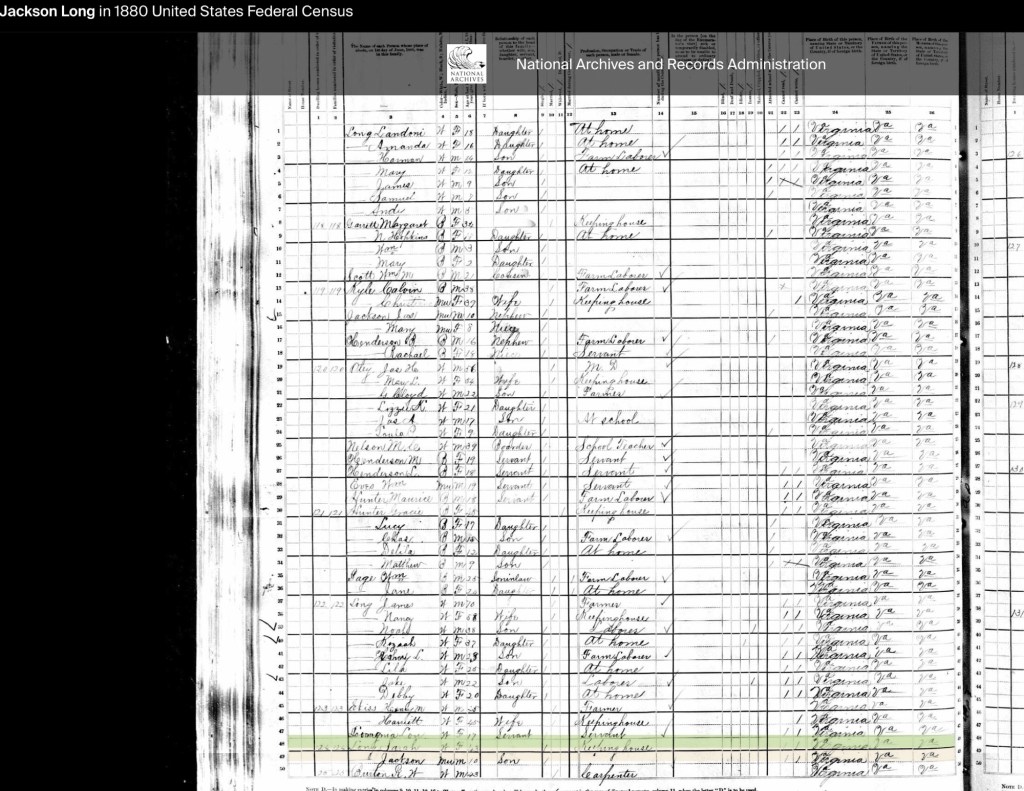
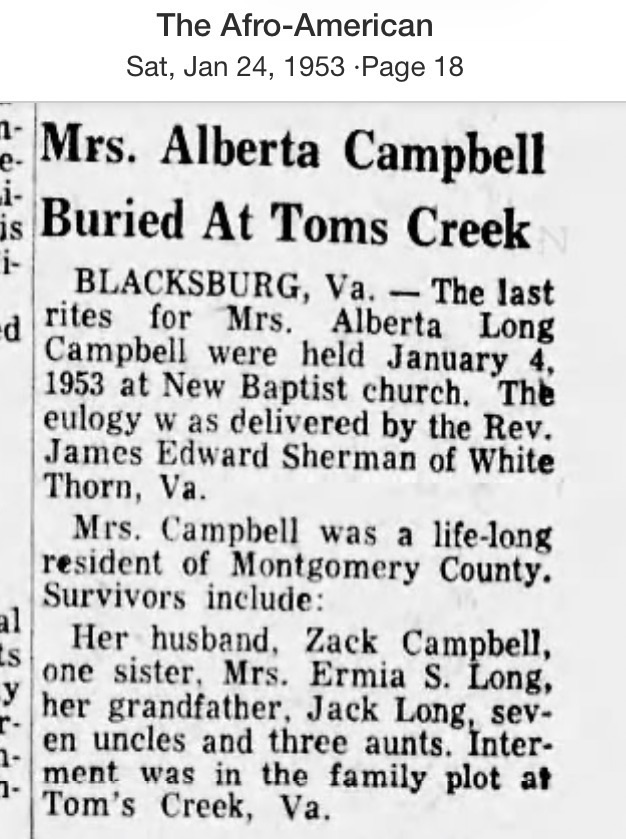
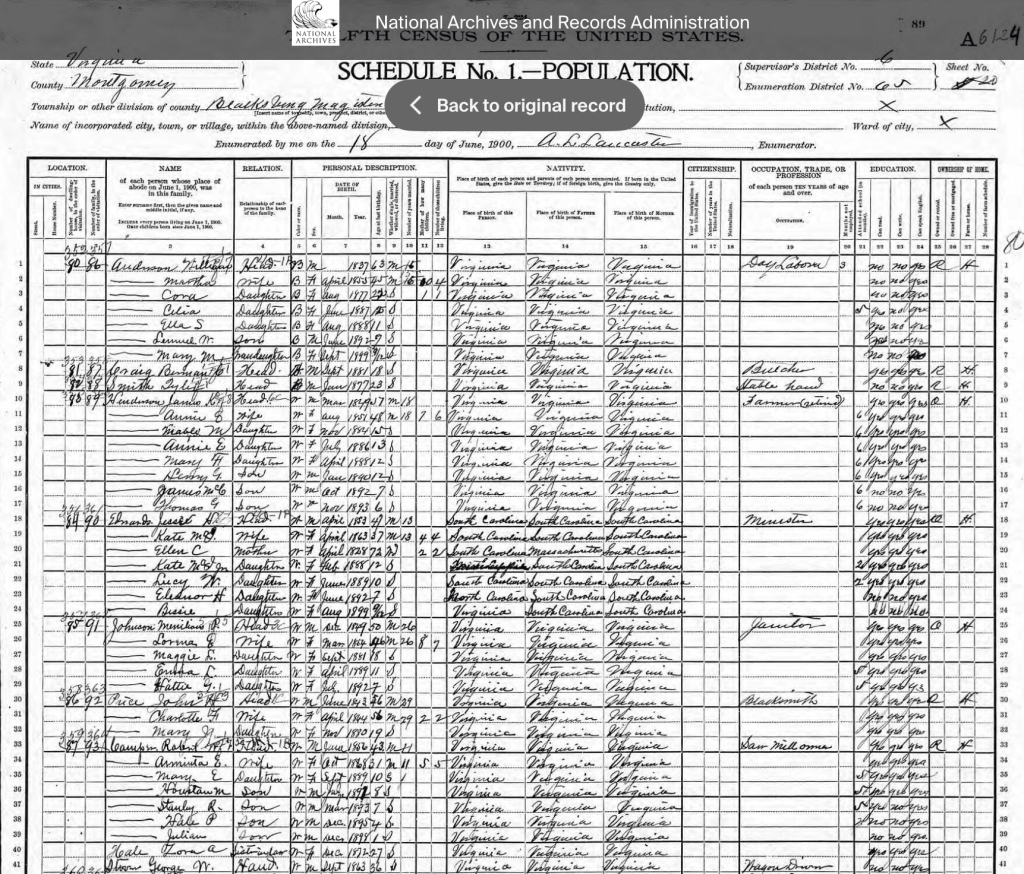
Andrew Jackson “Jack” Long was born in 1870 in Montgomery County as noted in the 1880 & 1900 US Census, and Jackson’s marriage record in 1892. In the 1930 census his birth year was noted as 1872. These documents list Jackson as either “mulatto, black or colored” and Sara/Sarah as “white.” No father was listed.
In the marriage record Jackson’s mother is noted as Sara Long and in the 1880 US Census as Sarah. In the 1880 census Sarah and Jackson are living in the vicinity of other Long families and close to the James Otey farm, Walnut Springs, close to Toms Creek.
On 1 September 1892, Jackson Long (22 yrs, laborer) marries Mary Jackson (21 yrs) by D. Bill Groseclose. Polly Jackson is noted as Mary’s mother.
Eight years later the family of 6 appears in the 1900 US Census. Jackson is 26 and a laborer in the stone quarry; Mary, his wife, is 26 and had given birth to 4 children, all still alive: Theodosia, daughter, born December 1893, 6 yr; Thomas, son, born September 1895, 4 yr; Donald, son, born May 1896, 4 yr; Hary C, son, June 1897, 3 years.
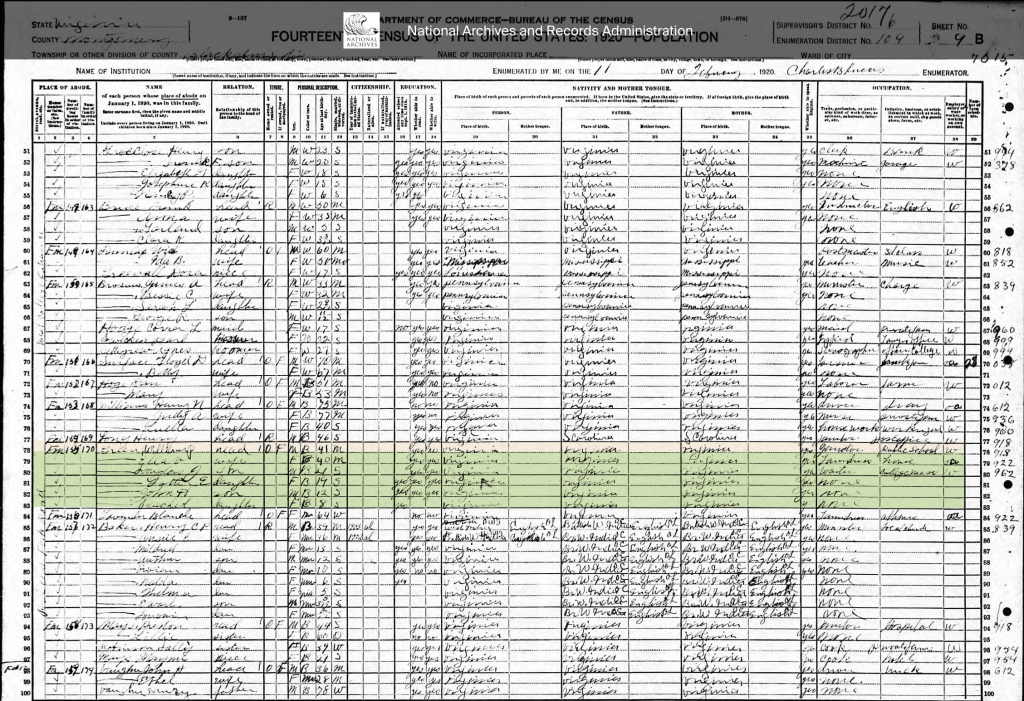
1930 US Census finds the family in Montgomery County, and appears to be living in the same neighborhood. Jackson and Mary own their home, worth $600. He is working in Mill Rock Quarry as a Stone Cutter. The couple are now living with 7 children.
Donald and Thomas are working in the millstone quarry. Thomas is 34 (b. 1906) and Donald is 31 yrs old (b. 1909). Theodore (Ted) is 23 (b. 1917) and his brother Gilbert 13 (b. 1917) are working on a dairy farm and Mason is 22 (b. 1918) and working on a “truck” vegetable farm. The two daughters, Eva is 19 (b. 1911) and Annie 16 yrs (b. 1914) are at home.
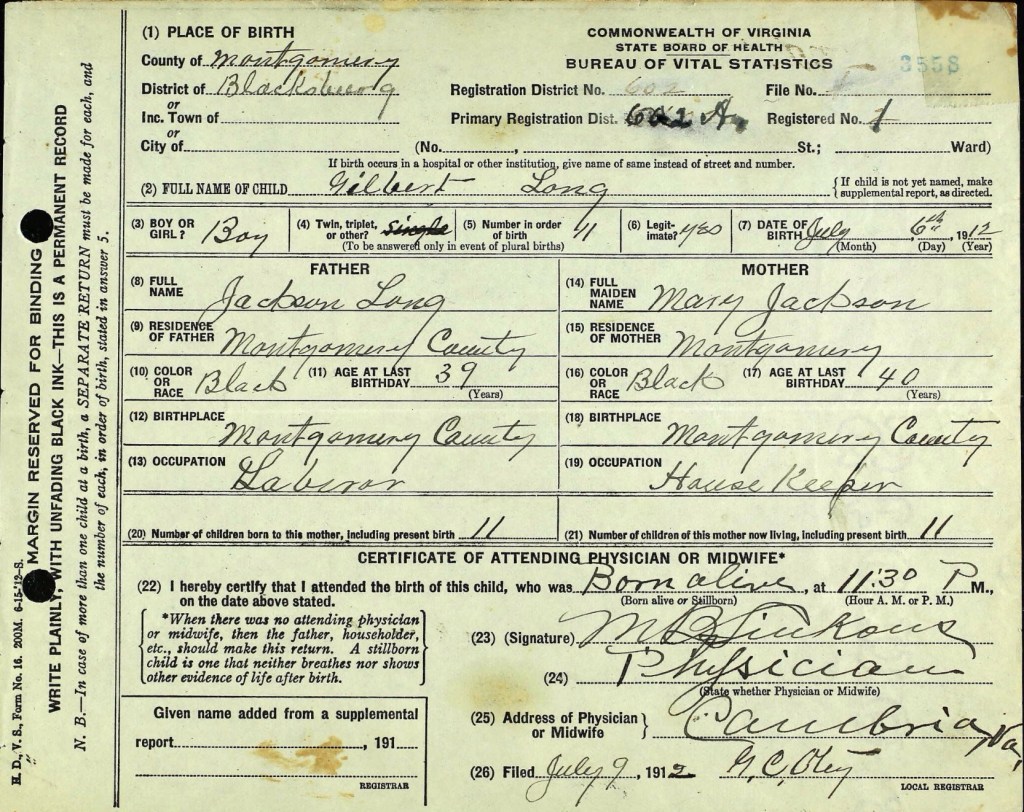
The birth certificate for Gilbert add to the Long’s story. He is listed as the 11th child, born on 6 July 1912 to 39 yrs old Jackson Long and Mary Jackson Long, age 40, housekeeper. M.B. Linkous was the attending physician in Cambria.
1880 US Census1900 US Census1892 Montgomery County, Va Marriage RecordBirth of Gilbert Long1930 Us Census, Montgomery County, Va
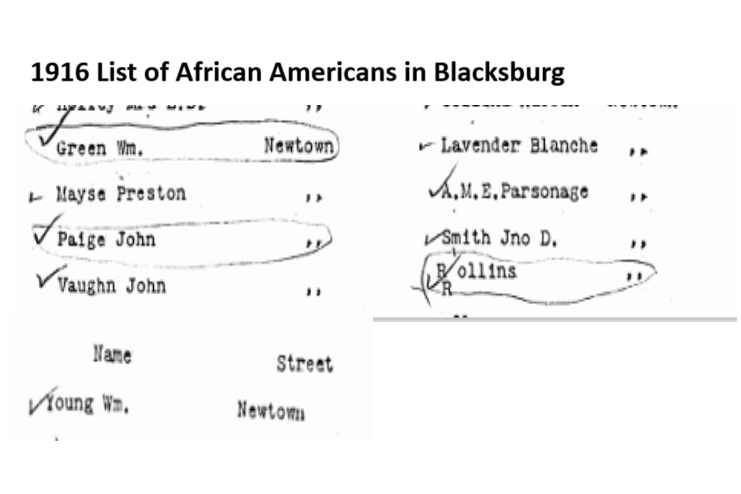
Noted as the Mayor’s Docket List of 1916 (origin unknown)
The following African Americans were listed in this list as living in Newtown (one word): William Green, Preston Mayse, John Paige, John Vaughn, William Young, Blanche Lavender, A.M.E. Parsonage, John D Smith and B. Rollins.
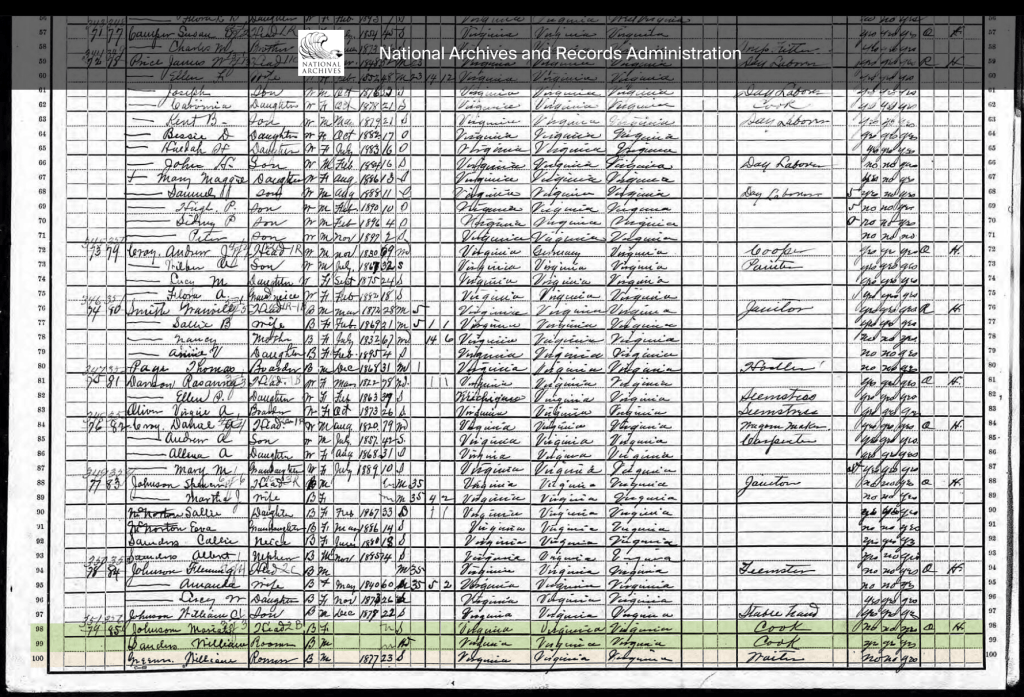
William Palmer Green, Preston Mays/Mayse, John Vaughn, William Young, Blanche Lavender, AME Parsonage, John D Smith and John B. Rollins are found in the various US Population Census.
1900 Population Census, National Archives & Records Administration1900 Population Census, National Archives & Records Administration1910 Population Census, National Archives & Records Administration1910 Population Census, National Archives & Records Administration1920 Population Census, National Archives & Records Administration1930 Population Census, National Archives & Records Administration1930 Population Census, National Archives & Records Administration1940 Population Census, National Archives & Records AdministrationEarly 1900 Map of Blacksburg and New Town
Montgomery County (Va.) Cohabitation Register. This register records the name of the husband, his age, place of birth, residence, occupation, last owner, last owner’s residence, name of the wife, her age, place of birth, residence, last owner, last owner’s residence, name of children with the ages of each, and the date of commencement of cohabitation. Of note is the wide range of localities reported as the former slaves’ places of birth
The University of Virginia Library’s Virginia Untold: The African American Narrative provides a comprehensive online archive of African American and related history. These primary sources are invaluable for researchers and genealogists. Search “Montgomery County, VA” to locate local materials, and include “Wythe County, VA,” as some Montgomery County records are held there. While the site offers search functionality, downloading PDF transcriptions allows for more targeted searching. Please note that name spellings may vary. Scroll down on this web page for additional online resources.
Montgomery County (Va.) Register of Colored Persons Cohabiting Together as Husband and Wife, 1866 Feb. 27. N.p., 1866.
This document is very valuable and now that it has been digitized it is accessible. Please read the description and historical note by the Library of Virginia: (accessed 3 March 2024)
Description Montgomery County (Va.) Register of Colored Persons of Montgomery County, State of Virginia, cohabiting together as Husband and Wife on 27th February 1866. Also commonly called Montgomery County (Va.) Cohabitation Register. This register records the name of the husband, his age, place of birth, residence, occupation, last owner, last owner’s residence, name of the wife, her age, place of birth, residence, last owner, last owner’s residence, name of children with the ages of each, and the date of commencement of cohabitation. Of note is the wide range of localities reported as the former slaves’ places of birth
Montgomery County (Va.) Register of Colored Persons Cohabiting Together as Husband and Wife, 1866 Feb. 27. N.p., 1866. Print.
Historical Note Note
Montgomery County was named for Richard Montgomery, who was killed in the American assault on Quebec late in 1775. It was formed from Fincastle County in 1776. Part of Botetourt County was added in 1789, and part of Pulaski County was added in 1842.
The Virginia legislature passed an act on 27 February 1866 to legalize the marriages of former slaves who had been cohabiting as of that date. See Virginia Acts of Assembly, 1866-1867, Chapter 18, An act to amend and re-enact the 14th section of chapter 108 of the Code of Virginia for 1860, in regard to registers of marriage; and to legalize the marriages of colored persons now cohabiting as husband and wife.
The federal Bureau of Refugees, Freedmen, and Abandoned Lands directed the Assistant Superintendents of the states to order the county clerks to make a registry of such cohabiting couples. See Circular No. 11, dated 19 March 1866, in Orders, Circulars, Circular Letters, and Letters of Instruction, vol. 2 (1866). Bureau of Refugees, Freedmen, and Abandoned Lands, Records of the Assistant Commissioner for the State of Virginia, 1865-1869. Miscellaneous reel 3880, Library of Virginia. National Archives microfilm M1048 (reel 41), Record Group 105.
Montgomery County (Va.) Register of Colored Persons Cohabiting Together as Husband and Wife, 1866 Feb. 27. N.p., 1866. Print.
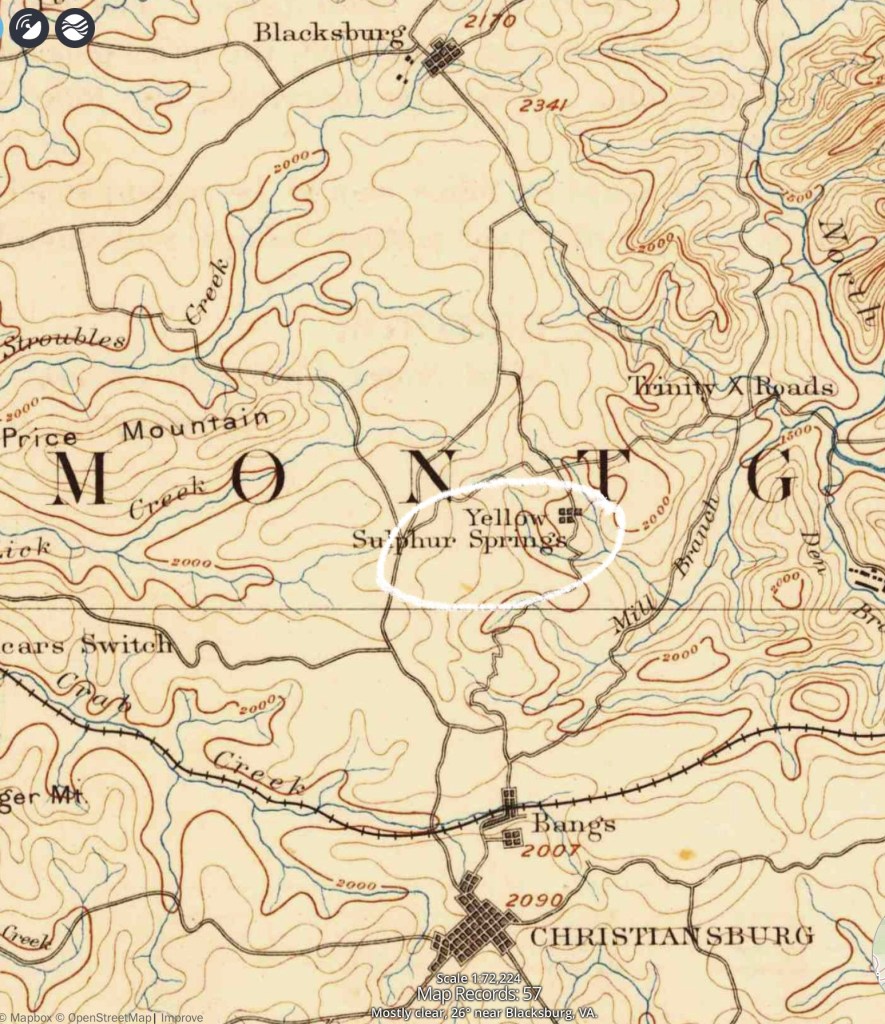
A consortium of African American investors bought Yellow Sulphur Springs in 1926 and entertained African American guests. These men were closely associated with Henry Street businesses in Roanoke, according to this report. The adventure was short-lived as it was sold in 1929.
Maps of the Springs in reference with Blacksburg and Christiansburg. USGS Historic Maps
The Sanborn Fire Insurance maps are often the only early glimpse of buildings in rural towns over time. Christiansburg Industrial Institute moved from the Zion Hill location to the Lattimer Plantation site, north west of Christiansburg, at the turn of the 20th Century. This Sanborn Fire Insurance Map from Christiansburg, Montgomery County, Virginia was published by the Sanborn Map Company, dated Sep, 1913. The key to the maps is at the end.
The map is of Christiansburg Industrial Institute, situated north west of Cambria and north of Christiansburg courthouse. Note that frame constructed buildings are coded yellow and red for the solid brick building. The Baily Morris Building which housed the girls dorm, assembly hall, dinning hall and kitchen (close-up below) is heated by steam and lighted by electricity.
“Baily-Morris” Building
The Morris Hall Boys’ Dorm is both red and yellow, denoting built of a combination of building materials. The building is heated by hot water and lighted by electricity. Note that the buildings were supplied with water by 2,500 ft of pipes connected to the 10K gal water tank on the hill. The tank is filled by a Worthington Pump, moving water from a spring.
The girls and boys dorms were named for two Friends’ of the Freedmen of PA, Elliston P. Morris and Joshua L. Baily. They also donated money to construct the water system which was installed in 1907, before either Christiansburg or Blacksburg had a community water system. (A Vision of Education, Selected Writings of Edgar A. Long, Anna Fariello, Ed. Christiansburg Institute, Inc. 2021, pg 86,)
The Lattimer Mansion House, wood framed, was heated by stove and not connected to the water supply. The house was used as classrooms. Note the printing, carpenter and black smith shop close to the entrance road.
1913 Hill School & Schaeffer Memorial Baptist Church
This map is of Zion Hill which is located on the ridge (now High Street) between Cambria and Christiansburg. The brick (red) “Public School” housed the Christiansburg Industrial Institute before that secondary school moved to the Lattimer Plantation property by the turn of 20th century. This brick school, built by 1885, was converted to a primary school for African American children after CII moved. As noted by the Sanborn map, the building was heated by stoves and lighted by electricity.
Image of the Hill School from The Story of a Consecrated Life, Commemorative of Rev. Charles S. Schaeffer by CH Harrison, 1900. High Street is visible.
The Schaeffer Memorial Baptist Church is also of brick and built by 1885. Charles S Schaeffer’s memorial brass plaque were unveiled 1 October 1899, after he died in May of that same year. Note the frame chapel to the left (east) of the brick structure.
Image of Schaeffer Memorial Baptist Church from The Story of a Consecrated Life, Commemorative of Rev. Charles S. Schaeffer by CH Harrison, 1900. High Street is visible in the foreground. Later photograph, courtesy of the D.D. Lester Collection, Montgomery Museum of Art & History
On the Sanborn map, note the small frame, 1 story building behind the church? This may be the first school/church building on Zion Hill. The deed (DB S, pg 12, Oct 1868) and Harrison, 1900 * note the existence of this building. The brick school on the 1913 Sanborn map was the third version of this school at this site. The second school on Zion Hill was a 2 story & frame building, used between 1974 and 1885. (The rented Campbell house was the first school but it was not located on Zion Hill.)*
The image of the small school/meeting house shows a one story frame building with hip-roof and double stove-pipes. The dressed limestone block foundation was typical in this area and seen on buildings dating from early 1800s to the turn of the 20th century.
Image of the first school house on Zion Hill from The Story of a Consecrated Life, Commemorative of Rev. Charles S. Schaeffer by CH Harrison, 1900. High Street is visible in the foreground.