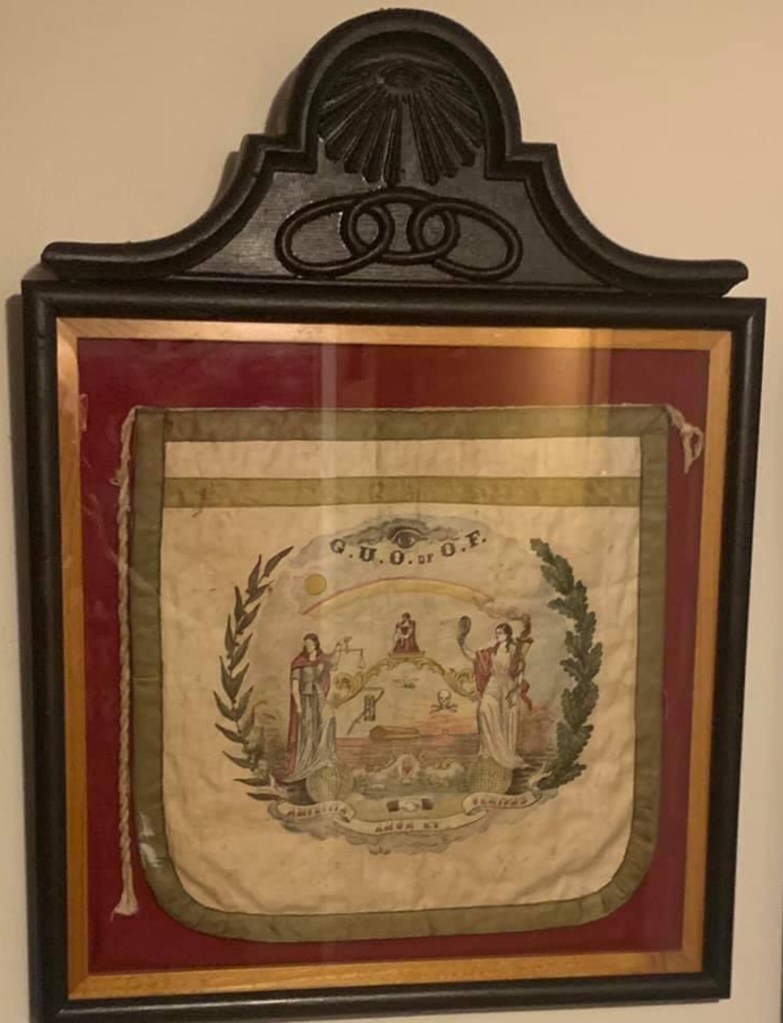
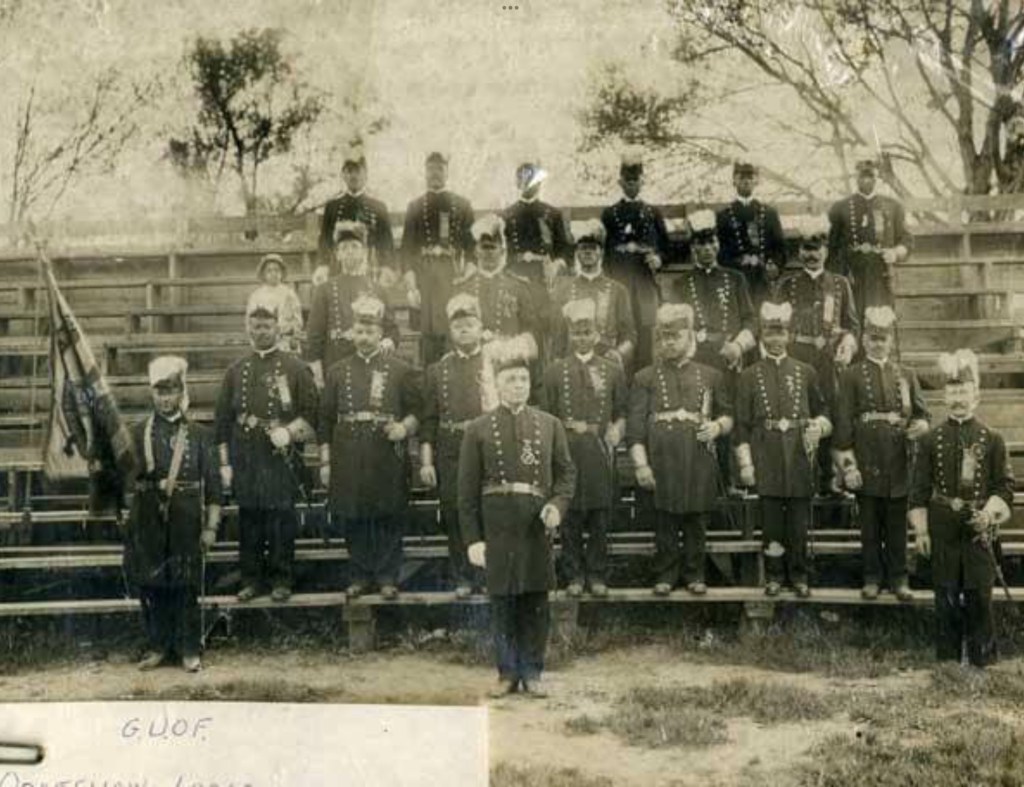
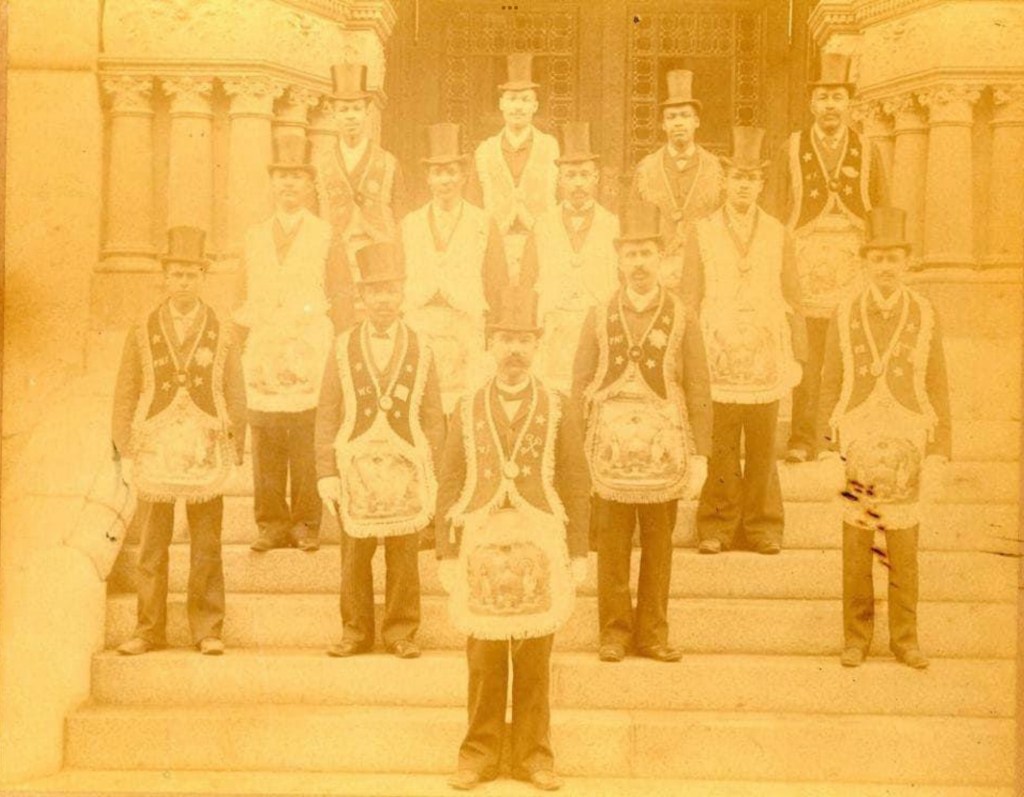
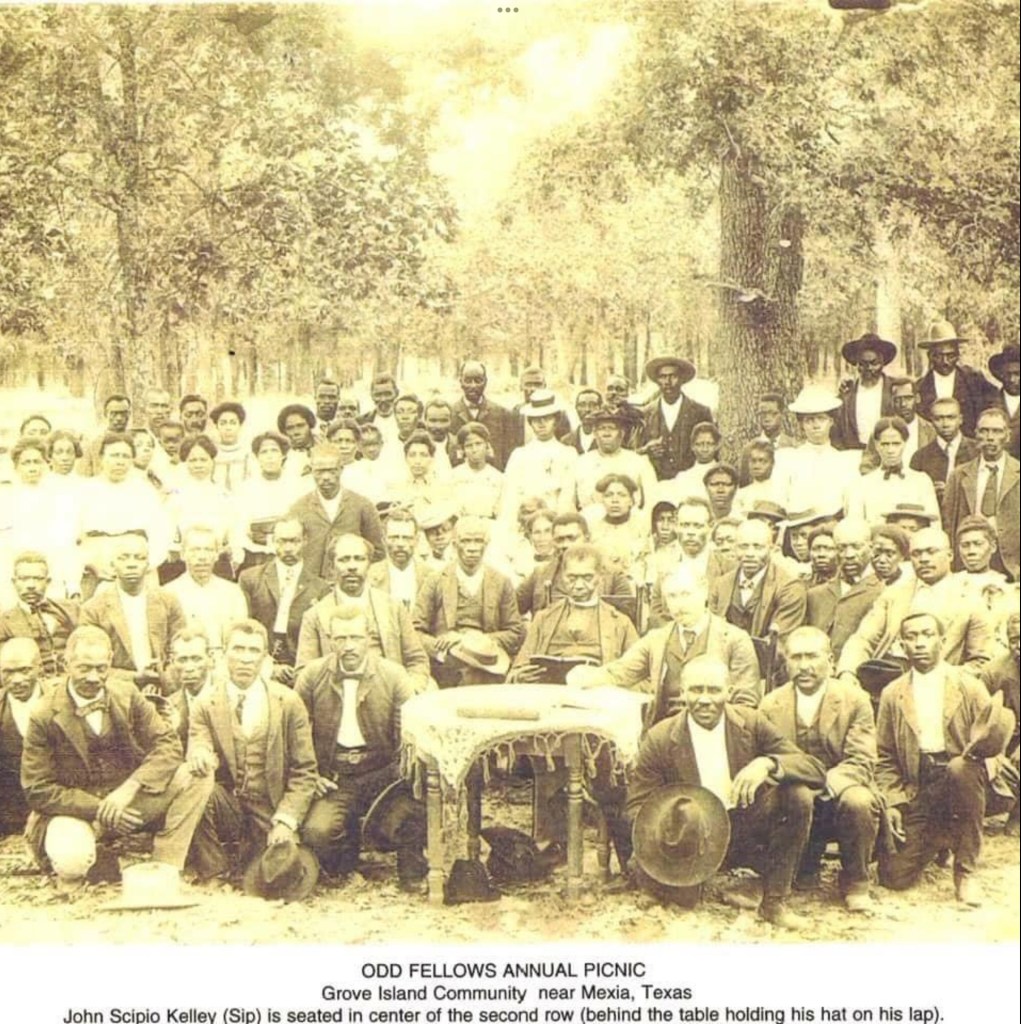
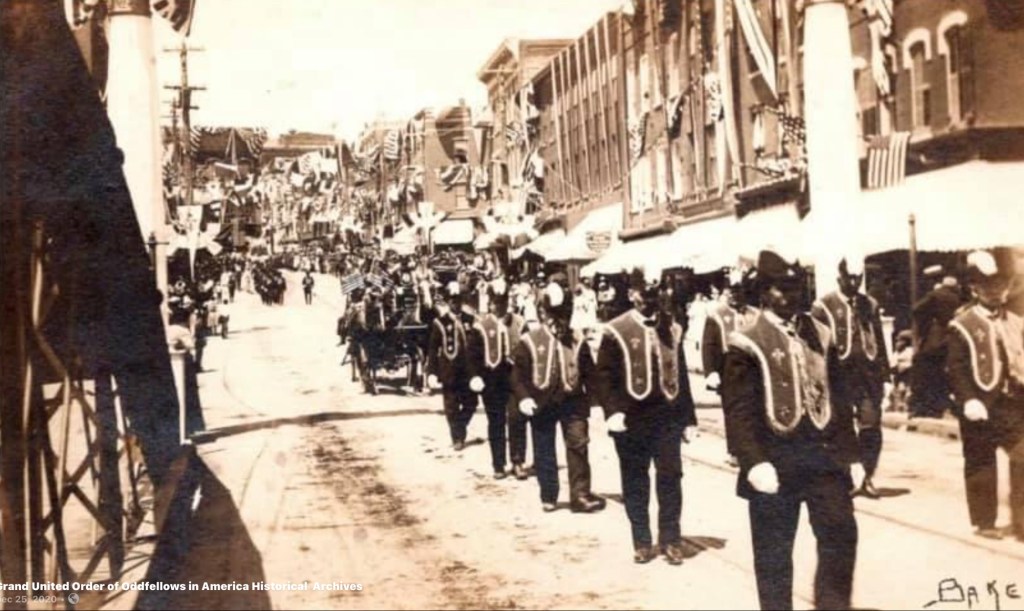
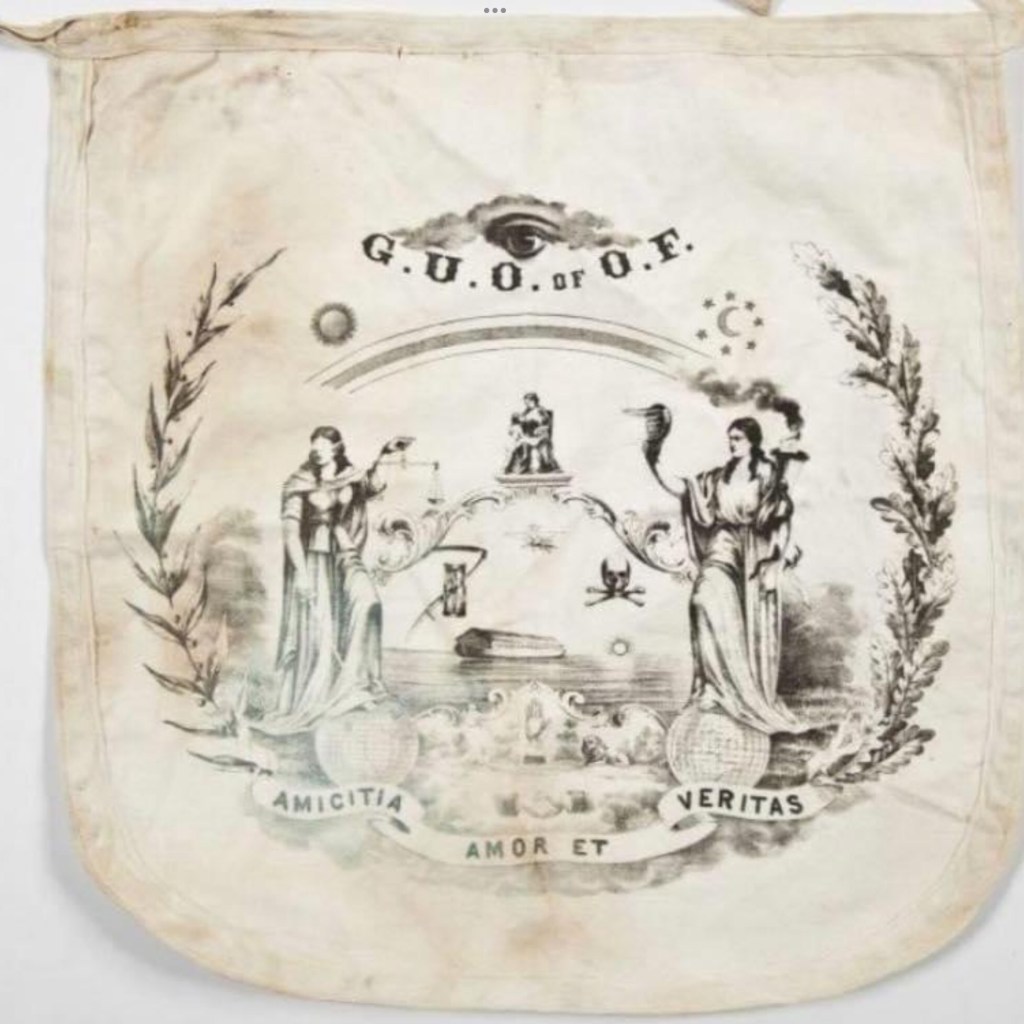
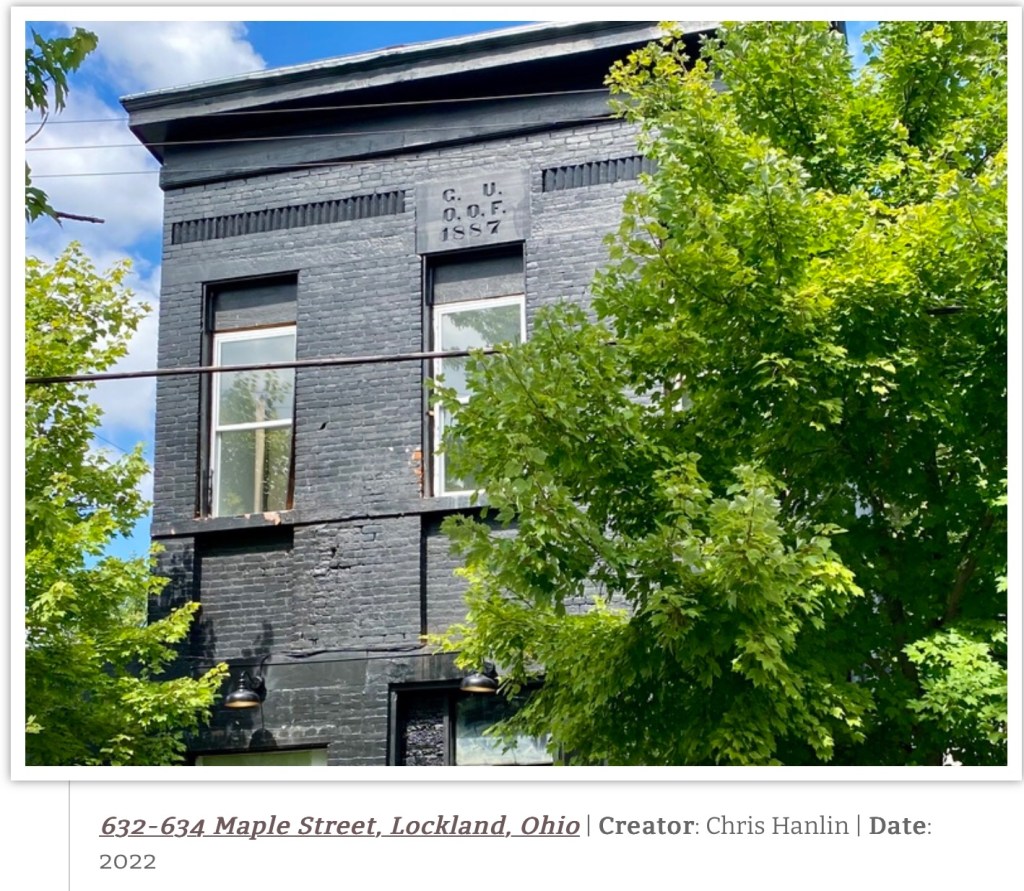
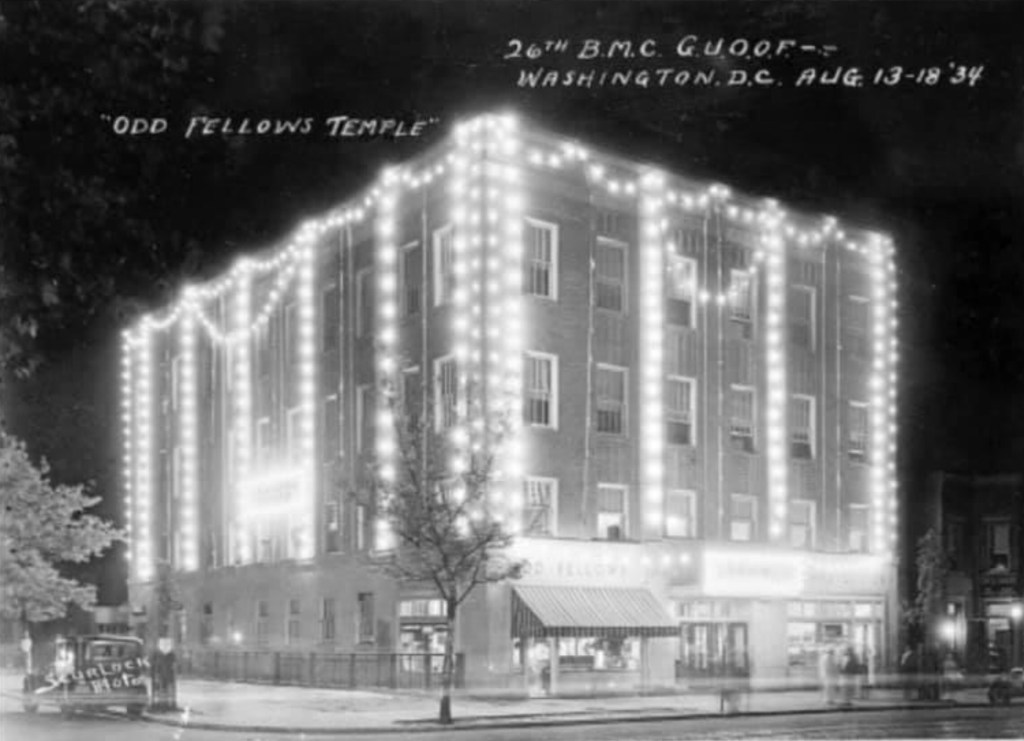
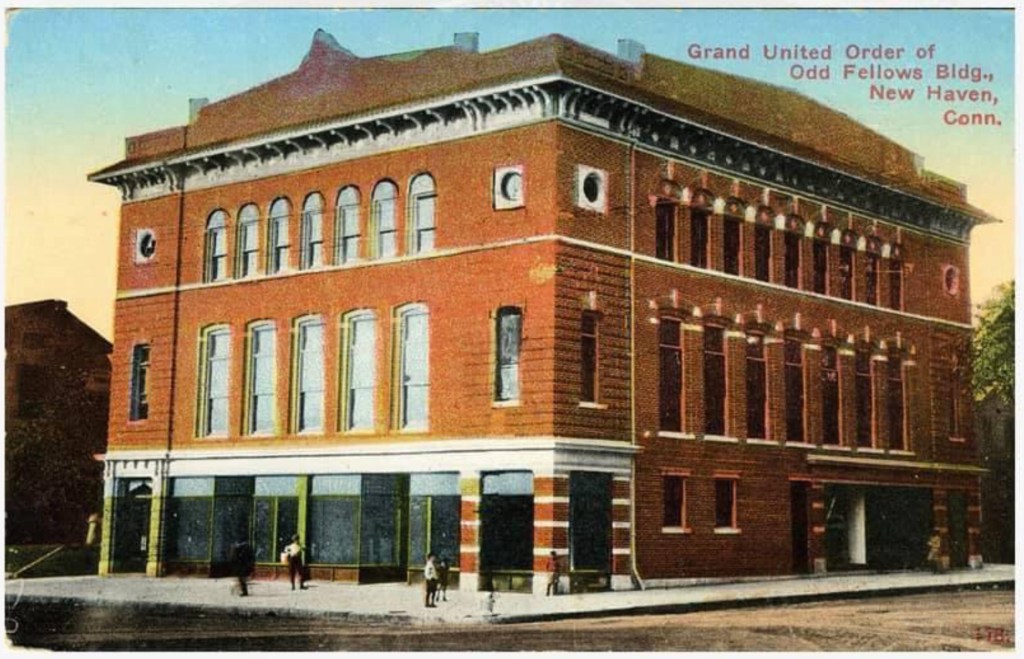
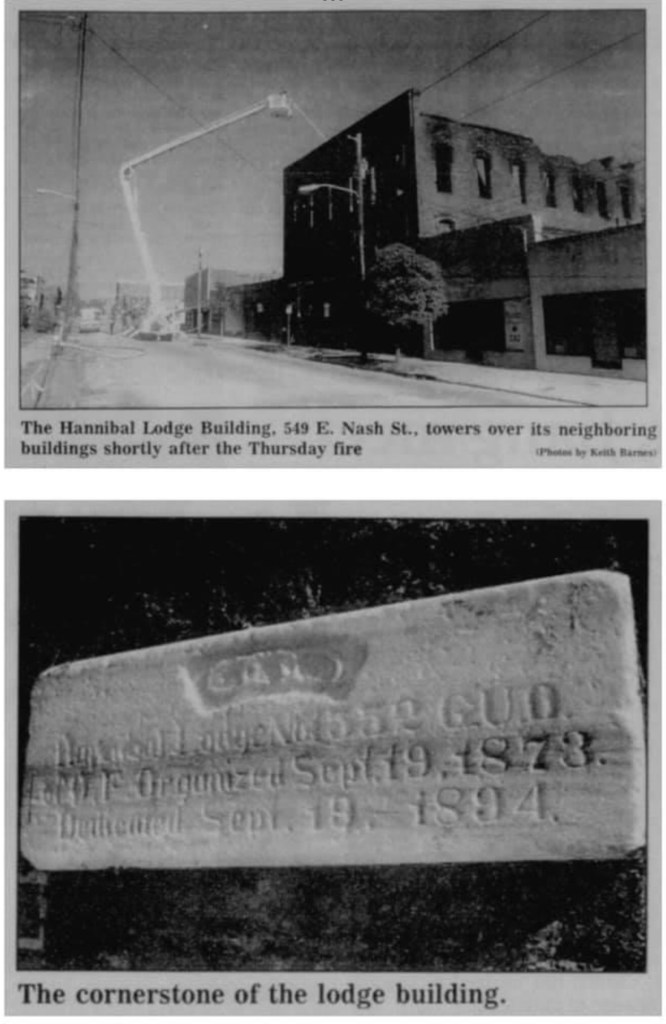
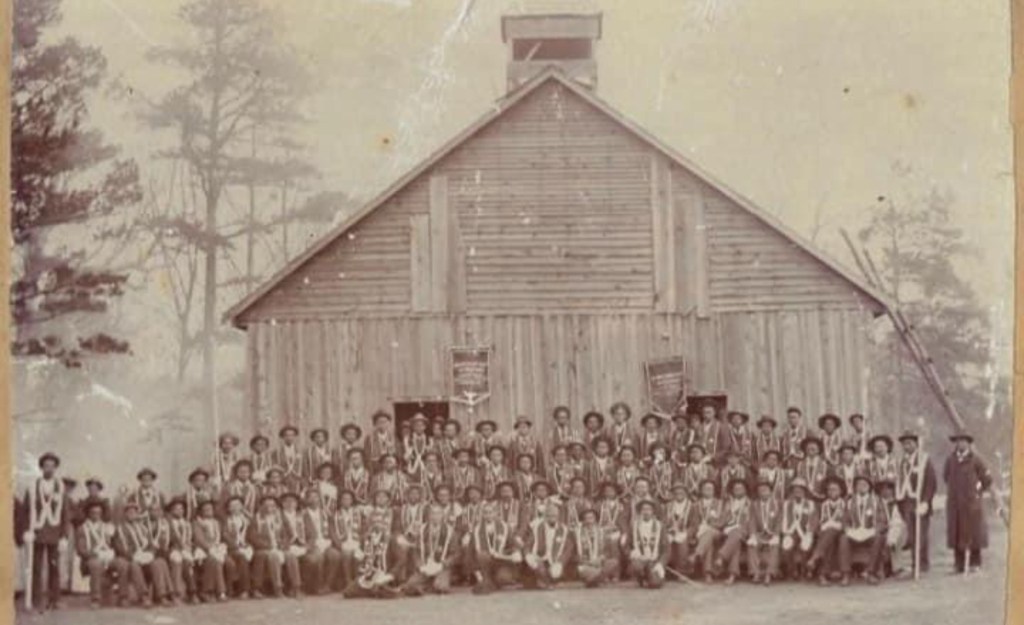
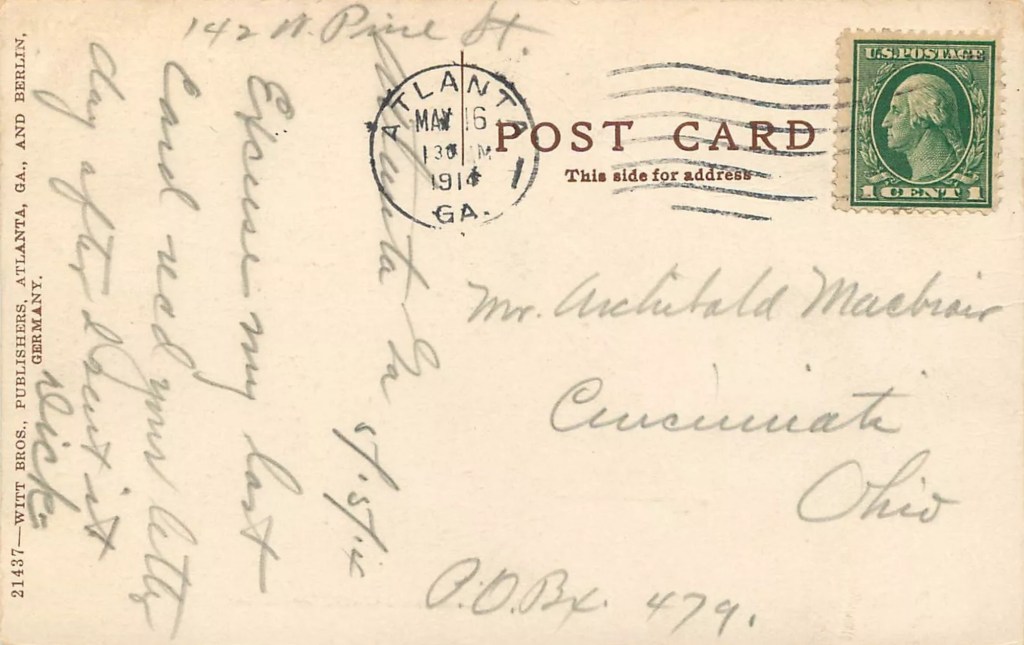
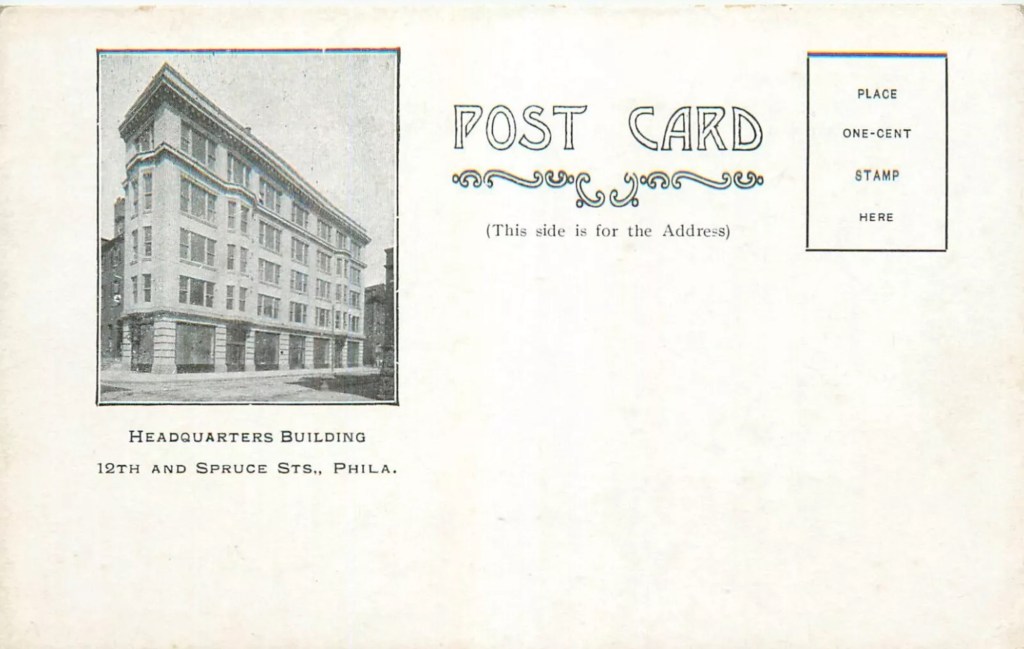
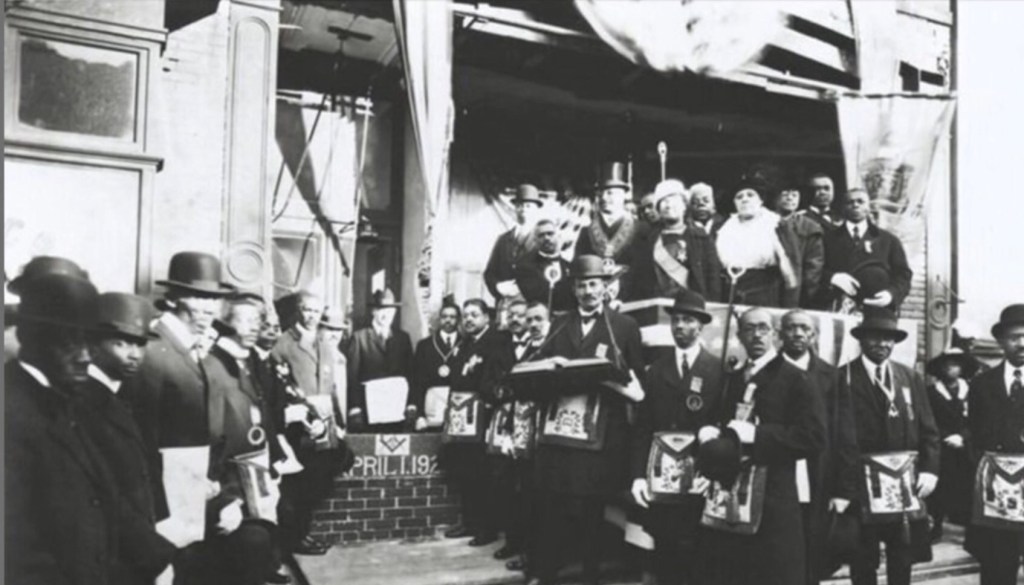
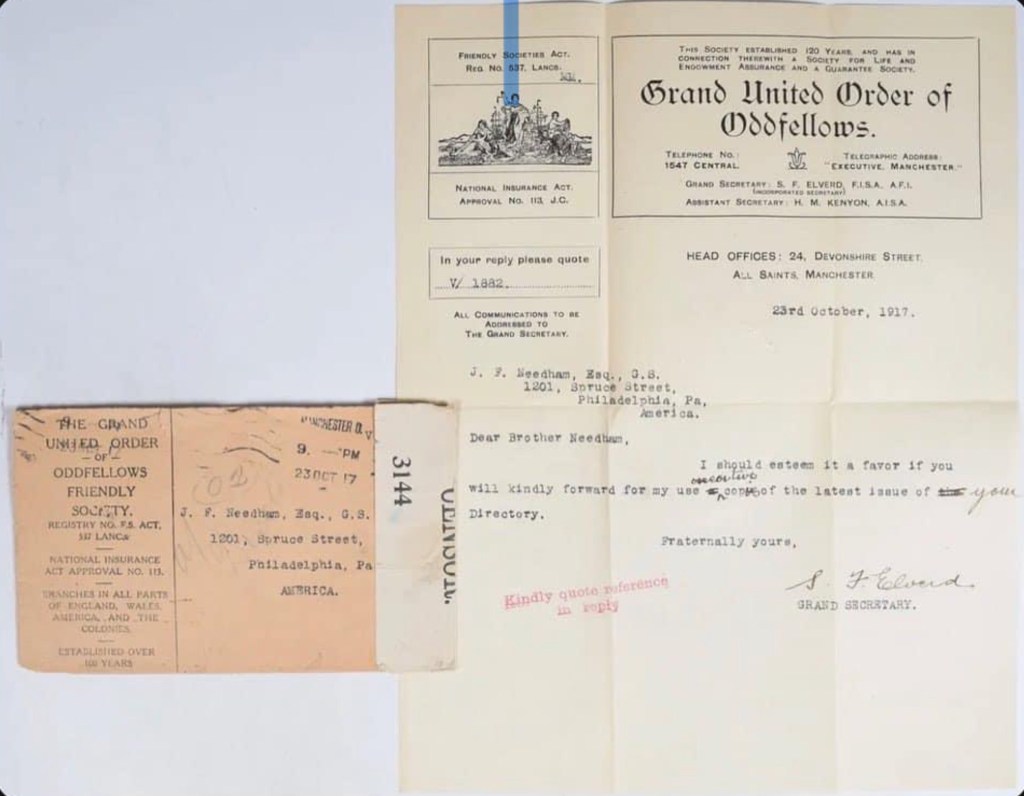
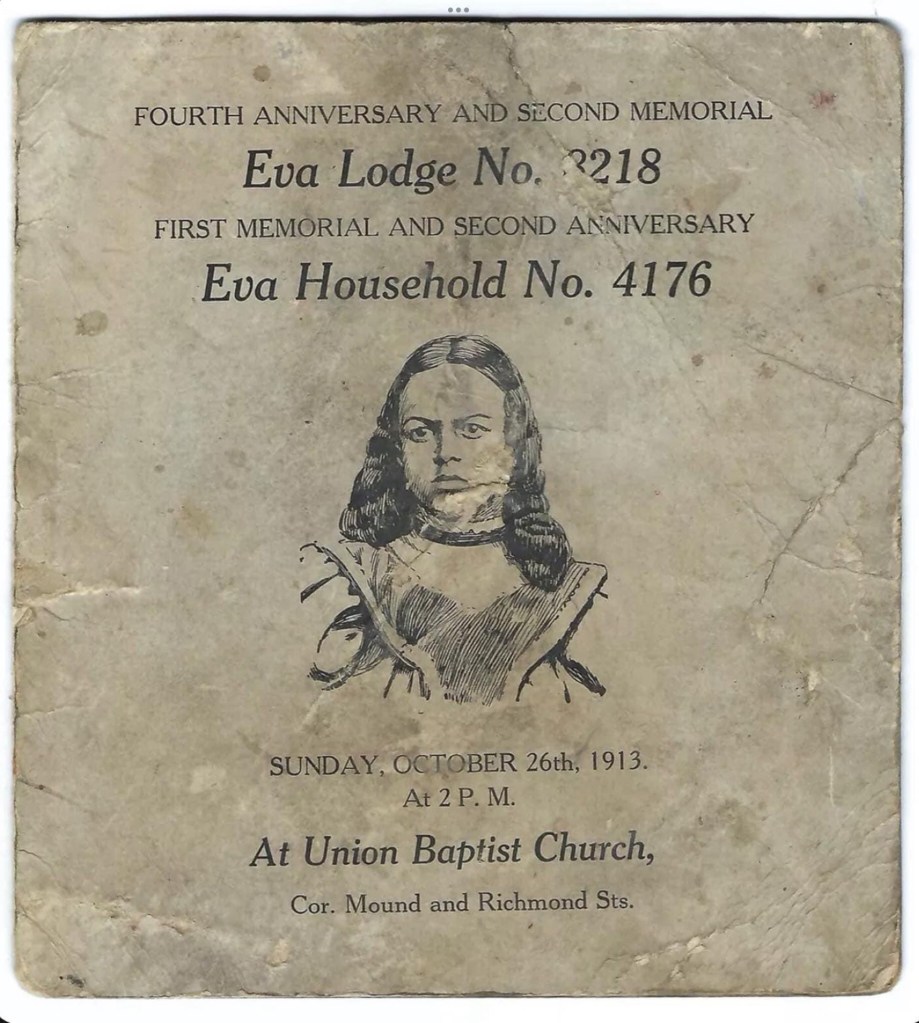
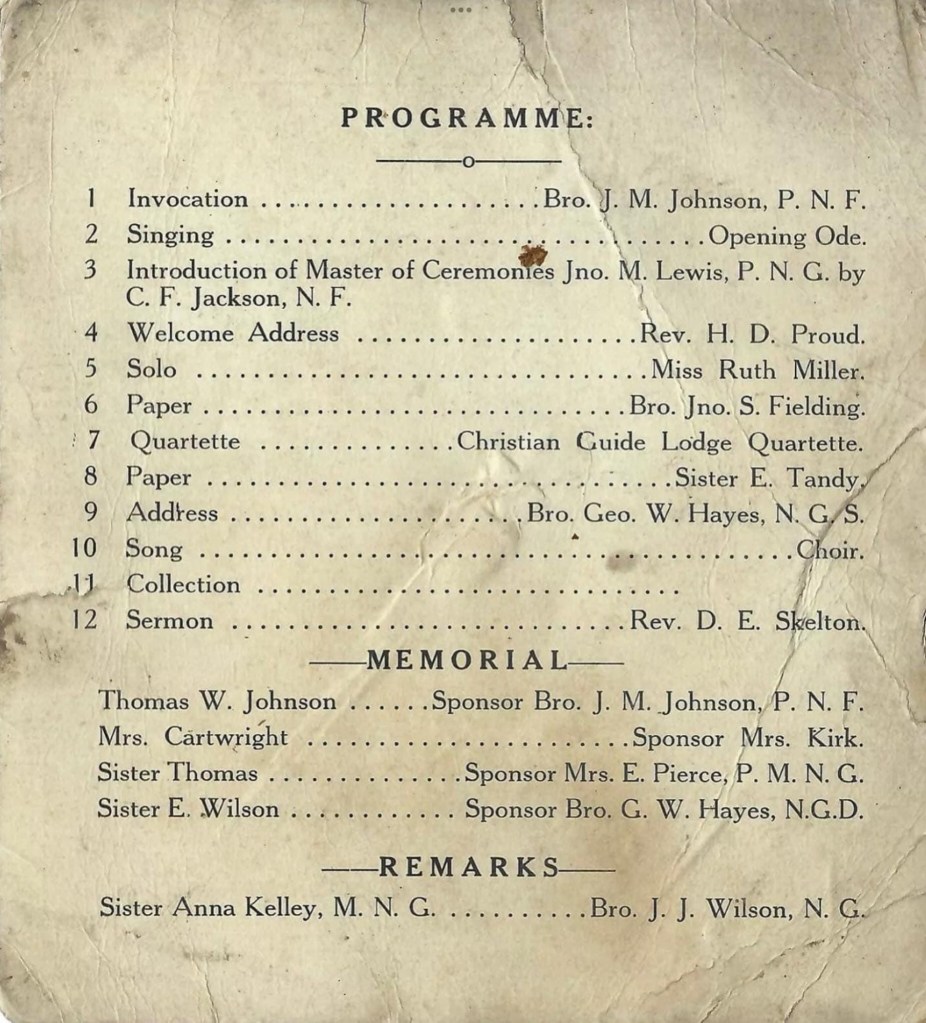
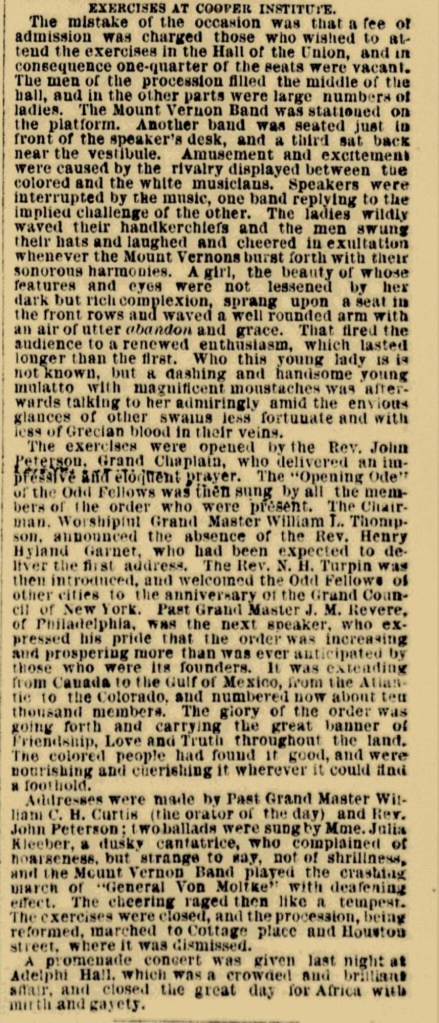
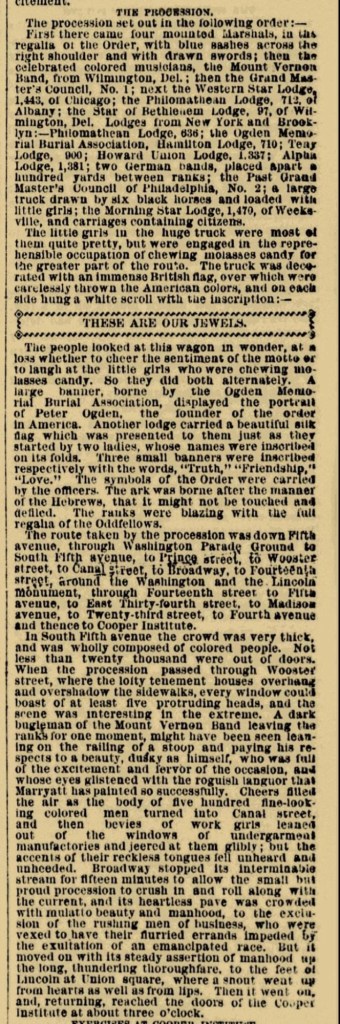
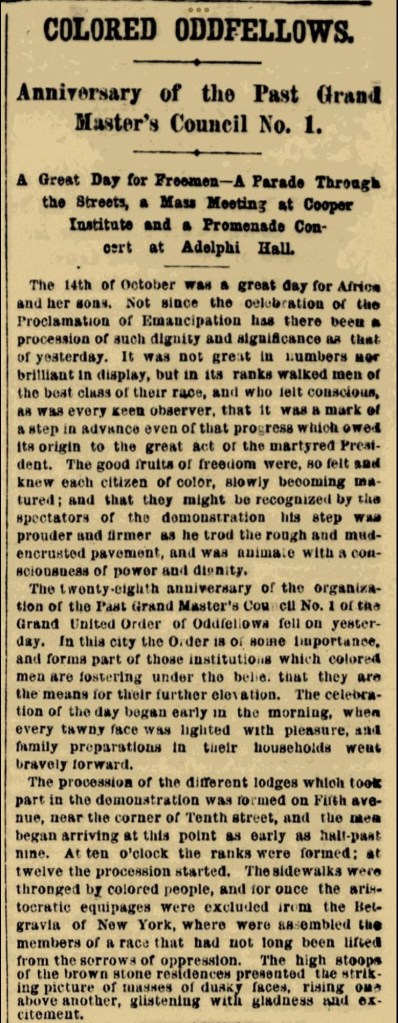
This webpage showcases a photo gallery of rare images featuring ceremonial regalia, equipment, documents, and leaders associated with the Grand United Order of Odd Fellows. While some images lack provenance, they offer valuable visual references for how members of the Blacksburg order may have appeared, especially since no living individuals can provide that information. (Many of these images were collected from eBay, Northern Star Lodge Facebook (No 715 NS) and other places.
Sandy Spring, MD – The Grand United Order of Odd Fellows Lodge No. 6430 has undergone a stunning renovation. Their mission-driven use of the building serves as an inspiring model that could be replicated in Blacksburg. The restoration of the building involved the Advisory Council of Preservation. Check out their Facebook page
Who in Blacksburg was traveling by train to and from Richmond, carrying the financial transactions and funds collected by St. Frances Council No. 235.
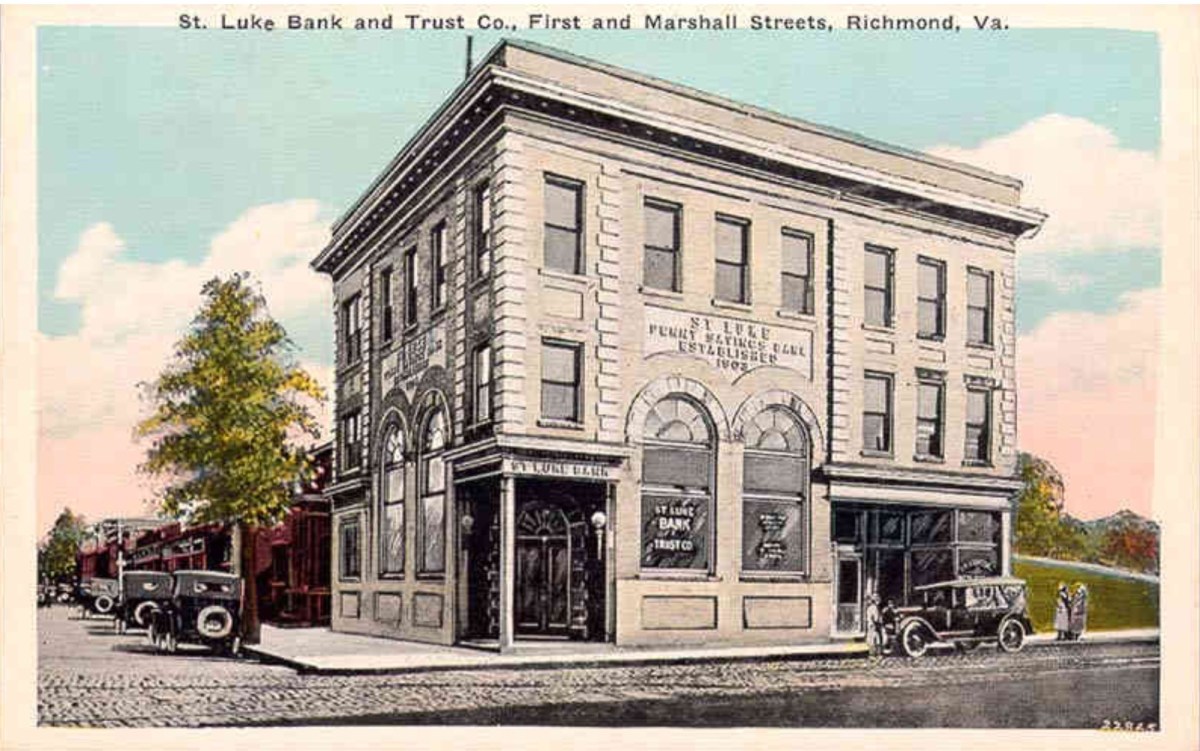
Resources half million dollars. Depository for Gas and Water Accounts and Taxes of the City of Richmond. Mrs. Maggie L. Walker, Pres.; J. Thomas Newin, Z.D. Lewis, S.W. Robinson, Jr., and P.H. Ford, Vice-Presidents; Emmett C. Burke, Cashier; Melvin D. Walker, Asst. Cashier. (Courtesy of William Shuman Collection of Richmond, Virginia Postcards, Accession Number 2004-09-12, Special Collections and Archives, James Branch Cabell Library, Virginia Commonwealth University.)
Mrs. Maggie Lena Walker was the first African American woman to serve as a bank president in the United States. The Maggie L. Walker National Historic Site in Richmond honors her remarkable life, legacy, and significant contributions to African American history, with her influence extending even to Blacksburg, Virginia.
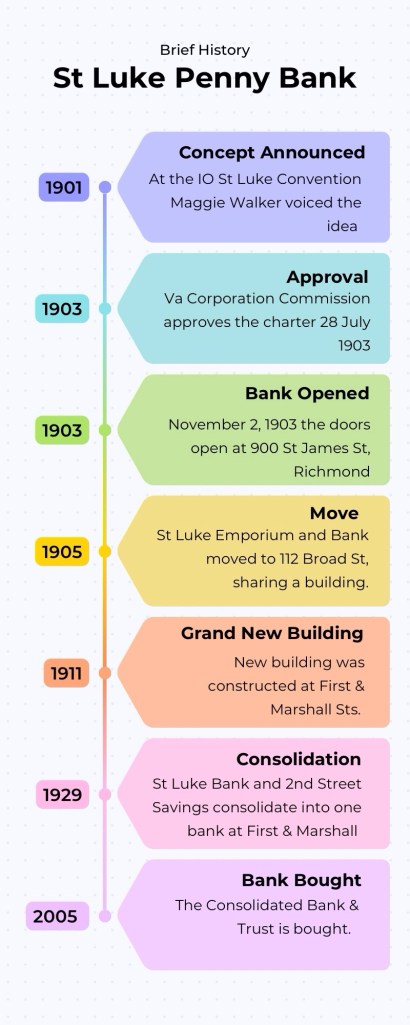
St Luke Penny Savings Bank
Much has been documented about the creation and impact of the Penny Bank in Richmond. What remains to be uncovered is who in Blacksburg was traveling by train to and from Richmond, carrying the financial transactions and funds collected by St. Frances Council No. 235, established by Mrs Maggie Lena Walker, 4 August 1902.
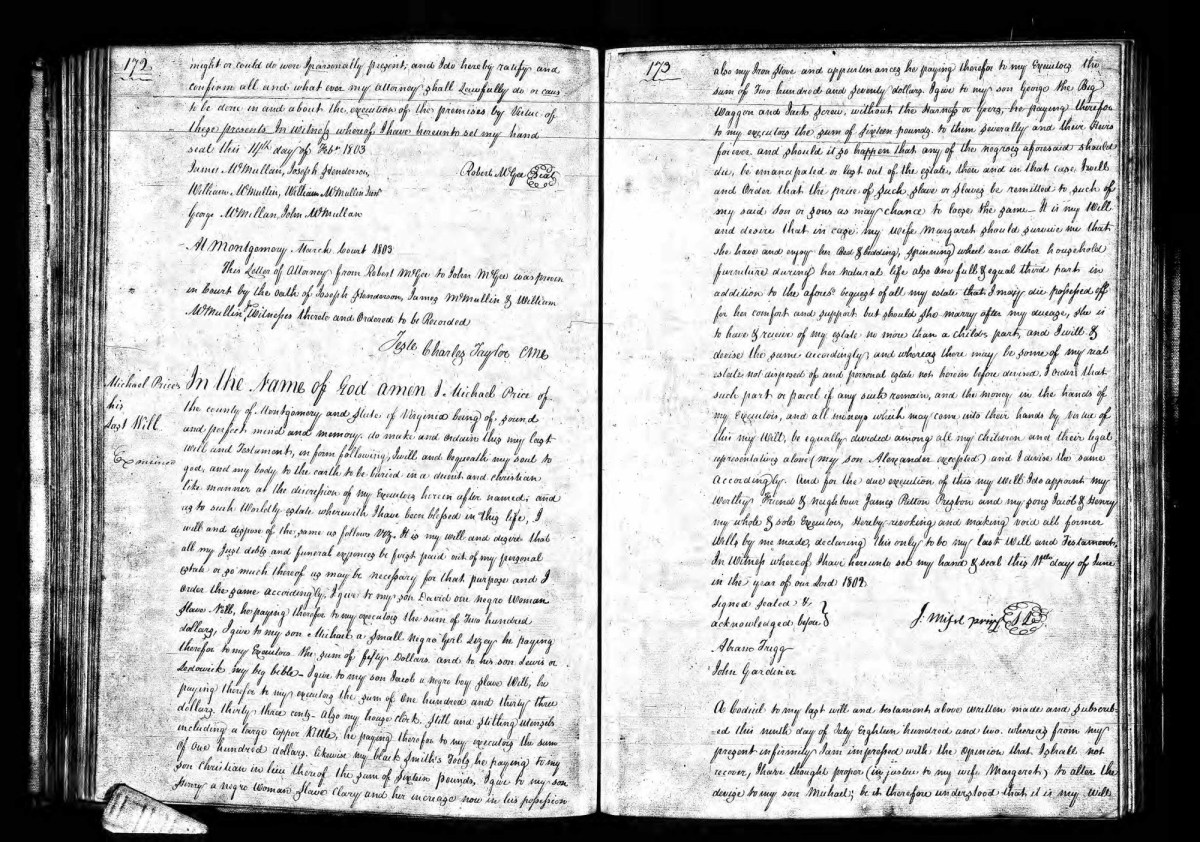
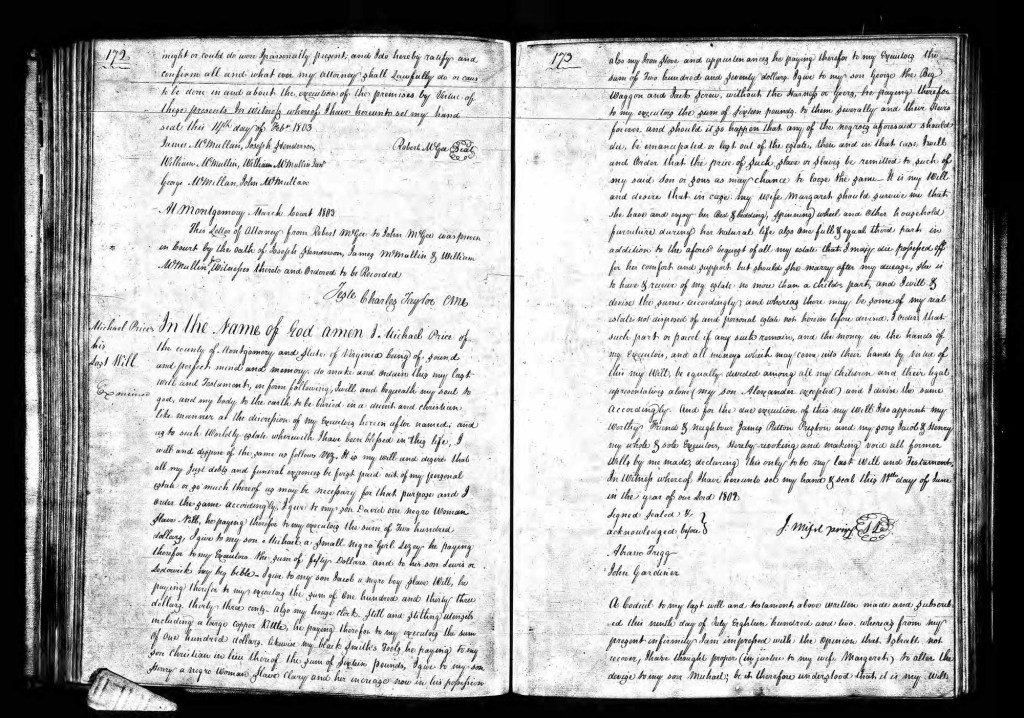
Michael Price wrote his will on 11 June 1802, witnesses by Abram Trigg and John Gardiner. James Patton Preston and his sons, Jacob and Henry Price were his executors. The will was proved on 09 July 1802. According to the 1788 Tax list, Michale was taxed for two enslaved people.
Summary
Son David inherited an enslaved woman named Nall for $200.
Son Michael inherited a small girl, Lizey for $50
Son Jacob inherited Will, paying $133
Perry inherited Clary with her “increase.”
Michael Price (1748-1839) Will
Michael Price wrote his will on 12 March 1835. witnessed by Jacob Shell, Jacob Harless, and Samuel Smith. The executors were Alexander Price (son), David Keister, Phillip Harless, and Peter Keister, proved on 12 March 1839. According to the 1788 Tax list, Michale held no enslaved people.
Summary
Wife, Esther Francisco Price inherited Liz and her two children, Maria and Ben. Upon Esther’s death she may “dispose” of Maria and/or Ben, but Liz was to be retained by the family. Liz was given the choice of which child she would become property.
Son Alexander inherited David and Sam.
Livey was alive in 1802 and was passed to Michael Price’s son, also named Michael. When Michael Price died in 1839, a woman named Liv and her two children, Maria and Ben, were mentioned in his estate. After his death, Liv was inherited by Esther Francisco Price, who was living with her son, Alexander Price.
Further research is needed to trace the lives of those held in bondage by the early Price family.
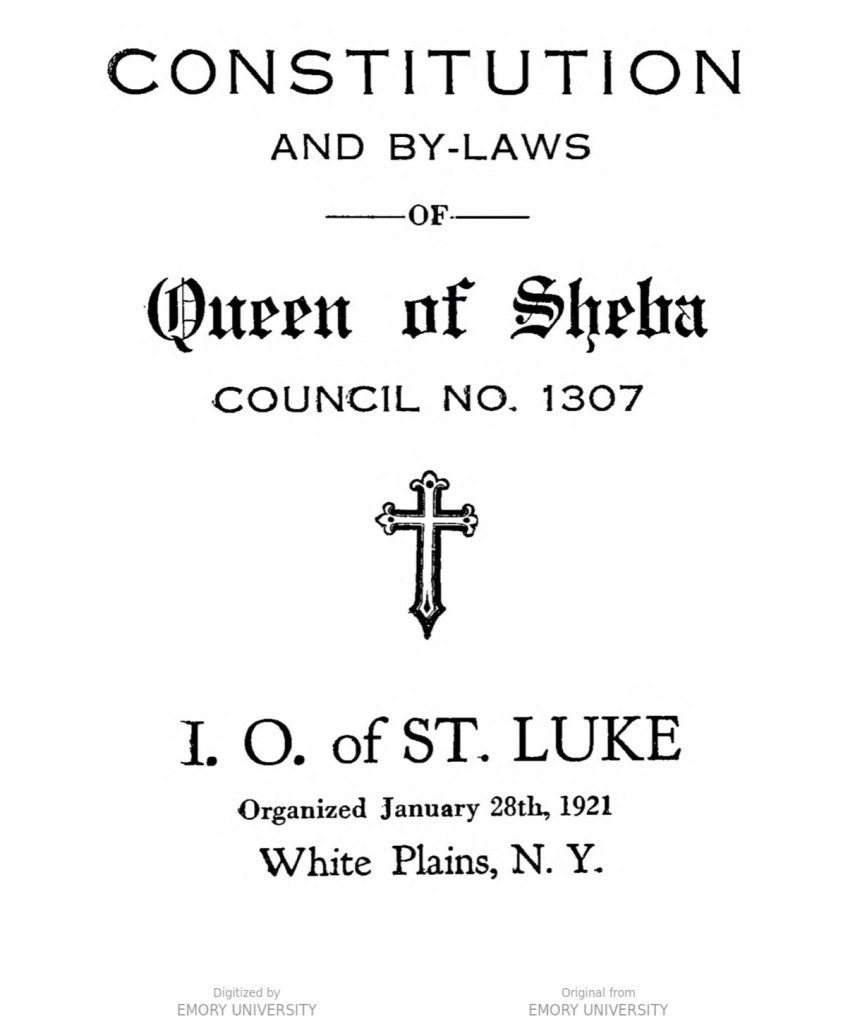
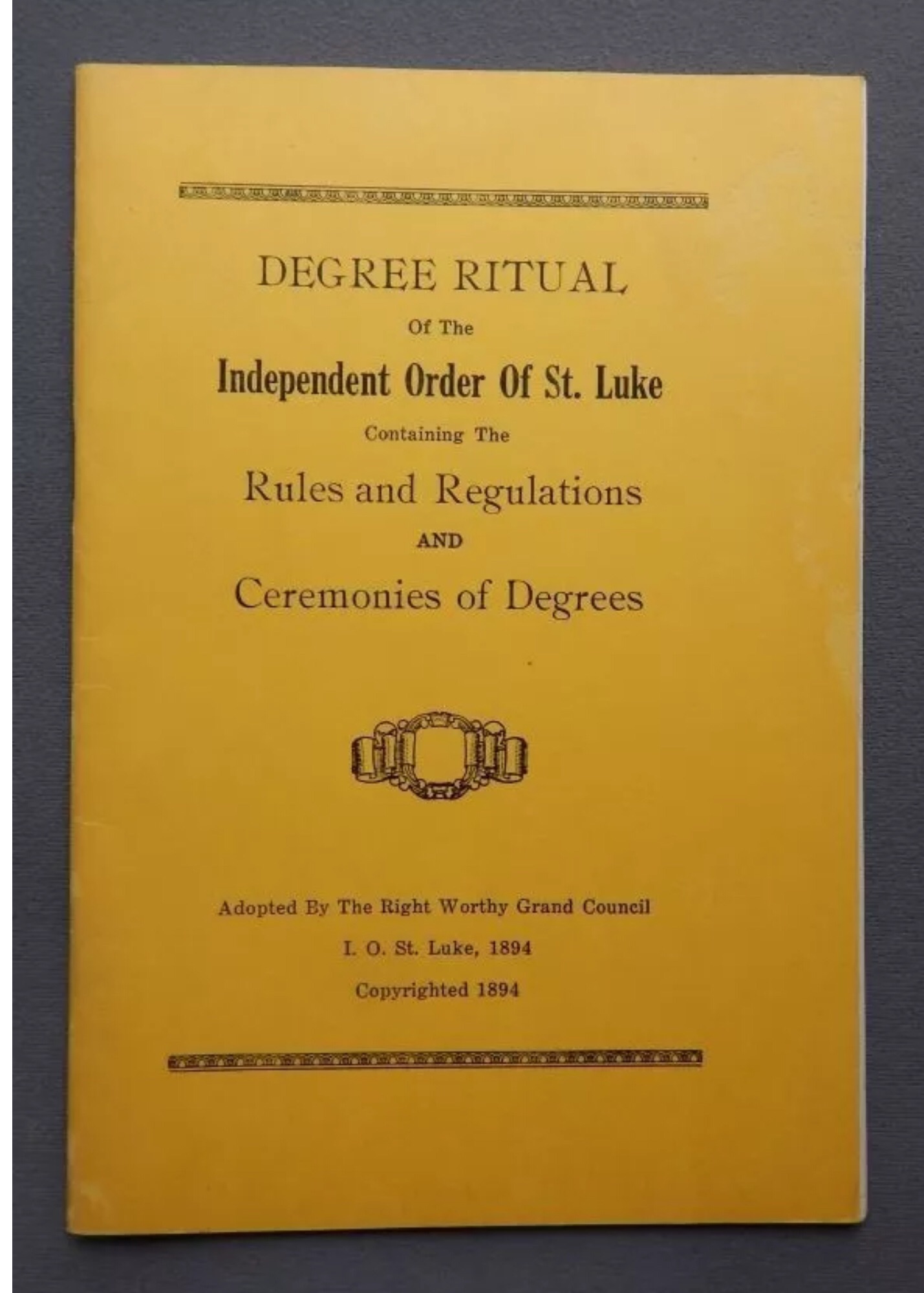
In Blacksburg, Virginia, the Independent Order of St Luke shared the same building with the Grant United Order of Odd Fellows, Tadmore Light 6184, located in New Town. That order’s copy of the Constitution and By-laws may be lost to history, but the Queen of Sheba Council’s 1921 version is fortunately accessible. This document highlights the significance of mutual aid within the framework of the function of the Order of St Luke.
Independent Order of St. Luke. Queen of Sheba Council No. , Randall K. Burkett, Lucy Emanuel, and Amos M. Gailliard. Constitution And By-laws of Queen of Sheba Council No. 1307, I.O. of St. Luke, Organized January 28th, 1921, White Plains, N.Y. [White Plains, N.Y.]: [The Council], 1921.
Madame Maggie J. Walker’s Vision for the Independent Order of St Luke Reflected in the Constitution and By-laws
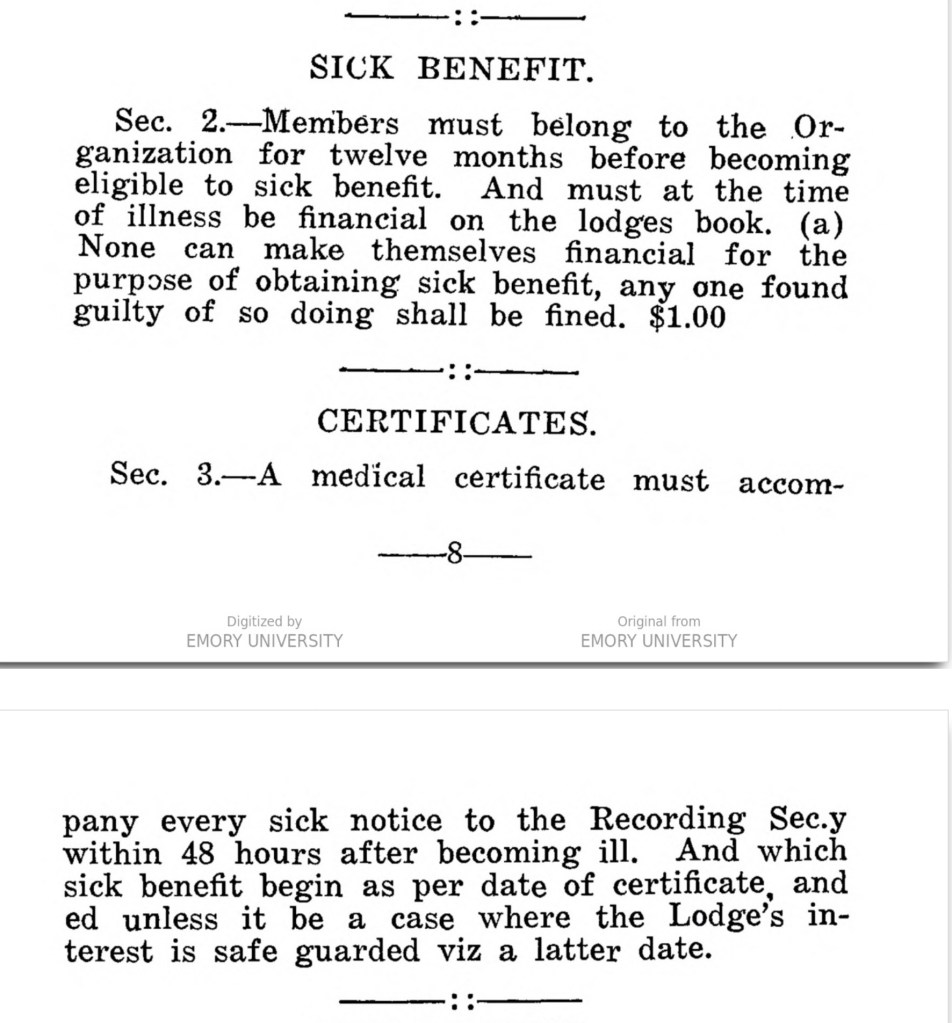
During the Jim Crow era, white-owned firms refused to grant disability and life insurance to the black community. In response, IOSL provided weekly sickness and disability benefits as well as funeral assistance for its members starting in 1895. Similar to contemporary insurance companies, it offered various premium options. Mrs. Walker’s effective leadership in membership drives bolstered the organization’s finances, enabling prompt payment of death claims and reduced premium costs.
Sick Benefit
Members who wished to receive financial support in the event of being sick or disabled, paid monthly dues into the Sick Benefit fund. The Sick Committee manages the implementation of this benefit. The member could receive no more than $35/year. That equates to about $t00 in current value.
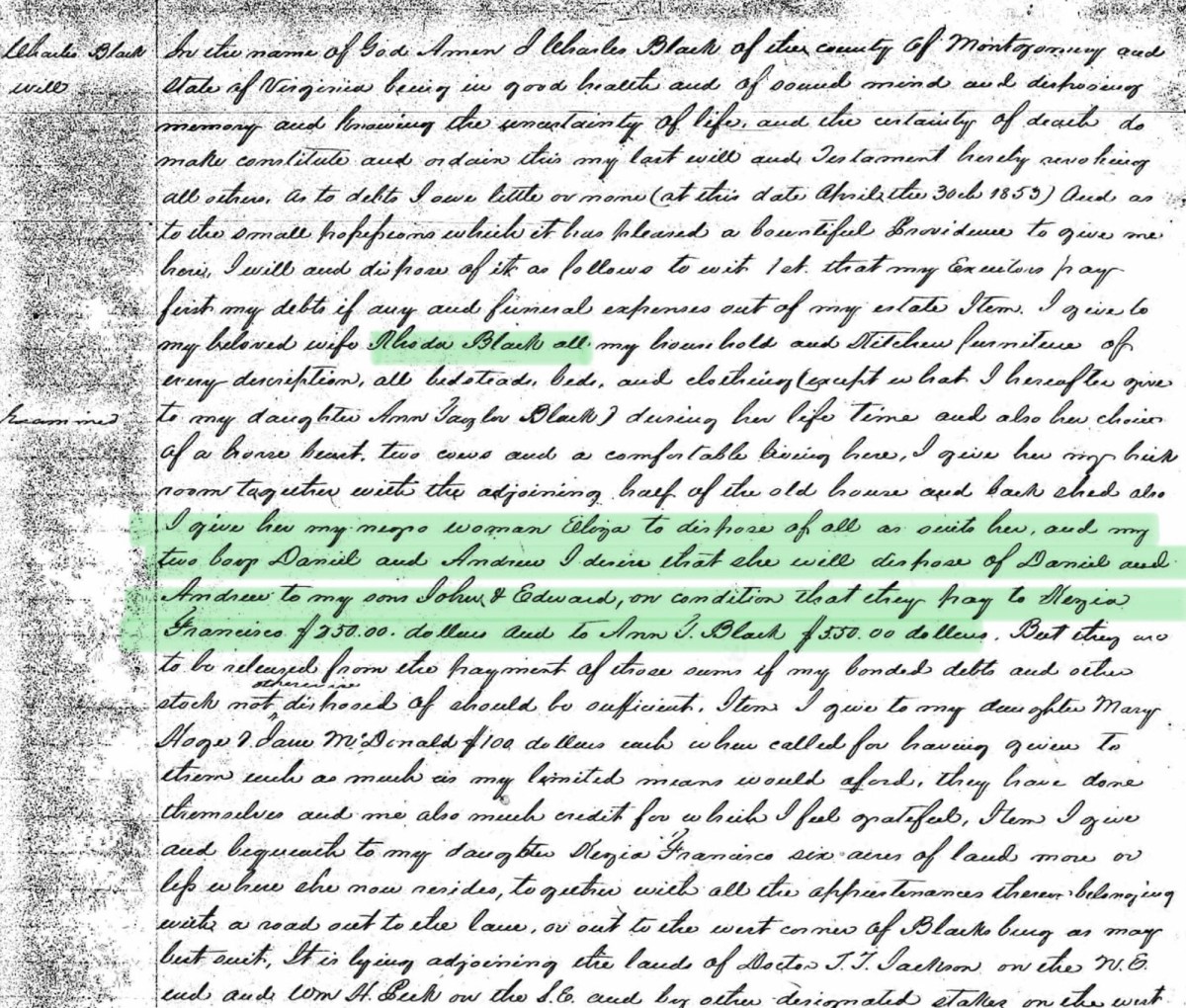
This is the last will and testament of Charles Black (1796-1853), son of John Black (1755-1845) and nephew of William Black, namesake of the Town of Blacksburg, Virginia. Charles died 1853 and his will was proved in Montgomery County, by Rice D. Montague, Clerk.
Quote: “I give her [my beloved wife Rhoda Black] my negro woman Eliza to dispose of all as suits her, and my two boys Daniel and Andrew I desire that she will dispose of Daniel and Andrew to my sons John & Edward, on condition that they pay to Kezia Francisco $750.00. dollars and to Ann T. Black $550.00 dollars.”
Rhoda McDonald Black (1805-1859), wife and mother of Keziah Black Francisco (1830-1903), Ann Taylor “Nannie” Black (1837-1903), John Black A. (1831-1899), and Edward Black (1835-1912).
Much of Charles and Rhoda Black’s land becomes part of Virginia Tech campus after the death of Charles and Rhoda.
Page 1 Charles Black Last Will & Testament, Montgomery County Court HousePage 2
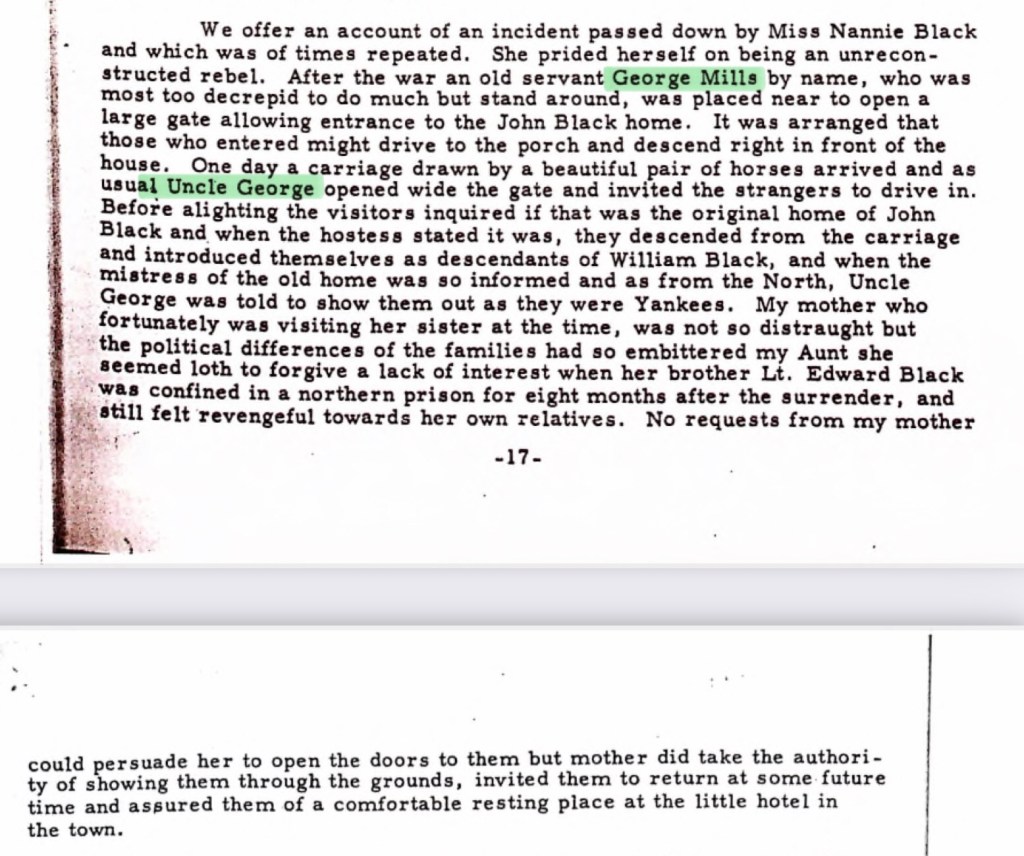
George Mills is noted as “After the war an old servant George Mills by name….” in Nannie Francisco Porter’s , daughter of Keziah Black Francisco.
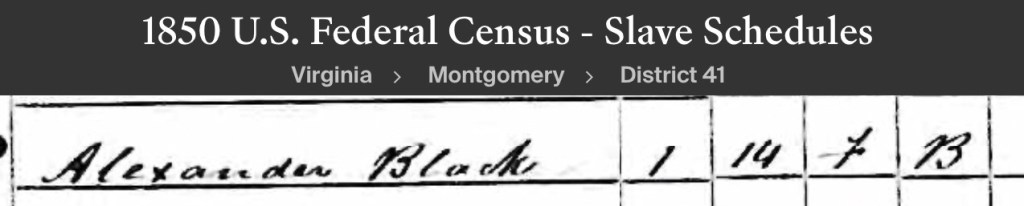
The 1850 Slave Schedule for Montgomery County does not name the people held against their will and provide a documentation of the slave owners. Charles Black’s will notes three people, a woman and two men, not four as noted below. No proof yet, but perhaps Eliza is the one listed female. Daniel and Andrew are likely one of these three people.
Alexander Black is the brother of Charles Black.
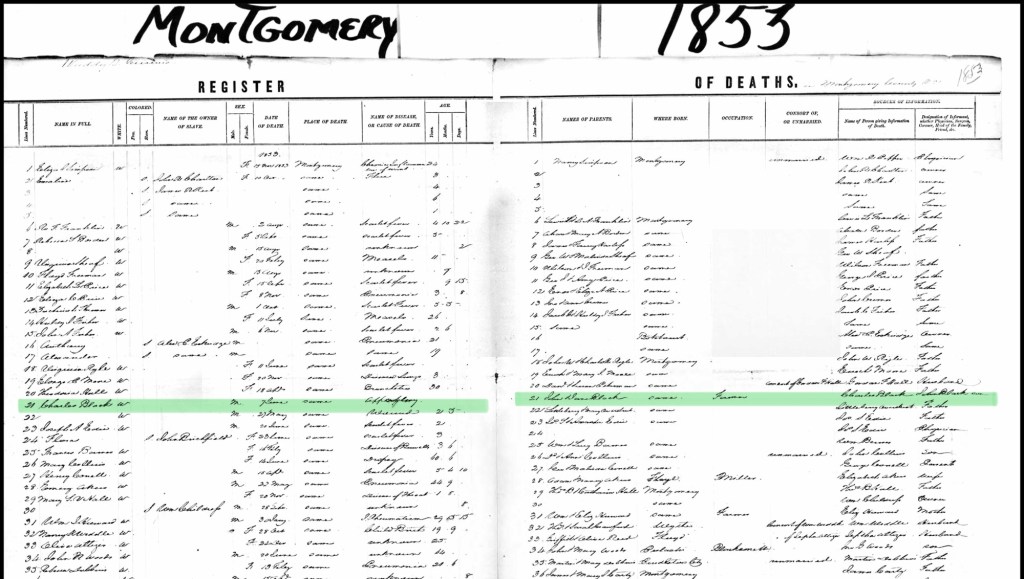
Register of Death of Enslaved by their owners
In 1853, one of Charles Black’s enslaved men reportedly died from apoplexy. This explains why his will only mentioned two men and one woman.
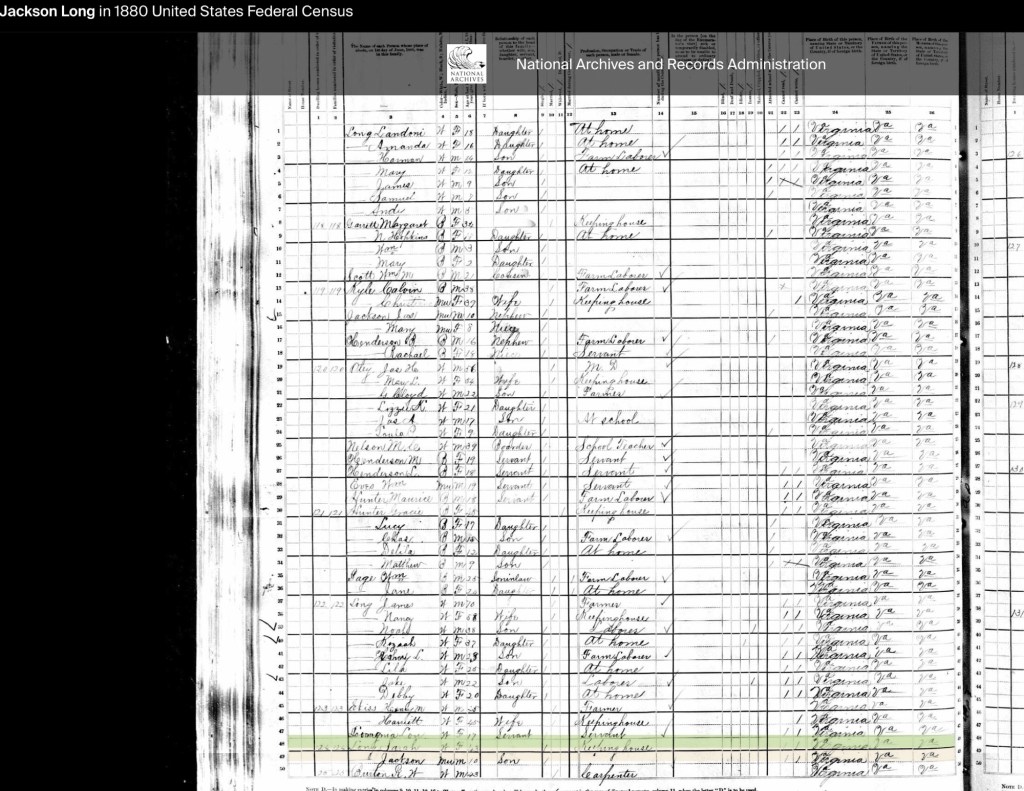
Andrew Jackson “Jack” Long was born in 1870 in Montgomery County as noted in the 1880 & 1900 US Census, and Jackson’s marriage record in 1892. In the 1930 census his birth year was noted as 1872. These documents list Jackson as either “mulatto, black or colored” and Sara/Sarah as “white.” No father was listed.
In the marriage record Jackson’s mother is noted as Sara Long and in the 1880 US Census as Sarah. In the 1880 census Sarah and Jackson are living in the vicinity of other Long families and close to the James Otey farm, Walnut Springs, close to Toms Creek.
On 1 September 1892, Jackson Long (22 yrs, laborer) marries Mary Jackson (21 yrs) by D. Bill Groseclose. Polly Jackson is noted as Mary’s mother.
Eight years later the family of 6 appears in the 1900 US Census. Jackson is 26 and a laborer in the stone quarry; Mary, his wife, is 26 and had given birth to 4 children, all still alive: Theodosia,- daughter, born December 1893, 6 yr; Thomas – son, born September 1895, 4 yr; Donald- son, born May 1896, 4 yr; Hary C – son, June 1897, 3 years.
1930 US Census finds the family in Montgomery County, and appears to be living in the same neighborhood. Jackson and Mary own their home, worth $600. He is working in Mill Rock Quarry as a Stone Cutter. The couple are now living with 7 children.
Donald and Thomas are working in the millstone quarry. Thomas is 34 (b. 1906) and Donald is 31 yrs old (b. 1909). Theodore (Ted) is 23 (b. 1917) and his brother Gilbert 13 (b. 1917) are working on a dairy farm and Mason is 22 (b. 1918) and working on a “truck” vegetable farm. The two daughters, Eva is 19 (b. 1911) and Annie 16 yrs (b. 1914) are at home.
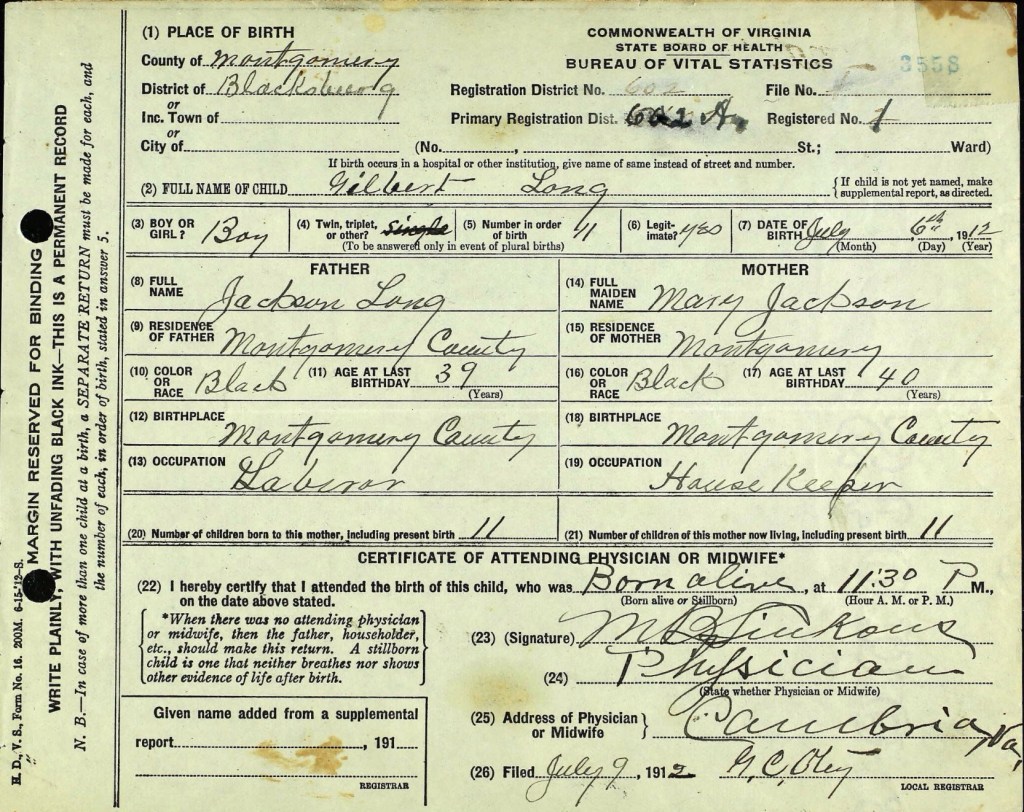
The birth certificate for Gilbert add to the Long’s story. He is listed as the 11th child, born on 6 July 1912 to 39 yrs old Jackson Long and Mary Jackson Long, age 40, housekeeper. M.B. Linkous was the attending physician in Cambria.
1880 US Census1900 US Census1892 Montgomery County, Va Marriage RecordBirth of Gilbert Long1930 Us Census, Montgomery County, Va
The Household of Ruth No 5533 included the mothers, wives and daughters of the Tadmore Light Lodge, No 6184 members. This female order, which was started a few years after the men’s order – Grand United Order of Odd Fellows (GUOOF) – was vital in the function of the Lodge and the well being of the community.
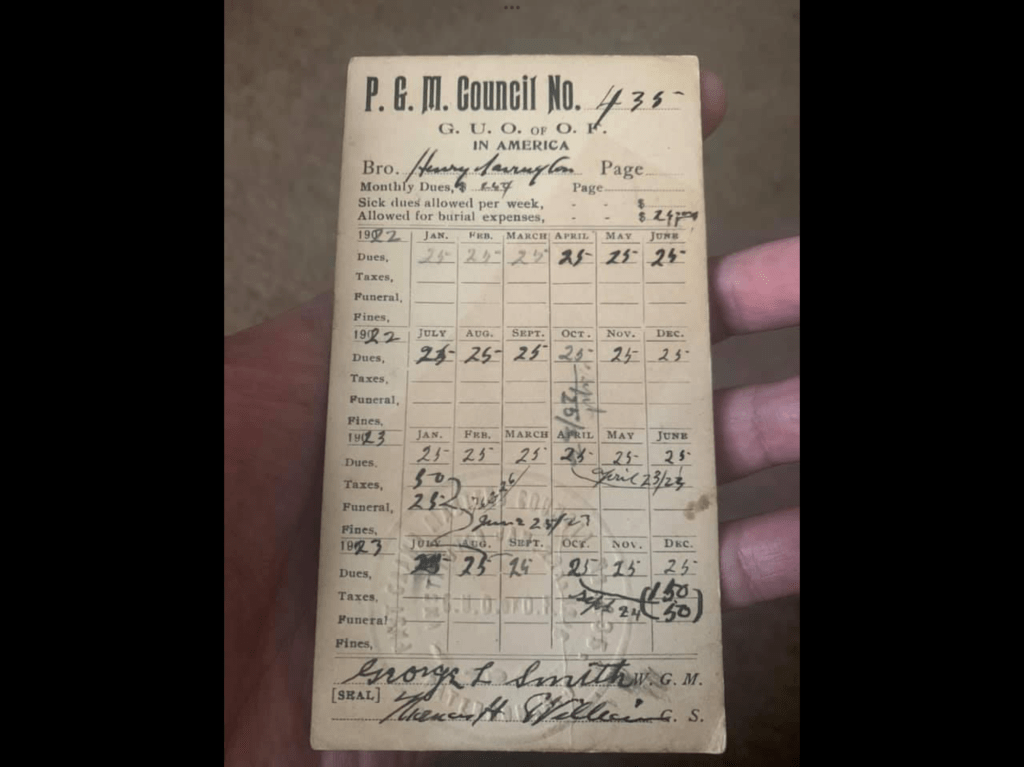
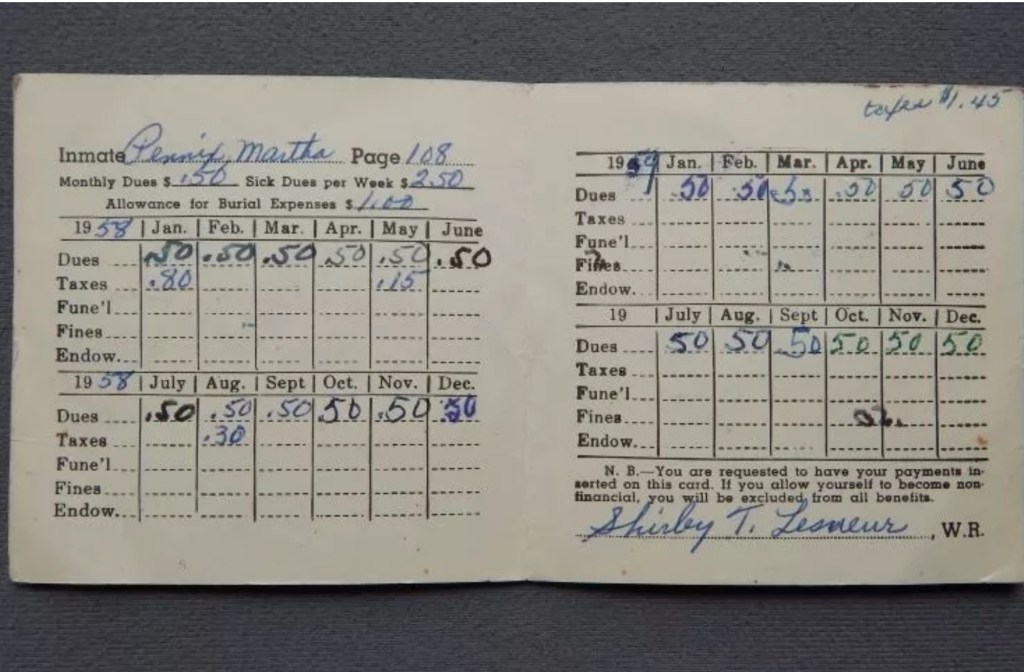
This 1958 “membership” card hails from Burlington, North Carolina, yet it serves as a representation of the mutual aid reliance likely mirrored in Blacksburg. It outlines monthly dues of $0.50, weekly sick dues of $2.50, and a $1.00 allowance for burial expenses.
Martha Pennif, member and Shirley T. Lesneur, W.R.
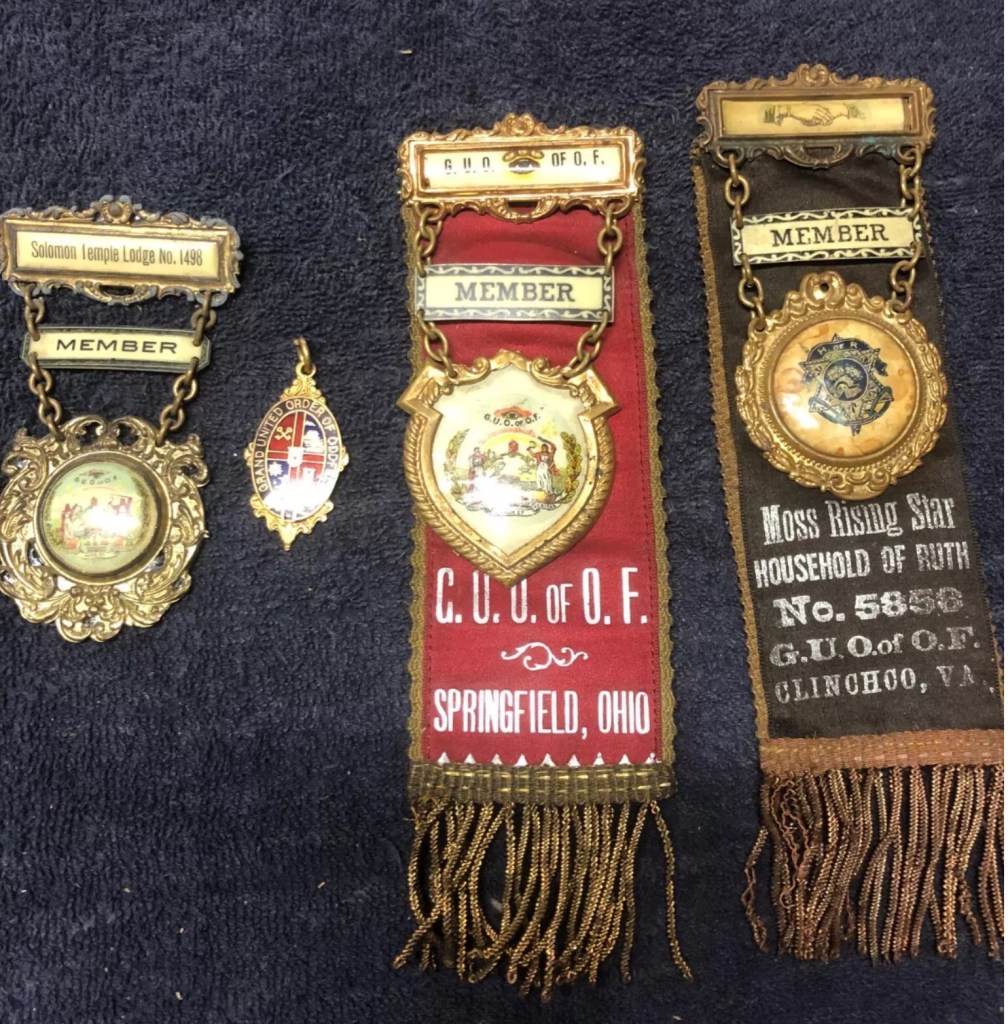
Clinch County, Virginia Household of Ruth No. 5858 – Moss Rising Star
The ribbon on the right is proof that this lodge existed in Clinch County, Virginia
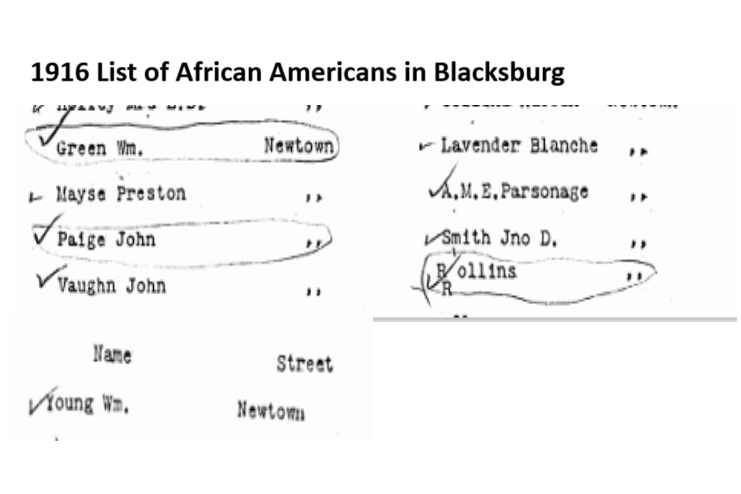
Noted as the Mayor’s Docket List of 1916 (origin unknown)
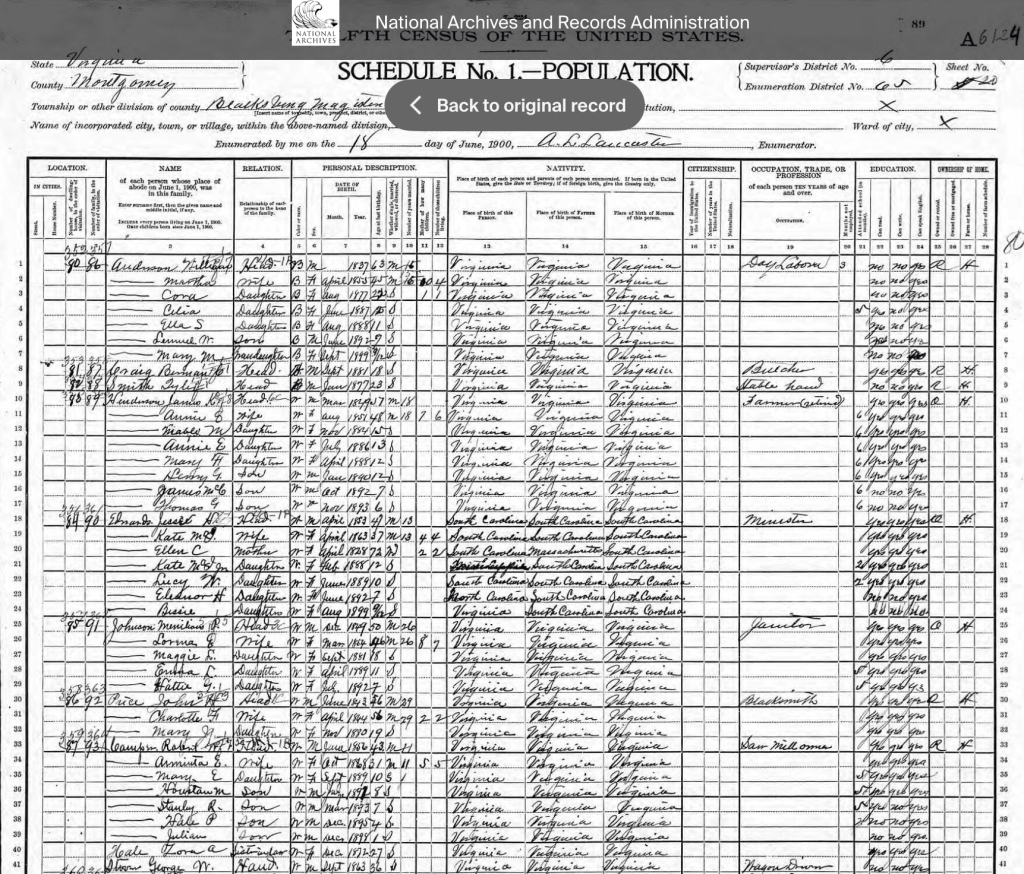
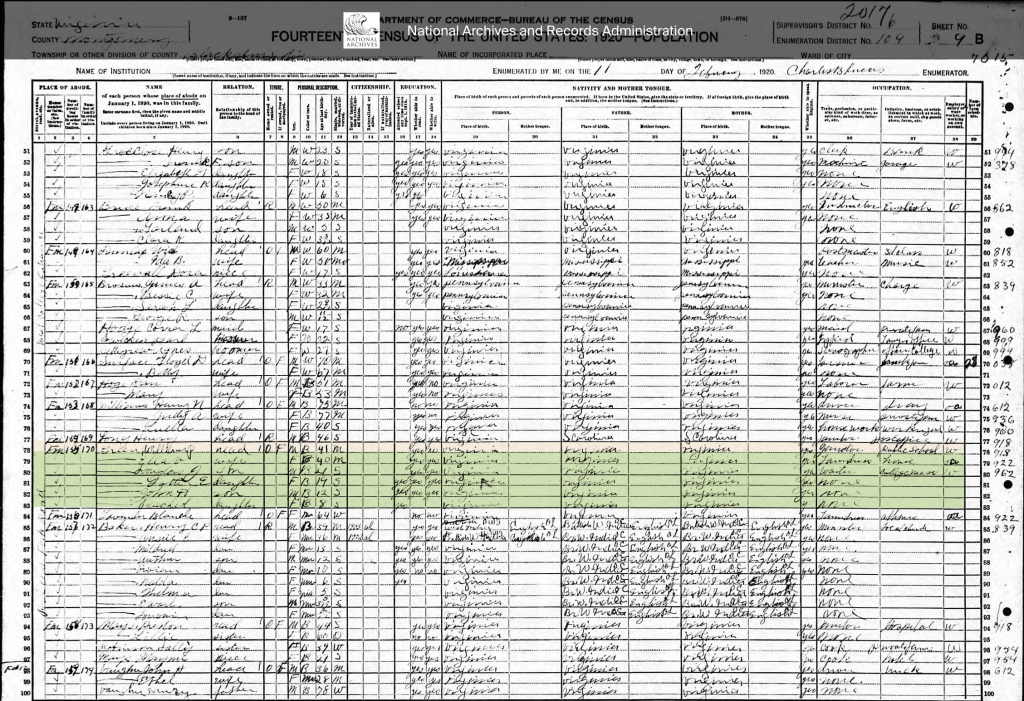
The following African Americans were listed in this list as living in Newtown (one word): William Green, Preston Mayse, John Paige, John Vaughn, William Young, Blanche Lavender, A.M.E. Parsonage, John D Smith and B. Rollins.
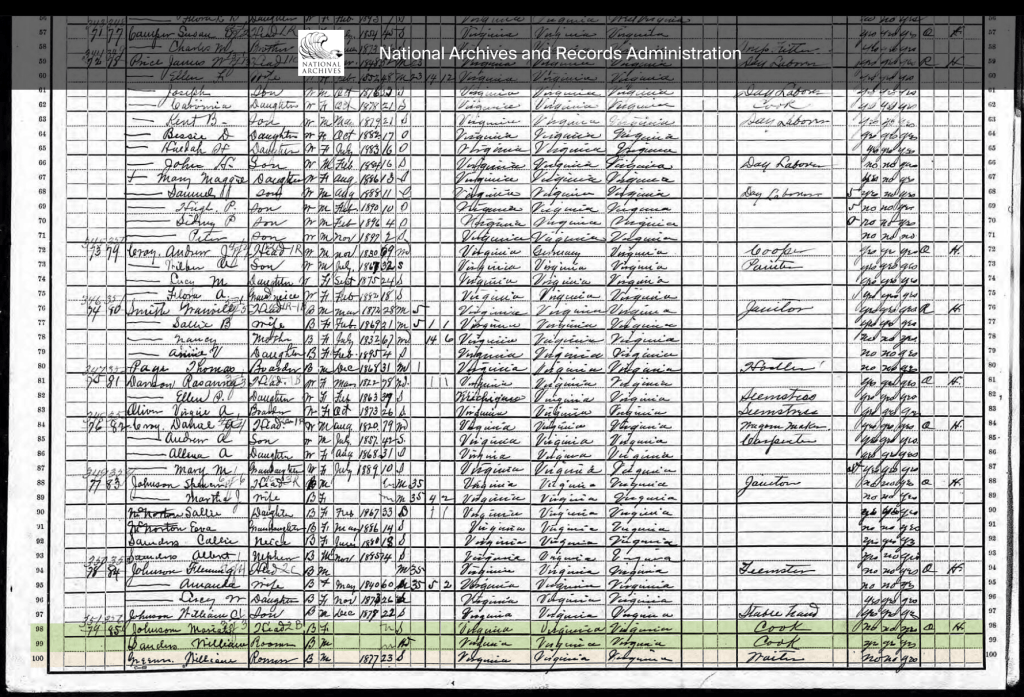
William Palmer Green, Preston Mays/Mayse, John Vaughn, William Young, Blanche Lavender, AME Parsonage, John D Smith and John B. Rollins are found in the various US Population Census.
1900 Population Census, National Archives & Records Administration1900 Population Census, National Archives & Records Administration1910 Population Census, National Archives & Records Administration1910 Population Census, National Archives & Records Administration1920 Population Census, National Archives & Records Administration1930 Population Census, National Archives & Records Administration1930 Population Census, National Archives & Records Administration1940 Population Census, National Archives & Records AdministrationEarly 1900 Map of Blacksburg and New Town
Montgomery County (Va.) Cohabitation Register. This register records the name of the husband, his age, place of birth, residence, occupation, last owner, last owner’s residence, name of the wife, her age, place of birth, residence, last owner, last owner’s residence, name of children with the ages of each, and the date of commencement of cohabitation. Of note is the wide range of localities reported as the former slaves’ places of birth
Montgomery County (Va.) Register of Colored Persons Cohabiting Together as Husband and Wife, 1866 Feb. 27. N.p., 1866. Print
This document is very valuable and now that it has been digitized it is accessible. Please read the description and historical note by the Library of Virginia: (accessed 3 March 2024)
Direct Link to the pages as images and as a transcription
Description Montgomery County (Va.) Register of Colored Persons of Montgomery County, State of Virginia, cohabiting together as Husband and Wife on 27th February 1866. Also commonly called Montgomery County (Va.) Cohabitation Register. This register records the name of the husband, his age, place of birth, residence, occupation, last owner, last owner’s residence, name of the wife, her age, place of birth, residence, last owner, last owner’s residence, name of children with the ages of each, and the date of commencement of cohabitation. Of note is the wide range of localities reported as the former slaves’ places of birth
Montgomery County (Va.) Register of Colored Persons Cohabiting Together as Husband and Wife, 1866 Feb. 27. N.p., 1866. Print.
Historical Note Note
Montgomery County was named for Richard Montgomery, who was killed in the American assault on Quebec late in 1775. It was formed from Fincastle County in 1776. Part of Botetourt County was added in 1789, and part of Pulaski County was added in 1842.
The Virginia legislature passed an act on 27 February 1866 to legalize the marriages of former slaves who had been cohabiting as of that date. See Virginia Acts of Assembly, 1866-1867, Chapter 18, An act to amend and re-enact the 14th section of chapter 108 of the Code of Virginia for 1860, in regard to registers of marriage; and to legalize the marriages of colored persons now cohabiting as husband and wife.
The federal Bureau of Refugees, Freedmen, and Abandoned Lands directed the Assistant Superintendents of the states to order the county clerks to make a registry of such cohabiting couples. See Circular No. 11, dated 19 March 1866, in Orders, Circulars, Circular Letters, and Letters of Instruction, vol. 2 (1866). Bureau of Refugees, Freedmen, and Abandoned Lands, Records of the Assistant Commissioner for the State of Virginia, 1865-1869. Miscellaneous reel 3880, Library of Virginia. National Archives microfilm M1048 (reel 41), Record Group 105.
Montgomery County (Va.) Register of Colored Persons Cohabiting Together as Husband and Wife, 1866 Feb. 27. N.p., 1866. Print.






































 Gathering African American History