Montgomery County (Va.) Cohabitation Register

Montgomery County (Va.) Cohabitation Register. This register records the name of the husband, his age, place of birth, residence, occupation, last owner, last owner’s residence, name of the wife, her age, place of birth, residence, last owner, last owner’s residence, name of children with the ages of each, and the date of commencement of cohabitation. Of note is the wide range of localities reported as the former slaves’ places of birth

The University of Virginia Library’s Virginia Untold: The African American Narrative provides a comprehensive online archive of African American and related history. These primary sources are invaluable for researchers and genealogists. Search “Montgomery County, VA” to locate local materials, and include “Wythe County, VA,” as some Montgomery County records are held there. While the site offers search functionality, downloading PDF transcriptions allows for more targeted searching. Please note that name spellings may vary. Scroll down on this web page for additional online resources.

Montgomery County (Va.) Register of Colored Persons Cohabiting Together as Husband and Wife, 1866 Feb. 27. N.p., 1866.

This document is very valuable and now that it has been digitized it is accessible. Please read the description and historical note by the Library of Virginia: (accessed 3 March 2024)

Montgomery County, Va Register of Colored Persons Cohabiting Together as Husband & Wife, 1866 Feb. 27 – link to online images and transcriptions, citation, supporting information.

Description
Montgomery County (Va.) Register of Colored Persons of Montgomery County, State of Virginia, cohabiting together as Husband and Wife on 27th February 1866. Also commonly called Montgomery County (Va.) Cohabitation Register. This register records the name of the husband, his age, place of birth, residence, occupation, last owner, last owner’s residence, name of the wife, her age, place of birth, residence, last owner, last owner’s residence, name of children with the ages of each, and the date of commencement of cohabitation. Of note is the wide range of localities reported as the former slaves’ places of birth

Montgomery County (Va.) Register of Colored Persons Cohabiting Together as Husband and Wife, 1866 Feb. 27. N.p., 1866. Print.

Historical Note
 Note

Montgomery County was named for Richard Montgomery, who was killed in the American assault on Quebec late in 1775. It was formed from Fincastle County in 1776. Part of Botetourt County was added in 1789, and part of Pulaski County was added in 1842.

The Virginia legislature passed an act on 27 February 1866 to legalize the marriages of former slaves who had been cohabiting as of that date. See Virginia Acts of Assembly, 1866-1867, Chapter 18, An act to amend and re-enact the 14th section of chapter 108 of the Code of Virginia for 1860, in regard to registers of marriage; and to legalize the marriages of colored persons now cohabiting as husband and wife.

The federal Bureau of Refugees, Freedmen, and Abandoned Lands directed the Assistant Superintendents of the states to order the county clerks to make a registry of such cohabiting couples. See Circular No. 11, dated 19 March 1866, in Orders, Circulars, Circular Letters, and Letters of Instruction, vol. 2 (1866). Bureau of Refugees, Freedmen, and Abandoned Lands, Records of the Assistant Commissioner for the State of Virginia, 1865-1869. Miscellaneous reel 3880, Library of Virginia. National Archives microfilm M1048 (reel 41), Record Group 105.

Montgomery County (Va.) Register of Colored Persons Cohabiting Together as Husband and Wife, 1866 Feb. 27. N.p., 1866. Print.

The Dates for Odd Fellows Lodge in the New River Valley and Roanoke – Grand United Order of Odd Fellows

The founding of the GUOOF lodges in this middle Appalachian area began in the early 1870s. The list to date:


Other Fraternal Orders in the Area

The Christiansburg, St John’s, is a Masonic Lodge, #35 which still exists.

More information about the Blacksburg Hall

Facebook information about the Blacksburg Hall with three organizations in one place

“America’s Greatest Colored Resort” – Yellow Sulphur Springs, Montgomery County

HISTORIC AMERICAN LANDSCAPES SURVEY National Park Service
U.S. Department of the Interior report.

https://www.loc.gov/item/va2213/

https://tile.loc.gov/storage-services/master/pnp/habshaer/va/va2200/va2213/data/va2213data.pdf

A consortium of African American investors bought Yellow Sulphur Springs in 1926 and entertained African American guests. These men were closely associated with Henry Street businesses in Roanoke, according to this report. The adventure was short-lived as it was sold in 1929.

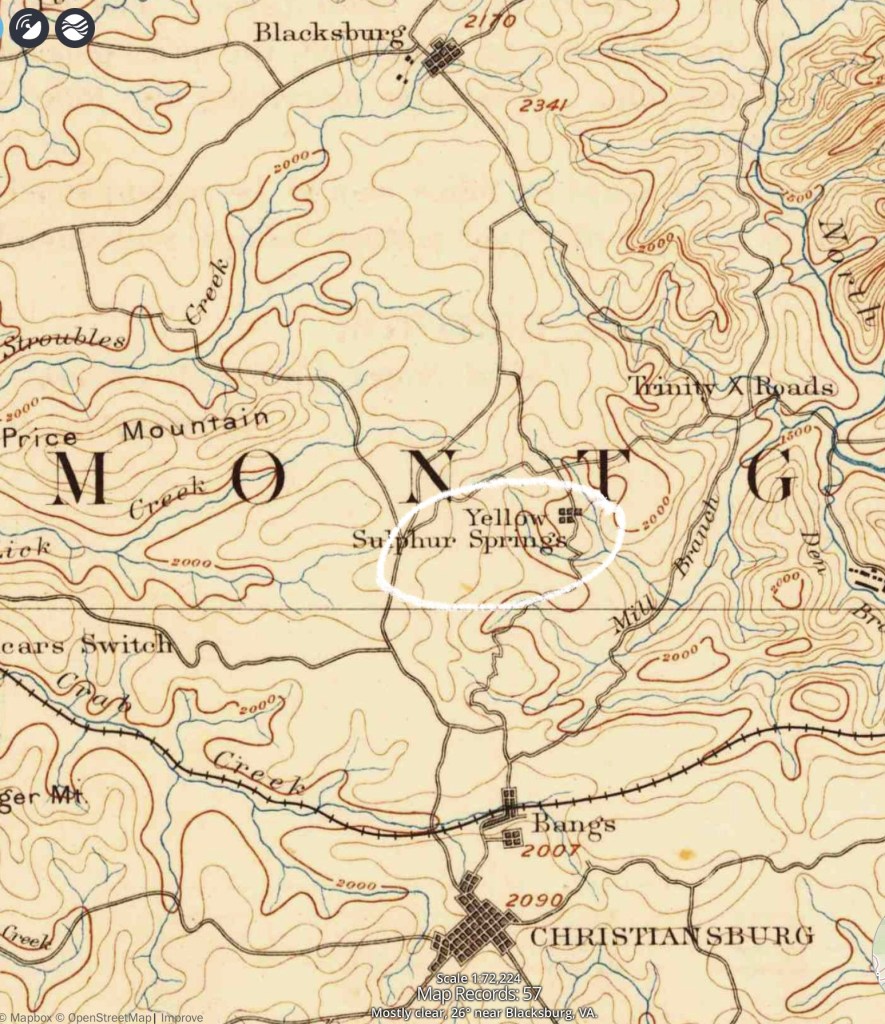
Maps of the Springs in reference with Blacksburg and Christiansburg. USGS Historic Maps

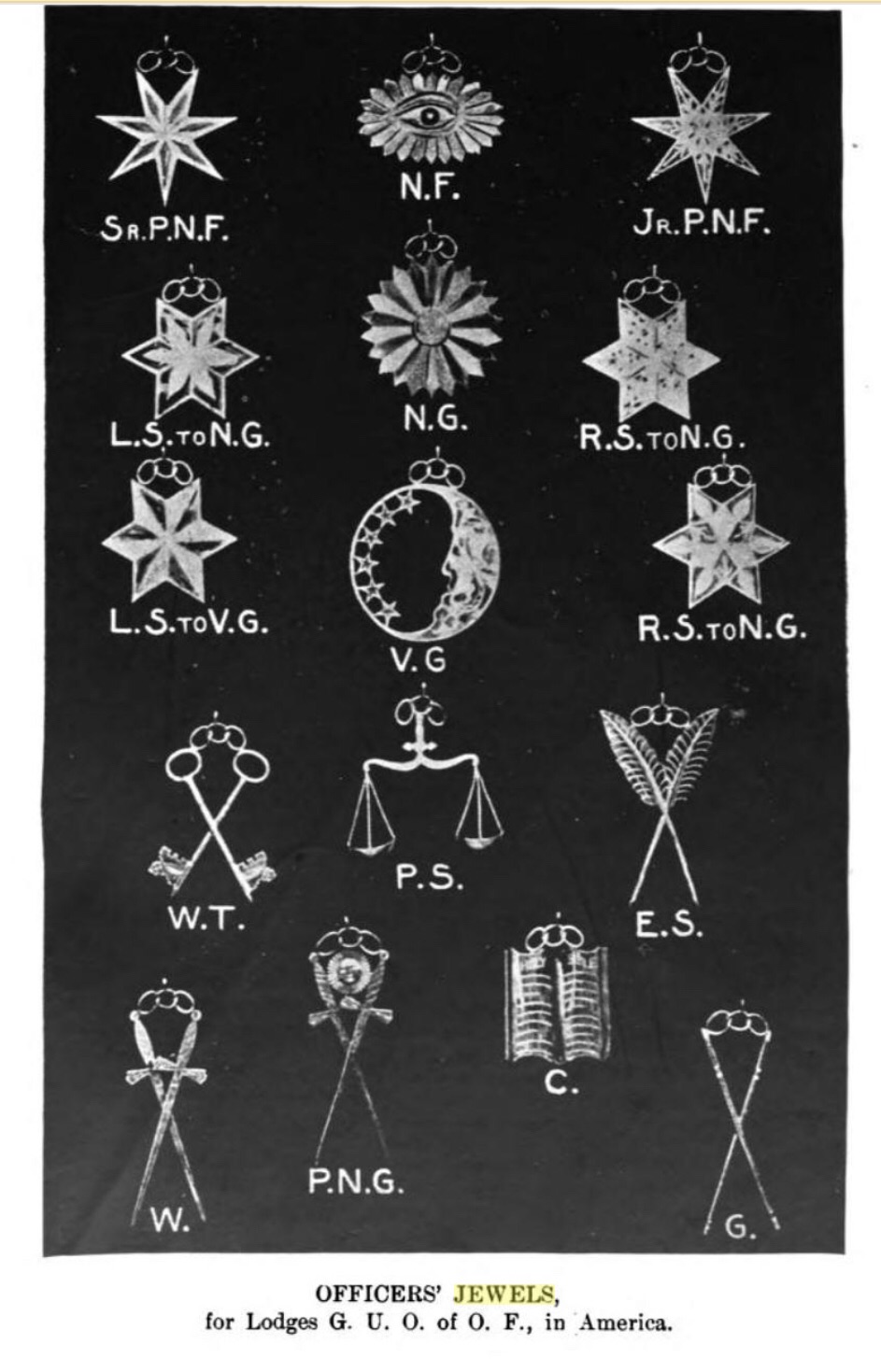
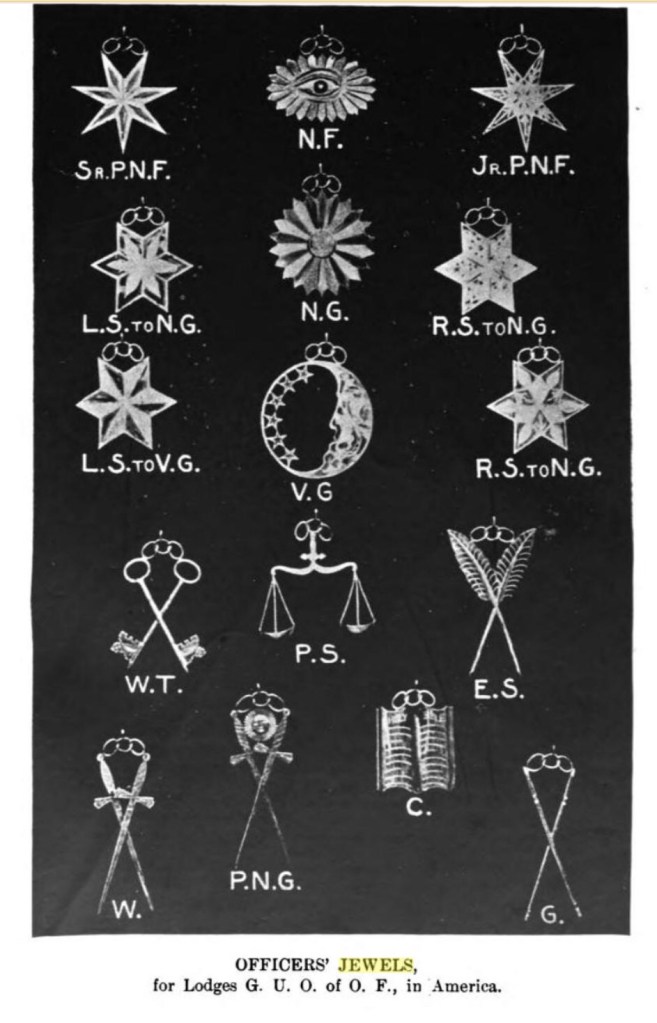
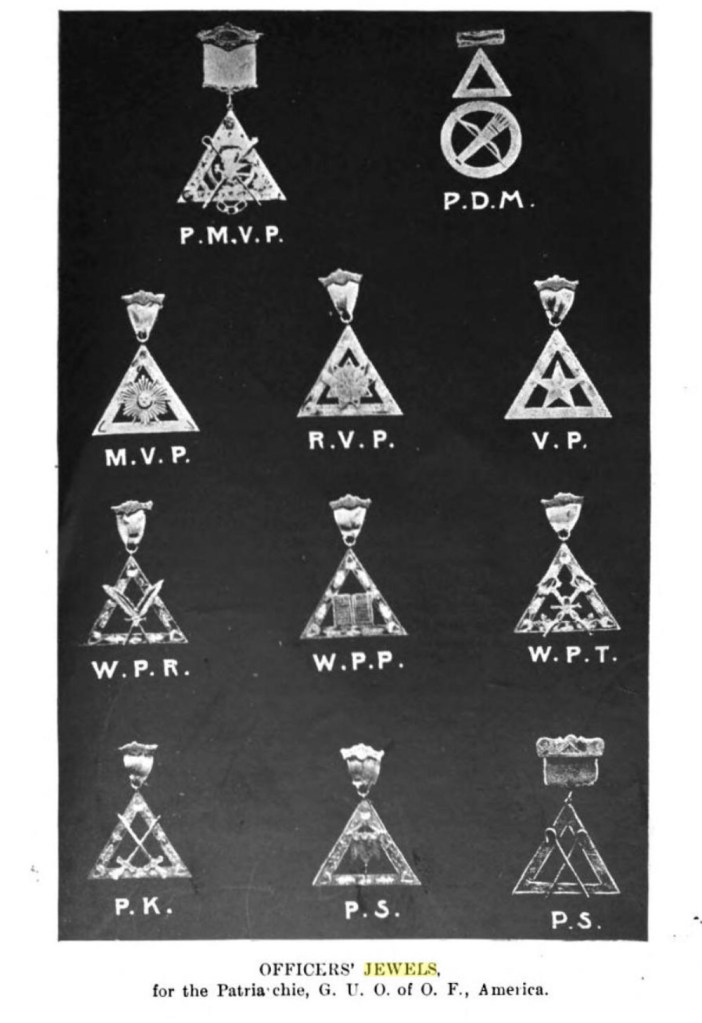
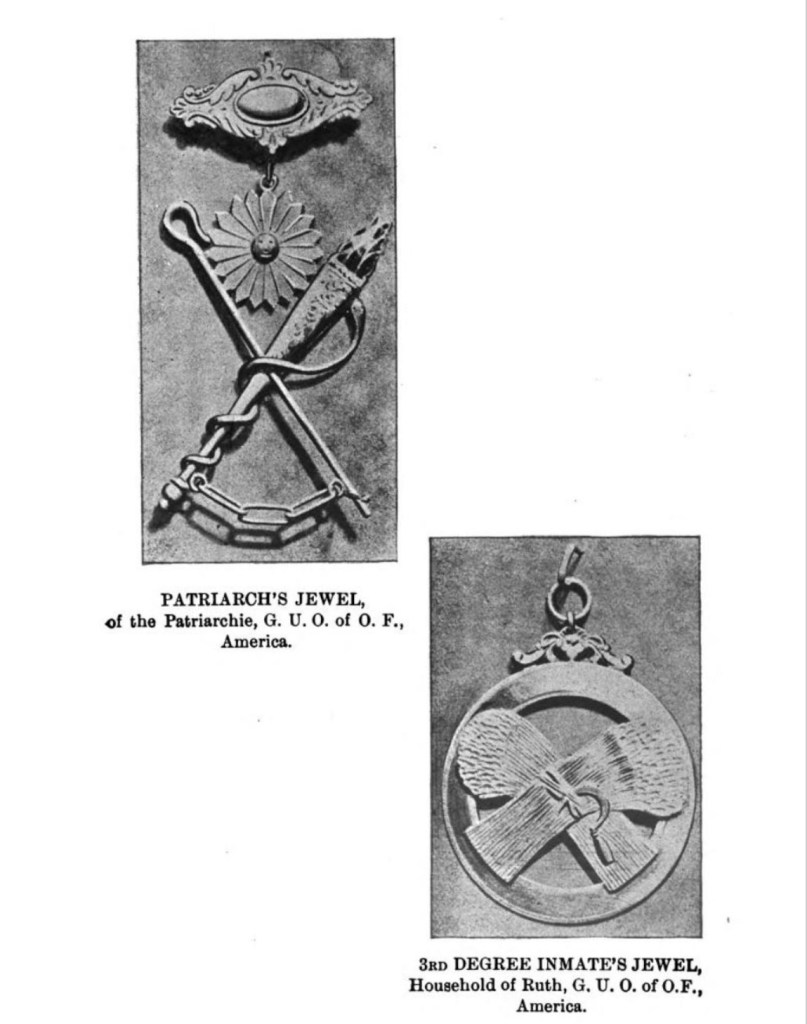
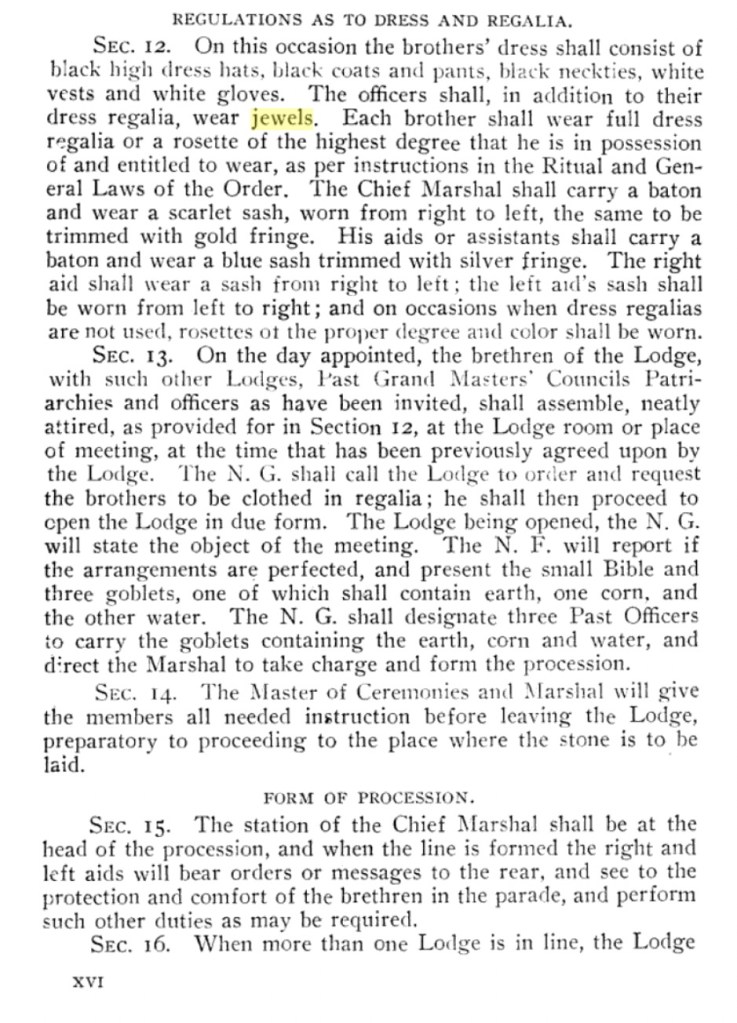
Grand United Order of Odd Fellows Regalia Jewels

The regalia worn by members is described in this 1902 book:

The Official History and Manual of the Grand United Order of Odd Fellows in …

By Charles H. Brooks

Understanding the Degrees, Titles and Symbols on the Lodge Level

  1. Initiate – white
  2. Appointed Officers – star, often 5 pointed
    • Worthy Treasurer (crossed keys)
    • Warden (crossed swords)
    • Worthy Chaplain (Bible, black)
    • Guardian (crossed baton)
    • Right and Left Supporter to NG (RSNG or LSNG, 6-pointed star)
    • Right and Left Supporter to VG (RSG or LSG, 6-pointed star)
  3. Elective Secretary – emerald (crossed quill); Permanent Secretary (balance)
  4. Vice Grand – blue (moon & stars)
  5. Noble Grand – Scarlet (sun and rays)
  6. Past Noble Grand – Golden (heart in hand, crosses swords)
  7. Noble Father – Excelsior, (Seeing-Eye in the night).
  8. Past Noble Father (Permanent Noble Father), (7-pointed star).

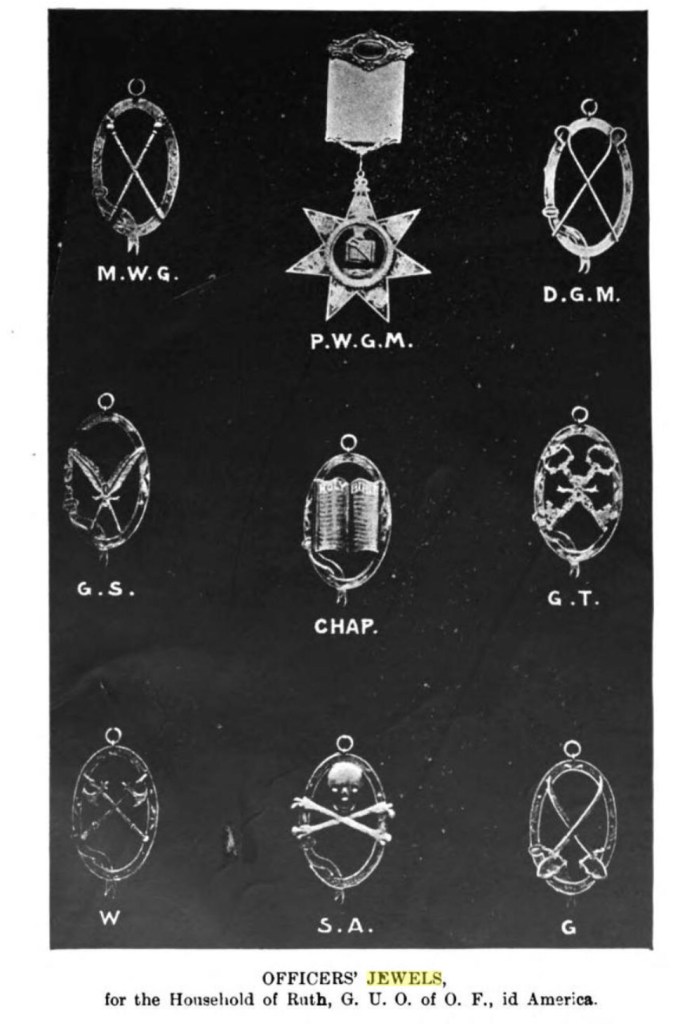
Understanding the Degrees, Titles and Symbols on the District Level

  • Grand Treasurer (crossed keys)
  • Grand Secretary – (crossed quill)
  • Warden (crossed axes)
  • Guards (crossed sword)
  • S.A. (skull & cross bones)
  • Master Worthy Grand (crossed batons)
  • District Grand Master – (crossed shepherd hooks)
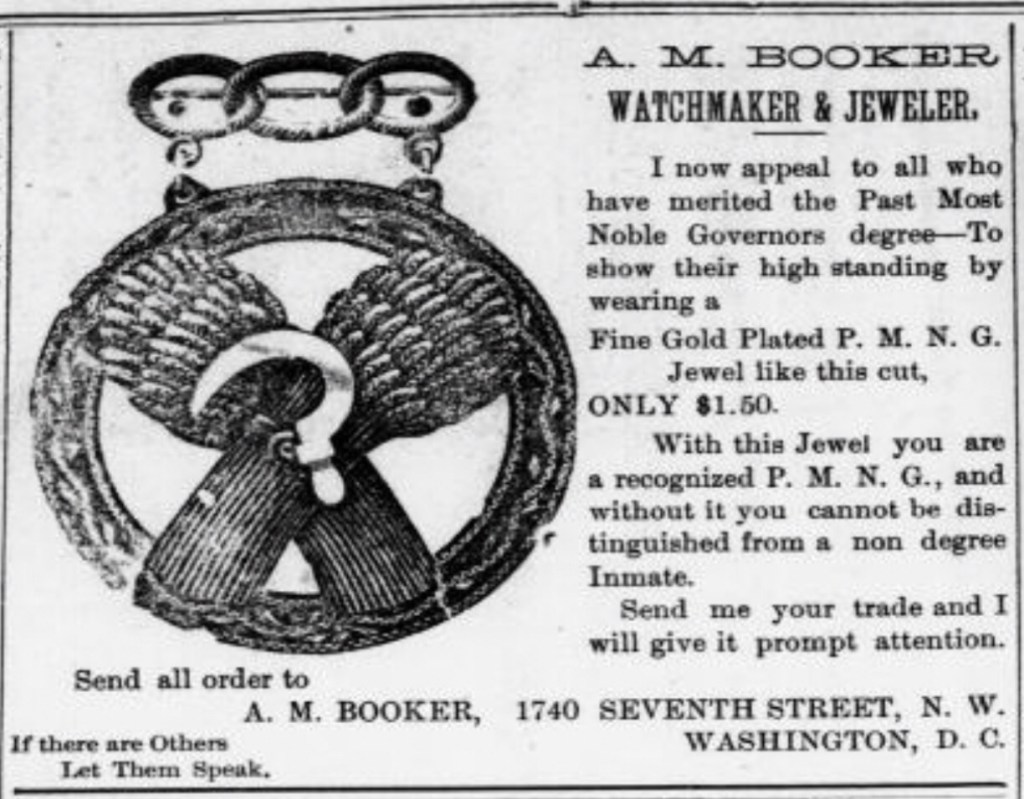
  • Past Worthy Grand Master – wheat & scythe and 7-pointed star

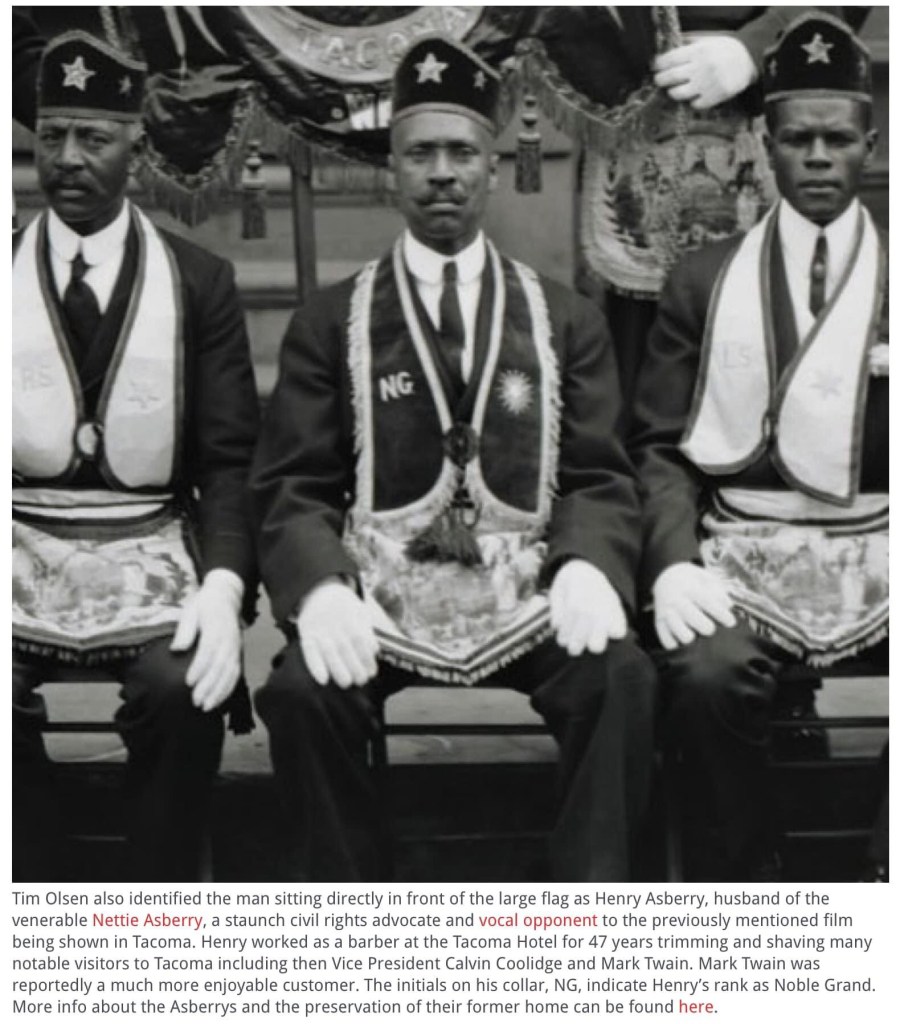
The structure of Grand United Order of Odd Fellows is reflected in the regalia worn by the members. This is an amazing image that was posted in the article from Tacoma, Washington, a long way from rural Blacksburg of the time. But the collars, staffs, swords and hats plus the proximity of the men to the Noble Grand leader provide a glimpse of the hierarchy. Note the two men on both sides of the GN. LS and RS stand for Left and Right Supporter. Grit City Magazine, Feb 2023


Grand United Order of Odd Fellows in America (1843-present) By: Michael Barga

Blacksburg, VA Tadmore Light #6184 Lodge Explored


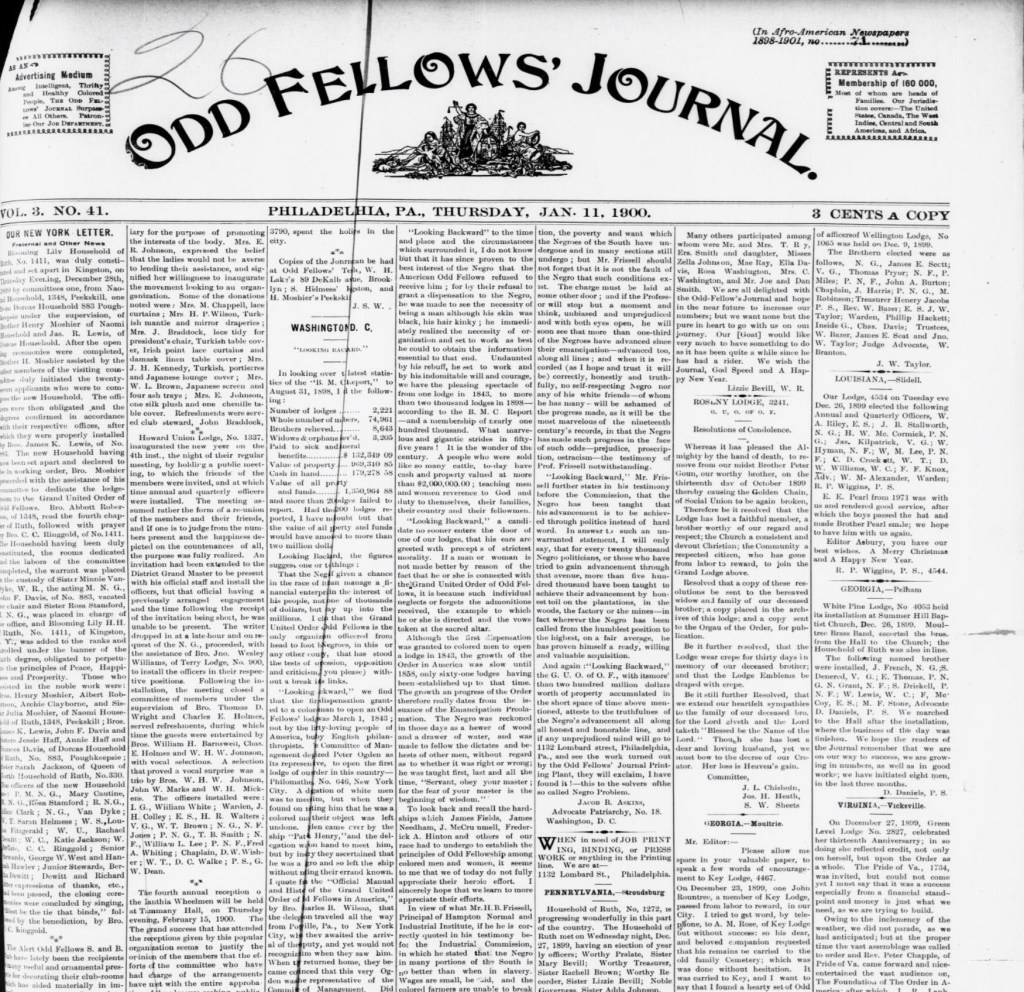
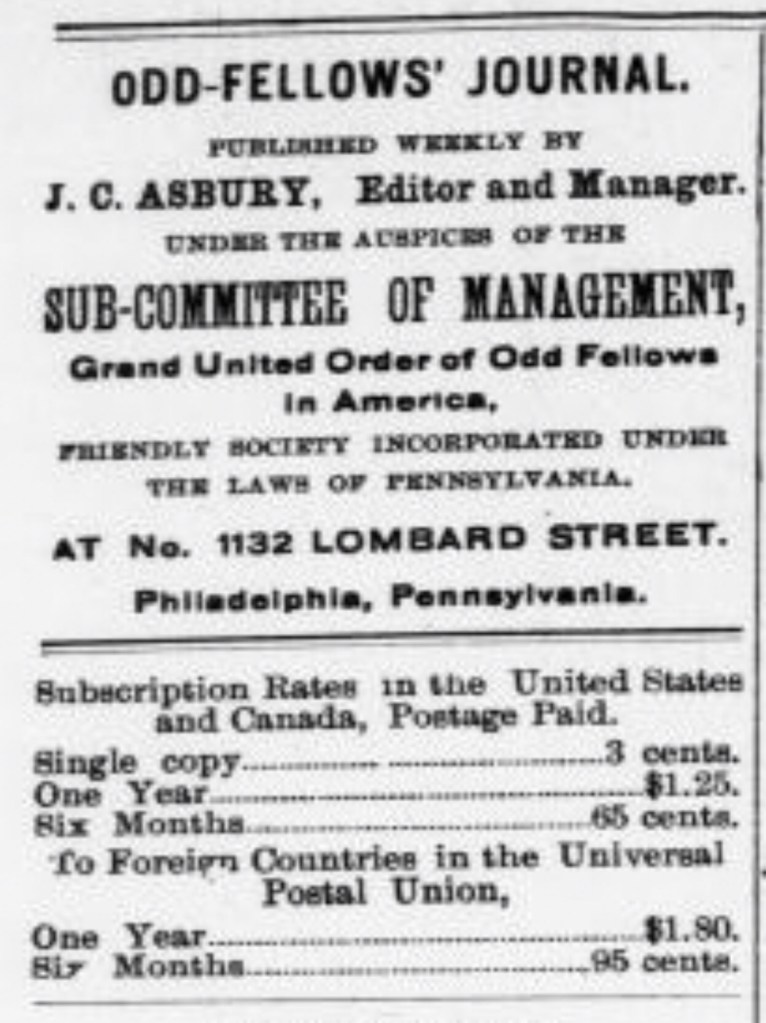
More Regalia Images from the Odd Fellows Journal, 1900.

Asbury, J. C. Odd Fellows’ Journal. (Philadelphia, Pa.), Vol. 3, No. 41, Ed. 1 Thursday, January 11, 1900; Philadelphia, Pennsylvania. (https://texashistory.unt.edu/ark:/67531/metapth523664/: accessed January 16, 2024),University of North Texas Libraries.


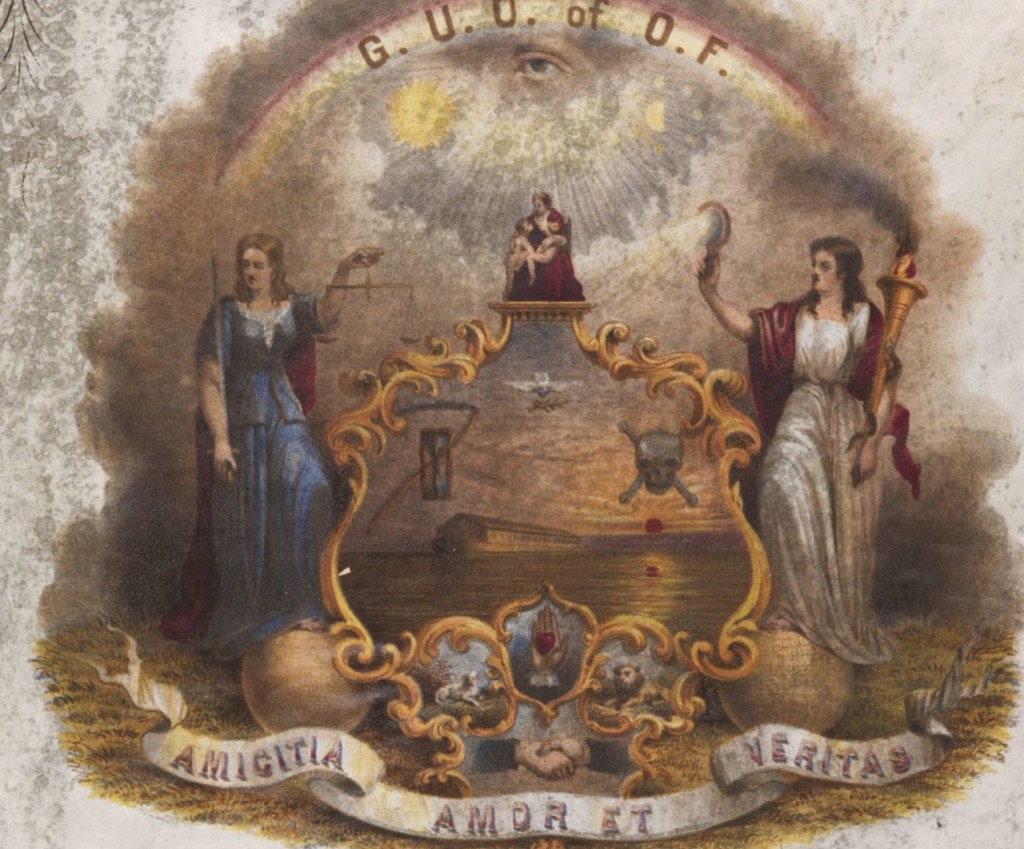
Iconography

Iconography that is associate with GUOOF is featured and explained by The Library of Philadelphia based on the 1843 chromolithograph created by D.B. Bowser (1820-1900), an African American artist. The symbols used include: “sickle & hourglass, dove, skull & crossbones, lamb, heart-in-hand, lion, seeing eye in the night sky and under a rainbow.”

The Library of Philadelphia

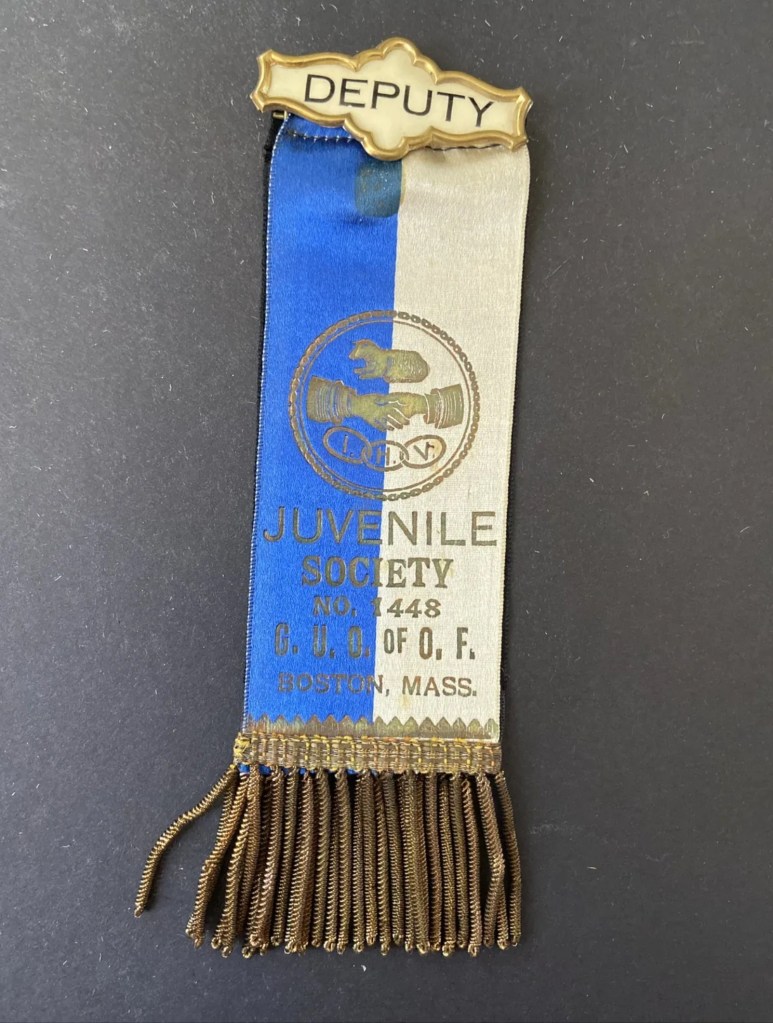
Juvenile Society, the Juvenile Branch of Odd Fellows.

The Grand United Order of Odd Fellows and the House of Ruth created the Juvenile Branch on September 13, 1897 for all children from age 3 to 16. Their parents did not have to be a member of the order. In support of families, the 4th Sunday of September was designated “Children’s Day.” The Juvenile Branch became known as the Juvenile Society.

Clip for a badge, front
Back

Independent Order of St Luke

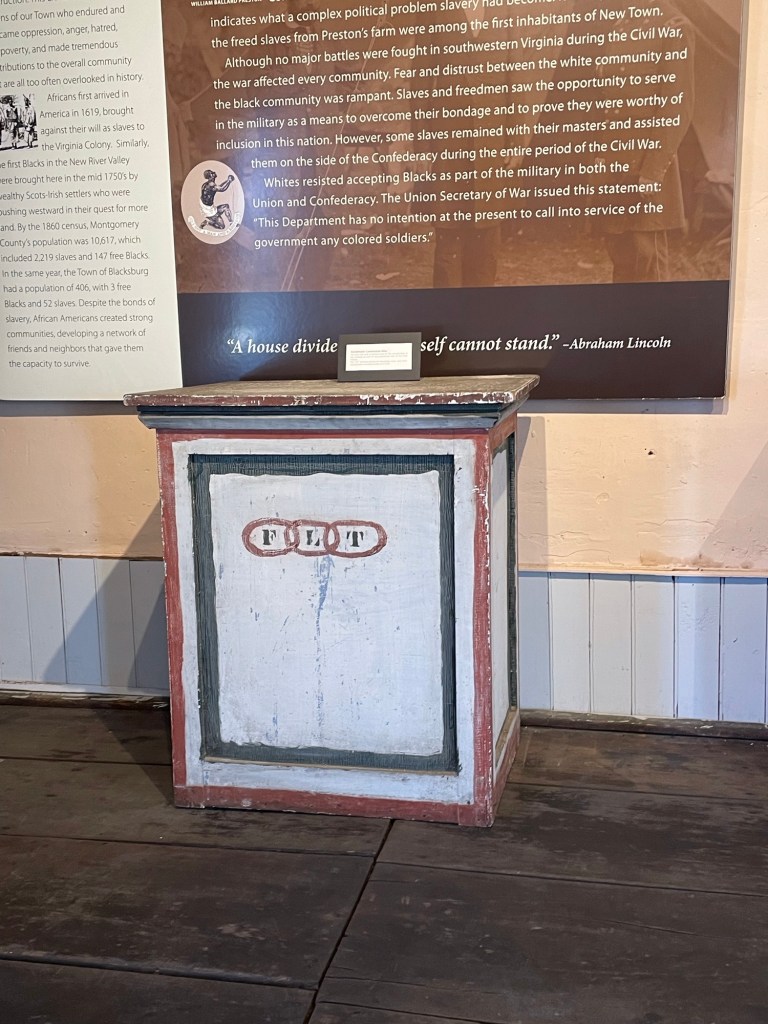
The St. Luke and Odd Fellows Hall, located on Gilbert Street in Blacksburg, stands as the sole remaining historic building from the once vibrant African American neighborhood of New Town. With two floors, it hosted both sacred ceremonies and administrative functions, contrary to the misconception that ceremonies were exclusive to the second floor. The Rules & Regulations book includes a diagram detailing the assigned places for desks and officers, clarifying this aspect.

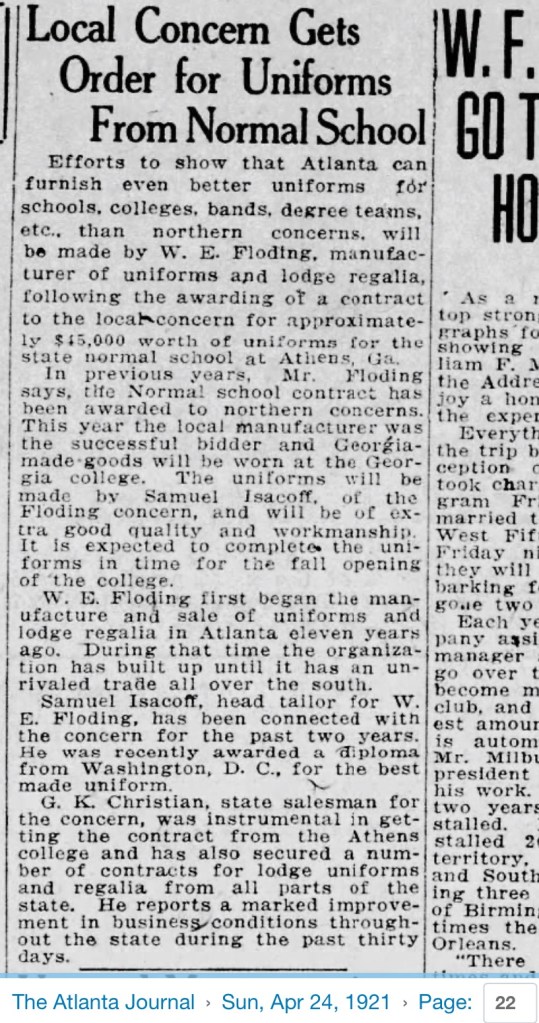
Floding Company Manufactures Catalog and the KKK Uniform Manufacture

Courtesy of Virginia Tech Special Collections & University Archives

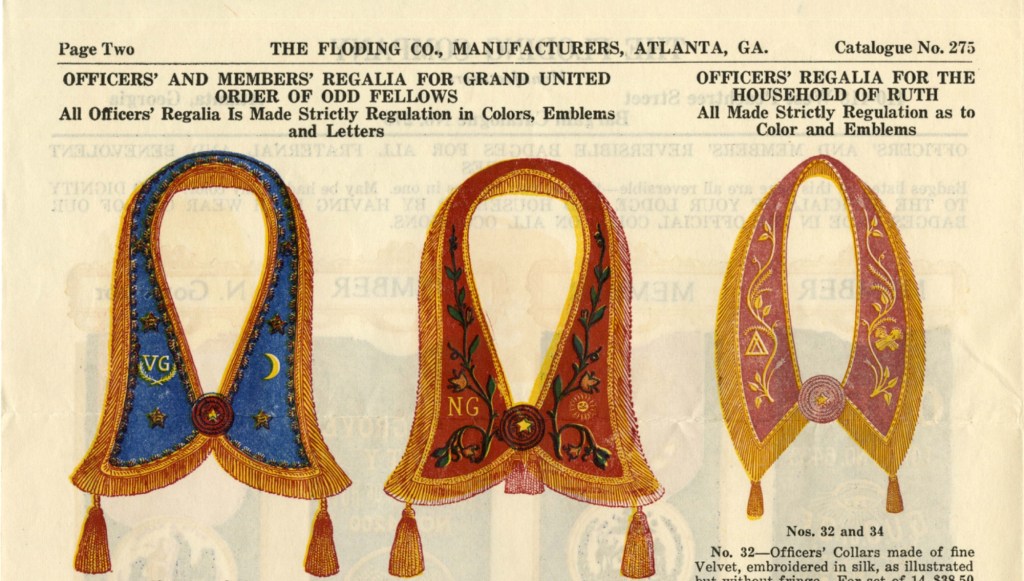
How did the Orders in Blacksburg acquire their regalia? The Floding Company Manufacturers Catalog (Ms1988-009)

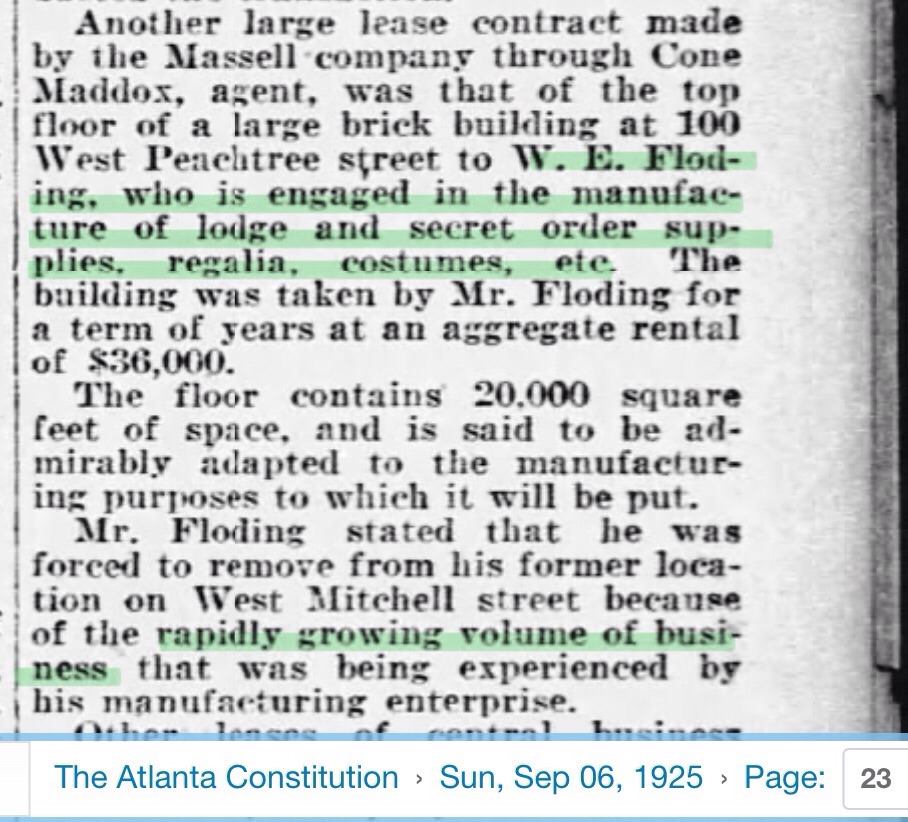
From 1875 to 1964, the Floding Regalia Company, based in Atlanta, produced regalia. Owned by W.E. Floding, the company supplied regalia to African American fraternal organizations and secretive costume to, most likely, the KKK.

In 1925 Mr Floding moving his manufacturing to a large space in Atlanta due to the expanding sales of secretive regalia and costume. However, Floding was also financially linked to Atlanta KKK activities under Edward Young Clarke, who was convicted of violating the Mann Act by assaulting and then transporting a woman across state lines. In 1927, Clarke and Rev. JR Straton were instrumental in creating a competing organization to the KKK, pledging operations to other states. Clarke, Imperial Wizard 1915-1922, was booted out of the KKK but started a parallel group. See clipping below.

Souvenir Medal from 14-20 September 1908 Atlantic City, NJ Gathering

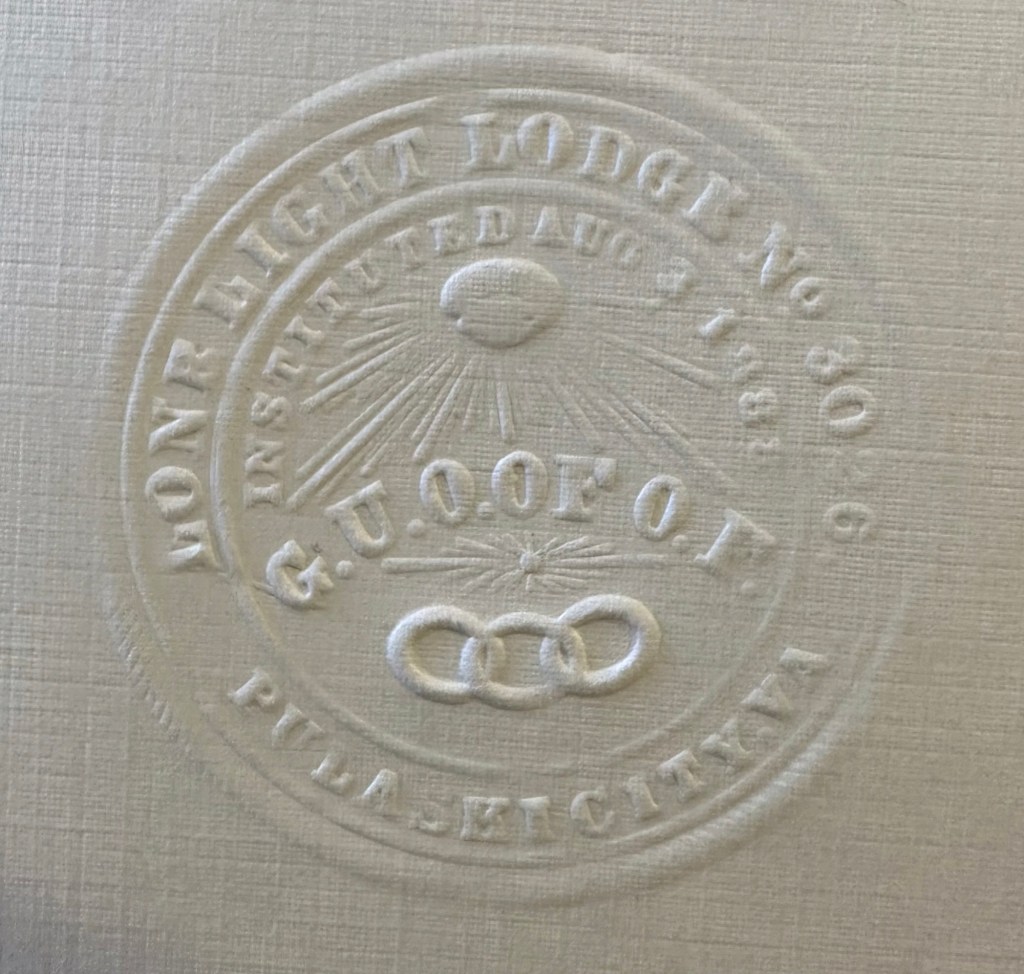
Pulaski City Grand United Order of Odd Fellows Lodge

Christiansburg Institute Museum and Archives has a stamp which is proof that this lodge existed.

The lodge is listed in the Official History and Manual of the Grand United Order of Odd Fellows in … by Charles H. Brooks on page 192.

We have much to learn about this Lodge and the people who belonged. This lodge was created before the Roanoke City Lodge, known as Roanoke, #3225, dated 13 March 1890 and the Blacksburg’s Tadmore Light Lodge, #6184

Preservation of Historic St Luke, Odd Fellows & House of Ruth Under One Roof – Blacksburg, Virginia

St Luke, Odd Fellows, & House of Ruth Orders served the African American Communities which were settled soon after emancipation and located within the Town of Blacksburg and the surrounding areas within the Montgomery County, Virginia.

Within the region we know that a lodge existed in Roanoke, Christiansburg, Pulaski (Radford) and Blacksburg. The documents indicate that they were in close communications. Who was instrumental in bringing these orders to the New River Valley? Who interfaced with Maggie Walker’s Penny Savings Bank? Much to discover.

St Luke, Odd Fellows & House of Ruth (Photo taken September 2023)

Lone Light Lodge #3026. Instituted Aug 3, 1888. Pulaski City, VA (Courtesy of Christiansburg Institute, Inc