The Fisk University Rosenwald School Digital Collection is Now Public!

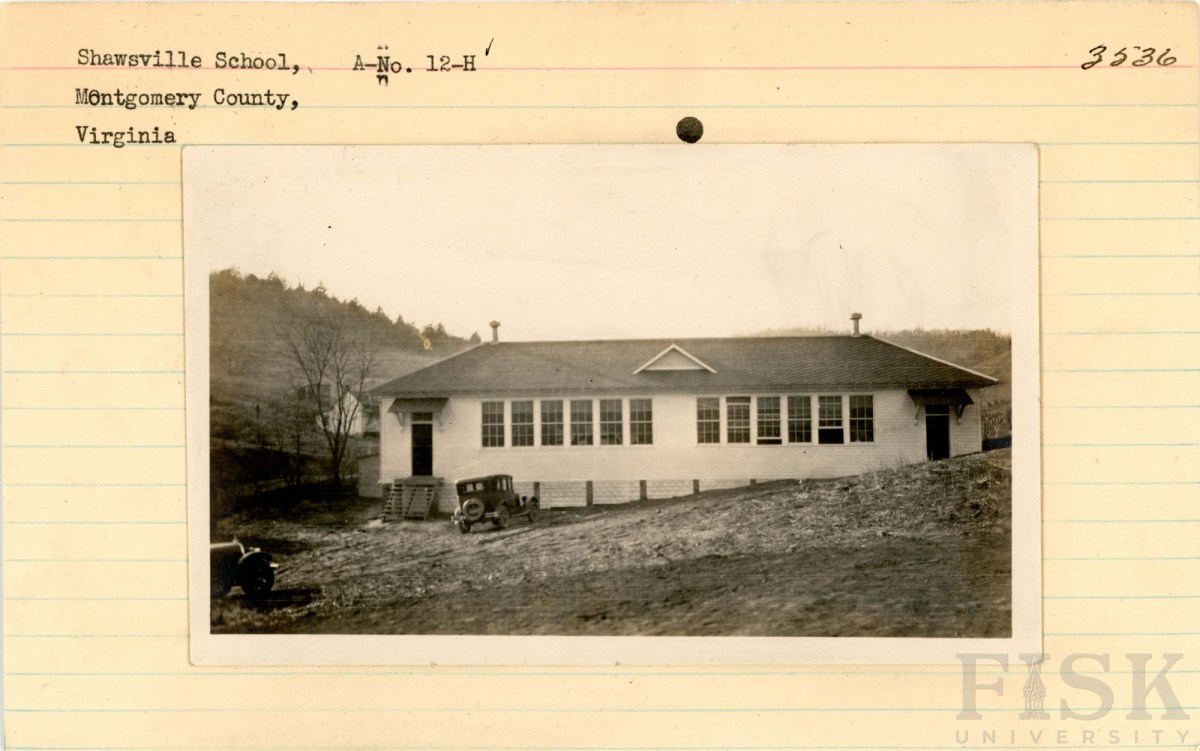
Fisk University has released its Rosenwald School Digital Collection, preserving and sharing the history of these vital institutions. In Montgomery County, the collection highlights schools built through the determination of African American communities in Elliston, Pine Woods, Shawsville, and Wake Forest.

Fisk University has made its Rosenwald School Digital Collection publicly accessible, a significant step in preserving and sharing the history of these important institutions. For Montgomery County, the collection documents the Rosenwald Schools established through the determination and vision of African American communities in Elliston, Pine (Piney) Woods near Riner, Shawsville, and Wake Forest.

Although only the Wake Forest school remains today—adapted for use as a private residence—the collection ensures that the legacy of all three schools endures. These schools stand as a testament to community leadership, resilience, and the transformative power of education during the early twentieth century.

The Story of Rosenwald Schools

The website (scroll down) offers a wealth of information: the story of Julius Rosenwald and his vision, the purpose of the school fund, the significance of the school designs, and the requirement that African American communities contribute a share of the cost. Visitors will also find maps, photographs, and documentation of schools across the region and beyond.

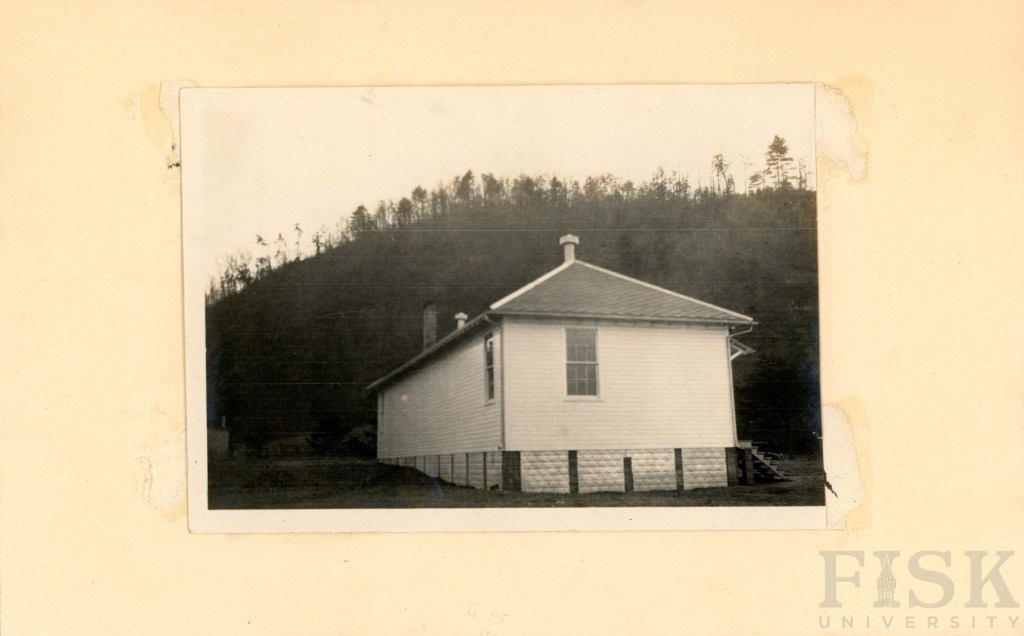
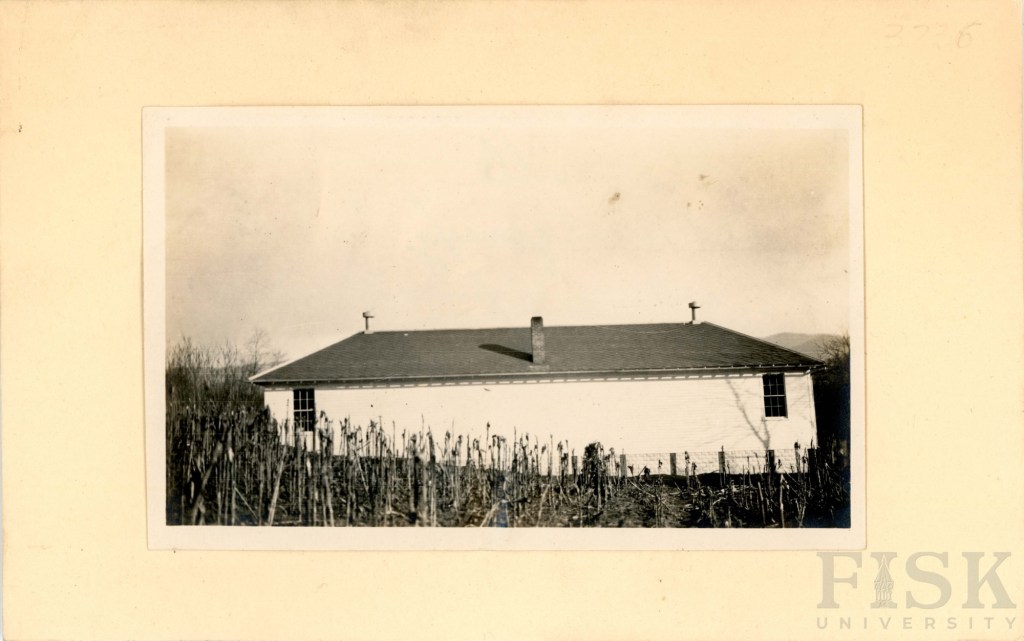
Elliston School

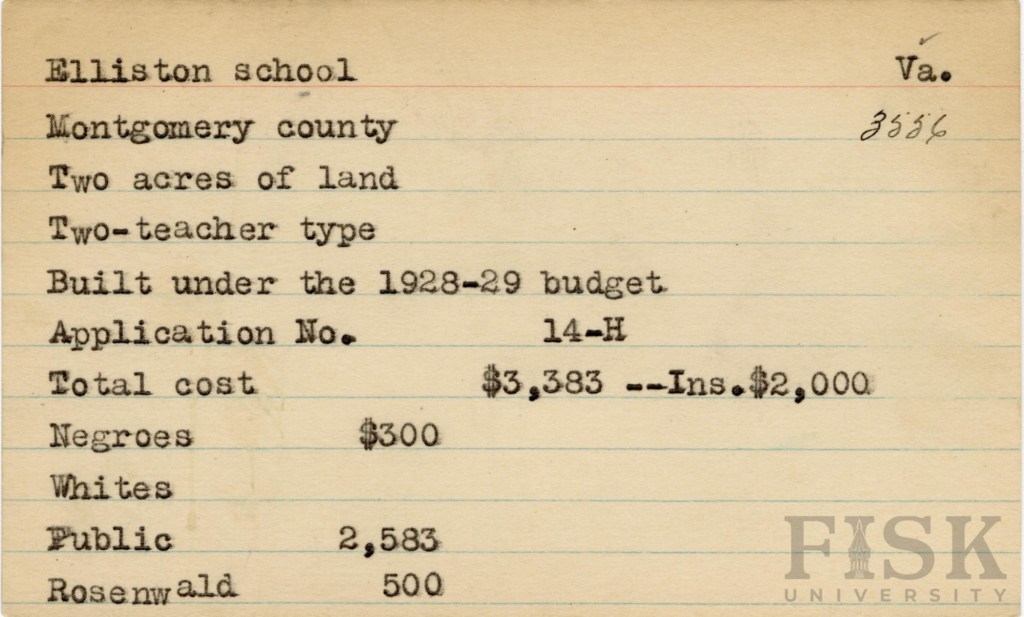
Built in 1928–1929, the Elliston Rosenwald School reflects the determination of the local African American community to provide better educational opportunities for their children. Families in Elliston raised $300 toward the project, which was matched by $500 from the Rosenwald Fund and $2,583 from the Montgomery County School Board.

The school stood on two acres of land and housed two classrooms, each with its own teacher. The school was located on Brake Road, in the Allegheny School District. The legacy: the Elliston Rosenwald School was a center of learning, community, and pride during an era when access to education was hard-won.

Pine Woods School

The Pine Woods Rosenwald School (Piney Woods) was built in a two-teacher design under the supervision of Tuskegee University. The school was sited on Piney Woods Road, in the Auburn School District. While the exact construction date is unknown, records indicate the total cost was $1,075. Of that amount, the Rosenwald Fund contributed $300, the African American community raised $275, and the Montgomery County School Board provided $500.

Unlike white schools of the period, which were fully funded by the School Board, African American families were required to make direct financial contributions toward the construction of their schools. This inequity underscores both the systemic barriers they faced and the extraordinary commitment of the Pine Woods community to ensuring education for their children.

Shawsville School

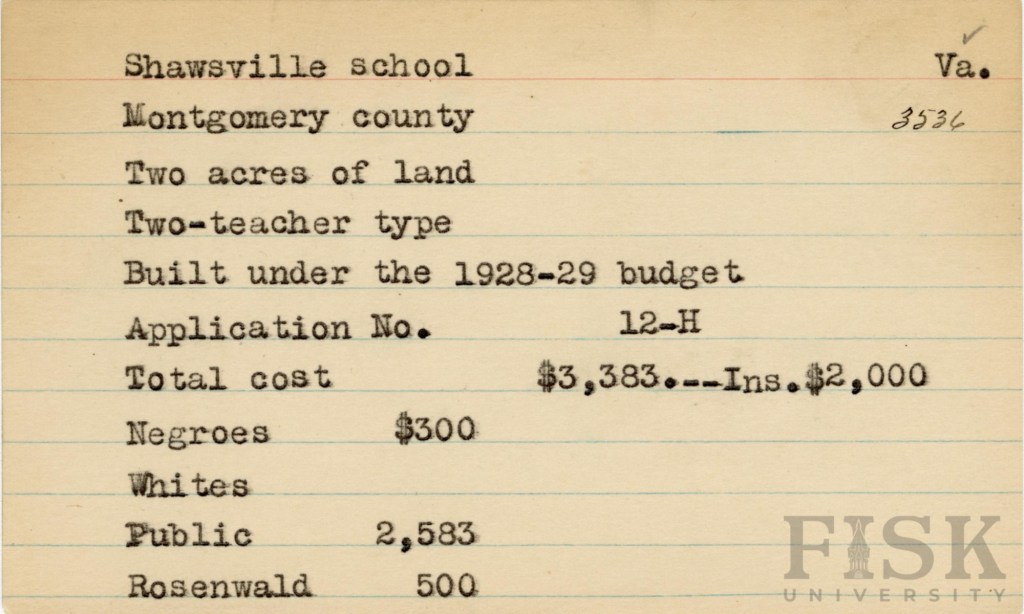
Constructed between 1928 and 1929, the Shawsville Rosenwald School followed a two-teacher design overseen by the Montgomery County School Board. The total cost of $3,383 was shared among the Rosenwald Fund ($500), the African American community ($300), and the Montgomery County School Board ($2,583).

At the time, Shawsville, of the Allegheny School District, was a thriving hub, energized by railroad service and new road (US Route 11) construction projects. These opportunities drew African American laborers and rail workers to the area, many of whom invested their limited resources into building a school for their children. Their contributions—financial and communal—stand as a testament to the determination of Shawsville’s African American families to secure education despite inequities in public funding.

Wake Forest School
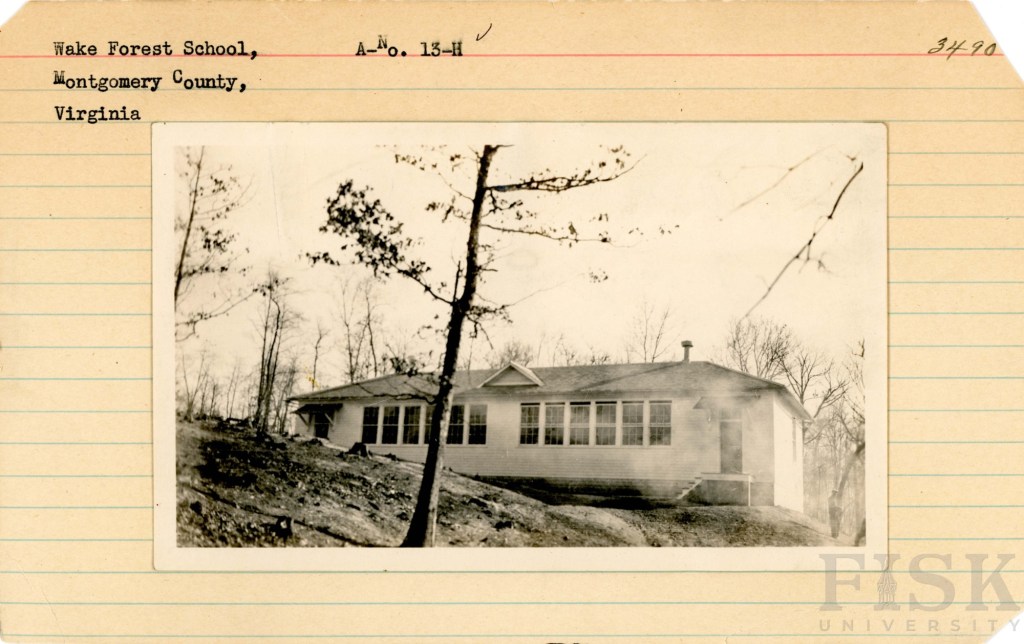
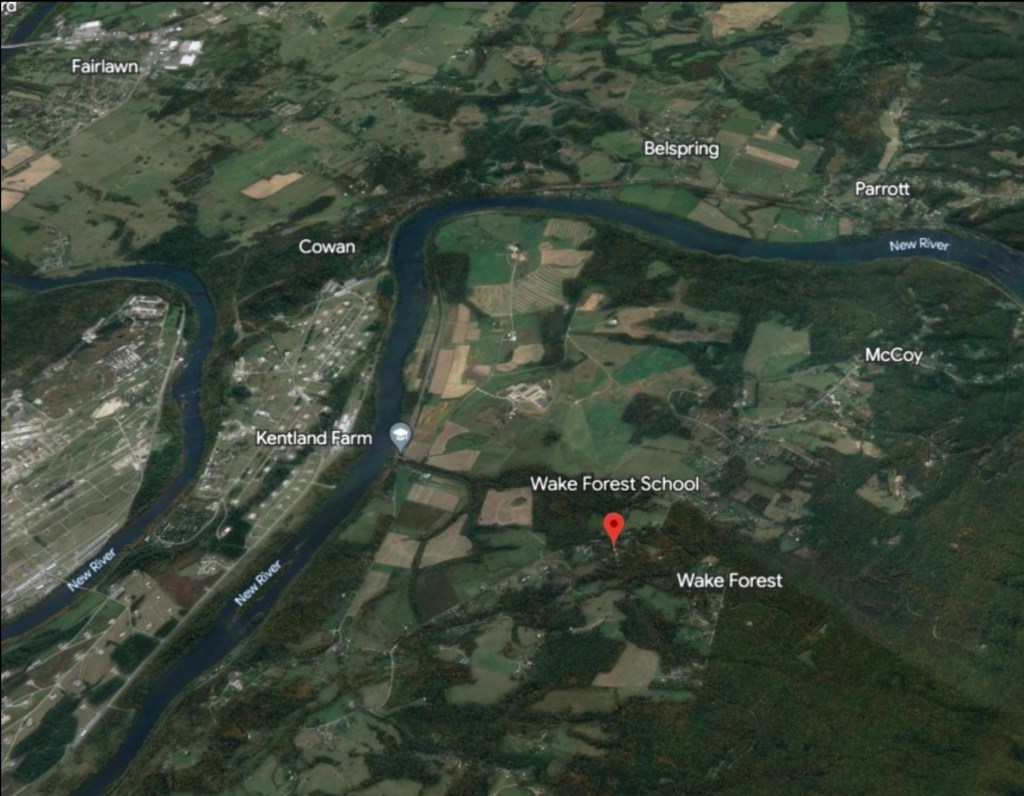
Constructed between 1928 and 1929, the Wake Forest Rosenwald School followed a two-teacher design on a two-acre site, in the Blacksburg School District, overseen by the Montgomery County School Board. The project cost $3,383, with funding shared by the Rosenwald Fund ($500), the African American community ($426 in 1928, about $7,500 in today’s value), and the Montgomery County School Board ($2,457). This school is now a private residence.

The Wake Forest community at this time was made up of independent farmers, farm laborers, boatmen, railroad workers, teamsters, and domestic workers. As coal extraction began to rise and reshape the region’s economy, African American families recognized that education would be essential for their children’s future. By pooling their resources—despite economic hardship—they ensured access to schooling that could open paths beyond the limits of labor and provide new opportunities for the next generation.

Hidden Histories: Family Stories Beyond Montgomery County

Hidden Histories: Family Stories Beyond Montgomery County

When researching local history, we often come across carefully documented African American family histories that have no direct link to Montgomery County, Virginia. These stories are too valuable to leave hidden.

This page will share those findings so they might reach descendants searching for their past. Even without local ties, they speak to the wider story of resilience, migration, and community.

If you recognize a name or place, we invite you to connect—your memory could help bring another family’s history to light.


BRUMMAGE FAMILY

During our research on the Brumage family, we visited with the Clarence Brummage family in Homestead, FL. We were warmly greeted and all the information he could recall was told to me. 

On our return to California, I stopped at the Morman Library in Salt Lake City to see what records could be found and how far back I could take the family. I will start with the family of Clarence.

Clarence Brummage was born 16 June 1920 in Cochran, Georgia. His father was Tom (Booten) Brummage and his mother was Josephine Clark. Clarence was in the army during World War II. He married Everlena Trammeall, 31 October 1950 in Collins, Georgia. Daughter of Roy Trammeal, Everlena was born 16 March 1926 and was killed in a car accident 3 November 1977 in Homestead, FL.

Clarence and Everlena had nine children: Clarence Jr., b. 3 October 1952, Jeanette, b. 17 January 1956, Evelyn Ann, b. 26 April 1957, Ina Mae, b. 26 May 1958, in Cochran, Georgia, Dwight Wayne, b. 16 January 1961, Decatur, Alabama, Dorothy Jean, b. 7 August 1962, Pensacola, Florida, Michael Anthony, b. 9 March 1964, Daytona Beach, Florida, Josephine, b. 14 September 1965, Miami, Florida, and Donald Lee, b. 1 March 1968, Miami, Florida.

Clarence said he was raised by Dornest (Donna) Grandhoun and that she gave him the name of Brummage. Tom (Booten) Brummage worked for John Anderson in Cochran and Clarence remembers him as being 7 ft. tall.

Clarence has a sister, Sarah Lee Brummage Kemp who lives in Cochran. His mother Josephine Clark died in Florida. Josephine’s mother’s name was Sarah Woodfork and they all attended the Mt. Zion Baptist Church in Cochran.

On the 1900 census in Pulaski County (later changed to Beckley County in 1912 [Georgia]) Georgina Brummage, b. October 1854 is listed with sons Miles, b.March 1882 and Thomas, b. November 1890. I am assuming that Thomas is the father of Clarence. They were living in the Colhran district. Also in the same area is Hannah Jackson, b. 1867, her children were Wilson Brummage, b. November 1883, Lou Brummage, b. June 1885 and Charity Brummage, b. July 1888.

The family of Charley Brummage, born December 1877, his wife Zilla, b. June 1876, and their daughter Vinie, b. September 1899. This family lived Della Brummage, age 37, b. January 1863. Her children Anna Lee, b. April 1896. They lived in Hawkinsville.

1882, Lizzie, b. August 1885, John b. November 1887, Jeffries, b. November. In Ward County, Georgia, I found Amie Brumage with sons David, Henry, Bogene, and daughters Neppie, Nora and Lulu E. 

1990 census was burned so I next read the 1880 census. On this census I found the following. Trank Brummage, age 25, living in Pulaski County, he was working for Reuben Waters. Frank was single, a laborer, maimed, crippled or disabled, could not read or write, his parents were born in Georgia. There were no Brummages listed in Pulaski County in 1870 or 1860 so where Frank Brummage obtained the name of Brummage is a mystery. At least I found Tom (Booten) Brummage. I had hoped to find where this family, at one time, were slaves to a Brummage family but I could not find any proof of this.

I did call a James Brumage in Newport, Virginia and he was also black. He did not know where he obtained the name of Brumage.

Someone with the name of Brumage/Brummage had to be in the area during the Civil War or shortly afterward for the name to be taken by the families I found.

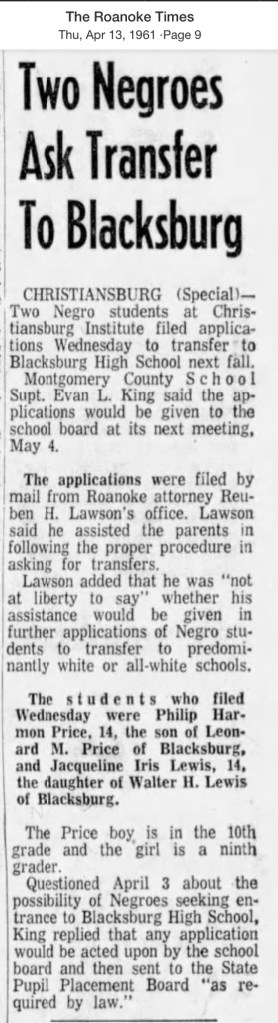
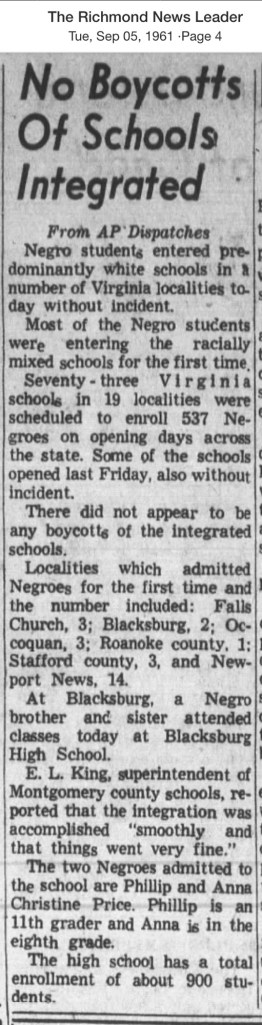
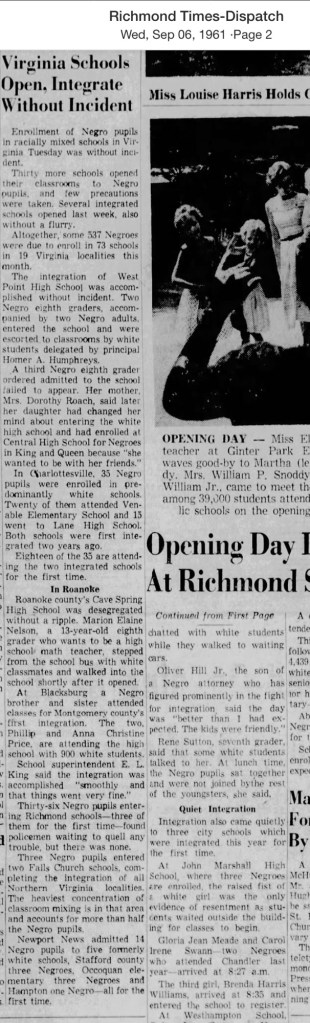
The Year 1961—Blacksburg High School Leads County in Desegregation

In 1961, Blacksburg High School became the first in Montgomery County to admit African American students, paving the way for full integration of all county high schools by 1966.

Montgomery County, Virginia, was slow to dismantle enforced racial separation in its schools, not doing so until September 1961. Neighboring counties followed a similar pace—Floyd in January 1961 and Pulaski in September 1961. (Martin, Black Education in Montgomery County 1939–1966, Virginia Tech master’s thesis, 1996).

After the U.S. Supreme Court’s 1954 Brown v. Board of Education ruling outlawed segregation, Montgomery County resisted. The school board leaned on “states’ rights” arguments and used tactics from Virginia’s Gray Commission—such as controlling student assignments and offering tuition grants to white families—to delay integration for years.

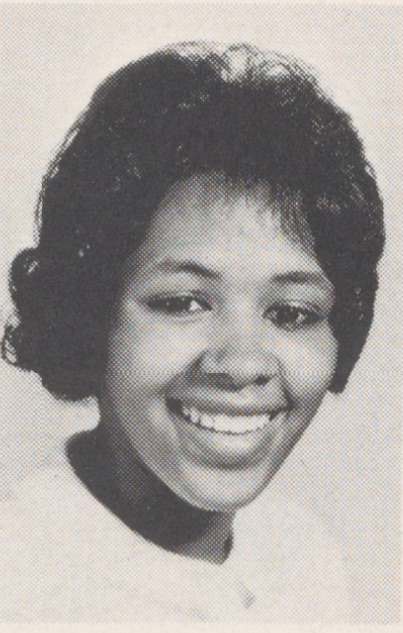
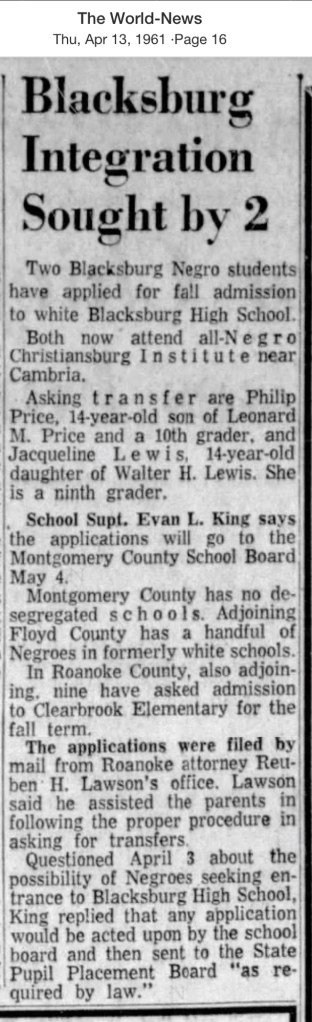
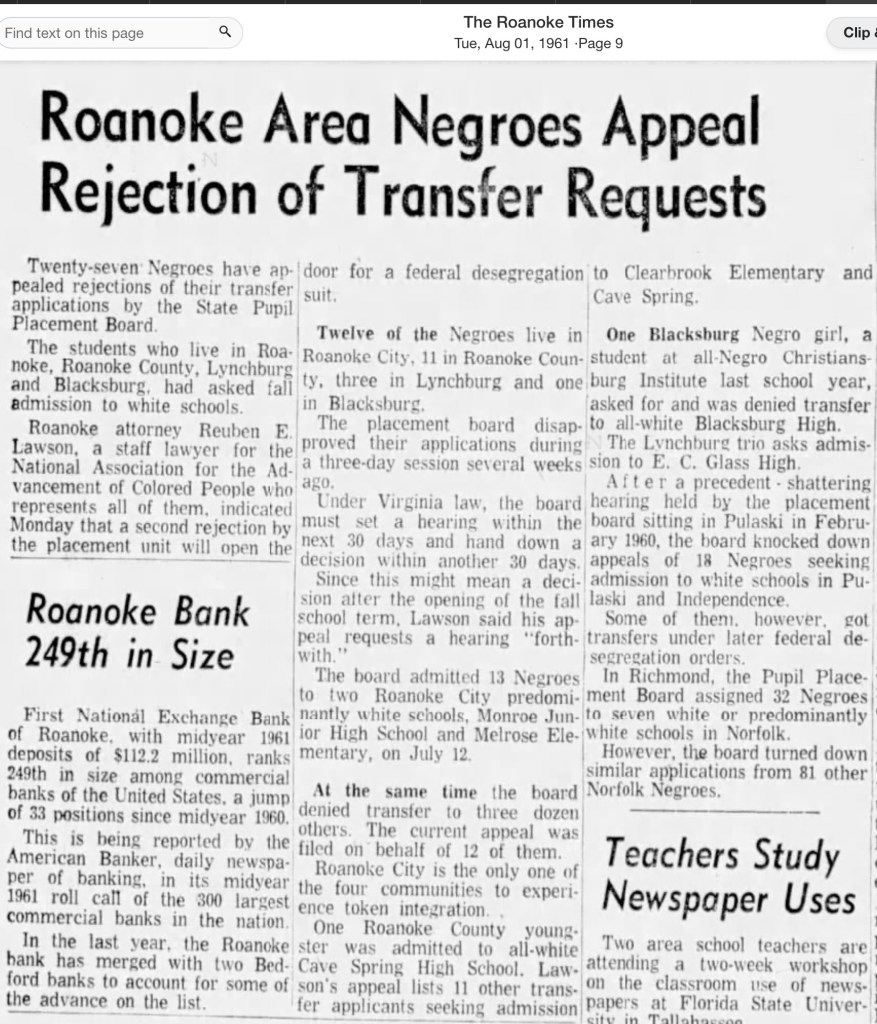
Amidst this resistance, three students from Christiansburg Institute applied to transfer to the all-white Blacksburg High School, which then enrolled about 900 students. They were siblings Phillip H. Price (15) and Ann Christine Price (13), along with Jacqueline Iris Lewis (14). With support from NAACP attorney Reuben E. Lawson of Roanoke, their applications went before the State Pupil Placement Board. Phillip and Ann Christine were admitted for the 1961 school year, but Jacqueline’s request was denied on the grounds of “academic standards”—a requirement never applied to white students.

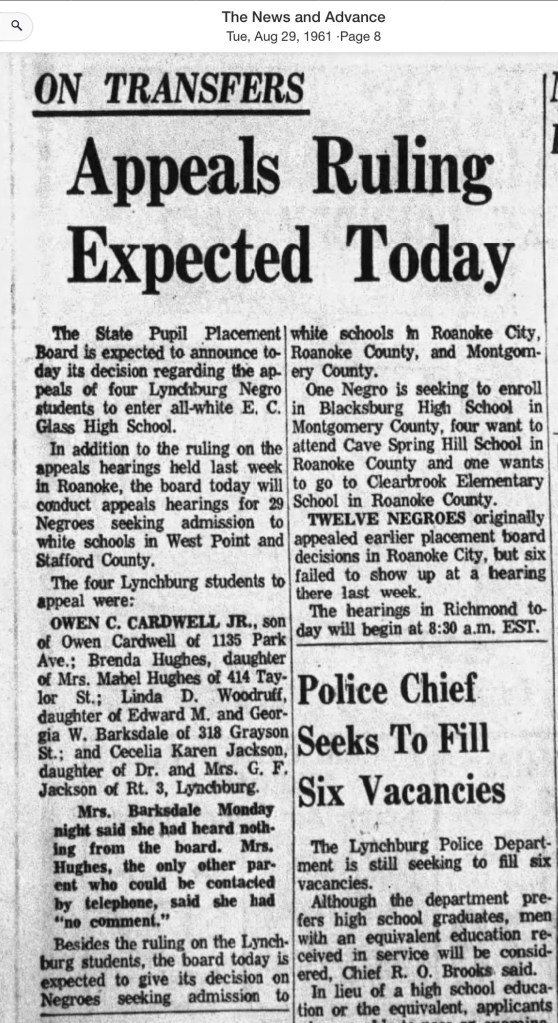
On August 23, 1961, Jacqueline and her father, Walter H. Lewis, traveled to Roanoke for the hearing, an intimidating experience for a 14-year-old. The Board delayed its ruling for a week before denying her appeal. That fall, Jacqueline remained at Christiansburg Institute.

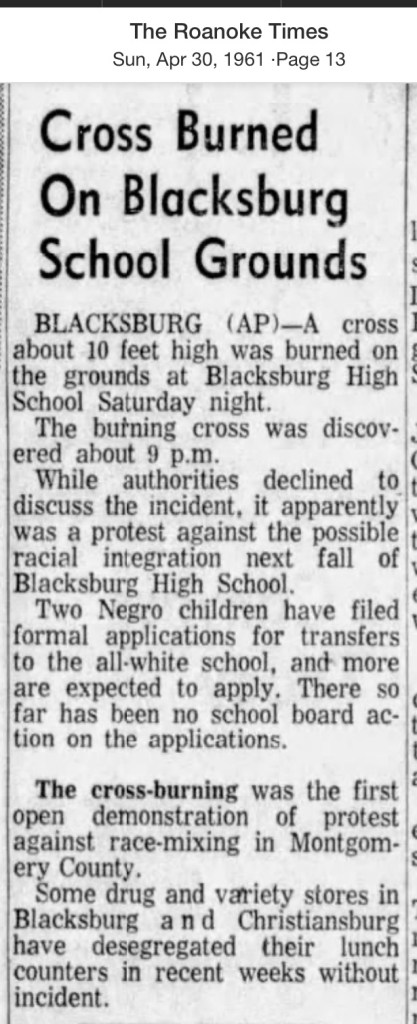
That September, Phillip and Ann Christine Price became the first Black students to integrate Montgomery County schools when they walked into Blacksburg High. According to researcher Tracy A. Martin, they were not alone—their white neighbors walked beside them in solidarity. This act of courage followed a chilling warning: on April 29, 1961, a ten-foot burning cross had been discovered on the school grounds, South Main Street.

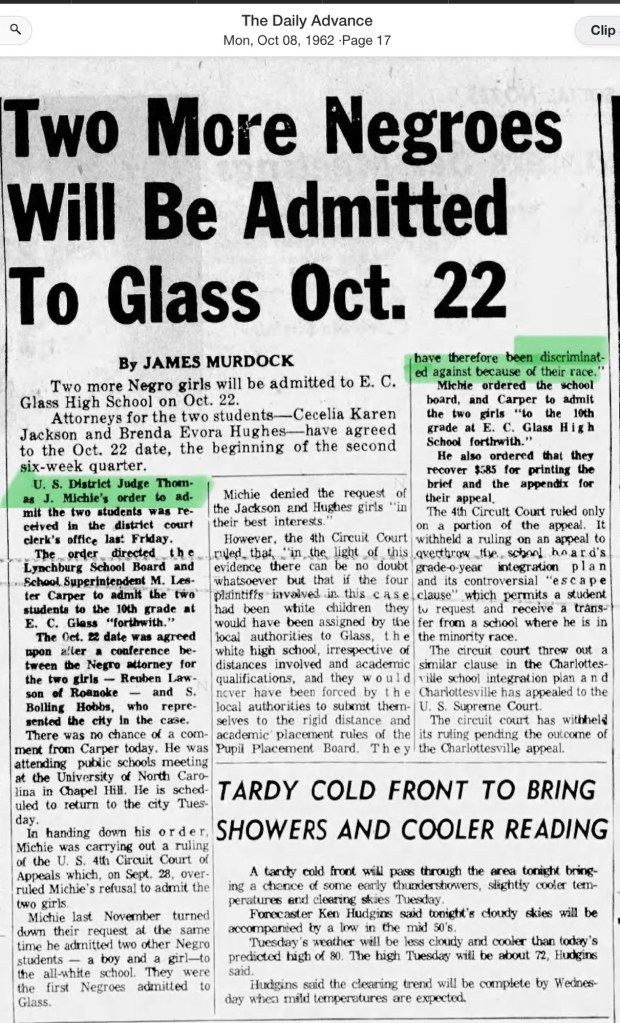
In 1962, the school board again delayed the application process for two more students seeking admission. Yearbooks from 1961–1964 suggest that the Price siblings were the only African American students at Blacksburg High during those early years. In the years that followed, more students of color began to appear in the yearbooks. By 1966, the school board closed Christiansburg Institute, and all of the county’s white high schools were finally opened to every student.

Newspaper Articles

April 1961

July 1961

August 1961

September 1961

1962 Application of Two Young Women, the Courts Ruling