
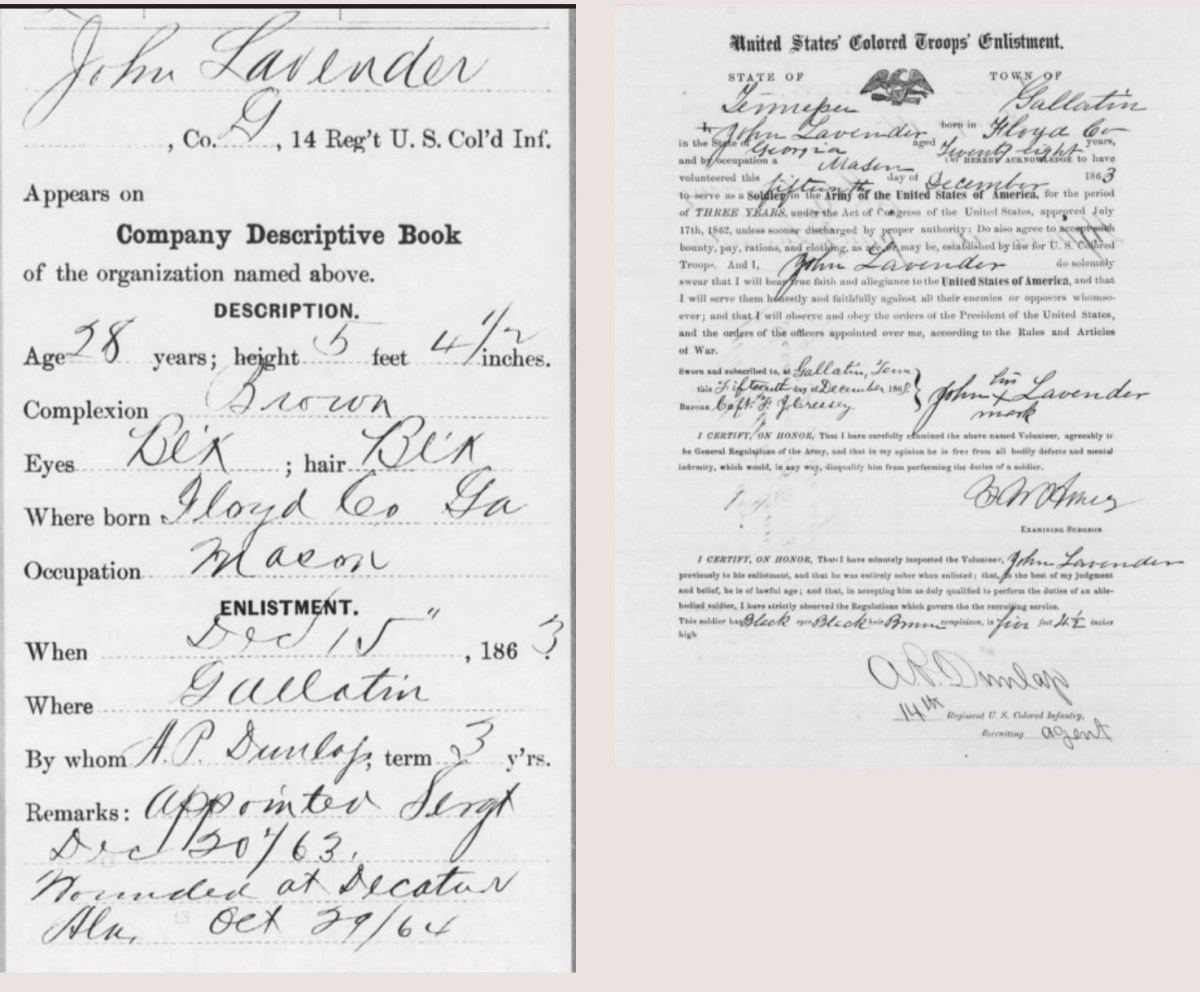
When researching African American genealogy, particularly in the South, it can be challenging to trace family history due to the lack of comprehensive records. However, some of this information can be found in an unexpected place: the Civil War documents of the Southern Confederacy and the US Military.
The book Virginia’s Black Confederates: Essays and Rosters by Greg Eanes highlights this, providing primary source documents that list the roles free and enslaved Black men, women, and children performed for the Southern war complex. These records, while written from a perspective that upholds the Confederacy’s narrative, contain valuable data for tracing African American ancestry.
The information in the post is found within this book. Eanes, Greg. Virginia’s Black Confederates: Essays and Rosters 2014. Civil War Sesquicentennial Edition, 2nd Edition.
Virginia 11th Regiment and Montgomery County
This regiment was established in Lynchburg, VA in May 1861 and put into service in July that same year. It was comprised of men from Botetourt, Campbell, Culpeper, Fauquier, Montgomery, and Rockbridge Counties. The free and un-free Blacks associated with this regiment may be listed in the regimental documents.
Eane’s Compilation of of Jobs Performed by Free & Enslaved (pgs 22-23)
- Body Servant – “Assist with care, cleanliness, and order as assigned quarters, uniforms, and military personal equipment; Help to purchase, prepare, and serve food and beverages in the General Officer’s quarters.”
- Cook – “Preparation and service of food in field or garrison food service operations.”
- Teamster – “Motor Transport Operators” and “Cargo Specialist.”
- Laborer-Breastwork – “Combat Engineer” and “Carpentry and Masonry Specialist.”
- Laborer – Railroad – “Railway Equipment Repairers”, “Railway Section Repairers”, and “Railway Operations Crewmember.”
- Laborer – Burial Details – “…recovery, collection, evacuation, establishment of tentative identification” of the body and possessions.
- Hostler – “comprehensive care for government owned animals.”
- Hospital Steward/Nurse – provide movement and care for injured people.
- Musician – professional Army band
- Blacksmith – “fabrication, repair and modification of metallic and nonmetallic parts.”
- Mechanic – “maintenance and repair on artillery, small arms; store ammunition.”
- Carpenter – “Perform general heavy carpentry, structural steel and masonry duties.”
- Boatman – “..navigation, cargo operations and supervising other Soldiers on Army watercraft.”
- Laundress – “supervising and performing laundry…”
- Preacher – “Support Unit Ministry Team”
- Scouts/Spies – “..reconnaissance…”
Compiled Service Records
Service records provide valuable information. They are available in paid sources, Ancestry.com or Fold.com and in Familysearch.org.

Pension Applications of the Confederacy and US Military
Confederate Pension Acts for Virginia were enacted between 1888 and 1934. On 14 of March, 1924 the act centered on servants granted pensions. “The 1928 Act broadened recognized duties to include performance of guard duty, burring Confederate dead, working in railroad shops, blacksmith shops or hospitals” (Page 26).
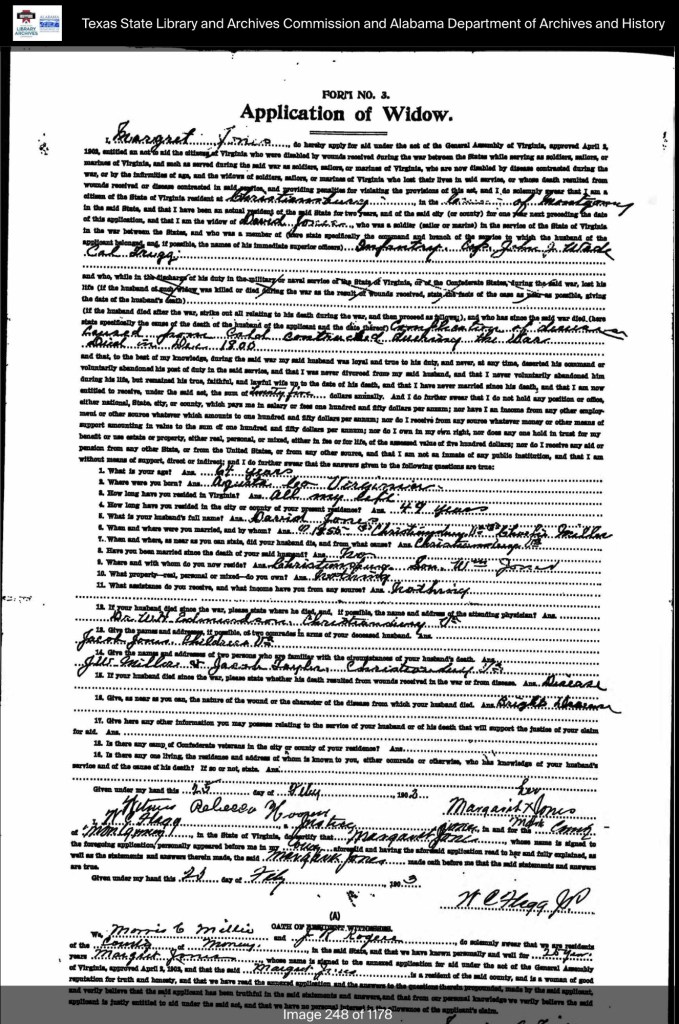
The pension records can be found at the Library of Virginia and on Ancestry.com (subscription required).
National Archive article on how to use the Pension Records, “Union Pension Files Giving Voice to Former Slaves”
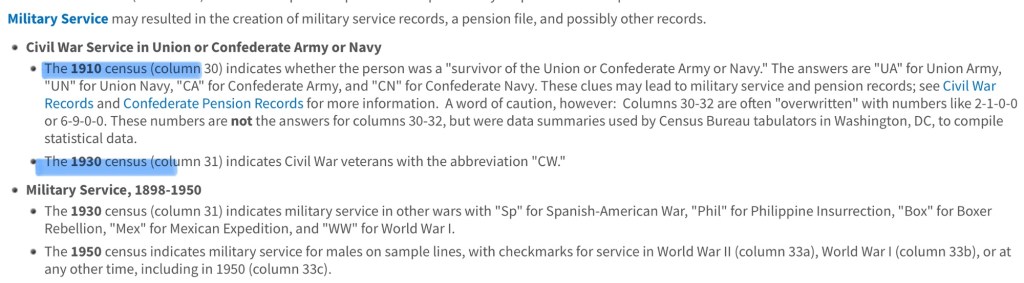
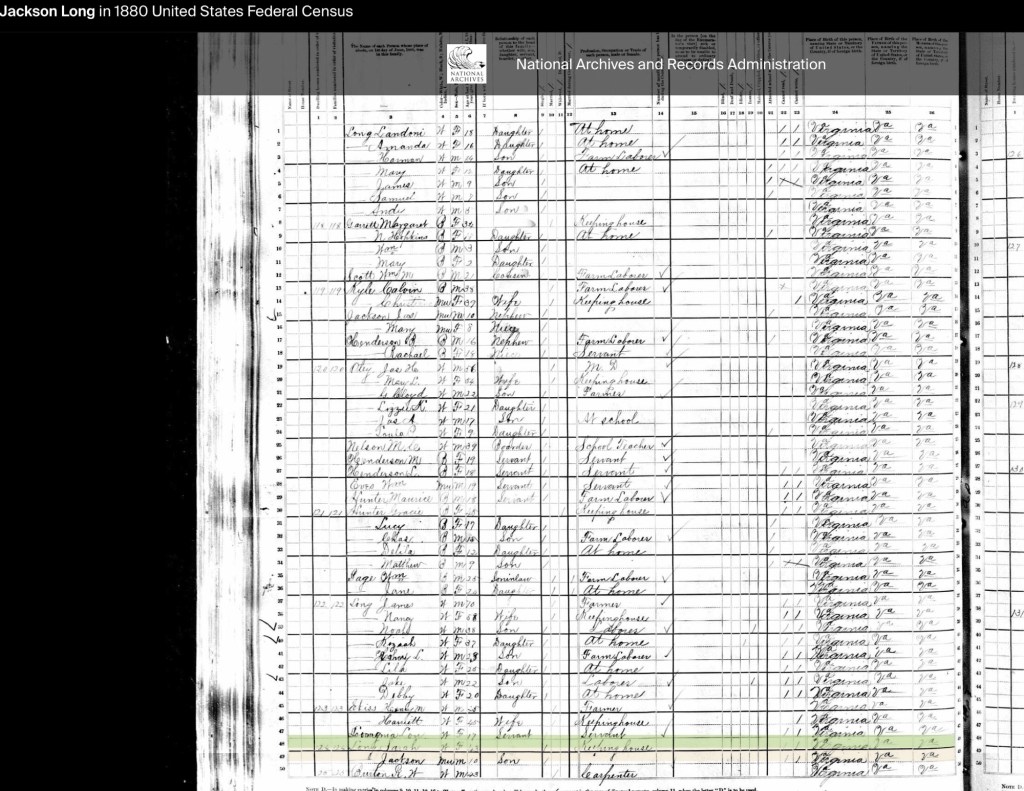
The 1910 (see image) and 1930 (CW) census indicates that the person was a veteran. The National Archives provides a helpful list of codes that were used.
Confederate Soldiers’ Home Application for Admissions Records
Found in the Library of Virginia digital collection or this link .
The American Civil War Museum
The archives of the museum maintain a large holding, some of which is digitized.
Confederate Certificate of Service – Freemen and Enslaved.
According to Eanes on page 113, the Army of the Confederate States adopted (1861) Form #4, the Certificate of Service. This was used for both free and unfree persons. Where these are located? We have not found an online source, yet.
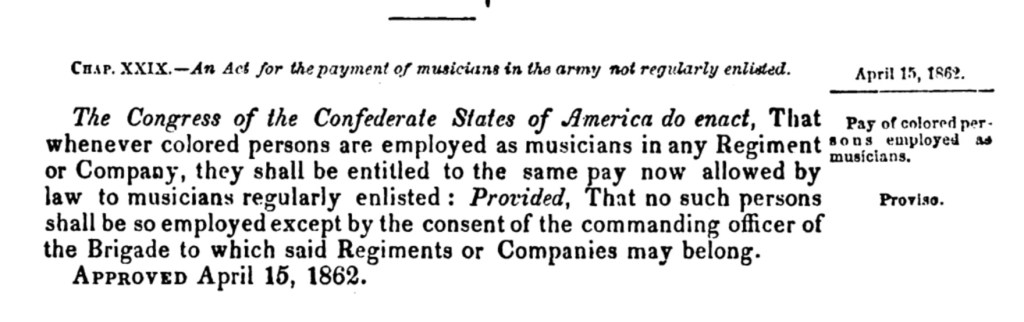
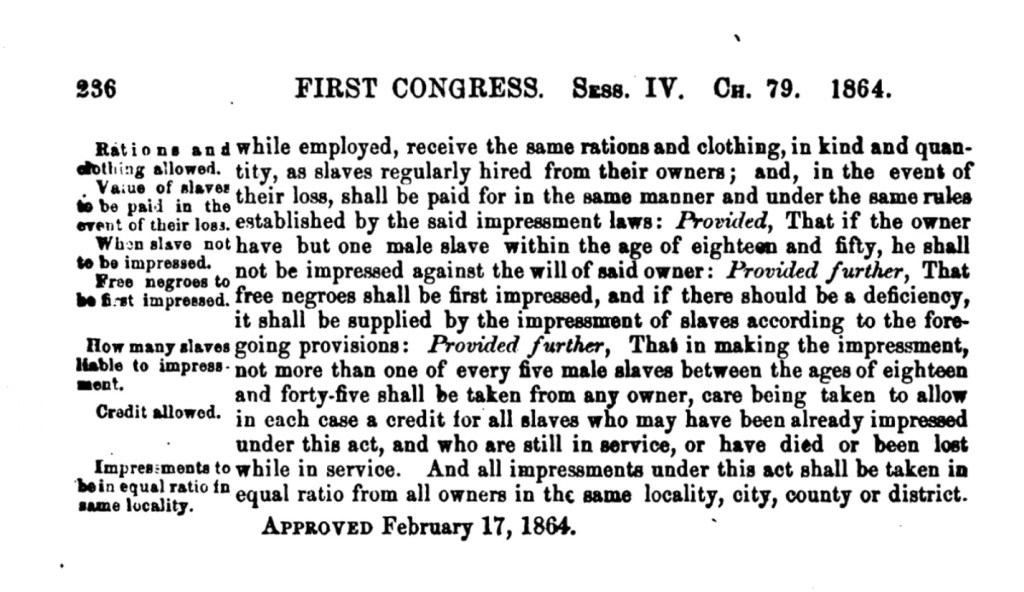
Public laws of the Confederate States of America, first Congress, 1862-1864 / [edited by James M. Matthews].
Primary source of the Acts of the Confederate Congress, Public laws of the Confederate States of America, first Congress, 1862-1864 / [edited by James M. Matthews]






 Gathering African American History