This is a collection of archival letters and newspaper clippings, many of which were discovered through eBay searches focused on Virginia. We’re sharing them in the hope that they may help someone uncover or connect with their ancestors.
Disclaimer: Any text in quotation marks reproduces the seller’s original listing. As with all archival materials, we encourage careful interpretation, as this information has not been independently confirmed.
February 27, 1798 – Mention of Dolly
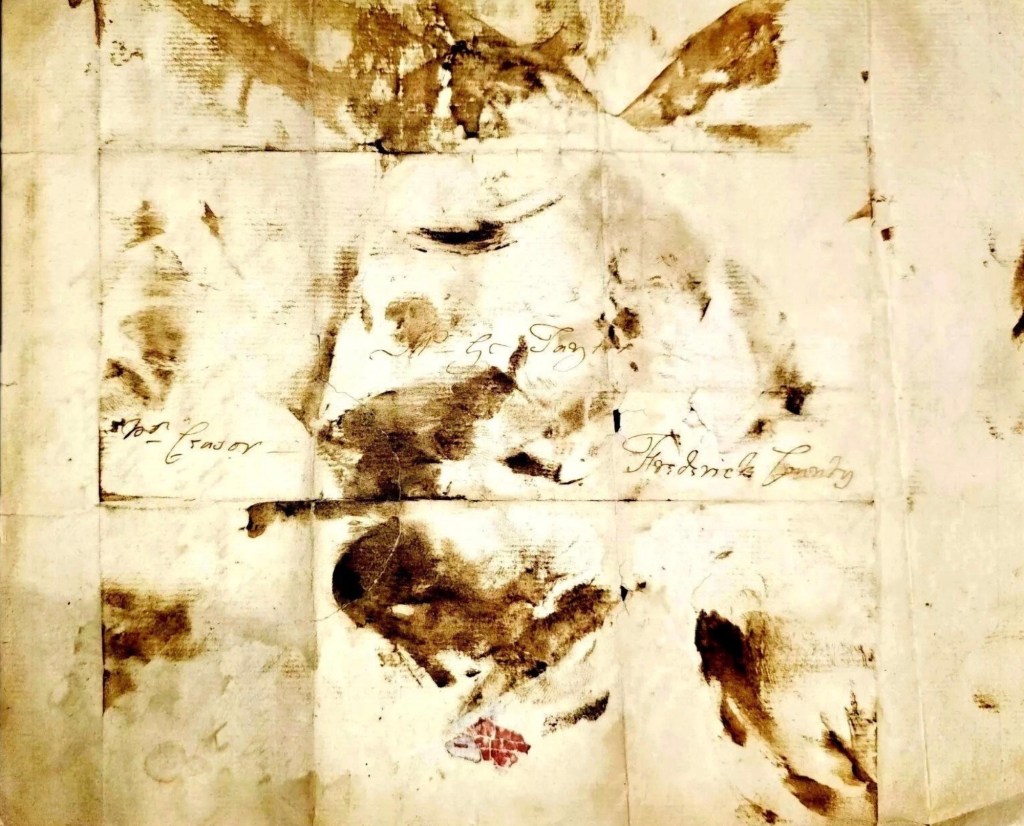
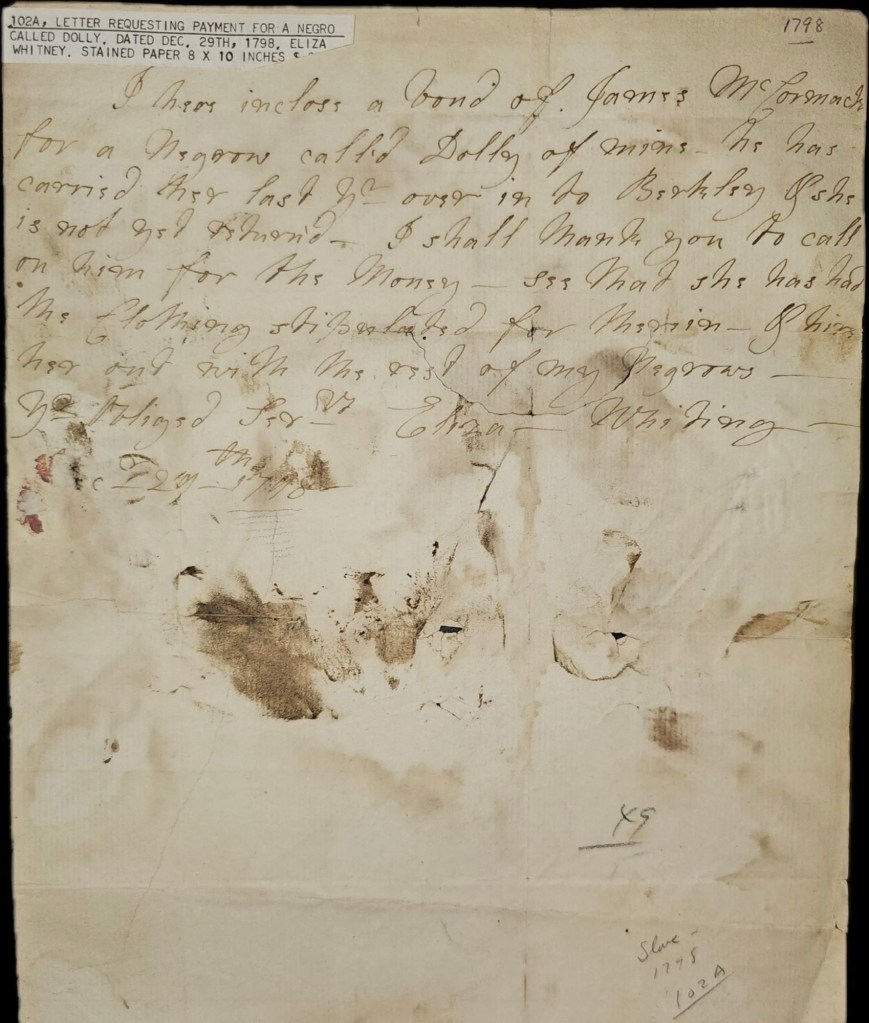
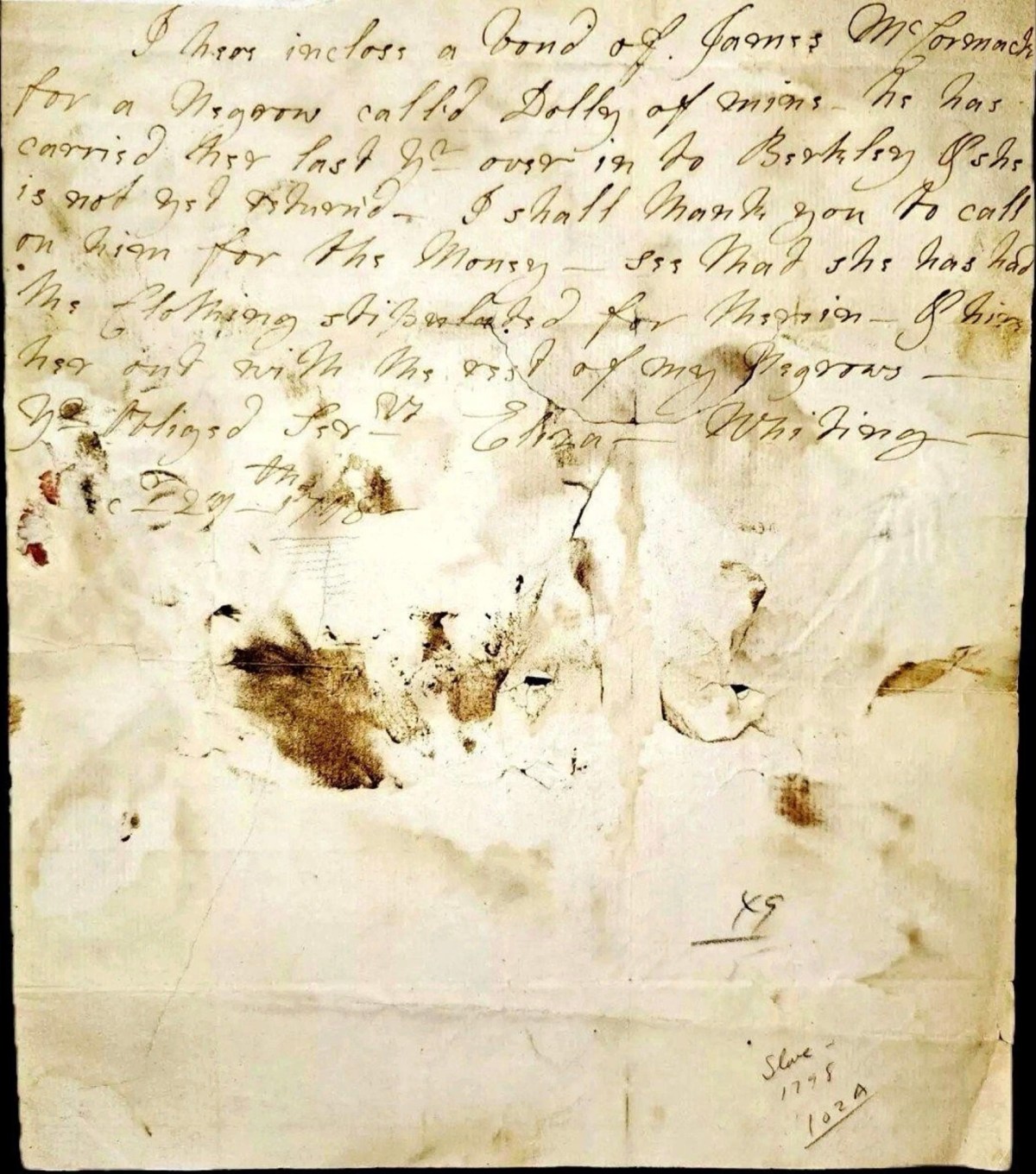
“This rare and historical slave letter from 1798 is Eliza Whiting to James McCormack is a must-have for collectors or slavery historian. The letter, written on old paper and hand-stamped for cancellation, depicts the harsh realities of slavery and commerce in the United States. Specifically relating to the Frederick County Virginia area in 1798.
The letter reads…
“Mr. George Taylor
Frederick County
-for favor
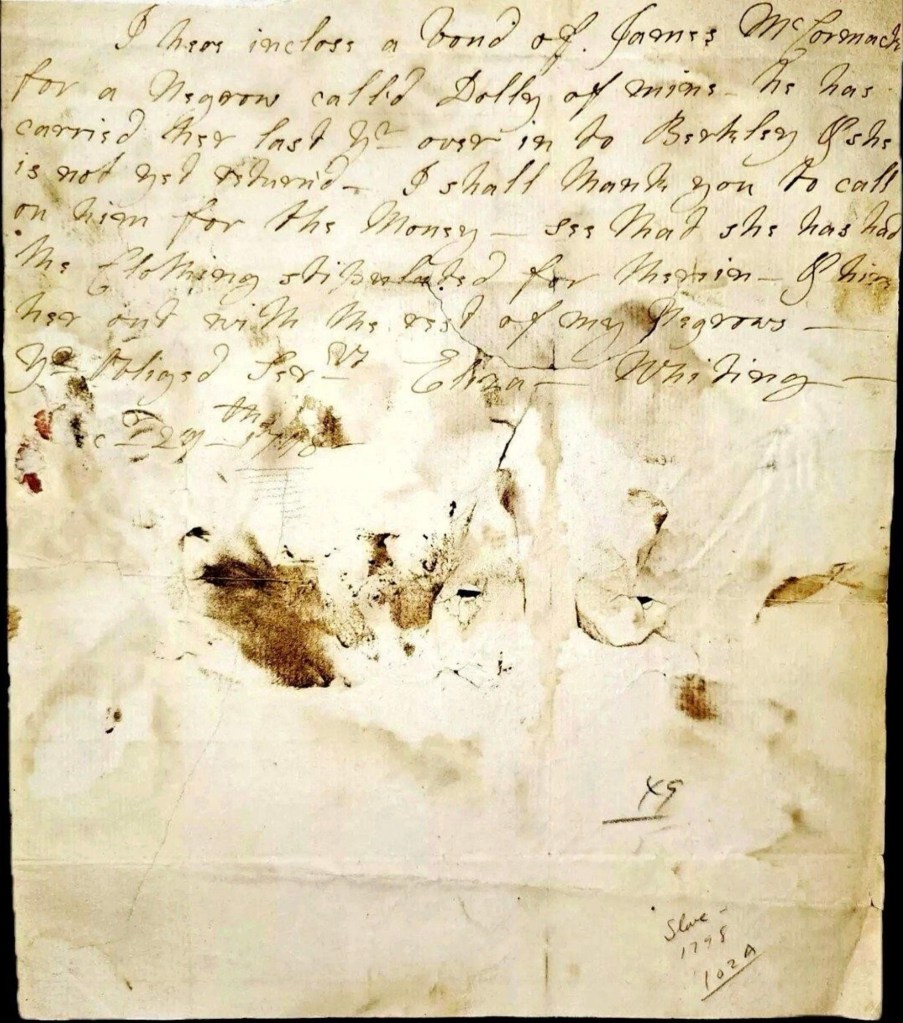
I hereby inclose a bond of James McCormack for a Negrow called Dolly of mine. He has carried her last go-over in to Berkley Pshs (Plantation) is(has) not yet returned – I shall mark you to call on him for this money – see that she has had the clothing stipulated for mention – Of hire her on I with the assist of my negroes.
Your Most Obliged Servant – Feb 27th 1798 – Eliza Whiting”
Elizabeth Burwell Whiting was the daughter of Lewis Burwell (1710–1752) of Carter’s Creek, Gloucester County, Virginia. A graduate of Cambridge who studied at the Inner Temple, Burwell served in the Virginia House of Burgesses and was acting governor of the colony in 1750. Mrs. Whiting’s husband, Beverley Whiting, was probably the son of Peter Beverley Whiting (c.1707–1755) of Gloucester County. Peter Beverley Whiting may have been the son of the Beverley Whiting who was one of George Washington’s godfathers.
James McCormick was born on June 8, 1768, in Frederick, Virginia, United States. His father was also named James McCormick, and his mother was Mercy Lupton. In 1784, James married Elizabeth Hanna in Rockbridge, Virginia. They had at least three sons. James passed away in 1841 in his hometown at the age of 73.
The letter’s aspects include a Stampless Courier denomination, a year of issue 1798, and a place of origin in the United States. It is a valuable addition to any collection and a testament to the rich history of Maryland. Don’t miss out on the opportunity to own a piece of history.
The piece has significant staining, probably dating to the time of creation, as it could be ink, or mud, or caused from water during delivery to its recipient.
Upon further research the name appears to be Eliza “Burwell” Whiting who was from a prominent family out of Prince William County.”
April 22, 1840 – Mention of Bill
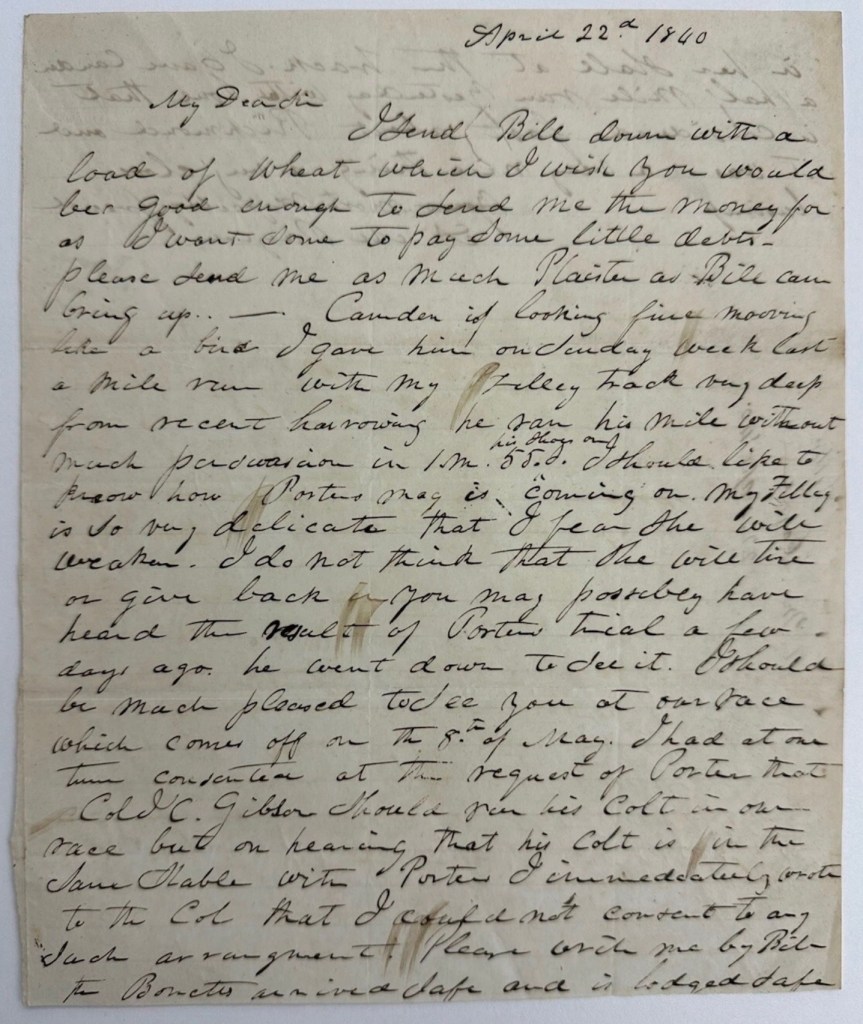
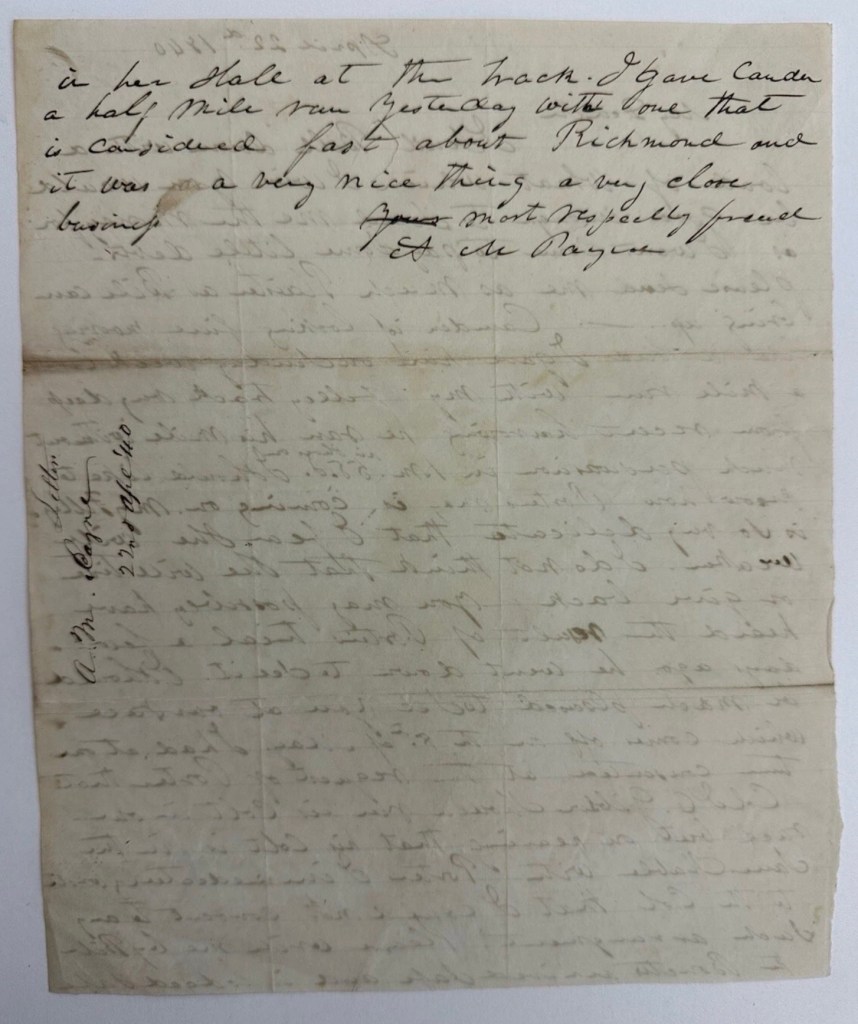
“April 22d 1840 [-] My Dear Sir [-] I send Bill down with a load of wheat which I wish you would be good enough to send me the money for as I want some to pay some little debts – Please send me as much plaister as Bill can bring up. – Camden is looking fine mooving [sic] like a bird. I gave him on Sunday week last a mile run with my [filley?] track very deep from recent harrowing [-] he ran his mile without much persuasion in 1 m[inute] 55 [seconds] his shoes on. I should like to know how Porter’s nag is coming on. My filler is so very delicate that I fear she will weaken. I do not think that she will tire or give back in. You may possibly have heard the result of Porter’s trial a few days ago. he went down to see it. I should be much pleased to see you at our race which comes off on the 8th of May. I had at one time consented at the request of Porter that Col. J.C. Gibson should run his colt in our race but on hearing that his colt is in the same stable with Porter’s I could not consent to any such arrangement. Please write me by Bill [illegible] Bonetis arrived safe and is lodged safe in her stall at the track. I gave Camden a half mile yesterday with one that is considered fast about Richmond and it was a very nice thing a very close business. Most respectably friend. A. M. Payne.”
“The author of this letter, Arthur A.M. Payne (1804-1868), was a member of the longstanding family associated with Fauquier County, and the last familial owner of the Clifton estate in that county, which he sold in 1854 on moving to Missouri, where he passed away in 1868. His father was Captain William Payne (1755-1833) who served in the Virginia Militia under General Richard Henry Lee during the American Revolution. A.M. Payne was in turn the father of Confederate States Army Brigadier General William Henry Fitzhugh Payne (1830-1904).
The man mentioned in the letter, Colonel Jonathan Catlett Gibson (1793-1849), was a notable landholder in both Culpeper and Rappahannock County, Virginia.
Colonel Gibson served in the Virginia militia during the War of 1812 and rose to command rank in later years. He was elected to the Virginia House of Delegates in 1830. Originally married to a niece of George Washington, he remarried after her death, raising five sons, all of whom served in the Confederate Army. “
November 22, 1845 – Mention of Abb, Nancy, Mary, Martha, Rachel, Luce, Big Davy
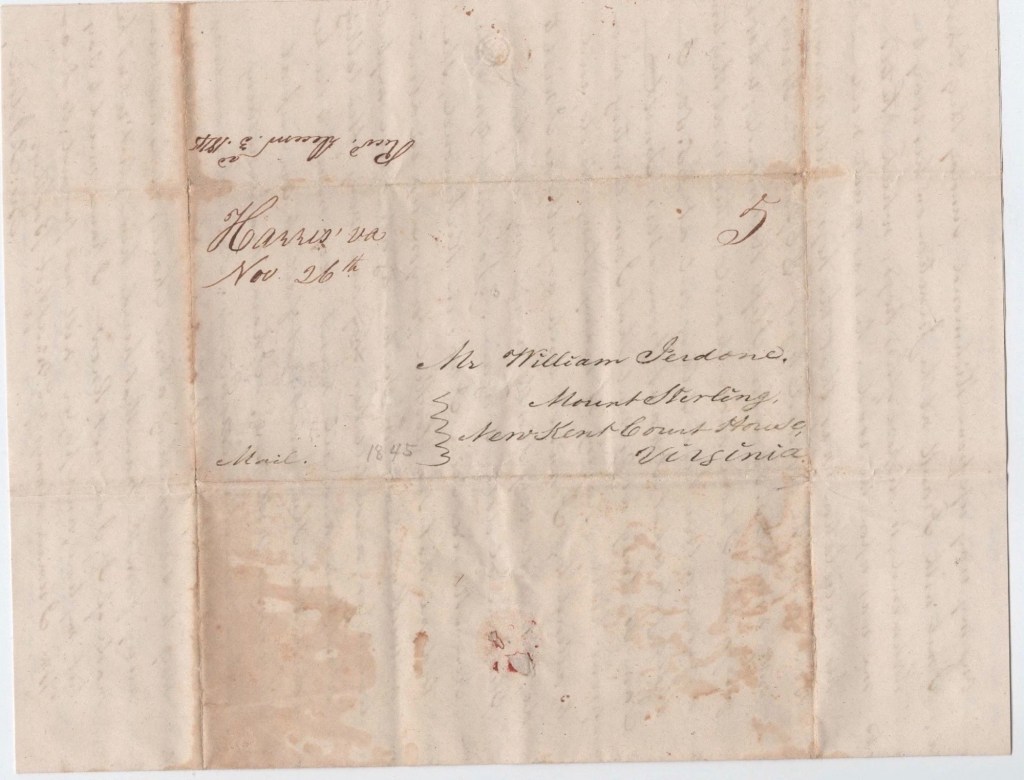
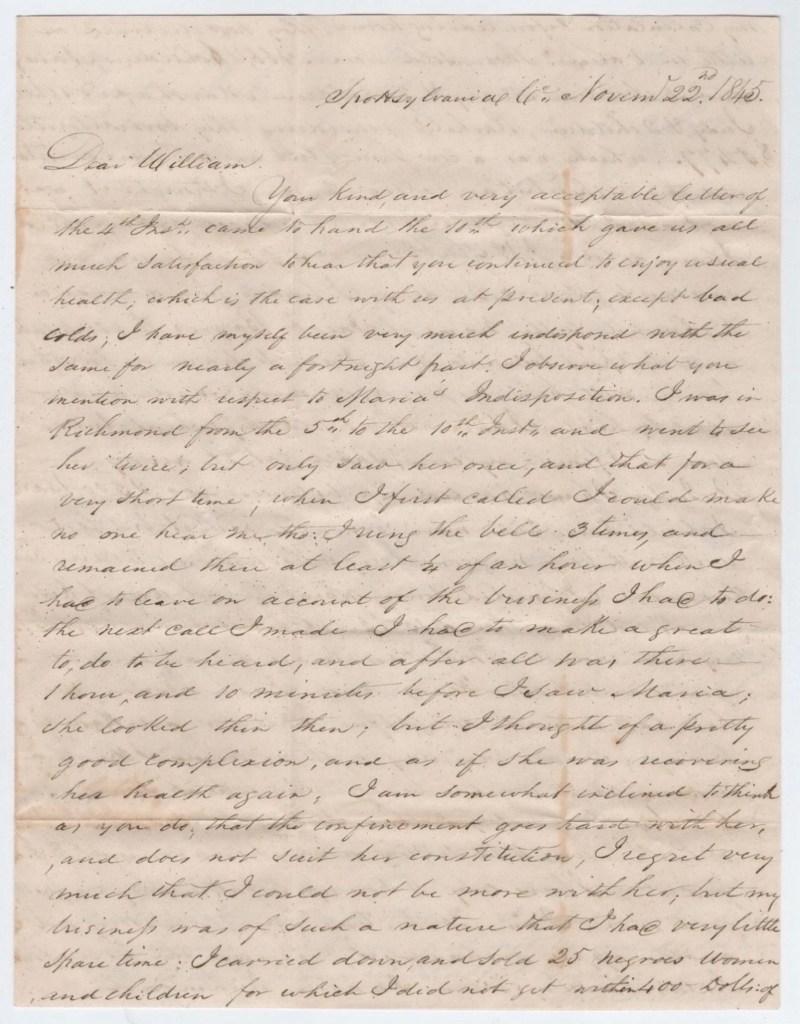
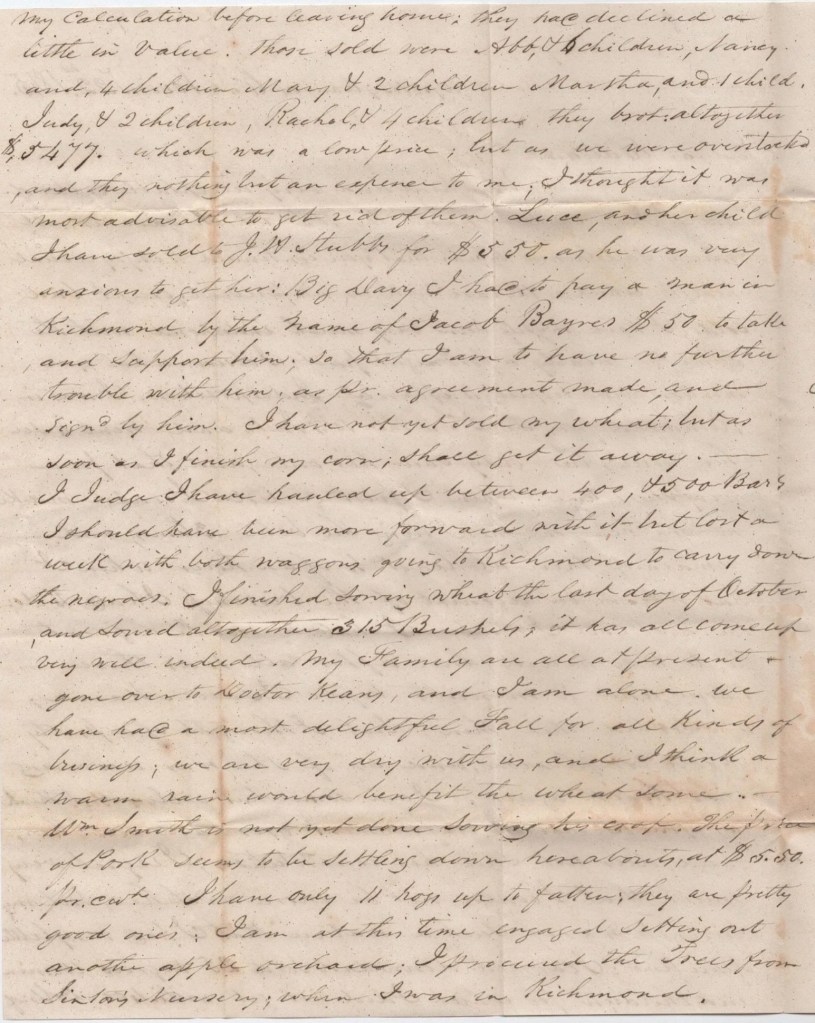
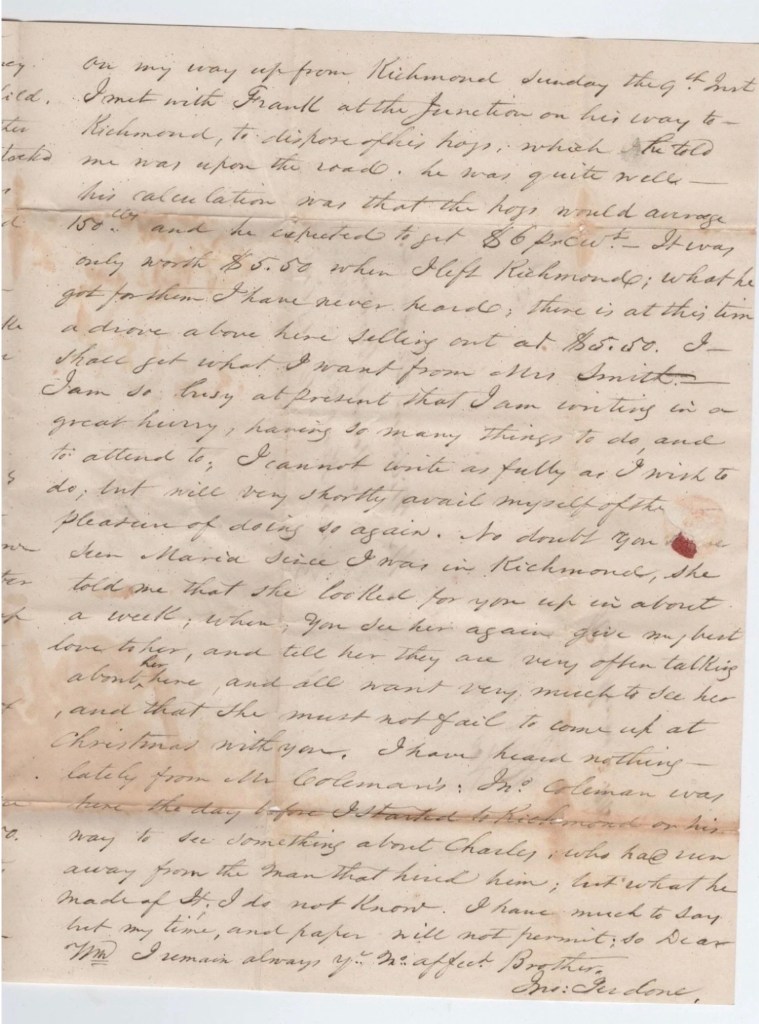
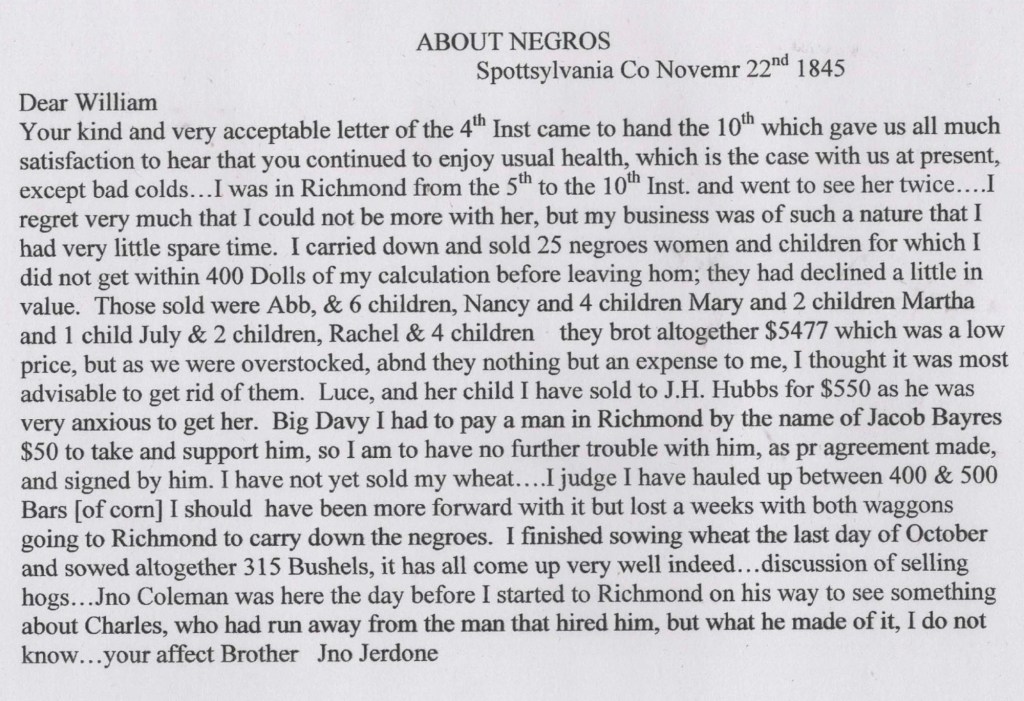
“Remarkable Stampless folded letter written November 22, 1845 by John Jerdone, a prominent plantation owner in Spottsylvania, Virginia and sent to a relative, William Jerdone in Mount Sterling, New Kent Court House, VA.
Content is about the sale 25 enslaved negro women and children, the prices obtained. Rest of content is farming news, selling hogs in Richmond etc.”
As noted by Dan Thorp in Seeking Justice: The Extraordinary Freedom Suits of an Enslaved Virginia Family, fluctuations in the enslaved labor market in eastern Virginia reflected broader economic shifts in the decades before the Civil War. Periods of declining prices—such as those described in this letter, where individuals were said to be “overstocked”—often prompted enslavers to sell people out of the region, feeding the domestic slave trade to the Deep South. This language of “overstock” underscores the brutal commodification of human lives, where people were treated as surplus property in a market economy, and their forced movement reshaped families and communities across the South.
1851 March – Mention of Isetta
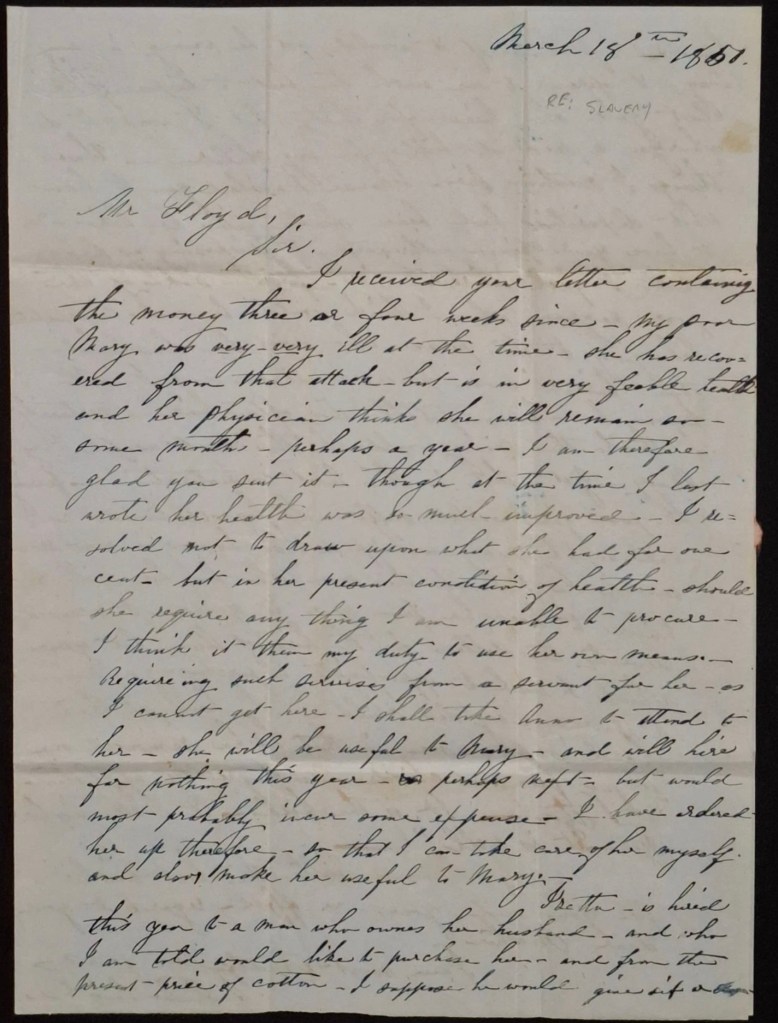
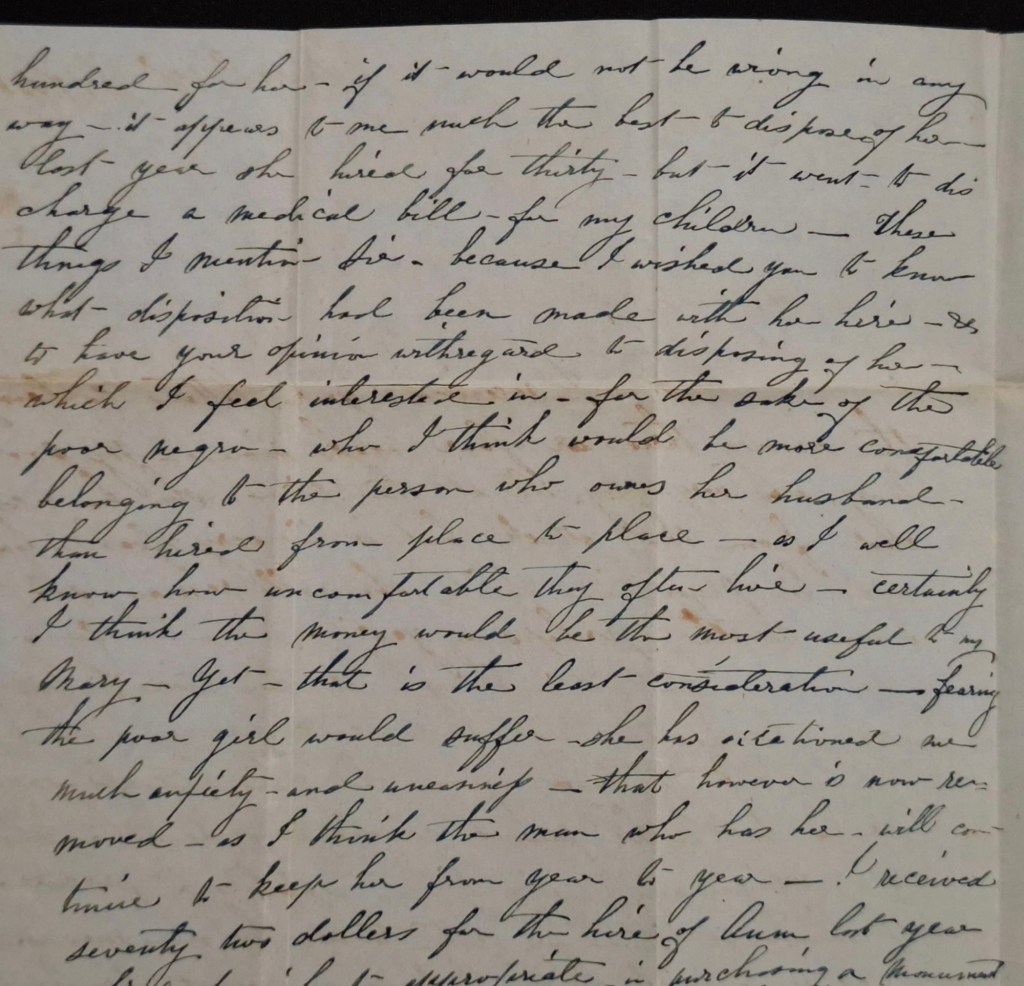
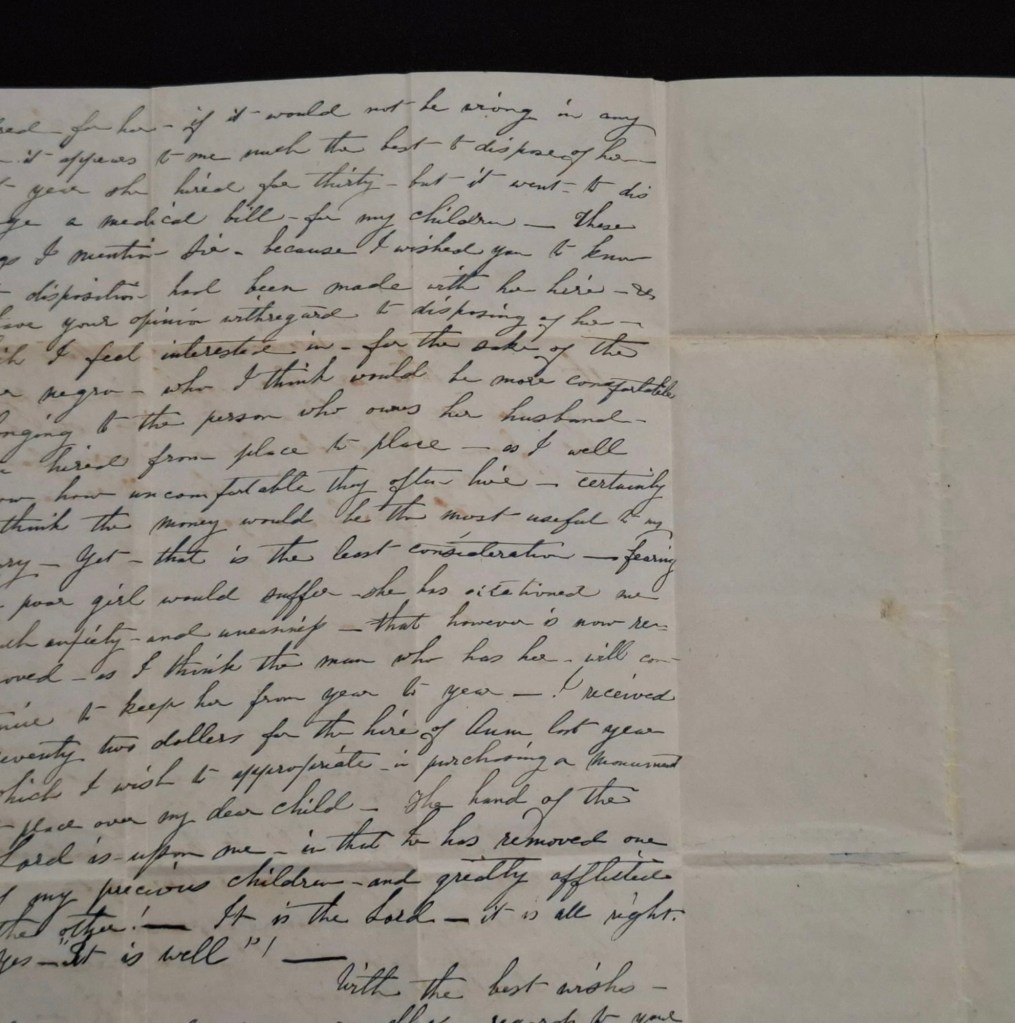
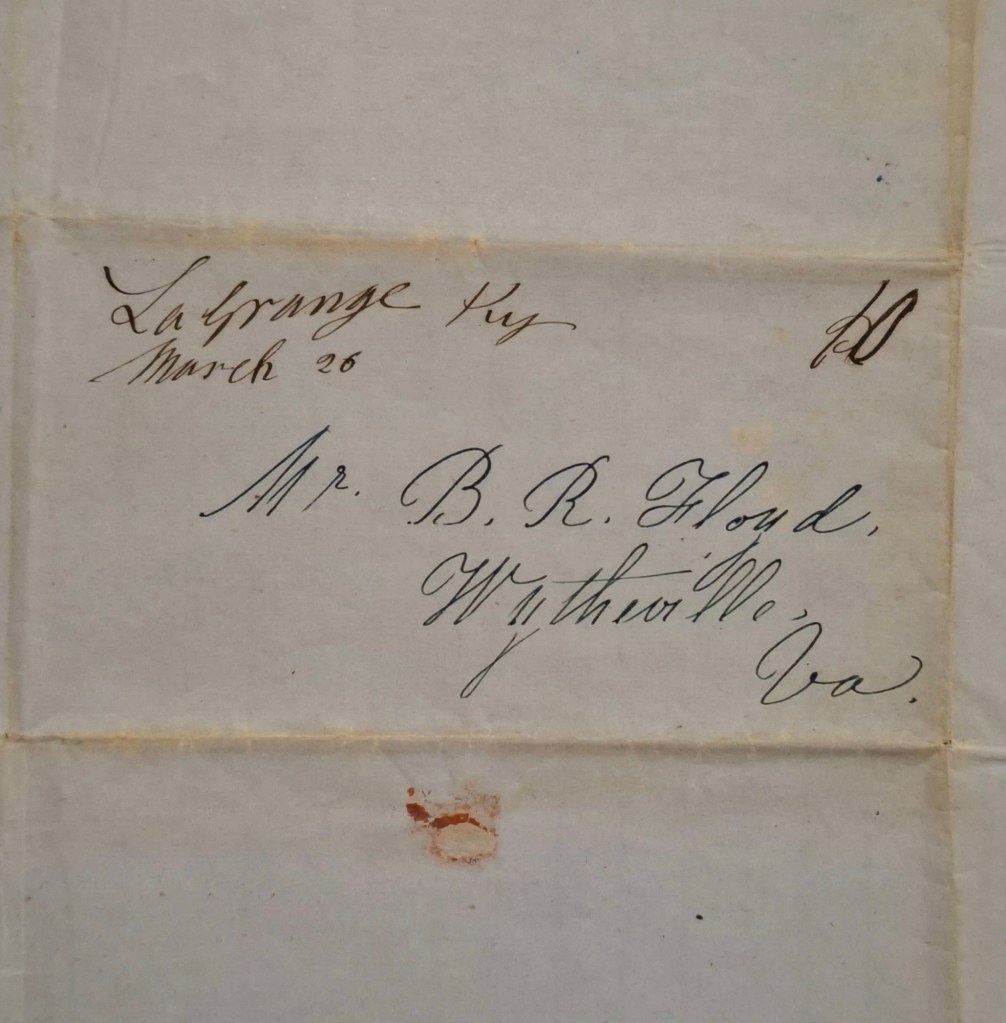
“An autograph letter signed S.W. Leigh to Benjamin Rush Floyd, discussing personal matters and asking for advice on the sale of a slave woman named Isetta.
Excerpt:
“[….] Isetta is hired this year to a man who owns her husband and who I am told would like to purchase her and from the present-price of cotton – I suppose he would give six hundred for her….”
2 pp. , 25 x 18,5 cm, leaf address “Mr. B.R. Floyd, Wythe, Virginia” sent from La Grange, Kentucky, March 1851.
Note: The recipient of the letter, Benjamin Rush Floyd (1811-1860), American lawyer and politician was a member of the Virginia House of Delegates from 1847-1848, and state senator from 1857-1858.”
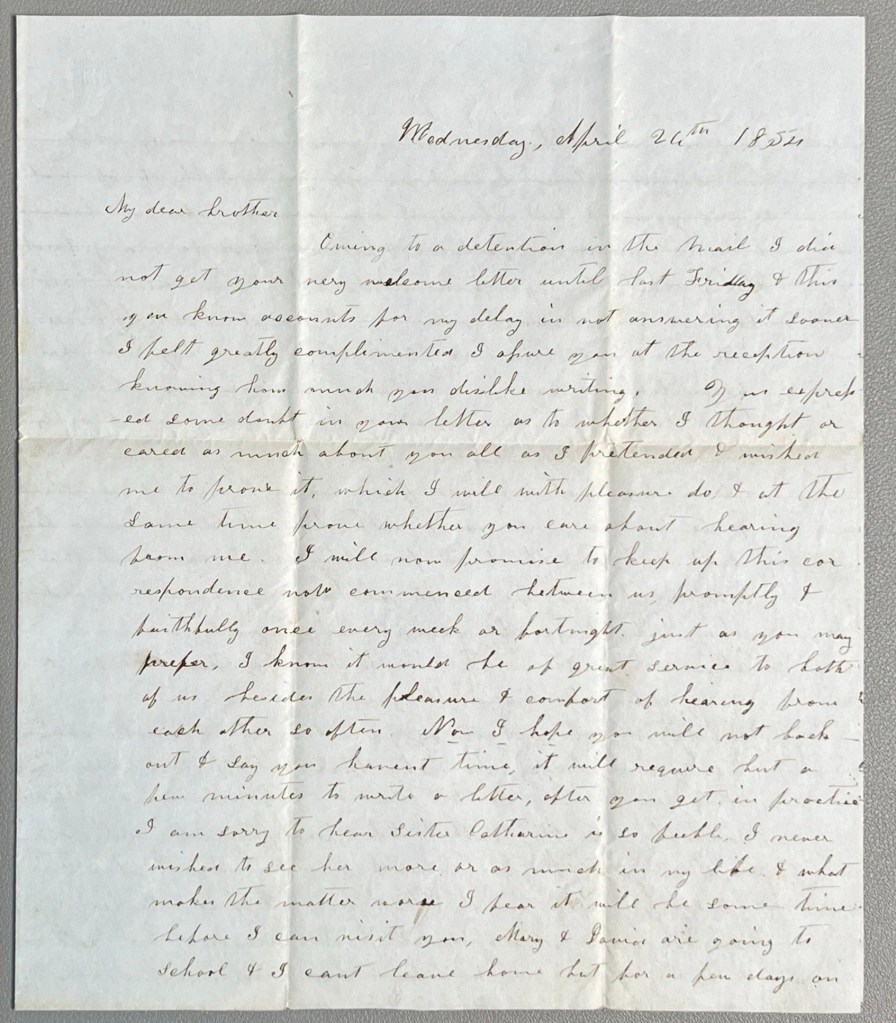
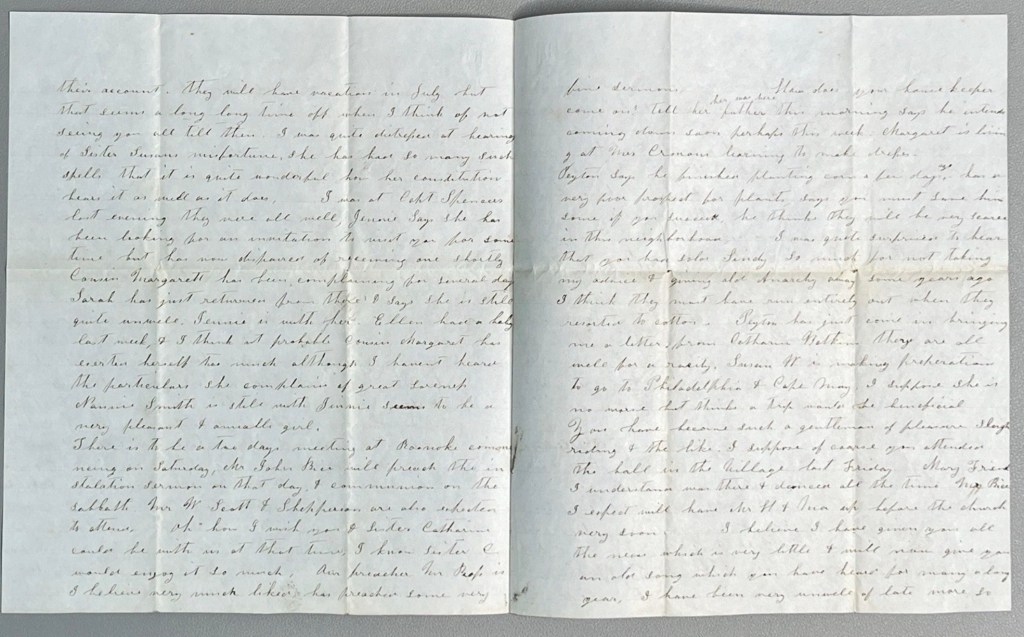
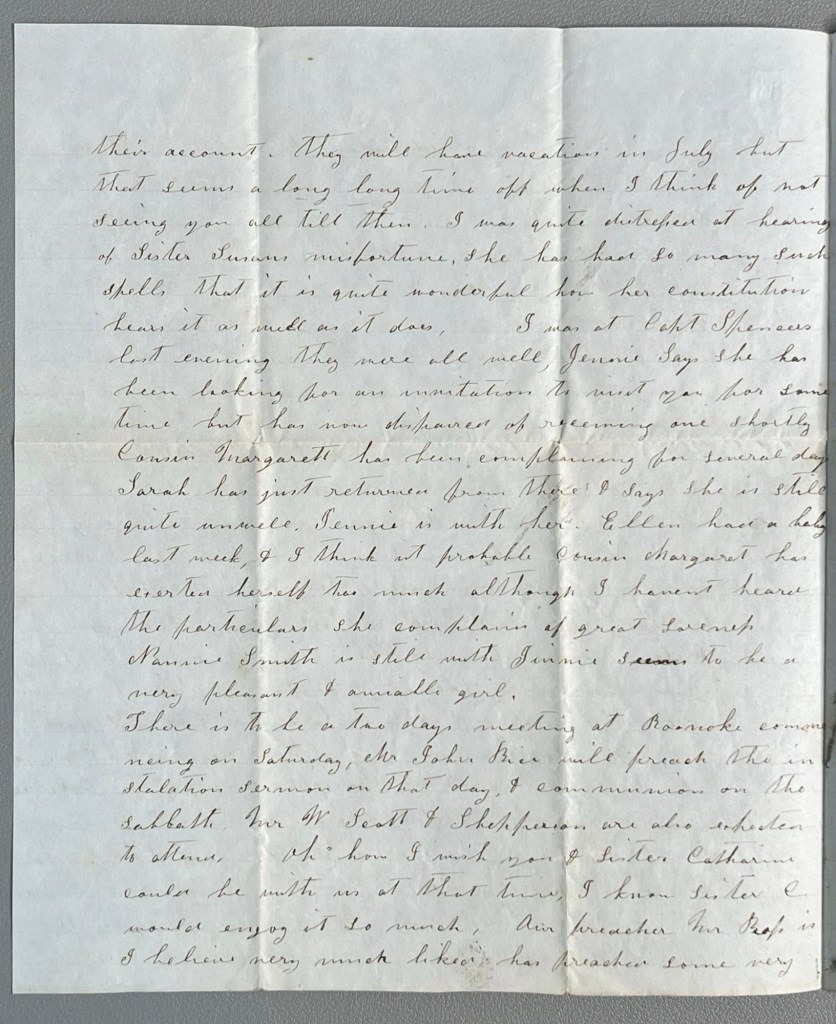
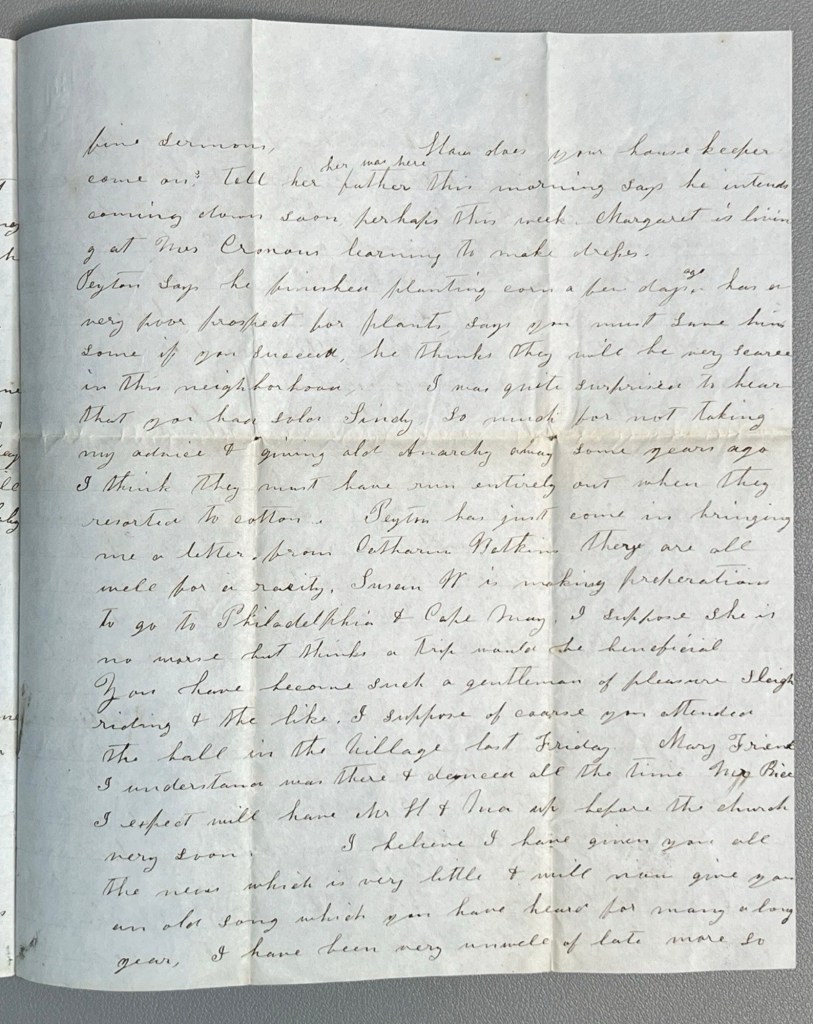
1854 – Roanoke
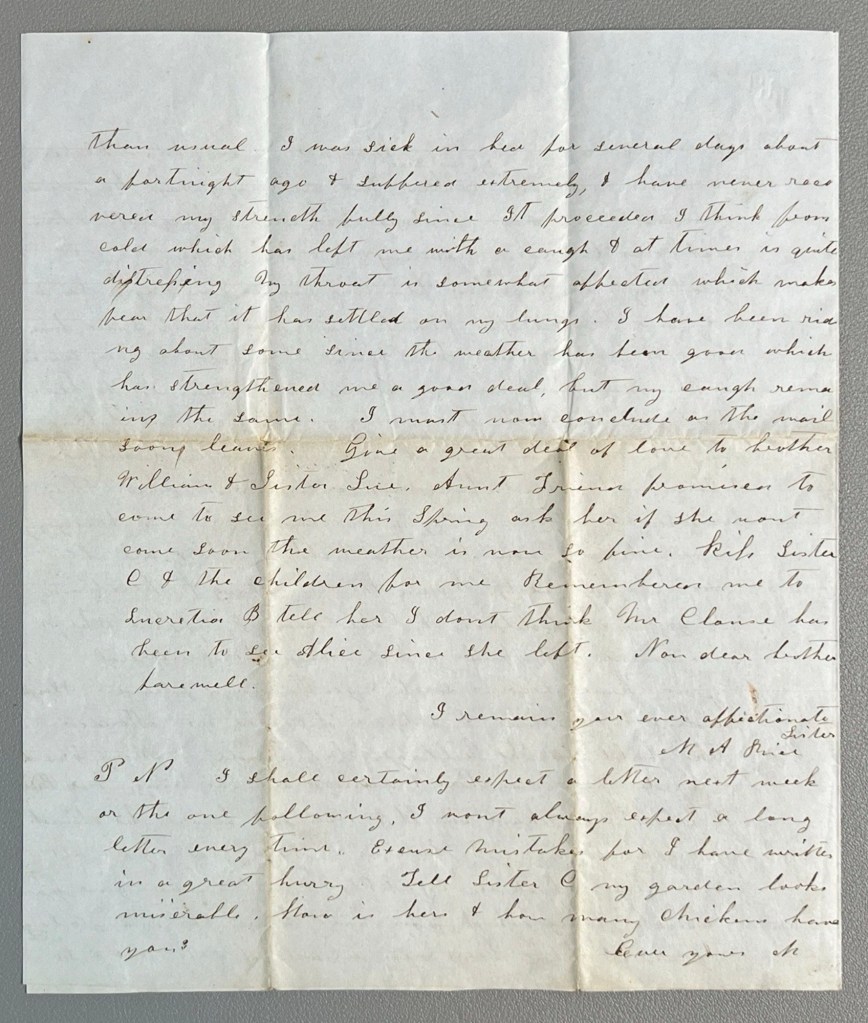
Primary Historical Hook: The defining value of this manuscript rests on the explicit mention of the sale and transfer of enslaved individuals. Within the text, the author expresses surprise at the recipient’s actions:
“I was quite surprised to hear that you had sold Sindy. So much for not taking my advice & giving old Anarchy away some years ago.”
Antebellum correspondence that names specific enslaved persons is highly sought after by academic archives, museums, and private historical collectors for its rarity and research potential.
- Date & Origin: The letter is dated Wednesday, April 26th, 1854.
- Local Interest: Refers to a “Two days meeting at Roanoke” with sermons delivered by “Mr. John Rice” and “Mr. Proffit.”
- Identified Individuals: The text is rich with genealogical data, mentioning “Sister Catharine,” “Sister Susan,” “Sister Sue,” “Brother William,” “Capt. Spencer,” “Cousin Margaret,” “Nannie Smith,” “Peyton,” and “Aunt Irene.”
- Health & Daily Life: Details the “feeble” state of Sister Catharine, agricultural concerns regarding a “poor prospect for plants,” and general family news regarding school and recent births.
- Date: April 26, 1854
- Location: Roanoke, Virginia
- Author: M. A. Price
- Key Themes: Slavery/Enslavement history, Southern Social History, Genealogy, 19th-Century Religion