Searching for Their Name – Cambria, VA

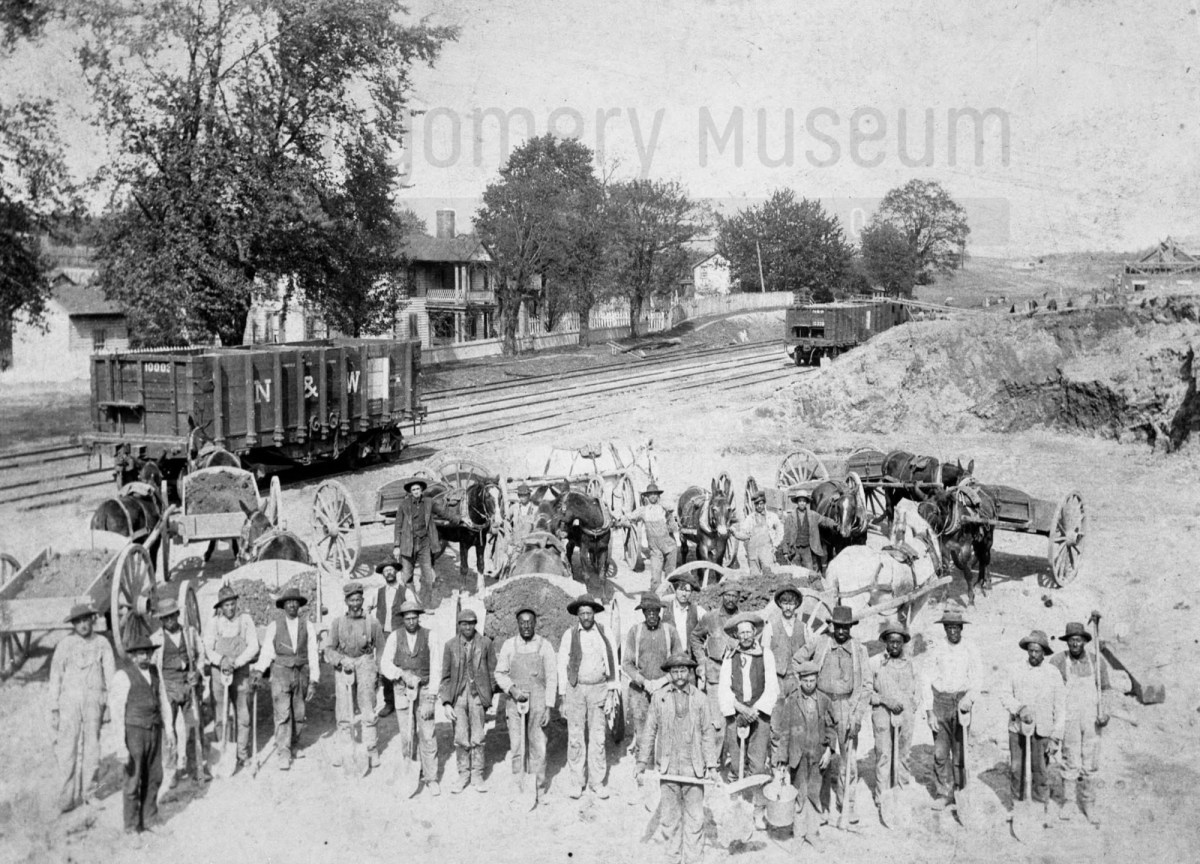
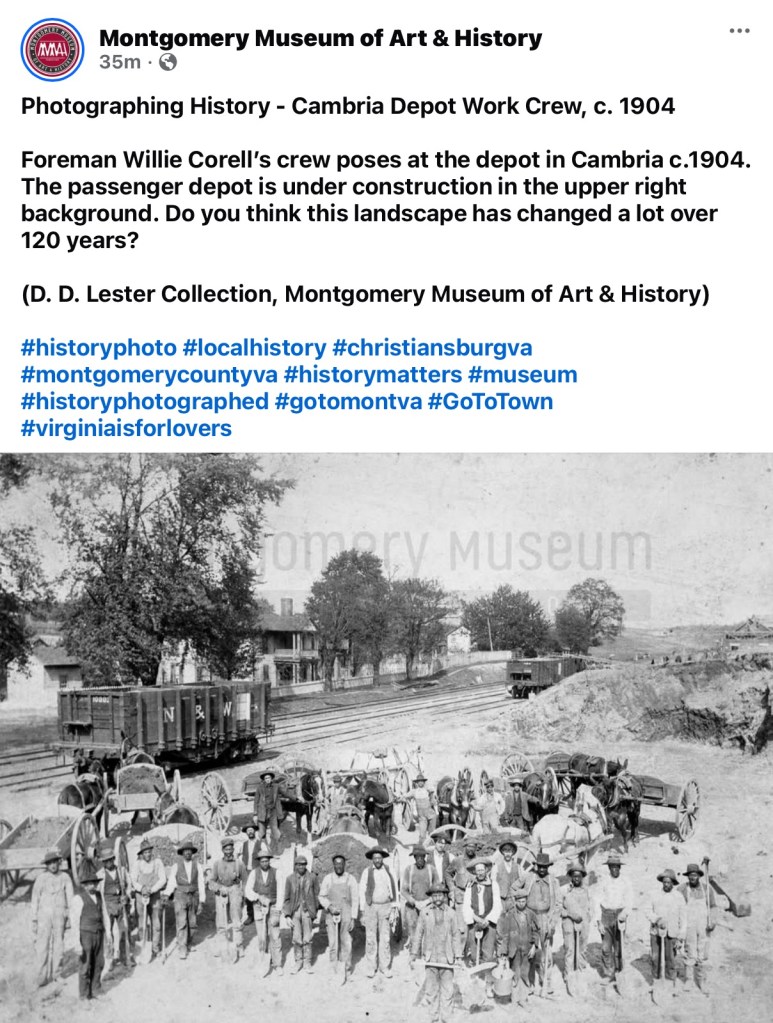
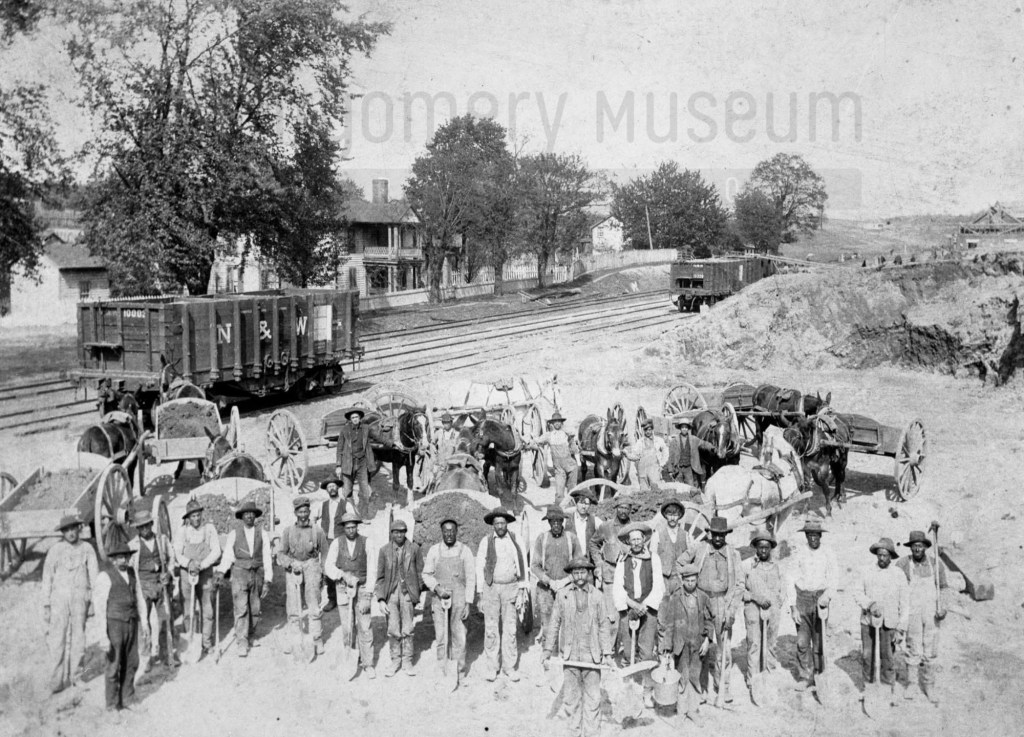
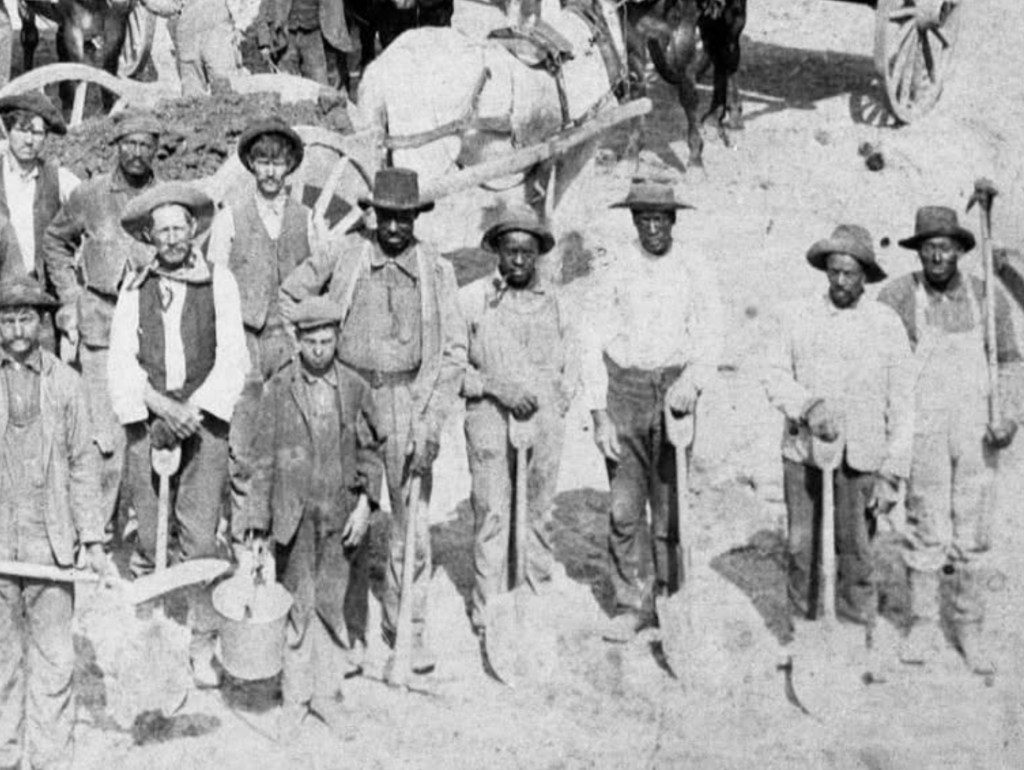
In 1904, a mixed-race crew built the new Cambria, Virginia Depot passenger station. Their faces were captured, but their names were not. As we search census records and explore new tools like AI facial recognition, we hope to uncover who they were — the hands and lives behind this piece of our shared history.

This 1904 photograph captures a work crew—Black and white men together—building the new passenger station for the Cambria, Virginia Depot. It’s a remarkable image of shared labor and community effort during a time of deep segregation.

Yet, like so many images from the early 20th century, the men remain unnamed, except for the foreman, Willie Corell. Their faces look back at us across more than a century, but their identities have been lost to time. Who were they? What were their lives like?

With advancing technology, tools like AI facial recognition may one day help uncover their names and family connections. Until then, our research turns to the 1900 and 1910 census records, where we hope to find traces of the African American laborers who helped shape the Cambria community and build this station that still stands as part of our shared history.

If you have family stories, photographs, or names that might help identify these men, we would love to hear from you. Each clue brings us closer to giving them the recognition they deserve.

Church: Rough and Ready in Childress, Virginia

The exact location of this church in the Childress area remains unknown. A 1940 school map shows nearby schools but lists only Pine Woods, a Rosenwald-funded African American school. Because schools were often built near churches, the map—and the noted Shelburne home—may offer clues to where the congregation once gathered.

Rough & Ready Church in Childress, Va – Roanoke Times, 05 August 1923, page 20

The exact location of this church in the Childress area is unknown. A 1940 school map identifies local schools but does not mark any African American schools, except Pine Woods School, which was built with Rosenwald funds. In many communities, schools were often situated near churches, so their locations can offer valuable clues. A Shelburne home also appears on this map, suggesting possible connections within the neighborhood.

The Roanoke Times, 05 August 1923, page 20

During a violent electrical storm Monday, lightning struck a son of Authur Shelburne near the colored church “Rough & Ready.”

Searching for Her Name – Lawrence Family Photo

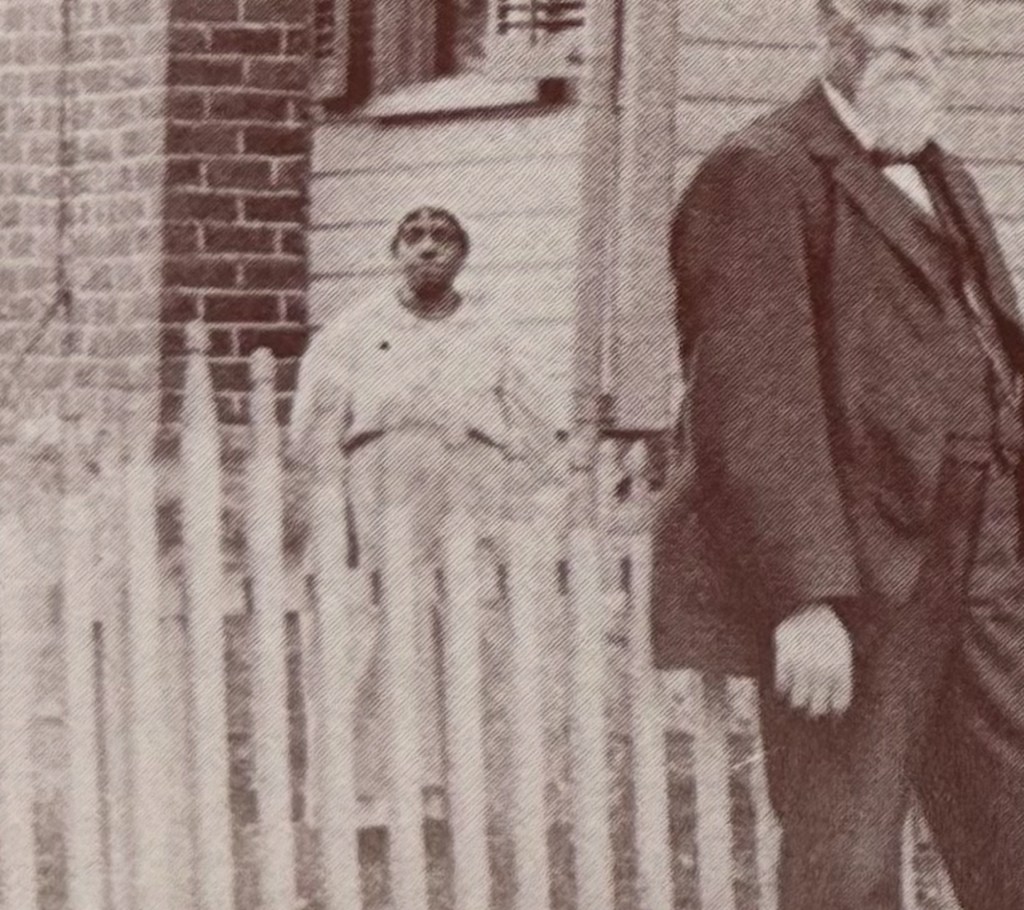
Behind the Lawrence family’s fence on Five Points Road in Riner stands an unidentified African American woman—her name unrecorded, her story unknown. She appears behind Canaan and Mollie Weaver Lawrence, whose wealth came from farming, commerce, and the post office in the late 1800s.

Searching for Her Name

In this photograph, taken in Riner, Virginia, a white family stands proudly in front of their home on Five Points Road, Riner, Virginia. Behind the fence, partially obscured, stands an unidentified African American woman—someone whose name and story have not yet been recorded.

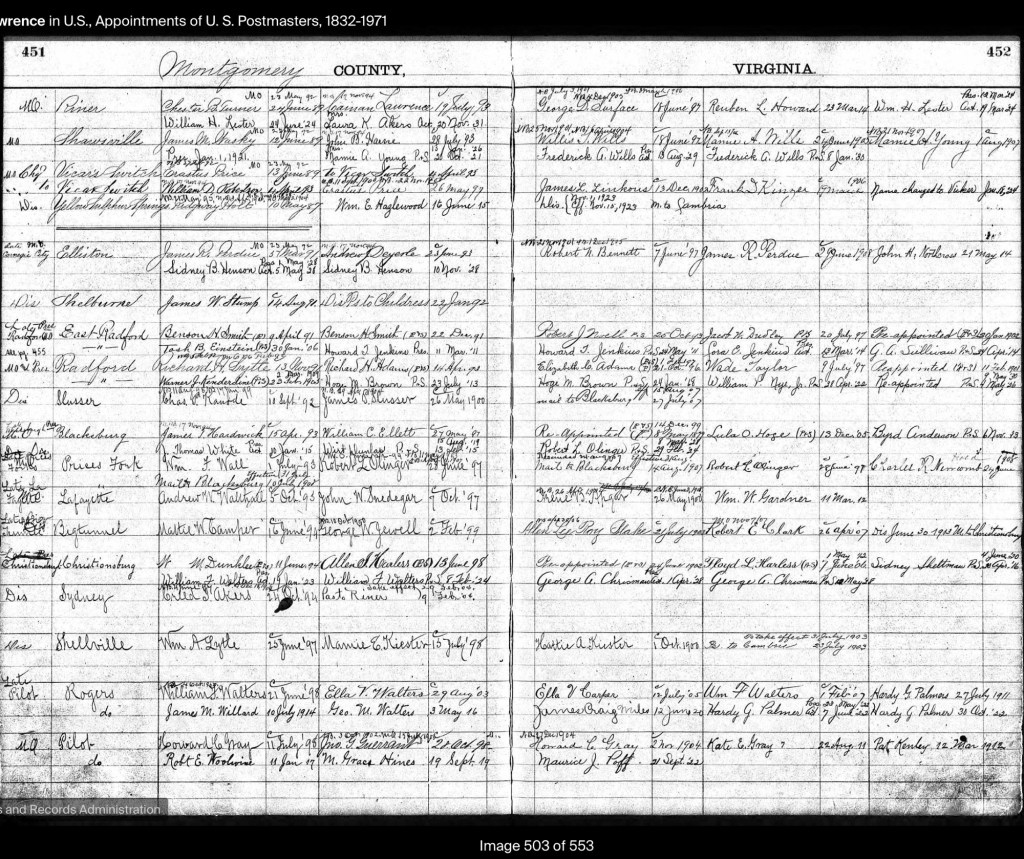
She is pictured behind Canaan (1840–1905) and Mollie E. Weaver Lawrence (1838–1931), whose home and farm once stood at this site. Canaan, a Confederate veteran, was listed as a farmer, D.G. merchant, and postmaster in 1893—the sources of the family’s prosperity. Born in Floyd County, he moved to Auburn by the 1870 census. Mollie, born in Auburn, remained there her entire life.

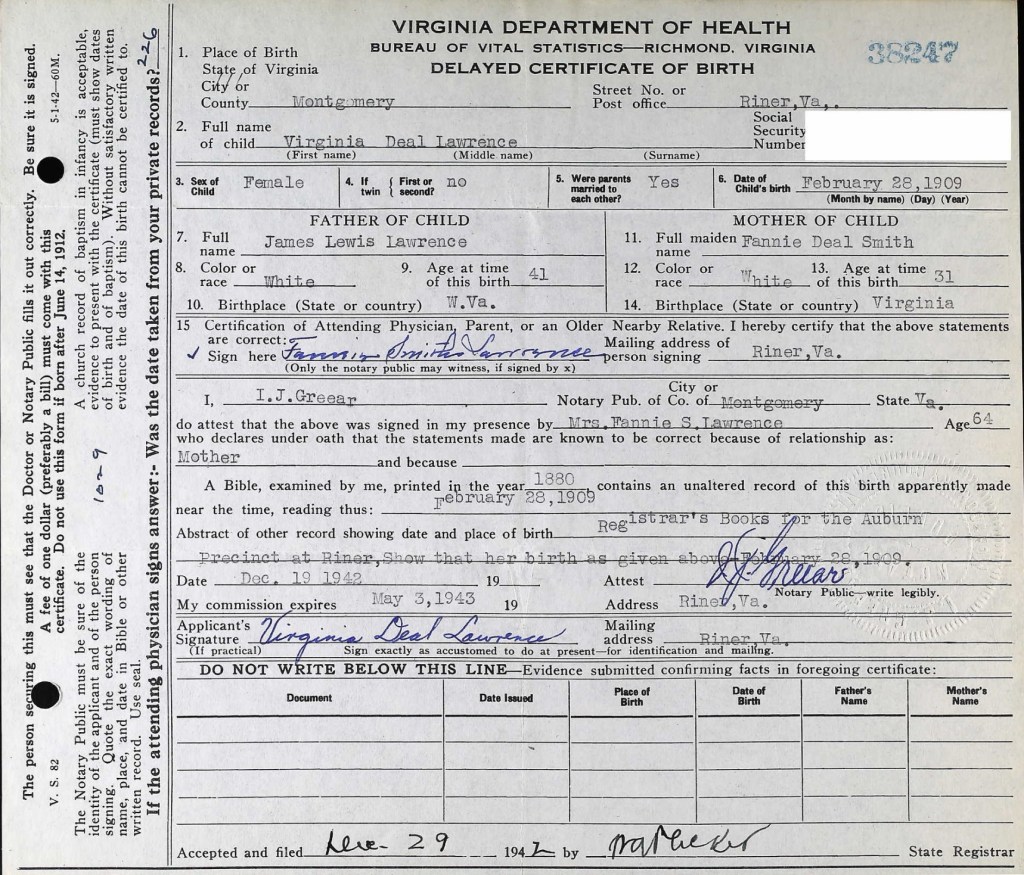
This photograph was shared by their granddaughter, Virginia Deal Lawrence, a longtime teacher at Auburn Elementary School, who preserved many family images and documents. Despite a search through census and local records, the woman’s name remains unknown.

We will continue to look through Virginia Deal’s papers and scrapbooks in hopes of finding a clue.

If you recognize this woman or know anything about the African American community connected to the Lawrence family, please contact us—we would be honored to record her name and story.

Please let us know if you can identify this woman behind the fence.